


From Libra to Open USD: Those who haven't left the table, change positions and do it again
author:Raise your voice BeatZ
Original title: To make this money, they waited 7 years
Circle, the first stablecoin stock, fell 20% faster overnight because of a list.
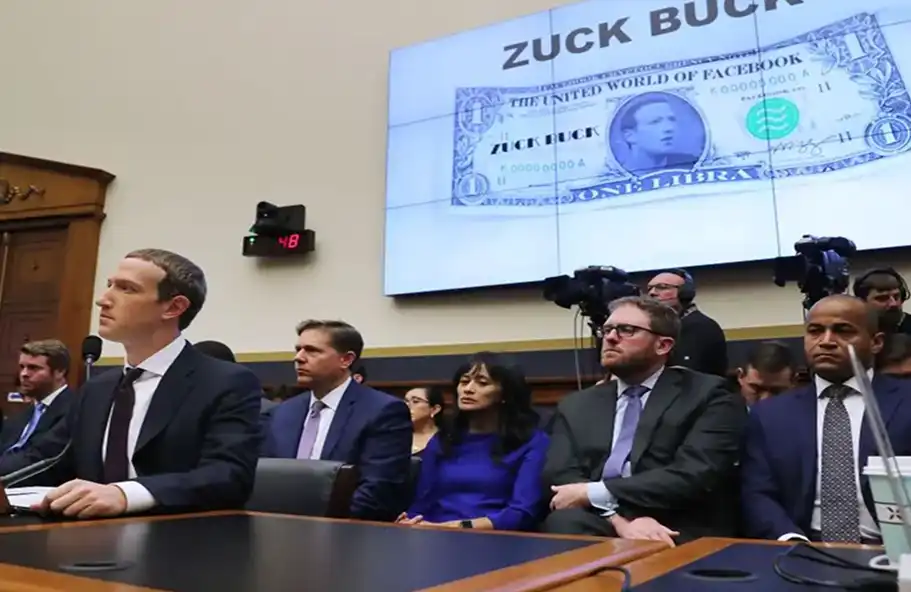
The list includes Visa, Stripe, Mastercard, Coinbase, BlackRock, Google, IBM, and Ripple. They are preparing to join a new coalition to become a US dollar stablecoin called Open USD. The coin is scheduled to be launched later this year and may land on some mainstream chains first. There are no fees for minting and redemption. After deducting operating costs, the revenue generated from the reserve must be distributed to the company that uses it.
The market understood at a glance.
It's not a question of one more coin. Circle's most profitable portion of deposit interest may be replaced.
This news is interesting. These big names have long wanted to do it.
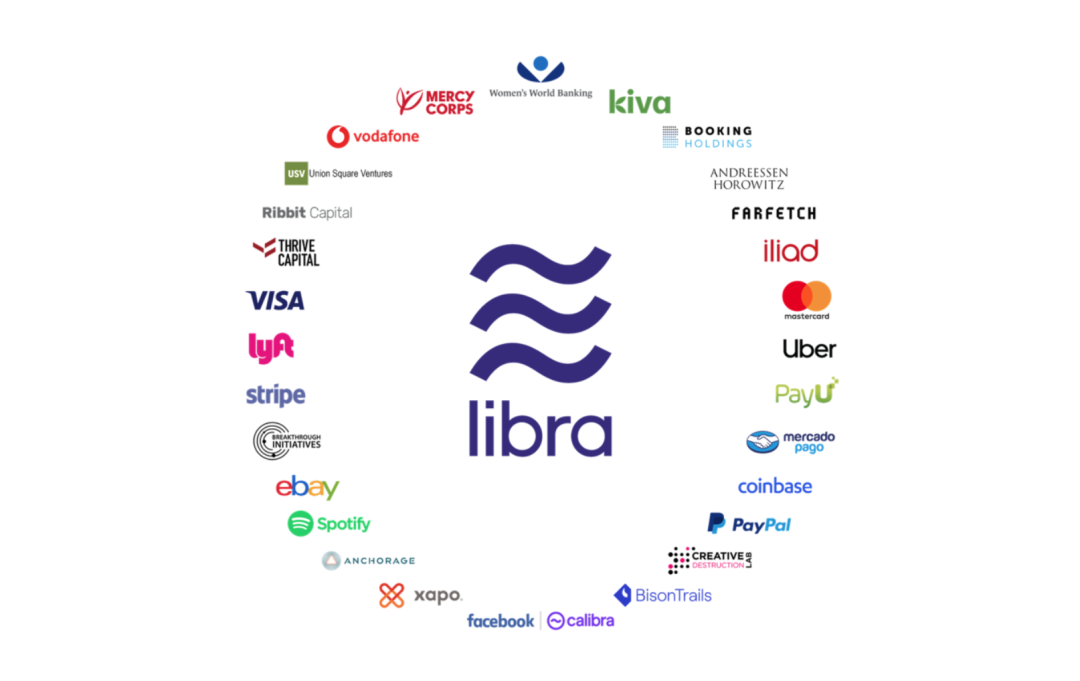
In 2019, when Facebook promoted Libra, these people were also sitting at the card table. Visa, Mastercard, PayPal, Stripe, Uber, Spotify, and Coinbase are all there. Facebook understood at the time that it couldn't do this alone. It needed to package this matter into a Swiss association. The name is Libra Association.
Seven years later, Facebook no longer takes the lead.
But the table didn't go away.
The table that didn't sit well in 2019
In 2019, also in the summer of June, when Facebook launched Libra, it was a beautiful story.
There are also many people around the world who don't have bank accounts. Cross-border remittance is too expensive. The traditional financial system is too slow. The Internet has made the flow of information almost free; why should money be stuck in the middle of banks, card organizations, clearing networks, and a bunch of intermediaries.
This story sounds like a charity.
But everyone at the table knows it's not charity.
If Libra makes it, it will become a new highway for money. Users can use it to pay, send money, and buy things. Merchants can take it. Facebook is also preparing to create a wallet called Calibra and put it in Messenger and WhatsApp.
Libra's former league camp; image source from the Internet
This isn't about sending a coin.
This is an attempt to rewrite the way money moves on the internet.
Facebook knows this is too big of a deal, so it's pulling a lot of companies in. Each member appears to have only one vote. Facebook says it won't control this system. All it has to do is one of the members.
Regulators have not been convinced. What they saw was not a modest payment innovation, but a social network with several billion users, bringing together global payment companies and internet companies to launch a private digital currency.
The central bank sees monetary sovereignty.
Congress saw Facebook.
The bank sees the payment portal.
What users see is simpler. A company that already has data on social relationships, photos, ads, and behavior says it also wants to help you manage your money.
Soon, the pressure hit those coalition members. PayPal went first, and Visa, Mastercard, Stripe, eBay, Mercado Pago, and Booking all went later. The project changed its name to Diem, changed its narrative, reduced its ambitions, and returned from a basket of currencies to a US dollar stablecoin. Diem's assets were later sold to Silvergate. Then, Silvergate itself fell into the banking crisis of 2023.
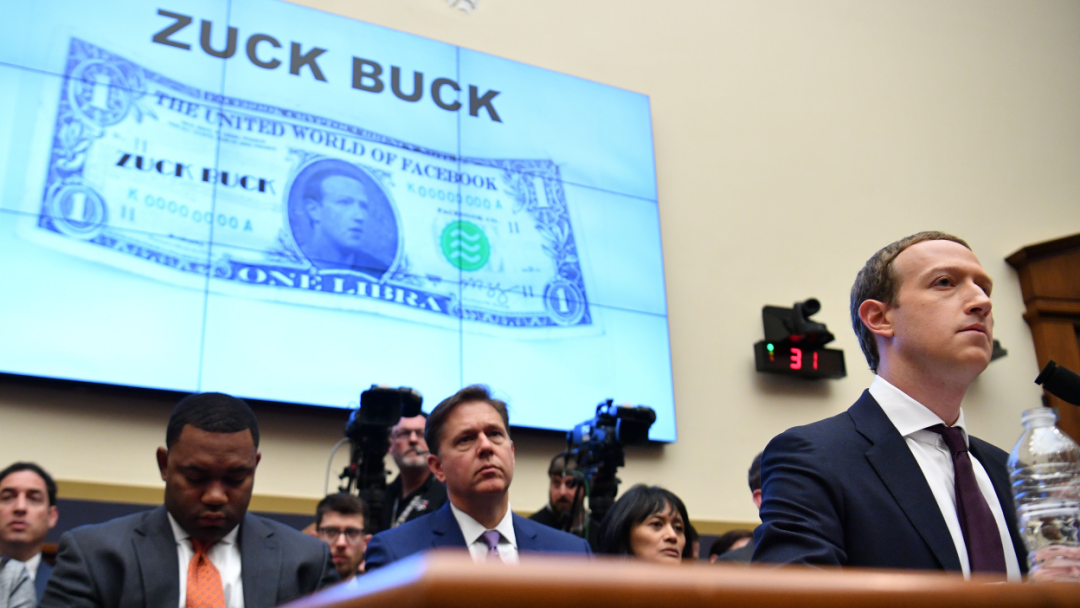
In 2019, Zuckerberg was questioned at the Libra hearing. The screen behind him was the community sketch “Zuck Buck” (banknote binding)
On the face of it, Libra is completely dead.
A white paper, a wallet name, a set of codes, a group of exit lists. What's left is just a footnote in the history of the industry.
But if you take Facebook out of the middle and look at that table again, you'll find another story.
The companies that left didn't want to touch stablecoins.
They don't want to follow Facebook and hit that wall in 2019.
But they'll admit that Facebook saw a bigger world with them.
What hasn't really changed is who does the interest go to?
The stablecoin business looks very new on the outside, but it's actually very old on the inside.
The user hands over one dollar to the issuer, and the issuer gives the user an on-chain dollar certificate. Users use this voucher to move back and forth between trading platforms, wallets, and payment scenarios. That dollar is put into bank deposits, short-term US bonds, or money market funds by the issuer.
The user still got a dollar.
The issuer received the interest generated on that dollar.
When interest rates are very low, this is unremarkable. Interest rates rose, and the stablecoin issuer suddenly became like a money printer. It doesn't have to pay interest to coin holders, but it can eat the benefits of reserve assets.
This is how Circle's story unfolded.
USDC is highly credible, its reserve transparency is more easily accepted by US institutions than Tether, and Coinbase is its most important distribution portal. After listing in 2025, the market once viewed Circle as one of the few stocks that could directly bet on stablecoin growth. A large portion of its revenue comes from reserve earnings. The larger the USDC, the more beautiful the income on the book.
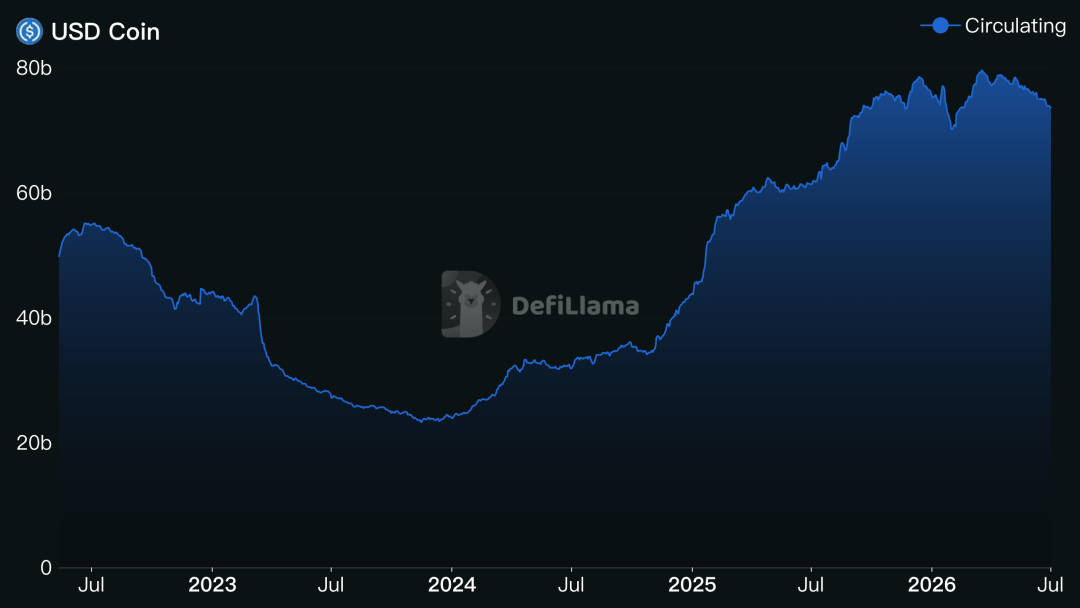
The USDC market capitalization has continued to rise since its low in 2024 until it reversed at the beginning of this year; source from DeFilLama
But it also revealed its fragility.
If stablecoins are just standardized products that “put dollars on the chain”, why do issuers take most of the interest for a long time?
Open USD's harshest statement this time is not “we also want to issue coins,” but “reserve proceeds should be distributed to users.”
This statement hit Circle's money bag.
The Open USD style of play is quite a “coin circle”: the money earned is distributed to everyone who helps run this network. This is a story of “people outside the coin industry use the mentality of the coin community to beat a guy who came out of the coin circle but flaunted that he was not from the coin community”.
Companies like Visa, Stripe, Mastercard, and Coinbase aren't necessarily concerned about currency prices. Stablecoins should not have a currency price. They are concerned with distribution, clearing, merchants, wallets, accounts, and settlement balances. Whoever controls where the user's money is parked will be close to the next generation payment system's toll booth.
This is also what Libra wants to do in 2019.
It was only then that its face looked too much like Facebook.
After Libra's failure, the world made up for it
In seven years, many things have changed.
Most importantly, the US has finally set up a legal framework for stablecoins. In 2025, the GENIUS Act was signed into law, drawing boundaries for issuing, storing, regulating, and anti-money laundering requirements for paying stablecoins. This boundary is imperfect, and there are many disputes, but for large companies, it has at least changed “can it be done” into “how to do it.”
The infrastructure has also changed.
In 2019, Libra needed to explain why it had a chain and why an alliance could handle global payments. By 2026, the public chain will already be a ready-made financial channel. Trading platforms, wallets, escrow, and on-chain risk control are all much more mature.
Payment companies haven't just woken up either.
Visa has tried USDC as a settlement for a long time. Stripe reopened the crypto payment portal and later bought stablecoin infrastructure company Bridge. Coinbase has always been in the USDC distribution chain. For these companies, Open USD is not an abrupt shift, but rather a fragmented effort over the past few years under the same name.
The story has also calmed down.
Back then, Libra was talking about global currency. It was financial inclusion, and it served people without bank accounts. Too much talk; it sounds like getting around the existing financial system.
Open USD didn't say that.
It refers to a US dollar stablecoin, which is compliant. It was launched later this year. It is a multi-chain, has more than 140 business partners, is free to mint and redeem, and distributes reserve proceeds to adopters.
This phrase isn't Libra romantic, nor is Libra scary.
It's no longer like a social network that makes money. It's more like a group of companies that have mastered payment portals and want to move the dollar to a more familiar path.
That's seven years of change.
The League's old problems haven't gone away
But there's an old problem with the League.
Lots of people.
Once there are a lot of people, the ambition is huge, and the movement is very slow. Every company wants a new system to grow, but they don't want to hand over their customer relationships. Visa has networks, Stripe has merchants, Coinbase has trading users, and BlackRock cares about reserve assets. Their ability to agree on “stablecoins will be important” doesn't mean they can agree on “who gets the most benefits”.
Back then, Libra didn't just die at the hands of regulators.
It also died under the weight of the League.
One coalition has to answer too many questions at once. Who issues, who hosts it, who is responsible for anti-money laundering, who bears redemption pressure, who enjoys reserve benefits, and who answers the phone in the event of an accident.
The hardest part about stablecoins isn't the moment they're released.
It's not difficult to issue a token. The hard part is getting enough people to believe that this token can be exchanged for dollars at any time. The difficulty is getting trading platforms, merchants, wallets, market makers, payment companies, and banks to treat it as real money. The difficulty is that in times of pressure, redemption channels continue, reserve assets are not discounted, on-chain transfers are not blocked, and supervisory calls are answered.
The value doesn't come from the list.
It comes from fluidity, trust, and habit.
That's why Circle hasn't been sentenced to death.
USDC has been in the market for many years. It has liquidity, redemption experience, institutional relationships, and many on-chain apps support it by default. For many businesses, switching to a stablecoin isn't something that can be done at a glance. You have to go through every level of finance, law, risk control, and technology.
Open USD is more likely to first become a settlement channel between businesses.
It can run on Stripe's merchant network, and can run on Coinbase-related chains, making it the default option in some cross-border, B2B, and on-chain finance scenarios. It doesn't necessarily need to replace USDC right away. It only takes away the new traffic and some distribution rights, which is enough for the market to re-evaluate Circle.
So, can this be done?
Yes.
But if the meaning of “do it” is to turn it into new money in the daily lives of billions of people, as Libra imagined back then, then it's still too early. The average user doesn't care if they use USDC or Open USD. Merchants also don't want to understand more than one type of currency. Most people just want money to be available, the cost is low, and nothing happens.
When stablecoins actually entered public life, probably no one said “I'm using stablecoins.”
It's like few people think about clearing the internet when swiping cards.
Circle punched the market, it wasn't all wrong
Does Circle count as a mistake kill?
I need to take it apart.
If the market meant that Open USD would beat USDC tomorrow, that would be overkill. A planned new alliance will not automatically inherit liquidity and trust because the list is beautiful. Circle's locations don't grow in a day, and they won't disappear in a day.
But if the meaning of the market is that the scarcity Circle enjoyed in the past is to be discounted, then this isn't wrong.
Once Circle went public, the most appealing part was its purity. It's not a mix of trading, hosting, subscriptions, and market sentiment like Coinbase. It looks like stablecoin growth itself. The bigger the stablecoin, the more profitable it is.
Sometimes pure is an advantage. Sometimes it's not.
When reserve income is the main income, interest rates affect it. When distribution relies on partners like Coinbase, partners influence it. As more large companies discover that they can also issue compliant stablecoins, the right to issue them will affect it. Open USD brought these issues to the table at the same time.
It reminds the market that the stablecoin issuer may not be the new Visa.
It's probably more like a middle layer that wraps dollars into an on-chain format.
If this middle tier is credible enough, early enough, and deep enough, of course it's worth the money. But if stablecoins become standard commodities, the real strength may be entrances. Merchant portal, wallet portal, transaction portal, developer portal, cloud and identity portal.
It just so happens that these entrances aren't in Circle's hands.
As a result, Circle's decline was half sentiment, and half of its business model being re-examined.
To say it was a complete miskill is not honest enough.
To say it's over is too hasty.
The more stable judgment is that the market pulled Circle back from “a few tickets to the stablecoin era” to “a strong issuer in the stablecoin competition.” The former enjoys imagination, while the latter is judged by gross profit margins, distribution costs, interest rate cycles, and new alliances.
Facebook isn't doing it anymore, they still have to do it
Looking back at Libra, the easiest conclusion is that Facebook has failed.
Facebook was too big, too famous, and too full of tone at the time. Perhaps Zuckerberg later changed Facebook's name to Meta, partly because he was really optimistic, and partly because he felt that the name Facebook had already been labeled by everyone, that Feng Shui didn't work, so it had to be changed.
It puts something that is already sensitive into a shell that is most likely to cause doubt. Regulators don't need to understand every technical detail, and they can instinctively feel uncomfortable.
A social network said it wanted to improve the global financial system, which didn't sound right in 2019.
So far, it's a good inspirational story. Because these companies haven't made that money yet.
They just learned not to talk about it as a big story. Don't let a super platform stand in front of the stage. Don't say it needs to be a global currency, and don't let users think that a social networking app now needs to reach into their wallets.
Seven years later, the story is much simpler.
Or dollars.
Or an alliance.
It's also a mixed table of payments companies, tech companies, asset management firms, and crypto firms.
Just this time, they said they are making open standards, a settlement tool, a stablecoin network, and an underlying channel for corporate payments.
The idea hasn't changed.
The posture changed.
Facebook doesn't do it anymore; they still have to do it. Because the account behind this incident has always been there. Internet commerce has taken away most of the entrances to advertising, social networking, content, cloud, and software. There are still too many toll booths with the old system for the movement of money.
Whoever can turn the US dollar into an Internet native balance can get a little closer to transactions, interest, risk control, and merchant and user relationships.
Libra died at the door that year because it looked like a person carrying a flag storming in.
If Open USD survives, it's probably because it doesn't raise the flag.
It's like a pipe.
Pipelines don't need to be liked. It just needs a little bit to fit into the wall. By the time everyone discovered it, the water had been flowing from there for a long time.
Twitter:https://twitter.com/BitpushNewsCN
Compare the TG exchange group:https://t.me/BitPushCommunity
Compare TG subscriptions:https://t.me/bitpush
