


The number of Bai B.AI users exceeded 2 million, and the multi-model aggregation platform entered the refined service stage
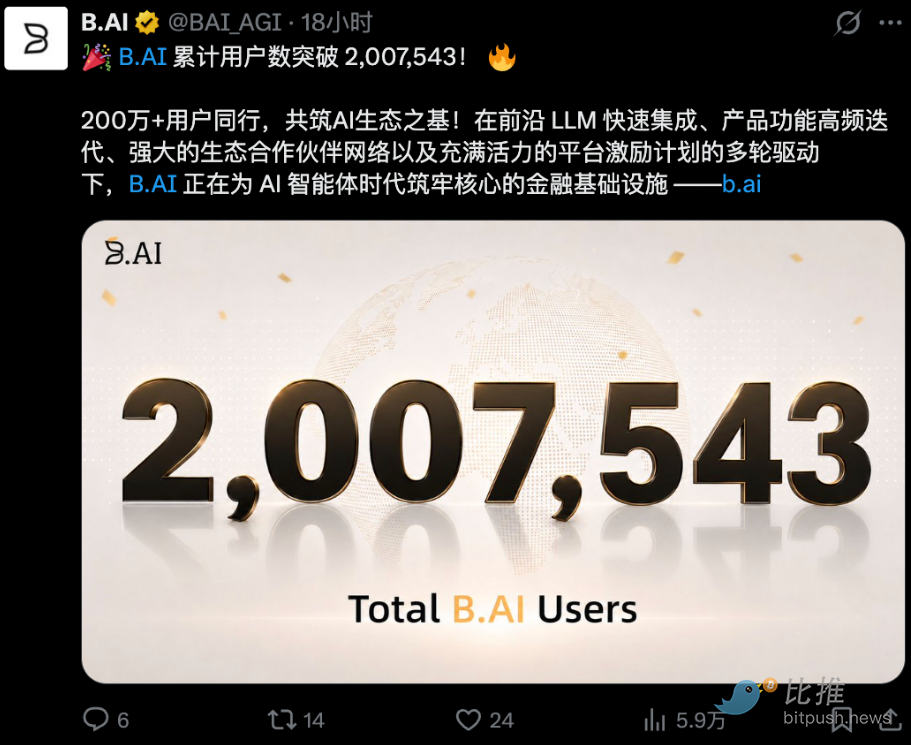
Recently, Bai B.AI, an AI model aggregation platform, ushered in a new growth node. According to the latest disclosure by Bai B.AI on its X platform's official account, the number of users on the platform has exceeded 2 million. At the same time, the actual call data of the platform is also increasing at the same time: recently, Bai B.AI's single-day token throughput reached a maximum of 18.69 billion, and the proportion of API calls rose to 99.7%, mainly carrying large-scale AI agents, automated processes, and enterprise-level core system applications. This means, whiteB.AIThe growth is no longer limited to front-office conversation scenarios, but is deepening into high-frequency scenarios such as developer calls, agent operation, and production-level system access, forming more sustainable actual usage consumption.
The competitive focus of the global AI industry has changed over the past year. With the rapid iteration of large model capabilities, users and developers are no longer only concerned about whether a certain model is strong enough, but more concerned about how to efficiently choose between different models, how to control token costs, and how to stably connect AI capabilities to real business processes. The model aggregation and routing platform represented by OpenRouter continues to receive attention, indicating that multiple model coexistence has become an important direction for AI application development. The growth of Bai B.AI further points to another trend: AI model aggregation platforms are moving from a “unified portal” to more detailed service layers. The platform must not only provide model calling capabilities, but also allow different users to make more flexible choices between stability, price, payment habits, and usage scenarios.
Multi-model calling is becoming more refined, and Bai B.AI strengthens service layering capabilities
In the context of the rapid expansion of the large model ecosystem, complex reasoning, code generation, long text processing, multi-modal tasks, and low-cost high-frequency calls often correspond to different model capabilities. For ordinary users, switching accounts, subscriptions, and payments between multiple platforms is inefficient; for developers and enterprises, connecting to different models separately can also bring additional engineering costs, billing pressure, and stability challenges.
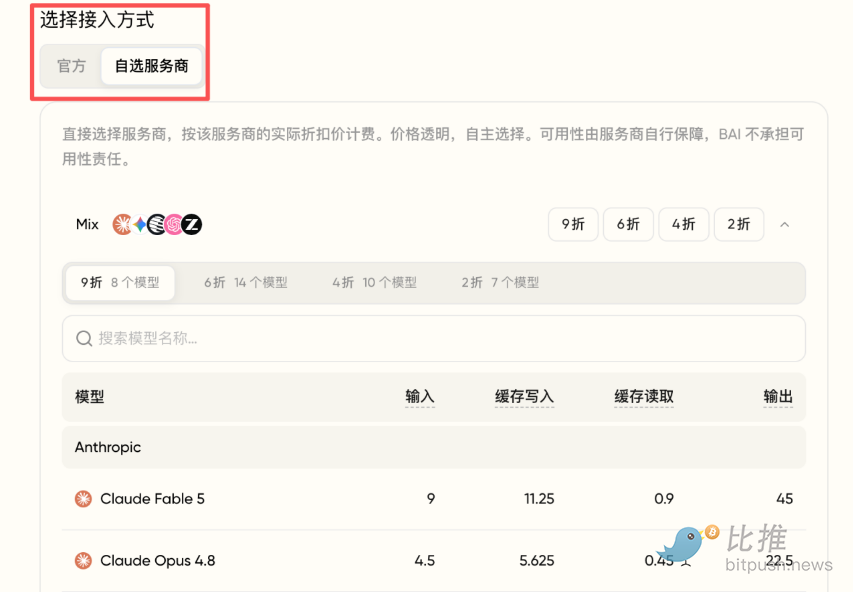
Bai B.AI cut right into this pain point. As an AI model aggregation platform, Bai B.AI connects to various mainstream models through a unified portal and provides API services compatible with mainstream calling methods, making it easy for users and developers to complete model selection, call, and cost management on the same platform. Compared with a single model portal, Bai B.AI places more emphasis on using AI services according to scenarios: for production-level applications with higher stability requirements, more standardized and more stable official access can be selected; for cost-sensitive scenarios such as testing, exploration, AI agents, and batch calls, more flexible pricing plans can be obtained through optional service providers.
This design also makes Bai B.AI's differentiation even more clear. According to Bai B.AI's official X platform information, the optional service provider model currently provides different discount groups such as 10% off, 40% off, and 20% off, covering mainstream model series such as Claude, Gemini, GPT, Kimi, and GLM, and can be used in combination with recharge giveaways. In other words, Bai B.AI does not only provide a fixed price model entry, but rather splits AI services into different consumer levels: core production operations prioritize availability, and test environments and high-frequency call scenarios place more emphasis on cost efficiency. For developers, the value of this model is not “more models,” but rather the ability to choose a more suitable service path based on task importance, call frequency, and budget constraints.
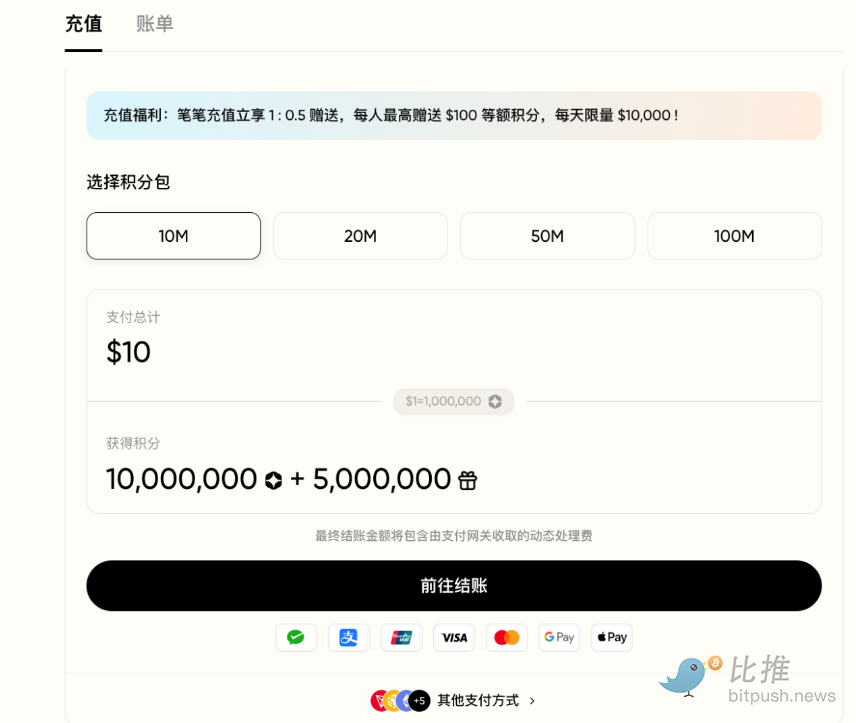
The diversification of payment methods also serves this logic. Bai B.AI is currently compatible with WeChat, Alipay, bank cards, and commonly used fiat payment routes such as UnionPay, Visa, Mastercard, Google Pay, and Apple Pay. It also supports multi-chain multi-currency cryptocurrency payments. Compared to a single payment method, this arrangement is more suitable for covering users in different regions and with different usage habits, and also helps lower the conversion threshold for developers and high-frequency subscribers from testing to continuous use. Previously, public data showed that the proportion of Stripe payments in the core payment group of the platform rose to 69.0%. Combined with the increase in the share of API calls, it also reflected on the side that the usage stickiness of traditional developers and production-level users is increasing.
Behind the high proportion of APIs, Bai B.AI is entering a deeper developer scene
Looking at the usage structure, Bai B.AI recently accounted for up to 99.7% of API calls, and platform consumption comes more from developer interfaces, automated tasks, AI agent workflows, and enterprise-level system calls. Previously disclosed data also showed that the DeepSeek-V4 series once contributed nearly 60% of token consumption; combined with the recent increase in the popularity of calls to models such as MiniMax M3, BaiB.AIThe user usage structure is showing two characteristics.
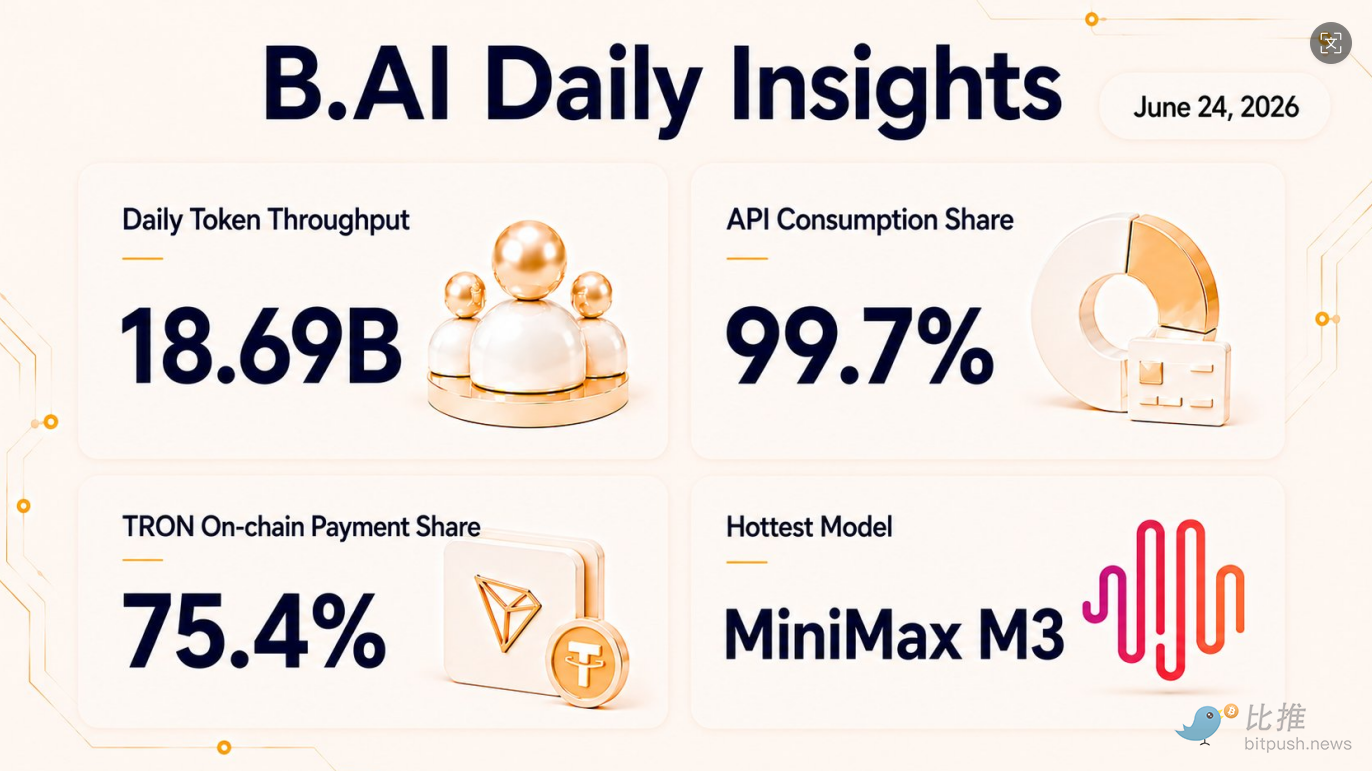
On the one hand, the platform is attracting more traditional developers and production-level users, and usage scenarios extend from front-office conversations to back-office calls and automated processes. On the other hand, users are beginning to actually choose between different models based on cost, performance, and task type: more powerful models for complex tasks, more cost-effective models for high-frequency tasks, and service providers with more flexible discounts for test scenarios. This further highlights the practical value of model aggregation, intelligent routing, and multi-service provider access.
As AI agents move from demonstration to actual workflow, model calls will no longer be a one-time conversation, but will become continuous, high-frequency, and billable service consumption. For an agent to actually enter the business system, it requires not only model capabilities, but also a stable interface, clear billing, flexible payment, and a service environment with sustainable operation. whiteB.AICurrently, construction is being carried out around a unified API, multi-model access, service layers, and multiple payment experiences to adapt to this new way of using AI.
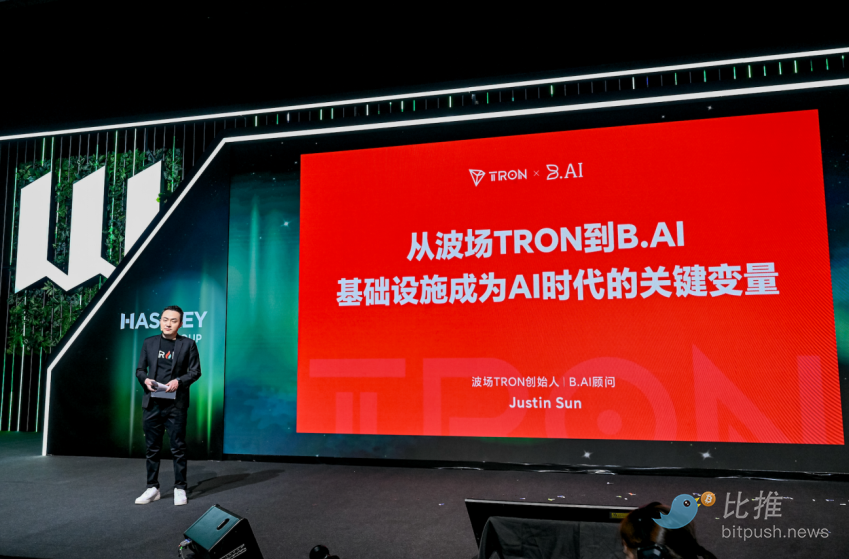
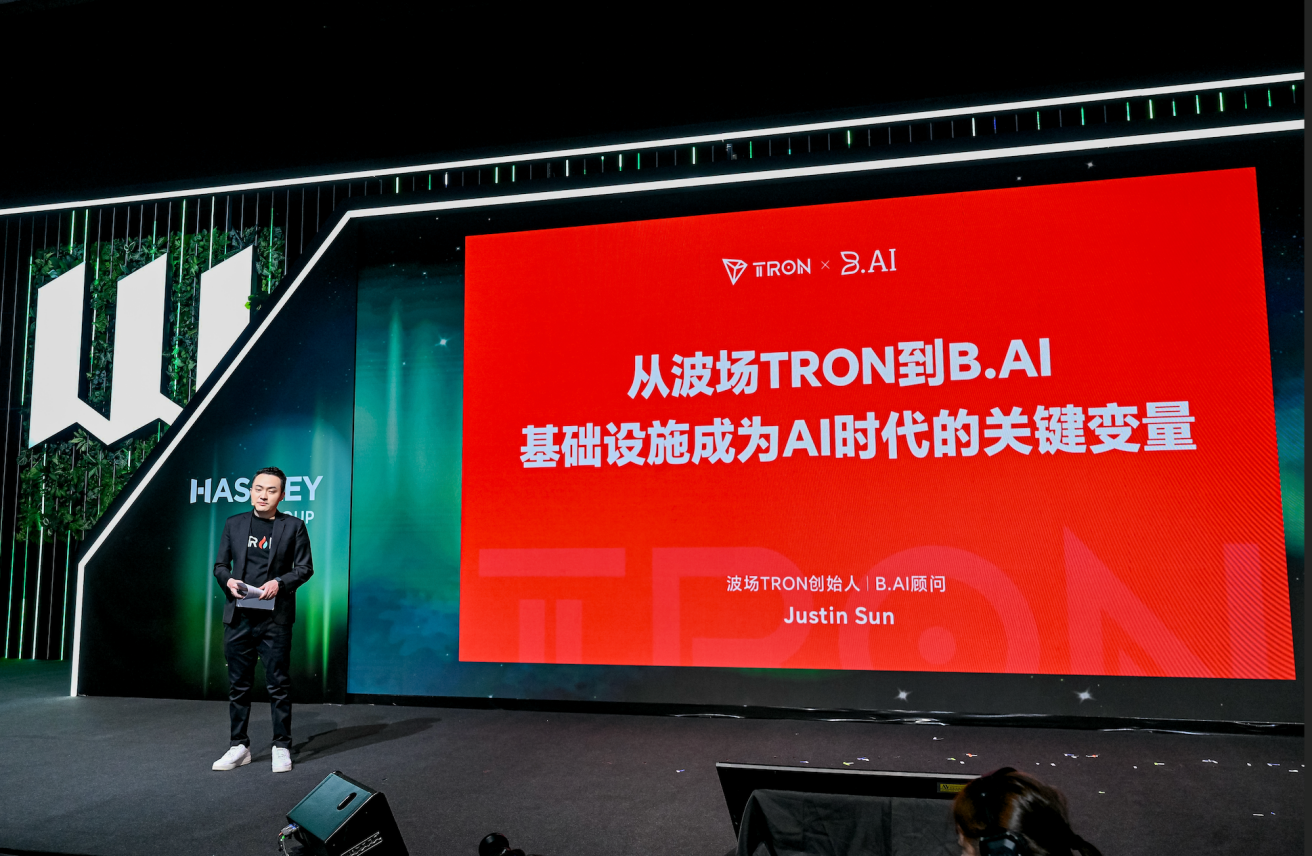
Sun Yuchen, founder of Bochang TRON, participated in Bai B.AI as a consultant, which also made it easier for the outside world to understand its long-term layout from the perspective of AI service infrastructure. Sun Yuchen has emphasized many times before that the AI Agent era requires the support of new underlying capabilities. As AI moves from auxiliary tools to autonomous execution, model calling, resource purchasing, and automated settlement will become more frequent requirements. The value of Bai B.AI is trying to provide lightweight, more flexible, and more expandable underlying support for this new AI service consumption and agent operation scenario.
From the number of users surpassing 2 million to reaching 18.69 billion in a single day and the share of API calls rising to 99.7%, Bai B.AI is forming a clearer development path. In the short term, it is an integrated portal for users and developers to use multiple model capabilities; in the medium term, it is a service platform for AI applications and agents to reduce call costs and improve access efficiency; in the long run, as AI agents participate more widely in task execution and inter-machine collaboration, Bai B.AI hopes to become an AI infrastructure platform that connects model capabilities, service consumption, payment methods, and developer ecosystems.
