


Silicon Valley CEOs Don't Talk About AI Layoffs Anymore
Source: The Wall Street Journal
Author: Katherine Bindley
Compiled and organized by: bitPushNews
Warnings of massive layoffs are dwindling as public perceptions of artificial intelligence turn negative
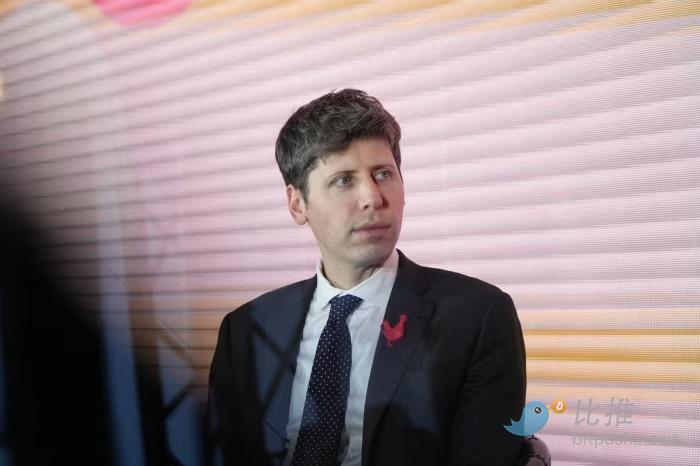
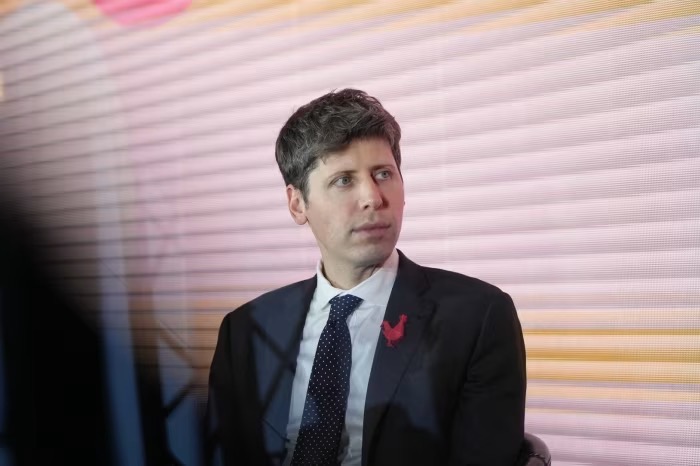
OpenAI CEO Sam Altman (Sam Altman) said the industry has underestimated our ability to keep “people first” in everything we do.
A year ago, many business leaders conveyed the message that artificial intelligence would completely destroy jobs. But over the past month or so, tech CEOs have begun to adopt a more optimistic tone.
In late May of this year, OpenAI CEO Sam Altman (Sam Altman) — who has long predicted that artificial intelligence will cause drastic changes in the labor market — said at a conference: “We were largely right in predicting technology, but completely wrong in terms of social and economic impacts.”
Soon after, in an interview with CNBC, he said, “Our industry underestimates our ability to keep people at the center of everything.”
Anthropic CEO Dario Amodei (Dario Amodei) warned in May 2025 that artificial intelligence could eliminate half of startup jobs. A year later, he highlighted the more positive solutions facing companies adopting artificial intelligence: “They can do the same thing with fewer resources, which can lead to results such as layoffs; or they can do more with the same resources. But it takes creativity.”
In an article published by the executive in June, he wrote that his job loss warning was to give policymakers and the private sector the best chance to adapt — he wasn't trying to be a “doomsday prophet.” (He also wrote that the possibility of “permanent unemployment” still exists.)
This more optimistic outlook is to win back customers and the public who are dissatisfied with the promise of artificial intelligence to “disrupt the world”?
Or do people now have a better understanding of the role of artificial intelligence in the workplace?
Some comments on AI's potential to create jobs come at a time when companies are raising more capital for AI spending through layoffs.
Meta CEO Mark Zuckerberg (Mark Zuckerberg) recently said in an interview with “Complex” that if companies focus on increasing employee productivity at a faster rate than automation, “theoretically, there should be more jobs in the future, not fewer.” In May of this year, the company began cutting 8,000 employees and streamlining the team.
In February of this year, Amazon CEO Andy Jassy (Andy Jassy) talked about the job creation potential of artificial intelligence in an interview with CNBC. A year ago, he announced that due to artificial intelligence, the company would reduce the number of employees in the next few years. Amazon said that the 16,000 layoffs that followed had nothing to do with the application of artificial intelligence, but were aimed at continuing to reduce organizational hierarchies and revive the company culture.
Overall, the narrative has moved from an apocalyptic scenario of “streamlining employees” caused by artificial intelligence to a future where workers can keep their jobs and become more productive.
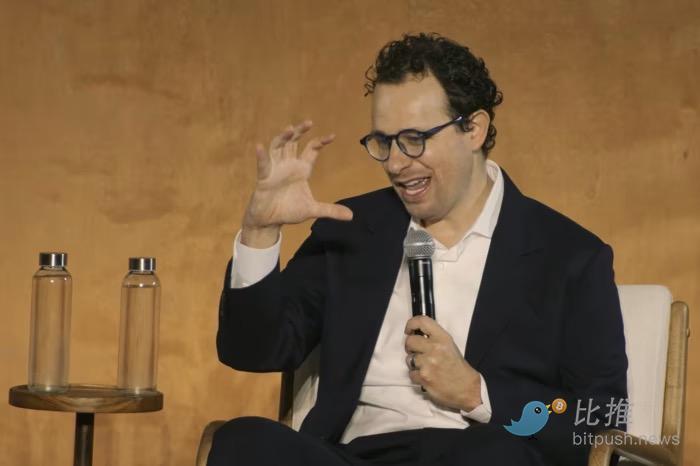
Anthropic CEO Dario Amodei once warned about job replacement issues caused by artificial intelligence, but in a recent article, he said he wasn't meant to be a “doomsday prophet.”
This shift in sentiment isn't limited to tech leaders: an EY-Parthenon survey found that the proportion of CEOs who believe investment in artificial intelligence will lead to drastic layoffs fell from around 46% in January 2025 to 20% in May of this year.
“They may have noticed that the labor market really isn't changing (or collapsing) as quickly as they expected,” said David Autor, an economics professor at MIT. “They may have realized that claiming that your great new product will destroy the economy is simply bad business strategy.”
A recent study by fintech company Ramp and workforce intelligence firm Revelio Labs found that among companies that invest the most in artificial intelligence, employment growth rates are about 10% higher than similar companies that have not yet adopted artificial intelligence.
“The companies I know that use artificial intelligence the most are also the ones that hire the most,” Ultraman said in an interview with CNBC. Some tech leaders say artificial intelligence is even creating demand for certain jobs, and more jobs that don't currently exist will appear in the future.
Many well-known economists disagree about the long-term impact of artificial intelligence on employment.
Ford CEO Jim Farley (Jim Farley) said last year that artificial intelligence would replace “the literal half of America's white-collar workers.” The company recently hired hundreds of engineers and attributed the move to concerns about the quality of automated work. (These job postings were previously reported by Bloomberg.)
“Engineers with deep technical expertise harnessing the power of artificial intelligence are a powerful combination that is driving Ford's quality improvement,” a Ford company spokesperson said.
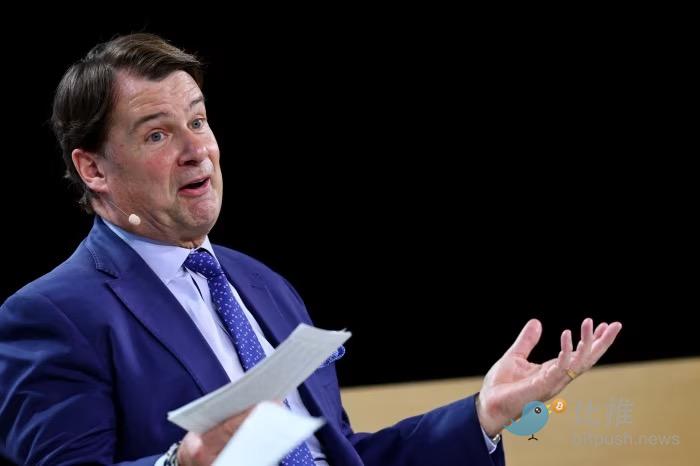
Under CEO Jim Farley (Jim Farley), Ford recently hired hundreds of engineers to address concerns about automating work.
Meanwhile, negative public sentiment about artificial intelligence is building up. According to a recent poll by researchers at Stanford University and the University of California, Berkeley, about 30% of Democrats think the US should accelerate AI innovation as fast as possible, compared to about 50% and 77% of Republicans and tech founders, respectively.
“The tone of the conversation has changed,” said Maurice Schweitzer (Maurice Schweitzer), a professor of leadership and decision making at the Wharton School of Business at the University of Pennsylvania. “There was a lot of hype in the early days.”
Between building data centers and government regulatory efforts against artificial intelligence, “what they are trying to do contains a political component,” he said.
Furthermore, there is the question of the actual performance of artificial intelligence in enterprises. Companies in technology and beyond are learning how long it takes to implement new artificial intelligence tools and working to better understand how effective they are in handling tasks and workflows.
According to a survey of business executives conducted by technology and management consulting firm Emergn, it is difficult for companies to determine which AI investments are successful. About 20% of US leaders said the deployment reports they received were more optimistic than the facts showed. Some reports “glorified” the bad news, while employees kept silent about the failure.
According to Stephen Henriques (Stephen Henriques), a senior researcher at the CEO Leadership Institute at Yale University, when the CEO talks about the capabilities and expected returns of artificial intelligence during an earnings call, it probably sounds great, “but how it actually penetrates the entire economy is another story.”
Amazon founder Jeff Bezos (Jeff Bezos) had previously predicted that artificial intelligence would create new jobs. In June of this year, he even said that artificial intelligence could lead to labor shortages. When asked on CNBC in May of this year about people being afraid of artificial intelligence replacing jobs, he said that the reason people are afraid is “all smart people talk about this all the time.”
Fewer people are saying this now.
Twitter:https://twitter.com/BitpushNewsCN
Compare the TG exchange group:https://t.me/BitPushCommunity
Compare TG subscriptions:https://t.me/bitpush
