


When AI is cheaper than Indian engineers, how far can India's IT model go?
Author: Shenzhao TechFlow
Original title: India, the first country to be shorted by AI
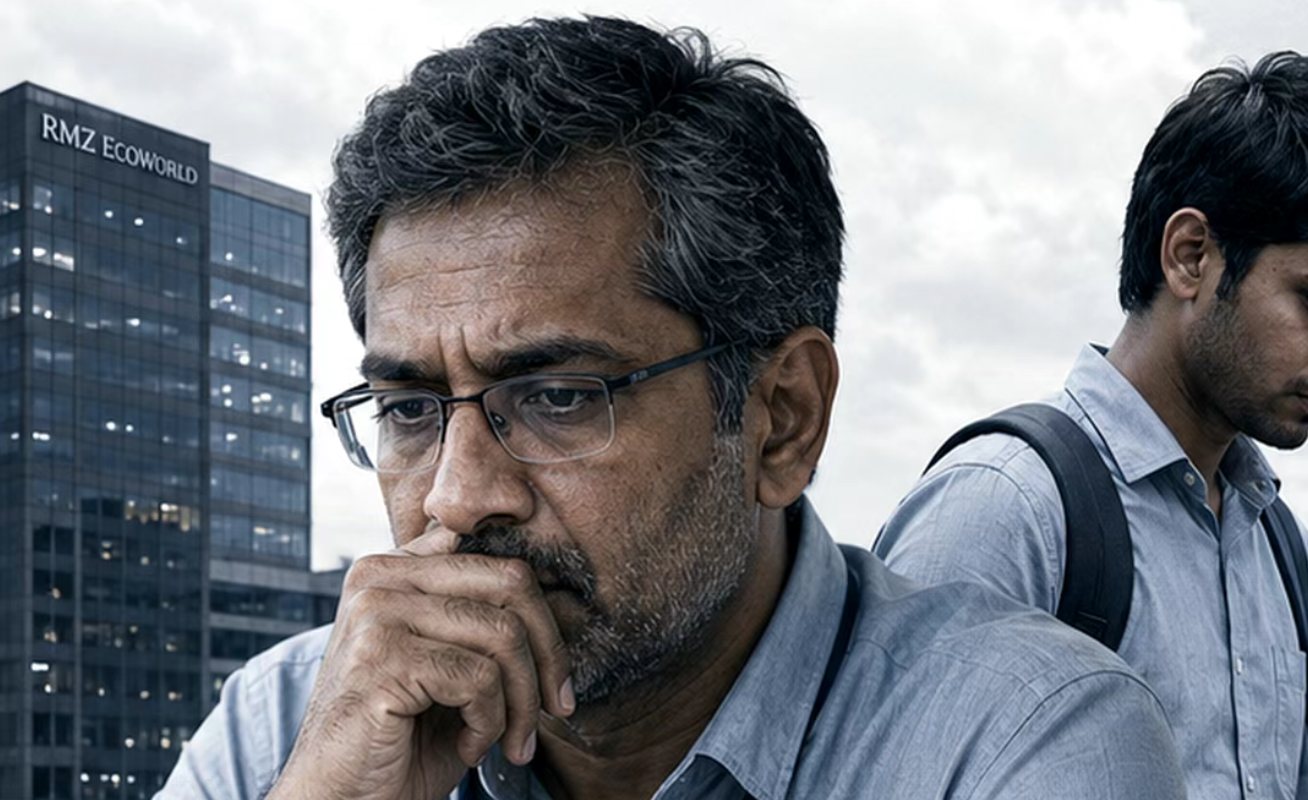
52-year-old Indian engineer Shiv still maintains a habit: posting at least 5 resumes every day.
This commitment began in April of this year. In March, US software giant Oracle laid off 12,000 people in India, and he was one of them. After working for the company for 14 years, he thought he would keep working until his retirement. Now he still has to pay Rs 50,000 per month. The family has been living in the same house for 15 years, and he doesn't want his family to move out. One evening, he discovered that he had infuriated his wife for no reason.
In an interview with India's “Outlook” magazine, he said, “Technology was built by us; we learned it; we developed it. When they run out, they let us go.”
Also in the same round of layoffs was 25-year-old Priyanka. She woke up early that morning to go to the gym, glanced through her email, and a cold email informing her that she had been fired. She is carrying two installments, one for an iPhone and one for a small e-mule, and she has to pay back a total of 20,000 rupees every month. She is using her savings to stay in Bengaluru.
Taking the camera further away, behind Shiv and Priyanka is a rare national-level shorting liquidation. The shorting country is called India.
The world's purest AI shortname is in Mumbai
If you want to find a target for a deal in the global market, you can express the story “AI replaces human white-collar workers” in its purest form. The answer is on both the NASDAQ long list and the Bombay Exchange's short list. The former is Nvidia, and the latter is India's Nifty IT Index.
A look at the trend of this index in 2026 is like a judgment being executed one by one.
The Nifty IT Index hit a record high of 4,6089 points on December 13, 2024, and had retreated 43% by the end of June this year.
In the first half of 2026, the index fell by about 30%, making it the worst performing sector in the entire Indian market. The Nifty 50 market fell only about 9% during the same period. India's four IT giants, TCS, Infosys, Wipro, and LTimindtree, have withdrawn about 50% from their respective peaks. The ten major IT companies have collectively evaporated about 19.28 trillion rupees in market capitalization, equivalent to more than 200 billion US dollars. The market value of TCS has fallen below the 10 trillion rupees mark.
What is even more interesting is the pace of decline. Every big negative line can almost cover the last press conference of an American AI company.
On February 4, Anthropic released a next-generation programming tool that claims to automate exploration and analysis in the transformation of most legacy systems. The modernization of COBOL systems has been an iron job in India's outsourcing industry for decades. The news spread to Mumbai, and the IT sector began selling off. Since then, the cumulative decline has exceeded 15%, and 5.08 trillion rupees have evaporated.
In May, OpenAI announced that it would invest more than $4 billion to form a team of “pre-deployment engineers” to directly enter enterprise customers and restructure workflows around AI. The market immediately understood the subtext: high-value consulting, deployment, and transformation projects that may bypass Indian service providers in the future. Nifty IT's response fell to its lowest level since May 2023.
In June, Accenture plummeted by nearly 18% in a single day, the biggest single-day decline since listing. When Mumbai opened the next day, Nifty IT fell 6%, Infosys fell 8.19% in a single day to a five-year low, and 1.35 trillion rupees evaporated in one trading day. The customers that Accenture serves are the same European and American banks, retailers, and manufacturers that Indian IT companies serve.
The seller's attitude is also changing.
Investment bank Jefferies warned that in the worst case scenario, there is still room for a 30% to 65% decline in Indian IT stock valuations. Citrini Research's report predicts that contract cancellations between TCS, Infosys, and Wipro will continue to accelerate until 2027. Local brokerage firm Nirmal Bang adjusted the TCS rating from buy directly to sell, and cut the target price from 3046 rupees to 1,693 rupees.
According to Bloomberg data, the combined weight of the top five IT companies in the Nifty 50 has fallen below 7.6%, the lowest since 2002. The capital market uses real money to make a judgment: global investors are systematically bearish on a country's pillar industry.
The essence of the Indian model: wholesale junior engineers to the world
To understand why India has been hurt the most in the AI era, we must first understand what the Indian IT industry is selling.
The answer is simple: engineer hours billed by the hour.
The millennial bug crisis at the end of the last century gave India its first pot of gold. Over the next 30 years, this model grew bigger and bigger. The customer wrote the code in New York or London, in Bengaluru or Hyderabad. For the same job, the Indian engineer's offer was a fraction of that of its American counterpart. Labor arbitrage is the whole secret behind the operation of this $283 billion industry.
This model has created an unprecedented class within India. Neeti Sharma, CEO of TeamLease Digital, summed up “Outlook” very well: “The logic is simple. You can borrow four and a half million rupees to complete your engineering degree and go to TCS, Infosys, or HCLtech, and you'll be stable for life.”
The experience of an engineer named Pooja is a perfect example of this logic: she grew up in a single room in the suburbs of Calcutta, shared a bathroom with nearly 70 people. After getting her diploma in 2005, she went to Gurgaon to work as a programmer, starting at 7056 rupees a month, and now earns 3.5 million rupees a year at a leading IT company.
According to a joint study by Nasscom and Crisil, by 2007, every IT job could drive about 4 jobs in other sectors of the economy. Drivers, security, cooks, housekeepers... The share of housing loans in India's GDP has risen from 0.6% in 1995 to about 11% today, with 35% concentrated in the south where major IT centers are concentrated. The entire property market in Bengaluru and Hyderabad is almost betting on IT white-collar payrolls.
The problem is that the products sold in this model have an exact name: repetitive labor for junior and intermediate engineers.
Writing template codes, doing manual tests, maintaining legacy systems, processing work orders... and the big model just happens to be the perfect replacement for this kind of labor. It's a junior engineer with marginal costs close to zero, works 7 x 24 hours a day, and never needs a visa.
India spent 30 years building itself into the world's greatest “replacement for American programmers.” What is ending it now is a cheaper “replacement for Indian programmers,” AI.
The teenager who slaughtered the dragon did not turn into an evil dragon, but was swallowed up by a new dragon.
A ten-year script for the middle class, torn up in three years
A collapse is already being realized at an accelerated pace.
TCS announced 12,000 layoffs in July last year, accounting for 2% of the total number of employees. This is the largest layoff in the history of India's largest private employer. A 45-year-old Calcutta employee told Reuters: “This is devastating news. It's too difficult for someone my age to find a new job.”
An even more absurd detail is that more than 500 job seekers who received TCS offers with an entry date of July 2025 are still waiting indefinitely to join the job, and many of them have long since left their last job.
Other than layoffs, the recruitment engine has stopped working.
The top five IT companies in India had a net loss of about 7,000 employees in the fiscal year ending March 2026, compared to a net increase of more than 12,000 people in the previous year. Over the past five years, these five companies have hired an average of about 230,000 people a year, leaving only 170,000 for FY26. TCS's fresh graduate recruitment plan has been cut from an average of 40,000 to 25,000 over the past three years.
Gaurav Vasu, founder of market intelligence firm UnearthInsight, estimates that 400,000 to 500,000 IT workers are at risk of layoffs in the next two to three years, 70% of whom are mid-level workers who have been working for 4 to 12 years.
Fund manager Saurabh Mukherjea has calculated a bigger account: India produces around 3 million engineering graduates every year, of which around 1.5 million are considered “qualified engineers.” Before 2020, those 1.5 million people were almost entirely absorbed by IT services. Over the past three years, that number has dropped to close to zero. Meanwhile, Azim Premji University's 2026 India Employment Status Report shows that the unemployment rate for 15 to 25 year olds is as high as 40%.
The shock wave is being transmitted in reverse along the path of wealth spread back then.
In the first quarter of 2026, residential sales in major Indian cities fell 13% year over year, and analysts directly named IT layoffs as one of the main reasons. The shared apartment in Bengaluru suddenly became unhappy, and the landlords settled the bill on the IT company. Mukherjea also observed a dangerous sign: a large number of people anticipating that they will be laid off are rushing to apply for personal loans and mortgages before losing their jobs. Part of India's loan growth over the past 12 months comes from these “doomsday loans.”
So what about leaving India to work in the US?
Sorry, this road is also gradually being soldered by Washington.
In September 2025, the Trump administration raised H-1B visa fees from $5,000 to $100,000, a 20-fold increase. Two months before that, Trump publicly asked Google and Microsoft to “stop hiring in India.”
In 2024, Indians took over 200,000 US work visas, and Indian companies accounted for 20% of all H-1B batches. This channel was once an extension of India's IT model in the physical world.
About 60% of India's IT revenue comes from the US market, which is close to $135 billion. Today, India is facing a double strangulation structure. For the first time, AI gave American companies the “service return” technology option, and no longer needed to send jobs to Bengaluru; the new visa policy made it difficult for Indian engineers to send themselves to the US.
People can't get out, work can't get in.
What's even scarier is that the big liquidation brought about by AI is still ongoing.
India's median age is only 28, and over the next 20 years, tens of millions of young people will pour into the labor market every year.
The demographic dividend is a check with an expiration date. If it is cashed, India is the next largest country; if it can't be cashed, the same group of young people will move from the left side of the balance sheet to the right.
A grain of ash from the times falls on an individual's head; it's a mountain. Shiv is still posting his 5 resumes every day. The Bengaluru office building is still brightly lit. This is only the first time that people in the building are starting to seriously think about how long those lights will stay on and for whom.
Twitter:https://twitter.com/BitpushNewsCN
Compare the TG exchange group:https://t.me/BitPushCommunity
Compare TG subscriptions:https://t.me/bitpush
