


Anthropic sprints to trillion-dollar IPO: This brother and sister overtook their old owner OpenAI in 5 years
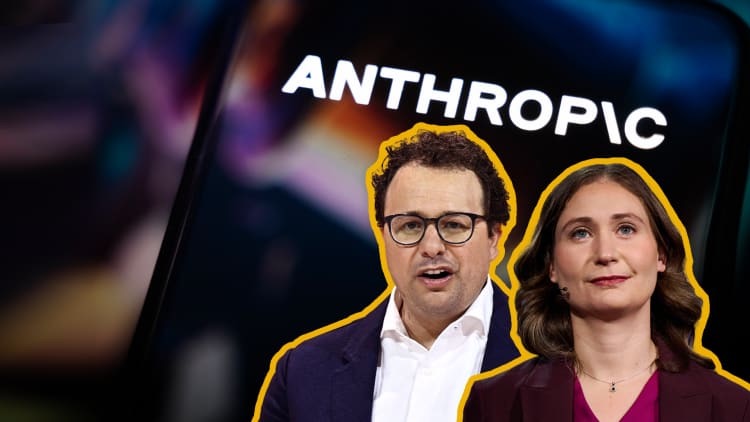
In May 2026, a confidential IPO document was submitted to the US Securities and Exchange. In the same month, Anthropic completed the H round of financing of 65 billion US dollars, and the post-investment valuation reached 965 billion US dollars, surpassing OpenAI for the first time.
In the secondary market, the company's implied valuation has climbed further to $1.2 trillion.
And the starting point of this Big Mac was a pair of siblings: Dario Amodei (Dario Amodei) and Daniela Amodei (Daniela Amodei).
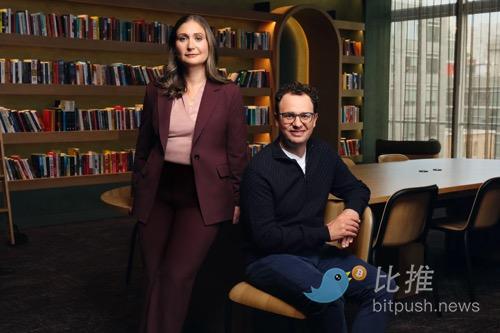
One cobbler and one librarian have developed two top AI
兄Both girls grew up in working families in San Francisco's Mission District. Her father, Riccardo Amodei (Riccardo Amodei), was a leather craftsman from Tuscany, Italy; her mother, Elena Engel (Elena Engel), worked as a project manager at the San Francisco Public Library. Her father died of illness when the brother and sister were just adults. This family, which has nothing to do with technology, has emerged as two top figures in the AI field.
The older brother Dario was born in 1983 and has been a standard science genius since childhood. He studied at Caltech and Stanford University with a bachelor's degree in physics, and then a doctorate degree in biophysics from Princeton University. His research interests are the electrophysiology of neural circuits. After graduating from his PhD, he completed his postdoctoral research at Stanford University School of Medicine, focusing on applying machine learning to biomedical data.
My younger sister, Daniela, is four years younger than her brother, but she is following a very different path. She attended the University of California at Santa Cruz on a classical flute scholarship and graduated with the highest honors (summa cum laude) in 2009 — majoring in English literature with a minor in political science.
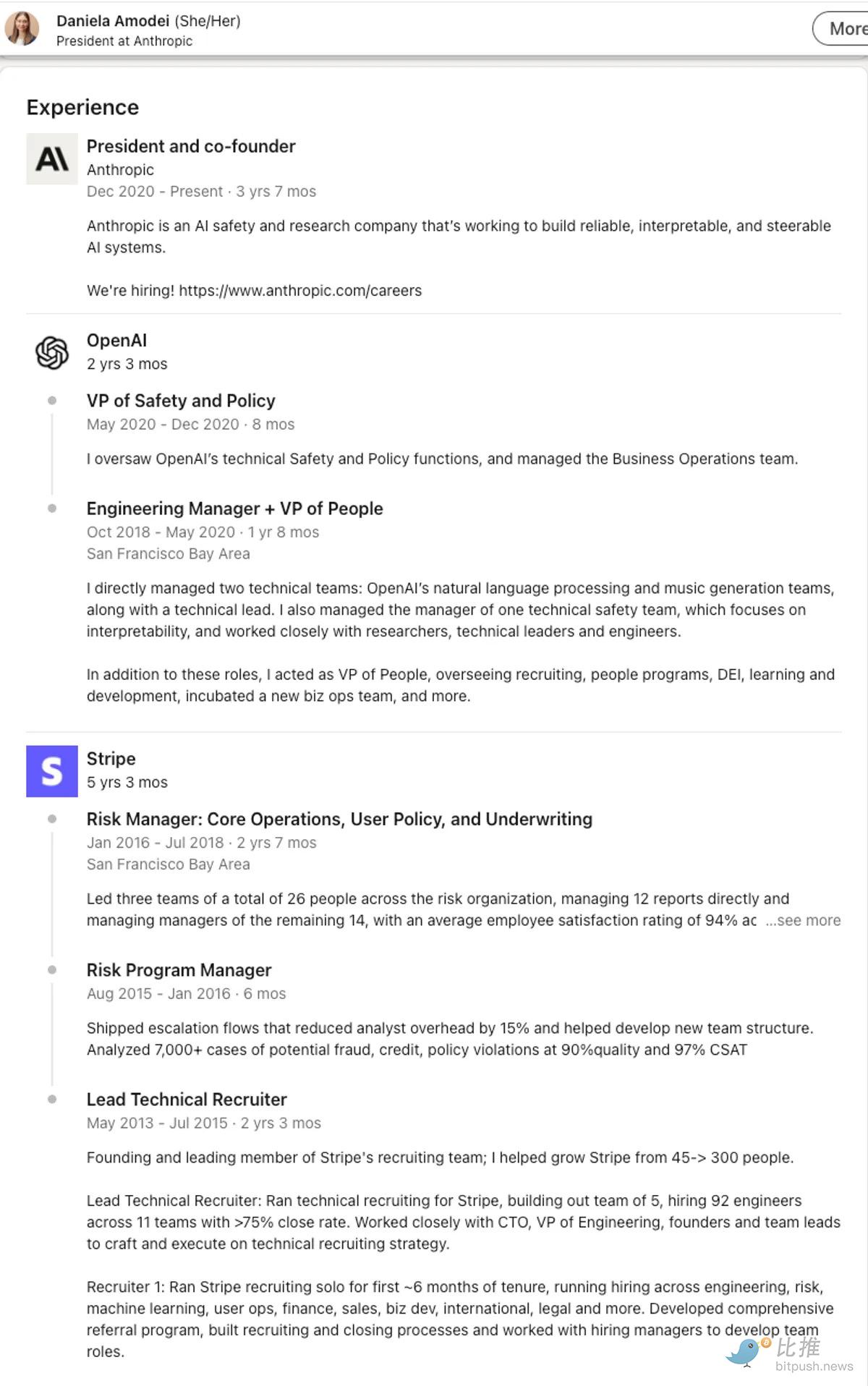
A few years after graduation, Daniela managed humanitarian grants for international relief organizations, and also went to Washington to manage schedules and voter affairs for members of the U.S. House of Representatives. In 2013, she made a decision that surprised everyone — to switch to tech and join Stripe, a 45-person fintech company at the time. As a founding recruiter, she personally expanded the company from 45 to over 300, then switched to risk management.
In 2016, Dario joined the recently established OpenAI and quickly became vice president of research, leading the development of GPT-2 and GPT-3.
In 2018, Daniela was also recruited into OpenAI — her brother has been a core researcher there for two years. My brother is in charge of technology, and my younger sister has gone from engineering manager to vice president of safety and policy.
“The direction is wrong; the more you do, the farther you get from your goal”
But the rift quietly surfaced in 2020. With Microsoft's investment, OpenAI began to accelerate commercialization. Dario is increasingly concerned that AI security is being overlooked.
According to the Wall Street Journal investigation, the brother and sister and OBrockman, the co-founder of PenAI, has been conflicted for a long time. Dario, who was in charge of research at the time, directly banned him from participating in the development of the GPT series predecessor project due to Brockman's “excessive intervention in the project and alienating researchers.”
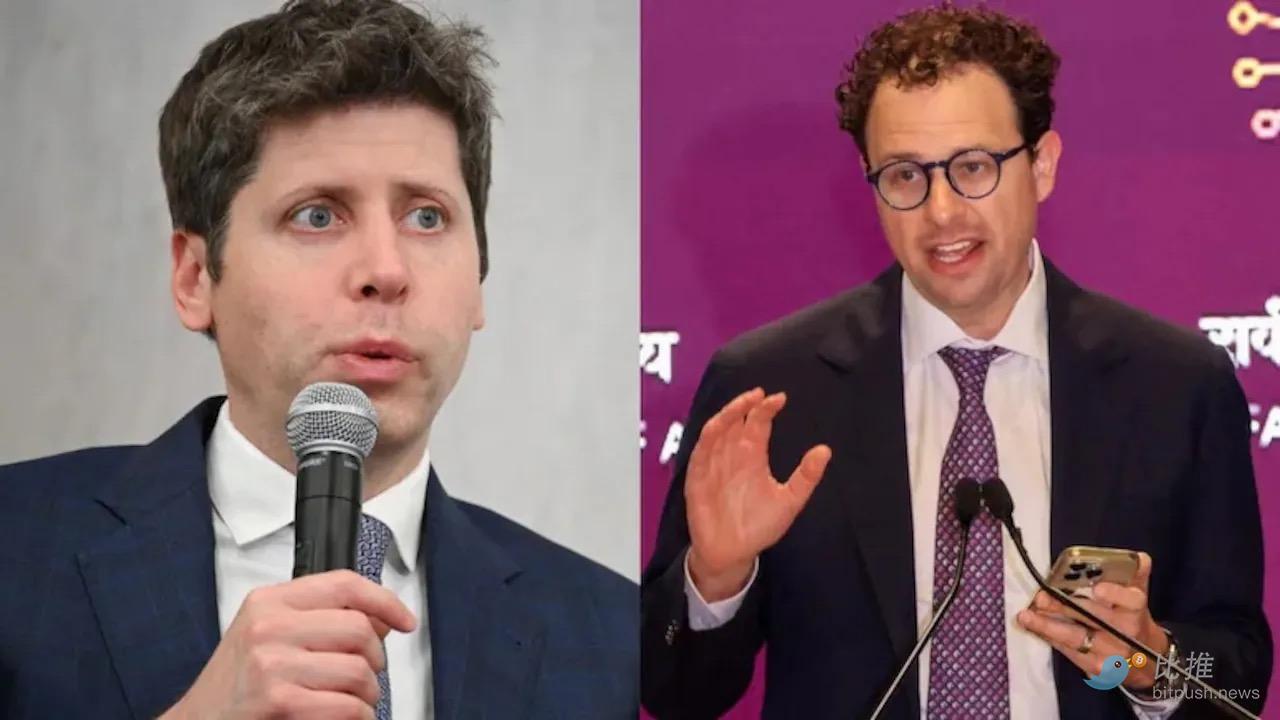
In 2020, the conflict completely broke out. Ultraman called the brother and sister into the conference room, accusing them of inciting executives to “make small reports” to the board of directors. Daniela, who has a strong personality, called a so-called “informant” to confront him on the spot. As a result, the other party had no idea about the alleged plot. This complete collapse of trust eventually became the trigger for the brother and sister to leave OpenAI.
On Lex Fridman's podcast about his reasons for leaving OpenAI, Dario said, “Trying to argue with someone else's vision is extremely inefficient. Why don't you bring someone you trust and make your own vision.”
At the end of 2020, Dario left his job with his sister and five other core members of OpenAI.
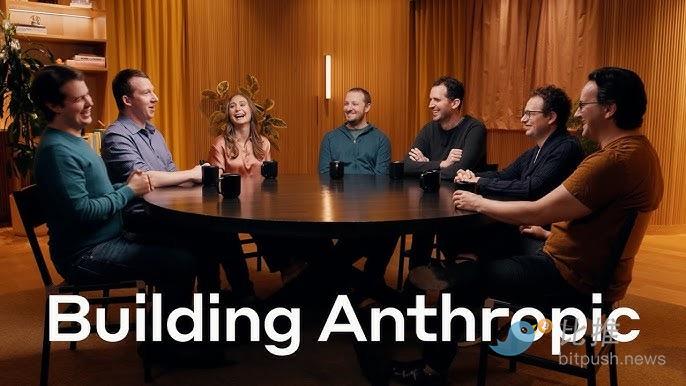
In January 2021, seven people co-founded Anthropic. The company name comes from the Greek word “anthropos” (human), and was registered as a “Public Benefit Corporation” (Public Benefit Corporation) from the beginning, promising to find a balance between commercial profit and social responsibility.
The division of labor between brother and sister is extremely clear: Dario is CEO, focusing on computing power clusters, machine learning architectures, and technical security; Daniela is president, responsible for corporate expansion, financing, policy, and organizational culture.
One detail is — Dario only has one immediate subordinate, his Chief of Staff. All other company executives reported to Daniela. As Dario said, it freed him almost completely from everyday chores and was able to focus on technology and strategy.
The reason why this division of labor works so smoothly is largely due to the tacit agreement that the two have formed over decades. Daniela once said, “From when we were young, we always felt like we were a perfect match.”
Facts have proven that this “science students set the direction, liberal arts students manage everything” division of labor is extremely effective.
From 9 billion to 60 billion, it only took half a year
The speed at which Anthropic explodes is placed throughout commercial historyAll of the above are extremely rare.
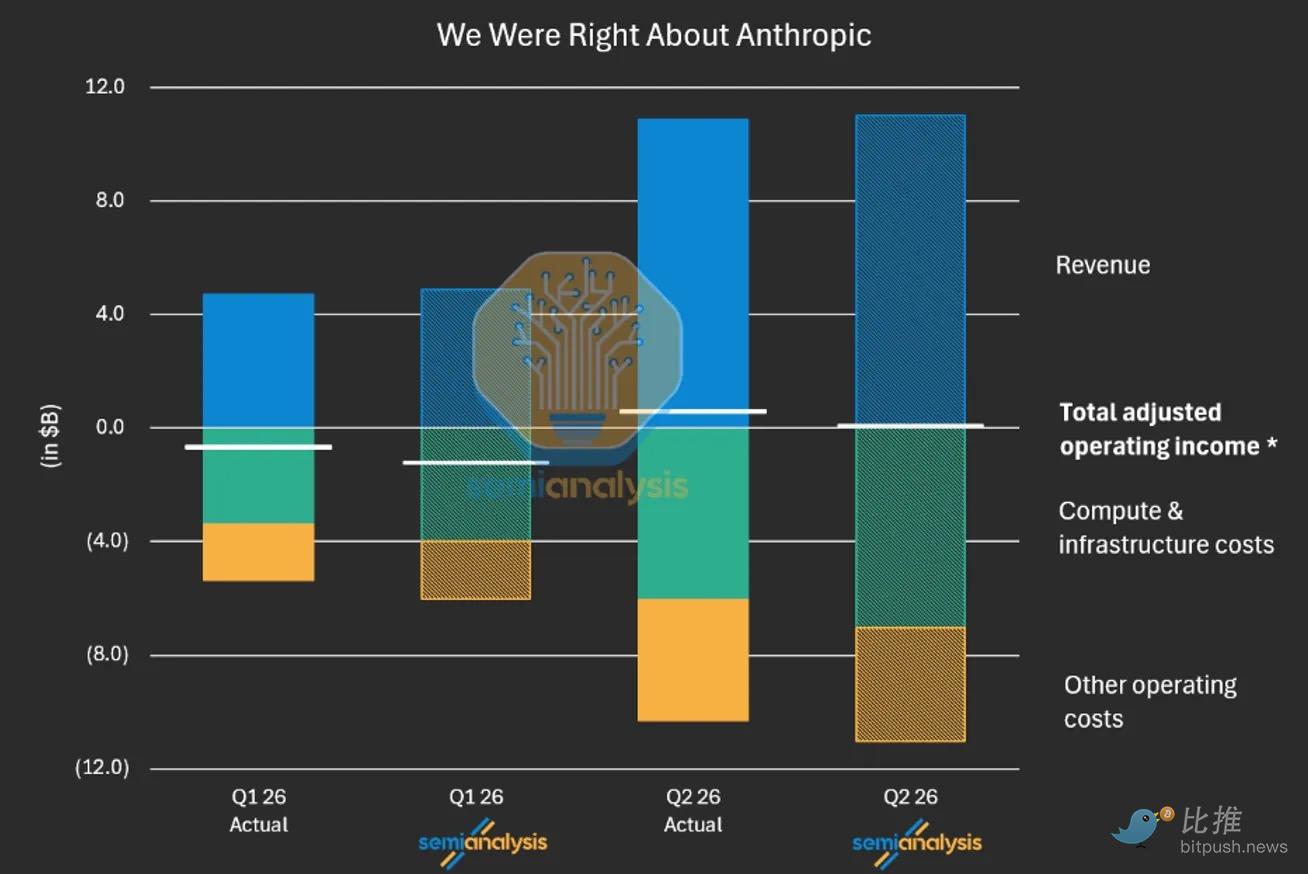
According to the Wall Street Journal, Anthropic's revenue for the first quarter was US$4.8 billion and is expected to more than double to US$10.9 billion in the second quarter. This will be the first time that the company has achieved operating profit.
According to an in-depth report released by SemiAnalysis in July 2026, the company's annual recurring revenue (ARR) has soared from $9 billion at the end of 2025 to more than $60 billion. The report also predicts that Anthropic's third quarter GAAP operating profit (EBIT) will exceed $1 billion. The comprehensive gross margin has risen from a negative value in 2024 to more than 60%, of which the API business gross margin exceeds 80%.
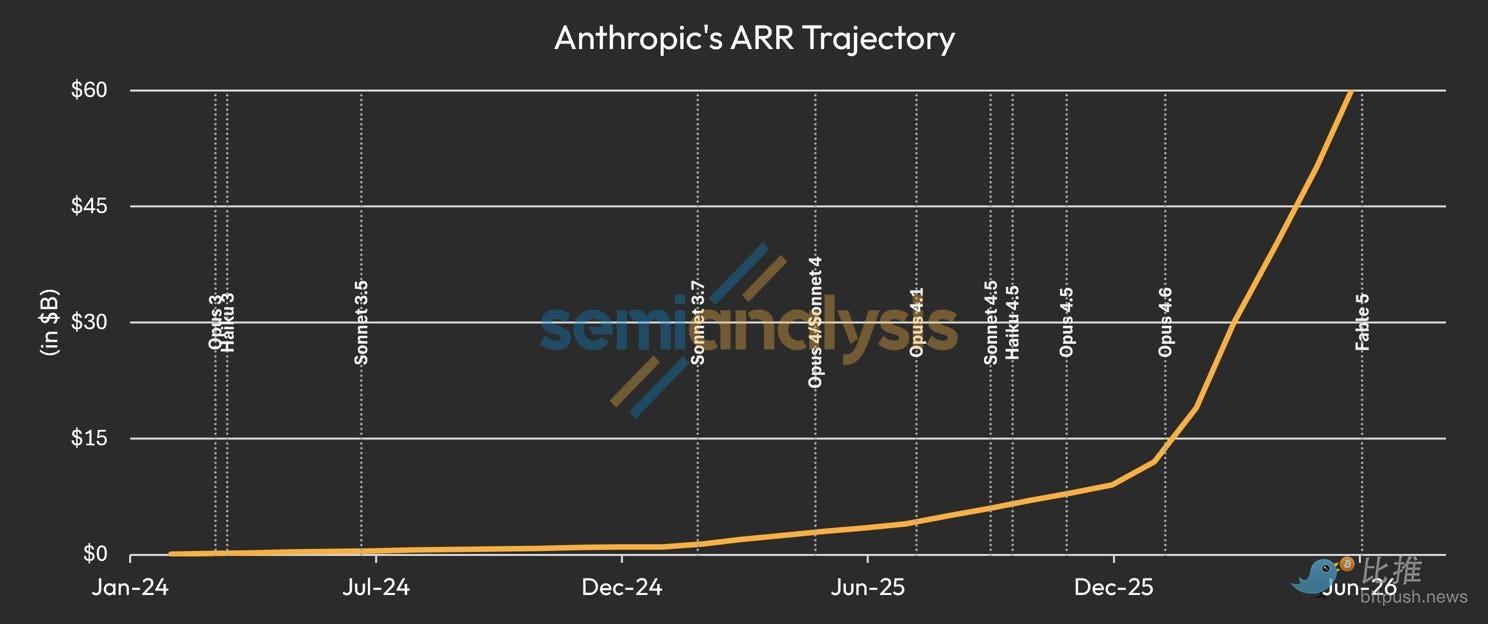
In more than half a year, ARR has grown more than 6 times. As a reference, it took Salesforce almost 20 years to achieve annual revenue of 30 billion US dollars from 0; Anthropic achieved similar scale, and it only took less than 3 years.
Anthropic's revenue structure is also unique.
According to SemiAnalysis data, 75% to 85% of ARR comes from pay-as-you-go API services, and consumer subscriptions only account for about 15%. Over 80% of revenue comes from corporate customers. In May 2026, the company's annual recurring revenue (ARR) had surpassed $47 billion. The company's net dollar retention rate is extremely high — customers who have worked with the company for at least a year have seen an astonishing increase in average spending.
What surpassed OpenAI?
Anthropic's explosion was largely due to one product—Claude Code. This programming assistant tool, which was fully launched in May 2025, quickly became popular among developers and enterprises. Claude Code accounts for over 7% of GitHub's daily code submissions. Today, more than 1,000 enterprise customers spend at least $1 million a year on Anthropic.
In contrast, OpenAI is still struggling in a “money-burning” model. OpenAI's 2025 revenue was US$13.07 billion, operating loss was US$20.92 billion, and net loss reached US$38.53 billion. In the first quarter of this year, OpenAI's revenue was approximately $5.7 billion, and the adjusted operating margin was -122% — equivalent to an operating loss of approximately $1.22 for every dollar of revenue earned. According to The Information, OpenAI's internal documents show an estimated loss of 14 billion US dollars in 2026, which is about three times the loss in 2025.
Bloomberg Intelligence analysts pointed out that Anthropic's valuation is more than $100 billion higher than OpenAI's.
On June 1, 2026, Anthropic secretly submitted an IPO registration statement to the US Securities and Exchange Commission (SEC). According to Bloomberg, the company has hired Morgan Stanley, Goldman Sachs, and J.P. Morgan Chase as co-lead underwriters and is arranging intensive meetings with potential investors in the next few weeks, and is expected to go public in October this year as soon as possible.
If all goes well, Anthropic will be the first to launch OpenAI on the capital market — although the latter has also submitted a confidential application, the IPO schedule has been postponed from fall 2026 to 2027. Patrick Corrigan, a law professor at Notre Dame studying IPOs, said, “I think everyone thought OpenAI would go public first, so this is a bit surprising. Open market investors will compare them at roughly the same time, and the first-mover advantage seems real.”
According to The Information, Anthropic is also negotiating with banks to expand existing credit lines and establish cash buffers for IPOs.
disputing
There are many popular people, and disputes surrounding this company are also continuing.
The biggest question mark comes from valuation. Within a year, the valuation soared from $61.5 billion to $965 billion, nearly 16 times. Michael Burry, the prototype of “The Big Short,” issued a statement saying, “There are no guarantees, or even strong possibilities, indicating that Anthropic is worth close to 1 trillion dollars in the long term.”
“Lean Entrepreneurship” author Eric Reese has been Anthropic's governance advisor since 2021. He confessed on CNBC: “I tried my best to get people to invest at a valuation of 5 billion dollars; no one wants to. Now the same people are asking me for 50 billion, 80 billion, 1 trillion, whatever the price. Whenever people are willing to pay anything, I instinctively doubt it.”
Old rival Sam Altman also stepped on it from time to time.
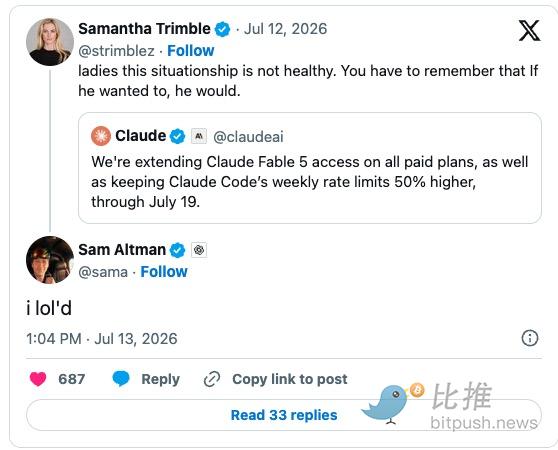
A few days ago, Anthropic posted an ad with a “disturbing” tone that began with a burning house. Altman retweeted it on X: “I thought this was ironic.” He added: “The problem is great — but only if we think you're worth enough and won't silently downgrade you.”
This directly points to the Fable 5 controversy. When the model was first released, requests in sensitive areas were automatically downgraded, but users were unaware. Just three days after launch, the US government issued an export control order on safety grounds. After reopening, the safety fence became stricter, and programming and debugging capabilities were visibly reduced.
Peers' criticism of Anthropic is condensed into one sentence: they talk about the threat of AI to the ground and then package themselves as the only antidote.
The controversy boils down to just one question: is a company that believes in “safety” putting the brakes on humans or building a wall for itself?
Perhaps only time will tell the answer. But Dario said something quite right — “Let the market and public opinion do the talking.”
Author: seed.eth
Twitter:https://twitter.com/BitpushNewsCN
Compare the TG exchange group:https://t.me/BitPushCommunity
Compare TG subscriptions:https://t.me/bitpush
