


Changxin went public or Fuying trillion yuan. This small town, which was ridiculed back then, gambled to win Chinese chips
Source | A Little Bit of Finance
Author | Zou Jun
Planning | Tristan
Once a company goes public, can it actually make a city earn 1 trillion dollars?
Recently, Changxin Storage Station's Science and Technology Innovation Board subscription threshold is expected to create the largest A-share IPO this year. The only domestic company that can mass-produce mainstream DRAM memory chips is already a popular fried chicken in the AI community. After the news came out, many people calculated another account:
How much money can Hefei make?
According to the Tianyancha App, Changxin is headquartered in Hefei, and entities related to Hefei's state-owned assets hold a total of about 36.79% of Changxin's shares. Some agencies predict that Changxin's market value may reach 3 trillion yuan after listing. Calculated in this way,Hefei's book revenue is likely to exceed 1 trillion yuan.
What is the concept of 1 trillion?That's about the GDP of Hefei for a whole year.
Everyone is amazed at Hefei's huge profits, but they forget that ten years ago, every time the central provincial capital took action, it was viewed by the entire industry as a big gamble they could not control. Hefei invests in star companies such as BOE and NIO. Which one was not initially described as crazy and later punched in the face of the questioner? This provincial capital, which was ridiculed as the “largest county town in China” back then, relied on heavy betting time and time again to become the “best venture capitalist” in the city club.
Changxin's listing is just the latest footnote. What makes people curious is why is Hefei able to step on the right spot every time, and where does it bet on the next bet?
Hefei's “Three Big Gambles”
Hefei's counterattack began in 2008.
The global financial crisis that year saw layoffs and contractions everywhere, yet Hefei did something that no one could understand — it wanted to be introduced to BOE.
Today's young people probably don't know. Back then, LCD panels in China were stuck to death. Most televisions, computers, and mobile phones need to be imported as long as they have a block screen. Samsung and LG in South Korea, Sharp in Japan, and Youda in Taiwan basically have the final say.
In 2008, the global economy was cold, and money bags were tightened everywhere. BOE's performance at the time was poor, and its stock price fell to suck. No one dared to touch the asset-heavy panel line. Wang Dongsheng, the founder of BOE, was looking for money to build a sixth-generation line, but almost no place was willing to pick it up. The reason is simple. A six-generation line requires investment of more than 10 billion dollars. The risk is high and the return is slow. No one wants to go through this muddy water.
Hefei said, “I'll come.”
The total fiscal revenue of Hefei in that year was only about 30 billion dollars. At the time, Hefei's attitude was very clear; they were breaking the pot to sell iron, and they also wanted to bring in this sixth-generation line. In the end, Hefei promised to pay 60 to 9 billion dollars, which is equivalent to spending less than half a year.
Seen at the time, this decision was almost crazy. In an inland provincial capital, they are busy eating their own meals. What kind of high-risk LCD panels are they going to buy? There is a lot of ridicule on the internet, saying that Hefei punches people with swollen faces and makes them fat. But in the end, they got punched in the face.
After BOE's Hefei 6th generation line was put into operation, it directly broke the overseas panel monopoly. Within a few years, China became the world's largest producer of LCD panels, and BOE also became the world's largest, and its market capitalization soared.
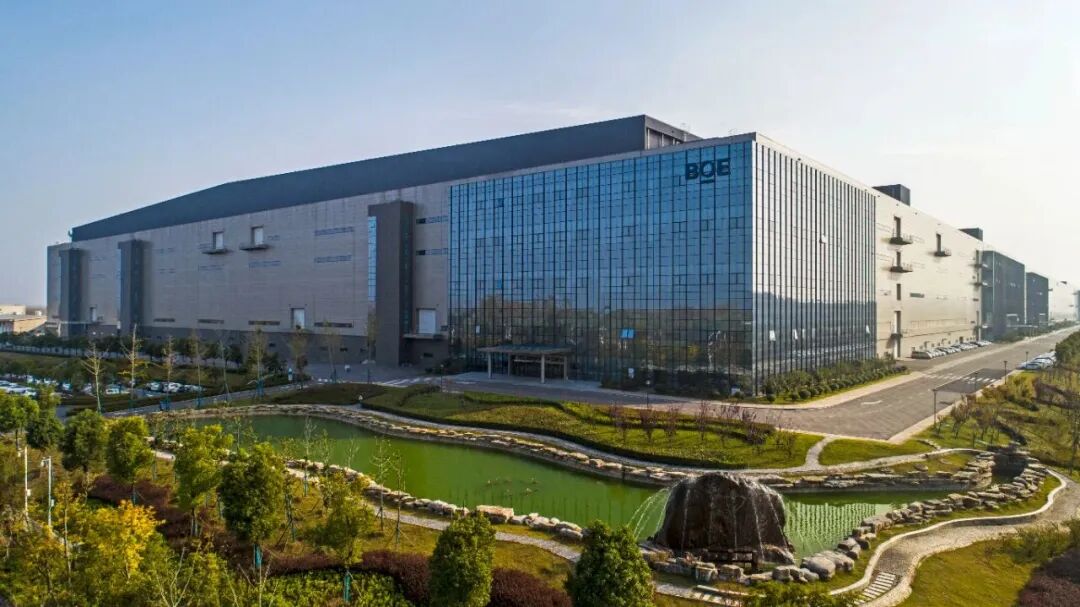
What Hefei received was far more than just that equity return. Because after BOE landed, upstream and downstream slowly became attracted. Corning for glass substrates, Sanli Spectrum for polarizers, Lianyong for driving chips... they built factories one by one in Hefei. The display industry alone has consumed hundreds of billions of dollars in output value in Hefei.
It's not about investing in a project; it's about “throwing a seed into a forest.” Because only by turning the project into an industrial cluster can upstream and downstream complete support without leaving the province, reduce costs, and preserve technology. Individual projects may lose, but once the industrial chain grows, it takes root. For a city, if it has its own industrial cluster, taxes, employment, and talent have all settled down, and only then can the economic base stand.
After winning the first big gamble, Hefei also found a way: seize the key links in the industrial chain, turn it into a climate, and the upstream and downstream will naturally gather. In 2016, it took another gamble, betting on DRAM memory chips.
DRAM is the memory in mobile phones and computers. Your phone card doesn't stick, and it depends on how many apps you can open at the same time. In 2016, China's presence in this field was almost nil. Samsung, Hynix, and Micron monopolize over 90% of the global market. China spends more money on importing chips a year than buying oil, and DRAM is the bulk of it.
The DRAM industry burns money fast and returns are slow, and how many major international companies are still at a standstill after burning tens of billions of dollars. In 2016, Hefei and Zhu Yiming, founder of Zhaoyi Innovation, co-founded Hefei Changxin, with a total investment of over 150 billion dollars. Back then, Hefei's fiscal revenue for the whole year was only around 100 billion dollars. This amount of money was equivalent to spending more than a year on the family budget.
Questions are once again flooding in: a city in inland China, why? In response to this, Hefei chose to continue to work hard.
In 2019, Changxin mass-produced, and China had its own DRAM chip for the first time. Today, it is the fourth largest DRAM manufacturer in the world, with a market share of over 7%, ranking first in the country. Although there is still a gap between Changxin's products in terms of yield and performance compared to established giants such as Samsung, the significance is not present; rather, the monopoly has been torn apart. As Changxin continued to grow in Hefei, upstream and downstream enterprises such as equipment, materials, sealing and testing settled in Hefei one by one, rapidly forming a large-scale memory chip industry chain.
If BOE and Changxin both took the initiative, then Hefei's third big gamble was somewhat like being rescued in danger.
At the beginning of 2020, Li Bin, founder of NIO, had almost no choice. NIO's money has been burnt out, the car can't be sold, the stock price has dropped to more than one dollar, and it may be delisted at any time. During that time, Li Bin ran to 18 cities, and none of them were willing to take over. The media gave him the title, the worst person in 2019.
Hefei appeared at this time. The two sides finalized the investment after a few months of contact. Hefei pulled up several state-owned platforms and rounded up more than 7 billion dollars to bring in NIO's headquarters in China. On the day the news was announced, there were many disputes between the auto industry and the investment community. One voice said that Hefei is stupid. There is clearly excess production capacity for new energy vehicles, and NIO sees that it is about to go out of business and jump back in. Another statement is even harsher; Hefei has taken over.
What followed was beyond the expectations of most people. Tesla's gigafactory in Shanghai has boosted the industrial chain, and the penetration rate of new energy vehicles has soared from single digits to 340. NIO has survived, and its stock price increased tens of times when it was at its highest. Not only did Hefei make a huge profit on its books, but more importantly, it introduced the entire NEV industry chain. After NIO, BYD arrived, and a large number of leading companies in the industrial chain, such as China Airlines, Fuyao Glass, and Autoliv, followed.
Three big bets, three different ways to play. However, the core is the same. It targets all weak links in China's industrial chain, then bet on chips, and then become friends of time.
Along with these industrial gambling games, Hefei's economy has also taken off.
In 2008, Hefei's GDP was only over 160 billion dollars, ranking outside of the 40th place in the country. By 2025, this figure reached 1421 billion yuan, breaking into the top 20 rankings. The growth rate was 6.1%, ranking first among the top 20 cities with GDP. In the first quarter of 2026, the growth rate continued to reach 6.8%, continuing to lead the trillion-dollar city.
The “largest county town in China”, which was ridiculed back then, is now a growth champion among trillion-dollar cities.
Unlock the code to win by “gambling” in Hefei
Outsiders always say that Hefei loves gambling; in fact, most cities are the least afraid to gamble in the country.
Investment promotion in many places only depends on current year's tax revenue and short-term output value; projects that have not been effective for three years are simply put on hold. Officials can't wait for a ten-year industrial cycle, let alone lose investment.
Hefei is different. Hefei is not so much a gamble as an investment in the industry. The difference between these two is the key to understanding the Hefei model. Gambling is betting on size; I had no idea until I opened the cup. Industrial investment involves thoroughly researching the industry, figuring out the target, and planning an exit path before investing money.
The first step in the Hefei method is to explore the industrial chain.
Let's talk about one detail first. Before deciding to invest in BOE back then, the investment promotion team in Hefei made a systematic mapping of the industry. How long is the LCD panel industry chain, what is the pattern of upstream glass substrates and polarizers, where is BOE ranked in the industry, where is BOE ranked in the industry, whether the technology route is right, how many years can the money spent pay back... all of these issues were clearly calculated before deciding.
Moreover, after investing in BOE, Hefei did not sit back and wait for a return. Its investment department began to follow the upstream and downstream of the industrial chain, knocking on other people's doors one by one. Corning's glass substrates are the core raw materials of BOE. Previously, they had to be shipped from abroad, and the cost was high and the cycle was long. Hefei directly found Corning and said that you are here to build a factory in Hefei, I will help you build the factory, approve and I will help you run, and your customer BOE is right next door. Corning landed in 2015, and the factory was built directly next to the BOE 10.5 generation line. The glass substrate was directly delivered to the BOE workshop through an automated corridor.
Polarizers, driver chips, backlight modules... Using the same method, Hefei moved the entire display industry chain to the doorstep. As a Hefei official said to the outside world, “We are not venture capitalists; we are industrial investors.”
After figuring out the industrial chain, the second goal is to establish a professional team.

Platform investments with a state-owned background are those most likely to be criticized by outsiders leading insiders. Decisions are made by shooting in the head. No one cares when the money is invested, and no one is distressed when it is lost.
Hefei's approach is to establish a specialized operating mechanism. It has three core platforms. Hefei Construction Investment focuses on major projects. Hefei Industrial Investment is deeply involved in “investing early, investing small, and investing in technology,” while Xingtai Holdings is responsible for the full cycle of financial services.
It sounds like a government agency, but it does the same thing as a professional investment company. Investment managers are recruited according to market-based standards, and the remuneration system is also in line with the market. Every project must follow a complete process of project establishment, due diligence, investment committee review, and market-based terms negotiation.
This mechanism ensures that people carefully settle accounts before placing a bet, and that someone keeps an eye on the progress after placing a bet. For example, Changxin Storage invested 150 billion dollars. It was not a one-time payment; it was disbursed in batches. Each installment depends on whether the milestone has been reached or not.
But it's not enough to have a process and team; you have to be patient.
Hefei waited almost ten years from investing in BOE to reaping the rewards of its launch. Changxin has been waiting almost ten years since its establishment until now, when it hit the market. What is the concept of ten years? Both government terms have passed. I'm afraid many local leaders won't be able to wait that long. After three years of not seeing results, this project may have been cut down by someone later.
Hefei didn't do that. Because it was clear from the beginning, it is impossible to achieve immediate results by engaging in the industry, especially by strengthening the technology industry. Chips, panels, and automobiles are all assets-heavy, long-term activities. It's no use rushing to rush; there's no use in rushing; you can just wait.
I can wait. These three words are easy to say, so hard to do. So many cities across the country want to replicate the Hefei model; most of them are stuck on this one.
In addition to patience, there is another thing that has been overlooked in Hefei, which is fault tolerance.
It's not that Hefei hasn't lost ground either. Back then, we started a biomedical industrial park with Peking University under the name, but later we had trouble all over the place. The solar energy project signed with Jiangsu Saiwei was also withdrawn at a loss. But these failures did not stop Hefei; its mechanism allowed errors.
People who don't dare to lose can't win big. Hefei has won three times because it has lost before and can afford to lose.
This is the password for the Hefei model. Instead of gambling for the sake of gambling, they use industrial chain thinking to find projects, use professional teams to manage projects, use ten years to wait for rewards, and use fault-tolerant mechanisms to cover the costs of failure.
The story isn't over yet. The gong of Changxin's listing hasn't sounded yet; Hefei has reached out to the next bigger chessboard.
In the AI era, a new gambling game in Hefei
In 2026, the hottest word is unquestionably AI. Big models, semiconductors, robots... these topics are making headlines every day.
Hefei actually started a long time ago on the path of AI. In 1999, a group of Chinese University of Science and Technology students founded iFLYTEK in a rental house near the school. After more than 20 years, it has grown into a representative enterprise in China's AI industry, and its smart voice market share has steadily ranked first in the country. With iFLYX as the core, Hefei has built China Sound Valley, the first national artificial intelligence industry base in China, gathering thousands of upstream and downstream enterprises. In the first half of 2025, the revenue of the artificial intelligence industry in Hefei was nearly 50 billion yuan, an increase of 24% over the previous year
With this foundation, Hefei is not satisfied. While most people are focusing on algorithm breakthroughs and application scenarios, Hefei is using one of its most familiar methods to add code to the upper layers of the AI hardware base. To put it bluntly, it's still the old path — pull in the key companies in the industrial chain one by one and play a set of their own cards on the hardware base.
The first card is the easiest to understand, arithmetic power.
AI looks like software; in fact, it eats hardware the most. You asked ChatGPT to answer a question, and behind it were a bunch of servers running at the same time. According to data from the International Energy Agency (IEA), ChatGPT consumes about 2.9 watt-hours of electricity per query and 0.3 watt-hours for Google searches. The former is about 10 times that of the latter. The smarter the big model, the faster the meter behind it rotates.
When the computing power competition comes to an end, the competition is energy. However, electricity alone is not enough. The server cluster has an amazing heat dissipation capacity. Without sufficient cooling water, the computer room will overheat and shut down for a few minutes. Therefore, electricity and water are two hard indicators for developing the computing power industry.
Anhui, where Hefei is located, has both. The Lianghuai coal and power base has always been the energy center of East China. The Yangtze River passes through the province, and Chaohu Lake is on the edge of Hefei City. Having electricity and water is equivalent to getting a ticket to build a large-scale data center.
Hefei also has a specific card called “Chaohu Mingyue.” At the 2026 Spring Festival Gala in Hefei branch, that cube device with a sense of technology was it. This computing power cluster combines five types of computing power: total computing, supercomputing, intelligent computing, quantum computing, and star arithmetic. It also contains the country's first domestically produced 10,000 card intelligent computing cluster.
Computing infrastructure isn't like making an app; you can see user growth in the year you put it in. The data center took two or three years from inception to commissioning, to say the least. However, once it is built, it is a highway for the entire digital economy; this is the path that Hefei gambles on. At a time when the whole country is worried about computing power, Hefei wants to be that “toll taker.”
Hefei's second card is very hard-core, AI chip.
The big model runs on an existing chip, which is actually quite strange. Including Nvidia GPUs, the underlying architecture was initially designed for graphics rendering, not for AI. The big model runs on it, like taking a truck for takeout — it can run, but it's not the right way.
Hefei noticed this misalignment a long time ago.
In July of this year, the end-side AI inference chip company Lingsi Technology completed Series B financing of nearly 500 million yuan, led by state-owned capital from Hefei. The meaning of “end side” means that AI can run locally on the device without an internet connection. It also targets specific fields — robots, AI PCs, smart cockpits, all scenes closest to ordinary people.
The other one is more interesting. Core Power recently moved its headquarters from Zhuhai to the Hefei High-tech Zone. The chip made by this company is called GP-GPU. The core is a self-developed RPP architecture, which has been specially redesigned for AI algorithms. The efficiency is an order of magnitude higher than traditional GPUs, and the first generation of chips has already been mass-produced.
The design is there, who will make it? Crystal integration is located in the Xinzhan area of Hefei, the third largest wafer foundry in China. Seal Test has Qizhong Technology and Huicheng Co., Ltd., all in Hefei.
If you look at Changxin's storage, crystallization foundry, and Qizhong's sealing, listening, and core power design, Hefei is completing the chain one link at a time, from design to manufacturing to sealing and testing.
The third card closest to the average person is the terminal.
Once the chip is made, it has to be put into the machine.
In June of this year, Lenovo set up a “Yunhai Factory” at Lianbao Technology in Hefei, which specializes in the production of AI servers and robots. The factory runs through the entire process from the motherboard to the whole machine. Not far away, Shenzhou Kuntai's production base can produce 250,000 servers a year, making it the largest single server production line in Anhui.
Streamlining this chain can be found: At the bottom is the computing power base. “Chaohu Mingyue” converts electricity and water into computing power. In the middle is the heart of the chip. From the end-side reasoning of Listening to the GP-GPU with core power, to the convergence of Changxin, Jinghe, and Qi Zhong, a one-stop package and testing system. At the top is the terminal landing, Lianbao's robot and Shenzhou Kuntai's server production line.
From computing power to chips to terminals, Hefei has occupied key nodes in the AI hardware base.
The most profitable people in the gold rush are not gold diggers; they sell shovels. Hefei's approach is a bit different. Not only is it selling shovels, but it is also experimenting with production lines and holding the iron ore to make shovels in its own hands.
epilogue
The times are changing, and every city is looking for its place. Some are seizing the tide, others are chasing waves, and others choose to dive to the deepest point and lay a solid foundation.
Hefei is exactly the last one.
Today, Hefei has four trump cards: BOE, Changxin, NIO, and iFLYTEK. Who has changed the city the most?
Some people say it's BOE, which taught the Hefei industrial chain how to play, and is the starting point of all the stories; others say Changxin, which has a trillion-dollar market capitalization and domestic storage breakthrough, is currently Hefei's heaviest undercard; the car building industry favors NIO, which supports Hefei's 500 billion new energy industry cluster; AI track practitioners recognize iFLYTEK to bring a national sound valley and support Hefei's science and technology innovation business card.
From panels to chips, from new energy sources to AI, every time Hefei makes a move, it is often betting on places others don't understand, but in reality, it has gnawed down the hard bones of the industrial chain piece by piece and built a solid foundation for development. Looking back, behind its “best venture capital” title was never luck, but the most precious traits in urban development — vision, courage, fault tolerance, and patience.
The waves will change, and the trend will turn, but as long as it has these characteristics, a city has the strength to go through the cycle.
Twitter:https://twitter.com/BitpushNewsCN
Compare the TG exchange group:https://t.me/BitPushCommunity
Compare TG subscriptions:https://t.me/bitpush
