


Low threshold leverage detonates chip stock transactions, and South Korea's regulations put an emergency on the brakes
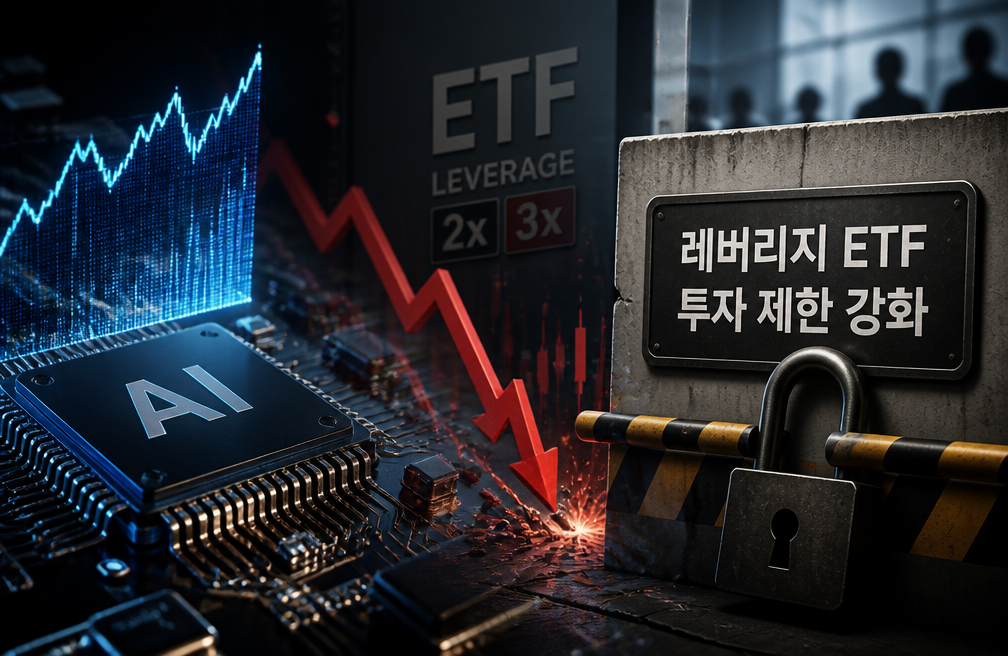
Author: Fire
Original title: South Korea raises the entry threshold for leveraged ETFs, will the AI chip market be eaten back by the product mechanism?
TL; DR
· South Korea will tighten leveraged ETF/ETN for a single stock ahead of schedule, and the 30 million won pure cash threshold will be implemented on July 31.
· The new regulations will depress demand for new speculation, but established leveraged positions and daily rebalances may still amplify fluctuations.
· Related subjects: Samsung Electronics (005930.KS), SK Hynix (000660.KS), KOSPI, Korea Single Stock Leveraged ETF/ETN.
The Korea Financial Services Commission accelerated the tightening of the rules for leveraged products for individual stocks in late July, and brought the investor threshold for the phased implementation of the original plan ahead of schedule until around July 31.
According to Korean media SBS on July 24, investors will need at least 30 million won of pure cash in their accounts to participate in such products in the future. Previously, the threshold was 10 million won, and alternative securities such as stocks, ETFs, and bonds can also be included at a certain rate. The new regulations apply to new or additional investments and cover single-share leveraged products listed at home and abroad.
The core of being named this time is tracking a single stock leveraged ETF/ETN 2 times that of Samsung Electronics and SK Hynix. The regulation also suspends the listing of new similar products, restricts marketing of already listed products, and requires strengthened discount and premium management.
What the market needs to look at is not just South Korea cooling down retail speculation. The more realistic question is that Korean chip stock transactions have expanded in the past two months. Much of this comes from AI semiconductor fundamentals, and how much of it comes from leveraged products that have increased trading pressure.
Chip trading dominated the market for a short time
A single stock leveraged ETF/ETN doesn't buy a basket of stocks, but instead focuses on a single stock and tries to increase the daily rise and fall of the underlying stock by about 2 times. Samsung Electronics rose 3% on the same day. The target increase for related products is roughly 6%, and it also amplifies when it falls.
The launch of such products at the end of May coincided with the rise in AI semiconductor deals. Samsung Electronics and SK Hynix are originally the core players in the Korean market, and retail investors also prefer high volatility targets. Low thresholds, strong themes, and clear targets are superimposed, and the product is expanding rapidly.
The Korean Financial Services Commission announced in English on July 16 that since the launch of related products on May 27, the market value and turnover have risen rapidly, causing the market to worry about increasing fluctuations in global memory chip stocks. This means that the trading structure is already beginning to affect the underlying stocks.
According to Bloomberg, Samsung Electronics, SK Hynix, and related leveraged and inverse products once accounted for more than 70% of the trading value of the Korean stock market. This data is not a regulatory standard, but it is enough to explain why the regulation put the brakes on early after the product was launched less than two months after the product was launched.
Daily rebalancing amplifies procyclical strength
Where this type of product really affects the market, it is rebalanced on a daily basis. In order for the product to rise and fall by about 2 times every day, issuers and liquidity providers need to continuously adjust underlying stocks or related exposures.
Frankly speaking, when underlying stocks rise, products may need to continue to increase their exposure in order to maintain target leverage. When underlying stocks fall, products may also reduce their exposure. This will create a procyclical force, buying after when it rises and selling when it falls.
If the product is small, rebalancing is just a back-office operation. However, when related products and underlying stocks account for the majority of exchange transactions, it will change from technical details to part of the market price.
This is also the reason why an explosion in transactions cannot be directly equated with increased demand for fundamentals. AI servers, HBM orders, and storage prices will affect the valuation of Samsung Electronics and SK Hynix, but when short-term capital is doubled in and out of the product, a large number of technical transactions will be mixed into the transaction.
It's easy for investors to misjudge this tier. Seeing the expansion of transactions and rising stock prices, it is easy to understand that institutions continue to increase AI hardware assets. In actual transactions, retail subscriptions, capital increases, reverse product hedging, and daily rebalancing may co-create the illusion of liquidity.
What is putting pressure on the cash threshold is new speculation
South Korea's regulation raised the cash threshold because it was more direct than a risk warning. The requirement to have 30 million won of pure cash in the account is equivalent to blocking part of the funds for small, high-frequency, and rolling participation.
“Pure cash” is the core of this adjustment. In the past, investors could calculate the entry threshold for assets such as stocks, ETFs, and bonds at 70% of the market value, and the actual financial pressure was less. After the implementation of the new regulations, existing position prices cannot replace cash requirements, and the ability of retail investors to continue rolling their asset portfolios to participate in leveraged products will decline.
The suspension of new product launches has sent another layer of signal. Instead of just dealing with abnormal transactions in a few products, regulation is telling issuers that the pace of expansion of single-stock leveraged ETF/ETN expansion needs to slow down, and at least not continue to distribute goods until the fluctuations stabilize.
Judging from the market effect, the new regulations may depress the two types of demand. One category is new retail investors who originally wanted to use small capital to obtain AI chips to amplify profits, and the other category is an ETF/ETN trading ecosystem that relies on high turnover and high transactions. After product transactions fall, the mechanical impact of rebalancing on underlying stocks will also weaken marginally.
But that doesn't mean South Korea's regulation denies AI chip logic. What is being cut off is the low-threshold leverage entry, not HBM, storage cycles, or AI capital expenditure itself. For Samsung Electronics and SK Hynix, the valuation ultimately still has to return to orders, profit margins, and industry cycles.
The stock position determines the cooling slope
The clearest effect of the new regulations is to block additional speculation; the hardest thing to determine is how to proceed with stock positions.
Investors who have already entered the market will continue to hold and gradually withdraw, or whether they will concentrate on leaving the market under threshold and fluctuating pressure will determine whether this cooling will smoothly recede or trigger new price fluctuations. Regarding the size of product assets, the market has different estimation scales, so it is more suitable to be viewed as a directional signal for crowded transactions.
Peter Kim, an investment strategist at KB Securities in Seoul, is cautious. He believes that single-stock leveraged ETFs have become more like speculative instruments than long-term investment instruments. If positions are suspended and fluctuations continue, the market downturn may be prolonged.
The cash threshold can prevent more retail investors from rushing in, but it cannot automatically absorb the crowded positions that have already been formed. Stock pressure may be overshadowed if underlying stocks continue to rise. If AI chip trading weakens, sales and rebalancing of leveraged products may still amplify the decline.
After July 31, the real variable we need to look at is whether the transaction structure has returned to normal. If the relevant ETF/ETN changes and falls, the intraday fluctuations of Samsung Electronics and SK Hynix narrow, indicating that regulation begins to cut off the product mechanism's takeover of market transactions.
Conversely, if transactions fall but fluctuations are still high, or if the stock of products continues to increase sales pressure in the midst of a decline, the problem is not just that the threshold is too low. For investors following the AI hardware market, this verification point is more important than regulatory news itself.
Twitter:https://twitter.com/BitpushNewsCN
Compare the TG exchange group:https://t.me/BitPushCommunity
Compare TG subscriptions:https://t.me/bitpush
