


How can crypto VCs find their next opportunity? Haseeb says “some things never come back”
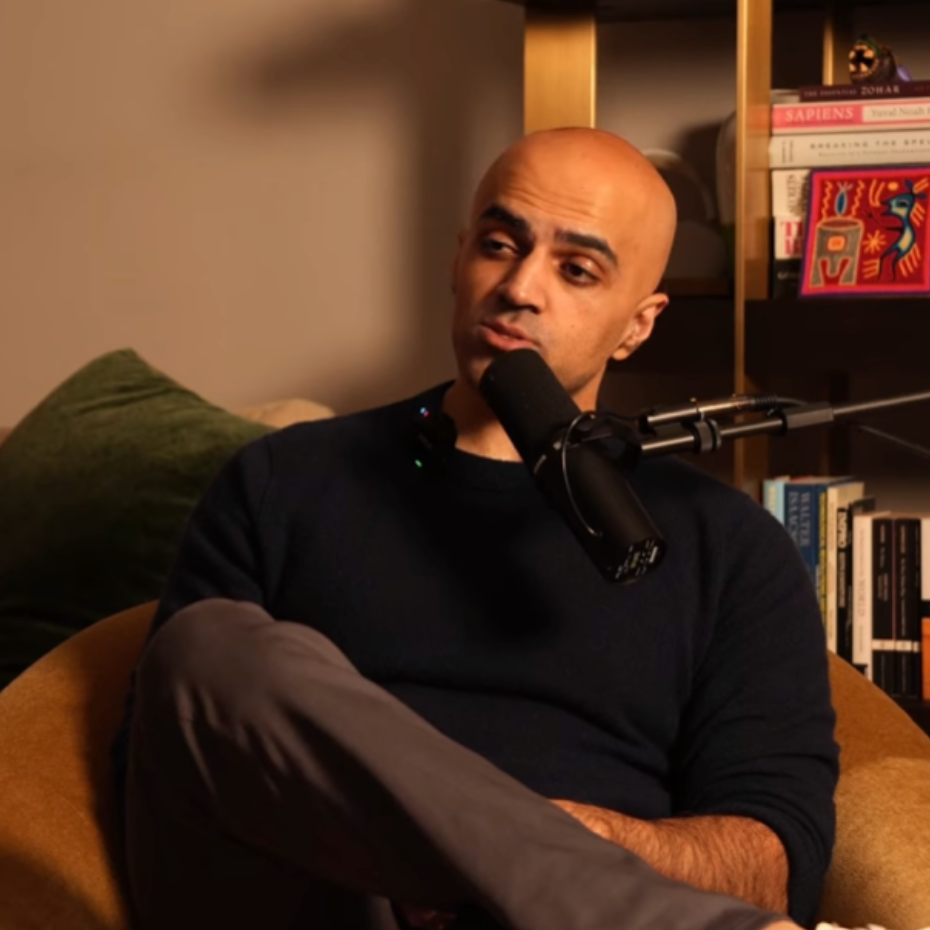
Author: Wu talks about blockchain
Haseeb on Crypto VC: Sorry, Some Things Will Never Come Back
In an interview with MAD Society on July 15, 2026, Dragonfly managing partner Haseeb Qureshi discussed crypto venture capital, founder judgments, and long-term trends in the industry. He believes that the key to venture capital is to seize a few non-consensus opportunities. Excellent founders should have outstanding “peak ability,” but lack of integrity and inconsistent words and actions are clear danger signs. Haseeb also said that it is difficult to form long-term enterprises in the direction of some structured products and the tokenization of individual assets, while the DeFi, stablecoin, payment and prediction markets will continue to exist; in the long run, cryptographic technology will eventually be incorporated into various financial and technology products, and the “crypto company” label may gradually disappear.
The audio transcription was done by GPT, there may be errors, please watch the original video at YT.
Poker and Venture Capital: How to Establish Judgment Discipline in a Long Feedback Cycle
Haseeb Qureshi: There really isn't much compatibility between poker and venture capital. Poker is very similar to trading because they all have very fast feedback loops that can be iterated very closely and quickly. As soon as you play a hand, you'll know whether you won or lost, and whether your decision was right.
But in venture capital, the feedback cycle is very slow. If you invest in a founder, it may take many years before you know if your original judgment was correct. In the first year, you may see some initial signs, such as the company is growing and seems to be starting to gain some market recognition. Even if a company has completed Series A or even Series B financing, it can still suddenly go awry. It may have looked like it was going well for several years, but the founders had a fatal flaw that eventually led them to lose the ball in their final offense in the final game of the season.
So the reality is, it's hard to quickly judge whether you're doing a good enough job as a venture capitalist. Many funds raised funds by relying on the early book valuation of their portfolios, but it was only discovered in the end that there were no real winners in the entire portfolio. Let's say you invested in Axie Infinity or OpenSea early on, and you probably thought, “Wow, I'm an amazing investor, I did such a great job.”
There are also several funds that have invested in FTX in the early stages. At the time, people would say, “My God, this guy is simply the son of choice in the investment world. Can you believe he participated in the FTX seed round?” But just a few years later, the situation became: “OK, this fund doesn't seem to be anything special now.” Because its brightest star project has already exploded.
Venture capital is unique in this regard. This means, first, you must take the initiative to establish a feedback mechanism for yourself, rather than expect the world to give you direct feedback. Because as a venture capitalist, you have to keep learning and improving, but it often takes many years to know whether an investment is successful or not. Therefore, feedback must come more from your judgments about your own performance rather than from external results. For a lot of people, this is very difficult.
Another difference between venture capital and poker is that venture capital is a team sport, while poker is a single player game. Of course you're playing cards with other people, but essentially you're facing the entire table alone. That's not the case with venture capital. You can only be successful if the founder you invest in is successful; you can only really win if your fund is successful and the projects carried out by the other partners in the fund are also successful. As a result, venture capital relies heavily on collaboration and interpersonal relationships.
But if you're a poker player, you hardly need to care about anyone else in the world. As long as you sit at the table, play properly, and continue to make a profit, you can still be a successful poker player even if you don't have any friends. This is also a very different point between the two. Most really good venture capitalists are really good at dealing with relationships. I don't think I'm particularly good at this, but I'm definitely a lot better than the past and better at building relationships than most traders I know.
Most traders don't need that. Just like poker players, they don't need to be friendly, be good at handling relationships, and don't need to have a large network of people. Therefore, the ability to really help you make good venture investments in poker is mainly the ability to think clearly about risk and the ability to control emotions well. I found that a lot of venture capitalists aren't really good at this. They can be very emotional, and it's hard to handle conflict.
Both of these are exactly what I'm good at. But frankly, compared to the other core competencies required for venture capital, I don't think these competencies are that important.
Who is the “GOAT” of crypto VC?
Haseeb Qureshi: Who is the best at batting? I'd say probably the most controversial investor in our industry, Kyle Samani. Of course, he's now past the stage of hitting the ball in person, just like Baby Ruth retired. But if measured by the internal rate of return and profit and loss for every dollar invested, he is probably better than anyone else in the industry. So if there is a “GOAT” in venture capital, it can only be Kyle Samani, founder of Multicoin Capital.
He's a very unconsensual person. Wherever he goes, he often causes a lot of controversy. But he's a true reverse investor, and the best venture capitalists usually have this reverse mindset: they don't simply copy what others are doing.
As for how to hit that ball, I think this is the hardest part of venture capital. It's very easy to convince yourself to believe in a project, such as “a16z Crypto is also bidding on this deal”, “Paradigm is also bidding on this deal,” or “this company is currently very popular and is breaking out on Twitter, and everyone is talking about it.” In the crypto industry in particular, many investments were made before the project had achieved product-market fit.
For example, a new Layer 1 is about to go live; or Bitcoin Layer 2 is suddenly very popular, Babylon is very popular, and so are other similar projects. These concepts may not have proven themselves at that stage, but they themselves have received tremendous attention and are beginning to spread rapidly in everyone's minds and brainstorming discussions. In this situation, it's hard for you to firmly say to yourself, “No, I'm right, I don't believe it.” Or the other way around, take a firm stand: “I believe in this project. Although no one is discussing it now, and no one cares, everyone will care in the future.”
It's very difficult to do that. As for how to quiet your mind and focus on hitting the ball, I think the answer lies in the discipline established by the Investment Committee. That's why venture capital firms usually operate in teams rather than investors acting alone. When you make your own judgments, you're very vulnerable to group pressure. There are too many voices and too many forces from outside to influence your thinking.
But when you're in an investment agency, and the agency has developed an institutionalized culture, such as “We don't believe anything without verification,” the situation is different. Even if you've been affected a bit, your partner isn't necessarily going to be affected. Your partner might say, “I'll never approve this investment just because of these claims.
You have to prove to me that if Bitcoin Layer 2 is really that good, then take out the data and take out the evidence. What exactly are your arguments? Let's actually sort out the logic and go step by step.” If you can't do that, I wouldn't believe it. This discipline has been gradually established by Dragonfly over the years, and it is also our culture as an investment agency. But if an institution doesn't have this kind of discipline, I think it's hard to be a really good investor.
What is the biggest blind spot of crypto VC?
Haseeb Qureshi: I think if you're a crypto venture capitalist, then you're essentially a product of the crypto cycle. Anyone who has been in this industry long enough has experienced the ups and downs of the market, and has also experienced this kind of emotion: “OK, these things are actually not important; everything is meaningless.”
Not long ago, “financial nihilism” was the dominant cultural trend on Crypto Twitter. People think none of this stuff matters, doesn't have any real value, everything is just a meme.
Things are different now. I wouldn't say it's still financial nihilism today, but more like: “It's not that nothing matters, but only a few things matter, and only what generates income matters. Projects that don't have revenue don't matter.” If you're a crypto venture capitalist, it's easy to fall into the idea that the market has some kind of Hegelian dialectical cycle, things come and go, and there will always be endless booms and bust awaiting us in the future.
The longer you stay in the crypto industry, the more cycles you'll go through. At the end of the day, everything seems like a cycle; after a cycle, it's still a cycle. But if you're hypnotized by this view that things are bound to unfold this way, I think you're probably making a very serious mistake as an investor because you haven't thought deeply enough about what changes will happen in the future.
Another question I don't think people think about enough is that crypto venture capital may actually end at some point. There may be a last fund year worth investing in, after which there won't be many new opportunities in this area. For example, social media was one of the most important technology trends of the 2010s. You can look at Google and Facebook in the open market, and Microsoft, which entered this space through the acquisition of LinkedIn. The biggest social media networks have continued to grow since then.
But venture capital for social media companies actually came to an end around 2009. After 2009, few new social media companies were created. ByteDance, behind TikTok, is almost the only company that has managed to build a truly meaningful business even after that. Despite the continuous evolution of the product itself, the platform landscape has hardly changed. Basically it's still Meta, WhatsApp, Instagram, etc., and these platforms have been around since 2009.
Therefore, the crypto industry is likely to follow a similar path of development. Even if the crypto industry continues to grow, stablecoins continue to grow, Bitcoin continues to grow, and Ethereum continues to grow, all of these indicators continue to move towards the top right, but assuming that by 2030 almost all important companies have been established and existing platforms have become very large and continue to grow, there may be very limited room left for new players to enter the market and disrupt them.
I don't know if this is necessarily going to happen. Even if it does happen, I don't know exactly when it will happen. But it will almost certainly come out at some point in time. Almost every industry will eventually evolve this way, especially in those where there are economies of scale and network effects, and the crypto industry has exactly these two characteristics.
But I don't think most crypto venture capitalists are seriously thinking about this. This is probably a potential blind spot: because we've been doing this in the past, we think we can do it forever in the future. In the consumer industry, new consumer companies will probably always appear. But it's uncertain whether new crypto companies will keep popping up in the crypto industry forever. It may or may not.
Which popular tracks in the crypto industry are difficult to sustain in the long run?
Haseeb Qureshi: There are actually a lot of racetracks that have basically died or are dying out. Occasionally, we still receive funding proposals for some of these projects; for example, someone will say, “I'm working on a Bitcoin Layer 2 with a borrowing function.” We still see projects like this once in a while, but there are quite few of them now. One type of project I often see right now is a structured product built on Hyperliquid. For example, someone would say, “This is CLO built on Hyperliquid. CLO itself is a huge market, so there will definitely be a huge CLO market on Hyperliquid.”
We'll still see many similar complex financial products trying to launch on Hyperliquid or some relatively independent trading venue. I think these kinds of projects will probably decrease soon because they aren't real businesses. It is difficult to form a business by making only one type of financial product. Few companies in history have been able to establish a real business by simply selling a single financial product.
Especially when you don't know the distribution channels. If the distribution channel is in Hyperliquid's hands, then you're essentially just a reseller; or vice versa, Hyperliquid is just a resale channel for your product. In either case, it's not a particularly attractive business model.
What other tracks are likely to disappear? Many people are now tokenizing individual assets, such as “I want to tokenize gold mines” or “I want to tokenize these cars.” But it's also not a single company; at best, it's only a product. Maybe it's a good thing that this kind of product exists. But unless you tokenize really large assets such as US Treasury bonds or stocks, and can expand them to a sufficient scale while actually solving the distribution problem, I think projects that just say “I want to tokenize this asset I own and ask venture capital institutions to invest in me” will gradually disappear, or even disappear already.
There is also a classic joke in the field of traditional venture capital: there are directions like “depressions,” and founders always fall into it over and over again. When founders are transitioning, they tend to invariably think of the same idea and then do it over and over again, even though venture capitalists are always telling them not to do it.
One typical direction is dating apps. Every time the founders consider a transformation, they seem to think about whether to make a dating app. This is usually because the founders are young and single, so they spend a lot of time thinking about dating issues. Another common direction is “co-founder matchmaking.” Founders often think of this idea because they're looking for co-founders themselves, so they think they should develop an app to help others find co-founders.
There are also plenty of productivity tools, such as “I want to make a better to-do app” and “I want to make a better Asana.” These are all “depressions” of bad ideas. People keep coming back in these directions. Of course, there is a similar phenomenon in the crypto industry.
The one I've seen the most is “Bloomberg in the crypto industry.” This is interesting because “the Bloomberg of the crypto industry” was already a bad idea about ten years ago, when I first started doing venture capital. People recommended this kind of project to me at the time, and people have continued to recommend it almost every year since then. But they usually don't really know what they're saying. What the “Bloomberg Terminal for the crypto industry” actually means is somewhat vague. What exactly are the features to be provided in it? What problem does it solve? There are often no clear answers to these questions.
Now that it's 2026, you need a clearer and more precise entry point, not just the slogan “Bloomberg in the crypto industry.” I don't know if this counts as a trend; it's more like a fun little phenomenon: many of these ideas have always floated around in the industry and never really disappeared.
How can young investors maintain objective and clear judgments in the face of market hype and noise?
Haseeb Qureshi: Frankly speaking, my advice is to talk less to a few people. I think many venture capitalists who are new to the business make a mistake, that is, they communicate with too many people, and in the end, their opinions become the average of the opinions of a group of people around them. As a venture capitalist, forcing yourself to think independently is actually very important. It's easy for people to tell themselves, “Of course I think independently. I have my own ideas, I've written a blog, and I organize my notes after communicating with others.” But the easiest way to lose your ability to think independently is to communicate with people who have too many strong opinions.
I'm not saying you shouldn't communicate with anyone. But most of the venture capitalists I know are essentially just a collage of the opinions of the seven people I most often communicate with. The more time you spend alone, thinking, reading, and studying, the more likely you are to develop your own unique perspective. These opinions may or may not be accurate enough, but at least they are different from those of others around them.
And the way you're most likely to make extra money is to think differently from others. Of course, there is a risk of misjudgment by doing this, but it is also possible that you are making the right judgment on something that everyone misunderstood.
As a venture capitalist, you are rewarded with this ability. You actually won't be punished too much for making mistakes in judgment. Assuming you have 50 projects in your portfolio and 15 misjudgments, who cares? What really matters is whether you've caught the project that everyone misread and only you judged right. And this comes from the ability to think differently from others.
It also requires a certain level of confidence. Communicating with lots of people is a very easy and very safe way to do it. You can say, “OK, this is my opinion on the new banks, because I've talked to five people, and they all have these views, so I'll take an average of their opinions and talk about them in the next podcast.”
But if you don't, the demands on you will be much higher. You need to re-examine these views, make a judgment from the beginning, and really think independently about what you actually believe. And like I just said, the cost of making a mistake in judgment is actually not that high. I think most people really optimize how to make themselves look smart or look good at the job rather than how to actually do it well.
That's why I always say Kyle Samani is the all-time best in venture capital. He's crazy, right? He clearly lives in his own world and has very strange views on many things. He also judged that many trends had been missed, and often said with great confidence, “I think something will happen in the future.” The result was completely wrong. But that doesn't matter at all. As long as you make the right decision once, and that one time is enough to cover all the other mistakes, who cares?
Venture capital isn't a business where you want to appear unmistakable, and it's not about making an audience or focus group think you're smart or decent. The real way to win in venture capital is when it comes to things that everyone misjudges; only you make the right judgment.
What's your experience in raising $1 billion?
Haseeb Qureshi: During the fundraising process, you'll realize that there are very different ways to raise capital, and each method is likely to be successful. One way is to really establish trust with someone, get to know each other on a personal level, and make him agree with you and be willing to invest in you because he believes in who you are and what you think.
I'm not good at this method, and I'm not good at all. I'm a pretty bad social person. It may not seem like it, but it really is. With so many investors and money allocators, it's hard for me to build deep relationships with them. There are many successful strategies for fundraising, and there is no single path. An area where I am more likely to succeed, and where I am relatively good at raising capital, is dealing with institutional investors. What institutional investors value most is whether you can demonstrate a high level of ability, knowledge, and a thorough grasp of your field.
But if the other party is a family office or individual investor, relationships and trust are often far more important. They usually want to know you for a long time to really understand who you are and how you do things. They want to be able to pick up the phone anytime and even grab a beer with you once in a while. Institutional investors are looking for something else: they want to confirm that you're the best person in the business. You're the best at doing this compared to everyone they've met or heard of.
You need to put forward the most rigorous and reliable arguments, explain why you win and others lose, and use facts and performance as evidence. This type of fundraising is usually what I do best. But the reality is that if you're raising a lot of money for a fund, it's still a team job. You need people who are good at different fundraising methods, covering different parts of the fundraising market.
If you are an entrepreneur, you usually finance mainly from venture capital institutions, and you may also approach some corporate investors or individual investors, but mainly venture capital institutions. Venture capital firms, on the other hand, are actually quite similar to each other. If you're a fund and need to raise capital from different pools, the differences between these pools are huge, far less similar to venture capital institutions. Raising money from a college endowment fund, raising money from a hospital foundation, raising money from an insurance company, raising money from a public pension, and raising money from a family office are all completely different experiences.
Facing these diverse groups, you need to use different skills, different perspectives, and different storytelling methods to make fundraising really work. Therefore, fund-raising itself is an independent ability. A truly excellent venture capitalist, good at investing and raising capital. I've made some progress in fundraising over the years, but I'm still not a world-class fundraiser.
What traits do successful founders usually have?
Haseeb Qureshi: According to my observations, a high level of mental flexibility is probably the best predictor. People often think that being a founder requires certain entrepreneurial skills or CEO skills. But the reality is that if you start a successful company, your job changes every two to three years. Leading a company of only 3 people, a company of 15 people, a company of 100 people, and a company of 1,000 people actually requires completely different abilities.
It's a bit like going from the head of a parent-teacher association to the mayor of a small town to the president of the United States. These are actually three completely different jobs that require completely different skills. Being able to become the President of the United States does not mean that he will be an excellent member of the Parent-Teacher Association, nor does it mean that he will be an excellent mayor of a small town.
Founders who are really adaptable usually have a strong curiosity about learning and are willing to change their minds, abandon old frameworks, and adopt new ones. And founders who aren't good at dealing with scale often say, “I always did this when we only had 7 people, so why don't people follow my instructions anymore? Why is product development slowing down? Why are there so many political issues in the company all of a sudden?”
They will think that these are all issues that must be thoroughly addressed. They may say, “The company is currently wasting too much, and there are many bureaucratic issues in our management. I must fire them all and return the company to its basic state.” I'm not saying that these issues don't exist at all; they often do exist. As companies scale, it is almost inevitable that they will experience the pain of growing.
But the best founders actively explore how their work should change when the company grows to a certain size. They will also adjust their abilities to meet new job requirements. Managing a company with 1,000 employees is more like governing a small town. You need political ability, as well as diplomatic ability, to manage an organization of this size.
In contrast, managing a company with only 7 people mainly relies on execution ability. A team of 7 doesn't require much management because everyone sits in the same boat and paddles in the same direction. You don't even need to communicate much; just see what others are doing and move forward together.
But when the company has 50, 100, or even 1,000 people, everything revolves around communication. In a company with 1,000 employees, it's almost impossible for you personally to have a real impact on the company by personally completing a job. Everything you do is mobilizing the entire team through instructions issued by yourself as a general, clarifying direction for them, and motivating them to go the extra mile and really pay attention to every detail of the product to create an excellent product. That's why I'll say that for most founders who have grown their company to a certain size, the most difficult thing is to adapt to these changes in the content of their work. Not everyone can do this well.
When judging whether a founder is likely to succeed, we usually look for his particularly prominent “peak ability.” Our philosophy is to invest in one's strengths rather than in someone who has no obvious weaknesses. Almost every great founder has weaknesses. For example, in the early days of Facebook, Mark Zuckerberg was clearly not a great leader, and he had a very obvious shortcoming in leading the team. But in his field of expertise, he has reached world-class standards.
Almost all founders were like that. Uber founder Travis Kalanick is another famous example. He has extremely prominent strengths while also having very obvious weaknesses. It's almost a general rule in the field of entrepreneurship: the best founders aren't usually all-around people. Well-rounded talents are better suited to serve as executives once the company has reached scale. They almost never really mess things up, don't say the wrong things easily, and are less likely to make others feel strongly dissatisfied with themselves. This type of person would be an excellent manager in a large, mature company.
But they're generally not good at going from 0 to 1, nor are they good at leading startups through the gradual transitions that occur as they grow. So, we can accept a founder who has serious flaws. To invest in really great companies, I think you have to accept that. But what we can't accept is that a founder is not particularly capable in any way.
Moderator Mia: Then I'll ask the question the other way around. What signs mean a founder might not be successful? Let me set up a situation: the project idea is good, the team is excellent, everything on paper looks fine, and they've even successfully attracted a lot of excellent fund investments, but you always think there's something wrong. What is usually the problem?
Haseeb Qureshi: One of the most obvious issues is honesty. It would be dangerous if the founder wasn't completely honest or completely transparent. Of course, every company exaggerates to a certain extent when financing, saying, “We will rule the world,” “We will reach an incredible scale,” “We will do this and that,” and “We will cooperate with a certain company tomorrow.” But when you keep asking, “What exactly is this collaboration?” Things might get vague.
Confidence is one thing, but it's quite another when confidence slowly slips into dishonesty. This is a very strong red flag because this type of behavior is only getting worse. I've never seen it improve as the company grows; I've only seen it get worse.
So it's almost an issue that can directly end the investment process. If we find out that a founder has repeatedly been dishonest, we'll say, “Forget it, we're not voting.” Another question is whether words and actions are consistent. Many investors make a very common mistake: they love the story, the founders, the team, and the market, but something just isn't right.
For example, the founder said he was in a hurry to complete this round of financing, but actual action was very delayed, and progress was not fast. Another example is that the founder said that he is very optimistic about the company, and there is also a large demand for investment in the market, yet he is willing to compromise on all financing terms and even accept a less-than-ideal valuation. These performances were inconsistent, and the whole story was not entirely self-satisfying.
Inexperienced investors often overlook these issues. They might think, “Maybe it's just because I'm so good that they want to offer me this condition.” Or look for some seemingly harmless explanation for these inconsistencies. But almost every time, when a startup's actual behavior doesn't match the story it's telling, it means you're missing out on some information. And when you don't know what you're missing, it's usually not going to work in your favor. Actually, that's the answer: if you don't know what the problem really is, then it's probably not going to your advantage. If you actually know the truth, you probably won't want to invest anymore.
So, I'm not talking about a specific problem, but a kind of phenomenon. As your investment experience increases, you'll gradually learn to recognize them. You get a gut feeling: “Wait, my alarm has gone off. Put on the brakes first. There are a few things wrong with this, but we don't know exactly what it is.” When you don't know what the question is, it probably won't be the answer you want to see.
Moderator Mia: How often do you encounter founders lying? Is this a very common situation?
Haseeb Qureshi: Most projects don't actually advance to the level where they need to be investigated. It doesn't matter if the founders lied, because we probably decided not to vote in the first place, or even check further. After actually entering the stage of in-depth due diligence, I discovered that cases where the founder lied were relatively rare, but there were also no rare cases where they were completely untouchable.
The more common one is actually exaggerating propaganda. For example, the other party will say, “We are about to cooperate with NVIDIA,” or “ByteDance really wants to participate in this round of financing.” But when you actually talk to ByteDance or NVIDIA, they might say, “We're just still thinking about it.” This situation is very common. I don't usually take it directly as a lie. The founders were clearly trying to convince us to invest, and they were really excited about their company. They may not even have accurately judged the situation themselves; they genuinely think that the other party will participate; it's just that they don't know the final outcome yet.
It's their own startup after all, and these founders are probably young and inexperienced. Therefore, I don't usually conclude just because of this kind of exaggeration: “This person is untrustworthy; he is deceiving me.” But it's very rare for a person to actually lie about an important fact. However, this does happen, and once it does happen, it basically directly terminates the investment process.
Moderator Mia: In the past, single-person founders were generally less recognized, but now in the AI era, solo entrepreneurs seem to be starting to be admired. Have you had a framework for judging a single founder before? Why do you think there was this prejudice in the past? Now, can one person really run an entire company on their own?
Haseeb Qureshi: Yes, and it's always been possible to start a business alone. The problem is not how difficult it is for one person to start a business, but rather that among people who choose to start a business alone, there is often some kind of reverse screening. If you're really good, there are usually people willing to work with you and start a company together, and you're also capable of finding a very strong co-founder. If no one wants to start a business with you, it probably means you haven't realized that you're not capable enough to work side by side with the people you want to work with; it may also be that you think you're better than everyone else, but that's not true. Maybe he just can't get along well with others. And this isn't a good sign for starting a company, because you need to get allies and customers, do a good job of recruiting and retaining employees, etc.
However, if we think there is nothing wrong with this person and just chooses to start a business alone, then we don't care and it's totally acceptable. Therefore, a single founder is not necessarily a negative sign; only from a probabilistic point of view, a single founder is more likely to become an unqualified founder.
Another problem is that founders often have some kind of fatal flaw. Let's say a founder is extremely skilled but has no commercial mindset, commercial experience, or sales experience. If he starts a business with someone with these abilities, then the team can complement each other and make up for each other's shortcomings. That way, we wouldn't worry so much about the downside risks of this founder and CEO. But if he's a one-man founder, we're even more worried: who can stop him from making mistakes?
Even if he later hired a chief commercial officer or chief operating officer, the reality remains that the founder always had a special position within the company. Whether the founder is aware of his weakness or not, and whether he hires a COO for it, this won't change. Professional managers, such as the chief operating officer, chief commercial officer, or head of sales, always have some reservations because they don't really have control over the company. When one person has no control, it means that the founder forms a “power distortion field” within the company, regardless of whether the founder himself is aware of it or not.
If another co-founder is also in this “warped field” and sits with the founder in this bubble, he can play a very powerful corrective role and help the company avoid failure due to some of the founder's weaknesses. That's why venture capital firms pay attention to co-founder issues. But if a founder doesn't have these obvious shortcomings, then there's absolutely no problem starting a business alone.
Industry trough, how can crypto entrepreneurs hold on
Haseeb Qureshi: I'm very reluctant to give advice without understanding a person and their specific situation. It's kind of like giving life advice to young people. When you know the other person is in college, tell him, “You should do this, choose this major, and then do those things.” But in reality, you don't know this person, nor do you know his environment, circumstances, and personal abilities.
I think it's not just difficult to give general advice when you don't know the specific situation; it's probably even irresponsible. My only suggestion that I think is probably generally useful is that, too often, what really stops people from making the right decisions is shame. People feel a strong sense of shame because of the time, energy, and money they have invested, the money they have raised, and their dependence on their own employees. These emotions prevent them from making the final, truly right decision.
The right decision may be to close the company, accept an acquisition, move on to do something else, or continue to stick with it. But for many founders, the most damaging factor is that they feel ashamed for making a decision or deviating from their current established path. So the only advice I can give is: do your best to let go of this sense of shame. Try to imagine that the person in this situation isn't you, but someone else. Faced with the exact same situation, what advice would you give him?
Host Mia: I think a lot of it probably depends on whether they have the confidence to trust that their judgment is correct. Therefore, the question can also be asked in another way: What kind of framework should we use to view the current state of the industry? Perhaps people can get some information from it and then make their own decisions.
Haseeb Qureshi: I think it's pretty clear that some things in this industry will never come back. If you're still sitting there holding an NFT and looking forward to another round of the NFT cycle one day in the future, then I'd say you should probably let go of this and move forward to find other directions that are more worth investing your time, capital, and talent. But on the other hand, there are also areas in the industry that will indeed come back because they are very cyclical. DeFi is a prime example. A lot of DeFi projects are in a really bad situation right now, but I don't think DeFi will ever die out. It will be a foundational component of how the world works in the future and how the crypto industry works.
That's why I'm saying that it's hard to discuss these issues in general. Tolstoy's famous quote in “Anna Karenina”: “Happy families are all alike, and every unhappy family has its own misfortunes.” I think this phrase is also very applicable to startups.
NFTs won't come back, but will DeFi, stablecoins, and payments last long?
Haseeb Qureshi: I think the prediction market will last for a long time, Layer 1 will exist for a long time, and DeFi will exist for a long time. Obviously, the connecting layer between the on-chain and off-chain world will also exist for a long time, including fiat currency deposit and withdrawal channels and various fund transfer channels. Cross-border remittances will exist, payments will exist, and apparently stablecoins will also exist, including stablecoin issuers, payment orchestration service providers, etc.
In my opinion, these areas are almost certain to continue to be important. As for most other fields, it's hard to judge.
Moderator Mia: You've predicted that a major tech giant will integrate or launch a crypto wallet this year. Which Web2 company is currently the closest to actually doing this? What other company completely missed this train?
Haseeb Qureshi: The first thing I need to say is that my prediction was correct. I made this prediction in January of this year. Then, probably in March, it was revealed that Meta would launch its own stablecoin wallet. So I'm betting on this prediction. Meta has announced that it will provide stablecoin settlement for content creators in emerging markets. I remember this feature was launched on Instagram. Next, they will continue to expand this business and may launch a wallet soon.
Apparently Zuckerberg has been very bullish on the crypto industry since Libra. He clearly believes in this field. So I think Meta might be the first company to act in this race. However, if you pay attention to Open USD, which was announced a few days ago, or OUSD, you'll find another possibility. OUSD was launched by a stablecoin consortium, which includes many different companies. Google also appeared on the list and is a member of the Open Standard Coalition.
Therefore, gUSD, also known as “Google USD,” may appear in the future. It is available as a packaged version built on top of OUSD. OUSD is expected to go live later this year. I'm a bit skeptical about OUSD, though. I've also been discussing this on Twitter lately. As I should have said on the “Chopping Block” program this week, I don't think OUSD's chances of success are high.
The reason is that this alliance includes around 140 companies. It has a United Nations-like organizational model: there are too many participants, everyone wants to participate in decisions, and responsibilities are spread among different members. This type of model usually doesn't give good results. Just this morning, we already saw some signs. I was also tweeting about this at the time. Some of the listed Korean companies, which appear to be companies such as Samsung and Dunamu, later publicly stated, “We don't know why we are appearing in this announcement. We don't understand this, we haven't signed any formal agreement, and we don't understand why they included us.”
More companies will probably respond similarly in the future, such as: “I thought I just signed a letter of intent, and I didn't agree with you announcing to the world that I would participate in issuing a stablecoin.” Incidentally, something similar happened about five years ago when Libra was launched. So, the old story was played again.
Host Mia: I'm not sure. Meta often says it wants to do something, and it lasts for a while after the product goes live, but in the end, it doesn't really work. So, when I hear that Meta is about to launch a wallet, I first wonder: How long will this product last? Three months?
Haseeb Qureshi: Of course I don't know how long it will last in the end, but how can that not count? Meta is one of the top ten companies in the world by market capitalization. When it comes to coverage in emerging markets, no company can match Meta. Take a look at regions such as India, Southeast Asia, and Latin America. Many people almost rely on WhatsApp in their daily lives. Instagram is also apparently everywhere around the world.
These are all extremely large platforms with a very wide range of coverage. So I'm not going to take Meta's launch of a stablecoin wallet lightly. Among the companies that can reach a large number of users' wallets, only companies like Binance are likely to have better coverage than Meta.
Why doesn't the best technology win?
Haseeb Qureshi: I used to believe that the best technology would win out in the end. I was convinced of this in the early days, but then gradually abandoned this view, and now I don't believe in it anymore. Instead, it's a combination of factors, including market entry strategies, distribution channels, partnerships, product quality, and user experience, all of which are obvious. I think “the best technology doesn't necessarily win” should come as a surprise to anyone.
But I may have had a slightly idealistic view in the past: the crypto industry was initially founded by technical people, and technical experts who really dive deep into the underlying code and algorithms are also taste-shapers of the industry. They will eventually check for others to determine which technologies are good enough and which systems are robust and trustworthy enough to use with confidence. But we are now entering a world where many people are less concerned about these issues. Maybe this is normal, and maybe it's unavoidable. However, it's still a bit unfortunate to see that the industry may eventually converge on technology solutions that aren't the best we can offer.
Moderator Mia: Did you believe in other ideas in the past but don't agree with them anymore?
Haseeb Qureshi: I used to believe that cryptocurrency is inherently opposed to national power, and as it grows larger, it will eventually be banned almost everywhere. Cryptocurrency will have to continue to develop and prove its worth in this state of underground, anti-authority asset.
But the world we live in right now is completely different. Bitcoin has become the underlying asset of ETFs in the US, Japan, Hong Kong, and Europe, and stablecoins are now legalized. You can instantly send $100 million to someone in North Korea, no one will stop you until the transfer takes place, and the stablecoin system itself is completely legal. Of course, transferring money to North Korea clearly violates sanctions and is an illegal act. However, technically blocking stablecoins from reaching the other party's address in advance is not how the current stablecoin system works. The system itself is entirely within the legal framework.
I was very surprised by the world that came out today. Ten years ago, I would never have predicted this. It also fundamentally changed my understanding of the nature of cryptocurrency and what role it will play in the overall financial system. In the past, cryptocurrencies were a rebellion. The current situation is a bit like America. America itself was founded in a rebellion. A group of people thought the tax was too high, so they took up arms, ousted the original government, and built a country from scratch.
But now, America is the system itself. It is now one of the longest running independent constitutional governments in the world. If you live long enough, you'll eventually see yourself as a parent. That's probably the moral of the story. Bitcoin was born out of a rebellion against the banking system, but now we are starting negotiations with banks. In fact, this is exactly what is happening around the CLARITY Act. So, things are definitely going to change.
What's the biggest mistake the crypto industry has ever made?
Haseeb Qureshi: The biggest mistake we've ever made was idolizing Sam Bankman-Fried. In my opinion, this is the biggest mistake the industry has ever made.
Moderator Mia: Of all the things that have happened in this industry, is this the worst?
Haseeb Qureshi: Yes, I would say that.
Host Mia: Do you think we'll have similar events in the future?
Haseeb Qureshi: Probably not. It's kind of like a global financial crisis. At the time, it was a crisis caused by real estate, but the next crisis usually won't take the exact same form because people will establish a number of defense mechanisms and rules to detect similar problems earlier.
Now, we have proof of reserves, and a large number of detectives and analysts continue to observe on-chain data, mark the flow of funds into or out of different exchanges, and check the solvency of the platform. The various regulatory measures introduced now, including the various rules that Binance needs to comply with in the EU, are essentially aimed at preventing the next FTX from appearing.
That means we probably won't see another FTX that's exactly the same again. But other issues will still occur. It certainly won't be the industry's last failure, nor will it be the last public scandal. However, it is likely to be the last crisis in this form.
Moderator Mia: The industry has experienced some major turning points, and FTX should be one of them. Of course, these turns didn't always make the industry worse, and there were moments where the entire industry changed drastically in a positive way.
Do you think such momentous moments will continue to occur in the future? As the industry matures, the chances of this happening seem to be decreasing. For example, Trump's token issuance was a very significant event. I feel like there are some major events happening almost every year, but I don't know if we'll gradually lose these major transitions as the industry matures. Do you think there will still be moments like this in the future?
Haseeb Qureshi: I think there will definitely be more significant moments ahead. Just take a look at Open Standard. Just announced two days ago, Open Standard is a coalition of some of the world's largest companies. Companies such as BNY Mellon, major banks, Google, and Samsung all participated and stated, “We want to jointly launch a stablecoin to compete with Circle and Tether.” This is pretty crazy.
If the stablecoin market can grow to $3 trillion by the end of this century, the path to achieving this goal is likely to take a similar pattern. I don't know if Open USD will succeed in the end. Obviously, I have my doubts about this. But this incident at least shows that history isn't over yet. We are still in the early stages of the development of this industry.
Although I've talked about things that won't come back, and that people can't be complacent about thinking that everything will automatically rewind and then replay the way it used to, the crypto industry is clearly still very early, and the story is far from over. Looking at the size of the overall financial asset market, stablecoins currently have a total market value of around $315 billion. If you're BlackRock, or a large financial institution, this number isn't really that big.
Compared with the actual flow of US dollars and the scale of US Treasury bond issuance, etc., the stablecoin market is still very small. It is growing rapidly and is gradually making itself systemically important, but it hasn't really reached the level of systemic importance yet. Its share of the total dollar supply is still only a few basis points. However, that will change. When it really changes, we'll see more crazy things happening in this industry.
These things will take a different form and won't completely replicate events that have occurred in the past. But the story certainly isn't over yet. I expect a lot more to happen in the next ten years.
Will crypto VCs eventually be replaced by integrated funds?
Haseeb Qureshi: That's a great question. What is clear is that when cryptocurrency really succeeds and crosses the divide, the way it succeeds is to become ubiquitous, integrated into everything as if it were entering a water supply system.
Social networks used to be a separate investment category as well. In an age where Facebook, LinkedIn, and Snap were on the rise, people thought of “socializing” as an independent racetrack. But at the end of the day, socializing only becomes a feature. Now, when you develop an app, you might add social features to it, but that doesn't mean you're starting a social networking company. Social features are only gradually becoming part of all products.
Cryptocurrency will evolve in the same way. In the future, “encryption” will no longer be the identity of the entire company, but only a function in the company's products. Companies may say, “We have a stablecoin settlement layer,” “we use on-chain analysis,” and “we also provide some related functionality,” but cryptocurrency itself is no longer the whole reason for the company's existence.
I think that's the direction we're headed. In fact, this transformation may have already begun. In a world like this, if a company doesn't focus on the crypto business but only has some cryptographic features, then investors no longer need to have extremely unique cryptographic expertise. It's like investing in a business that has social features but isn't a social media company. You don't need to have a unique set of social media expertise to decide if this company is worth investing in.
So, I think this is the direction of the future. In this case, the answer is: to be a good venture capitalist, you must be really good at venture capital itself, and you must have all the abilities a good venture capitalist needs. At that time, integrated investment institutions will enter your circuit, and fintech investors will also enter your circuit. If this is a project combining cryptography and AI, AI investors will also enter your racetrack.
You must be a better partner, a better venture capitalist, provide better help and advice to founders, and be better able to support the founders you work with. If you can't, you're not eligible to continue managing your funds. It's that simple. The answer may be straightforward, but the answer is pretty obvious: if cryptocurrencies win in the end, their way to win is to become ubiquitous. And those companies that use cryptography will no longer be called cryptographic companies. They're just companies.
Twitter:https://twitter.com/BitpushNewsCN
Compare the TG exchange group:https://t.me/BitPushCommunity
Compare TG subscriptions:https://t.me/bitpush
