


Why did Kimi get scolded for her honor, but the Silicon Valley carnival is touted as culture?

Author: Beating
Original title: Why can't KIMI go to a nightclub to celebrate?
This past weekend, Kimi hosted a celebration party at a nightclub in Beijing.
There are three lines on the nightclub's big screen:
K3, scale up
K4, scale the Fuck Up
To the moon
Someone posted Xiaohongshu that night, saying that Kimi's programmers were all very careful. They sat down in the card slot and played with their phones. They rounded up and added WeChat themselves, but they were rejected. Co-Founder Zhang Yutong is also said to have been present.
The next day, reviews on the community and social media were that people who are impetuous, addicted to gold, and big models shouldn't be like this. Some people say they haven't reached the best technology in the world, so drink alcohol first.
Kimi's celebration party at the nightclub should not have attracted so much criticism. Kimi K3 has already caused an international uproar soon after its release. It can even be said that it is one of the most critical sources of recent controversy in the US tech industry and politics about the open source model. Of course, the team has reason to be happy.
However, when an ordinary celebration arrived in Beijing, it became a trial about original intentions.
Strangely enough, if the same scene happened in a different place, the perception would be completely different.
Silicon Valley Worship
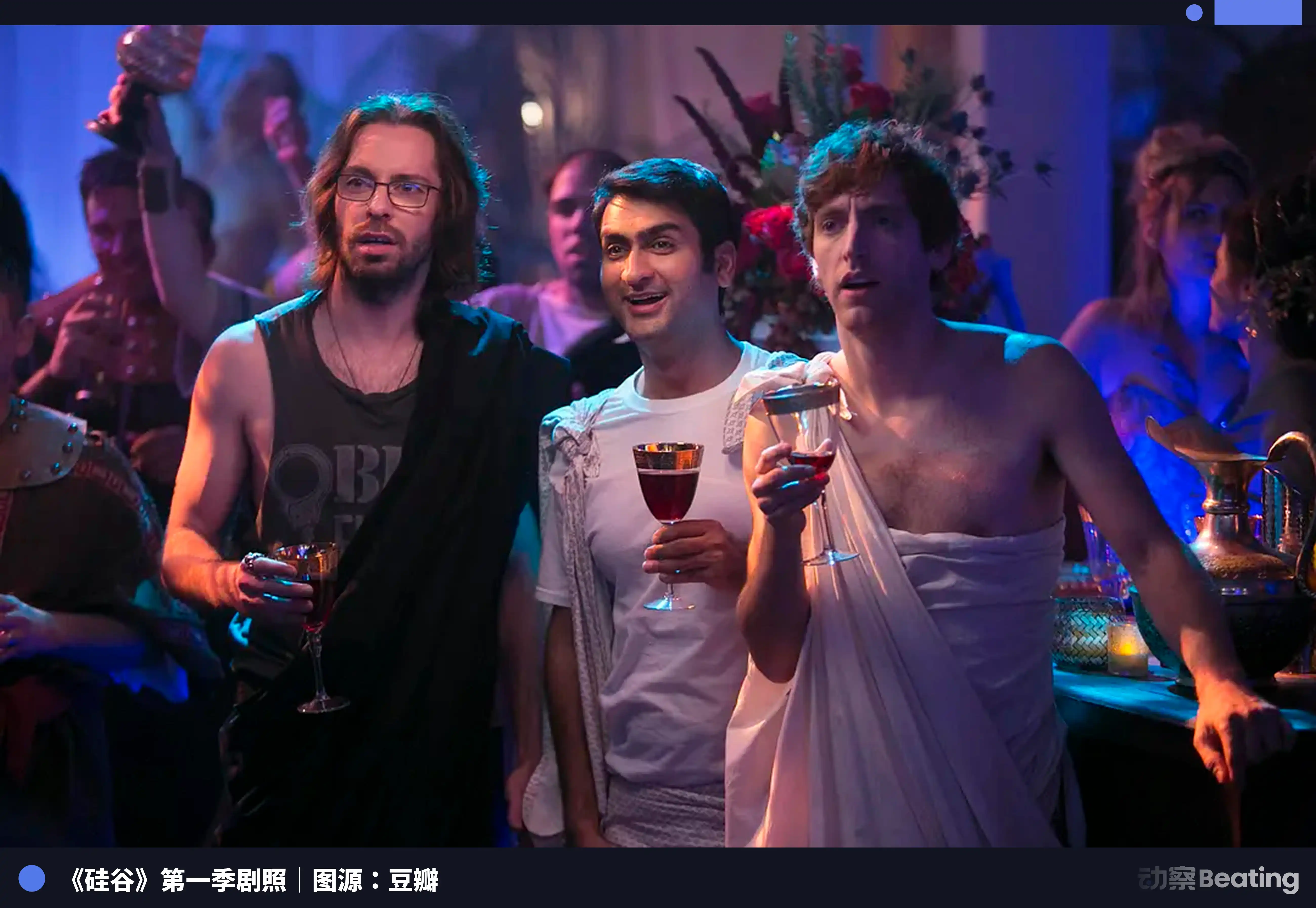
Imagine if it were a Silicon Valley company celebrating at a Silicon Valley nightclub, wouldn't it have a lot of fun?
A group of engineers who have just finished training models are wearing T-shirts and drinking too much at the bar. The founder is standing in the crowd and puts a swear slogan on the screen. The next day, the tech media wrote, and the title would probably include words such as ambition, crazy, and young. Readers will say this is Silicon Valley after reading it.
When we talk about Silicon Valley, we're always liberal.
Silicon Valley's most valuable products aren't just chips, models, and software. It also produced a complete set of languages to explain success.
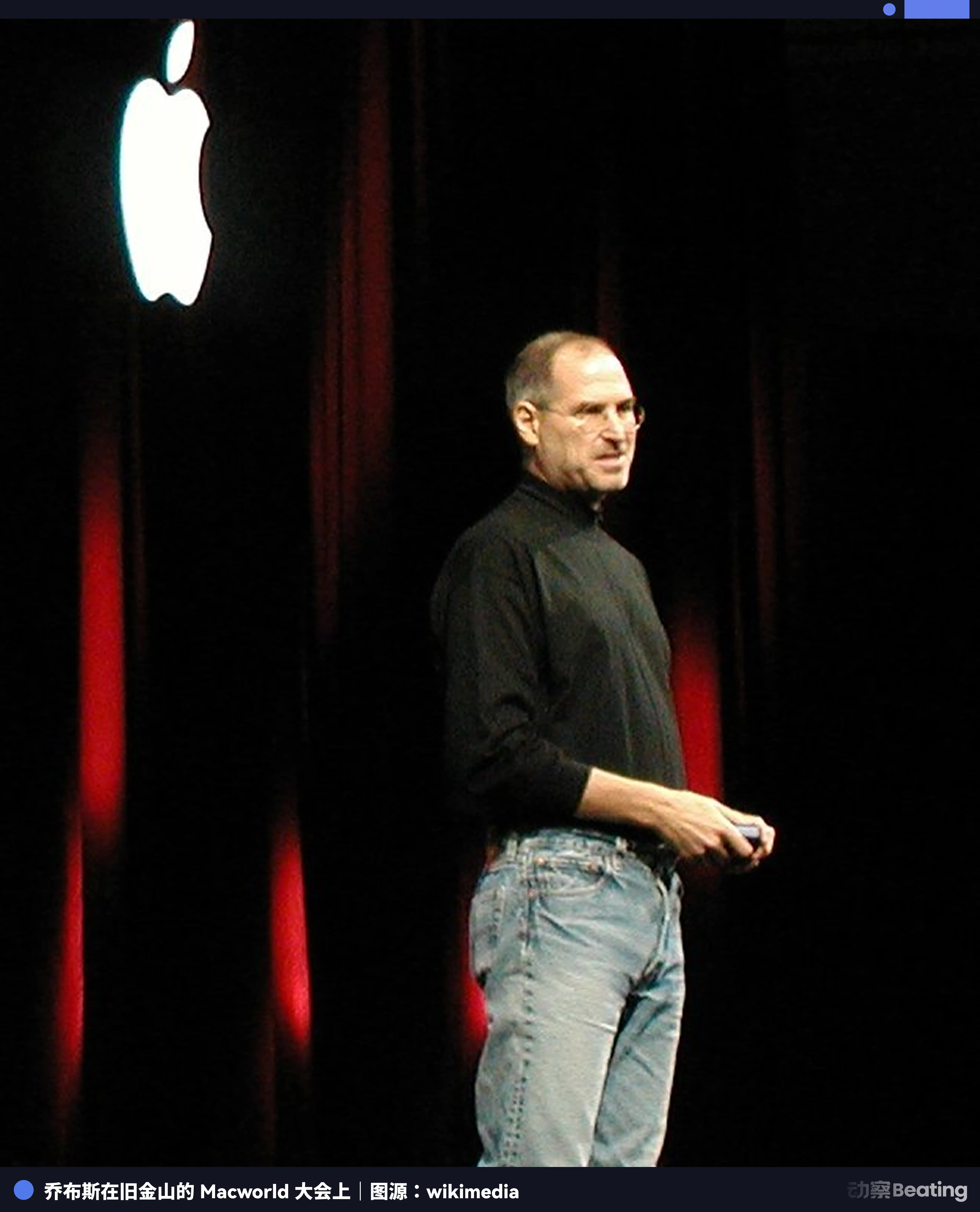
Jobs wears a black turtleneck all year round, which is called focus. Zuckerberg wears slippers to meet investors; that means he doesn't take stereotypes seriously. Sleeping in the office is devoting oneself to a career, and making money for Burning Man is unleashing creativity.
Silicon Valley sells more than chips, models, and software to the world; it also has a whole set of rhetoric to explain why a person succeeds and what he does after success is considered decent.
People in Silicon Valley can be proud, they can be offended, and no one takes it seriously when they say a few swear words after drinking too much. They don't have to prove they're good students all the time, because in this line of rhetoric, they default to the future.
But Chinese companies have never had this kind of treatment.
It must first prove that technology is real, growth is real, and valuations are not blowing. I've proven all of this, and I need to prove again that I'm not proud. There was a lot of English at the press conference; some people think it advocated foreign beauty. The founder will express that some say he only does marketing. The company made money, employees went out to celebrate, and others worried that it had lost its original intention.
To put it bluntly, there's a kind of Silicon Valley cult in it.
For a long time, Silicon Valley was not only the birthplace of advanced technology, but also the birthplace of modern life. Garage entrepreneurship, hacker culture, venture capital, equity incentives, flat management, and even the attitude of rebellion were learned from there.
This is where the problem lies. We can accept that Chinese companies learn how Silicon Valley suffers, but we can't accept that Chinese people also learn to enjoy themselves like successful people in Silicon Valley.
This is actually a hidden form of cultural inferiority. The worship of Silicon Valley here is not simply about thinking that Silicon Valley is superior. Instead, we subconsciously think:
Successful people in the West have the right to define their lifestyle, while successful people in China only have the obligation to be judged by their lifestyle.
The Information recently published an article “Private Jets Are Scarce. Blame the Gusher of AI Wealth describes this reality:
Today, about 30% of consumers of high-end private jets in the US come from Silicon Valley. Among them are not only the founders of technology companies. Thanks to the crazy performance of AI in the capital market, researchers and engineers at many AI companies are now also starting to consume private jets.
America's top AI engineers have begun to study buying a Gulfstream G650, and we're still discussing whether Chinese AI engineers are too impetuous to go to work and drink.
We're not promoting a luxurious lifestyle. To be sure, if you were one of these top talents, which public opinion environment would you rather work in?
Moralism of suffering
We are extremely tolerant of America's tech elites, yet we are extremely strict with our own people, not only because we worship Silicon Valley, but also because our education from an early age tells us that decent success should come from a very difficult time.
We have long learned to judge a person's character by whether they can bear hardships.
Children don't have good grades, and parents are often angry about not scores, but “you haven't worked hard at all.” Inability is poor, and there is room for maneuver; refusing to suffer becomes a matter of character. Conversely, it doesn't matter if you fail the exam; as long as you study late at night every day, adults will still say this kid is sensible. The matter of useless use has long since changed from an ability issue to a moral issue, and even a debt that children owe their parents and students to teachers.
This set of judgments accompanies people growing up.
School has to get up early, work overtime at work, and stay up all night to start a business. It's one thing if something isn't done; whether the person doing it leaves traces of suffering is another, and the latter is easier to see. Dark circles, instant noodles, and the office at 3 a.m., are all evidence that the results spread more easily than the results.
Of course, this idea has inspired many people. In an age where resources are scarce and opportunities are scarce, hard work is one of the few things that ordinary people can control themselves. The family can't afford to pay, and there's nothing to be trusted; they can only tell their children over and over again to endure it again and fight again.
Since childhood, Chinese children have heard that “if you suffer from suffering, you can only be superior to others.” “Pain” slowly changed from the cost of success to an invoice for success.
It also shaped our imagination of scientists, and it still seems to be stuck in an extremely single personality pattern to this day. It's best for scientists to be unpretentious, carry an old school bag, or carry a bottle of mineral water. They have no entertainment, no desire to spend, and no worldly vanity. Every day in my mind, apart from the formula, I just think about essays. This kind of scientist is certainly very worthy of respect. But the problem is that we're turning a scientist's lifestyle into a moral template that all scientists must abide by.
As a result, the less a scientist cares about money, the more moved we are, the more broken our clothes are, the more pure we feel, the more boring our life is, and the more we believe in his high academic standards.
So recently, mathematician Wang Hong resonated with more people: it turns out that mathematicians can also be elegant, beautiful, and wear luxury goods. Wei Dongyi and Wang Hong have no problems with their lifestyle. The only question is when will we, the onlookers, understand that the lifestyle has nothing to do with academics.
This is true for mathematicians, and so are AI scientists.
Play as a good Silicon Valley elite and an ascetic
Exactly how powerful Kimi K3 is should be left to the reviews, developers, and actual use to answer. Whether Dark Side of the Moon can become a great company also depends on whether it can continue to make products, control costs, and establish a healthy business model in the future.
Nightclubs can't prove these, but nightclubs can't overturn these either.
A lot of scolding isn't actually against Qinggong; they think it's not time yet. Chinese companies are still far from being the best in the world; how can they learn the best faction in the world first. This feeling is easy to understand. It is a prudence accumulated over the past few decades. I'm afraid I'll be happy too soon, and I'm afraid to rejoice again.
If Kimi hosted a celebration party at a hotel, a round table was set up in the private room, and the management greeted each other with a glass of wine. “Create another brilliance” was written on the screen, there would probably be people who thought it was bureaucratic and old. It wasn't like a young technology company at all. Going to a nightclub is impetuous; going to a hotel is setting up a party; staying in the office to eat packed lunches; and they are inevitably suspected of having a hard time performing. There are people who say anything wrong.
This also shows that the focus of the dispute has never been about exactly what to do with the celebration party. People expect Chinese technology companies not only to have the ambition and vitality of Silicon Valley, but also to always be restrained and humble. At best, they can't even see what success looks like after success.
It's just this kind of misunderstanding that creates barriers. After a long time of separation, people will leave. Maybe no one wants to get rid of anyone; we're just waiting for these people to show up and for them to come back from overseas, and at the same time, we're in a hurry to shape them into what we imagine.
The nightclub in Beijing will also close eventually. “To the Moon” on the big screen will turn off, the wine glasses will be taken away by the waiter, and people sitting in the card slot looking down and playing with their phones will return to their desks to continue working. The puzzle is still that difficult, and the cards are still not enough.
A truly mature technology culture doesn't require packaging a nightclub as an innovative spirit, or judging the success of a company from a glass of wine. That night didn't have much weight in the lives of these people.
They just made a difficult thing and wanted to be happy for a while. And if we need to explain our happiness to others, it means we're probably not used to something simpler.
Chinese geniuses can also be happy.
Twitter:https://twitter.com/BitpushNewsCN
Compare the TG exchange group:https://t.me/BitPushCommunity
Compare TG subscriptions:https://t.me/bitpush
