


US stocks and gold are rising, so why is only BTC “pretending to die”?
Source: Foresight News
By Glassnode
Compiled by AidiDiaoJP
Allergic to good, immune to bad: when the “fear” of Bitcoin only stays on the lips, the most pressing change in history is imminent.
The global market has repeatedly reached new highs, yet Bitcoin hasn't moved at all. This edition of the report focuses on this “standstill”: a market theft that is almost asleep,
Surrendering through boredom rather than panic, the cumulative bottom signals, and an options market that is priced as “immovable,” is emotionally sensitive to any kind of hype.
summary
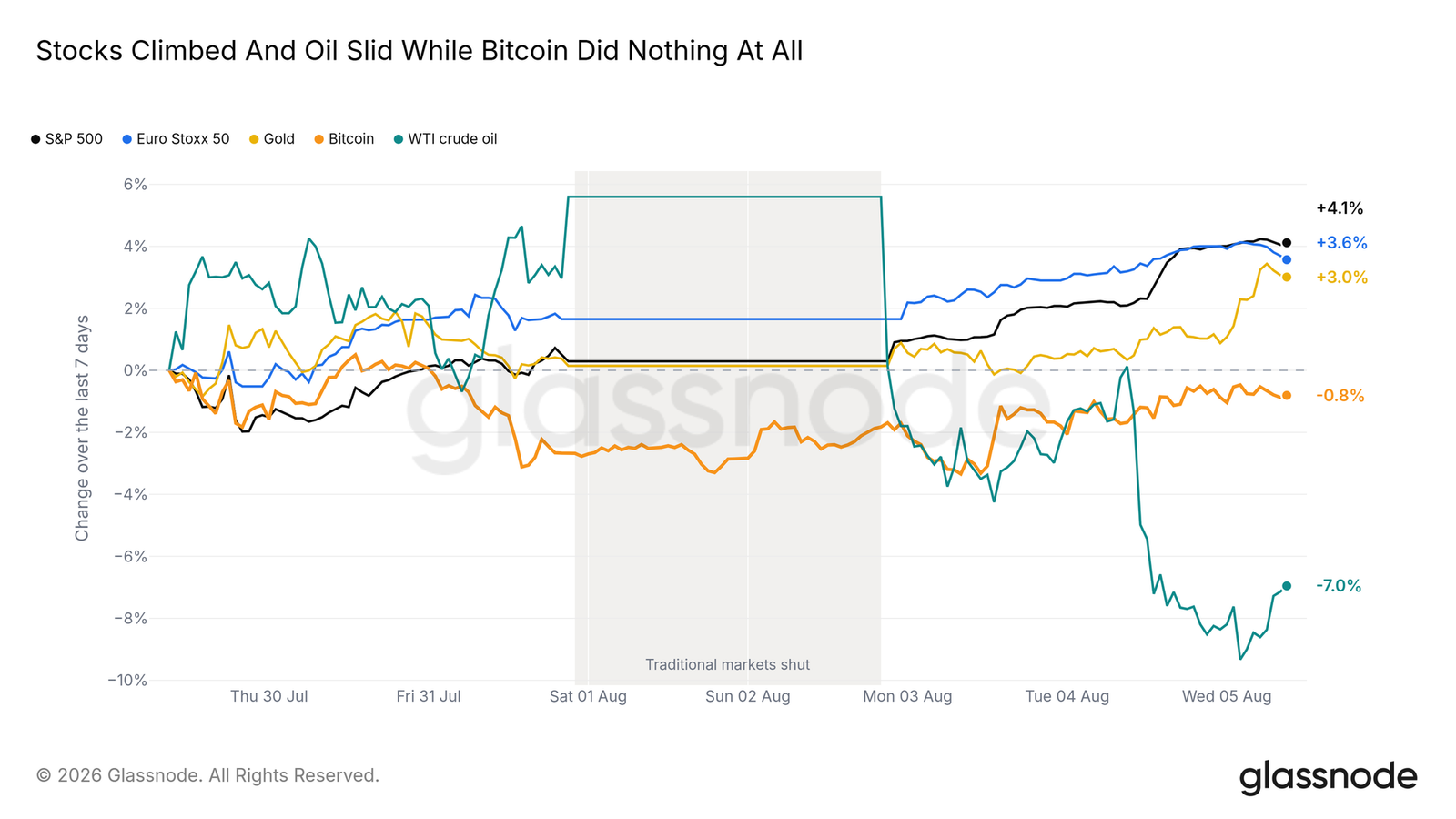
Stocks and gold exploded, crude oil prices declined sharply, and Bitcoin barely moved.
594 BTC were stolen, and sleeping coins surged 200 times the amount stolen; the price was unsensitive to either.
The bottom signal was assembled through boredom rather than surrender, yet it still hasn't touched the true bottom of every previous bear market.
Institutional buying over the past two years is still going backwards.
Options pricing doesn't move much in either direction, yet sentiment reverses with every small wave of the market.
This deep squeeze has almost always been an upward breakthrough in history; when it was formed this time, the demand engine had not yet started.
Bitcoin's Week of Absence
If you put the main markets on the same axis and use zero as the benchmark, this week will be clear at a glance.
The two major stock indexes both broke records, and gold rose at the same time, while crude oil opened on Sunday, which instantly erased the supply risk premium due to news of a tight downgrade, opening sharply lower.
Bitcoin is the only asset that also trades over the weekend, but it is slightly below the position left by last week's report, falling more than four percentage points behind the S&P 500.
Apart from the protagonist of this report, everything else has moved. What follows is an attempt to explain this.
Fears quickly subside as the Federal Reserve stands still
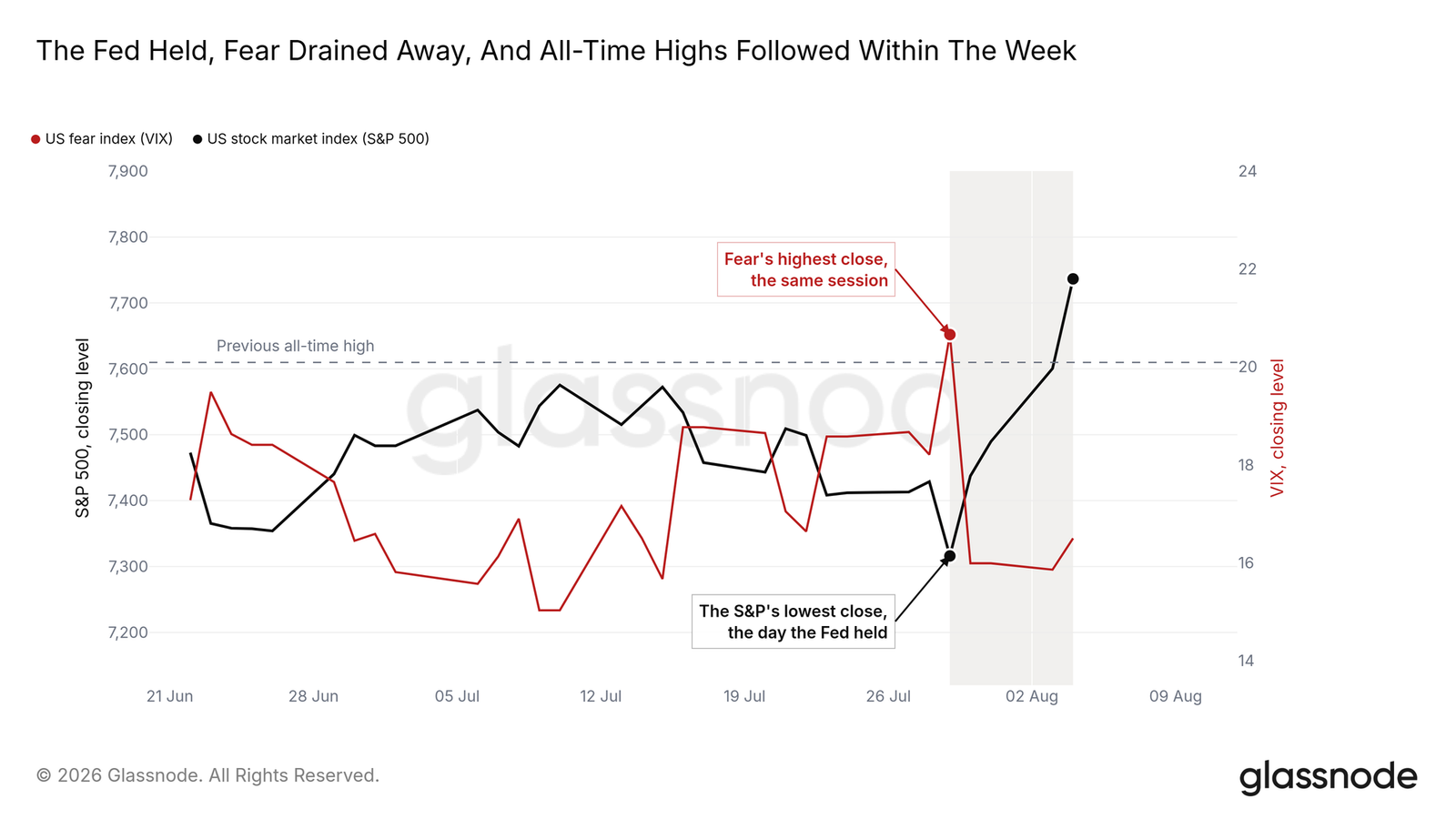
The stock market is on the FOMC. The Federal Reserve kept interest rates unchanged on July 29th.
The market's first reaction was to sell: S&P closed at its lowest point this summer, and fear in the stock market peaked.
The reassessment took only one trading day. The speed at which fear subsides is a level that has only been seen ten times since 2009.
Four days after the resolution, the index closed at 7,737 points, breaking the record high since June. The European Stoxx 50 also set its own record on the same day.
The key is this order: the market first sells “patience,” takes a nap, and then takes four days to determine that “patience” is actually good news.
Forward-looking data is getting stronger
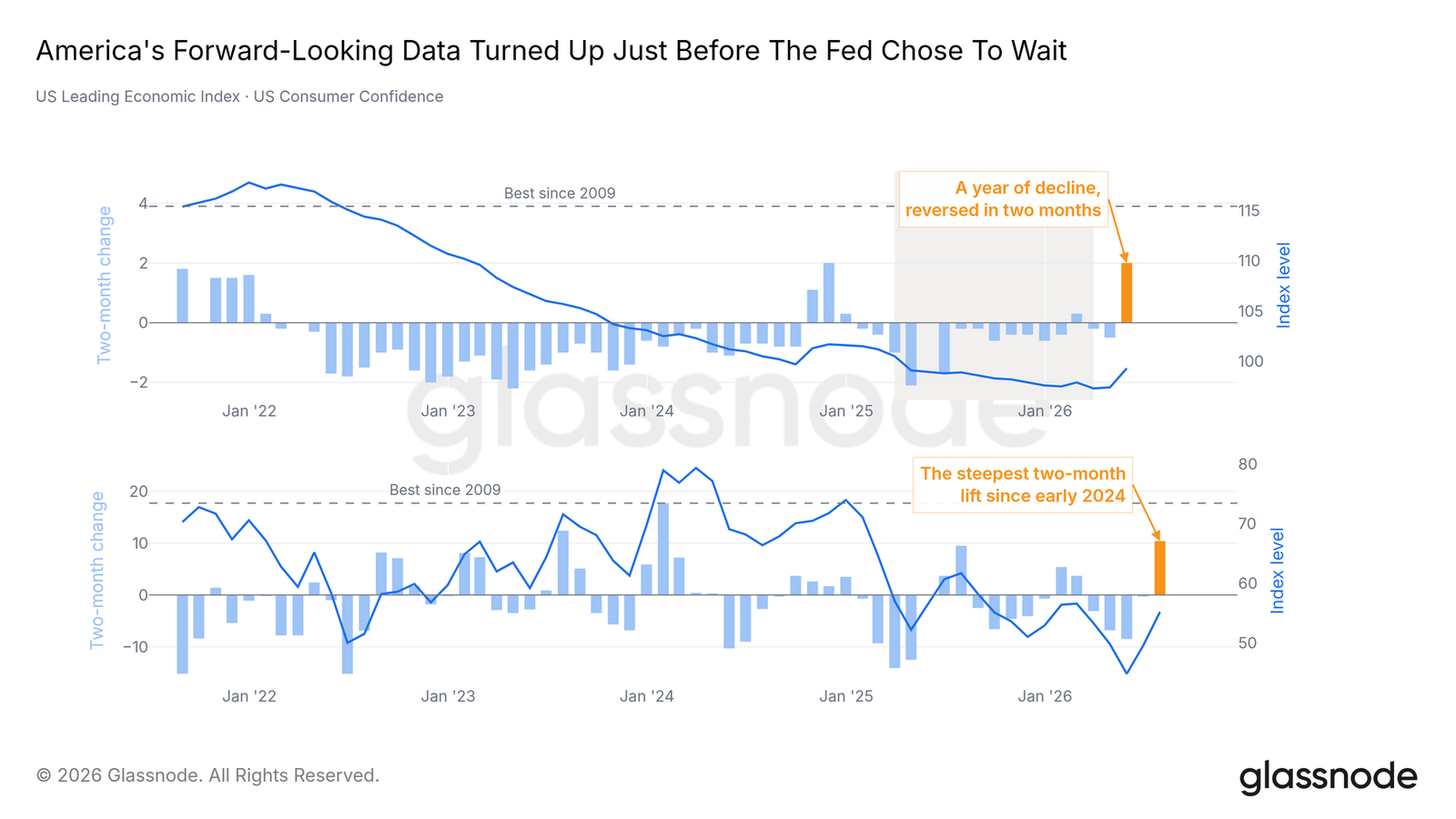
Being on hold is read as good news because the underlying data has changed. The leading economic index reversed a year-long decline within two months.
Consumer confidence recorded the steepest increase in February since the beginning of 2024.
The central bank is standing still and forward-looking data is improving, which is tantamount to removing the risk of further tightening and allowing growth to do its own work; the stock market has accurately priced this.
Bitcoin has absolutely no price for all of this. Whether it is resting weak or anesthetized, later data will answer.
 A 25 minute stress test
In the early morning of Friday, July 31, the market experienced a stress test that no one named.
Within 25 minutes, the attackers exploited a five-year-old key generation vulnerability in the Coldcard hardware wallet.
Approximately 594 BTC worth around $38 million has been taken from around 500 self-hosted wallets.
The theft ended almost as soon as it began. However, the reaction it triggered on the chain continued for several days, and it was also the clearest natural experiment of holder behavior in this cycle.
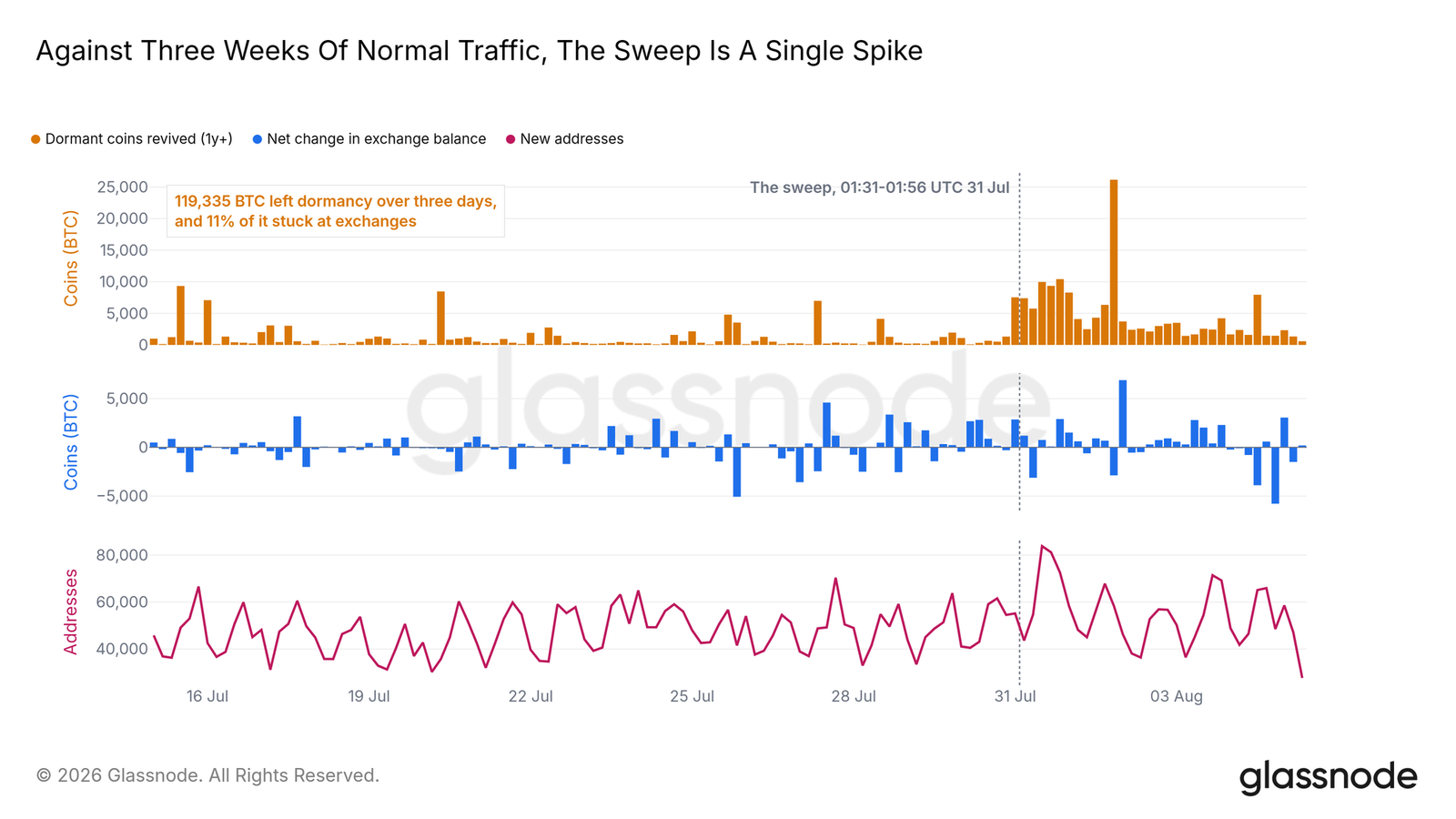
The “resurrection supply over 1 year” (the amount of coins moved again after at least 1 year) surged to about 119,000 BTC over the next three days, 200 times the amount stolen.
Holders across the ecosystem have removed the coins from seeds that could be broken. Compared to three weeks of normal traffic, this is an isolated spike.
Only about one-tenth of these ended up on the exchange, and the number of new addresses returned to the baseline within three days.
The supply of wallets that have been held for less than a month has increased by 40% since then.
It continues to rise. This is a migration to a new cold wallet, not a sell-off and liquidation.
On the spot side, there was almost no registration of this incident. The largest old currency in this cycle was forced to move.
It neither generated measurable selling pressure, nor did it trigger a discernible price reaction.
A market that is insensitive to core self-hosting groups being robbed, and there is no active buying.
There are also no active sales — and this is exactly what the indicators describe for the next cycle.
 The bottom area was not cleaned and rinsed
The bottom signal in boredom
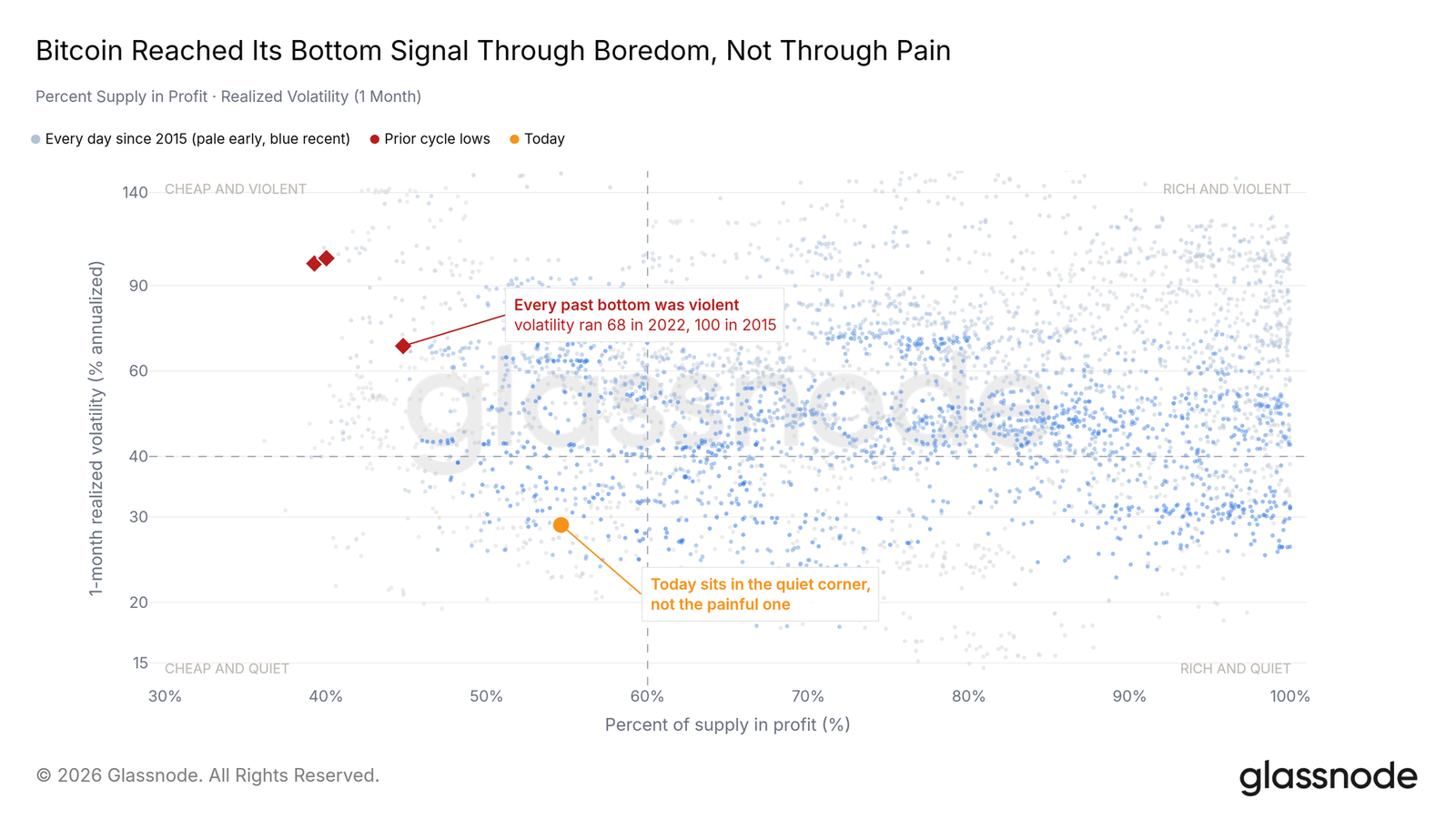
Bitcoin's bottom signal usually comes through pain: a capitulation sell-off pushes the share of profitable supply to the extreme, while volatility soars.
This round, however, went to the same area through boredom. Profit compression has been put in place, but it has been worn out by months of decline.
The volatility was on the floor rather than the ceiling when it arrived. The destination is familiar, and the route has no precedent in the previous bottom.
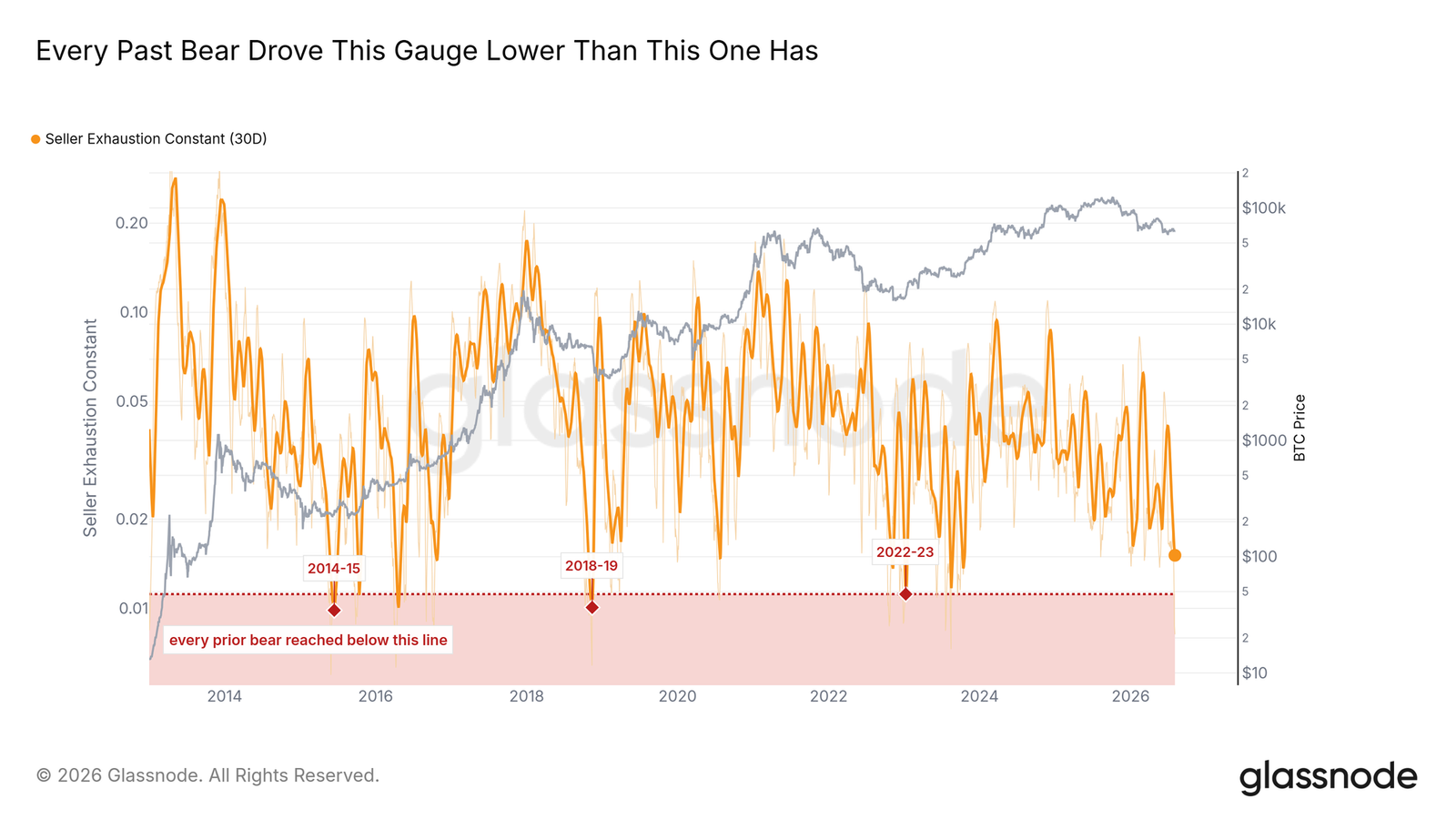
The “seller exhaustion constant” (the share of profitable supply multiplied by achieving volatility) makes this more clear.
Its 30-day average is at the low point of this cycle, and it has already entered the area formed at every bottom in the past.
However, it is still about one-third higher than the floor that each previous round of the bear market finally hit. The indicator stands at the door,
Haven't entered the room yet: If the past cycle was a template, the final drop hasn't come out yet.
The track is running in reverse
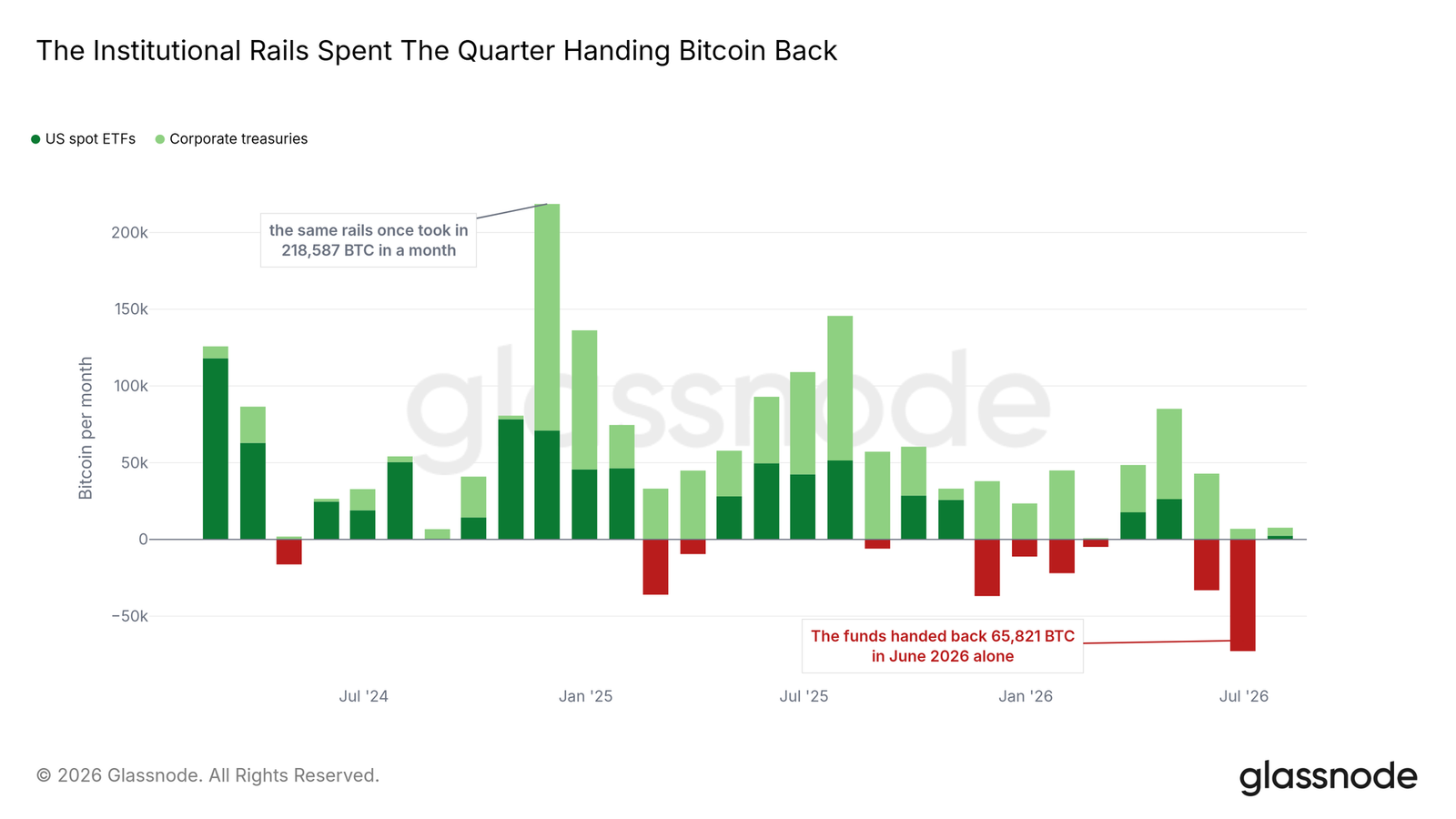
The demand side tells the story of matching. The institutional trajectory of the last round of the bull market - US spot ETFs plus corporate treasury
——Over the past quarter, coins have been returned: in June alone, the fund had a net outflow of about 65,800 BTC, the worst single month on record.
At the end of 2024, the best monthly net absorption was over 218,000 pieces. Corporate treasury purchases continue, but the scale is far insufficient to offset fund outflows.
No matter how the bottom is formed, it must be formed in the absence of market-defining structural buying in the past two years until that share reverses.
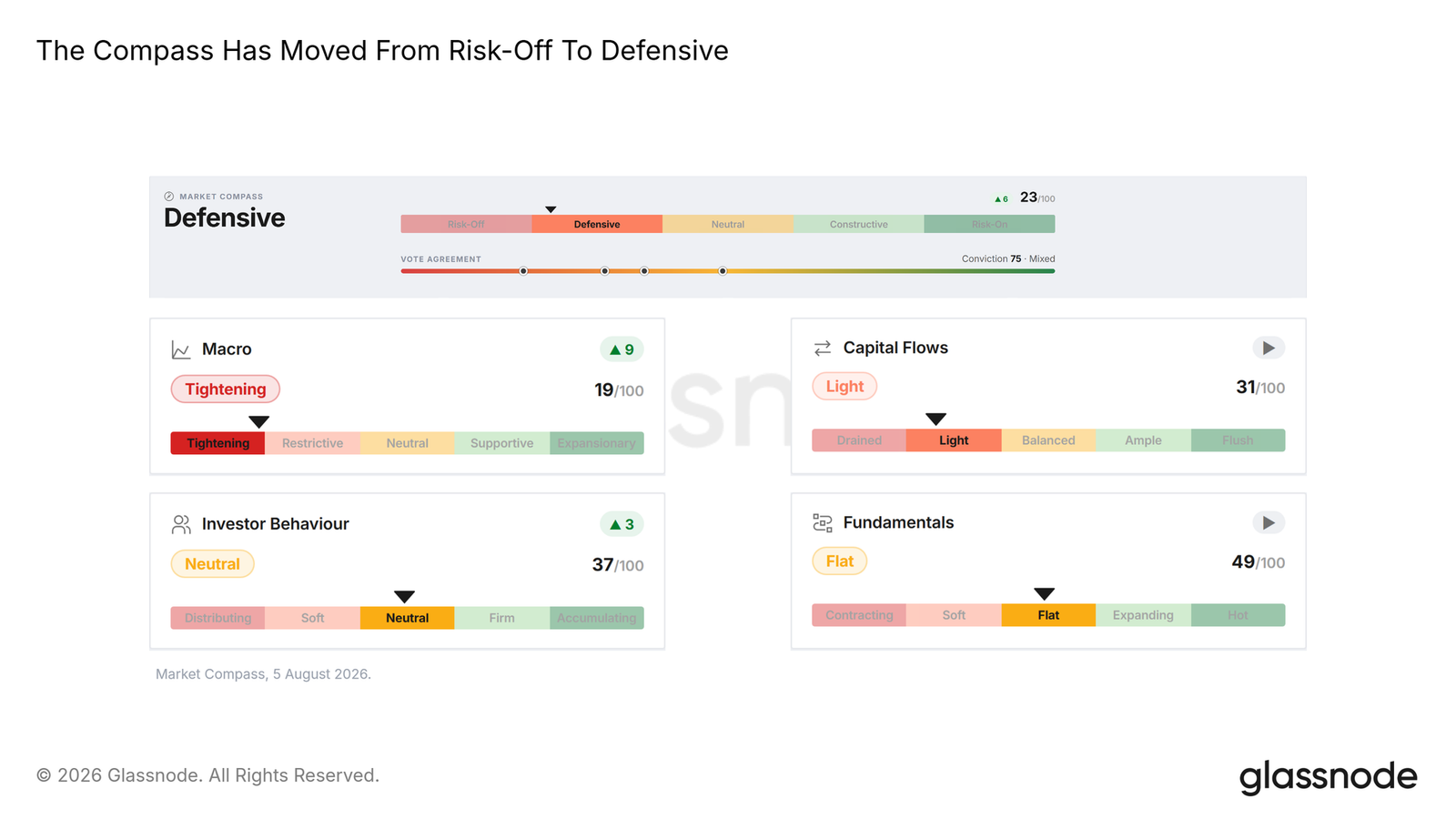
Our market compass sums up the current state of affairs: after the risk aversion zone was set for nearly three weeks, the composite indicator climbed into the defensive zone, and all inputs were generally consistent.
Defense means that the market has stopped deteriorating, but there is no momentum yet.
Half of the checklist is ticked off at the bottom, and the half that isn't checked is waiting for the same missing element: a mandatory event.
No one is paying for direction
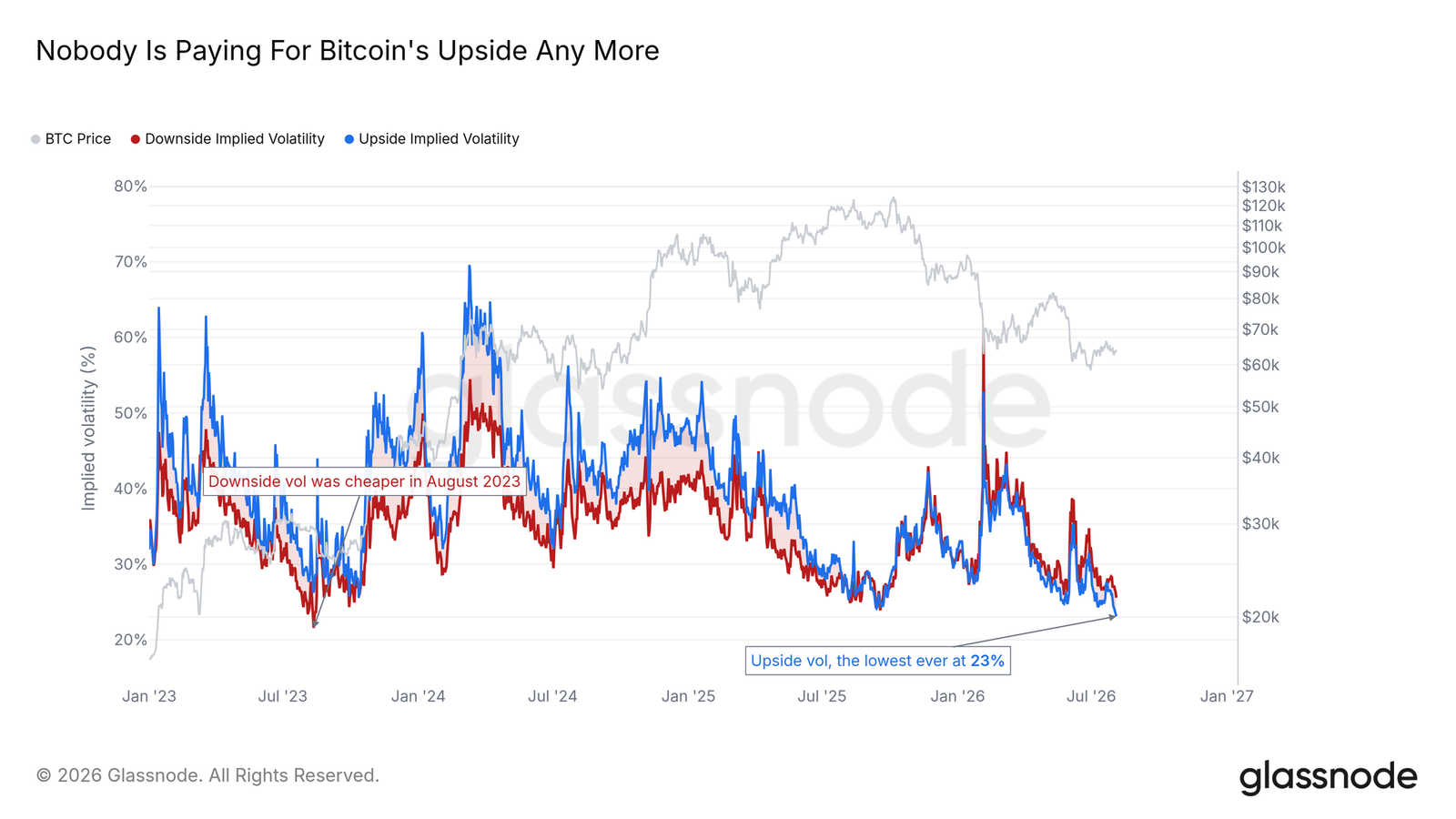
Breaking the curve of options into two wings, the much-loved “fear premium” in Bitcoin options is actually even more strange.
The upward implied volatility printed the lowest level in the indicator's history, close to 23%;
Downside implied volatility is common—the last time it was cheaper was in August 2023.
This asymmetry is not about bidding on put options, but rather the disappearance of buying call options.
No one is paying for the upside, and no one is paying much for the downside.
Emotionally unable to sit still
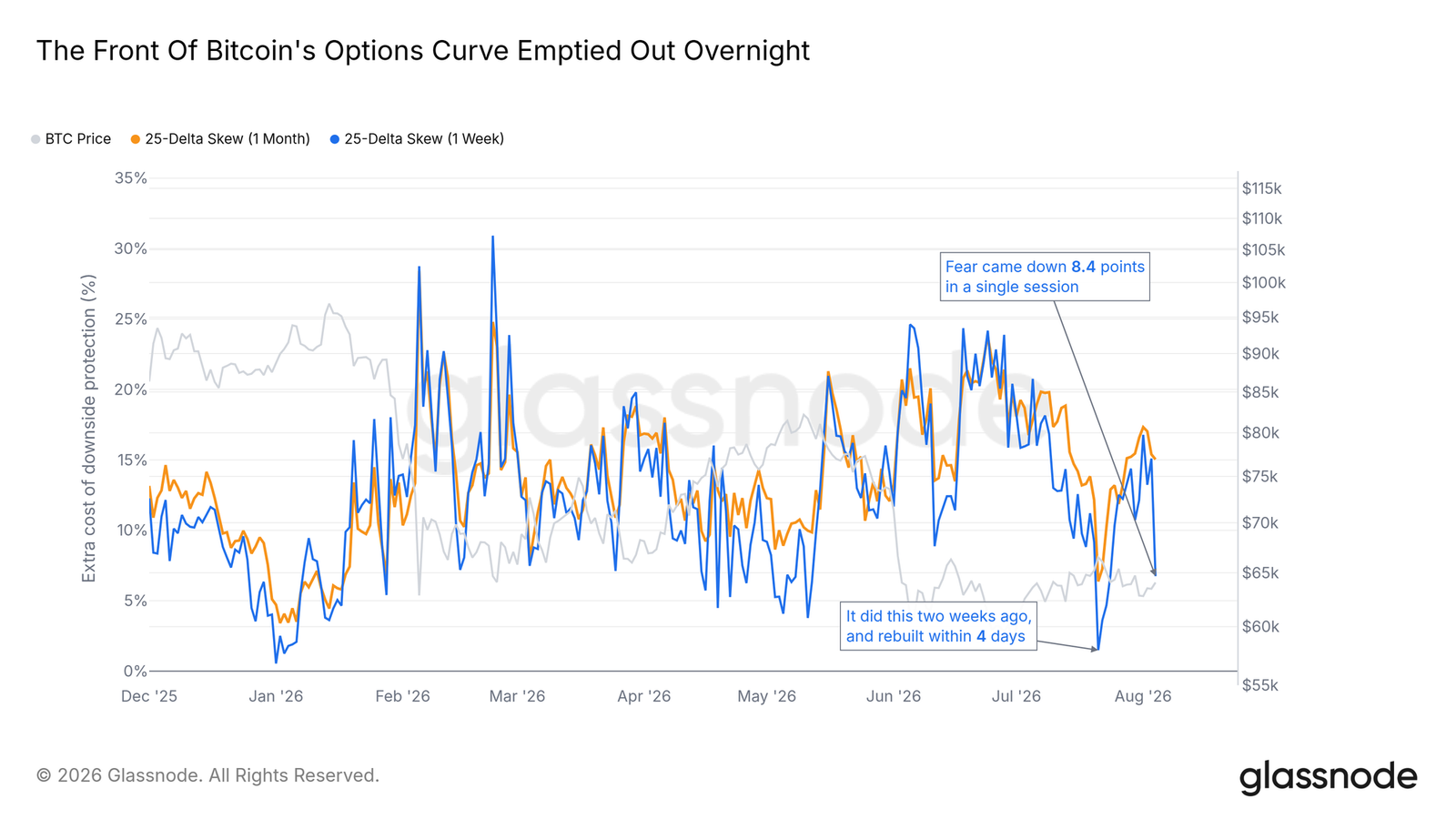
At the same time, emotions can't sit still. The fastest position indicator we've tracked—25 Delta skewness in 1 week,
This week, the stock collapsed by more than eight points in a single day; at the July high two weeks ago, the same vacuum opened and filled in four days.
Short-term fears about pricing are overturned by fluctuations of only a few percentage points, yet the level of price volatility lies on the floor.
This kind of lash almost all happened in options: perpetual fund rates are fixed to the norm in the long term, so leverage is not an amplifier; it is emotion.
The market bought a week of calm, yet continued to pay a premium for half a year of risk.
History has opinions
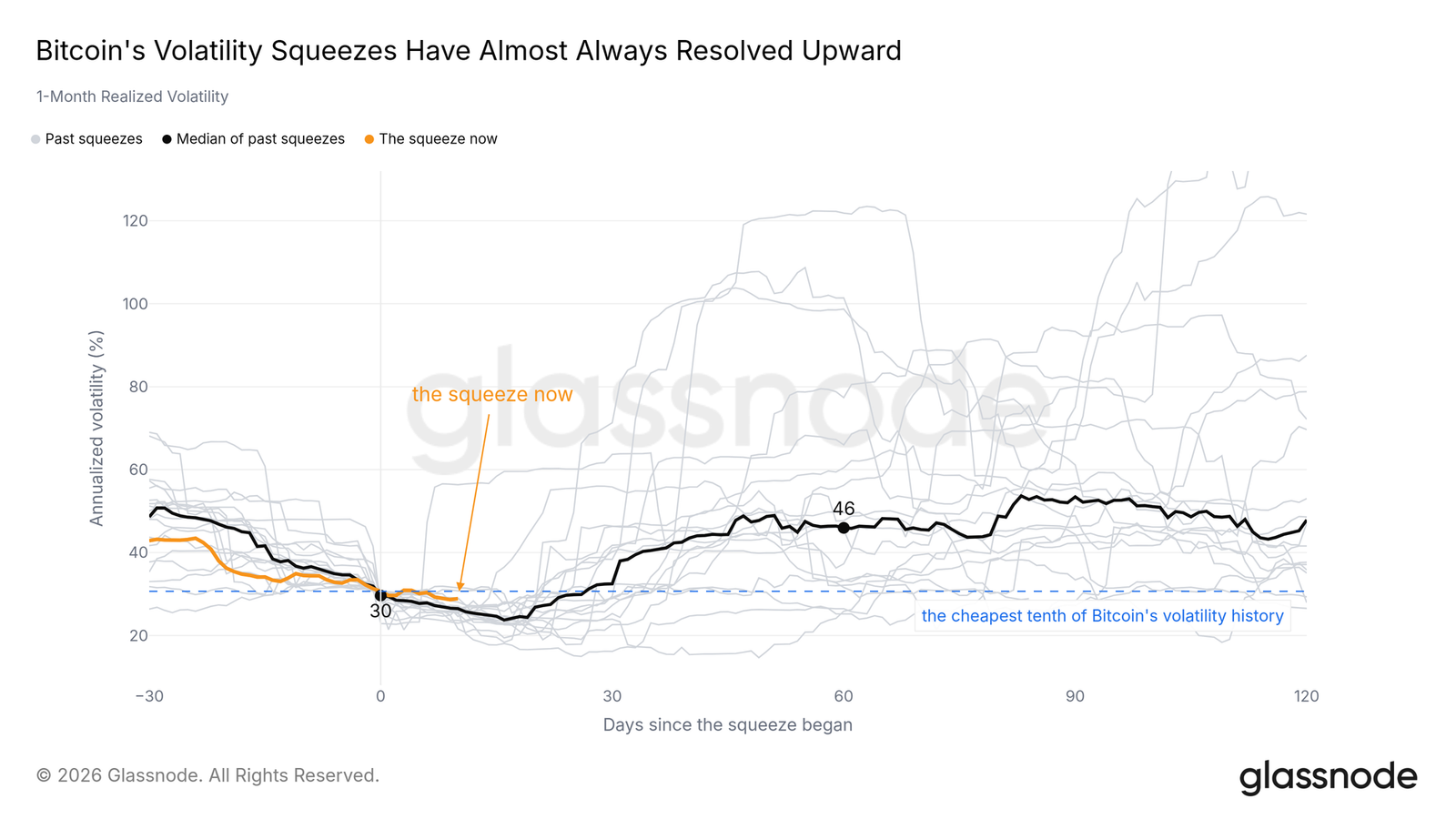
History has opinions about this compression. When the volatility is squeezed to a similar depth in 1 month, the release almost always resolves upward,
This benchmark rate is the most constructive data point for this period. However, there is a premise: most of the squeezing in the past was solved when the engine needed to idle in the background.
However, when it was formed this time, the trajectory was reversed, and the final decline was not yet complete.
conclusions
Summarize the current system in one sentence: a market that is compressed, has insufficient holdings, and is left behind by global risk appetite. The bottom conditions are being assembled but not yet complete.
Compression ensures that the final action will be much larger than any position, and the instant push at the front end of the options curve ensures that crowds will catch up late.
Continued return of net inflows to the ETF track, or an upward expansion in volatility from the squeeze, will confirm an improvement.
The sellers' constant was pushed to the area that each previous round of the bear market finally reached, marking the completion of the classic bottom template.
“Zero pricing, overreaction” is not a steady state.
[Disclaimer] The market is risky, so you need to be careful when investing.
This article does not constitute investment advice, and users should consider whether any opinions, opinions, or conclusions in this article are in accordance with their particular circumstances.
You are responsible for investing accordingly.
Twitter:https://twitter.com/BitpushNewsCN
Compare the TG exchange group:https://t.me/BitPushCommunity
Compare TG subscriptions:https://t.me/bitpush
