22

22

Bitpush Column · 31 articles

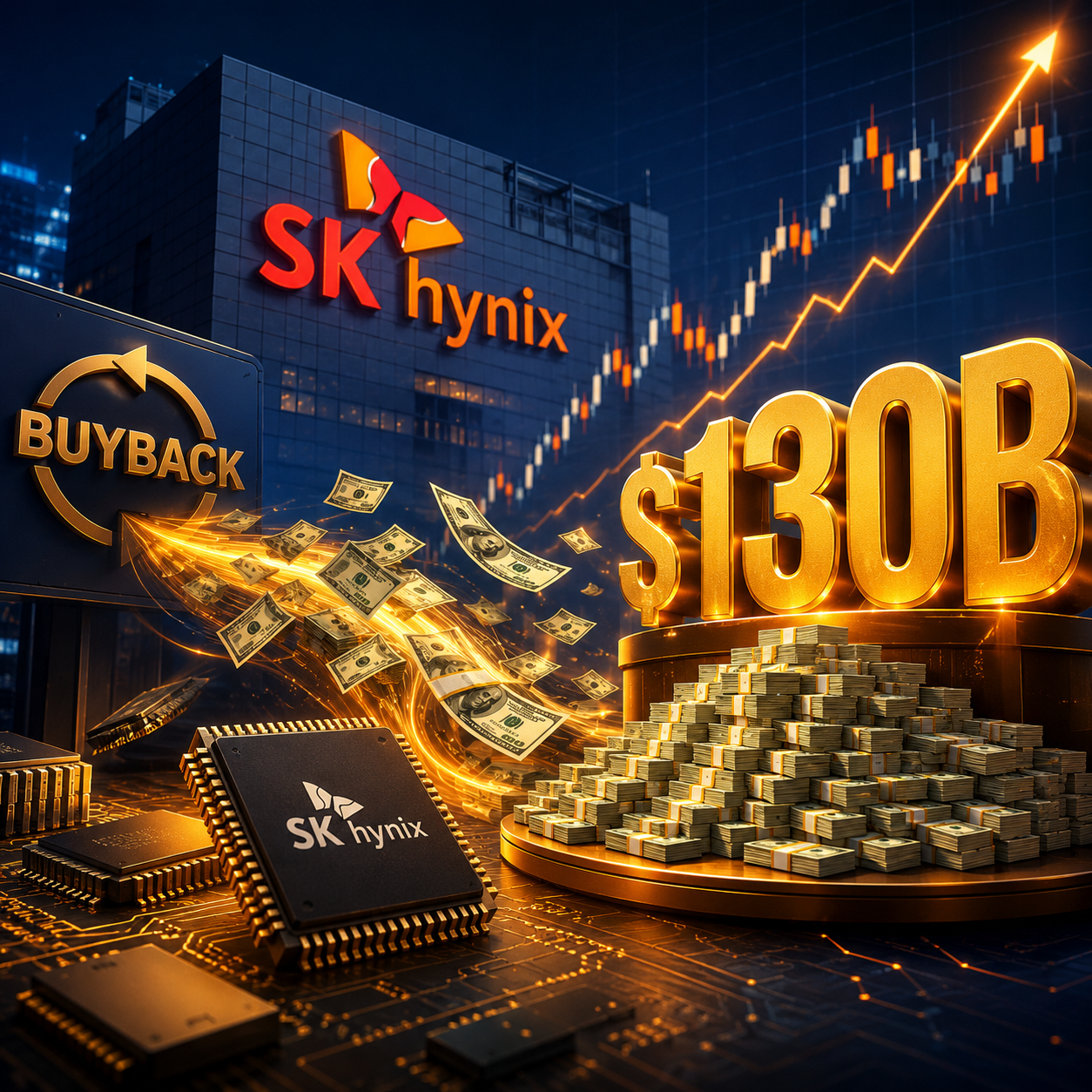
Is 40 trillion just an “appetizer”? The Hynix buyback landed ahead of schedule. Is 130 billion US dollars still ahead?

Source: Wall Street News Editor: Dong Jing Original title: Wall Street interprets Hynix's repurchase plan: Shareholder return of up to 8% next year, or return at least $130 billion to shareholders by 2027 Summary: J.P. Morgan believes that the shareholder return policy was upgraded from “no more than 50% free cash flow” to “no less than 50%”, changing from the upper limit to the lower limit, sending a clear signal to the market: future shareholder returns will only be greater, not less. Goldman Sachs predicts an 8% shareholder return in 2027, and expects an additional repurchase of approximately 7 trillion won in the future. J.P. Morgan expects additional return of over 16% of its market value by the end of 2027. Follow-up focus will be on the results meeting at the end of October. While the market was still debating the continuation of the AI storage cycle, and SK Hynix's stock price plummeted from a June high, the storage giant suddenly threw a huge bomb on the market. A historic repurchase, which was implemented early, reshaped the market's valuation logic for Hynix! SK Hynix officially announced the market's long-awaited shareholder return policy after closing on August 19, 2026 — it plans to repurchase and cancel 40 trillion won worth of shares, involving 24.07 million shares (3.3% of the shares issued as of the end of the second quarter of 2026), equivalent to about US$28.9 billion. This scale is not only the largest share repurchase in the history of a Korean listed company, but also exceeds the approximately 26.5 billion US dollars that Hynix raised through ADR financing in the US in early July this year. According to Chase Trading Desk, the two top Wall Street agencies, J.P. Morgan Chase and Goldman Sachs, both gave highly positive comments on the announcement in their latest research report on August 20. J.P. Morgan believes that the shareholder return policy has been substantially upgraded from “no more than 50%” to “no less than 50%”, and the policy ceiling has become the policy floor. Following the announcement of a 40 trillion won ($29 billion) share repurchase plan, SK Hynix may return at least $130 billion to shareholders by 2027, according to J.P. Morgan Chase. Goldman Sachs predicts a shareholder return of up to 8% in 2027, and expects an additional repurchase of approximately 7 trillion won in the future. Both J.P. Morgan Chase and Goldman Sachs maintain buying ratings: J.P. Morgan's target price is 2.75 million won (about 84% upside compared to the current price), and Goldman Sachs's target price is 3.5 million won (implying an upward margin of about 133%). The next key catalyst is the third quarter results conference call at the end of October 2026, when the company will reveal a more complete roadmap for shareholder returns. Analysts believe that this aggressive capital action directly proved to Wall Street that the company is “printing money” faster than market expectations. For the stock price, which has plummeted 49% since its high on June 22, this not only completely offset the dilution effect of the recent ADR issuance, but also established a valuation bottom (current annualized price-earnings ratio of only 3.8 times). The scale of the repurchase: The largest in history and earlier than expected. J.P. Morgan analyst Jay Kwon clearly stated that the 40 trillion won repurchase announcement “landed earlier than expected” — previously, the market generally expected the announcement to be released around the end of September, but the company chose to directly disclose it after closing on August 19, showing management's high level of confidence in the company's cash flow situation. In terms of scale, this repurchase has multiple historical significance: 40 trillion won is the largest share repurchase announced by a Korean listed company so far; equivalent to US$28.9 billion, higher than the approximately US$26.5 billion raised by Hynix's US ADR offering in early July, which means that the company actually used the repurchase to “hedge” the previous equity dilution; this amount is equivalent to 63% of the rolling FCF (operating cash flow minus capital expenses) over the past 12 months, & nbsp; It is higher than the previous “no more than 50%” FCF allocation limit policy. At the same time, J.P. Morgan Chase pointed out that if viewed from a valuation perspective, the price-earnings ratio corresponding to Hynix's current stock price is 6.4 times (based on adjusted earnings per share for the past 12 months) or 3.8 times (based on annualized adjusted earnings per share for the first half of 2026). This valuation level can be regarded as a reference benchmark for management to initiate repurchases. Policy upgrade: From “ceiling” to “floor”, the core policy change in this announcement is that the shareholder return ratio statement was upgraded from “up to 50% (no more than 50%)” to “50%”...

1d ago22SK HynixJ.P. Morgan Street
Is 40 trillion just an “appetizer”? The Hynix buyback landed ahead of schedule. Is 130 billion US dollars still ahead?

Is “Cow Lai” really here? Bitcoin skyrocketed, and $2,743 billion bears were brutally liquidated

Source: PanNews Author: Nancy Original title: Is “Cow Coming” Really Here? Bitcoin changed overnight, and bears hit the main points of the biggest liquidation day in history: Bitcoin rebounded strongly on August 19, with an intraday increase of more than 7.4%, once approaching 70,000 US dollars, a new high since the beginning of June; Ethereum simultaneously broke through 2,300 US dollars. Over the past 24 hours, the entire network closed out more than 2,986 billion US dollars, of which short liquidations reached 2,743 billion US dollars, setting a new record for short liquidation in a single day. The recovery in the market was driven by multiple factors: the US Treasury expanded the scale of long-term treasury bond repurchases to improve liquidity; the SEC proposed new crypto asset issuance rules to exempt some registration requirements; and Trump met with crypto business executives and made supporting remarks, urging Congress to pass the Clarity Act. Furthermore, the net inflow of Bitcoin spot ETFs has exceeded US$480 million in the past two days, causing large-scale short liquidation effects. On-chain data shows that spot demand is about to improve, with a median increase of about 18.1% over the next 60 days. However, Glassnode pointed out that high real interest rates are still a suppressing factor, the market is still bottoming out, and the capitulation is not completely over. VanEck believes that 8 of the 12 capitulation indicators have been triggered, but this is not a sign of bottoming out. The potential cumulative window may be from September to November. Standard Chartered Bank expects Bitcoin to rise to 100,000 US dollars by the end of 2026. If it effectively breaks through $65,500, it may confirm the low in the cycle. CEO Strive believes that the long-term downward trend in the US dollar may bring the strongest macro tailwind to Bitcoin. Overall, there are positive signs in the market, but continued strengthening still requires verification of demand, liquidity, and macro environment, and investors should maintain reasonable positions. While the movie “Cow Lai” continues to be popular, the market's expectations for a “return to the bull market” are also constantly being ignited. Coincidentally, the crypto market also suddenly ushered in a long-lost “bull attack”. Bitcoin's strong counterattack overnight led to a collective recovery of the market. For the crypto market, which has been dormant for a long time, this surge not only means a breakthrough in price, but also a return to market volatility. After the market heated up rapidly, market sentiment was instantly ignited, and coin industry players even ridiculed that “native families are finally getting better.” Meanwhile, this sudden strong rebound also simultaneously triggered a single-day liquidation wave of bears on an astonishing scale. Bitcoin fought back strongly. On the evening of August 19, the bears experienced the biggest wave of liquidation in history. On the evening of August 19, Bitcoin broke out of a long-lost positive line and strongly broke through the consolidation range that continued for several months. According to CoinGecko data, Bitcoin suddenly experienced a strong rebound, with an intraday increase of more than 7.4%, once approaching 70,000 US dollars, a new high since the beginning of June. Ethereum strengthened at the same time. At one point, the price broke through 2,300 US dollars, reaching a new high of nearly three months. Mainstream assets rose collectively, rapidly driving the overall recovery of the crypto market. Over the past 24 hours, the total crypto market capitalization has risen by around 7.5%, recovering to around $2.46 trillion. However, this sudden surge also turned into a large-scale bear slaughter. According to CoinGlass data, the total amount of online liquidations in the past 24 hours has exceeded 2,986 billion US dollars, and more than 175,000 traders have been forced to close their positions. Among them, the biggest single liquidation occurred in the BTC-USD contract on the Hyperliquid platform, which amounted to about US$48.8 million. Judging from the historical scale, this wave of liquidations has surpassed the single-day liquidation record of about 2.23 billion US dollars during the “tariff shock” in February 2025, ranking the eighth largest liquidation event in crypto history. What is more noteworthy is that this liquidation almost showed a one-sided pattern of bears squeezing. According to CoinGlass data, in the past 24 hours, the amount of short liquidation reached US$2,743 million, far exceeding the liquidation scale of about US$243 million for longs. This figure even surpassed the scale of short liquidations of about 2.46 billion US dollars on the largest settlement date in history on October 10, 2025, setting a new record for the scale of short liquidations in a single day in the crypto market. The crypto market welcomed multiple benefits. Trump's bullish remarks ignited optimism behind the collective reversal of the crypto market's decline, mainly driven by multiple factors such as improved macro liquidity, bearish shortfall, regulatory optimism, and the return of ETF funds. At the macro level, the US Treasury expanded the scale of long-term treasury bond repurchases, which became the core trigger for this round of market recovery. The Ministry of Finance announced that it will double the maximum limit of liquidity support repurchases of 10-year to 30-year treasury bonds from at least US$2 billion to US$4 billion. The measures will be implemented on September 9 and will continue until November 4. The market generally interpreted this as strong support for the liquidity of the treasury bond market, which effectively lowered long-term yields. The yield on 30-year treasury bonds declined markedly from a high level of about 5.33% to 5.34%. And the decline in US bond yields...

2d ago22Blood washes empty heads
Is “Cow Lai” really here? Bitcoin skyrocketed, and $2,743 billion bears were brutally liquidated

Will compliant ICOs be revived? New SEC regulations open up a financing channel for the cryptocurrency industry

Source: ChainCatcher Author: 0xFACAI Original title: The biggest benefit for the coin industry, is compliant token financing coming back? Public coin sales and financing have once again gained a legal path in the US. On August 18, the US Securities and Exchange Commission released a draft “Regulation Crypto Assets”. According to this draft, startups can raise $5 million in up to four years, and larger projects can raise $20 million or $75 million in 12 months. Without completing a complete set of securities registration, the project can also sell tokens to investors to raise money for network development. The biggest benefit for the coin industry, is compliant token financing coming back? Sounds like ICOs are back. But the SEC gave far more than three funding lines. It wants to establish a set of rules for tokens from birth to “graduation”: projects can be sold to finance first, but it is necessary to clearly explain what to do with this money; if the key work promised by the team is not completed, the token continues to carry the regulatory responsibility for investment terms; only after fulfilling the promise, the token has a chance to exit this level of relationship. “Promises” are the core of the entire draft, and devs must “work” until the token “graduates” before they can “sell”. The draft rules gave the project parties two options. The first type is suitable for startup teams. Assuming a project required $3 million to develop, common choices in the past were to seek venture capital, limit buyers and issue coins outside of the US, or incur the high cost of registering securities. The new draft allows it to use the “startup exemption,” raise no more than $5 million over a maximum period of four years, and file with the SEC when the funding starts and ends. The second type is suitable for projects with greater funding requirements. The first tier raised up to $20 million every 12 months, and the second tier raised up to $75 million. Compared to the $5 million startup exemption, this path can be used over and over again, but the rules are more stringent. Projects can't just hand in a white paper and start selling coins. Both exemptions require the team to disclose how the network is being managed, how the product is being prepared and developed, what security risks the code has, what the company's financial situation is, and who is managing the project. The two larger funding levels also require financial statements to be provided and continuously updated, and the $75 million tranche requires an audit. The SEC didn't remove the original fence either. Issuers and insiders with a record of serious violations cannot use these exemptions, and anti-fraud and anti-manipulation responsibilities remain in effect. If the project uses other securities exemptions at the same time, it must also comply with existing consolidated financial calculation rules. The most important aspect of how to define “graduation” in the entire draft is to treat tokens separately from the investment relationships formed around tokens. A project sells coins to raise money to build a network. Buyers often buy more than just a digital asset that can already be used. They are also expecting the team to create products, attract users, increase token demand, and profit from these efforts. This relationship, which depends on the team's future work, is what the SEC calls an “investment clause.” The token itself can be just a digital asset, but how the project sells it and what it promises to the buyer makes it covered by a layer of investment terms. What the SEC really regulates is this level of relationship between issuers and buyers. The draft designs an exit path for the token. The token can only enter a “safe harbor” after the issuer has completed or permanently ceased all key management tasks of its promises, no new related commitments, and then submitted public certification and analytical instructions to the SEC. As a result, tokens have the concept of “graduation.” When the project is sold and financed, construction is promised to the market. After the project is completed and key tasks are completed, the buyer can no longer rely on the team to fulfill the old promises before the token can “graduate” and the project party can withdraw. The new regulations don't focus on whether tokens are considered securities. In the past, the market judged when a token was no longer subject to securities laws, and often questioned whether the network was “decentralized enough.” As long as the foundation, development company, or founding team continues to work, many people will understand this as the token still relies on a central entity. The SEC draft changed the question: what promises did the project rely on to sell the tokens, and are those promises fulfilled now? Take an example. When Project A sells coins, it tells investors that the team will develop the main network, launch transfer and pledge functions, and then leave the network to a decentralized validator to operate. The main network was later launched, and the features were also available, but the validators were still controlled by the team. Since “decentralizing the network” was also a promise at the time of financing, the token is still unable to “graduate” at this point. When Project B sells coins, it only promises to create a network that can function properly, without “the team must disappear” or “the network...

2d ago22ICOSEC
Will compliant ICOs be revived? New SEC regulations open up a financing channel for the cryptocurrency industry

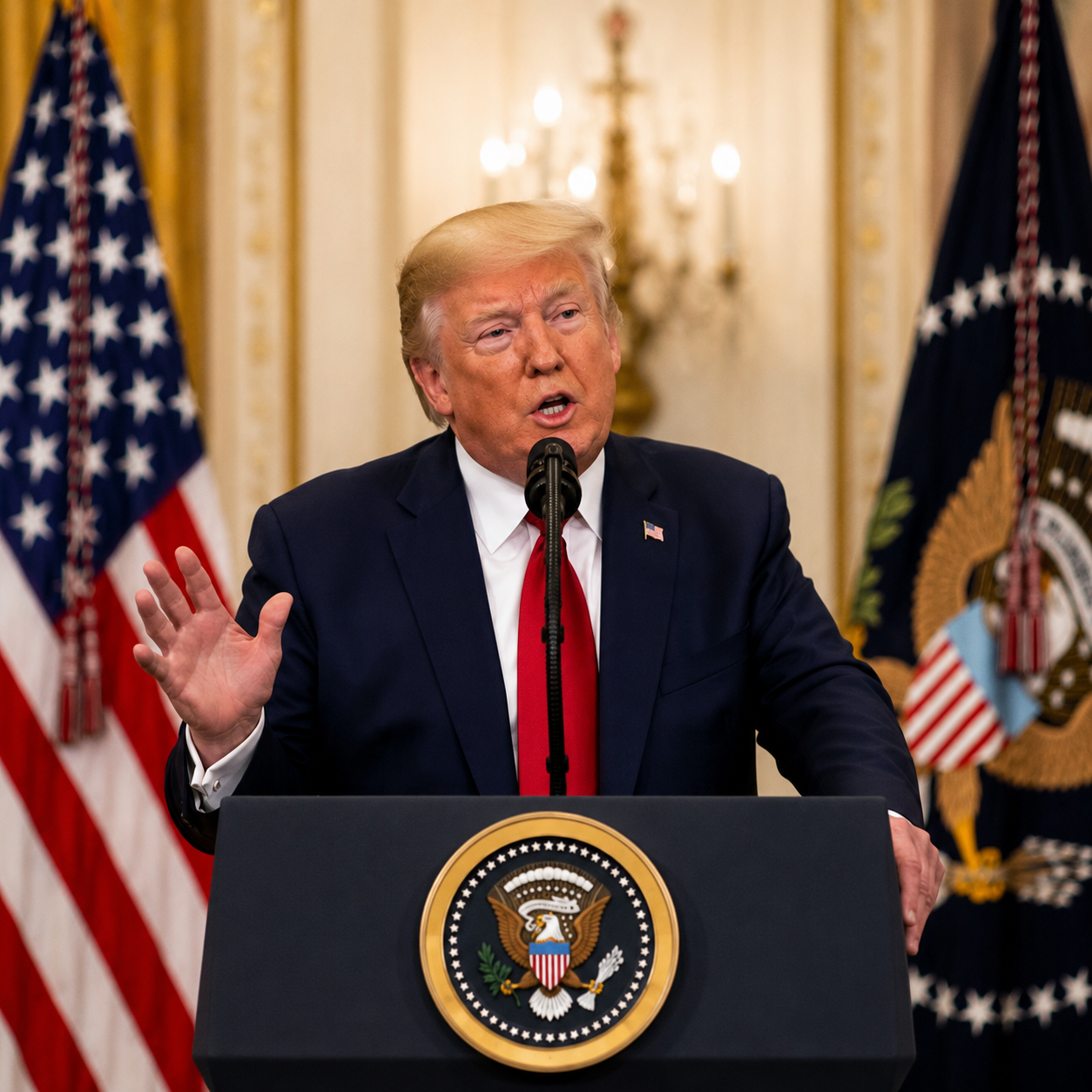
Overnight skyrocketing 20%! Trump is sending a big signal, the crypto market is crazy

Source: Trump's White House speech compilation: Odaily Planet Daily Original title: What did Trump say on the night of the cryptocurrency explosion? The White House organized a “Cow Comes” show! Core point of view: At the White House cryptocurrency industry executives gathering, Trump explained the results of his administration's policies to promote the development of digital assets, emphasized America's position as a global leader through executive orders, legislation, and regulatory reforms, and called on Congress to pass the CLARITY Act to strengthen competitive advantage. Key elements: 1. Participants included SEC Chairman Paul Atkins, CFTC Chairman Michael Selig, and executives such as Coinbase, Robinhood, and Ripple, highlighting the trend of cooperation between the industry and the government. During the conference, BTC once surpassed 70,000 US dollars, ETH rose nearly 20%, and the market response was positive. 2. Trump announced the dismissal of former SEC Chairman Gary Gensler, terminated “Operation Blockpoint 2.0,” and signed an executive order banning CBDC and launching “Project Crypto” to reform the rules. 3. The government establishes US strategic Bitcoin reserves and digital asset reserves to use Bitcoin as a permanent asset of the Treasury; the “GENIUS Act” paves the way for widespread adoption of US dollar stablecoins. 4. The CFTC approved the first Bitcoin perpetual futures contract and promoted Hyperliquid compliance into the US, showing the gradual implementation of the regulatory framework. 5. Trump criticized the high interest rate policy, arguing that interest rates should be cut to support growth when economic data is strong; he emphasized that the fintech revolution has created jobs and wealth, and that the stock market has reached 80 new highs in a year and a half. 6. He called on Congress to pass the “CLARITY Act” as market structure legislation to ensure that the US continues to lead competitors such as China in the fields of encryption and AI. Editor's note: In the early morning of August 20, Beijing time, the White House held a meeting of cryptocurrency industry executives. Trump himself attended and delivered a speech. Government executives such as SEC and CFTC, industry representatives from Robinhood, Coinbase, Ripple, Gemini, a16z, etc., and senior traditional finance executives such as the Intercontinental Exchange and NASDAQ all attended the conference. Perhaps influenced by this positive signal, the cryptocurrency industry soared at night. At one point, BTC broke the $70,000 mark, and ETH rose close to 20%. Below is Trump's own statement on his speech at the conference. Seriously, a group of important people came to the scene today. If you love the world of finance as much as I do — I really love finance — all of you here today are big names in the financial world. It's incredible that you might not know some of them, but anyone in the financial world should know every one of them. Thank you so much for being here today. We're excited to welcome some of America's best talent in finance, cryptocurrency, and technology. In Washington, D.C., we are about to welcome the first meeting of the US Commodity Futures Trading Commission (CFTC) Innovation Advisory Committee (Innovation Advisory Committee). It's a committee of very smart people who will give us suggestions and tell us what we should do. Right, Paul (referring to SEC Chairman Paul Atkins)? They'll tell us a few things. But I think Paul probably knows these issues better than anyone else, and he did a great job. We're very happy with Paul, and I think everyone thinks the same. He's really amazing. From the cryptocurrency market and prediction market, to traditional finance, to decentralized finance, the people in this room are making sure that the future of the commercial market can be created and improved here in the US. We are competing with many other countries for control of these markets, market share, and the profits, jobs, and everything else they create. And we did a great job. We are leading the way in every aspect, including artificial intelligence, and by a huge margin. We want to continue this lead. I would like to thank CFTC Chairman Michael Selig for his outstanding leadership. (Find someone first) Michael, come over... (Then suddenly found him around) Why am I so close that I almost didn't recognize you. At the same time, I would like to thank a very special person, someone who has been respected by everyone for a long time. I would have liked him to take this role — I wanted him to do this job before he became SEC chairman. Paul Atk...

2d ago22BTC skyrocketedTrump
Overnight skyrocketing 20%! Trump is sending a big signal, the crypto market is crazy

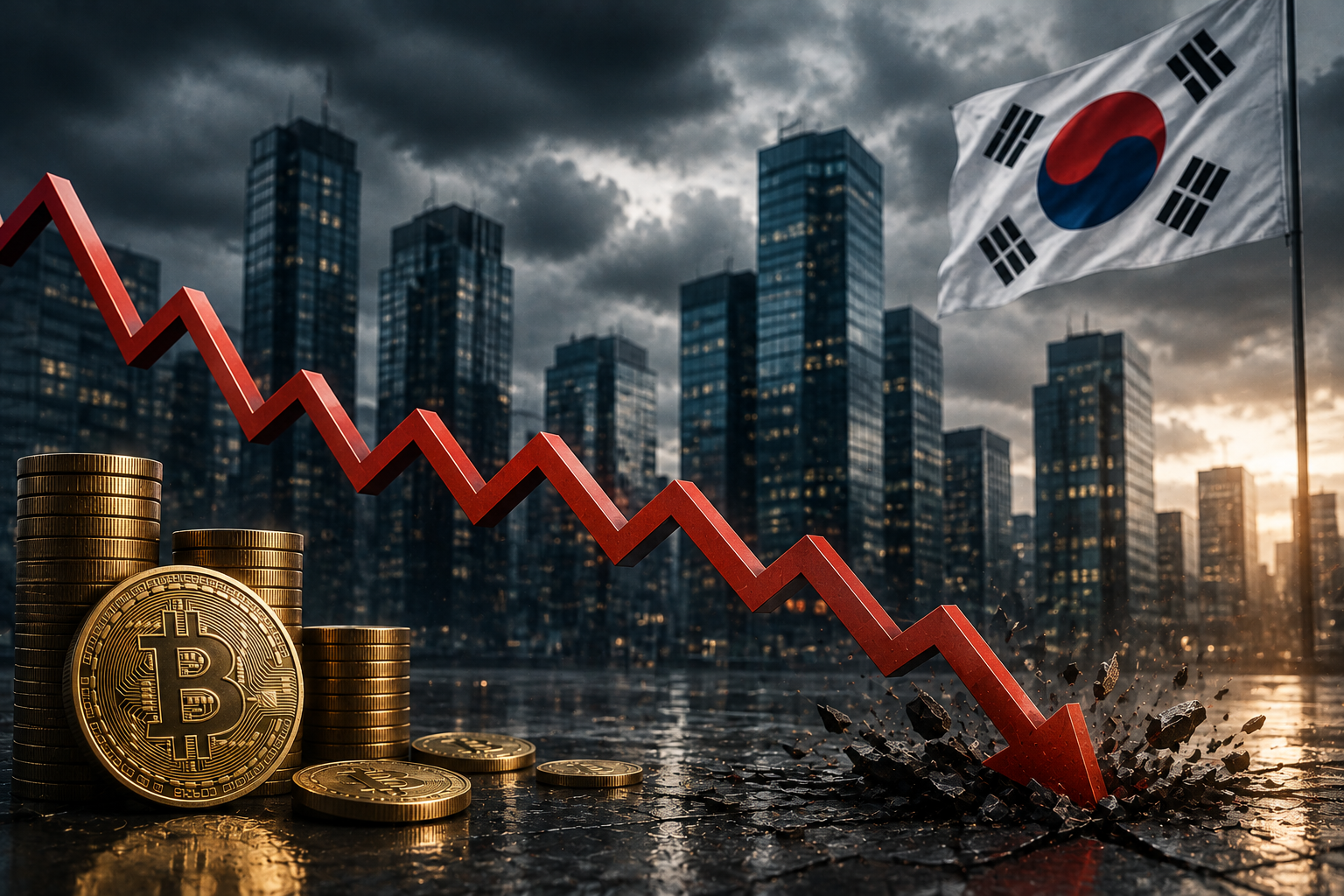
Revenue is cut! Korean crypto exchanges can't handle it anymore

Source: Shenchao TechFlow Article: Cookie Original title: Shortage of revenue from the Korean Crypto Exchange: The most profitable business can't escape the decline in liquidity, the business most like traditional finance, and is also most constrained by cycles like traditional finance. Key points: Dunamu, the parent company of Upbit and Bithumb, the two largest crypto exchanges in Korea, released financial reports for the first half of 2026 on the same day. Revenue was almost down (down about 49% year on year), but profit performance was extremely uneven: Dunamu's net profit was 108.4 billion won (down 74.1% year on year), while Bithumb had a net loss of 108.7 billion won (profit of 55 billion won in the same period last year). The main reason for the decline: The total trading volume of South Korea's licensed Korean won exchanges fell 49.5% year-on-year in the second quarter, and fee revenue declined simultaneously with the overall contraction of the market. Profit difference: Dunamu has better cost control and remains profitable; Bithumb's losses include digital asset impairment and regulatory penalties, and the operating profit margin is less than 9%. Capital flow: South Korea's retail capital is shifting from the crypto market to AI and semiconductor concept stocks (Samsung Electronics, SK Hynix), and a 22% crypto profits tax will be introduced in 2027, curbing the will to trade. IPO process: Dunamu received an investment of about 1.5 trillion won from Samsung affiliates and others, and cooperated with Naver Financial to advance the KRX listing; Bithumb plans a three-phase IPO, targeting 2028, but current financial performance is under pressure. Industry reflection: The business model, which accounts for nearly 100% of transaction fees, showed strong cyclical characteristics. The profit margin fell from 88% in 2021 to the current 14%. Exchange valuation logic faced open market torture and transformed into a key issue. South Korea's two largest crypto exchanges simultaneously handed over a nearly symmetrical recession report card. On August 14, Upbit's parent company Dunamu submitted its report for the first half of 2026 to the Korea Financial Supervisory Service (FSS) electronic disclosure system. Bithumb's semi-annual report also surfaced on the same day. Looking at the two financial reports together, it's like two perspectives on the same recession. Dunamu's consolidated revenue for the first half of the year was 408.1 billion won, down 49.1% year on year; operating profit was 111.5 billion won, down 79.7% year on year; net profit was 108.4 billion won, down 74.1% year on year. Bithumb's revenue for the first half of the year was 168.8 billion won, down 48.7% year on year; operating profit was 14.9 billion won, down 83.4% year on year; net loss was 108.7 billion won, compared to net profit 55 billion won for the same period last year. Revenue declines were almost the same, all around 49%. However, there is a huge gap on the profit side. Despite a sharp drop in profits, Dunamu still earned 108.4 billion won. Bithumb directly turned into losses, and the amount of losses even exceeded Dunamu's net profit. At the same ebb, the revenue of the two companies at different levels fell at the same time. The reason is simple: the total trading volume of the five licensed Korean won exchanges (Upbit, Bithumb, Coinone, Korbit, Gopax) in the second quarter fell 49.5% year over year to about US$146.4 billion. The overall market has shrunk in half, and handling fee revenue has naturally shrunk in half. But why is Dunamu still profitable and Bithumb losing money? The difference is revenue structure and cost control. Upbit's trading platform revenue for the first half of the year was approximately 395.5 billion won, accounting for 97% of total revenue. Bithumb has a higher percentage, and almost 100% comes from transaction fees. Both are highly dependent on transaction fees, but Dunamu has better control on the cost side. Bithumb's losses include digital asset impairment losses and administrative expenses associated with regulatory penalties. One more number explains the problem. At its peak in 2021, Dunamu left an operating profit of 88 won for every 100 won of revenue. By the second quarter of 2026, this figure became 14 won. The operating profit margin dropped from 88% to 14%. In five years, same company, same business model. Bithumb's situation is more extreme. The operating profit for the first quarter was only 2.8 billion won, and the net loss was 86.9 billion won, including significant digital asset impairment and compliance rectification expenses. Although the business level recovered in the second quarter, the first half of the year as a whole remained a net loss. Where did the money go? The decline in South Korea's crypto trading volume is directly linked to a structural shift in local capital flows. 2026...

3d ago22Bithumb
Revenue is cut! Korean crypto exchanges can't handle it anymore

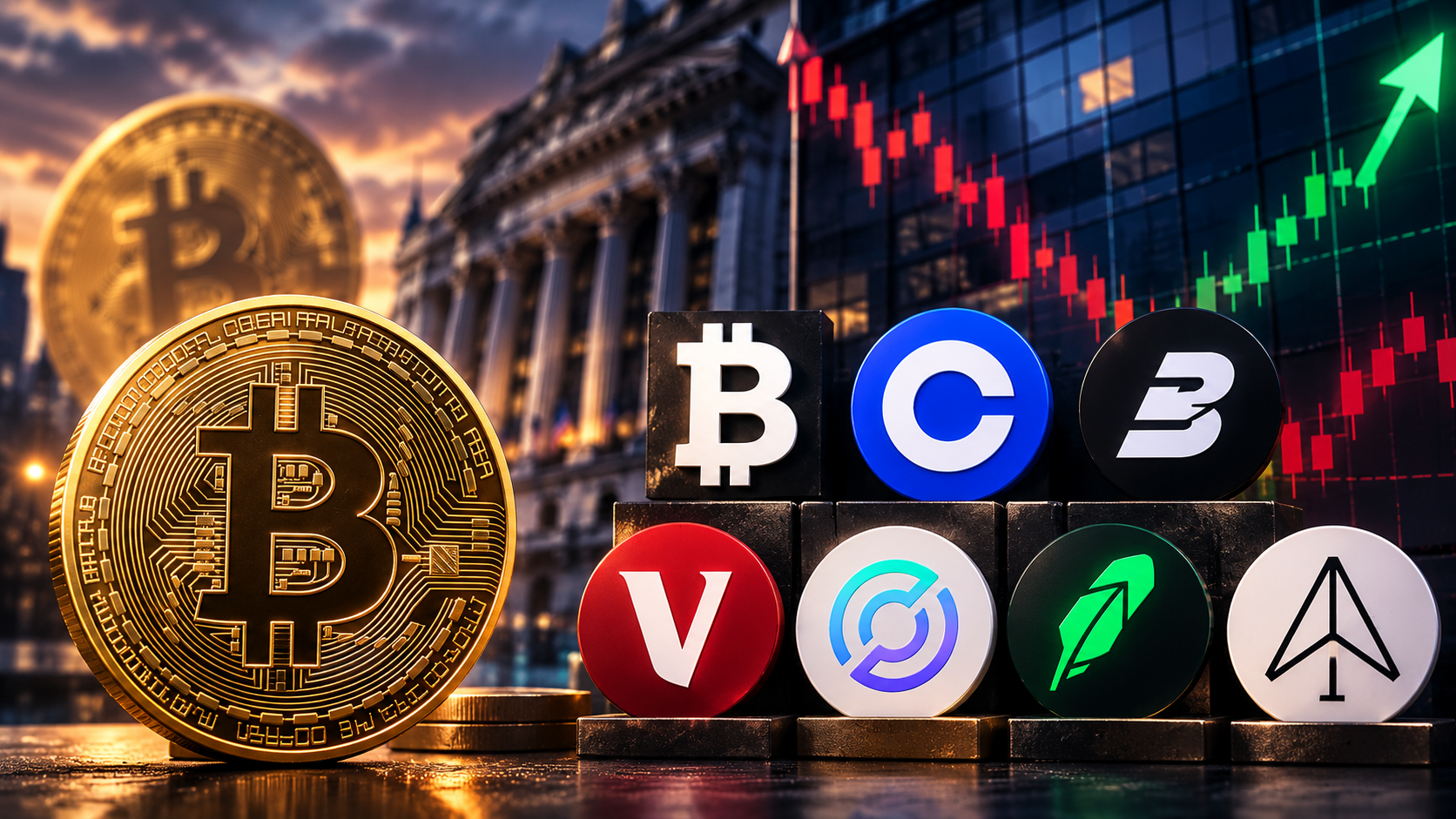
Wall Street Q2 holdings revealed: as institutions fall and buy more, ETH outperforms BTC across the board

Source: ChainCatcher Author: Zhou Original title: Q2 Wall Street Institutional Crypto Positions: Most institutions bucked the trend, and ETH exposure completely outperformed BTC in the second quarter. ETF capital flows and institutional behavior were decoupled, and the institutionalization of crypto assets deepened; at the same time, institutional differences over crypto-related stock targets are also getting bigger. August 14 is the legal deadline for the US SEC to require institutional investors to submit Q2 13F forms. After the centralized disclosure of documents, Wall Street's crypto holdings were once again spread out on the table. There was a clear contrast between institutional movements and currency price trends this season. The price of Bitcoin fell by about 14.2%, while crypto holdings declared by institutions increased. According to Bitcoin Strategy's calculation of 13F data, institutional Bitcoin holdings increased 7.5% from about 498,000 to about 536,000, up 7.5% month-on-month, while total ETF holdings fell from about 1.297,000 to about 1,211,000 during the same period. According to SosoValue data, the US spot Bitcoin ETF continued to make net redemptions in the second quarter, with net outflows of about 2.4 billion and 4.5 billion US dollars in a single month in May and June, respectively. Among them, June set the worst monthly record since listing. The Ethereum ETF also had a cumulative net outflow of around $700 million over the same period. At the same time, the chips are concentrated on the head. The number of institutions declaring Bitcoin holdings dropped from about 2,000 to about 1,900. According to Bloomberg data, as of August 13, the number of institutional holders of an IBIT product reached about 1,500, with a net worth of about US$47.35 billion. The growth rate of Ethereum on the bank side completely outperformed Bitcoin. Previously, ChainCatcher wrote in the first quarter position review: Institutional interest in Ethereum's allocation is increasing, and Jane Street, Wells Fargo, and J.P. Morgan Chase all added Ethereum ETFs during the outflow phase. In the second quarter, this sign was confirmed on the bank side. According to DWF Labs estimates, in terms of the number of corresponding crypto assets, Morgan Stanley's exposure to BTC increased 3.7% month-on-month and ETH exposure increased 18.6% in the second quarter. J.P. Morgan's BTC exposure increased 12.2%, and ETH exposure increased 67.3%. Both banks are growing at a significantly higher rate of ETH than BTC. The individual level is more intuitive. Morgan Stanley's ETHA increased by about 202% to 4.6 million shares, J.P. Morgan's ETHA increased by about 338% to nearly 1.17 million shares, and Bank of America ETHA increased from about 67,500 shares to about 1.98 million shares, about 29 times the previous one. But in fact, there was an overall net outflow of Ethereum spot ETFs in the second quarter. According to SosoValue data, there was still a net inflow of about 356 million US dollars in April, net outflows of about 541 million and 529 million US dollars in May and June respectively, and a total net outflow of about 714 million US dollars in the second quarter. Jane Street bought it back. Hedge funds moved their positions into options. Last season, Jane Street cut IBIT holdings by about 71%. The market once speculated that it was bearish on Bitcoin. This quarter, it reversed IBIT and added back about 24.9 million shares, a sharp increase of about 324% over the previous quarter, making it one of the biggest buyers of the quarter. Its current spot Bitcoin ETF exposure is approximately $9.9 billion, of which approximately $828 million is in IBIT. As an authorized participant and market maker, its end-of-quarter inventory is related to redemptions and hedging, and a large amount on spot is not equal to a directional bet. It is worth noting that 13F only reported a long spot volume at the end of the quarter. If options were added, the image of several institutions would also reverse. Global macro hedge fund Brevan Howard cut spot IBIT from 24.3 million shares to 7.21 million shares in the second quarter, reducing its holdings by about 70.4%. But it also holds a call option corresponding to approximately 7.23 million IBIT shares and a put option of 5.27 million shares. Graham Capital reduced its current IBIT from about 926,000 shares to 259,000 shares, reducing its holdings by about 72%, while holding down options corresponding to about 1.74 million IBIT shares, with a declared value of about $57.94 million. Multi-strategy giant Millennium reduced current IBIT from about 19.29 million shares to 9.69 million shares, reducing holdings by about...

3d ago22Wall StreetBitcoin
Wall Street Q2 holdings revealed: as institutions fall and buy more, ETH outperforms BTC across the board

From crypto mining farms to AI clouds: Why does a16z say the “new cloud” burns money as it grows?

Source: a16z New Media Author: Moses Sternstein, a16z Original title: Charts of the Week: Head In The Neoclouds Editor's Note: In the context of generative AI driving a new round of computing power investment, market discussions on AI infrastructure are shifting from “whether there are enough GPUs” to “who can provide computing power in a sustainable way”. When model training, inference requirements, and data center expansion became consensus, a lower-level question began to emerge: Can the rapid increase in computing power demand actually translate into stable profits and cash flow? In “Charts of the Week” published by a16z New Media, author Moses Sternstein moved in from new cloud companies such as CoreWeave, Nebius, and Applied Digital to discuss the growth, valuation, and profit conflicts of the AI computing power market, and further extended to horizontal SaaS, model routing, and cutting-edge lab talent competition. In this article, instead of simply judging whether AI demand is strong, the author breaks down current AI transactions into a set of lower level structural issues: how existing infrastructure is being repriced, why revenue growth is not simultaneously improving market expectations, and why the AI industry's competitive focus is shifting from simple expansion to efficiency and return. The first is the rediscovery of the value of infrastructure. In the past, land along railway lines, gas pipelines, and cable television networks all served specific industries and were later transformed into telecommunications and internet infrastructure. Today, a similar revaluation of assets happened again. Originally serving cryptocurrency mining, some new cloud companies already have operating experience with electricity, computer rooms, cooling systems, and high-density computing; after the outbreak of AI demand, these capabilities were quickly transformed into scarce computing power supplies. The point is that AI infrastructure competition doesn't start entirely from scratch; early advantages often come from a recombination of old assets, energy resources, and engineering capabilities. Second, high revenue growth and profit uncertainty coexist. The early revenue growth rate of new cloud companies such as CoreWeave once surpassed the initial stages of cloud giants such as AWS, but the capital market did not receive the same level of recognition. The reason is that the new cloud is not a typical asset-light software business. GPU procurement, power access, data center construction, chip depreciation, and debt interest will rise simultaneously with scale, or even faster than revenue. This means that revenue expansion can only prove that AI computing power is in high demand, but it cannot automatically prove that the business model has a sufficiently high return on capital. What the market is really waiting for is whether these companies can turn orders and revenue into sustainable free cash flow. Third, the value of software is being re-differentiated according to the impact of AI. In the past, the market feared that generative AI would generally weaken SaaS companies' moats, but Atlassian's performance suggests AI could also be a tool to increase customer spend and product stickiness. At the same time, cybersecurity and observability software continues to receive valuation premiums as AI expands potential risks and increases companies' reliance on proven solutions. This means that the so-called “end of SaaS” will not happen evenly. Whether AI is an alternative product, lower prices, or expand demand, is becoming the new standard for software valuation differentiation. Fourth, AI applications are shifting from “stacking tokens” to optimizing tokens. In the past, companies often preferred to directly call the most capable models or give engineering teams a budget to test on their own; now, companies such as Databricks have begun to use intelligent routing to match models with different prices and performance according to the difficulty of the task to reduce costs while maintaining results. A decrease in the unit price of tokens does not necessarily mean a contraction in total AI spending: as unit costs decrease and application scenarios increase, total token consumption and overall market size may continue to rise. Efficiency and demand are not mutually exclusive, but may form a mutually reinforcing cycle. If I were to reduce this article to one judgment, it would be: AI infrastructure has proven itself to generate rapid growth, but the next phase of success or failure will depend on whether the company can transform growth into greater capital efficiency. In this sense, the topic discussed in this article is not only whether CoreWeave can become the next generation of cloud giants, but whether the entire AI industry can move from expanding computing power to sustainable commercial returns...

5d ago22a16z
From crypto mining farms to AI clouds: Why does a16z say the “new cloud” burns money as it grows?

From crypto to AI: Why are believers turning collectively?

Source: Wall Street Journal Author: Vicky Ge Huang Compiled by Chopper Original title: Why are cryptocurrency believers “throwing coins into AI”? Summary: Individual investors are withdrawing from the cryptocurrency market and switching to AI stocks. Daniel Koss, a 30-year-old investor, cleared Bitcoin and invested all of them on the AI circuit; Ryan Ho, the founder of the social networking platform, also replaced his seven-digit Bitcoin holdings with chip stocks, believing that the structure of the crypto market is weakening and the AI application scenarios are more realistic. Another trader, Minh Le, cashed out some of his crypto assets to buy Ferraris and anime collectibles. Although he recently re-entered the market, his strategy is conservative. Bitcoin fell from a high of $126,000 to around $60,000, decoupling from the trend of US stocks, while AI stock derivatives launched on platforms such as Hyperliquid also boosted capital migration. Bloomberg analysts say the crypto market is undergoing a deep clean-up, and investors believe that the era of Bitcoin's high-multiple growth is over. Daniel Koss has bought Bitcoin in a big way, and he is convinced that cryptocurrency will reshape the financial industry. But after the advent of the AI boom, he changed his investment direction. The 30-year-old investor believes that rapidly developing artificial intelligence technology has the potential to disrupt many industries, so he entered the market decisively. In August of last year, he cleared his six-digit Bitcoin holdings, and now all of his money is invested in the artificial intelligence circuit. “It felt like primitive humans discovered Tinder.” Koss, who is in Zug, Switzerland, said. Koss's position adjustment choice reflects the major capital migration that has taken the entire market by storm over the past year: individual investors and hedge funds have successively sold Bitcoin and various tokens to chase AI stocks. This asset rotation also explains Bitcoin's price dilemma: since it hit an all-time high of over $126,000 in October last year, Bitcoin has continued to be under pressure and has been hovering around $60,000 for a long time. At the time, the Trump administration threatened to impose new tariffs on China, triggering investors to sell high-risk assets. At the same time, chip makers and other AI concept stocks have broken out of the boom that only existed in the crypto market in the past. Bloomberg Industry Research Advanced Commodity Strategy Mike McGlone said, “The crypto market is undergoing a round of deep clean-up, and this is just the beginning.” The US stock market continued to hit new highs this year, yet Bitcoin continued to weaken. Koss has no plans to re-trade Bitcoin anytime soon. In his view, crypto assets have matured, and the era of exponential skyrocketing surges is over. He believes that Bitcoin will never increase tenfold in a year. “Bitcoin is already so large that even doubling it would be extremely profitable.” Even staunch crypto believers are reducing their crypto holdings and turning to volatile AI stocks. Ryan Ho, founder of the social trading platform Legend, revealed that when the price of Bitcoin was close to $120,000, he held a seven-digit Bitcoin position. At the time, he was convinced that Bitcoin “will never fall below $100,000 again.” However, the market backfired. In December of last year, he swapped a large number of bitcoins and altcoin holdings to buy AI-related stocks such as chip companies, including Intel. Currently, he still holds hundreds of thousands of dollars in Bitcoin. Ryan Ho, a 25-year-old entrepreneur, said that the core reason for the reduction in crypto assets was the structural weakening of the crypto market. In his view, after the sharp decline in October, the crypto market no longer has the characteristics of a health-risk asset: demand for buying has dried up, and institutional capital continues to flow to the AI sector. The crypto market then decoupled from the trend of US stocks. US stocks continued to rise, and the crypto market stagnated. Ryan Ho believes that ordinary investors are more likely to be optimistic about the growth prospects of AI. Artificial intelligence has a large number of real implementation scenarios such as ChatGPT and AI-assisted programming. Another driving force behind the shift of capital from crypto to AI is the launch of AI stock derivatives on mainstream crypto trading platforms such as Hyperliquid. “A large number of crypto traders have started trading AI stocks in the past few months, and the core reason is that related trading channels have been opened up.” Ryan Ho said. There are also some crypto traders who chose to settle the bag and end the previous round of sharp increases in Bitcoin and mainstream tokens. Trader and digital artist Minh Le recently monetized some of his crypto assets to buy a Ferrari, while also allocating a large amount of profit to a Japanese anime collection, including “One Piece” and Pokémon collectible cards. Minh LeMinh Le relies on...

8d ago22AIBitcoin
From crypto to AI: Why are believers turning collectively?

HKD stablecoin “big retreat”: 36 applicants, only 2 left

Source: Foresight News Author: Joe Zhou Original title: The Hong Kong Dollar Stablecoin “Great Retreat” is strategically negative and tactically aggressive. The participants in the HKD stablecoin are waiting for a reason to get them excited. “We are not optimistic about the HKD stablecoin.” An industry insider close to the regulatory level said bluntly to the author, “Being optimistic about stablecoins does not mean being optimistic about Hong Kong dollar stablecoins — these are two completely different things.” He paused and added: “Let the least willing and least motivated institutions dominate the Hong Kong dollar stablecoin and marginalize the most motivated and thoughtful institutions. How can this be done?” This is not personal prejudice. I learned from many participants in the Hong Kong stablecoin business that the ownership of the first two Hong Kong dollar stablecoin licenses already reflects the embarrassment of “passive defense” supervision: Standard Chartered Bank-led Anchoring Fintech Co., Ltd. took the initiative, while the other licensed institution “didn't want to do it at all” — this is already an open secret in the community. At the same time, companies with strong intentions to explore the Hong Kong dollar stablecoin scenario, such as Ant Group, JD Technology, and Yuancoin Technology, have failed to actually enter the market or have no core dominance. “Engaged, but not optimistic.” Two people from different institutions, both close to the Hong Kong stablecoin business, spoke almost in unison. Currently, the situation of Hong Kong dollar stablecoins is showing three subtle patterns: one type of institution is optimistic about the stablecoin circuit but has reservations about the Hong Kong dollar stablecoin, but they have to “take their place”; another type of institution is not enthusiastic about stablecoins and is being forced to enter the market by regulation; there is also a category of institutions that have the will, resources, and scenarios, but are turned away because of their status. This misalignment is the most realistic footnote to the Hong Kong dollar stablecoin's “Great Retreat”. One license, two attitudes, three positive reactions for Standard Chartered, negative for HSBC — one license, two attitudes. In September 2025, 36 institutions flocked to apply for a HKD stablecoin license, which was very exciting. Nearly a year has passed, and today in August 2026, few people have taken the initiative to mention the Hong Kong dollar stablecoin. The hustle and bustle has receded, and there are only two real players left: Standard Chartered and HSBC. A brand-new business model was eventually completely handed over to organizations that are mainly engaged in traditional business models. Market sentiment is as cold as ice. “Everyone in the community knows that HSBC is not active.” Two people from different Hong Kong licensed crypto exchanges invariably told the author. On 10 April 2026, the HKMA issued the first batch of two HKD stablecoin licenses to Anchorage Financial Technology Co., Ltd. (Standard Chartered Bank (Hong Kong), Hong Kong Telecom and Animoca Brands) and Hong Kong Shanghai Banking Corporation Limited. However, according to industry sources, the two institutions have very different attitudes towards stablecoins. Standard Chartered has shown some initiative and has begun to lay out a global stablecoin strategy. On July 2, 2026, Standard Chartered and USDC issuer Circle jointly announced the launch of an institutional-grade USDC one-stop access service. On August 12, 2026, Anchorage Financial launched the first phase of the Hong Kong dollar stablecoin HKDAP. Currently, it is only open to institutional distributors and professional investors such as HashKey and OSL, and plans to expand to retail users as early as the end of 2026 depending on market conditions. HSBC is a different story. “HSBC is passive; they only do it when they are pointed at their nose.” An industry insider spoke bluntly to the author. Compared with Standard Chartered's aggressive promotion, HSBC's Hong Kong dollar stablecoin program is clearly behind schedule until the second half of 2026. Behind this delay is HSBC's careful consideration of the stablecoin business based on real interests. “HSBC is more inclined to implement tokenized deposits rather than stablecoins.” A person close to HSBC revealed. The root cause is that stablecoins directly conflict with HSBC's main business. According to the data, about 85% of HSBC's payment business revenue comes from net interest income based on deposits, and the payments business itself accounted for about 22% of its total revenue in 2025. HSBC's core business model is to absorb low-cost deposits and earn interest spreads through loans and investments — and stablecoin issuance just diverts bank deposits and shakes its foundation. What's more, the business of issuing compliant stablecoins itself is far from being “profiteering”: revenue is highly dependent on the interest rate environment, yet profits are being encroached upon by various channels such as issuance, hosting, and distribution. For HSBC, which has deposit and loan spreads as the core and holds a large number of customer deposits, active all in stablecoins not only erodes its deposit base, but also does not earn significant profits, and lacks internal commercial driving force. In addition to Standard Chartered and HSBC, the reaction of 13 licensed crypto exchanges to the Hong Kong dollar stablecoin was also mixed...

8d ago22Hong Kong dollar stablecoin
HKD stablecoin “big retreat”: 36 applicants, only 2 left

At a time when Bitcoin is sluggish, institutional giants are bucking the trend to grab these crypto concept stocks

Source: Daily Planet Daily Author: Wenser Original title: Crypto Bear Market, Which Crypto Concept Stocks Are Institutional Giants Making Up Their Positions? The agency is scrambling for funding: the full list of leading stocks on each track is here! Core view: Despite the fluctuating Bitcoin price and poor performance of crypto concept stocks, institutions such as Amundi, Pioneer Group, and State Street Group, the largest European asset management company, bucked the trend and increased their holdings of crypto stocks such as Strategy and Coinbase through 13F documents in Q2 2025, showing that institutional capital is quietly laying out leading targets at their own pace, rather than the “collapse of institutional belief” as market rumors say. Key factor: 1. France's Amundi increased 148% of Strategy shares to 1.32 million shares (worth US$127.7 million). Previously, it cut its position by nearly 90% in Q1, which is a low base correction. 2. In July, Pioneer Group's funds increased their holdings of MSTR by about 610,000 shares, with total holdings exceeding 12.6 million shares, worth more than 1.2 billion US dollars; State Street Group increased its holdings by 506,000 shares, with a total holdings of 7.52 million shares. 3. The pension fund signal is remarkable: the Michigan retirement system increased its MSTR holdings by 141%, the Louisiana and New Jersey pension funds simultaneously increased their positions, and conservative funds expanded their exposure to crypto assets. 4. Bitmine's entry into the Russell Index triggered forced purchases by passive funds such as BlackRock (holding 27.3 million shares) and State Street, which made unactive decisions; Circle received an investment of US$131.8 million from the Norwegian Sovereign Fund and opened a position with the Swiss National Bank. 5. ARK Invest operates on frequent bands such as Coinbase, Block, and Circle. For example, it bought 59,668 COIN shares (worth US$9.16 million) on August 7, reflecting an active dipping strategy. 6. The shareholding ratio of Robinhood institutions exceeds 93%. A large number of small and medium-sized pension funds have scattered positions, indicating that they have entered the regular allocation pool of conservative funds. There was a 45-day disclosure delay in the 7.13F document. Institutional position adjustments were flexible, and retail investors should not directly follow orders, but institutions are more sensitive to the bottom of the market and the racetrack. Recently, France's Amundi, the largest asset management company with an asset management scale of 2.9 trillion US dollars, disclosed that it has increased its share of Strategy by 148% and currently holds 1.32 million shares worth US$127.7 million. Looking back at recent data, although BTC continues to fluctuate and the price performance of many crypto concept stocks is not impressive, there are still quite a few institutions that choose to buck the trend and increase their holdings and wait for the market to rebound to generate profits. Today, claims about the “DAT model bankruptcy” and “the collapse of institutional cryptographic beliefs” are rampant, but the 13F documents that are mandatory to be disclosed by the US SEC every quarter reveal the truth about the time difference — a number of investment institutions with asset management scales of 100 billion and trillion dollars are quietly increasing their positions at their own pace. Strategy (MSTR): Asset management giants and public funds have made up MSTR with the most solid data in this round of institutional holdings increases. Buyers include various institutions such as asset management companies, large banks, and public funds. Amundi's position of about 1.32 million shares mentioned at the beginning of the article was not the result of continuous unilateral purchases. It cut Strategy's stock position by nearly 90% in Q1 this year, and the Q2 increase was to make up for the low base position of about 530,000 shares. After all, the Q1 market performance in the crypto market is hopeless, and asset management giants also need to review the current situation and trade. Asset management giant Vanguard Pioneer Group's VOE fund previously announced an increase of 83,093 MSTR shares, worth $8.16 million, to 2.12 million shares worth $209 million; on July 27, its VTSAX fund increased its holdings of 5291 million MSTR shares worth $50 million and increased its holdings to 10.5 million shares worth $994 million. State Street Corporation (State Street Group), the world's fourth largest asset management company, recently disclosed that it has increased its holdings of 506,635 MSTR shares, involving an amount of about US$51 million, with a total holdings of 7.52 million shares, with a position value of about US$758 million, and a 7.2% increase in holdings. Growth ETF (CGGR) under Capital Group, the world's largest active fund management company with an asset management scale of $3.3 trillion, disclosed an increase in MSTR in July...

8d ago22CircleCoinbase
At a time when Bitcoin is sluggish, institutional giants are bucking the trend to grab these crypto concept stocks

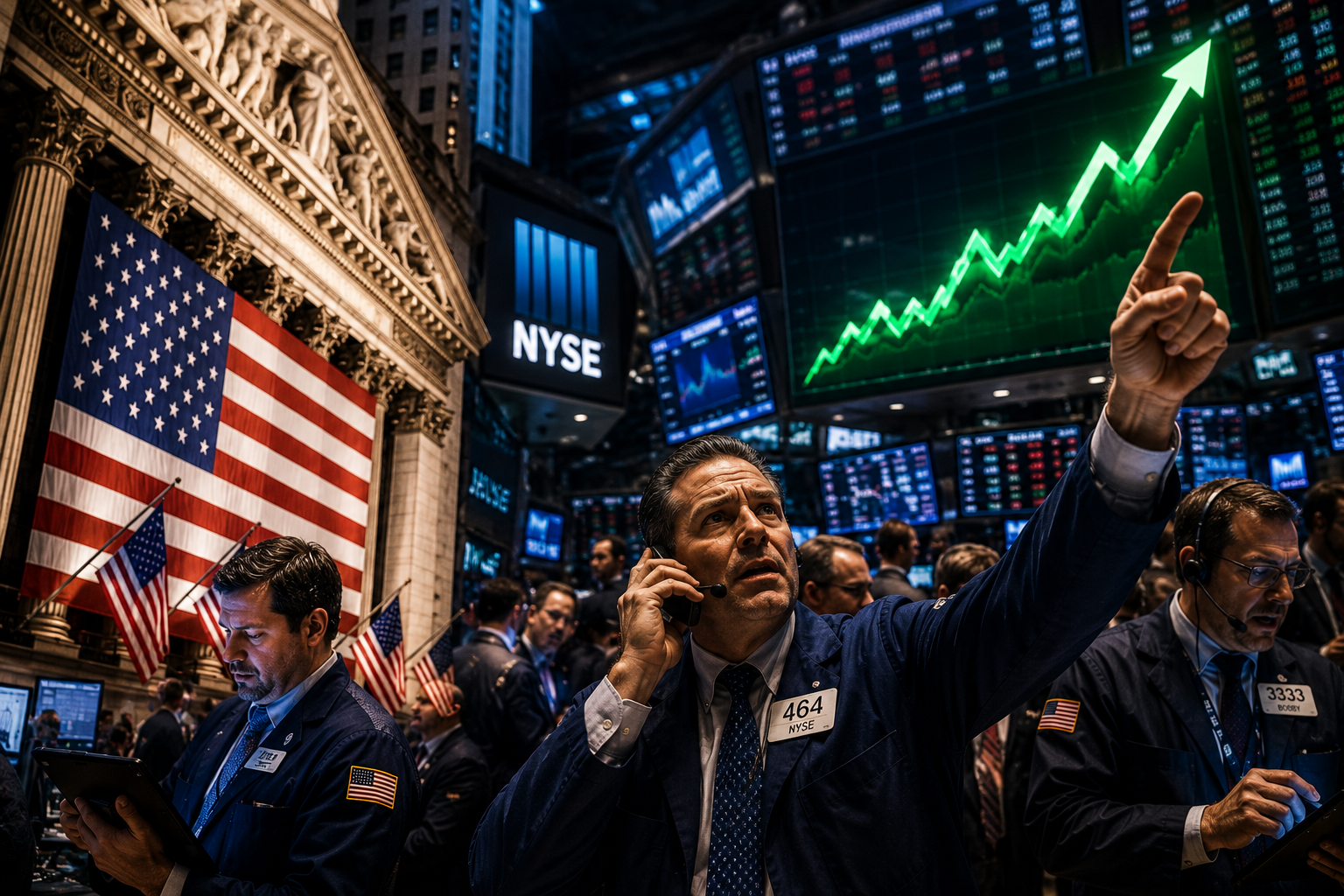
As soon as US stocks stopped falling, capital went crazy rising -- Wall Street was suddenly wary

Source: Wall Street News Author: Xu Chao Original title: After the sharp fall in July, capital surged again, and the “panic index” of US stocks plummeted. Wall Street began to be wary. The strong rebound in US stocks created a calm image of a sharp drop in volatility, but Wall Street is sounding the alarm: the options market is now “biblical” and distorted. Under ostensible prosperity, the market position structure is extremely weak. As Nvidia's earnings report and the central bank's annual meeting approach, any external catalyst could set off a severe one-sided storm at any time. US stocks rebounded strongly from sharp deleveraging in July. Investors scrambled to catch up, and volatility indicators quickly fell back to a near-calm level. However, Wall Street traders and strategists are warning that under surface calm, the market structure already conceals fragility, and any external catalyst could trigger a rapid, self-reinforcing directional shock. The VIX Index plummeted from a July high of around 21 points to around 15 points — a level that has historically been on par with absolute calm in the market. Meanwhile, Goldman Sachs's internal panic index plummeted from 7.9 at the end of July to less than 1, hitting its lowest point since June 2024. Bloomberg market strategist Jan-Patrick Barnert pointed out that the position structure left over after large-scale deleveraging last month makes the market extremely vulnerable to dramatic changes in direction caused by mechanical capital flows before important risk events such as upcoming inflation data, Nvidia earnings reports, and the Jackson Hole Central Bank Annual Meeting. The three Wall Street trading platforms gave a nearly consistent description of the current August market: investors are selectively chasing the rise, but not out of full faith. Fundamentals may provide support for current index points, but market sentiment is far from being fully optimistic. Traces left by the rise: the options market is now “biblically” distorted. After the severe deleveraging round in July, buyers' institutional positions were generally light, but it just happened to have hit one of the strongest earnings seasons in recent years. At the same time, the market rotated, and stocks outside the AI sector and high-quality AI targets both became the core of risk taking. Charlie McEligott, a cross-asset strategist at Nomura Securities, said that “customers were caught off guard” and immediately began to rise. The evidence of this upward movement is not reflected in price trends, but is clearly imprinted in the options market: call options are being snapped up, and as the index soars away from everyone's hedging price, put options quickly lose value. McEligott described the resulting skewed bias as “biblical level.” Both the S&P 500 and Nasdaq 100 Index's 25-Delta bullish option bias fell to the lowest level in history in January, and the S&P 500 bullish options volume simultaneously reached record highs. Over the past week, the achieved volatility was significantly higher on rising days than on falling days — the only thing the market seemed to worry about was shorting subsequent gains. The volatility of individual stocks has been destroyed, and the risk behind the calm has not been eliminated. Volatility at the individual stock level has been erased on a large scale in the process. Goldman Sachs derivatives and capital flow expert Lee Coppersmith pointed out that the average monthly implied volatility of NASDAQ 100 constituent stocks fell 9.1 percentage points within three trading days, and the decline of S&P 500 constituent stocks also reached 6 percentage points. Coppersmith said, “In the AI era, we have seen larger fluctuations, only the fluctuation shock in August 2024 and the tariff incident in April 2025. “At that time, VIX broke through 60 points. However, in the past month, the highest point of VIX reached only about 21 points, then quickly fell back. However, this is probably where the trouble lies. Goldman Sachs's internal panic indicators have certainly fallen to a low point, but a non-farm payroll report showing employment losses of 23,000 people, US bond yields hovering around 4.7%, the latest episode of the yen intervention, and the unresolved Iran conflict all together form a picture of macroeconomic risks that should not be underestimated. Financial data is impressive, but the macroeconomic background is far from confirming that everything is improving. AI is no longer an overall position, but a stock selection list at the index level. The overall exposure seems to have completely changed to risk appetite. But underneath the surface, skepticism still exists. Artificial intelligence trading is still the core of the market, but the basket of leading thematic gains is fragmenting. Not all of the targets that were hit hard in July experienced a strong rebound — memory chip stocks are a typical example. Nick Savone, Global Head of Equity Advisory and Client Services at Morgan Stanley, wrote: “This may be a broader revelation of a week of familiar trading regaining life without simply returning to the old script. The degree of diversification is still extremely high, and deleveraging in July...

9d ago22US stocks
As soon as US stocks stopped falling, capital went crazy rising -- Wall Street was suddenly wary

Hash Global: Bitcoin bear market may be nearing its end

Source: X Author: Jessica Feng (Hash Global BNB Fund Investment Manager), Henry Yang (Hash Global Investment Partner) Original title: Hash Global: Bitcoin hasn't risen yet, why are we starting to think the bear market might be over? Abstract: Bitcoin has been trading sideways between $62,000 and $65,000 for nearly two months, but on-chain chips have been reshuffled: more than 2.4 million BTC has been deposited in the $610,000 to $65,000 range. Concentration is rare, and a new bottom is being formed. Similar chip structures in history have predicted subsequent market trends. Changes in kinetic energy take precedence over price. Now is the time to enter the next round of cycle layout. Over the past six months, the popularity of AI has absorbed almost all of the market's attention, and even Crypto's last belief, Bitcoin, has been drastically shaken. Since falling below $70,000 in February, BTC has stepped back into the $58,000-$60,000 range three times. Strategy, an old player in the industry, began selling coins, and mining companies turned to AI. The prospects for the industry were bleak, and it also made the fears real time by time. While US stocks continued to rise and gold bottomed out, Crypto seemed to be forgotten by the world: BTC had been trading sideways between $62,000 and $65,000 for almost two months, and the 30-day implied volatility dropped to 36%, setting a multi-year low. The lack of vitality makes it difficult for the public to be optimistic about the market. But what we've been paying more attention to recently is “change” and “perspective,” that is, behind the price, the changes that are taking place in the market. The forces that weighed down the market in the early stages are weakening one by one: macro-austerity expectations have cooled down, the strategic lightning crisis has abated, and the outflow of institutional capital has stopped. Meanwhile, Bitcoin's on-chain chips are gathering again in the midst of consolidation. Everything seems to indicate that an inflection point is approaching, but these changes are not yet reflected in prices, as the market is waiting for more clear signals. Outside the market, AI transactions are cooling down, and a new round of capital switching is about to begin; in the market, the old OGs are still waiting for the last drop and slow to take action — the calm and quiet surface at the moment has just opened up the best angle and timing for us to enter. It is difficult to predict when the market will start, but what is certain is that we are entering the time window for the next round of layout. 1. Under the impression that the price has not changed, the chip structure has been reshuffled. The new bottom is forming a new bottom where BTC has tested the $60,000 mark three times, and has been clearly accepted each time. The price then rebounded to around $65,000, upward selling pressure reappeared, and the market fluctuated repeatedly between $63,000 and $65,000. On the face of it, the price has hardly changed, but on-chain chips have quietly completed a round of redistribution. Currently, more than 2.4 million BTC has been deposited in the $610,000 to $65,000 range, accounting for about 12% of the circulating supply; of these, around $63,000 alone, more than 1 million BTC has been collected, accounting for about 5.2% of the circulating supply. The concentration of chips has risen to a historically rare level. This change is more worthy of attention than short-term ups and downs. The bottom did not appear suddenly, but was “bought” by the market in repeated tug-of-war: some people left the market, others took over; old chips were constantly replaced, and new capital re-established the cost base at a lower position. As more BTC is concentrated in similar price ranges, a new price consensus has also been established. As a result, changes in kinetic energy often precede prices. Looking back at history, from May to November 2024, BTC also experienced a half-year adjustment after the ETF market. Before pulling from $60,000 to $100,000, the chain also had a highly concentrated structure around $50,000 to $60,000. In hindsight, the bottom of the construction at the time was a springboard for the subsequent launch of the market. History won't simply be repeated, but a similar chip structure indicates that the market is experiencing a round of similar bottom changes. 2. Directional choices are coming. The forces suppressing the market are being disrupted, and the concentration of chips represents an intensification of the game. The market is about to make a choice, but this is not enough to indicate the direction. What really tilts the balance upward is that several forces that previously drove the market decline are weakening. 1. Macro pressure is falling, and the risk of interest rate hikes has been reduced. The most important driving factor behind this round of adjustments is market concerns about higher interest rates. The geopolitical conflict boosted inflation expectations, the Federal Reserve sent hawkish signals, US bond yields and the US dollar strengthened, and risk assets naturally came under pressure. Recently, however, this logic of pricing high interest rates has begun to loosen. US CPI fell 0 month-on-month in June...

9d ago22Bitcoin
Hash Global: Bitcoin bear market may be nearing its end

Supply surged by 3 trillion dollars, and the established public chain Harmony is in jeopardy again

Source: Foresight News Author: Mach Original title: Hackers blasted 3 trillion ONE: The established public chain Harmony was hit by another fatal blow. In 2022, Harmony's total TVL peaked at over 1.4 billion US dollars. According to DeFilLama's latest data, its TVL is less than 170,000 US dollars. Hacker attacks are becoming the “number one killer” of cryptographic protocols. On August 12, X user Juiceberg tweeted that on-chain data showed that the Harmony protocol had been exploited, and that attackers illegally minted about 4 billion ONE tokens (worth more than 3 million US dollars) through empty blocks, accounting for 26% of its total supply. Of these, about 2.8 billion tokens were quickly transferred to exchanges during the price collapse, while Harmony's total supply end point failed to reflect this additional token issuance, causing differences between actual on-chain supply and public data. The attackers have about 115 million pieces left on the chain (about 2.9% of the minting volume), and the vast majority of the rest have either gone to exchange accounts, sold, or stored in deposit wallets. After the news was announced, ONE's price plummeted from $0.00118 to a minimum of $0.00056, and has now rebounded to $0.00078, a 24-hour drop of nearly 38%. The official Harmony response was then retweeted on the X platform. It is cooperating with the team and several related exchanges to block and freeze the funds involved; at the same time, it is promoting software patch development and evaluating network rollback options. Subsequently, the government further announced four sets of relevant wallet addresses, clearly requiring each exchange to block and freeze funds traceable to these addresses: one1uap8dx2z0qsjxqthm5flgcxkeepsz3gsrghnfnone17u300a40ll5wphd8kj5hktryhdjq3ml9f4phy4one1a5hur07z5vtvzhr35zkw8tfqedemkz8t88xgd7one1h56hkxmua0uzfv07fu04cudvtrl35u96pq47vy at around 2 p.m. bridge.harmony.one cross-chain bridge service and requires all verification nodes to immediately upgrade to the latest patch version v2026.1.1. Officially, the patch will prevent further illegal minting, and will be updated separately to handle minted tokens in the future. The relevant release notes are already available on GitHub. This is the third time in recent years that Harmony has experienced major security or technical issues directly related to token supply. In June 2022, its Horizon cross-chain bridge was attacked, losing about $100 million in assets. The US Federal Bureau of Investigation later attributed the incident to North Korea-related hacker groups. In December 2023, a bug occurred in the staking system, causing approximately 146.3 million ONE to be mistakenly minted, involving 74 addresses, of which a single address received more than 51 million tokens. Some of the tokens were then transferred to the exchange. Officials urgently issued a patch and took follow-up measures at the time. Judging from the size of the market, although this incident caused drastic dilution of supply and sharp price fluctuations, the scale of absolute losses was limited. Prior to the incident, Harmony's market capitalization had dropped to around $17 million; after the incident, it fell further back to the $12 million level, and the market value evaporated by about $5 million. Harmony's total TVL peaked at over $1.4 billion in 2022, and DeFilLama's latest data shows that its TVL is less than $170,000. According to CertiK Alert monitoring, as of around 4 p.m., the number of ONE tokens abnormally minted by the Harmony network had exceeded 3 trillion (worth approximately $2.34 billion), involving six abnormal blocks. Early attackers initially used the total supply interface to hide incremental data, and different blocks were packaged one after another, so the 4 billion increase at the time was far from real data. X account BlockWatchDog said that the attackers used Harmony's serious logical errors in cross-shard receipt verification and signature checks to falsify about 3 trillion coins in one go. Harmony is a sharded chain. Transferring coins between different shards requires...

9d ago22Harmonyhacks
Supply surged by 3 trillion dollars, and the established public chain Harmony is in jeopardy again

Gold returns to 4,350 US dollars, and a new round of precious metals market begins?

Source: Groove BlockBeats Original title: Gold returns to $4,350, is the precious metals pullback over? The central bank's gold purchases have resumed, and the rebound also depends on the dollar and real interest rate points: · Sprott believes that the 2026 annuity bank decline is more like a cyclical correction in a long-term bull market. Gold rose above 4,350 US dollars/ounce on August 7. · Global central banks' net purchases in the second quarter were 289 tons, about five times the 57 tons after the first quarter correction, but the amount of money purchased in the first half of the year was still the lowest since 2022. · Silver is expected to be in short supply for the sixth year in a row, but industrial demand is slowing, and the dollar, real interest rates, and liquidity will still amplify short-term fluctuations. Sprott Asset Management recently released a precious metals report, characterizing the retracement of gold and silver since 2026 as a cyclical correction in a long-term bull market rather than the end of the market since 2025. As of August 7, gold had once risen above $4,350 per ounce, a seven-week high. Previously, the price of gold stabilized in the 4,000—4100 US dollar area, indicating that safe-haven demand and financial sentiment have begun to recover. The question this report is trying to answer is straightforward: after gold rose 64.58% and silver rose 147.95% in 2025, the obvious retracement in the first seven months of 2026 actually meant a reversal of trend or a rebalancing of leverage and financial sentiment after clearing up? As of July 31, gold closed at $4046.15 per ounce, down 6.33% during the year; silver closed at $57.60 per ounce, down 19.63% during the year. Although both varieties are down from the beginning of the year, prices are still significantly higher than a year ago. For investors, what they really need to observe is not whether there is a correction in gold and silver, but whether the long-term demand that supported the previous round of growth has changed. Gold and silver rose sharply in 2025, and there was a marked retracement after hitting a high in early 2026, but as of the end of July, the price of gold stabilized around $4,000, which was still higher than a year ago. Futures capital began to flow back. Sprott's judgment was not that precious metals would not continue to fall, but rather that this round of retracement had not destroyed long-term support factors. Annuity banks rose too much in 2025, and continued to reach record highs in early 2026, and the market has accumulated more leverage and profit margins. Sprott believes that the March geopolitical conflict unexpectedly tightened global liquidity, and some leveraged investors were forced to sell gold to raise cash; after entering the second quarter, the US-Iran situation eased, oil prices fell, the dollar strengthened, and expectations that US interest rates might remain high for a longer period of time further suppressed precious metals prices. By early summer, some selling pressure was gradually released, and gold regained physical demand and central bank buying support around $4,000, then rose above $4,350 on August 7. Silver fluctuated more sharply, but it also stabilized in the $55-60 area, and once rose again above $60. Futures positions are also showing signs of a return. According to Saxo Bank's compilation of CFTC data, as of the week ending August 4, hedge funds had increased their exposure to precious metals before gold completed technical breakthroughs. Net speculative long positions in silver futures increased 32% month-on-month, and net long gold positions also continued to rise, reaching their highest level since January. Meanwhile, speculators cut back about $13 billion in a week, the biggest weekly decline in six years. However, the overall dollar position is still clearly too large, and it is not yet possible to judge that the dollar trend has reversed based on this. COT data is more suitable for observing short-term financial sentiment. It shows that precious metals are attracting speculative capital again, but it cannot alone prove that a new round of bull market has begun. As of August 4, net longings of gold managed funds rose to 132,000 lots, reaching the highest level since January; net longings of silver increased 32% month-on-month to about 11,000 lots, but overall positions remained relatively low. The central bank made a net purchase of 289 tons of gold in the second quarter, but demand in the first half of the year still did not fully recover. Long-term support for gold is still inseparable from central banks and sovereign capital. According to data from the World Gold Council, the net purchase amount of global central banks reached 289 tons in the second quarter of 2026, about five times the revised 57 tons in the first quarter, an increase of 62% over the previous year, and the highest level in the second quarter since statistics were available. However, there is another side to this set of data. Due to the drastic reduction in the scale of purchases in the first quarter, the central bank's total net purchase amount for the first half of 2026 was 345 tons, or 20...

10d ago22Baiyinprecious metals
Gold returns to 4,350 US dollars, and a new round of precious metals market begins?

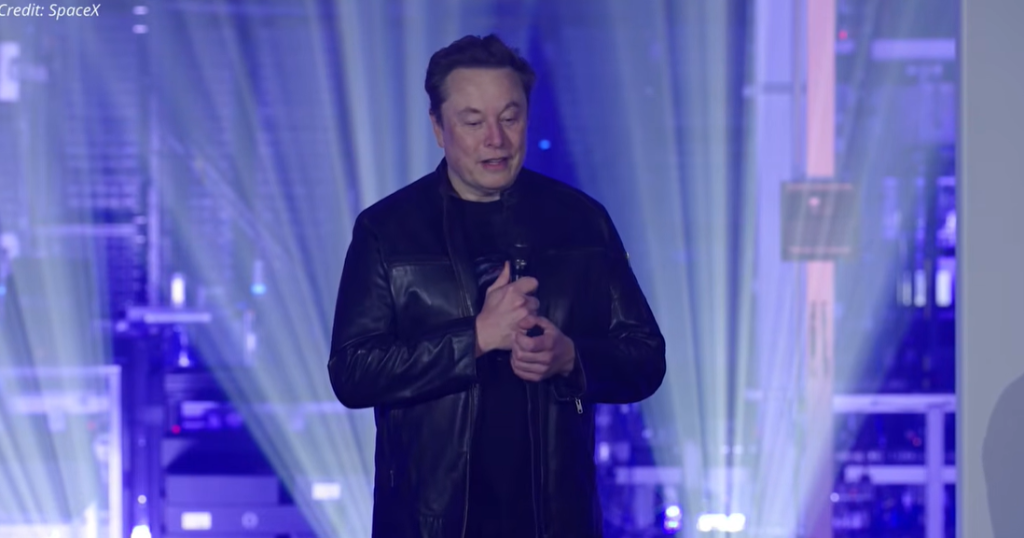
Musk said: After 5 years, AI will account for 99% of SpaceX's value. “We must win against AI!”

Source: Wall Street News Original title: Musk's latest speech: Five years from now, AI will account for 99% of SpaceX's value, and we must win against AI! Abstract: Musk announced at the SpaceX General Meeting that AI revenue “definitely” will surpass all other SpaceX business revenue for the first time in September, and has set a target of 10 gigawatts of AI computing power by the end of next year, corresponding to potential annual revenue of 300 billion to 500 billion US dollars. He shouted, “We must win against AI; the future will be about the world of AI and robots.” This is also his clearest forecast of the timeline and scale of SpaceX's AI business. In the early morning of August 12, SpaceX released a video of Musk's speech at the company's internal staff meeting, which lasted about half an hour. After reviewing the company's development history, Musk turned the conversation to AI and gave a series of specific revenue forecasts and timelines. Musk said at the conference, “It's impossible, definitely — our AI revenue will probably surpass all other SpaceX revenue in September, or next month, and will significantly exceed all other SpaceX revenue in the fourth quarter.” This is the first time Musk has publicly given a specific point in time when AI revenue surpasses traditional business. He said that Rocket, Starlink, Dragon spacecraft... no matter how strong these businesses are, they will be overtaken by AI. “AI has become an extremely important part of SpaceX's future.” He said, “We have to win against AI because the future will overwhelmingly be about AI and robots.” With a target of 10GW and annual revenue of 300 billion to 500 billion dollars, Musk further gave a scale forecast. SpaceX aims to reach 10 gigawatts of AI computing power by the end of next year. His estimate is: “If the value of each watt is about $30 to $50, that means the annual revenue will be between $300 billion and $500 billion. That's a huge number.” He also revealed that the company has now built the “world's most powerful AI training cluster,” and the goal by the end of next year is to build on this by 10 times. In terms of deployment methods, Musk also drew a division of labor: “AI training will continue to be carried out on the ground, but AI inference — that is, the daily use of AI — will be in space.” “Five years later, AI is 99% of SpaceX's value.” Musk's position on SpaceX's future has fundamentally changed. At the conference, he said, “In the long run, in the near future, in about four or five years, AI will account for 99% of SpaceX's value. I dare say for sure five years from now, AI is 99% of SpaceX's value. And SpaceX's value will be an astronomical figure.” This means that in Musk's narrative, SpaceX is no longer just a space company, but a technology company with starships as infrastructure and AI as the core value. Using Grok to carry SpaceX's “genes,” Musk's concerns about AI go beyond commerce. In his speech, he repeatedly emphasized the importance of AI values. “In the end, we won't be able to control AI; it will be too smart for us to control. But just like if you have a super genius kid, you can still instill in that kid the values you think are good and right.” SpaceX plans to use all of the company's information to train Grok, he said. “In a sense, you're actually going to be AI's parents. It will inherit your thoughts, ideas, and beliefs.” Grok's iteration schedule was also revealed: version 4.6 will be released in about a week, and “4.7 should be quite special.” Starlink: There are 22 million users in 167 countries, and in addition to AI, Musk has also updated the latest Starlink data. At present, Starlink has entered 167 countries, with 22 million mobile users, 13 million high-bandwidth users, and nearly 11,000 satellites in orbit, which is more than double the total number of satellites of all other operators. With the deployment of the V3 and subsequent versions, the target number of satellites is 100,000. Musk quoted Cloudflare's forecast as saying that according to the current growth trend, the traffic generated by AI may reach 1,000 times that of human Internet traffic within five years. He believes that Starlink could eventually carry more than 90% of global internet traffic. Starship: One million tons enter orbit every year, leading to a multi-planetary civilization, Musk's position on the Starship was still ambitious at the conference. “Starship will increase our ability to launch into orbit from about 2,500 tons per year to more than 1 million tons per year, and I think it may even reach 10 million tons per year.” He said that this amount of capacity is a prerequisite for establishing civilizations on the Moon and Mars. If you can't put millions of tons of cargo into Earth orbit, you won't be able to get the supplies you need to the Moon...

10d ago22AISpaceX
Musk said: After 5 years, AI will account for 99% of SpaceX's value. “We must win against AI!”

588 days, 300+ Web3 projects fall: who's still at the table?

Source: Foresight News Author: Eric Original title: In 588 days, 300+ Web3 projects sank into the deep sea and sailed a thousand sails by the side of a sinking ship, and the disease tree is ahead of time. On the way to prosperity, any industry must go through a round of “dead bodies are everywhere” of elimination, and Web3 is no exception. According to Foresight News's review of public information, since 2025, at least 78 Web3 projects with a total funding amount of more than 1.5 million US dollars have been announced to be shut down. Of these, 69 projects that can confirm the amount of financing have taken away more than 900 million US dollars in total. If you count the small projects that didn't get financing from institutions and died silently, the total number is far over 300. This means that over the past nearly 600 days, an average Web3 project died every two days, or was famous or unknown. Of the 75 projects counted by Foresight News, 37 were shut down throughout 2025, while 41 were shut down in just half of 2026, and 17 were shut down in a single quarter in the second quarter, setting the highest number in a single quarter since this round of clearance. The “hot” DappRadar, Zapper, and established exchanges including BitMEX and AscendEX (formerly BitMax) in the last round of the bull market have all put an end to their business careers in nearly two years. The reshuffle did not stop as the market picked up; on the contrary, it accelerated. After receiving millions of dollars or even tens of millions of dollars in financing, every team that has stepped into this new world has had the proud ambition of “laughing at the sky and going out. Are our generation people from Fenghao?” But after a few years of being baptized in the market, these cold and cruel numbers are still in front of everyone's eyes. Emerging markets are also markets, and Web3 isn't more gentle than other industries. “Not being able to support myself” is the number one “cause of death”. Looking at the “cause of death” of 75 projects, the first one ranked was “insufficient funding,” with 31 projects falling on this issue, accounting for more than 40%; followed by “insufficient market demand,” and 17 companies shut down as a result. The two added up are close to two-thirds of the total. In other words, the vast majority of projects die for only one reason: they have never been able to support themselves. The expressions used by these projects in the shutdown announcement are similar. Many of them say “after trying our best to find a path to sustainable development, we have not found a path to sustainable development.” The subtext of this sentence is: At the beginning of the project, there was actually no idea how to do it, or the initial idea was very different from the actual situation in the market. Some industry observers rated this wave of bankruptcy as “a direct reflection of the failure of the business model and the breakdown of the capital chain, rather than simply fluctuating market sentiment,” which can be described as hitting the head. The investment logic of the primary market has completely changed in the past two years. The first question investors meet is no longer “how much room do you have for imagination”, but “how to make money.” The first batch of projects whose revenue did not cover operating costs or tell a new story fell after the financing floodgates were tightened. The OSL Institute summarized this shift in its annual report as the industry moving from the “first half” to the “second half”: a growth model driven by rising asset prices and innovative agreements came to an end, and the market moved “from narrative to delivery.” To put it more bluntly, the market and capital are no longer willing to pay for “experiments,” and the project's self-hematopoietic ability has become a necessity. Compared to the reason they wanted to be clear, the five projects that announced that the “model is unsustainable” seemed much more honest. For example, Goldfinch, which made unsecured credit loans, lost blood and shut down due to continued bad loans to emerging market companies; the social game Fantasy.Top, which is a popular social game that relies on tokens to motivate, makes it difficult to sustain the incentive model after the popularity recedes. The “unsustainable model” is a very interesting reason for the collapse. Most unsecured credit loans in traditional financial markets are based on big data or personal past credit records to set reasonable limits. As an emerging “lending company,” Goldfinch dares to provide unsecured credit loans in emerging markets without credit data. This is not a problem that can be solved by cryptocurrency and Web3 alone. Obviously, the reason for the birth of this company with a total financing amount of nearly 40 million is hard to convince. I don't know how top institutions like a16z were fooled into entering the market. Additionally, some companies have died due to regulation. Mango Markets shut down through a community vote after reaching a settlement with the SEC...

10d ago22WEB3
588 days, 300+ Web3 projects fall: who's still at the table?

Who was fattened by a meme spree? How can Pump.fun and GMGN turn transactions into money printers?

Source |Odailey Planet Daily Author | Asher Original Title | Disassembling the Meme Revenue Structure for Shovel Sellers: How do Pump.fun and GMGN make tens of millions of dollars a month? If you think it's a bear market, you're not looking in the right direction. Core view: Despite the decline in the popularity of the meme coin market and fewer opportunities to get rich, token issuance platforms and trading tools remain strong and profitable. According to the data in the article, leading platforms such as Pump.fun have earned more than 34 million US dollars in the past 30 days, and GMGN and Axiom have also reached nearly 20 million and 14 million US dollars respectively. The revenue mainly comes from transaction fees and issuance fees. Key elements: 1.pump.fun has earned US$34.68 million in the past 30 days, with a trading volume of US$1,718 million. The revenue comes from Bonding Curve transaction fees (1.25%, of which 0.95% is the agreement) and token graduation fees. 2. Flap's revenue in the past 30 days was 5.58 million US dollars. More than 90% came from BNB Chain. Benefiting from the boom in the stock MEME coin MarsCoin, the basic agreement rate was 1%. 3. Pons was once the leading distribution platform for Robinhood Chain. The revenue from the recent 30-day agreement was about US$4.99 million. After the launch of V2, its revenue sources expanded to include issuance fees, transaction fees, and processing fees after graduation into Uniswap V4. 4. GMGN's revenue in the past 30 days was about US$1.81 million, and Robinhood Chain contributed US$11.67 million (accounting for the largest share). The platform made a profit by charging a 1% handling fee for each transaction. 5. Axiom's revenue in the past 30 days is about US$14.67 million, almost all of which comes from Solana on-chain transactions. The base rate is 1%, the actual net rate is about 0.75%-0.95%, and there is a transaction volume rebate mechanism. 6. Fomo's revenue in the past 30 days is about US$8.79 million, mainly from Solana spot transactions (US$8.64 million), with a minimum handling fee of 0.5% per transaction and a minimum fee of $0.95. Since this year, the overall performance of the crypto market has been sluggish, and altcoins have spread far and wide. The enthusiasm for discussion in the previously active second-tier alpha community and airdrop community has declined markedly, but memes are one of the few exceptions. Compared to the previous bull market, “Express Express,” where the market value of a meme broke through 50 million US dollars or even hundreds of millions of dollars in a short time after being issued, is rarely seen this year, and the myth of getting rich is gradually becoming an unfamiliar term. However, new hot spots are still emerging from time to time in the meme market. From CASHCAT, which became popular on Robinhood Chain, to MarsCoin, a recent stock meme on BNB Chain, it is still attracting the attention of many communities. The hot topic is still there, and naturally people continue to use platforms and wallets around meme creation, trading, etc. So, when “Young P” has fewer and fewer opportunities to become rich with memes, how much money can these platforms make by relying on users to continue to issue and trade coins? Starting with the two dimensions of token issuance platforms and meme trading tools, this article will break down the current revenue sources of the Meme Circuit's main platforms, as well as the revenue situation in the past 30 days. (The data below is all from DeFilLama.) Pump.fun and others, take on the first round of the SGD transaction demand Pump.fun: Although the meme market has earned more than 34 million dollars in the past 30 days, the meme market is far less than the bull market, but Pump.fun can still earn more than $30 million a month, and its ability to make money even exceeds that of Hyperliqud. As of August 11, Pump.fun's revenue for nearly 30 days was $34.68 million. Over the same period, the platform's trading volume was $17.18 billion. The core of Pump.fun's revenue comes from continuous trading of SGD on the platform. Currently, users are free to create tokens themselves, but trading during the Bonding Curve phase requires transaction fees. According to Pump.fun's latest rate, Bonding Curve's total fee rate is 1.25% per transaction, of which 0.95% goes to the agreement and 0.30% is distributed to token creators. Additionally, when tokens graduate from Pump.fun and enter PumpSwap, a graduation fee of 0.015 SOL will be charged. Flap: Revenue surpassed $5.5 million in the past 30 days, 90% from BNB Chain nearly...

11d ago22MEMEPump.fun
Who was fattened by a meme spree? How can Pump.fun and GMGN turn transactions into money printers?

Bybit Sues North Korean Hackers! In the $1.5 billion theft case, over 90% of the funds are difficult to recover

Source: Foresight News Author: Nicky Original title: Bybit sued the North Korean hacker group in the US court. Ninety percent of the funds may be difficult to recover. When approving the preliminary temporary restraining order, the court found that Bybit essentially “has a chance of winning the case.” On August 8, according to CoinDesk, Bybit has filed a civil lawsuit with the U.S. District Court for the District of Columbia against the Democratic People's Republic of Korea, its General Investigation Bureau, and Lazarus Group, which is identified as a North Korean-linked hacker organization. The group stole around $1.5 billion in crypto assets from Bybit in February 2025, one of the largest cryptocurrency thefts in history. In granting the preliminary interim restraining order, the court found that Bybit “had a chance of winning” the case in substance. In addition to filing a lawsuit, Bybit also successfully obtained an initial injunction to freeze some of the stolen assets held by a group of unidentified individuals and entities, and the defendants were listed as “John Doe” in the case. The ban requires the parties concerned not to transfer or sell the assets they hold in the case during the trial of the case. Bybit said it will continue to seek further redress from the courts and emphasized that the civil lawsuit is independent of ongoing criminal investigations by US law enforcement. On February 21, 2025, Lazarus Group manipulated the transaction interface when transferring funds from the Bybit cold wallet to the hot wallet by hacking the supply chain of the Safe multi-signature wallet, successfully controlling the multi-signature process, and transferred approximately 401,347 ETH, 90,375 stETH, 15,000 cMetH, and 8,000 metH to the hacker address, with a total value of about $1.46 billion at the time. The amount of stolen ETH accounted for about 0.42% of the total supply of Ethereum. At the time, the hacker once became the 14th largest holder of ETH in the world, surpassing Fidelity and Vitalik Buterin, the co-founder of Ethereum. The hackers' money laundering operations began quickly after the attack occurred. According to Spot On Chain monitoring, about 266,309 ETH were laundered within a week after the attack, accounting for 53.3% of the total amount stolen. It was mainly exchanged for BTC through THORChain, and an average of 48,420 ETH was laundered daily. In early March 2025, on-chain analyst Ember Tracking showed that the entire cleaning process took about 10 days, during which time the price of ETH fell by about 23%, and about 90.2% of the stolen funds had become untraceable. Hackers mainly used THORChain to launder money, and the platform received approximately $5.9 billion in transaction volume and approximately $5.5 million in commission revenue as a result. Up to now, Bybit, in collaboration with blockchain analysis companies, various exchanges and international law enforcement agencies, has recovered about 48.4 million US dollars of stolen assets and frozen about 30.5 million US dollars of assets involved in the case from more than 28 exchanges and custodians, totaling about 78.9 million US dollars, accounting for only about 5% of the total stolen assets. The Federal Bureau of Investigation confirmed the Lazarus Group as the perpetrator of the attack. Law enforcement agencies from many countries cooperated to carry out follow-up crackdowns. The German authorities destroyed the cryptocurrency exchange ExCH involved in the case, and the German and Swiss authorities jointly shut down the coin mixing platform CryptoMixer.io. Although law enforcement collaboration has achieved certain results, the vast majority of stolen funds have been removed from the scope of tracking through cross-chain bridges, coin mixers, and OTC transaction channels. The ban in the lawsuit documents is only effective for identifiable on-chain assets, and funds flowing into the hands of entities or individuals that have not cooperated with the administration of justice after coin mixing and cross-chain transformation are extremely difficult to recover. At the time of the theft, the price of ETH was about 2,730 US dollars. Currently, it is about $1920, a decrease of about 30%. Even if some assets are positioned in the future, their actual value has shrunk drastically. Source: SotameDialAzarus Group is a cyber threat actor cluster supported by the North Korean government. It belongs to the General Administration of Reconnaissance, and includes multiple subclusters such as UNC4736 (i.e. AppleJeus/Citrine Sleet) and TraderTraitor. According to Chainalysis statistics, North Korean hackers have cumulatively stolen cryptocurrencies through clusters such as Lazarus...

11d ago22cryptocurrency theftNorth Korean Hackers
Bybit Sues North Korean Hackers! In the $1.5 billion theft case, over 90% of the funds are difficult to recover

Coin Circle OG Ye Junde fell naked and died: from the peak of his wealth to the last early morning

Source: Shenchao TechFlow Author: Lin Zhengying Original title: Coin Circle Who Fell Naked OG: Ye Junde's Wealth, Gambling, and Asunción's 100-meter altitude in the last early hours of the morning. At 4:30 a.m. on August 7, 2026, the 911 alarm center in Asunción, the capital of Paraguay, received a call: A dead body was lying downstairs in Jade Park, an upscale apartment building in the Trinidad district. When the police arrived, they saw strange images: the deceased was naked, covered in a black plastic bag, and suspected to have fallen from 30 floors about 100 meters high. The deceased was soon initially identified — Harry Chun Tak Yeh, Chinese name Ye Junde, founder and managing partner of cryptocurrency fund Quantum Fintech Group, a Chinese crypto investor claiming to be in charge of more than $2.4 billion in assets. Investigators went up to the 30th floor and found that the doors of the apartment he was living in were wide open, and the house was a mess, but it was empty. He also has another apartment on the 27th floor of the same building where his Brazilian girlfriend, Isadora de Proenca Braganholo Carvalho, 29, lives. Faced with questioning by the prosecution, she said she didn't know anything, and the police have not publicly charged her with any wrongdoing so far. Prosecutor María del Carmen Palazón led the investigation and investigated the three possibilities of accident, suicide, and homicide. Everything waited until the autopsy results were discussed. The $500 entry history of Ye Junde's family is the most classic screenplay in the coin industry. He was born in Hong Kong and immigrated to Canada as a child. He studied electrical engineering at the University of California, Berkeley as an undergraduate, and later got an MBA at Stanford Business School. At least that's what he described as his resume. Prior to entering the crypto world, he followed the standard Silicon Valley elite route: an engineer, CTO and co-founder of several startups, running a technology consulting firm, and serving organizations with revenues ranging from $5 million to $200 million. Bitcoin was still hovering around $60 in 2013. Ye Junde used $500 to buy his first BTC, set up his first fund with $250,000 in the same year, set up the venture capital company Binary Financial, and later changed its name to Quantum Fintech Group several times. It was a pioneering era. Doing crypto OTC OTC trading and managing hedge funds for high-net-worth clients, Ye Junde caught up with Bitcoin's entire curve from $60 to tens of thousands of dollars. By 2023, he and his team claimed to have managed more than $2.4 billion in hedge funds and private equity networks. He began appearing frequently in the industry spotlight: he discussed Bitcoin forks and ICOs on CNBC in 2017, and was a guest on the Bloomberg crypto show in 2022, calling Bitcoin “digital gold,” and speaking on the same stage as Mark Cuban, Tether co-founder Craig Sellars, and others. He also took over the production team for the North American Bitcoin Conference (TNABC) and the Fantom Developer Conference, and set up his own Quantum Miami conference, which the mayor of Miami personally stood for. Highlight moment: In four months, between 2.5 million and 1.6 billion, the most legendary “investment” of Ye Junde's career occurred in the Fantom ecosystem. Fantom is one of the hottest public chains in the “DeFi Summer” of 2021, and was personally coded by Andre Cronje, known as the “Godfather of DeFi.” In September 2021, Tomb Finance, an algorithmic stablecoin project on Fantom, fell into a trust crisis due to a bug called “Gatekeeper” and was on the verge of collapse. Yip Chun-tak took over the team as a member of the Fantom Foundation. The next four months were a magical moment for Tomb Finance: the total hedged volume (TVL) went all the way from $2.5 million to a peak of $1.6 billion, and within two months, TVL skyrocketed nearly 80 times, making it the brightest project in the Fantom ecosystem. This battle established Yip Chun-tak's position within the Fantom community. Someone at X missed it: “Even if Harry turned to the dirty one at the end...

12d ago22Harry Chun Tak Yeh
Coin Circle OG Ye Junde fell naked and died: from the peak of his wealth to the last early morning

After cutting positions for three years in a row, Buffett suddenly took action! What did nearly $20 billion buy?

Source | Odaily Planet Daily Author | Azuma Original Title | After three years of continuous stock cuts, Buffett finally dared to laugh a few months ago, “The old man is not as good as me,” but only now does he know “Your grandpa is still your grandpa.” Core view: In the second quarter of 2026, Berkshire Hathaway ended 14 consecutive quarters of net stock sales, switched to net purchases of nearly US$19.8 billion, and invested in Google's parent company Alphabet with 10 billion private equity, marking a shift from long-term wait-and-see to active layout under the leadership of new CEO Abell. After the US stock market on August 9, Beijing time, Berkshire Hathaway announced financial results for the second quarter of 2026. According to financial data, Berkshire's total revenue for the second quarter of 2026 reached US$101.888 billion, an increase of about 10% over the previous year. Net profit attributable to shareholders was US$25.667 billion, doubling from the same period last year (up about 107%), and both operating profit and net profit greatly exceeded market expectations. However, the more signalling point in the financial report is that Berkshire Hathaway has finally ended net stock sales that continued for more than three years (14 quarters) and switched to net purchases. With $400 billion in cash, Berkshire finally got his hands on earnings data. In the second quarter, Berkshire Hathaway bought about US$23.47 billion in shares, sold only US$3.69 billion, and net purchases were close to US$19.8 billion, ending the long-term net sales situation since 2023. What is more worthy of investors' attention is where the funds are going. According to financial reports, Berkshire Hathaway's biggest move last quarter was an additional investment of about $10 billion in Alphabet (Google's parent company) through private placement. It also officially placed Google among the top five largest stocks in Berkshire Hathaway by market capitalization — along with American Express, Apple, Bank of America, and Coca Cola. As of the end of June, these five major holdings together accounted for 66% of the stock portfolio, and position concentration is still extremely high. Although Buffett himself has been cautious about technology stocks for a long time, Buffett previously revealed when he first opened a position at Google that his investment in Google was a joint decision he made after discussions with Greg Abell (current CEO of Berkshire Hathaway, who officially took over as Buffett on January 1 of this year). Buffett also confessed that missing out on Google in the early years was a “historic mistake.” This ticket replacement is based on value investment logic, and what it values is the barriers to its search monopoly and stable cash flow. The current 10 billion dollar increase in holdings is an investment decision made under the new CEO, Commander Abel. This may indicate that Berkshire Hathaway's tolerance and participation in the cutting edge of technology is increasing under the new pattern where Buffett retreats from behind the scenes and Abell comes to power. In addition to restarting net purchases in the market, Berkshire Hathaway also carried out its first share repurchase in two years in the second quarter. According to financial reports, Berkshire Hathaway spent a total of about US$4.527 billion on repurchases in the last quarter, a record high in a single quarter since 2021; in July, an additional more than US$3.3 billion was added to the repurchase. In March of this year, Berkshire Hathaway officially announced the restart of the stock repurchase plan. Abell said at the time that the buyback was because management believed that the “intrinsic value” of his stock was higher than its market price. As the pace of investment and repurchases changed, Berkshire Hathaway's long-term cash reserves also began to change. Over the past few years, one of the company's biggest labels has been “cash machine.” Due to a lack of large-scale opportunities that meet Buffett's investment standards, the size of the company's cash and short-term US debt continued to rise, reaching a record high of close to 400 billion US dollars at the end of the first quarter of this year. However, as stock increases, share buybacks, and industrial mergers and acquisitions (mainly to acquire petrochemical company OxyChem and housing developer Taylor Morrison) unfolded one after another, Berkshire Hathaway's cash reserves began to decline. As of June 30, Berkshire held about US$35.1 billion in cash and cash equivalents, and the size of short-term US Treasury bonds was about US$324.9 billion, totaling about US$364.7 billion, a significant decrease from US$397.38 billion at the end of the first quarter. It was once ridiculed for “not being able to keep up with the times,” but in fact, they are quietly watching the “shores of the turbulent times” and go back in time from 2023 to the beginning of 2026. Over the past few years, the technological wave of AI has completely detonated the global capital market, with chips and semiconductors represented by Nvidia, SK Hynix, Samsung, and Micron...

12d ago22Berkshire HathawayBuffett
After cutting positions for three years in a row, Buffett suddenly took action! What did nearly $20 billion buy?