


Hash Global: Bitcoin bear market may be nearing its end

Source: X
Authors: Jessica Feng (Hash Global BNB Fund Investment Manager), Henry Yang (Hash Global Investment Partner)
Original title: Hash Global: Bitcoin hasn't risen yet, why are we starting to think the bear market might be over?
Summary:
Bitcoin has been trading sideways at $62,000 to $65,000 for nearly two months. It seems to be calm.
However, on-chain chips have been reshuffled: more than 2.4 million BTC has been deposited in the $61,000 to $65,000 range. Concentrations are rare, and a new bottom is being formed.
Similar chip structures in history have predicted subsequent market trends, and changes in kinetic energy preceded prices.Now is the time to move on to the next round of cycle layout.
Over the past six months, the popularity of AI has absorbed almost all of the market's attention, and even Crypto's last belief, Bitcoin, has been drastically shaken.
Since falling below $70,000 in February, BTC has stepped back into the $58,000-$60,000 range three times.
Strategy, an old player in the industry, began selling coins, and mining companies turned to AI. The prospects for the industry were bleak, and it also made the fears real time by time.
At a time when US stocks continue to rise and gold hits the bottom and rebounds, Crypto seems to have been forgotten by the world:
BTC has been trading sideways between $62,000 and $65,000 for almost two months, and the 30-day implied volatility once fell to 36%, a multi-year low.
The lack of vitality makes it difficult for the public to be optimistic about the market.
But what we've been paying more attention to recently is “change” and “perspective,” that is, behind the price, the changes that are taking place in the market.
The forces that suppressed the market in the early stages are weakening one by one:
Macroeconomic austerity expectations have cooled down, the strategic lightning crisis has abated, and the outflow of institutional funds has stopped.
Meanwhile, Bitcoin's on-chain chips are gathering again in the midst of consolidation.
Everything seems to indicate that an inflection point is approaching, but these changes are not yet reflected in prices, as the market is waiting for more clear signals.
Outside the market, AI transactions are cooling down, and a new round of capital switching is about to begin;
On the field, the old OGs are still waiting for the last drop and are slow to take action — the calm and quiet surface of the water at the moment just opened up the best angle and timing for us to enter.
It is difficult to predict when the market will start, but what is certain is thatWe are entering the time window for the next cycle of layout.
1. Under the impression that the price has not changed, the chip structure has been reshuffled, and a new bottom is being formed
BTC has tested the $60,000 mark three times, with clear acceptance each time.
The price then rebounded to around $65,000, upward selling pressure reappeared, and the market fluctuated repeatedly between $63,000 and $65,000.
On the face of it, the price has hardly changed, but on-chain chips have quietly completed a round of redistribution.
Currently, more than 2.4 million BTC has been deposited in the $610,000 to $65,000 range, accounting for about 12% of the circulating supply;
Of these, more than 1 million BTC have been collected around $6.3 million alone, accounting for about 5.2% of the circulating supply. The concentration of chips has risen to a historically rare level.
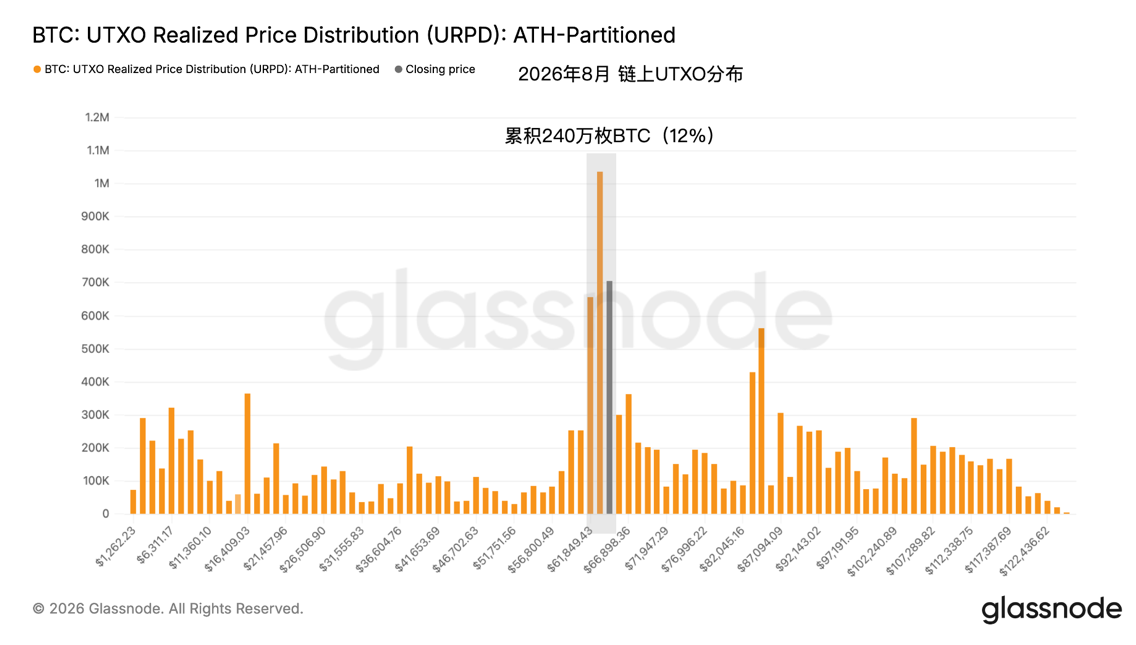 This change is more worthy of attention than short-term ups and downs.
The bottom did not appear suddenly, but was “bought” by the market in repeated tug-of-war: some left the market, others took it;
Old chips are constantly being replaced, and new funds are re-establishing the cost base at a lower location.
As more BTC is concentrated in similar price ranges, a new price consensus has been established.
Therefore,Changes in kinetic energy often precede prices.
Looking back at history, from May to November 2024, BTC also experienced a half-year adjustment after the ETF market.
Before moving up from $60,000 to $100,000, the chain also had a highly concentrated structure around $50,000-$60,000.
In hindsight, the bottom of the construction at the time was a springboard for the subsequent launch of the market.
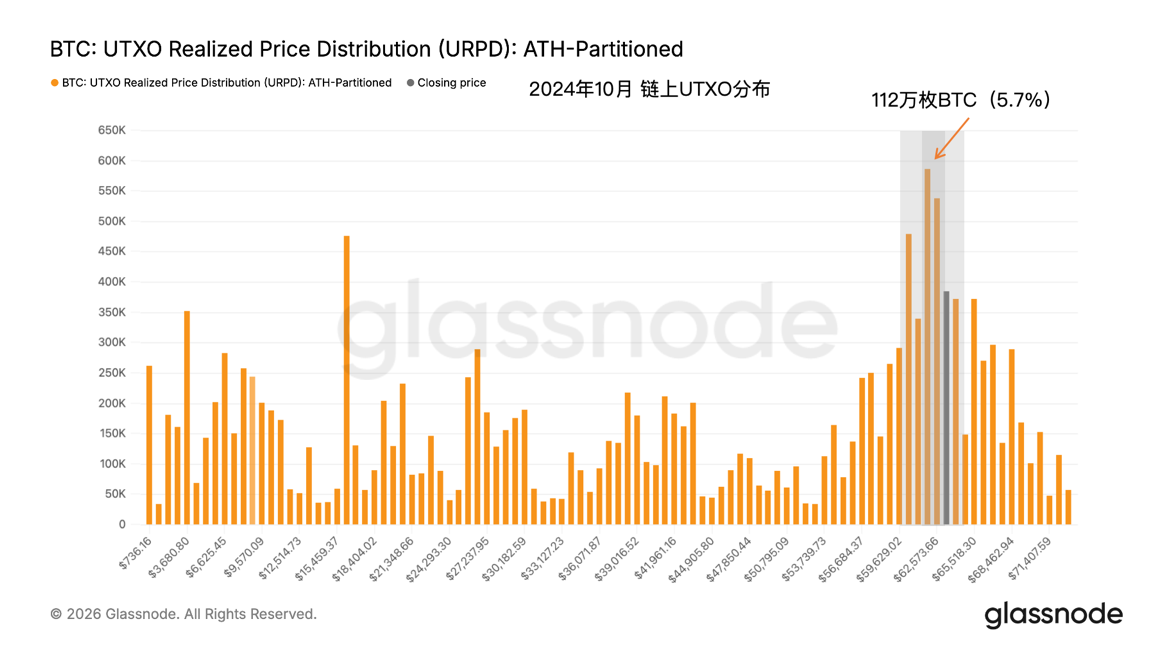 History won't simply be repeated, but a similar chip structure indicates that the market is experiencing a round of similar bottom changes.
2. The choice of direction is coming, and the forces that suppress the market are disintegrating
The concentration of chips represents an intensification of the game. The market is about to make choices, but it is not enough to indicate the direction.
What really tilts the balance upward is that several forces that previously drove the market decline are weakening.
1. Macro pressure falls, and the risk of interest rate hikes is reduced
The most important driving factor behind this round of adjustments is market concerns about higher interest rates.
The geopolitical conflict boosted inflation expectations, the Federal Reserve sent hawkish signals, US bond yields and the US dollar strengthened, and risk assets naturally came under pressure.
But recently,This logic of high interest rate pricing is beginning to loosen.
The US CPI fell 0.4% month-on-month in June, the biggest monthly decline since April 2020;
The core CPI remained flat month-on-month, falling short of market expectations. Meanwhile, the number of non-farm payrolls fell by 23,000 in July, which was also significantly weaker than expected.
Inflation is cooling, and employment is weakening. This marginal change reverses previous conditions of tight market pricing.
When this expectation loosens, the pressure on risky assets naturally decreases.
2. The lightning crisis cools down, and Strategy moves towards a third transformation
Over the past few months, the market's fud of Strategy has further amplified fears.
Many voices believe that there is a problem with Strategy's capital structure.
The biggest buyers supporting the current cycle will become the structural sellers that overwhelm the market during the downturn.
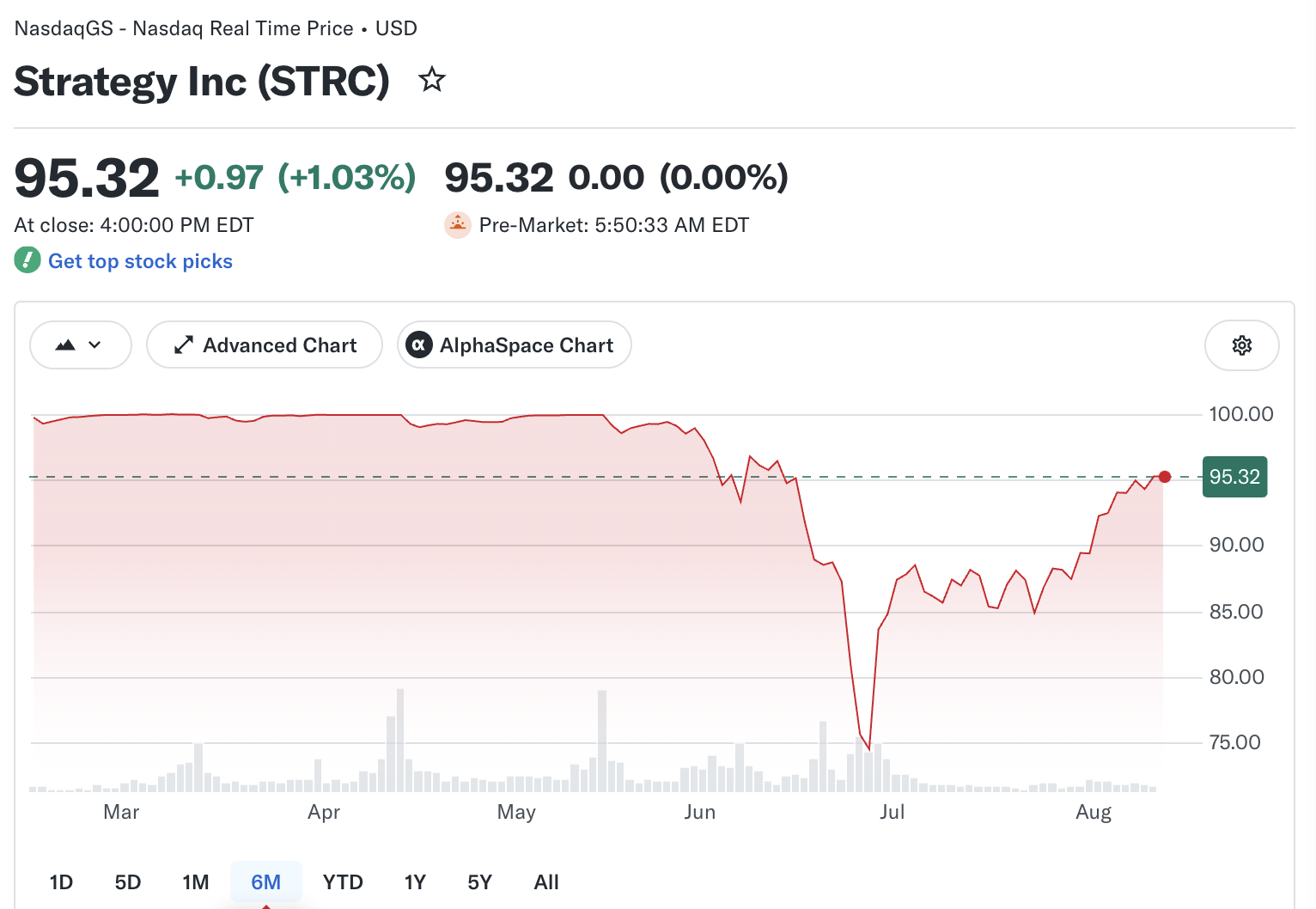
Due to this concern, STRC once fell to $74, and MSTR's MNaV also fell below 1 times.
However, after Strategy actually started selling coins, the market's reaction gradually declined.
What is behind “desensitization” is that the market is reunderstanding Strategy's strategy.
Up to now, Strategy has sold 0.26% of its total BTC holdings and replenished its cash reserves to about 4.5 billion US dollars.
STRC, which is sufficient to cover interest expenses for about 3 years, while at the same time being heavily repurchased at a discount, continues to reduce the size of debt in a low-cost manner.
The market also gradually realized that Strategy's series of operations,
Exactly through transformation --From passive holding to active capital management, cut off the negative spiral that the market is worried about.
Shrink the front line during the bear market phase, supplement liquidity through small-scale sales, stabilize the capital structure, and ensure survival.
Only then can we maintain sufficient financing capacity to restart the flywheel in the next round of the market.
STRC has recently recovered to around $95, and Strategy has resumed MSTR financing.
Short-term financial pressure has eased, and the risk of being forced to sell on a large scale has been reduced.
This means that one of the most worrying structural selling pressures until now is clearly weakening.
3. AI transactions are cooling down, and the attractiveness of Crypto's allocations is rising, or attracting the return of capital
Over the past six months, the AI sector has significantly diverted global funding.
Compared to Crypto, which lacks a narrative, AI provides investment opportunities for more definitive growth, but recently, AI transactions have begun to cool down.
As valuations continue to rise, value-added expectations are fully priced,
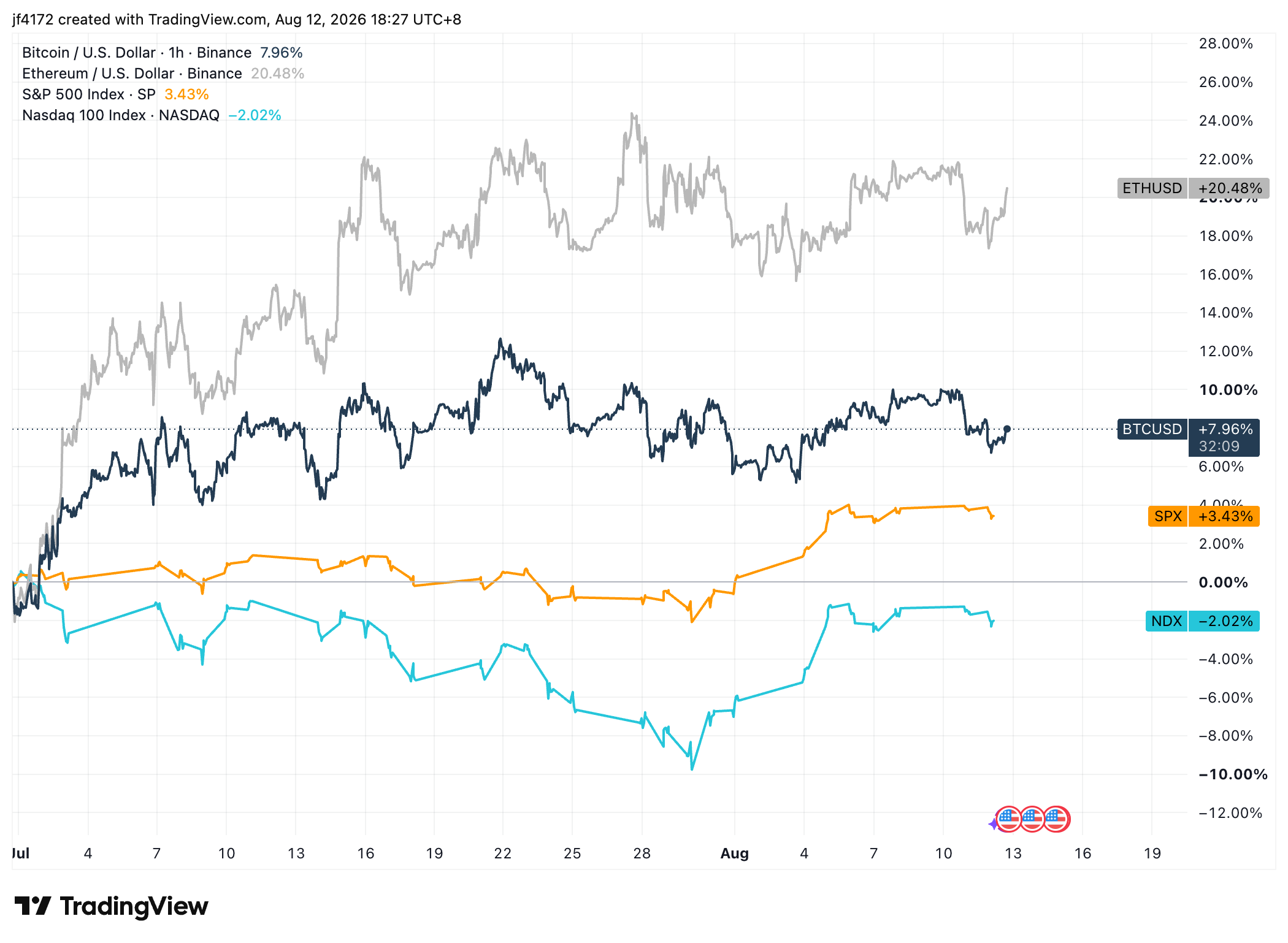
Crowded AI trading ushered in concentrated deleveraging in July: the Nasdaq 100 index fell about 7%, and the S&P 500 remained flat month-on-month.
Crypto, which had previously surpassed the decline, bucked the trend: BTC rose by about 6% in a single month, and ETH rose by about 18%.
Blue-chip DeFi assets with significantly strengthened fundamentals performed even better, with UNI rising more than 100% in a single month.
When capital is re-seeking allocation direction and is undervalued,
Policy fundamentals, however, have ushered in improvements to crypto assets, which may re-enter the financial field of view.
 3. Before the tide comes, the layout is “unclaimed”
A marginal improvement in stressors does not equal a complete reversal, so it is too early to judge that the market has arrived.
As the market waits for more clear signals, this just provides a valuable window of time.
When legendary investor Stanley Druckenmiller reviewed Teva Pharmaceuticals' investments,
I've talked about the concept of an “unclaimed zone”: value investors sell because of strategic transformation, and growth investors wait and see because the transformation has not yet been completed.
When neither type of capital has actually entered, it instead provides a structurally flawed investment opportunity.
Today's BTC is also facing the same opportunity of failure: Crypto has yet to launch, and AI FOMO funding is still at the end of the game;
The time for the industry's thunderstorm has been slow to arrive, and the old money in the industry is still waiting for the final drop.
At this point, what is really worth thinking about is, when the market enters an unclaimed zone, will we dare to take positions ahead of consensus?
(Articles and opinions do not constitute investment opinions)
Image source: Hash Global If there is any infringement, please contact the author to delete it.
Twitter:https://twitter.com/BitpushNewsCN
Compare the TG exchange group:https://t.me/BitPushCommunity
Compare TG subscriptions:https://t.me/bitpush
