


Use the xRev valuation method to lurk in the next doubling market

Source: Delphi Digital
Author: @that1618guy
Compiled and organized by: bitPushNews
I've been thinking about it when screening agreementsA question: If a business relies on its revenue to help you recoup all of your investment in less than 2 years, what's stopping you from buying it?
The answer is almost never the revenue itself, but whether you believe it's sustainable. This is what the XRev multiple (market capitalization divided by annualized revenue) really measures.
It's not cheap or not, it's durable (durable).
Two real-life cases illustrate this very well. The trailing multiples currently selected by PUMP and AERO are in the low single-digit range, 2.3 times and 3.5 times, respectively. Over the past 30 days, PUMP has risen 87%, while AERO has declined 14.5%. The same screening metrics, but the exact opposite results.
In June of this year, the market priced PUMP 1.3 times — meaning the market doubts that the agreement won't even be able to sustain current revenue for 16 months. This doubt was dispelled in July, and the subsequent revaluation (re-rate) completed all the upward drive. AERO is like a mirror: it has tripled since its high price in December 2024, not because some people are more optimistic about it, but because its revenue is declining faster than the market is repricing.
If this framework is established, then the trading logic is not “buying the lowest multiple,” but “buying the multiple that doubt will soon disappear.” When a suspected revenue stream is proven to be durable, even if revenue is overtaken, the revaluation will take on the burden of driving the rise.
What exactly does xRev measure
XRev is simple: market capitalization divided by annualized revenue. At 1.0 times, the revenue from the agreement can pay back its entire market value within a year. Less than 1.0 times, the payback is faster.
The most immediate instinctive interpretation of such numbers is a “pricing error.” But the correct interpretation is: the market is putting huge “durability discounts” on it. The market is telling you that it thinks this kind of revenue is just a fleeting thing, and once it falls, it will never come back. So a compressed XRev itself isn't a buying signal... it's more of a “statement of no confidence.” The alpha (excess revenue) of these is figuring out whether this distrust is right or wrong.
Before entering the case study, we also need to make a distinction, because the initial multiplier position of the token determines what kind of transaction it can evolve into.
We can split it into two buckets.
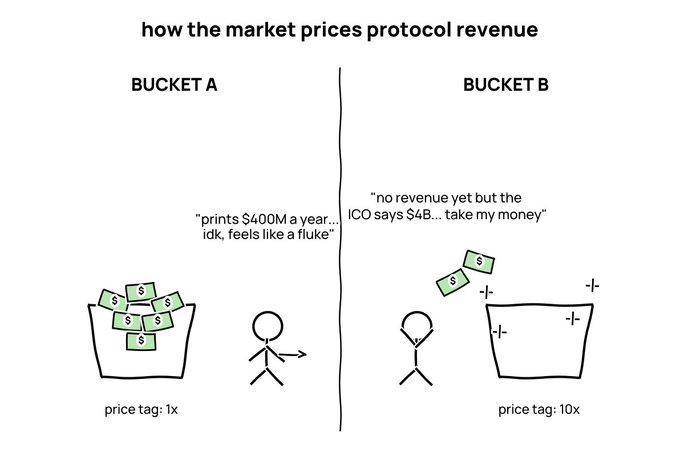
Bucket A (Bucket A) tokens are “cheap at birth”: A new protocol found product-market matches (PMF) in areas with extremely high rates, and revenue exploded before anyone believed it would last, so XRev launched at around 1x or less. High income, small market capitalization, and great doubt. The market capitalization is low for only one reason: the market hasn't bought up its revenue story, making them candidates for “belief revaluation.”
Bucket B (Bucket B) tokens are “expensive at birth”: the market has been pricing them as future revenue giants since day one, so XRev was initially very high, and the belief was already pre-paid. There are no doubts that can be purchased; only expectations need to be defended.
AERO's release belongs entirely to bucket A. The release of PUMP belongs entirely to barrel B. The next sections let's take a look at what happened to each of them.
PUMP: Barrel B pays for its premium
PUMP is a typical representative of barrel B. The token stemmed from a $1 billion round of financing, and the ICO gave a fully diluted valuation (FDV) of $4 billion, equivalent to more than 9 years of annualized revenue generated by the agreement at the time, and opened at 4.5 times the circulating supply. Faith has already been paid for in advance.
Since then, it has taken the market a whole year to reclaim these prepaid beliefs. This was reasonable at the time: Memecoin's trading volume was cyclical, competitors were actively absorbing order flows, and no one was sure if the platform could maintain market share. You can see that the belief in prepayment is being lost from the XRev chart. While the agreement recorded gross revenue of more than $200 million for four consecutive quarters, the multiples continued to shrink for almost a full 11 months.
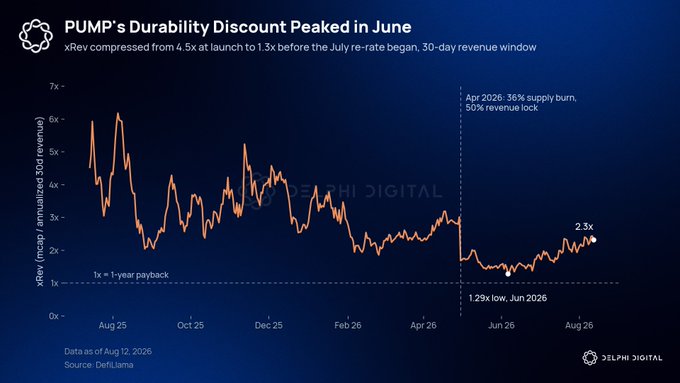
Figure 1: XRev, 30-day revenue window since PUMP was launched.
There are two points that stand out in this chart.
First, the April 2026 restructuring represented a mechanical step-down rather than just an emotional shift.
Pump destroyed all tokens previously purchased, worth approximately $370 million, or 36% of the circulating supply, and then locked 50% of net revenue into a one-year irreversible buyback and destruction agreement. The destruction reduced the market value by one-third overnight, which structurally directly reset the multiplier even lower. But the intriguing part is — the market is still discounting it.
XRev slipped all the way from ~1.7 times after being destroyed to 1.29 times on June 6. At that node, PUMP was priced at less than its own 16-month revenue, and half of that revenue was contractually earmarked for token purchases. This is what “extreme skepticism” looks like.
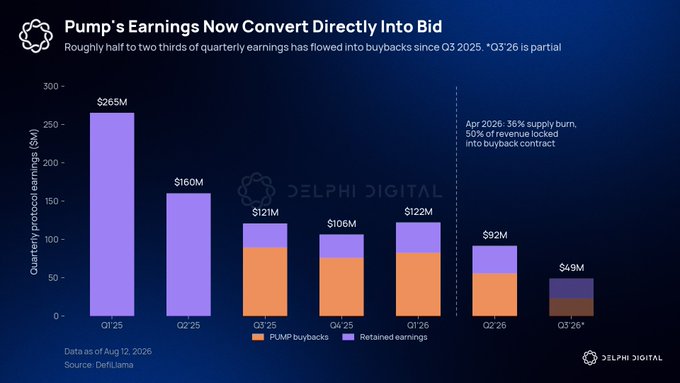
Figure 2: Pump quarterly agreement revenue, highlighting repurchase shares.
Second, the revaluation only really starts when the revenue story changes.
The week of August 3-9 was the first time that Pump costs crossed the $10 million mark, of which $5.02 million was used to buy and destroy 2.15 billion PUMPS. The 30-day revenue was $37.9 million, or about $4.6 billion annualized, which is the same as rolling data. The run-rate (run-rate) is the same number as the rolling data, and the cumulative agreement revenue has already crossed the threshold. The revenue that the market has spent a year calling “fleeting” is still here, and it is trending upward.
What were the results? XRev increased ~ 80% to 2.3 times from its June low of 1.29 times, boosting PUMP 87% to reach a market capitalization of $1.07 billion in 30 days.
Revenue doesn't need explosive growth to do this. Much of this trend is the market repricing “durability.” More people believe they can recoup their investment in ~2.3 years of revenue, which means higher entry costs, driving up XRev, even if revenue remains stable. I think the variable here isn't income, but belief in income.
The caveat here is that I'm using market capitalization in circulation. The multiple is about ~5 times when calculated at full dilution estimates (FDV, $2.3 billion), and the August unlock is actively transforming one number into another. Furthermore, regardless of how the repurchase contract is written, the revenue from the Memecoin launcher is still cyclical. If the weekly cost falls below the ~$5 million to 6 million range during the summer shock period, the results of the revaluation may fade as quickly as when it was established.
Aerodrome: When low multiples tell the truth
AERO is the opposite of a mirror image.
On paper, AERO seems like the better deal. The market capitalization of $404 million corresponds to rolling annualized revenue of $116 million, or 3.5 times, and unlike most agreements, 100% of its revenue goes to VeaEro's lockers. Real profits, zero losses, 54% of supply locked in. Sounds like a good buy.
But the XRev chart tells you why you shouldn't buy it (at least not right now).
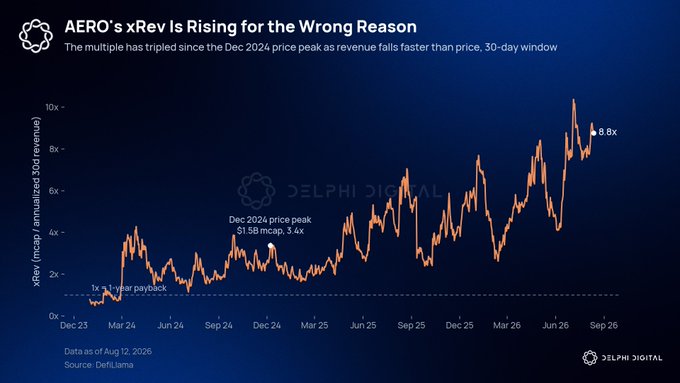
Figure 3: AERO xRev since January 2024, 30-day revenue window.
AERO in early 2024 was the prototype for barrel A and an excellent example of the framework's bullish logic: a new agreement found PMF through the explosion of Base, revenue exploded just before belief was established, and the market briefly priced it less than 1x — all in less than a year's revenue.
At that stage, the market's suspicions were wrong.
The scale of revenue increased, and belief followed, and when prices peaked in December 2024 ($1.5 billion market capitalization), the multiplier increased 3.4 times. Buying less than 1x AERO and following the reversal of belief was the deal at the time.
But look what happened since then. The coin has dropped 73% from its high, while the multiplier has almost tripled to 8.8x. This combination can only happen in one way: revenue collapses faster than prices fall. Annual operating rate revenue has slipped from ~$443 million at its peak to ~$46 million today. Quarterly gross revenue peaked at $106 million in Q4 2024, while only $29.3 million was recorded in Q2 2026, a decrease of 72%.
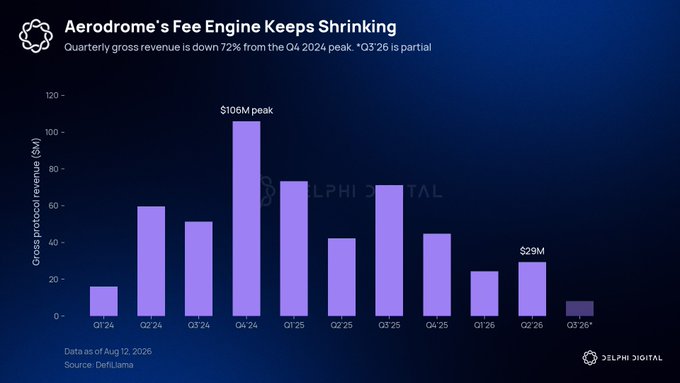
Figure 4: Aerodrome's quarterly total agreement revenue.
This is the flip side of the Pump situation.
The compressed price of AERO is not that the market is irrational about a profit agreement. In my opinion, this is the market correctly pricing a declining revenue stream, and repricing it more slowly than the recession should have. Over the past 30 days, against the backdrop of the general market driving PUMP up 87%, AERO experienced a 14.5% retracement. This is where the “durability discount” described earlier came into play.
To be fair to AERO, there are still some ready-made catalysts in the pipeline that could turn things around — a merger with Velodrome, a predictive distribution upgrade for July shipments, and the launch of Binance. Any of these could reverse the revenue trajectory, and if the operating rate rises in reverse, the revaluation mechanism that once applied to PUMP (and AERO itself in 2024) will apply again.
But that's the point: you're buying a change in trajectory, not a rolling multiple.
So when does xRev actually count as “reasonable”?
xRev is a ratio, so its single direction alone doesn't explain anything.
Every change can be accurately broken down into two legs: a change in multiples is equal to a change in market value minus a change in revenue (calculated in logarithmic form).
Compression means that prices fall faster than revenue, or revenue grows faster than prices.
Expansion (Expansion) means that the price is outperforming revenue, or that revenue is declining below the slower moving price.
Same chart shape, completely opposite trade.
Therefore, before interpreting any XRev changes, we should first ask which leg is at work.
This breakdown also helps to give “reasonable valuation” an empirical meaning. When XRev remains stable and both legs are moving, a protocol is at a reasonable multiple of it, which means the market is repricing the token one-on-one based on its fundamentals. The multiple settled by the market at this stage is its “durability estimate”. Based on the deviation from this value, we can deduce where the signal exists.
The following image shows AERO's XRev history and breaks down all three stages in order.
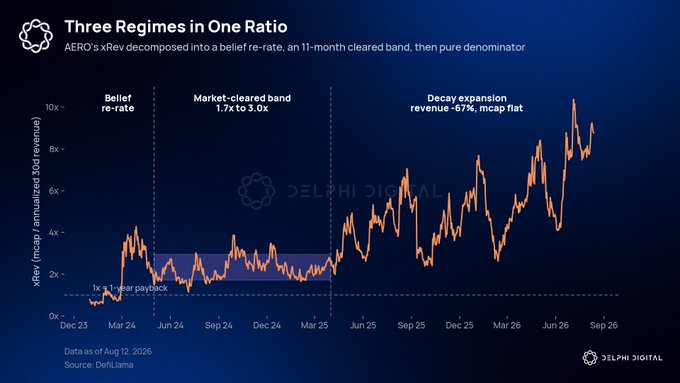
Figure 5: AERO's XRev history split into three stages
Phase 1 (early 2024) is the belief reassessment phase.
Market capitalization increased 58 times, while revenue increased 26 times. Both legs are exploding, prices are ahead, and the market is paying for this story.
Phase 2 is the reasonable value extension period. This is the most highly valued but also most easily overlooked part of the chart.
Over a period of 11 months (May 2024 to March 2025), xRev remained in the range of 1.7 to 3.0 times (median of 2.2 times), with market capitalization ranging from $223 million to $1.57 billion, and annualized revenue of $141 million. Both legs swung 4 to 7 times, while the multiples didn't move at all. This is where the market stabilizes on the consensus that a dominant Base DEX revenue is “worth” — roughly 2 to 3 years of revenue.
Phase 3 broke this range.
Since April 2025, market capitalization has remained largely flat ($350 million to $404 million), while annualized revenue has declined 67%. The multiplier has tripled, and the price did little to contribute anything.
If we analyze PUMP in the same stages, we see a very different pattern.
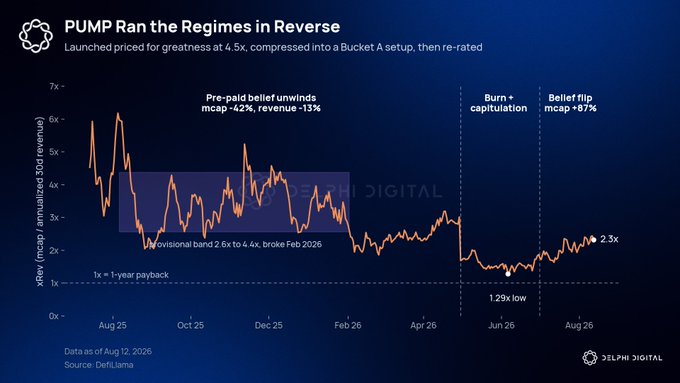
Figure 6: PUMP's XRev history split into its stages.
PUMP's chart is a mirror image of AERO, but there is an intriguing difference. Its opening position is the opening position of the barrel B token, which is 4.5 times higher. Faith has already been included in the price. Stage 1 is the process of releasing this belief. Market capitalization fell by 42%, while revenue fell by only 13%.
However, there was no damage to PUMP's business.
The market is just taking back what it prepaid. The shaded area is where the multiple remained for six months, fluctuating between 2.6 and 4.4 times. It looks like the market seemed to have found its level, but it didn't, and it broke in February due to pure price sales, even though revenue recorded its best gross revenue quarter at the time.
From a mathematical point of view,April is equivalent to a molecular change. Pump destroyed all previously repurchased tokens worth approximately US$370 million, accounting for 36% of the circulating supply. However, the market capitalization is simply the price multiplied by the circulation volume, so one-third of the supply was removed out of thin air, and one-third of the market value evaporated overnight, yet no one sold a single token. XRev dropped directly from about 3 times to 1.7 times. This whole period of change did not include any information on market confidence at all. The next two months were a real surrender period. Prices on both sides were plummeting, and the ratio reached its lowest point of 1.29 times.
That low point was the moment when a barrel B token completed the transition to the barrel A architecture. High verified revenues, compressed market capitalization, and huge doubts. Phase 3 is what happened when that doubt was shattered: market capitalization rose 87%, corresponding to a 43% increase in revenue — the same quadrant AERO was in early 2024.
Are incomes sustaining or dying?
To clearly understand whether the revenue behind the multiples is maintaining or declining, we can calculate xRev twice using two different revenue figures.
Rolling xRev (Trailing xRev) divides the market capitalization by the sum of revenue over the past 12 months, so it's an average of everything the agreement has earned over the past year, regardless of whether it's a good year or a bad year.
Run-rate XRev (Run-rate XRev) divides the same market capitalization by the last 30 days of annualized data, so it answers a different question: At today's actual pace, how many years would it take to earn back market value?
They both have the same molecules.
Therefore, any gap between these two multiples can only come from one place: the income trajectory. If earnings have been stable, the past 30 days have earned at the same rate as the average annual rate, and the two multiples yield the same value. If revenue is declining, the rolling sum will be artificially boosted by the “former harvest month” that no longer exists, making the rolling multiplier seem falsely cheap.
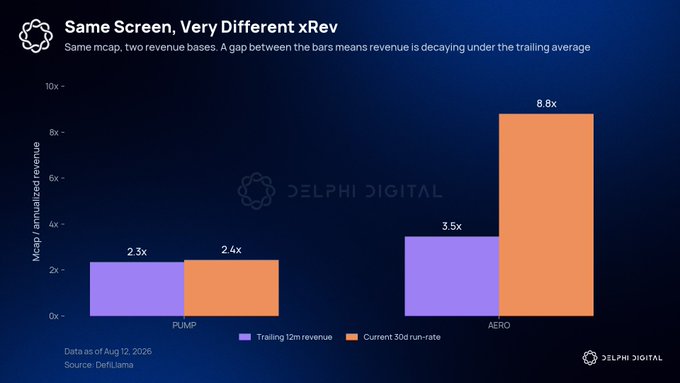
Figure 7: XRev at Rolling Benchmark vs. Current Run Rate Benchmark
AERO is the version of this trap. It screened a rolling factor of 3.5 times, and a payback period of 3.5 years, but only if it maintains the average earning rate last year — last year's quarterly revenue was 2 to 3 times the current one. At today's actual pace, the payback would take 8.8 years.
Think of a restaurant that had sales of $1.2 million last year, but now only does business $30,000 a month. Whoever sells you at “1 times sales” of last year's figure is actually charging 3.3 times its profitability today. The 2.5 times gap between these two multiples of AERO is the reason.
PUMP, on the other hand, achieved 2.3 times under both benchmarks. Today's pace matches the annual average, so the income base is intact, and everything the multiplier has done from now on has the price leg (belief) at work.
epilogue
Starting from barrel B, PUMP spent a year paying for its sale at a premium, and has just moved from being extremely skeptical to paying returns while the revenue base remains the same.
AERO started from barrel A and was revalued in 2024, and since then, as revenue shrank faster than prices fell, its multiples have been climbing for the wrong reasons.
Tokens worth hunting for are those that are in barrel A position today. Extremely high verified revenue, compressed market capitalization, and more importantly, the market hasn't bought the story yet. This is where the revaluation mechanism can take on the heavy burden of upward momentum for you.
Incidentally, many of the newer revenue projects are now in barrel A, generating six digits of revenue every day, while xRev is stuck at less than 1x. The market called it all a flash in the same way it used to treat AERO at 0.7 times and PUMP at 1.29 times.
Twitter:https://twitter.com/BitpushNewsCN
Compare the TG exchange group:https://t.me/BitPushCommunity
Compare TG subscriptions:https://t.me/bitpush
