BitpushNews

BitpushNews

Bitpush Column · 21 articles

Trump wants to issue coins again? Bitmart officially announced that it is considering restructuring; YuShu Technology has plummeted!

Dear readers, what have the KOLs on X been talking about in the past 24 hours? Note: The following content is compiled from the X platform. They are all personal opinions. They do not represent the platform's position, let alone constitute investment advice. Trump wants to issue coins again? Bull market script, how do you go this time? Bitmart officially announced that it is considering restructuring, YuShu Technology plummeted! Twitter: https://twitter.com/BitpushNewsCN比推 TG Community: https://t.me/BitPushCommunity比推 TG Subscriptions: https://t.me/bitpush

11h agoBitpushNewsKOL

Trump wants to issue coins again? Bitmart officially announced that it is considering restructuring; YuShu Technology has plummeted!

[Comparative Daily News Picks] Anthropic plans to include anti-AI sentiment as the main risk factor in the prospectus; Strategy's stock price hit a two-month high, and STRC returned above $96; Bernstein: Even if the “Clarity Act” is not passed, the SEC and CFTC will speed up rule-making; Dalio: The US debt crisis may break out within three years, and it is recommended to increase gold holdings

Daily AI · Crypto · Macro · Market Highlights, Bitpush helps you set priorities ↓ AI · News [Anthropic plans to include anti-AI sentiment as the main risk factor in the prospectus]. According to CNBC, Anthropic is expected to list the public's negative sentiment about artificial intelligence and data centers as a risk factor in the IPO prospectus to be released in the next few weeks. According to people familiar with the matter, Anthropic recently held a pre-listing “market trial” meeting with bankers and investors. Investors focused on competitive pressure, the impact of open source models on profit margins, and the risks that may be brought about by a slowdown in data center construction. Anthropic is currently valued at close to $1 trillion in the private equity market and is preparing to hit a major IPO. However, as Americans' concerns about AI replacing employment and data center expansion heat up, the related backlash sentiment is becoming a new challenge facing the company's listing. The company has previously achieved an annualized revenue operating rate of more than 65 billion US dollars. [Apple cuts Siri and Vision Pro team positions, and resources shift to AI and new devices] Compared to news, Apple (AAPL.O) is laying off employees from various teams responsible for Siri's digital assistants and Vision Pro headsets. The total impact of this layoff is more than 200 people. Of these, about 100 jobs in the Vision Pro department have been abolished, and about 100 other positions in the Siri and software teams have been cut. The move is part of the company's efforts to focus resources on new devices and artificial intelligence. People familiar with the matter said that in this adjustment, Apple has basically shut down a team dedicated to the Vision Pro game business, while also reducing the size of the department responsible for producing immersive video content for the device. Apple admitted in a statement that the company is making adjustments to some teams “to drive business development and provide the best experience for users.” [Castle Securities: Over 80% of the overall risk in the Situational Awareness Fund portfolio has been divested] According to the Financial Times, Castle Securities founder Ken Griffin responded to the company's acquisition of Situational Awareness assets under Leopold (Leopold) in a letter to clients on Friday. According to a letter obtained by CNBC, Griffin told clients that Castle Securities had divested more than 80% of the overall risk in the original purchased portfolio by conducting more than 100 major transactions (with a market value of more than $4 billion). In his letter, Griffin wrote, “A transaction of this scale would not have been possible without the full cooperation of the transaction teams and lead brokerage teams of the banks serving the two companies. I am very grateful for their dedicated efforts to complete the portfolio transfer quickly.” Griffin also confirmed that the company's flagship multi-strategy fund, the Wellington Fund, had a return of 5.94% in July, which is the fund's best monthly performance since 2022. [AI cloud company Nscale seeks to raise 3 billion US dollars in US IPOs] In comparison, AI cloud company Nscale is reportedly seeking to raise 3 billion US dollars in a US IPO. In the crypto market [Strategy stock price hit a two-month high, STRC returned above $96], the Bitcoin treasury company Strategy (MSTR) stock price rose to a two-month high today as the Bitcoin price briefly broke through $79,400. It broke through $120 during the intraday period, then partially regained its gains. Meanwhile, the price of STRC, Strategy's preferred stock product, also surpassed $96 for the first time since June. Previously, STRC's price once fell below $70 due to concerns about its ability to pay dividends and the ability of the stock price to maintain the $100 target for a long time. [Bernstein: Even if the Clarity Act is not passed, the SEC and CFTC will speed up rulemaking] Comparing news, the Bernstein analyst team led by Gautam Chhugani released a report stating that regardless of the procedural voting results of the “Clarity Act” on September 15, the certainty of US crypto regulation is expected to increase. They expect the SEC and CFTC to accelerate rulemaking in areas such as native crypto asset issuance, tokenized stocks, perpetual futures, computing power derivatives, and predictive markets. This regulatory clarity of expectations has become one of the broader supporting factors in the crypto market. 【A...

12h agoBitpushNewsCompare Daily Picks
[Comparative Daily News Picks] Anthropic plans to include anti-AI sentiment as the main risk factor in the prospectus; Strategy's stock price hit a two-month high, and STRC returned above $96; Bernstein: Even if the “Clarity Act” is not passed, the SEC and CFTC will speed up rule-making; Dalio: The US debt crisis may break out within three years, and it is recommended to increase gold holdings

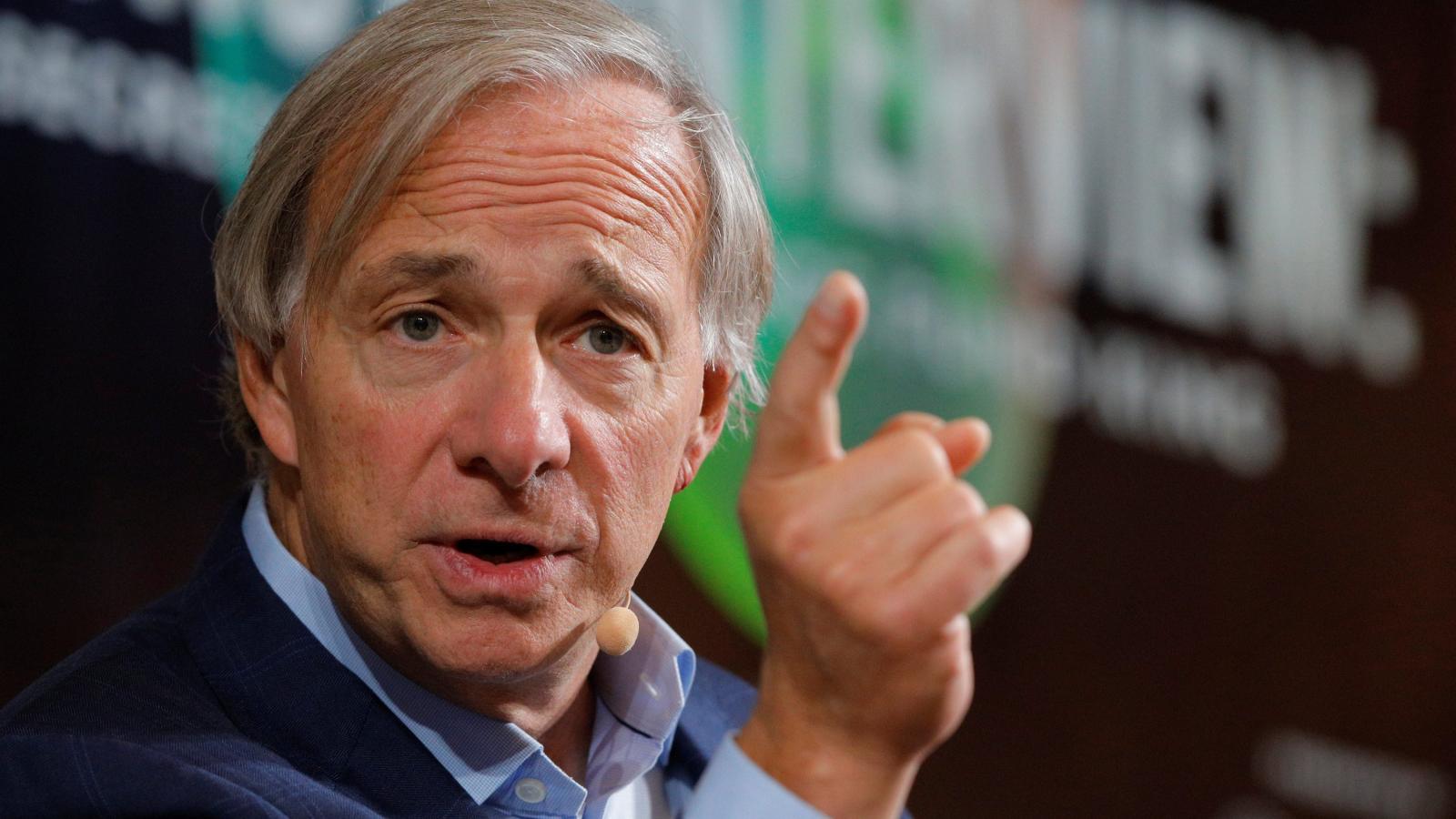
Dalio's latest warning: the US debt crisis may explode within three years. The antidote is...

Author: Ray Dalio, founder of Qiaoshui Foundation Original title: How Countries Go Broke: The Dynamic Behind What is Incurable Now Compiled and organized by: bitPushNews In “How Countries Go Bankrupt: The Big Cycle,” I detailed an analytical framework to describe dynamic processes that are highly likely to occur due to unsustainable imbalances between debt supply and demand. Recently, three things happened at the same time: 1) The Japanese government sold part of its US Treasury holdings to return capital to Japan to support the yen and the Japanese capital market, and reduce exposure to US Treasury bonds while avoiding being forced to raise interest rates beyond its wishes in order to support the yen; 2) US bond yields hit new highs under long-term leadership, while the dollar weakened. The reasons include not only the current and anticipated supply of huge debt, but also weak demand for US bonds; 3) Treasury Secretary Bessent announced this week that the US Treasury would buy US Treasury bonds and be able to buy other US Treasury bonds The amount of capital used is limited, and many people ask me : Do these events fit the classic template I set out in my book? The answer is yes. To anticipate what might happen next, let's first review this operating mechanism. The operating mechanism explains in detail that the central government's debt dynamics are the same principles as the debt dynamics of individuals or companies. The only difference is that the central government has a central bank that can print money (this will depreciate the currency), and it can obtain funds from the public through taxation. Because of this, if you imagine how the debt dynamic would work if you or the business you run could print money, or get capital from people through taxation — then you can understand this process. But remember, your goal is for the entire system to work well, not only for yourself, but for all citizens. In my opinion, the credit/market system is like the human body's circulatory system, delivering nutrients to every corner that makes up the market and economy. If credit is used effectively, it can generate productivity and income to repay debt and interest on debt, which is a healthy state of affairs. However, if credit is not properly used to generate sufficient income to repay debts and interest, debt payments will continue to pile up like plaques in blood vessels, squeezing other expenses. When debt payments become very large, debt repayment problems arise, and eventually evolve into debt rollover problems — because debt holders are unwilling to continue to roll over and instead want to sell. Naturally, this will lead to a shortage of demand and sell-off of debt instruments such as bonds; when demand is scarce relative to supply, it either causes a) interest rates to rise, thereby suppressing the market and economic downturn, or b) the central bank “prints money” and buys debt, which will reduce the value of the currency, thereby driving up inflation (compared to the original level). Banknote printing also artificially lowers interest rates and harms lenders' returns. Both options are bad. When debt sell-offs are too large and difficult to contain, and the central bank has already purchased large amounts of debt, rising interest rates can cause the central bank to lose money and damage its cash flow. If this continues, the central bank will fall into a situation where net assets are negative. When this situation became serious, the central government and central bank needed to borrow money to repay the principal and interest of the debt, while the central bank printed money to provide loans due to insufficient free market demand, so a self-reinforcing spiral between debt/banknote printing/inflation formed. In summary, the classic indicators to pay attention to are the following: the ratio of government debt payments to government revenue (which is like the amount of plaque in the circulatory system), the ratio of government debt sold to the demand for government debt (this is like a plaque falling off and causing a heart attack), and the amount of government debt purchased by the central bank to cover the gap between the demand for government debt and the supply of government debt to be sold (this is like the central bank applying a larger dose of liquidity/credit to mitigate liquidity shortages, and the central bank has a risk appetite for these debts). These indicators usually rise over a long cycle of decades — debt and debt payments continue to grow in relation to income — until this state of affairs cannot continue because: 1) debt repayment expenses unacceptably crowd out other expenses, 2) the supply of debt that must be purchased is too large, causing interest rates to rise sharply, leading to a sharp decline in the market and economy, or 3) central banks are unwilling to let interest rates rise and suffer bad market/economic consequences, so they print large amounts of money and buy large amounts of government debt to cover the demand gap, thereby making the value of the currency significant Decreased. Either way, the return on bonds will be poor until the money and debt eventually become cheap enough to attract demand, or the government can cheaply buy back or repay...

15h agoBitpushNewsindebtednessBitcoin
Dalio's latest warning: the US debt crisis may explode within three years. The antidote is...

MicroStrategy paid back; Hwang In-hoon's daughter went to Beijing; OpenAI secretly cut quotas...

Dear readers, what have the KOLs on X been talking about in the past 24 hours? Note: The following content is compiled from the X platform. They are all personal opinions. They do not represent the platform's position, let alone constitute investment advice. MicroStrategy returns, Huang Renxun's daughter went to Beijing to secretly cut quotas with OpenAI, Musk comments on Suzaku Rocket: Twitter: https://twitter.com/BitpushNewsCN比推 TG Exchange Group: https://t.me/BitPushCommunity比推 TG Subscriptions: https://t.me/bitpush

1d agoBitpushNewsKOL
MicroStrategy paid back; Hwang In-hoon's daughter went to Beijing; OpenAI secretly cut quotas...

[Comparing Daily News Picks] Bloomberg: Anthropic's IPO may match or exceed SpaceX's record; Broadcom plans to raise more than 60 billion US dollars and AI chip financing may reach 100 billion US dollars; the US CFTC Innovation Advisory Committee will hold its first meeting on topics including cryptocurrencies, AI, and forecasting markets; US Treasury Secretary Bezent: The maximum bond repurchase limit may exceed $4 billion

Daily AI · Crypto · Macro · Market News, Bitpush helps you focus ↓ AI · News [Bloomberg: Anthropic's IPO may level or even surpass SpaceX's record]. According to Bloomberg quoting people familiar with the matter, the artificial intelligence company Anthropic expects the scale of its IPO to match or surpass the record set by SpaceX. As the AI company speeds up preparations for listing, a large-scale IPO is in the works. People familiar with the matter said that Anthropic is making relevant calculations and is preparing to publicly submit a potential large-scale IPO application as early as the end of this month. They revealed that a recent investor communication meeting hosted by Chief Financial Officer Crao avoided valuation issues. According to the data, the rocket and satellite company SpaceX raised 75 billion US dollars at the time of the IPO, making it the largest initial stock offering in history. That figure eventually rose to $86.2 billion due to the exercise of the so-called over-allotment option. This mechanism is usually activated when stocks rise in the early stages of listing. Anthropic's goals reflect that AI industry leaders are reshaping the technology investment landscape in a very short period of time. Earlier, it was reported that Anthropic's initial revenue for the second quarter was over $11.5 billion, compared to only $787 million for the same period in 2025. By the end of July, the company's annualized revenue operating rate had reached 65 billion US dollars. [Broadcom plans to raise more than 60 billion US dollars, and the AI chip financing scale may reach 100 billion US dollars] According to Bloomberg, citing people familiar with the matter, Broadcom is negotiating an AI chip financing transaction of more than 60 billion US dollars with various lenders. The deal will help AI companies, including Anthropic, obtain chips and other critical AI infrastructure. According to people familiar with the matter, the financing plan could include about $30 billion in subprime debt and about $60 billion to $70 billion in high-security debt. Broadcom will guarantee part of the advanced guarantee debt. If calculated on the scale currently discussed, the overall financing scale could reach up to 100 billion US dollars. Apollo and Blackstone are in talks with Broadcom to participate in this funding. According to the plan, the relevant debt may be issued by a special purpose vehicle (SPV), the transaction may also proceed in stages, and the specific size and structure may still change. [Samsung plans to announce a shareholder return plan of up to 79 billion US dollars] In comparison, people familiar with the matter revealed that Samsung Electronics will announce a new shareholder return plan on Friday, which could be as high as 110 trillion won (79 billion US dollars). People familiar with the matter revealed that Samsung's board of directors is scheduled to hold a meeting at around 4 p.m. local time after the Korean stock market closes, and details of the plan will be announced soon after the meeting. According to people familiar with the matter, the scale of this shareholder return plan is expected to be between 90 trillion won and 110 trillion won. Crypto Market [Franklin Templeton Plans to Introduce Tokenized Assets into Traditional Funds] Comparing news. According to Bloomberg, Franklin Templeton is preparing to introduce tokenized assets into traditional investment funds. The company said its digital native products were approved for traditional funds for the first time after receiving approval from US regulators. According to a letter published by the US Securities and Exchange Commission (SEC) and information disclosed by company executives, Franklin Templeton plans to use his tokenized money market funds for ETFs and mutual funds, both as fund holdings and as collateral. This means that investors who originally invested in traditional funds may include them in their portfolios in the future without actively seeking tokenized assets. [The US CFTC Innovation Advisory Committee will hold its first meeting on topics including cryptocurrencies, AI, and predictive markets] In comparison, Fox Business crypto reporters posted an article on the X platform saying that the US Commodity Futures Trading Commission (CFTC) will hold its first meeting of the Innovation Advisory Committee at 13:00 EST today to discuss cryptocurrency, AI, and predictive markets. A number of executives attending the White House event yesterday will attend, in addition to other leaders from the crypto industry, traditional finance, academia, and predictive markets. [Coinbase CEO: Bitcoin may rise to $300,000 to $400,000 in the next few years] In comparison, Coinbase CEO Brian Armstron was interviewed by FOX Business...

1d agoBitpushNewsCompare Daily Picks
[Comparing Daily News Picks] Bloomberg: Anthropic's IPO may match or exceed SpaceX's record; Broadcom plans to raise more than 60 billion US dollars and AI chip financing may reach 100 billion US dollars; the US CFTC Innovation Advisory Committee will hold its first meeting on topics including cryptocurrencies, AI, and forecasting markets; US Treasury Secretary Bezent: The maximum bond repurchase limit may exceed $4 billion

Trump named Hyperliquid, and it wasn't a surprise

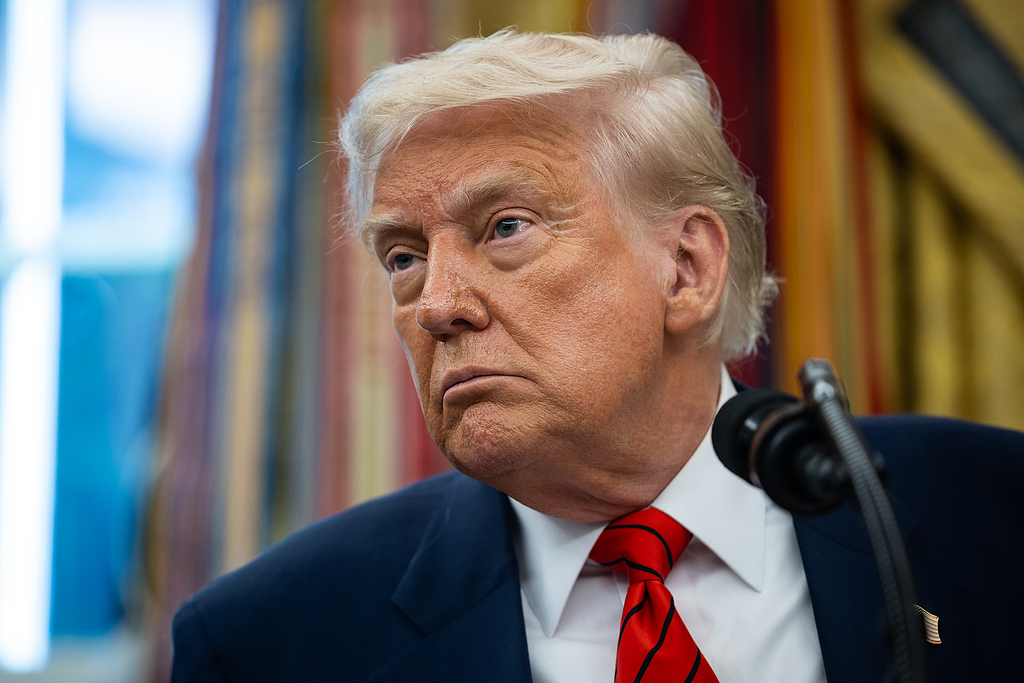
On August 19, when Trump met with crypto and financial industry executives at the White House, he suddenly read out the name Hyperliquid. His original statement was that CFTC Chairman Michael Selig is working to bring Hyperliquid to the US in a “fully compliant and legal” manner. After Trump's speech, HYPE rushed from around $60 to above $70, rising 20% to 22% in the short term, once again approaching a record high of around $76.8 in June this year. HYPE had a minimum of about $3.2 when it first entered the market in November 2024, and it has increased tenfold in less than two years. However, the entire crypto market also surged on the same day. Bitcoin is at $7.2 million, and Ethereum is rising at the same time as other altcoins. Macro liquidity and US regulatory news are driving up risk appetite. Why is it called Hyperliquid? Other factors aside, it has evolved to the point where US regulators and traditional exchanges cannot ignore it. Hyperliquid's main business is perpetual contracts. According to The Block data, in March 2025, its monthly perpetual trading volume was about 3.5% of all centralized exchanges (CEX); by March 2026, this ratio was close to 6%, and the monthly turnover was close to 200 billion US dollars. It rose to 6.63% in May, reaching 14.4% compared to Binance's perpetual trading volume, both of which were new highs at the time. It is no exaggeration to say that it is eating away at CEX's business step by step. Not all of Hyperliquid's assets have been growing the fastest recently. HIP-3 allows third parties to deploy a sustainable market. Since this year, contracts for stocks, indices, commodities, etc. have been rapidly sold. In May, HIP-3 sold more than 62 billion US dollars in a single month; by July, it had contributed nearly half of Hyperliquid's average daily sustainable transactions. It also explains why Wall Street is staring at it. How did the low-key team get on with Trump? Hyperliquid's past style is very different from typical crypto projects. Jeff Yan said in a lengthy interview in 2025 that the core team at the time was only 11 people, about half of whom were engineers; the team did not have a dedicated BD department, nor a business team that connects agencies around the clock. Even HYPE was not a centralized exchange, they didn't invest much resources to promote it. The Hyper Foundation's official website still says “No investors. “No paid market makers” is clearly written. Judging from public sources, there is no public evidence of any personal relationship or commercial ties between Jeff Yan and Trump himself. All I can find is news related to my own business. In May 2025, Hyperliquid Labs officially submitted submissions to the CFTC to discuss how the US handles 24/7 derivatives and perpetual contracts. At the same time, the document also clearly stated that the front-end developed by Hyperliquid Labs was prohibited for US users to trade. In February 2026, Hyper Foundation supported the establishment of the Hyperliquid Policy Center with 1 million HYPE cards. According to the current currency value of about 29 million US dollars, this agency was doing policy research and regulatory communication in Washington. The person in charge, Jake Chervinsky, had previously been the chief policy officer of the Blockchain Association and is also a familiar lawyer in the US crypto regulatory community. The introduction to HPC is straightforward: introducing Hyperliquid to lawmakers and regulators, and promoting regulatory frameworks in DeFi, perpetual contracts, and more. As of July 15 of this year, “Hyperliquid Strategic Inc. and Hyperliquid Labs” appeared in the CFTC official minutes. In other words, Hyperliquid was already in formal contact with the CFTC prior to Trump's public nomination. So, what we can guess is that Hyperliquid wasn't good at, or even very bad at traditional business relationships; it started this past year...

1d agoBitpushNewsCFTCHYPERLIQUID
Trump named Hyperliquid, and it wasn't a surprise

The New York Times: Ominous Omen? US debt surged above 40 trillion US dollars, with a per capita debt of 116,000

Source: The New York Times Compiled and Edited by: BitPushNews Original title: U.S. Debt Hits $40 Accumulated as America's Borrowing Binge ContinuesBitPush Note: The size of US federal government debt has once again broken through a historic integer node. According to data released by the US Treasury Department on the 19th, the total US debt surpassed 40 trillion US dollars for the first time, which is nearly 10 trillion US dollars more than last year's US gross domestic product (GDP), which means that every American is burdened with about 116,000 US dollars in debt. Here is the text: On Wednesday, the total amount of US Treasury bonds broke the $40 trillion mark for the first time. This is an ominous milestone for the US economy: for decades, the US has relied on continuous borrowing to support growing military spending, social security spending, and President Trump's tax cuts, and the fiscal ground has loosened. This year alone, the US will need to borrow more than 2 trillion US dollars to cover various financial expenses, including military expenses for the Iran war and large-scale tax cuts passed by the Republicans in 2025. Meanwhile, interest payments to US debt holders have also risen sharply. Currently, they account for nearly half of the total deficit, further dragging the US into a fiscal quagmire. Is this growing debt a crisis that must be addressed, or is it an alternative manifestation of America's economic strength? It's still a contentious topic. Deficits are also a battleground in a bipartisan political game — when the Republicans are in opposition, they have always been most vocal about reducing the deficit. “The scariest part of this is that we are beginning to see signs of a spiral in debt,” Mark Godwin, senior policy director at the “Committee for Responsible Federal Budget,” which supports deficit reduction, said of interest on debt. The inability of legislators to deal with the debt problem poses long-term risks. Although the US remains the world's largest economy, rising debt burdens may cause investors to demand higher interest rates on US Treasury bonds or question America's credibility, which could shake people's confidence in the US dollar as the world's reserve currency. Both Republicans and Democrats are responsible for America's debt burden. America is having to sell more and more debt to cover the costs of health-care programs, stimulus benefits, disaster relief, and day-to-day government operations. President Trump promised to restore fiscal order, yet many of his policies have exacerbated America's financial woes. When he first ran for president in 2016, Trump said he would eliminate the national debt within eight years by reaching a new trade deal and spurring economic growth. Since then, the national debt has doubled. During his second term, Trump's major measures to cut spending and increase revenue were unsuccessful. The Government Efficiency Department, initially headed by Elon Musk, promised to cut federal spending by $1 trillion. So far, the department claims to have saved just over $200 billion. The US Government Accountability Office said this month that the Government Efficiency Department's estimates lack reliability and transparency. By imposing comprehensive tariffs on imported goods, the Trump administration has previously made progress in increasing additional government revenue. However, this year, the Supreme Court ruled that some of these tariffs were illegal, forcing the federal government to refund more than 160 billion US dollars to companies that have already paid import tariffs, causing these plans to be thwarted. Treasury Secretary Bezent has set a goal of reducing the deficit from more than 6% of GDP when Trump took office to 3% by 2028. He admitted last week that this year's deficit situation is moving in the wrong direction. In an interview with Newsmax, Bezent gave several reasons for the growing deficit. He said that expenses related to the Iran war forced the US to increase military spending, and that tariff refunds weakened the Trump administration's progress in reducing the deficit as a share of GDP in 2025. The war in Iran has led to a rise in US energy prices, which has also dragged down economic growth and weakened economic expansion that Trump administration officials had hoped would increase taxes. Bessent also said that last year's tax cuts are increasing deficits as businesses are using a provision that allows them to immediately deduct plant construction and equipment costs. According to estimates by the Congressional Joint Committee on Taxation, these measures could cost $100 billion in fiscal expenditure this year. However, the finance minister said that despite the initial costs, these tax cuts will pay off in the future through increased revenue. “While this will currently widen the deficit, we are creating productive assets for future growth, and these assets will generate taxes in the future,” Bezent said. “I'd rather compare this to pulling out a slingshot, creating a large amount of potential energy, and then converting it into kinetic energy.” Although he believes that the fiscal trend will stabilize, investment...

1d agoBitpushNewsTrumpUS debt
The New York Times: Ominous Omen? US debt surged above 40 trillion US dollars, with a per capita debt of 116,000

Moderna's skyrocketing carnival; Trump's rage; Wang Xingxing's dark face...

Dear readers, what have the KOLs on X been talking about in the past 24 hours? Note: The following content is compiled from the X platform. They are all personal opinions. They do not represent the platform's position, let alone constitute investment advice. Moderna skyrocketed! Netizens have switched from semiconductors to biotech experts, and Bitcoin is rebounding again. Is this Trump's opinion? Why isn't Wang Xingxing happy Twitter: https://twitter.com/BitpushNewsCN比推 TG exchange group: https://t.me/BitPushCommunity比推 TG subscription: https://t.me/bitpush

2d agoBitpushNewsKOL
Moderna's skyrocketing carnival; Trump's rage; Wang Xingxing's dark face...

[Comparative Daily News Picks] OpenAI CFO: The company will go public in 2027 or sooner; Bitcoin's short-term rise hits $70,000; Trump: SEC Chairman is pushing to introduce Hyperliquid into the US; US federal government debt exceeds $40 trillion; Federal Reserve meeting minutes: Multiple officials think interest rate hikes may be needed if necessary

Daily AI · Crypto · Macro · Market News, Bitpush helps you focus ↓ AI · News [OpenAI CFO: The company will go public in 2027 or sooner] In comparison news, OpenAI Chief Financial Officer Sarah Flair said that OpenAI plans to become a listed company in 2027, but if the business grows at an accelerated pace, it may go public earlier in the morning. Flair said the IPO was a milestone and method of financing. In March of this year, the company closed $122 billion in financing, providing greater flexibility for future growth. [Nvidia plans to invest in AI data labeling company Mercor, financing valuation may reach 20 billion US dollars] According to The Information, according to a person familiar with the matter, Nvidia has already discussed investment matters with data labeling service provider Mercor. Mercor helped the chip designer develop an open source AI model. The investment will be part of Mercor's round of financing valued at $20 billion. Existing investors, General Catalyst, have been negotiating to lead this funding round. Mercor's past revenue came from closed-source AI model developers such as OpenAI, Google, and Anthropic. However, Mercor's revenue from Nvidia is growing as Nvidia prioritizes the development of Nemotron's open source model. Nemotron aims to compete with the world's most advanced open source models. According to people familiar with the matter, Nvidia paid Mercor tens of millions of dollars last quarter. In addition to Mercor, Nvidia also uses data from other data vendors such as Turing and Scale, and also has its own in-house data team. [US CFTC Seeks Public Opinions on AI Hashrate Futures] In comparison, as industry giants begin to accept computing power (compute) as a tradable asset, the US Commodity Futures Trading Commission (CFTC) is seeking public comments on hashrate futures contracts. A number of exchanges, including CME (CME), Intercontinental Exchange, and the emerging fintech company Architect Financial Technologies, have announced plans to launch relevant contracts after receiving regulatory approval. According to these exchanges, the establishment of a futures market with computational power will help end users and speculators hedge against energy shortages or other issues that may affect the technological progress of AI developers. In the crypto market [Bitcoin's short-term rise hit $70,000], according to market data, Bitcoin's short-term rally hit $70,000, but now it has fallen back to $69,800, and the 24-hour increase has increased to 8.08%. [Trump: SEC Chairman is promoting the introduction of Hyperliquid into the US] In comparison, HyperliquidNews posted an article on the X platform saying, “The SEC Chairman is promoting the introduction of Hyperliquid into the US.” [Coinbase CEO: Looking forward to the CLARITY Act being passed on September 15, followed by a new bull market] In comparison, Coinbase CEO Brian Armstrong recently released a vision board on the X platform saying that he expects the CLARITY bill to receive strong bipartisan voting support on September 15, then usher in Upmonth and start the next round of the cryptocurrency bull market, and stated “as predicted.” The CLARITY Act aims to provide a clearer market structure and regulatory framework for US crypto assets. Armstrong's statement reflects its expectations for regulatory progress and a recovery in market sentiment. Macro · Agency [US federal government debt exceeds 40 trillion US dollars] compared news that as US government borrowing has increased at an unprecedented rate in history, the total amount of US treasury bonds has exceeded 40 trillion US dollars. Despite Trump's promises to control government spending, rising debt has raised investors' concerns about the state of America's public finances. According to data released by the US Treasury Department on Wednesday, the total US federal debt broke through the $40 trillion threshold on Tuesday. Over the past year, its debt has increased by $3 trillion, which is the fastest growth rate in history if the pandemic period is not taken into account. “It's like that huge warning light on a car engine,” Responsible Federation...

2d agoBitpushNewsCompare Daily Picks
[Comparative Daily News Picks] OpenAI CFO: The company will go public in 2027 or sooner; Bitcoin's short-term rise hits $70,000; Trump: SEC Chairman is pushing to introduce Hyperliquid into the US; US federal government debt exceeds $40 trillion; Federal Reserve meeting minutes: Multiple officials think interest rate hikes may be needed if necessary

Skyrocketing! The crypto market picked up overnight, who ignited the fire behind it?

After months of silence, the crypto market finally ushered in a round of general rise after a long absence. In the US market on August 19, Bitcoin quickly rose from a low of about 64,100 US dollars during the day, and recently hit 69,000 US dollars again. At the beginning of June, Bitcoin fell below 70,000 US dollars and returned to around 69,000 US dollars. Since then, it has fluctuated more than 60,000 US dollars for most of the time. Now, after a lapse of nearly 3 months, it has once again reached this position, and market sentiment has clearly heated up. At one point, Ethereum rose by about 8.6%, and altcoins such as XRP and SOL all rose by more than 6%. The Fear and Greed Index also rebounded from the extreme fear range to a neutral fear level of around 40. This wave of markets is coming very fast, but it's not without any signs. Over the past few weeks, Bitcoin has been stuck in a sideways trade of more than $60,000. Prices are falling little, and buying is not strong enough, and the market is waiting for new catalysts every day. As of today, several factors have just come together: the fall in US bond yields, the weakening of the US dollar, improved US regulatory expectations, and the continued absorption of funds by large players on the chain have finally ignited the market. The first flash came from the US Treasury bond market, which had the biggest impact on the market today, and came from the US Treasury. The US Treasury Department announced that it will increase the liquidity support repurchase scale of 10-year to 30-year treasury bonds. The maximum limit for a single operation will be raised from 2 billion US dollars to at least 4 billion US dollars, which will be implemented on September 9. After the news came out, the yield on US long-term treasury bonds fell rapidly. The 30-year US Treasury yield fell by nearly 10 basis points, the 10-year yield returned to around 4.65%, and the US dollar index also weakened markedly. This is important for Bitcoin. US bond yields have remained high for some time. The 30-year US Treasury yield was once close to 5.34%, a multi-year high. As far as global capital is concerned, when US Treasury bonds can provide a yield of about 5%, capital is naturally more cautious; there is not much need to chase the volatile Bitcoin. Now that long-term yields have begun to decline, the US dollar is weakening at the same time, market concerns about liquidity have temporarily eased, and high-risk assets are also taking a breather. Jeremy Stretch, head of foreign exchange strategy at CIBC, believes that the actions of the US Treasury indicate that the policy level has noticed the pressure on the long-term bond market and the impact of this pressure on other assets. Second catalyst, SEC's new draft token issuance The US SEC proposed a new draft rule called “Regulation Crypto Assets” on August 18. It plans to establish a more targeted issuance system for some investment contracts involving crypto assets, including a maximum issuance exemption of up to 5 million US dollars for startup projects and a financing exemption of up to 75 million US dollars every 12 months. The key benefit is the “safe harbor” rule. Simply put: In the past, many crypto projects could be treated as “securities” by the SEC as “securities” and faced fines and removal at any time. Now, the draft provides a clear way out: the project party has completed (or officially stopped) the promised development and operation, and after reporting to the SEC, this coin is no longer considered a security. In the future, everyone will be able to trade and trade more freely, and there is no need to worry about sudden regulatory action. In addition, early projects can raise up to 5 million US dollars, and the procedures are much simpler. One sentence: The US has finally drawn a clear “graduation line” for crypto projects to reduce uncertainty and facilitate project implementation and transactions with ordinary investors. However, it is still only a proposal, which does not mean that the US crypto regulation issue has been completely resolved. However, market transactions have never been just reality, but also expectations. Crypto concept stocks such as Coinbase and Circle also clearly strengthened on the same day, indicating that this part of the expectation was not only reflected in currency prices. Today's surge in giant whales, which have been collecting funds for a long time, seems sudden, but from an on-chain perspective, the big money movement did not appear until today. CryptoQuant data shows that over the past 60 days, large Bitcoin holders — which excludes exchange and mining pool wallets from the statistics — have increased their net holdings by about 43,000 BTC. Based on the previous price of around 64,000 US dollars, the value is about 2.75 billion US dollars; if calculated at around 69,000 US dollars today, this batch of bitcoins is already close to 3 billion US dollars, and some of the large capital has slowly begun to be received. Real demand for goods is also picking up. According to recent CryptoQuant research, Bitcoin's 30-day “spot demand” has quickly recovered from negative about 206,000 BTC on July 23 to negative 5,000 on August 18. It is only one step away from recovering to a positive value, and the closest to a correction since the end of February. This indicator measures whether there are actually people in the market who are really willing to buy coins with money. CryptoQuant's historical backtesting shows that when this demand indicator changed from negative to positive, Bitcoin rose at a median rate for the next 60 days...

2d agoBitpushNewsoriginalaltcoins
Skyrocketing! The crypto market picked up overnight, who ignited the fire behind it?

Trump dinner offers; OpenAI employees change to rival avatars; all-weather US stock trading is not far away...

Dear readers, what have the KOLs on X been talking about in the past 24 hours? Note: The following content is compiled from the X platform. They are all personal opinions. They do not represent the platform's position, let alone constitute investment advice. What do you think of Trump's August 27th dinner offer? OpenAI employees have changed their profile picture as Anthropic CEO to trade US stocks around the clock. Will Bitcoin be bullish soon? Twitter: https://twitter.com/BitpushNewsCN比推 TG Community: https://t.me/BitPushCommunity比推 TG Subscriptions: https://t.me/bitpush

3d agoBitpushNewsKOL
Trump dinner offers; OpenAI employees change to rival avatars; all-weather US stock trading is not far away...

[Comparative Daily News Picks] WSJ: OpenAI's second-quarter revenue increased 18% month-on-month, but losses widened; Google plans to buy the bankrupt airline Spirit Airlines data for $10 million to train AI models; Yushu Technology's OTC price soared to 678.85 yuan, creating new potential revenue that could reach 263,900 yuan; the US SEC officially proposed Regulation Crypto Assets, and some crypto asset issuance plans to exempt SEC registration; traders are currently Hedge against the risk of the Fed turning to interest rate cuts in 2027

Daily AI · Crypto · Macro · Market News, Bitpush helps you focus ↓ AI · News [WSJ: OpenAI's revenue increased 18% month-on-month in the second quarter, but losses increased]. According to the Wall Street Journal, OpenAI told investors that its second-quarter revenue increased 18% compared to the first quarter, but losses widened further. This result disappointed some shareholders. They originally hoped the startup would make more progress and catch up with its rival Anthropic. According to people familiar with the matter, the company's revenue reached 6.7 billion US dollars in the three months ending June, compared to 5.7 billion US dollars in the first quarter. At the same time, its operating margin declined further, making the company's prospects for achieving profit even more slim before its much-anticipated IPO. [OpenAI strengthens AI security protection to prevent models from getting out of control] Compared to the news, OpenAI announced that it will adopt stricter system monitoring and security protection measures to prevent artificial intelligence models from getting out of control. The company plans to alert security teams within 30 minutes of finding an issue and add controls to prevent AI models from connecting to the internet to perform high-risk tasks. OpenAI has also suspended inference tasks and training plans for some models until safety verification is completed. [Google plans to buy data from the bankrupt airline Spirit Airlines for 10 million dollars to train AI models] Comparing news, Google has agreed to buy some corporate data from Spirit Airlines, an airline that has filed for bankruptcy, for 10 million dollars to improve its products and AI models. Relevant data includes internal emails, Microsoft Teams chat logs, calendars, spreadsheets, reservations and frequent flyer records, and marketing, productivity, operations, and employee human resources data. Spirit said data delivered to Google will be desensitized to remove personally identifiable information. The deal is also facing competition. AI data company Mercor previously bid $7.5 million to buy related data. Currently, the deal still needs to be approved by the US Bankruptcy Court. US Bankruptcy Judge Sean Lane is expected to review the deal on Wednesday local time. Spirit Airlines ceased operations in May of this year and is in the process of selling the remaining assets through bankruptcy proceedings. [Anthropic's pre-listing credit limit may exceed $10 billion] In comparison, market sources say Anthropic's pre-listing credit limit may exceed the $10 billion target. [Yushu Technology's OTC price soared to 678.85 yuan, which may reach 263,900 yuan in new potential revenue] According to comparison news, Yushu Technology will be officially listed and traded on August 19. Currently, the pre-market perpetual contract on Trade.xyz (Unitree)'s IPO price is 100.71 US dollars, about 678.85 yuan, which is about 3.5 times higher than the issue price of 150.8 yuan. Based on the current OTC price, if you sign a contract at the issue price, the theoretical profit surges are about 263,900 yuan. The Science and Technology Innovation Board's IPO plans to issue 404.464 million shares, accounting for 10% of the total share capital after issuance; 500 shares are signed, and the single subscription payment is about 75,400 yuan. Previously, when the average market value of the Shanghai account reached or exceeded 60,000 yuan, you could get 12 license numbers and purchase the maximum 6,000 shares. The probability of winning is exactly the same for large eligible investors and retail investors. Crypto Market [US SEC Officially Proposes Regulation Crypto Assets, Some Crypto Asset Issuance Proposes Exemption from SEC Registration] In comparison, the Fox Business crypto reporter posted an article on the X platform saying that the US Securities and Exchange Commission (SEC) has officially proposed Regulation Crypto Assets to establish a new framework for US crypto asset fund-raising. The proposal would allow partial issuances not to be registered with the SEC without accumulating more than $5 million over four years or $75 million per year; establish a conditional safe harbor for crypto assets after the issuer's critical management work has been completed; and exempt related offerings from securities registration requirements in some states. The proposal is now open for comment for 60 days. [Brian Armstr...

3d agoBitpushNewsCompare Daily Picks
[Comparative Daily News Picks] WSJ: OpenAI's second-quarter revenue increased 18% month-on-month, but losses widened; Google plans to buy the bankrupt airline Spirit Airlines data for $10 million to train AI models; Yushu Technology's OTC price soared to 678.85 yuan, creating new potential revenue that could reach 263,900 yuan; the US SEC officially proposed Regulation Crypto Assets, and some crypto asset issuance plans to exempt SEC registration; traders are currently Hedge against the risk of the Fed turning to interest rate cuts in 2027

The whole process of issuing coins was empty! How difficult is it to bet on the next “cow comes”

This August, the domestic animation “Cow Lai” suddenly went from “hardly anyone watching” to a phenomenal hit. The film was screened on August 5, and the cumulative box office for the first 9 days was only 7,169 yuan, and 236 people watched the movie; after topics rushed to the top search around August 14, the schedule and box office quickly reversed. On August 18, the “Cow Lai” film showed that the box office for the “Cow Lai” film had already surpassed 20 million yuan, and second-innovation videos created spontaneously by Internet users from Station B and Douyin were also all over the place. The crypto market followed almost synchronously. The meme coin of the same name, “Bullai”, appeared on BNB Chain. Currently, the main contract traded in the market is 0xbeea... 7777, with a market capitalization of about 49 million US dollars at one point. What is dramatic, however, is that the person who created this coin did not have the greatest wealth effect of this wave. According to on-chain data, “Niulai” was created at the address 0x6af3... 679e. On the morning of August 13, this address created two “Ox Lai” in a row within about 6 minutes, and then issued “Bear Walks” and “Stumbling” tokens for the next few days. The one that was finally selected by the market and became a popular trading target was the second “cow come”. According to GMGN transaction records, this address did not have any buying or selling records on the main “Niulai” which later became popular. Lookonchain monitoring shows that many early traders made a lot of money, but the publishers themselves did not buy them, so they did not make profits through main coin transactions. After “Cow Lai” became popular, this address continued to create meme coins such as “Tripp,” “Here Comes the Cow,” and “Moo,” and achieved a cumulative profit of about 253,000 US dollars from these subsequent projects. Therefore, the issuer did not expect the second “cow” to go this far. This kind of “igniting a fire but not getting in the car” is a common occurrence in the meme industry. Generally speaking, the usual style of play for meme players is to test the waters in batches, issuing N or more tokens within a few seconds, and betting that one or two of them can hit the hot spot. However, when a concept unexpectedly becomes popular, the creators often either haven't opened a position yet, or have already cleared their position, and can only wait and see. The most classic example is dogwifhat (WIF). In March 2024, Lookonchain's monitoring showed that the address labeled “WIF Dev” sold 350 million WIF copies in exchange for 511 SOL within two days of opening the transaction; at the time of its posting, the book value of this batch of WIFs had reached about US$693 million. Although this is just a book estimate, it doesn't mean that you can actually sell everything at this price, but the extent of “selling out” is really exaggerated. There's also the old Fartcoin. After issuing the coins, the creators of Fartcoin used 2 SOL to buy about 67 million Fartcoins. As a result, they sold all of them in less than 30 seconds, and in the end, they only earned about $600. Later, Fartcoin rushed all the way to a market capitalization of close to 2.5 billion US dollars, and his initial batch of chips was up to about 168 million US dollars. After missing Fartcoin, this address did not take it away, but instead began issuing new coins without stopping. According to Axiom and on-chain statistics, as of August 2025, the wallet has created a total of 446 tokens, with a total profit of more than 1.8 million US dollars. Its operation is highly modeled: buy the token immediately after creating it, and then sell it within seconds or minutes. Of course, there is no shortage of money, but it's still two orders of magnitude worse than if you had held Fartcoin in the first place. There are even more magical examples. In 2024, a teenager founded QUANT during a live broadcast, then sold all 51 million QUANT copies in his hand, making about 29,600 US dollars. As a result, after he cleared his inventory, the community continued to push up the price. At one point, the batch of coins that had already been sold was worth about 4 million US dollars. He then sent LUCY and SORRY, and only earned about $24,000. For people who issue coins in batches, most coins may not last long, so “run when you see money” is also the most reasonable operation. This is also the most “fascinating” part of Meme. It always creates stories of “getting rich overnight,” yet it rarely tells you how many zeroed tokens and empty people are behind it. It seems like everyone has an opportunity, but what is actually selected by the market is often only a very small probability event in mass issuance and transactions. Some people changed their net worth because they held one coin; others personally issued a thousand times ten thousand times ten thousand coins, but sold out of chips before take-off. The so-called wealth myth is essentially never a replicable methodology, but rather the result of survivors being magnified by the spotlight. In the Meme Marketplace, the hardest part isn't finding opportunities, but distinguishing what you see...

3d agoBitpushNewsMEMEoriginal
The whole process of issuing coins was empty! How difficult is it to bet on the next “cow comes”

Does the forecast market with monthly turnover of 44.8 billion US dollars need a main broker?

Source: Fintech Blueprint Compiled and edited by BitPushNewsBetterment recently published its 2026 retail investor survey. The main conclusion is that 26% of Gen Z investors see sports betting as part of their long-term financial strategy, and 52% have invested the money they originally intended to invest into it last year. The survey of 1000 US retail investors in early April showed that proportion rapidly declined as people grew older — 31% and 14% for millennials, 10% and 6% for Gen X, and 4% and 1% for Baby Boomers. Betterment CEO Sarah Levy put it bluntly: The problem comes when a prediction market or sports betting platform starts to feel like a retirement strategy. The combined monthly trading volume of Kalshi and Polymarket reached $44.8 billion in June, which is more than three times the average monthly transaction volume of approximately $14 billion for all US legal sports betting in 2025. Source: Bloomberg/Betterment Let's explore whether this transaction volume is huge enough to support the dedicated agency hierarchy below. Earlier this month, River Markets raised $8.5 million in seed funding to build what it calls “the first institutional-grade execution and prime broker platform for the prediction market.” Led by Haun Ventures, Y Combinator, Coinbase Ventures, Qube Research & Technologies, and Cherry Ventures participated, in addition to angel investors from Citadel, HRT, J.P. Morgan, Nvidia, and Google. The company has been online with trading clients since May 1 and has publicly listed five client names: Chimera Capital Management, Game Point Capital, Cleat Street, Skywalk, and 646 Equity. It claims to own three of the top ten traders on Kalshi and Polymarket, as well as several quantitative funds running on its API. The problems they are solving are real and unremarkable. The liquidity of the prediction market is distributed across multiple trading sites, which may have different quotes on the results of the same event, involving separate accounts, separate balances, independent APIs, and no uniform view of risk. A trader who trades the same event on Kalshi and Polymarket actually manually manipulates the two books and then reconcile the accounts. River integrates these sites into a single terminal and an API, uses a unified code system, adds execution algorithms (iceberg orders, linked orders, stop-loss orders, take-profit orders) not native to the exchange, and routes eligible orders to the best prices in the online ledger. It's live on Kalshi, Polymarket, and Polymarket US, and is integrating Novig and Crypto.com. Today, it's more like an order and execution management system than a Prime Broker (PB) — a boundary drawn by River itself. Its FAQ states that the real-time platform covers execution, routing, data, and profit and loss, that customer funds are kept in venue accounts rather than centrally pooled, and that companies are invited to contact them about financing, collateral, and cross-market requirements. Source: Allium predicts that the cumulative historical trading volume of the market exceeded 150 billion US dollars in May. Kalshi alone reached 31.5 billion US dollars in June, while Polymarket was 10.8 billion US dollars. Kalshi is currently in final negotiations to finance at least $750 million, with a valuation of $40 billion; Polymarket is financing at a valuation of $15 billion, after ICE had already committed $2 billion in two instalments. Kalshi's annualized revenue surpassed $4 billion in July, roughly double the $2 billion annualized pace two months ago. At the peak of the World Cup,...

3d agoBitpushNewsHYPERLIQUIDKalshi
Does the forecast market with monthly turnover of 44.8 billion US dollars need a main broker?

[Comparative Daily News Picks] Yushu Technology will be listed on the Science and Technology Innovation Board on August 19; Anthropic's annualized revenue exceeded 65 billion US dollars before the IPO; Ethereum developers plan to upgrade Hegotá's priority promotion of private transaction proposals in 2027, and FOCIL has confirmed inclusion; the US-Iran situation has added another variable, and the yield on 30-year US bonds hit a new high in 19 years

Daily AI · Crypto · Macro · Market News, Bitpush helps you set priorities ↓ AI · News [Yushu Technology will be listed on the Science and Technology Innovation Board on August 19]. Comparing news, Yushu Technology announced that the company's shares will be listed on the Science and Technology Innovation Board of the Shanghai Stock Exchange on August 19, 2026. [Anthropic's annualized revenue surpassed 65 billion US dollars before the IPO] In comparison, according to people familiar with the matter, Anthropic's current performance means that the company's annualized revenue is expected to exceed 65 billion US dollars, an increase of more than seven times from the level at the end of last year. As of the end of July, Anthropic's annual recurring revenue (ARR) had reached $65 billion, according to people familiar with the matter. One of the people familiar with the matter said that Anthropic shared this data when regularly updating investors on the company's situation. The sharp acceleration in revenue has further strengthened Anthropic's confidence in advancing its listing plan. Both Anthropic and OpenAI have secretly submitted documents related to the listing. Anthropic is expected to land on Wall Street as soon as this fall, possibly earlier than OpenAI. [OpenAI Super Data Center officially launched, Nvidia covered up to 105 billion US dollars] Comparing news, OpenAI's Ohio Super Data Center officially signed a contract. This project was previously revealed. At the time, OpenAI was still discussing a long-term lease with SB Energy, and Nvidia was only considering providing a guarantee. Now that the first 4.25 GW has been officially launched, Nvidia can continue to lock in the remaining 3.75 GW. Previously, the two sides discussed guarantees of up to 250 billion US dollars, and in the end, the initial liability was limited to 105 billion US dollars. This isn't money given directly to OpenAI. Only if OpenAI goes bankrupt or doesn't pay rent, and there is still a gap after the project is re-leased or sold, will Nvidia need to make up the difference. After that, OpenAI will also have to pay back the money actually advanced by Nvidia. Nvidia will also invest $1.5 billion in developer SB Energy, and the park will mainly use Nvidia's AI computing power. Hwang In-hoon estimates that each generation of systems deployed here may correspond to about 1.5 million GPUs and 150 billion to 200 billion US dollars in revenue. Until now, outsiders have been questioning that this model is circular financing: Nvidia backs up the customer's infrastructure, and the customer then uses the money to buy Nvidia chips. Hwang In-hoon also specifically responded this time, stressing that Nvidia only bears specific rent, electricity, and asset residual value risks; it is not responsible for the entire project on behalf of OpenAI. Crypto · Market [Ethereum developers plan to prioritize private transaction proposals in the 2027 Hegotá upgrade, FOCIL has confirmed inclusion] In comparison, Ethereum Foundation researcher Toni Wahrstätter said that the protocol architecture team hopes to prioritize Frame Transactions (EIP-8141) and FOCIL (EIP-7805) in the Hegotá upgrade planned for 2027. Frame Transactions can collaborate with Keyed Nonces and Recent Roots (EIP-8272) and Transaction Assertions (EIP-7906) to enable the privacy pool to pay transaction fees and let the wallet set execution conditions after transaction submission. FOCIL can provide agreement layer inclusion guarantees for eligible transactions. Currently, FOCIL is the only proposal that Hegotá has confirmed inclusion, and the Frame Transactions related scheme is one of 66 proposals currently being evaluated. Other candidate solutions include transaction pricing, status growth, block access lists, and optional zkEVM certification for the main network. Vitalik Buterin previously proposed improving Ethereum's privacy, resisting quantum security, and reducing reliance on second-layer networks. Hegotá will follow Glamsterdam, and the developers plan to complete Glamsterdam by the end of 2026. [CleanSpark, BitFufu, and Canan Technology's Bitcoin production in July fell by about 5%, 10%, and 28%, respectively] In comparison news, according to The Block, Bitcoin mining companies CleanSpark, BitF...

4d agoBitpushNewsCompare Daily Picks
[Comparative Daily News Picks] Yushu Technology will be listed on the Science and Technology Innovation Board on August 19; Anthropic's annualized revenue exceeded 65 billion US dollars before the IPO; Ethereum developers plan to upgrade Hegotá's priority promotion of private transaction proposals in 2027, and FOCIL has confirmed inclusion; the US-Iran situation has added another variable, and the yield on 30-year US bonds hit a new high in 19 years

Meta can't keep the Chinese University of Science and Technology hegemony: the big model in Silicon Valley, the Chinese are starting to form their own games

He dropped a $100 million, four-year “contract” in exchange for leaving after 14 months — the talent Zuckerberg had taken from OpenAI and left Meta. In the summer of 2025, Zuckerberg personally knocked out Jiahui Yu (Jiahui Yu), the head of multimodal research, from OpenAI using a salary plan with a total value of up to 100 million US dollars and covering four years. Silicon Valley is on the sidelines, and the industry calls it “stealing people at sky-high prices.” However, just 14 months later — on August 14, 2026, the star researcher, whom Meta had high hopes for, announced his departure and started his own business. A year ago, the blockbuster in the industry ended up being held for a shorter period of time than an NBA season. Just eight days before leaving his job, Muse Spark, the multi-modal model he led, had just been updated to version 1.2. From forming the team to continuously launching the four product lines Muse Spark, Voice Mode, Muse Image, and Muse Video, Yu Jiahui's year at Meta covered almost the entire process of this new team from construction to intensive delivery. Muse Image finished second in the Arena Wensheng Trials Test, beating Google Nano Banana, behind OpenAI GPT Image 2; Muse Video ranked third in the Wensheng video rankings. For Meta, this is certainly an impressive report card. But for Yu Jiahui, this is just an interlude. In his departure statement, he said he was “increasingly drawn to an issue that is critical to the future of humanity but has yet to be fully explored.” Details of the new company have not been disclosed, but he has decided to leave. From the junior class to the history of Yu Jiahui, the top in Silicon Valley, he is at the “top” level for any major AI company. Born in 1995 in Cixi, Zhejiang. In 2012, while still in his sophomore year of high school, he was admitted early to the Junior Class College of the Chinese University of Science and Technology. During his undergraduate studies, he won several contests, including the National Parallel Application Challenge Championship. After graduating in 2016, he went to the University of Illinois at Urbana-Champaign (UIUC) to study for his PhD in computer vision. This scholar trained many famous figures in the field of AI, such as Zhou Xi, founder of Yuncong Technology, and Han Xu, founder of Wenyuan Zhixing. After graduating from her PhD, Yu Jiahui's career progressed step by step. He has worked as a senior research scientist and manager at Google Brain and Google DeepMind, and has participated in the development of visual modules for the Gemini multi-modal project. Joined OpenAI in October 2023 as the head of the Perception (Perception) team, leading the development of GPT-4O and O-series inference models. In June 2025, Zuckerberg personally stepped down, and Yu Jiahui joined former OpenAI researchers such as Zhao Shengjia, Bi Shuchao, and Ren Hongyu into Meta's newly formed super intelligent team. According to foreign media Wired, Meta's compensation package was as high as $100 million — although Meta CTO Andrew Bosworth later clarified that this was not a one-time signing bonus, but a four-year total compensation plan that included stocks, bonuses, and performance conditions. But even so, this is one of the few sky-high contracts in the AI field. (Photo source: One mu of three-quarters of land) After conversion, even though Yu Jiahui only worked for 14 months, Meta paid an estimated cost of more than 25 million dollars for this short period of cooperation — but the actual cost of sunk was even higher. After all, the investment in team building and project start-up cannot be proportionately calculated. The fanaticism of the capital market is driving Silicon Valley's talent exodus, and Yu Jiahui's departure is by no means an exception. In fact, Silicon Valley in 2026 is experiencing an unprecedented “exodus” of AI talents. According to data from the research platform AlphaXiv, Meta alone has lost more than 200 well-known researchers, and another 929 researchers have “worked at Meta but have left their jobs.” In October of last year, Meta drastically cut more than 600 researchers in the AI business. In June of this year, with Llama 4's poor market performance and the company's implementation of more stringent performance reviews, it is expected that 15% to 20% of employees will be rated as “below expectations”, and many senior researchers have switched to competitors. Tech author Gergely Orosz pointed out that Meta's internal organizational restructuring and efficiency adjustments have caused engineers to feel uneasy, and many senior experts have begun to remain open to external opportunities. Google's situation is no less than happy...

4d agoBitpushNewsAIYu Jiahui
Meta can't keep the Chinese University of Science and Technology hegemony: the big model in Silicon Valley, the Chinese are starting to form their own games

Musk earns a year's salary for an ordinary person in 4 seconds; Luigi pleads guilty; OpenAI pinyin interaction leads speculation...

Dear readers, what have the KOLs on X been talking about in the past 24 hours? Note: The following content is compiled from the X platform. They are all personal opinions. They do not represent the platform's position, let alone constitute investment advice. Musk's sky-high pay, earns you a year's salary in 4 seconds. Luigi pleaded guilty to the assassination of Brian Thompson, CEO of UnitedHealthcare (UnitedHealthcare), which once made a splash. The 28-year-old suspect Luigi Mangione officially pleaded guilty to federal stalking charges in Manhattan federal court. OpenAI Official Ins Interact with Pinyin? The former Bybit Co-CEO shut down after only a few months of starting a business! Dan Bin, Duan Yongping, and Liang Wenfeng investment style comparison Twitter: https://twitter.com/BitpushNewsCN比推 TG exchange group: https://t.me/BitPushCommunity比推 TG subscription: https://t.me/bitpush

7d agoBitpushNewsKOL
Musk earns a year's salary for an ordinary person in 4 seconds; Luigi pleads guilty; OpenAI pinyin interaction leads speculation...

[Comparative Daily News Picks] Anthropic's second-quarter revenue exceeded 11.5 billion US dollars, an increase of at least 14 times over the same period last year; OpenAI currently had a wave of senior executives leaving their jobs, which some investors called a huge danger signal; Cboe sought approval from the SEC for the first batch of 3x leveraged BTC and ETH ETFs in the US; Trump: soon to announce the Strait of Hormuz as “US territory”

Daily AI · Crypto · Macro · Market News, Bitpush helps you focus ↓ AI · News [Anthropic's second quarter revenue exceeded 11.5 billion US dollars, an increase of at least 14 times the same period last year]. According to Bloomberg, Anthropic's initial revenue for the second quarter exceeded 11.5 billion US dollars, up at least 14 times from 787 million US dollars in the same period last year, and higher than 4.73 billion US dollars in the first quarter of this year. The company has achieved a positive adjusted operating profit for the quarter. Anthropic's annualized revenue surpassed $47 billion in May of this year. [OpenAI's current wave of senior executives leaving their jobs before it went public, some investors called it a huge danger sign] According to CNBC, OpenAI is experiencing intensive exiting of executives as it pushes ahead with a potential IPO. Denise Dresser, the company's chief revenue officer, suddenly announced her departure this week, just two days after senior executive Brad Lightcap announced the end of her 8-year tenure; Fidji Simo had also left before. Some investors believe that ongoing turmoil at the executive level is increasing uncertainty before OpenAI's launch. OpenAI secretly submitted its IPO documents in June. Currently, the valuation is about US$852 billion, but the exact launch date has not been announced. Kevin McCormick, founder of AI startup SignAudit.AI, said: The departure of OpenAI executives before the IPO is a huge red flag. Two current investors say Dresser's departure came as a surprise to some financial backers. Meanwhile, OpenAI's enterprise business continues to grow. Company President Greg Brockman said in internal news that annualized revenue increased by more than 20% month-on-month in July, with corporate customer revenue rising 32%. OpenAI said the number of its enterprise customers has grown to 2 million, double what it was a year ago. [Berkshire Hathaway's holdings of Google Class A shares increased by 45.2% to 78.8 million shares; Class C holdings increased to 27.2 million shares] Comparing news, US Securities and Exchange Commission (SEC) documents show that Berkshire Hathaway's holding on Alphabet (GOOG.O) Class A shares increased by 45.2% to 78.8 million shares; Class C holdings increased to 27.2 million shares. Crypto · Market [Cboe Seeks SEC Approval for First Batch of 3x Leveraged BTC and ETH ETFs in the US] Comparing news, Cboe BZX Exchange is seeking approval from the US SEC to list a set of leveraged commodity ETFs, including daily leveraged products that are 3x longer in Bitcoin and Ethereum. Cboe plans to launch 3x Gold ETF, 3x Silver ETF, 3x Bitcoin ETF, 3x Ether ETF, 3x Crude Oil ETF, and 3x Natural Gas ETF, according to proposed rule change documents submitted on Friday. These funds will mainly aim to achieve a return of 3 times the daily performance of the corresponding asset by holding CME or COMEX futures contracts and using cash and cash equivalents as collateral. Since the relevant products do not meet the restrictions on leveraged products in the exchange's general listing standards, Cboe needs to apply for approval through special rules. These highly leveraged funds are usually aimed at mature investors, used for short-term tactical transactions, and are not suitable for long-term holding. The documents also show that these funds will operate as a “commodity pool” and be regulated by the CFTC rather than as 1940 Act investment companies under SEC regulation like many traditional ETFs. Commodity pools usually pool funds from multiple investors to trade derivatives or other commodities related instruments. [J.P. Morgan terminates banking relationship with Polymarket due to regulatory concerns] According to Bloomberg, J.P. Morgan terminated its banking relationship with Polymarket due to regulatory concerns. [Musk's salary at Tesla in 2025 is about US$158.3 billion, 2.52 million times the median employee's salary] Comparative news, according to the “Fortune” report, the American Federation of Labor and Industrial Trade Unions (AFL-CIO) executive remuneration analysis shows that Musk...

7d agoBitpushNewsCompare Daily Picks
[Comparative Daily News Picks] Anthropic's second-quarter revenue exceeded 11.5 billion US dollars, an increase of at least 14 times over the same period last year; OpenAI currently had a wave of senior executives leaving their jobs, which some investors called a huge danger signal; Cboe sought approval from the SEC for the first batch of 3x leveraged BTC and ETH ETFs in the US; Trump: soon to announce the Strait of Hormuz as “US territory”

Use the xRev valuation method to lurk in the next doubling market

Source: Delphi Digital Author: @that1618guy编译及整理: BitPushNews When sifting through agreements, I've been thinking about the question: If a business relies on its revenue to help you recoup all of your investment in less than 2 years, what exactly is stopping you from buying it? The answer is almost never the revenue itself, but whether you believe it's sustainable. This is what the XRev multiple (market capitalization divided by annualized revenue) really measures. It's not cheap or not, it's durable (durable). Two real-life cases illustrate this very well. The trailing multiples currently selected by PUMP and AERO are in the low single-digit range, 2.3 times and 3.5 times, respectively. Over the past 30 days, PUMP has risen 87%, while AERO has declined 14.5%. The same screening metrics, but the exact opposite results. In June of this year, the market priced PUMP 1.3 times — meaning the market doubts that the agreement won't even be able to sustain current revenue for 16 months. This doubt was dispelled in July, and the subsequent revaluation (re-rate) completed all the upward drive. AERO is like a mirror: it has tripled since its high price in December 2024, not because some people are more optimistic about it, but because its revenue is declining faster than the market is repricing. If this framework is established, then the trading logic would not be “buy the lowest multiple”, but “buy the multiple that doubt will soon disappear.” When a suspected revenue stream is proven to be durable, even if revenue is overtaken, the revaluation will take on the burden of driving the rise. What exactly does xRev measure xRev is simple: market capitalization divided by annualized revenue. At 1.0 times, the revenue from the agreement can pay back its entire market value within a year. Less than 1.0 times, the payback is faster. The most immediate instinctive interpretation of such numbers is a “pricing error.” But the correct interpretation is: the market is putting huge “durability discounts” on it. The market is telling you that it thinks this kind of revenue is just a fleeting thing, and once it falls, it will never come back. So a compressed XRev itself isn't a buying signal... it's more of a “statement of no confidence.” The alpha (excess revenue) of these is figuring out whether this distrust is right or wrong. Before entering the case study, we also need to make a distinction, because the initial multiplier position of the token determines what kind of transaction it can evolve into. We can split it into two buckets. Bucket A (Bucket A) tokens are “cheap at birth”: A new protocol found product-market matches (PMF) in areas with extremely high rates, and revenue exploded before anyone believed it would last, so XRev launched at around 1x or less. High income, small market capitalization, and great doubt. The market capitalization is low for only one reason: the market hasn't bought up its revenue story, making them candidates for “belief revaluation.” Bucket B (Bucket B) tokens are “expensive at birth”: the market has been pricing them as future revenue giants since day one, so XRev was initially very high, and the belief was already pre-paid. There are no doubts that can be purchased; only expectations need to be defended. AERO's release belongs entirely to bucket A. The release of PUMP belongs entirely to barrel B. The next sections let's take a look at what happened to each of them. PUMP: Barrel B buys PUMP at its premium is typical of barrel B. The token stemmed from a $1 billion round of financing, and the ICO gave a fully diluted valuation (FDV) of $4 billion, equivalent to more than 9 years of annualized revenue generated by the agreement at the time, and opened at 4.5 times the circulating supply. Faith has already been paid for in advance. Since then, it has taken the market a whole year to reclaim these prepaid beliefs. This was reasonable at the time: Memecoin's trading volume was cyclical, competitors were actively absorbing order flows, and no one was sure if the platform could maintain market share. You can see that the belief in prepayment is being lost from the XRev chart. While the agreement recorded gross revenue of more than $200 million for four consecutive quarters, the multiples continued to shrink for almost a full 11 months. Figure 1: XRev, 30-day revenue window since PUMP was launched. At this...

7d agoBitpushNewspumptoken
Use the xRev valuation method to lurk in the next doubling market

Is the myth of “absolute safety” debunked? Trezor 14,000 encrypted user information leaked, a “wrench attack” is approaching

DID YOU KNOW? Buying a hardware wallet is probably more dangerous than posting luxury cars on social media. Because from the moment you place an order, your name, phone number, and address are permanently tied to the “hold crypto assets” label. And this information is probably lying in an Excel table from a dark web seller right now. Trezor customers are being targeted. On August 13, the hardware wallet giant confirmed that its logistics partner ShipMonk had been accessed without authorization, and 11,742 customers' names, emails, phone numbers, and full delivery addresses had been obtained; the names, cities, and emails of 1,947 other customers had been leaked, for a total of 13,689 people. The affected users are located in the US, UK, Sweden, Colombia, Brazil, Italy, and Portugal. Note that Trezor's own system hasn't been broken, the hardware wallet is still safe, and the private keys are fine. So what's the problem? The reason — buying Trezor became a “target” in itself. This instantly turned an ordinary logistics database into a “list” in the eyes of potential attackers. From a phishing email to someone knocking on your door, there have been quite a few things that have happened in the crypto industry. In 2020, Ledger's e-commerce and marketing database was leaked. More than 1 million email addresses were leaked, and details such as the names, addresses, and phone numbers of about 272,000 customers were later made public. Since then, Ledger has had to remind customers for a long time to prevent phishing emails and scams impersonating official websites. But today in 2026, things aren't just about the internet. According to data released by Chainalysis in August this year, by the end of June, the world had recorded 46 violent attacks against crypto asset holders; more than half involved kidnapping, and more than one-third involved house robberies. Since 2026 alone, more than $30 million in crypto assets have been successfully stolen through violent coercion. Insiders call it a “$5 wrench attack” ($5 wrench attack). The name has a bit of dark humor, but the logic is scary: Hack a hardware wallet? It's so hard. But if I know you have coins and know where you live, then I only need to spend 5 dollars to buy a wrench and say “please” the mnemonic phrase at the door. In January 2025, Ledger co-founder David Balland and his partner were kidnapped at their home in France. The kidnapper demanded a cryptocurrency ransom and severely maimed Balland's hand. French police later rescued two people, and several suspects were arrested. In November 2025, Danylo K., the son of the deputy mayor of Kharkiv, Ukraine, and a 21-year-old student, was kidnapped in Vienna, tortured for a long time to obtain a password for his wallet, and then burned to death in gasoline. The suspect was later arrested in Ukraine and the associated crypto account has been emptied. There is also an American cross-state violent robbery gang. Several suspects are accused of posing as delivery workers or pizza delivery in California and other places, bundling and assaulting victims, and forcing money transfers. In one case, about 6.5 million US dollars of crypto assets were extorted in a single transaction; other gangs carried out similar attacks in several states, with cumulative losses of millions to tens of millions of US dollars. The latest one is even more outrageous: a young couple in the French province of Somme (farmers and bank employees, who don't play with coins at all) bought a second-hand house. The former homeowner is a retired crypto-rich man. After the former landlord's tax information and old address were leaked to the dark web, from June 24 to July 17, 2026, they were robbed three times in less than a month. Although the two suspects have been jailed in the local court, the victim's lawyer pointed out that the dark web leak made the new owners innocent, and the couple are now preparing to sell their house and move. This is where the “wrench attack” is really scary. You don't need coins; as long as others “think” you have them, you're no longer safe. After “Not your keys, not your coins,” the next problem was actually two weeks before Trezor's launch. Another wallet manufacturer, Coldcard, had just experienced a key generation vulnerability crisis. Galaxy Research later estimated that related losses had reached about 130 million US dollars. As a result, Galaxy made a very interesting judgment: self-hosting does not eliminate the risk of hosting; it only transfers the risk to hardware, software, and key generation. And this time, Trezor has taken the risk one step further: the risk will also be transferred to the logistics company, order database, your mobile phone number, and your home address. Hardware wallets can be signed offline, so that private keys never touch the internet, but from the moment the user places an order, they have already entered the other...

7d agoBitpushNewsTrezormnemonic
Is the myth of “absolute safety” debunked? Trezor 14,000 encrypted user information leaked, a “wrench attack” is approaching