


Trump named Hyperliquid, and it wasn't a surprise

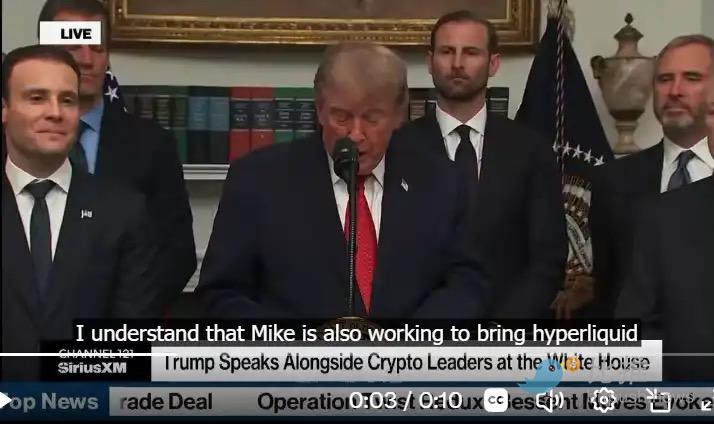
On August 19, when Trump met with crypto and financial industry executives at the White House, he suddenly read out the name Hyperliquid.
His original statement was that CFTC Chairman Michael Selig is working to bring Hyperliquid to the US in a “fully compliant and legal” manner.
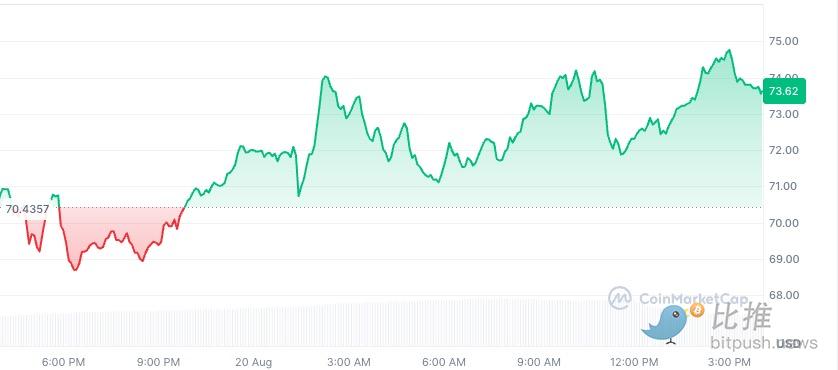
After Trump's speech, HYPE rushed from around $60 to above $70, rising 20% to 22% in the short term, once again approaching a record high of around $76.8 in June this year.
HYPE had a minimum of about $3.2 when it first entered the market in November 2024, and it has increased tenfold in less than two years.
However, the entire crypto market also surged that day. Bitcoin is at $7.2 million, and Ethereum is rising at the same time as other altcoins. Macro liquidity and US regulatory news are driving up risk appetite.
Why is it called Hyperliquid?
Other factors aside, it has evolved to the point where US regulators and traditional exchanges cannot ignore it.
Hyperliquid's main business is perpetual contracts.
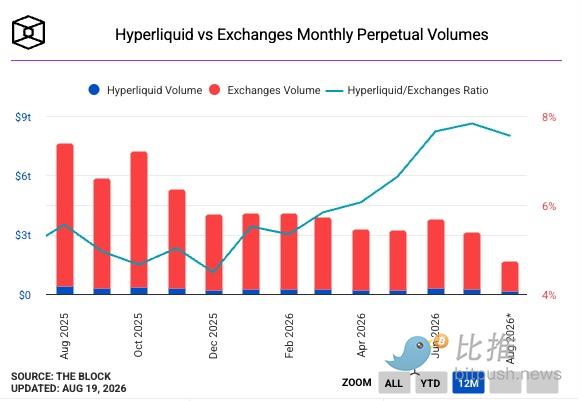
According to The Block data, in March 2025, its monthly perpetual trading volume was about 3.5% of all centralized exchanges (CEX); by March 2026, this ratio was close to 6%, and the monthly turnover was close to 200 billion US dollars. It rose to 6.63% in May, reaching 14.4% compared to Binance's perpetual trading volume, both of which were new highs at the time.
It is no exaggeration to say that it is eating away at CEX's business step by step.
Not all of Hyperliquid's assets have been growing the fastest recently. HIP-3 allows third parties to deploy a sustainable market. Since this year, contracts for stocks, indices, commodities, etc. have been rapidly sold. In May, HIP-3 sold more than 62 billion US dollars in a single month; by July, it had contributed nearly half of Hyperliquid's average daily sustainable transactions.
It also explains why Wall Street is staring at it.
How did the low-key team get on with Trump?
Hyperliquid's past style is very different from typical crypto projects.
Jeff Yan said in a lengthy interview in 2025 that the core team at the time was only 11 people, about half of whom were engineers; the team did not have a dedicated BD department, nor a business team that connects agencies around the clock. Even HYPE was not a centralized exchange, they didn't invest much resources to promote it.
The Hyper Foundation's official website still says “No investors. “No paid market makers” is clearly written.
Judging from public sources, there is no public evidence of any personal relationship or commercial ties between Jeff Yan and Trump himself. All I can find is news related to my own business.
In May 2025, Hyperliquid Labs officially submitted submissions to the CFTC to discuss how the US handles 24/7 derivatives and perpetual contracts. At the same time, the document also clearly stated that the front-end developed by Hyperliquid Labs was prohibited for US users to trade.
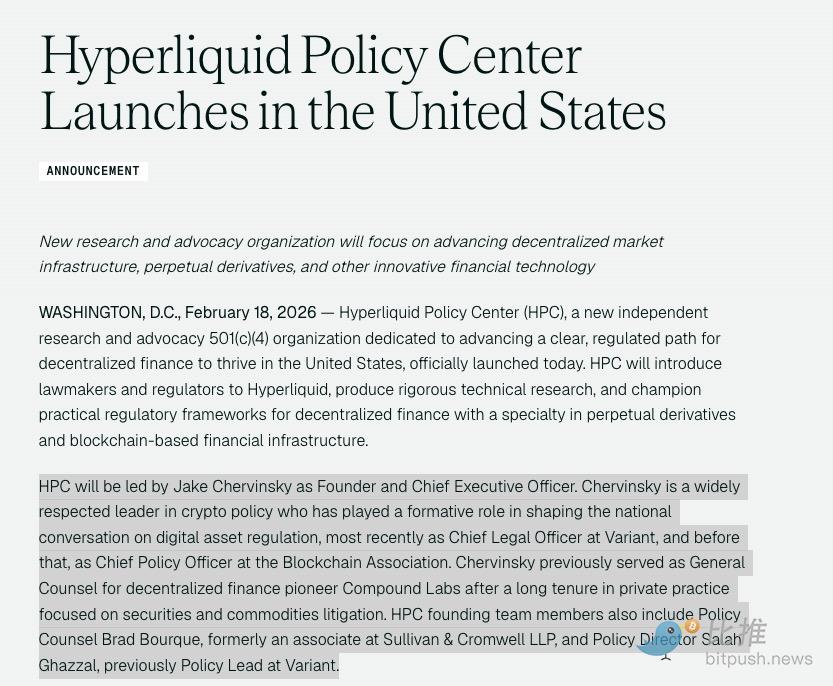
In February 2026, Hyper Foundation supported the establishment of the Hyperliquid Policy Center with 1 million HYPE cards. According to the current currency value of about 29 million US dollars, this agency was doing policy research and regulatory communication in Washington. The person in charge, Jake Chervinsky, had previously been the chief policy officer of the Blockchain Association and is also a familiar lawyer in the US crypto regulatory community. The introduction to HPC is straightforward: introducing Hyperliquid to lawmakers and regulators, and promoting regulatory frameworks in DeFi, perpetual contracts, and more.
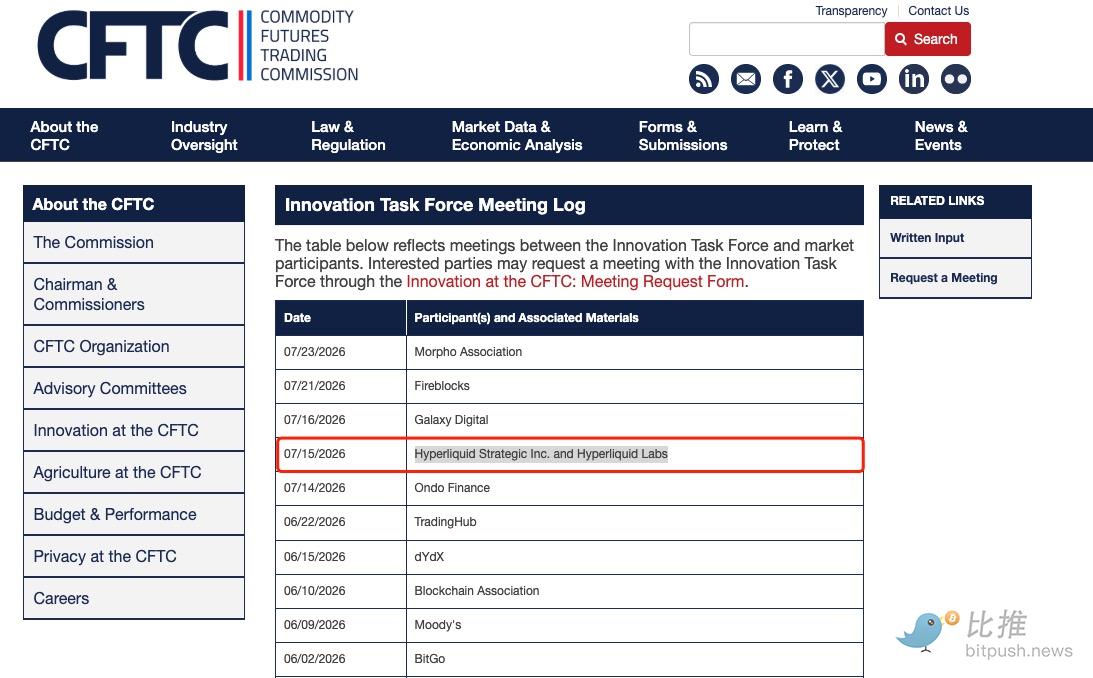
As of July 15 of this year, “Hyperliquid Strategic Inc. and Hyperliquid Labs” appeared in the CFTC official minutes. In other words, Hyperliquid was already in formal contact with the CFTC prior to Trump's public nomination.
So, what we can guess is that Hyperliquid wasn't good at, or even not very good at traditional business relationships; over the past year, it began to specifically fill this line of business.
Jeffrey Sprecher, CEO of ICE, the parent company of the New York Stock Exchange, once said that ICE has met the founding team of Hyperliquid many times, and also called this team of about ten people “very smart.”
Trump's statement simply made this line that already exists public.
As to whether it has any other interests with Hyperliquid, there isn't enough evidence to support it, so I won't speculate too much here.
Next, let's see how Washington writes the rules
Currently, there is a very delicate situation in US crypto regulation. The industry's most wanted CLARITY Act (Clarity Act) is still stuck in the Senate. It must resolve whether the token is managed by the SEC or CFTC and what rules the trading platform operates according to. Trump also publicly urged Congress to pass the bill on August 19, but the legislative time is already quite tight.
Industry insiders worry that if Congress fails to enact the framework into law this year, the policies introduced by the SEC and CFTC may still be overturned by the next administration.
But regulators didn't stop waiting for Congress. The CFTC approved the launch of a real Bitcoin perpetual contract in the US regulated market in May of this year, and issued a special 24/7 trading guide.
CFTC Chairman Michael Selig made it clear: In the past, a large number of perpetual transactions went overseas, and now he hopes to bring this part of the market back to the US regulatory system. This line is most directly related to Hyperliquid. If it actually enters the US, the questions will be specific: what license to use, whether US users have full KYC, how much leverage can be provided, and the current on-chain flow performance cannot continue to be used. Any of these are heavily restricted, and the US version of Hyperliquid is probably much different from the products users are familiar with today.
So we'll look at something very specific later: can the CFTC find an enforceable US path for on-chain perpetual exchanges. If so, and the rules are open to the entire industry, Hyperliquid will gain access to the US market, and will also welcome Coinbase, traditional futures exchanges, and more on-chain competitors; if regulations require KYC, leverage, and liquidity again, the benefits brought by Trump's speech will also have to be discounted.
Author: Bootly
Twitter:https://twitter.com/BitpushNewsCN
Compare the TG exchange group:https://t.me/BitPushCommunity
Compare TG subscriptions:https://t.me/bitpush
