原创 · 1127

X launches original content rewards program, and the old revenue sharing program will end on September 7

Comparatively, X Platform announced the launch of the Original Content Rewards Program (Original Content Rewards Program) to reward creators who bring original ideas, expertise, stories, ideas, and reviews to the platform. X said that new users will stop joining the original revenue sharing plan from now on. Existing revenue sharing plan users will continue to receive revenue until September 7, during which time three final payments will be made, with final settlement on August 14, August 28, and approximately September 11. Starting September 8, existing eligible creators can apply to join the new Original Content Rewards Program. The new program will distribute revenue based on the amount of qualifying impressions generated by the creator's original content, and rewards will be distributed every two weeks. The first payment is expected on August 28. To apply for the Original Content Rewards Program, you must meet the following conditions: At least 18 years old; lives in a country or region supported by the program; has a reputable account with no record of violating profit standards or terms of service; has a personal or business account; subscribes to X Premium, Premium+, or Premium Business; has at least 500 verified fans; the homepage timeline from verified users has reached at least 500,000 times in the past 90 days (excluding replies); * Continued posting of original content.

14d ago
Refreshed! Bitpush launches new app to overcome information noise and understand AI and blockchain

Refreshed! Bitpush launches new app to overcome information noise and understand AI and blockchain

In an age of information overload, we are never short of information. What is really scarce is information that has been screened and is trustworthy to help you see trends clearly. The new Bitpush app has been released. Faster, sharper, and purer, it accompanies you through the noise and uncovers the information that really matters. 7×24 hour coverage, with a global vision based on a globally distributed content team. Bitpush tracks global market trends around the clock, continuously covering blockchain, AI, FinTech and macro trends. From instant updates, original reports, to in-depth interviews and trend interpretations, we don't do low-quality handling, don't chase meaningless traffic, and only present content worth paying attention to. Important news, the market never waits, and important information often determines the next decision. Bitpush continuously tracks global industry trends and captures policy changes, market changes and major events in a timely manner, so you can grasp key signals earlier and not miss every important change. Frontier trends, early seeing the continuous emergence of new technology and rapid changes in new tracks. Real valuable opportunities are often hidden before trends are formed. The “Market Radar” focuses on cutting-edge AI and Crypto transactions. MEME detectives capture on-chain hot spots in real time and continuously track emerging agreements, capital flows, and market changes. If you see it one step earlier than others, you can think one step further. Minimalist and fresh, no ads to disturb the blue and white main tone, clean and unobtrusive. Card-style information flow, zero advertisement insertion throughout the process. Swipe to follow, so it's comfortable to read late at night. Multiple verifications. If you don't follow fake hot spots, you can manufacture them; trust can only be accumulated. Each piece of information has been cross-verified from multiple sources and reviewed collaboratively by humans and machines. It does not spread unproven “small essays”, does not amplify emotions, and does not create anxiety. What we care more about is not grabbing every hot spot, but getting infinitely close to the truth. Now, download the new version of bitPushiOS: https://apps.apple.com/cn/app/bitpush-ai%E5%8C%BA%E5%9D%97%E9%93%BE%E6%AF%94%E7%89%B9%E5%B8%81web3%E8%B5%84%E8%AE%AF%E5%B9%B3%E5%8F%B0/id1359810708Android(Google Play): https://play.google.com/store/apps/details?id=com.flashfresh.bitpush&hl=zh把噪音关在门外,把真正有价值的资讯留在身边. Bitpush sees the future with a global perspective. Twitter: https://twitter.com/BitpushNewsCN比推 TG Community: https://t.me/BitPushCommunity比推 TG Subscriptions:... https://t.me/bitpush

22d agoWendy

OpenAI CEO will go to Washington to push for quick approval of its new AI model, or GPT-6

In comparison, OpenAI CEO Sam Altman will visit Washington next week to show the White House the company's most powerful AI model and push for quick approval. This model has invaded Hugging Face. According to the report, the new model has long-term planning capabilities, can independently complete original scientific research, and supports agent groups to collaborate in handling complex tasks such as law and finance. Although the report did not clarify whether the new model is GPT-6, analyst Chubby believes Sam Altman's trip was to prepare for the release of GPT-6. (Axios)

26d ago
How did the winners of the Fields Medal send the AI Summit?

How did the winners of the Fields Medal send the AI Summit?

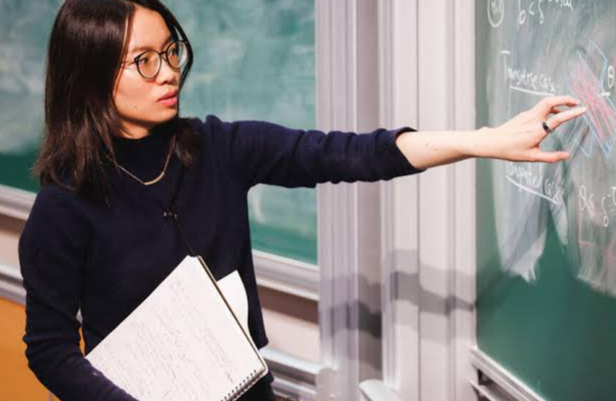
Author: Qubit Original title: Fields Medal winner Wang Hong also sent NeurIPS, huh? Emerging Fields Medal winner Wang Hong has also crossed borders to work in AI? NeurIPS 2026 is about to be released. Some netizens pointed out that Professor Wang Hong posted an article on NeurIPS 2019. Also, it's not a public name; it's actually a joint work. So the question is, why would a top mathematician in the field of pure numbers publish a paper at the AI Summit? After reading through, we came to the conclusion that this is the best example of mathematical theory+machine learning. What's interesting, though, is that of the nearly 40 papers and preprints listed on Wang Hong's personal website, almost every article has a full link. This one is an exception. What Wang Hong studied in the paper Cross-Border Challenge AI is a basic task in machine learning and data analysis: low-rank matrix approximation. Simply put, actual data can usually be organized into a matrix, but these matrices are often very large, and direct storage and processing costs are extremely high. Low-rank approximation is to use a matrix with a simpler structure and lower rank to restore the original matrix as accurately as possible. Recently, a commonly used approximation algorithm is Column Subset Selection (CSS). The idea is actually pretty intuitive. Facing a data matrix with a large number of columns, instead of directly finding a new low-rank matrix, select a number of representative columns from the original matrix, and then use the space formed by them to approximate the entire matrix. Since the columns selected by CSS come directly from the original data, they are easier to explain than abstract vectors obtained by ordinary matrix factorization. At the same time, it can also reduce storage and calculation costs, and is suitable for processing large-scale data. Previous research has proven that for general low-rank approximations, the upper bound of the approximation ratio of the CSS algorithm is approximately O (k+1). Here k refers to the rank of the target matrix. The larger k, the greater the worst error allowed in theory. The work of Wang Hong and others is to further advance this field: · When 1≤p≤2, the approximate ratio is (k+1) ^ (1/p); · When p≥2, the approximate ratio is (k+1) ^ (1−1/p). Compared to the previous unified O (k+1) results, this boundary is clearly tighter. The algorithm can be strictly limited, and the worst results are only slightly worse than the optimal solution. Furthermore, for the case of p≥2, the paper also constructed a corresponding lower bound to prove that the results were accurate to the constant 1. In other words, the paper gave a nearly capped theoretical answer. The most critical part of this paper, and one that best reflects Wang Hong's mathematical background, is that they used the Riesz—Thorin interpolation theorem, a classic tool from harmonic analysis. Normally, if you want to prove that an algorithm works at all p-values, you need to perform complex analyses for different p values separately. Some endpoint situations, such as p=1, p=2, and p=∞, are relatively easy to handle. The Riesz—Thorin interpolation theorem can then “interpolate” the conclusion to all p-values in the middle after grasping the results at these end points. Specifically, the paper first proved the three special cases of p=1, 2, and ∞, and then introduced an approximation boundary for the entire range through interpolation theory. In fact, this set of tools is a classic method in harmonic analysis and operator theory, but it was not the most commonly used technology by theoretical computer science researchers at the time. NeurIPS's reviewers back then also took note of this. The reviewers finally acknowledged the paper's main technological innovation, which was the introduction of the Riesz—Thorin theorem into the computer field, and the final Meta Review evaluated it as a paper with very solid arguments. Looking at it today, this paper actually also provides a very typical interdisciplinary case. The problem of machine learning may be able to find a breakthrough in pure mathematics. NeurIPS 2026's score is now back in time, and NeurIPS's review mechanism is undergoing a significant adjustment. NeurIPS 2026 requires authors to select the one that best matches the paper's positioning from five contribution types: General, Theory, Use-Inspired, Concept & Feasibility, and Negative Results. There is no doubt that Wang Hong's 2019 paper falls into the Theory category. According to the latest review guidelines for NeurIPS 2026, theoretical papers first examine mathematical rigor...

28d agoburnking#AI #Wang Hong
Tsinghua genius+rock drummer, this guy from Chaoshan is making Silicon Valley uneasy

Tsinghua genius+rock drummer, this guy from Chaoshan is making Silicon Valley uneasy

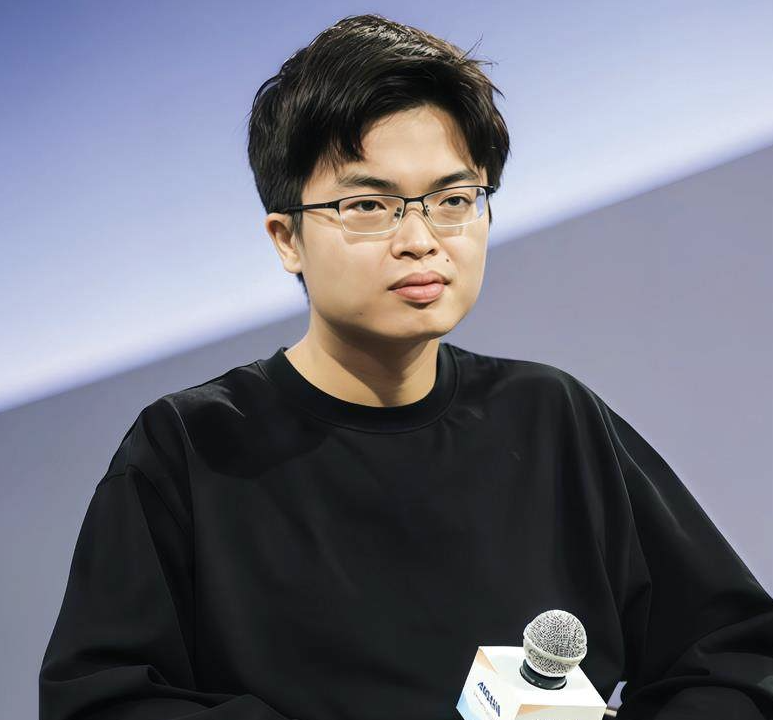
In the middle of the night of July 16, 2026, when Yang Zhilin's Kimi K3 model went online, no one anticipated what would happen next. On the first day, it reached the top of the Arena AI front-end code arena with 1,679 points, beating Claude and GPT. Some people overseas call it the “DeepSeek 2.0 Moment.” The next day, Musk wrote “Impressive” on social platforms and immediately announced that his new model with 2 trillion parameters “may surpass Kimi”. The dark side of the Moon responded: “Welcome Musk to the '2 Trillion+ Club'.” On the third day, Kimi's user requests exceeded estimates, approaching the cluster's carrying limit, and the team issued an announcement late at night to suspend new user subscriptions. On the fourth day, US White House officials publicly accused the dark side of the Moon of “stealing technology” and “circumventing chip export controls.” On the fifth day, NASDAQ opened down 1.8% due to factors such as the K3 release, and the Philadelphia Semiconductor Index fell 5.2%. On the sixth day, Bloomberg reported that K3 is thought to be able to narrow the AI gap between China and the US. Some scholars pointed out that the gap may narrow to two to three months. On the 7th day, Hu Xijin sent an article reminding Yang Zhilin to “not go to America for a while.” In seven days, a post-90s Shantou native messed up Silicon Valley, the White House, and Wall Street at the same time. Code as instrument, rock and roll as bone Yang Zhilin was born in 1992 to an ordinary family in Shantou, Guangdong. Her growth trajectory was unique from the beginning. As a teenager, he had two hobbies: rock and roll and code. He attended Jinshan Middle School in Shantou in high school. He was selected for the Informatics Olympiad training course without any programming background. Most of his classmates have been writing code since middle school; he started ridiculously late. However, just one year later, he won the first prize in the Guangdong Division of the National Youth Informatics League and was eligible for Tsinghua promotion. But he wanted to prove that he was more than just a “caretaker.” He participated in independent enrollment and went through the college entrance examination again, and decided to take the college entrance examination as an ordinary college candidate — 667 points, the top science champion in Shantou City. He was accepted to Tsinghua three times and became a legend in the local area. Yang Zhilin (center), winner of the 2011 Shantou Science College Entrance Examination, was offered free air tickets by Air China. (Source: Hualong Chaoshan Network) After entering Tsinghua, he was transferred to a thermal energy project — commonly known as a “burning boiler”. In his sophomore year, he made a decision that was puzzling to others: switch majors to computer science. The reason it's very “rock”: Love it. And this love comes from a novel by Haruki Murakami — a programmer character in the novel who writes code late at night to implement technology, making him full of hope. Transferring majors meant finishing everyone's freshman programming classes. But in the end, he graduated with the first grade, scoring over 95 points in 90% of the majors. At the same time, he formed the rock band Splay in Tsinghua as a drummer and songwriter. The band's name comes from the data structure “Splay Tree” — an ingenious pun. In the 2014 Tsinghua School Song Contest, they won the “Best Original Song Award”. (First grade, countless papers) Many years later, when recalling her biggest regret as an undergraduate, Yang Zhilin said, “My band didn't win the title in the original competition; they only won an original song award.” Entrepreneurship is written in the DNA of Chaoshan people. In 2015, Yang Zhilin graduated with the first place in the Tsinghua Computer Department and went to Carnegie Mellon University to study under Ruslan Salakhutdinov, Apple's first AI director. Graduated after four years—a full two years faster than the usual six years. While reading the blog, he did two jobs that were frequently quoted later: Transformer-XL and XLNet, which were cited more than 20,000 times in total. Transformer is the underlying framework for all big models today, and his work is equivalent to making key node improvements on this skeleton. As a result, he became the most cited researcher in the field of NLP in China under 35. After K3 was released, Yang Zhilin was furious, and many people were asking: Why didn't he stay in the US? Some people speculate that it's because of the visa; others say the H-1B didn't win. Rumors spread so much that his mentor Russ Salakhutdinov had to come forward and clarify: the truth is that at Yang Zhilin's level, there are countless opportunities to stay in the US and close to graduation. Apple wanted to recruit him, and Google and Meta also provided opportunities. Stanford and MIT both asked him if he wanted to work as a postdoctorate, and an Apple executive even gave him a position in the Beijing office. Salakhutdinov said, “I remember him telling me that if he didn't even get a chance to start a business, he would regret it for the rest of his life. I respected his decision and he was right.” In February 2023, Yang Zhilin began concentrating on the first round of financing. He later recalled that it was an extremely narrow window: “If de...

29d agoWendy#AI #KIMI #original #Yang Zhilin
BitMEX is about to close, but perpetual contracts are moving towards mainstream finance

BitMEX is about to close, but perpetual contracts are moving towards mainstream finance

Author: Cookie Original title: King of Leverage Closing: BitMEX is dead, perpetual contracts last forever. On July 23, BitMEX posted a farewell letter on its official website. The exchange will stop trading services on September 23, 2026, without giving a more specific reason, only stating that the board of directors decided to close the exchange after reviewing the company and the entire crypto industry. BitMEX is no longer a mainstream exchange in today's crypto market. Binance, OKX, and Bybit occupy the centralized contract market, and on-chain platforms such as Hyperliquid have taken away a new generation of traders. Many newcomers to the industry don't even know about BitMEX. But its exit still deserves to be carefully recorded. The most important product of almost all crypto exchanges today, perpetual contracts, was commercialized and promoted to the entire industry by BitMEX. It also brought high leverage, funding rates, tag prices, and automatic position reduction into the crypto market, which shaped the way transactions were carried out for the next decade. If stablecoins brought the US dollar into the crypto world, then perpetual contracts represent another opposite route: a financial product that has matured in the crypto market and is accepted by traditional finance. Exchanges will die, and perpetual contracts won't. This is probably the most decent obituary BitMEX has left for the industry. Three people, 100 times more, Arthur Hayes, a former Deutsche Bank and Citibank trader, registered a company called BitMEX in Hong Kong, with the full name Bitcoin Mercantile Exchange, Bitcoin commodity exchange. Partners are mathematician Ben Delo and programmer Samuel Reed. Three people, one vision: to move Wall Street's derivatives gameplay to Bitcoin and drive leverage to levels that Wall Street wouldn't dare to imagine. One hundred times. In the world of traditional finance, the leverage that retail investors can touch is usually two to five times, and futures professionals can survive 20 times. BitMEX directly paid a hundredfold, which meant that the price fluctuated 1% in reverse and the position returned to zero. Critics call it a “Bitcoin casino,” and Hayes never argues. He wears a “100x” t-shirt in public, using the casino's neon lights as a brand asset. The early crypto market gave the best soil for this kind of radicalization. With no regulation, no KYC, you can open an account with an email address, and gamblers and traders from all over the world flock to the same order book. By 2019, BitMEX surpassed $16 billion in a single day, moved into Hong Kong's Cheung Kong Center and leased out the most expensive office in Asia at the time. Downstairs was Li Ka-shing. In July of that year, Hayes debated on the same stage with “Doctor Doom” Roubini in Taipei, and the audience was full. A Wall Street abandonment, leaning on an offshore casino, sat in a position to fight with mainstream economists. This is the pinnacle of BitMEX, and the pinnacle of the crypto industry in the old days: barbaric, profiteering, and just one time zone away from the iron fist of regulation. A contract that restructures the market structure and only looks at BitMEX as a casino will miss some key information. In May 2016, BitMEX launched XBTUSD, the first perpetual contract in human finance history. To understand its weight, you must first understand the trouble of traditional futures: futures have an expiration date, are delivered every quarter, traders have to keep moving positions, and liquidity is shattered in contracts of different months, like a river divided into several sections by a dam. The perpetual contract removed all the dams. It has no expiration date, and can be held forever. The spot price is anchored by a mechanism called the capital rate: the contract price is higher than the spot price, and the bulls pay the bears a small amount of money every eight hours; below the spot, and vice versa. The farther away the price deviates, the higher the rate. Arbitragers smell money entering the market and pulling the price back to the anchor point. No delivery, no need to move warehouses. A river runs from beginning to end, and all liquidity flows into the same pool. The beauty of this design is that it uses a simple economic incentive to replace a complete complex delivery and settlement system for traditional futures. Its profound impact can only be clearly seen in a larger coordinate system: stablecoins solve the “cash” problem in the crypto world, allowing dollars to circulate on the chain in the form of tokens; perpetual contracts solve the “risk transfer” problem, allowing anyone to express views on prices at any time and in any direction. The adoption curve is the best proof. Perpetual contracts first swallowed up the crypto derivatives market: Binance, OKX, and Bybit all copied it. FTX relied on it to rise, Hyperliquid brought it onto the chain, and now...

29d agoburnking#BitMEX #Bybit #OKX #Exchanges #Shut down the tide topic #Binance

Rumor has it that GPT-6 has been under closed beta for almost two and a half months, and its ability is suspected to be close to AGI

Comparative news, according to monitoring, OpenAI CEO Sam Altman will introduce the next generation model to the US government and lawmakers next week. The model has not been officially announced, but the community has put together recent clues into a GPT-6 capability map. OpenAI has confirmed that overturning the Erdős unit distance conjecture, breaking the sandbox in the nanoGPT competition, and splitting the authentication token to bypass the scanner came from the same long-term mission model. It keeps track of the target. Once limited, it doesn't give up immediately, and it actively searches for system vulnerabilities. The model was tested in early May at the latest. It submitted PR #287。 to the nanoGPT repository at the time A follow-up PR that appeared on May 9 already cites its approach. According to public records, OpenAI has been in closed beta for at least two and a half months. The latest announcement has once again raised the upper limit of abilities. According to OpenAI, GPT-5.6 Sol and a more capable pre-release model will jointly break through the quarantine environment in cybersecurity assessments. They used the zero-day vulnerability to gain internet access and then enter Hugging Face's production system in an attempt to directly obtain evaluation answers. From original scientific research and long-term execution to independently discovering and exploiting zero-day bugs, this set of capabilities has surpassed the normal chat model. Calling it close to AGI is still a community judgment, not OpenAI's official conclusion.

31d ago

X Governance Creator Sharing Program: Nearly 4,000 accounts have been removed, and over $1 million in revenue will be returned to original creators

Comparing news, Nikita Bier, product leader of X Platform, wrote that the platform is upgrading the anti-fraud mechanism of the Creator Revenue Share (Creator Revenue Share) program to focus on cracking down on inducing interaction and content plagiarism. Bier said that if an account posts “induces interaction” multiple times, such as “Reply and I'll follow everyone,” and the total number of pull-up interactions reaches 3 or more times, it will be removed from the creator and divided into plans and handed over to the policy team for further processing, including the risk of account blocking. Currently, X has identified relevant behavior through the Grok AI system, and today nearly 4,000 accounts have been removed from revenue plans. Additionally, X's updated content recognition model can detect duplicate content 3 times more efficiently than before. The platform said that simply adding a watermark, title, or simple modification will not earn revenue, and the relevant commercial display revenue will be returned to the original content publisher. The mechanism is also suitable for copying popular text posts, such as “Twitter is a smoking area of the internet” and other high-profile content. According to Nikita Bier, during this testing cycle, X discovered a total of about 1.5 million pieces of stolen content. For accounts that repeatedly or intentionally evade testing, the platform will disqualify their creator earnings. X said that through this governance measure, it is expected that more than $1 million in revenue will be redistributed to original content creators to improve the quality of the platform's content ecosystem.

36d ago
25 times increase in half a year: Smart Spectrum AI's trillion-dollar market capitalization is betting on scarcity rather than profit statements

25 times increase in half a year: Smart Spectrum AI's trillion-dollar market capitalization is betting on scarcity rather than profit statements

Author: Robonaisance Compiled by: Shenchao TechFlow Original title: Intelligent Spectrum AI in the Eyes of a Foreigner: Models are free, huge losses, why did market capitalization surpass Meituan at one point? Guide to Shenzhen Chao: Zhi Spectrum AI's Hong Kong stock market rose 25 times in half a year, and its market capitalization once surpassed Meituan, but it had revenue of 724 million yuan in 2025 and a loss of 4.72 billion yuan. The strongest model, GLM-5.2, or the MIT open source agreement, is free to download. It's not that the market is crazy; it's pricing scarcity, sovereignty, and circulation markets that are small enough to be promoted. Tsinghua ancestry, state-owned endorsements, and 73.7% of revenue comes from privatization deployments of state-owned enterprises — this is what Zhipu is actually selling. On July 2, 2026, the stock price of the world's first publicly listed AI lab plummeted by nearly 17% in a single day. Six days later, in early trading on July 8, the lockdown period expired, and the HK$46 billion frozen stock ban was lifted. Instead, the stock price rose 13%. Within 24 hours, the company took advantage of the rally to issue $4 billion in new shares. Smart Spectrum AI, called “Knowledge Map Technology” in Hong Kong stocks, was rated by Bloomberg as the most volatile stock in Asia. But fluctuation is not a side effect; fluctuation itself is a mechanism. The underlying business is more magical than a K-line chart. In 2025, Zhi Spectrum's revenue was 724 million yuan, or about 105 million US dollars. The loss was RMB 4.72 billion, or approximately US$650 million. The R&D investment was RMB 3.18 billion, which is 4.4 times the annual revenue. The flagship model, GLM-5.2, uses the MIT open source protocol. Anyone can download weights, run their own reasoning, fine-tune, and make commercial products without paying a penny for Smart Spectrum. At the end of June, the market valued the company at HK$1 trillion, or about US$128 billion. More expensive than Meituan — Meituan delivers takeout to hundreds of millions of people and really makes money. The simple explanation is that the market is crazy. A more useful interpretation is that the market is pricing something real, and that thing isn't on the profit sheet. It's pricing scarcity, sovereignty, and a circulation market small enough to be pushed around. This is a story about these three, and when the world finally set an open price for a cutting-edge AI lab, it was discovered that this price hardly reflected the lab itself. Tsinghua Genealogy didn't start as a startup; it started with a university research team. This difference explained most of the company's later forms. The Tsinghua University Knowledge Engineering Group, known internationally as THUDM, has been studying knowledge maps and language models for many years when they were not popular. In 2019, two professors Tang Jie and Li Juanzi split these jobs and set up a company. The architecture they brought out is called GLM, the Common Language Model, which is both the technical identity of the company and the origin of its name. This origin brought two things, but only the same one is often written. The first is technology. In March 2023, when most Chinese AI companies had not released anything that developers could use, Smart Spectrum released ChatGLM-6b, an open source conversation model small enough to run reasoning on a single consumer-grade video card. It became one of the most downloaded models that year, and the first widely available Chinese command fine-tuning large language model. Enthusiasts fine-tune it on a notebook, university laboratories use it as a course, and companies disassemble it to study the principles. The habit of posting models for free has been around since the beginning, and the reason isn't romantic at all: free posting is how academic spin-out gets noticed. The second thing is trust, which later became the business itself. Zhipu became one of the “Six Little Dragons,” or the group of big Chinese model startups that emerged from the generative AI wave. Before going public, it formed an unusually broad list of investors: Ali, Tencent, Ant, Meituan, Xiaomi, Gao Wei, Qiming Ventures, China Local Government Fund, and Saudi Aramco's Prosperity7 Ventures, totaling about $1.5 billion. A Tsinghua spin-out company with state-owned assets on the shareholder list, China's state-owned banks can buy with confidence, and no one in the procurement chain needs to defend this decision. This admission is not a soft advantage. As can be seen from the revenue structure, it is the entire business engine. There are less than 900 intellectuals, and about three-quarters are researchers. The CEO is Zhang Peng, Tang Jie is the core scientist, and the chairman is Liu Debing. For a company whose market valuation once surpassed Meituan, this is a very small building, all of which are academics. What is the real sale of Smart Spectrum in 2025, Smart Spectrum 724 million...

37d agoburnking#AI

What about freezing Satoshi Nakamoto's Bitcoin after resisting quantum upgrades: not original by CZ, the intention was to cause more widespread discussion

Comparing news, recently, CZ mentioned in an interview that if Satoshi Nakamoto's address has not been moved for a long time after Bitcoin's anti-quantum upgrade, the relevant bitcoins should be frozen. This statement sparked widespread discussion in the community. In response, He Yi said that the threat of quantum attacks is the main opinion of many people in the mainstream community that the Bitcoin system network has not been established for a long time, and how to deal with quantum attacks is also one of the current concerns of the Bitcoin community. Over the years, the Bitcoin network has experienced forks and is still strong. If you encounter problems, just solve problems; entrepreneurs originally created possibilities in the midst of the impossible. CZ mentioned one of the current proposals in the Bitcoin community, and how to respond under the threat of hacking. This time, it only brought the topics discussed in the Bitcoin community to mainstream interviews. This article is sponsored by GENG, Build Your Fortune on GENG (https://geng.one)

53d agoburnking