


Tsinghua genius+rock drummer, this guy from Chaoshan is making Silicon Valley uneasy
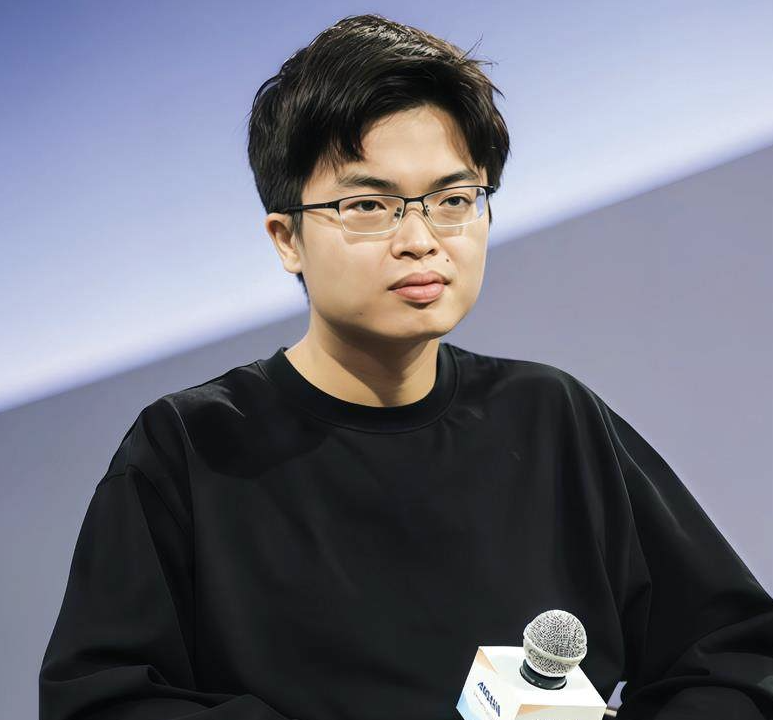
In the middle of the night of July 16, 2026, when Yang Zhilin's Kimi K3 model went online, no one anticipated what would happen next.
On the first day, it reached the top of the Arena AI front-end code arena with 1,679 points, beating Claude and GPT. Some people overseas call it the “DeepSeek 2.0 Moment.”
The next day, Musk wrote “Impressive” on social platforms and immediately announced that his new model with 2 trillion parameters “may surpass Kimi”. The dark side of the moon responded: “Welcome Musk to the '2 Trillion+ Club'.”
On the third day, Kimi's user requests exceeded estimates, approaching the cluster's carrying limit, and the team issued an announcement late at night to suspend new user subscriptions.
On the fourth day, US White House officials publicly accused the dark side of the Moon of “stealing technology” and “circumventing chip export controls.”
On the fifth day, NASDAQ opened down 1.8% due to K3 release and other factors, and the Philadelphia Semiconductor Index fell 5.2%.
On the sixth day, Bloomberg reported that K3 is thought to be able to narrow the AI gap between China and the US. Some scholars pointed out that the gap may narrow to two to three months.
On the 7th day, Hu Xijin sent an article reminding Yang Zhilin to “not go to America for a while.”
In seven days, a post-90s Shantou native messed up Silicon Valley, the White House, and Wall Street at the same time.
Code as instrument, rock as bone
Yang Zhilin was born in 1992 to an ordinary family in Shantou, Guangdong. Her growth trajectory was unique from the beginning.
As a teenager, he had two hobbies: rock and roll and code. He attended Jinshan Middle School in Shantou in high school. He was selected for the Informatics Olympiad training course without any programming background. Most of his classmates have been writing code since middle school; he started ridiculously late. However, just one year later, he won the first prize in the Guangdong Division of the National Youth Informatics League and was eligible for Tsinghua promotion.
But he wanted to prove that he was more than just a “caretaker.” He participated in independent enrollment and went through the college entrance examination again, and decided to take the college entrance examination as an ordinary college candidate — 667 points, the top science champion in Shantou City. He was accepted to Tsinghua three times and became a legend in the local area.
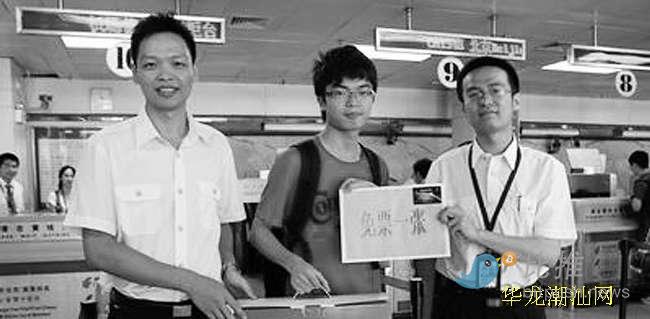
Yang Zhilin (center), winner of the 2011 Shantou Science College Entrance Examination, was offered free air tickets by Air China. (Source: Hualong Chaoshan Network)
After entering Tsinghua, he was transferred to a thermal energy project — commonly known as a “burning boiler.” In his sophomore year, he made a decision that was puzzling to others: switch majors to computer science. The reason it's very “rock”: Love it. And this love comes from a novel by Haruki Murakami — a programmer character in the novel who writes code late at night to implement technology, making him full of hope.
Transferring majors meant finishing everyone's freshman programming classes. But in the end, he graduated with the first grade, scoring over 95 points in 90% of the majors. At the same time, he formed the rock band Splay in Tsinghua as a drummer and songwriter. The band's name comes from the data structure “Splay Tree” — an ingenious pun. In the 2014 Tsinghua School Song Contest, they won the “Best Original Song Award”.
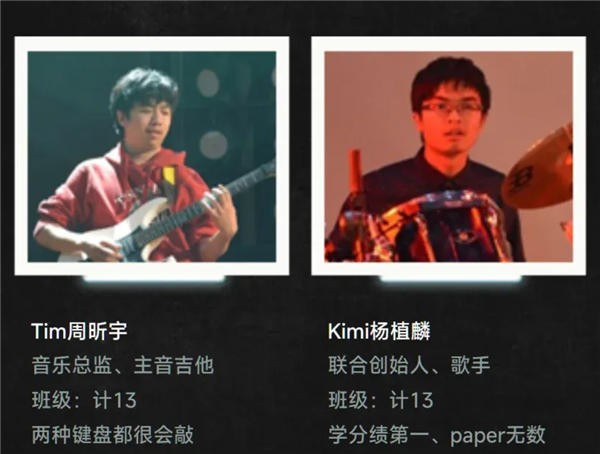
(First credit score, countless papers)
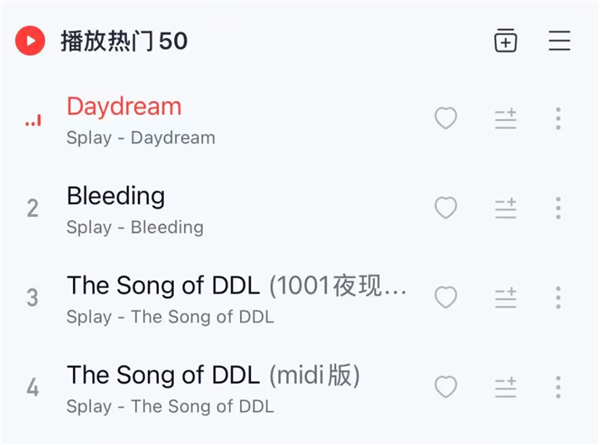
Many years later, when recalling her biggest regret as an undergraduate student, Yang Zhilin said, “My band didn't win the title in the original competition; they only won an original song award.”
Entrepreneurship is written in the genes of Chaoshan people
In 2015, Yang Zhilin graduated with first place in the Tsinghua Computer Department and went to Carnegie Mellon University to study under Ruslan Salakhutdinov, Apple's first AI director. Graduated after four years—a full two years faster than the usual six years.
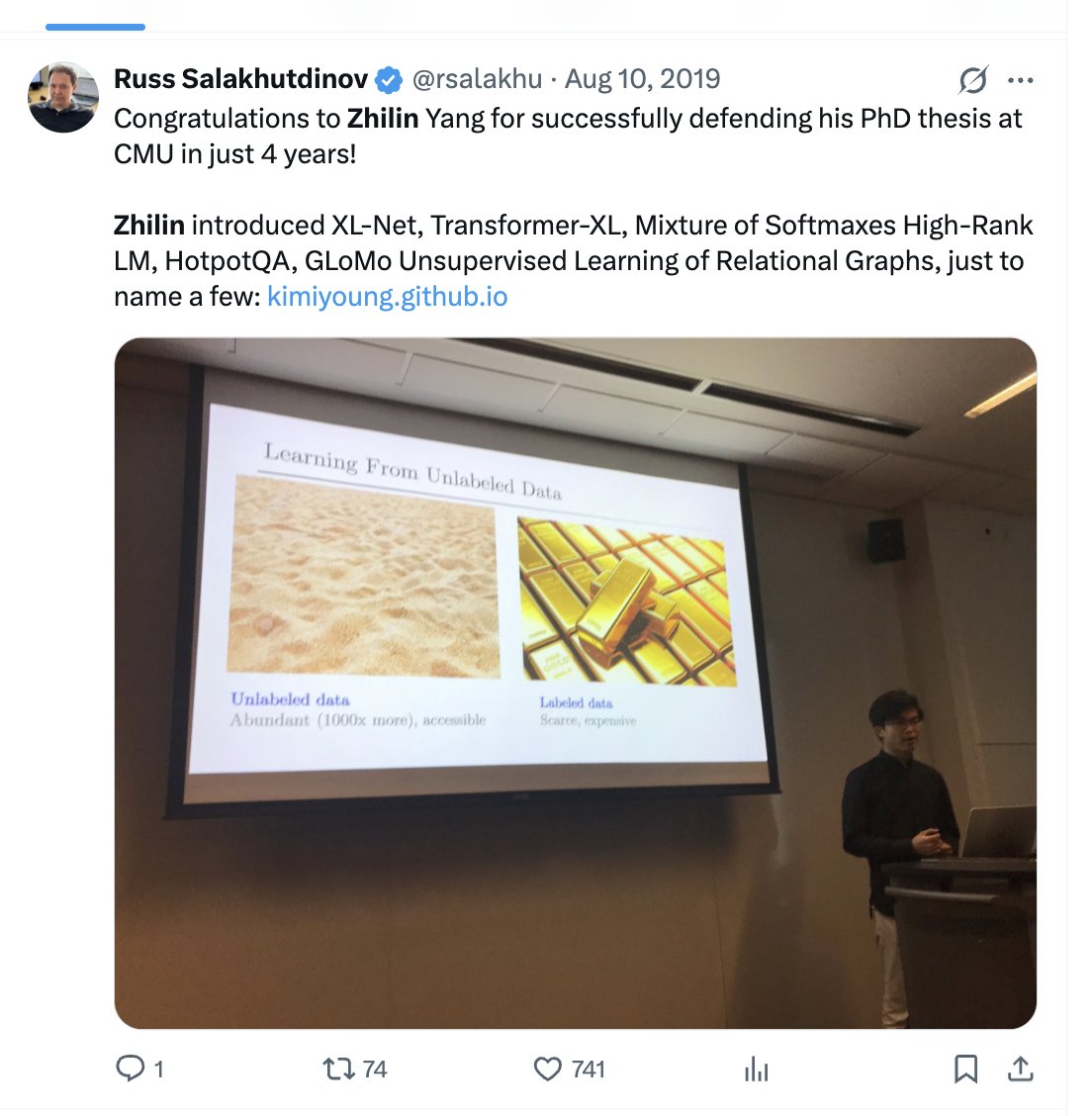
While reading the blog, he did two jobs that were frequently quoted later: Transformer-XL and XLNet, which were cited more than 20,000 times in total. Transformer is the underlying framework for all big models today, and his work is equivalent to making key node improvements on this skeleton. As a result, he became the most cited researcher in the field of NLP in China under 35.
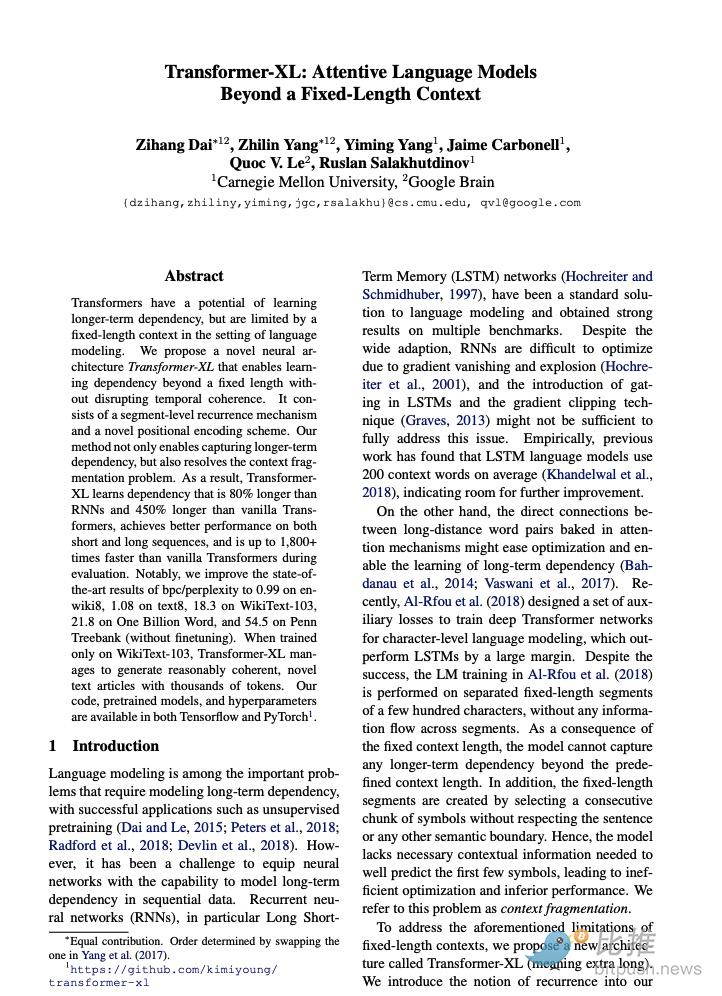
After K3 was released, Yang Zhilin was furious, and many people were asking: Why didn't he stay in the US? Some people speculate that it's because of the visa; others say the H-1B didn't win.
Rumors spread so much that his mentor Russ Salakhutdinov had to come forward and clarify: the truth is that at Yang Zhilin's level, there are countless opportunities to stay in the US and close to graduation. Apple wanted to recruit him, and Google and Meta also provided opportunities. Stanford and MIT both asked him if he wanted to work as a postdoctorate, and an Apple executive even gave him a position in the Beijing office. Salakhutdinov said, “I remember him telling me that if he didn't even get a chance to start a business, he would regret it for the rest of his life. I respected his decision and he was right.”
In February 2023, Yang Zhilin began concentrating on the first round of financing.
He later recalled that it was an extremely narrow window: “If the delay is until April, there is almost no chance. But if we did it in December 2022 or January 2023, we wouldn't have a chance. There was an outbreak at the time, and no one reacted — so the real window is one month.” While he was still in the US, he made an accurate calculation one night. After doing the math, he felt that he would get at least 100 million US dollars within a few months. At the time, few people in the market were financing, and many people felt that they couldn't finance that much. It later proved possible, and even more.
On April 17, 2023, Dark Side of the Moon was established in Beijing. The company name comes from Pink Floyd's album “The Dark Side of the Moon,” which he listened to for many years. Co-founders include Zhou Xinyu, the lead guitarist of the Tsinghua band Splay back then. From the band to the company, the two went from playing music to being models.
Six months later, Kimi's AI assistant was officially launched. It focuses on a direction no one dared to do at the time — super long context. The lossless input of 200,000 Chinese characters was the longest context length that could be supported in the global large-scale model commercialization service at the time. As a comparison, Claude supported about 80,000 words at the time, and GPT-4 was only about 25,000 words. Yang Zhilin's judgment is that context length is the key to unlocking new application scenarios — from analyzing a complete code base to long-term assistants who don't forget key information, this basic ability is required. Someone else is making the general list; he's betting that long texts are the next entry.
The bet was right.
In November 2023, Kimi officially opened the service to the whole community. In February 2024, Dark Side of the Moon completed an A+ round of financing of more than 1 billion US dollars. Ali led the investment, followed by Sequoia China, Xiaohongshu, Meituan, etc., with a post-investment valuation of about 2.5 billion US dollars. This was the largest single round of financing for a large domestic AI model company at the time. Less than a year after its establishment, Dark Side of the Moon became one of the most highly valued unicorns on China's Big Model Circuit. In March of the same year, Kimi increased the length of the context from 200,000 words to 2 million words. The number of user visits increased by 321.58% month-on-month, and at one point it went down.
From its establishment in April 2023 to becoming an AI unicorn, Yang Zhilin spent less than a year.
Yang and DeepSeek founder Liang Wenfeng are always compared together. Two hometown people from Guangdong have created two of the most popular AI companies in China.
However, the two have different backgrounds. Liang Wenfeng followed the local path — he was admitted to Zhejiang University at the age of 17, started with quantitative investment, and invested in AI with the money he earned. Yang Zhilin, on the other hand, is an academic route.
In terms of business model, Kimi is a financing-driven star company and is close to the product; DeepSeek is more like a research institution. It has long been run on its own capital, and model ability has always been the most discussed in the industry.
The narrative differences are even more obvious. Some people have summed it up very directly: Liang Wenfeng used the three keywords of open source, low price, and localization; Yang Zhilin fought on a battlefield defined by others with world-leading model abilities.
However, by 2026, the two routes began to converge. Kimi is paying more and more attention to low-level abilities, and DeepSeek has also begun to focus on inference efficiency and commercialization, and the boundaries are blurring.
Chinese AI talents let Silicon Valley take sides
Yang Zhilin and Liang Wenfeng are not the only ones standing in the spotlight.
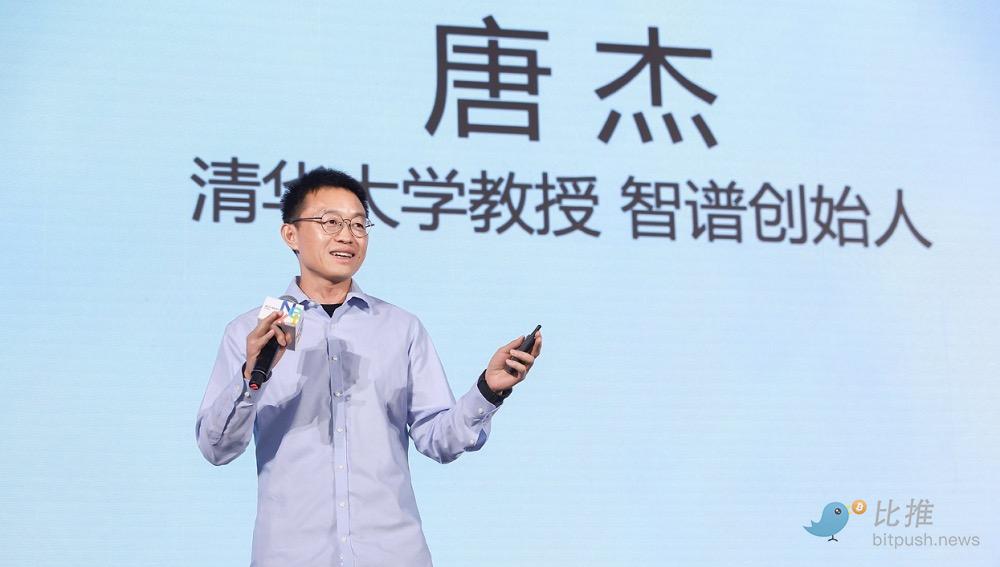
In the same month, the market value of Smart Spectrum once surpassed HK$810 billion, surpassing that of Xiaomi. This company, founded by Tsinghua professor Tang Jie, just landed on the Hong Kong Stock Exchange half a year ago. Tang Jie is 49 years old and is the oldest of the four founders. He sent an internal letter in July announcing that the next two years will focus on basic AGI research and not pursue short-term application monetization. Interestingly, Yang Zhilin was Tang Jie's student when studying in Tsinghua — the two teachers and students are now standing on the same field and have become each other's most familiar “rivals.”
MiniMax's Yan Junjie focuses on blending expert models and multi-modal technology. At almost the same time, he also sent a letter to all employees announcing that he would not be paid until AGI arrived, and offered 4% of his shares under his name to motivate the team. At that time, MiniMax's stock price had dropped from HK$1,330 to HK$297.
The four people — Liang Wenfeng, 41, Yang Zhilin, 34, Tang Jie, 49, and Yan Junjie, 37 — are known by the market as the “Four Kings of Domestic AI.” The total valuation of the AI companies they control exceeds 1.1 trillion yuan. Various backgrounds — quantitative trading, computer science, and artificial intelligence research are all top academic leaders. The four technology routes are also different — DeepSeek reduces costs, Kimi challenges cutting-edge American models, smart spectra bets on AGI basic research, and MiniMax expands multi-modal applications.
But what brought them to the same stage was the same fact: China's big model is in the front row of the global AI competition.
Over the past few years, most of China's AI narratives have been about “catching up.” DeepSeek shocked the world with a low-cost model in early 2025, and that was the first “DeepSeek moment.” And the arrival of Kimi K3 is known in the industry as the “DeepSeek 2.0 Moment” — the high-performance Chinese model appears as a competitor in the narrative of the global artificial intelligence era. OpenAI President Greg Brockman publicly acknowledged that the estimates he saw showed that China may be only four months behind the US in model development.
What makes Silicon Valley even more nervous is the open source model commonly adopted by Chinese companies. The 6 most popular models on OpenRouter are all from Chinese companies. Developers around the world can download it for free, deploy independently, and modify it flexibly, greatly reducing the application threshold of AI technology. France's “Le Monde” pointed out that China's mainstream big models generally use the open source model, which is in stark contrast to the closed source charges of leading US companies. Some analysts believe that China's AI industry has successfully turned a “chip shortcoming” into an “algorithm efficiency advantage” — the number of GPUs obtained was far less than that of its US rivals, but it has instead achieved the ultimate engineering optimization capability.
What supports all of this is a face that is getting younger and younger.
At the 2026 World Artificial Intelligence Conference, many people noticed an obvious change: post-00s and post-90s founders account for a very high proportion.
Zeng Guoyang, co-founder and CTO of Facewall Intelligence, was awarded “AI Person of the Year” by CCTV's 2026 China AI Festival. Tianmu Technology's protein design agent “Xiao Fei” became one of the “Treasures of the Town Hall” of the conference. The developer was Tan Yang, a “post-00s” doctoral student. At the beginning of 2026, Chen Boyuan, who had not yet graduated, founded the inverse matrix. In the first round, he received more than 10 million US dollars of investment from Gao Lin and Peking University funds, and the valuation had already exceeded 5 billion yuan.
From Yang Zhilin to Chen Boyuan, the Chinese AI narrative is being rewritten by a younger generation. The path is different and the direction is different, but the common characteristic is that they don't care much about established rules, and they don't care much about what others think.
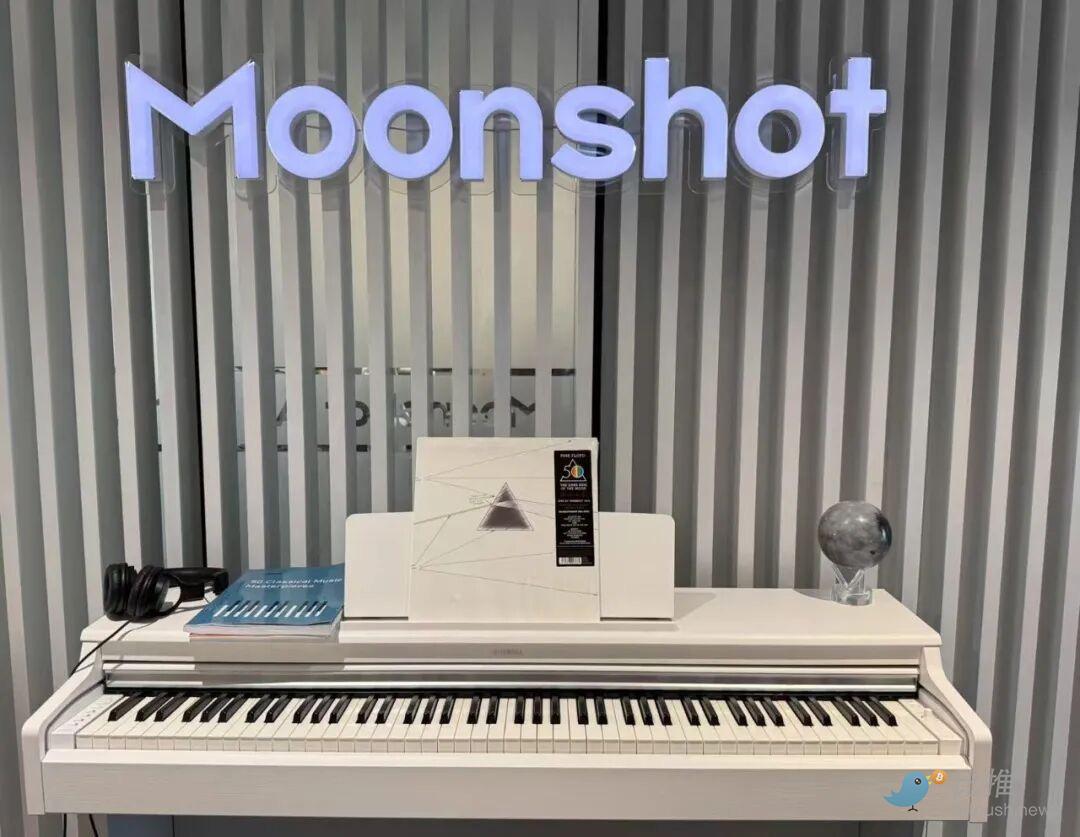
(Source: People Magazine)
Employees on the dark side of the Moon said that the company doesn't have a department wall; in a sense, it doesn't even have a department. Yang Zhilin's signature file is only four words: direct communication. If something requires the cooperation of others to complete it, just ask the person directly; no approval, no coordination, no meeting. More than ten employees said they are more used to dealing with AI because AI is more reliable and simpler. Everyone in the group chat was very lively, but when I met them, they were very quiet. Some employees used one word to describe this vibe: shy.
Most brands want a story, but Kimi's employees remind visitors not to write Pink Floyd or mention the piano in front of the office.
Back on the 2011 Dragon Tiger List of Jinshan Middle School in Shantou, Yang Zhilin wrote to his students and girls: “Trust the water until it comes to fruition. You can do anything you set your mind to.”
Looking back over ten years later, this sentence was not only his own footnote, but also a prophecy for this entire generation. They didn't take shortcuts, and didn't take long detours. When they finished what they had to do, the world naturally heard it.
Author: seed.eth
Twitter:https://twitter.com/BitpushNewsCN
Compare the TG exchange group:https://t.me/BitPushCommunity
Compare TG subscriptions:https://t.me/bitpush
