KIMI · 212

The Xiaomi MiMO-v3-Pro score is suspected to have been leaked, and the SW-Bench Pro reached 72.8 or close to the top overseas closed source model

According to Twitter news, Max For AI published an article that revealed that a Benchmark screenshot suspected to be Xiaomi's next big model, MiMO-v3-Pro, was circulating in the community. The screenshot shows that the model focuses on coding agents and general agent scenarios, and some test results are close to top overseas models such as Claude Opus and GPT. According to the suspected screenshot, MIMO-v3-Pro scored 72.8 points on the SW-Bench Pro, which is higher than the 67.9 points of GLM 5.3 and the 65.8 points of Kimi K3, which is less than 3 points different from Claude Opus 5's 74.6 and GPT-5.6 Sol Max's 75.4 points; Terminal-Bench 2.0 scored 70.6 points, which is also close to Claude Opus 5's 72.0 points and 73.5 points for GPT-5.6 Sol Max. Furthermore, it scored 76.4 points on the bt3-bench compared to the GPT-5.6 Sol Max with 78.8 points. If the above results are finally officially confirmed and replicated in the official version, the MIMO-v3-Pro may enter the first tier of the world's top models. However, at present, the authenticity and testing conditions of this Benchmark screenshot have not been officially confirmed by Xiaomi, and the relevant data should still be regarded as unconfirmed breaking news. It is worth noting that the latest MiMO flagships officially unveiled by Xiaomi are MiMO-v2-Pro and MiMO-v2.5-Pro, so whether V3-Pro exists and when it will be released is yet to be further disclosed by the official authorities.

1d ago
From 4 models to more than 500, OpenRouter was acquired after growing 30,000 times in three years

From 4 models to more than 500, OpenRouter was acquired after growing 30,000 times in three years

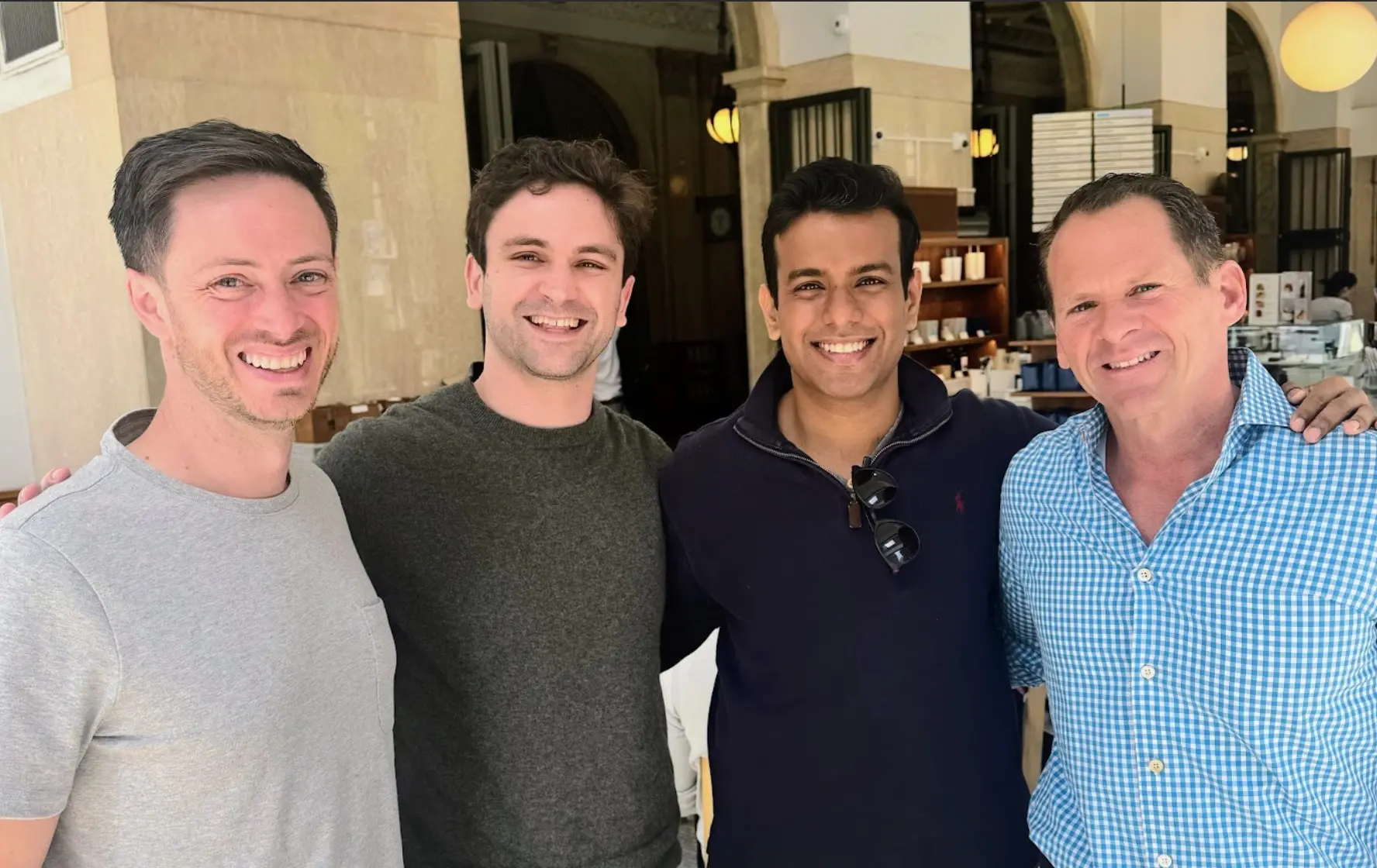
Author: Menlo Ventures Compiled by: Jia Huan, ChainCatcher Original title: Early Investors Behind OpenRouter Revisited Investments Today, OpenRouter announced that it has reached an acquisition agreement with Stripe. OpenRouter was launched in 2023, just over three years ago. OpenRouter was initially launched as a “unified interface for LLM” and only supported 4 models at the time: GPT-3.5, GPT-4, GPT NeoXt and Cohere xlarge by Together. When the company was founded, it was based on two core judgments: first, AI will eventually be used on a large scale and penetrate various fields; second, there will be many different models on the market, each with trade-offs, and users will choose different models according to different needs. As it turned out, both judgments far exceeded expectations at the time. Since its launch, the number of tokens processed by the OpenRouter platform has increased by about 30,000 times. Currently, it has exceeded 4,500 trillion tokens on an annualized basis, and the scale of expenditure on the platform has reached a very impressive level. Meanwhile, the number of models supported by OpenRouter has grown from the original 4 to over 500. Figure: OpenRouter Token usage growth from inception to acquisition Menlo Ventures is fortunate to be part of this journey. In March 2025, we participated in OpenRouter's seed funding round through the Anthology Fund set up in partnership with Anthropic. OpenRouter founder and CEO Alex Atallah previously founded OpenSea, which was once valued at $13.3 billion. His co-founders include tech guru Louis Vichy, whom he met on Discord, and highly executive COO Chris Clark. In May 2025, we led OpenRouter's Series A funding round, with Matt joining the company's board of directors, and Deedy as a board observer. Earlier this year, after seeing OpenRouter's rapid growth in customer numbers and revenue, and the company built a product route with stronger “model intelligence” capabilities around model selection and evaluation, we continued to step up Series B financing. In the tech industry, it often takes years for an idea to change from the judgment of a few people to industry consensus. And just a few weeks ago, this happened: from Ramp to Cursor, more than 10 companies launched their own model routing products almost simultaneously. In just a few years, OpenRouter has become one of the most important companies in the AI era. Picture: Group photo when deciding to lead OpenRouter Round A At first glance, Stripe doesn't seem like the most natural buyer of OpenRouter, but the two companies are actually strikingly similar. Both use an API that can be directly accessed to simplify the otherwise complicated transaction process and charge a certain percentage of the fee. It's just that OpenRouter deals with AI models. As Stripe has always said, the two companies combined and are still doing the same thing: increasing “internet GDP.” In fact, over a year ago, OpenRouter called itself the “Stripe of LLM.” OpenRouter's core value OpenRouter was one of the first companies Deedy came into contact with after joining Menlo in 2024. This company is almost right at the heart of our AI infrastructure investment logic. Menlo presented two judgments necessary to invest in OpenRouter in the 2024 Enterprise AI Report: AI spending will increase dramatically, and developers will not only use one model, but multiple models at the same time. Figure: Menlo's initial contact email to OpenRouter As someone who can also write code and actually use these models, we realized long ago that there is a very clear difference in cost, latency, and performance between the different models...

2d agoburnking#OpenRouter

Lyon: Smart Spectrum's training ability improved significantly after GLM-5.3, maintaining an outperforming market rating

Comparative news, according to a report by Jin Shi, Lyon published a research report stating that the Intelligent Spectrum (02513.HK) GLM-5.3 API will now be open for use, showing leading performance in the domestic industry in terms of complex coding and long-term proxy tasks. Although the parameter scale is small, it has achieved open-weighted SOTA performance in many benchmark tests, and scored 60 points in the Artificial Analysis Intelligence Index, which is on par with Kimi 3, surpassing Tongyi Qianwen 3.8 Max. The bank estimates that the GLM model's OpenRouter revenue share has risen from 1% in January to 7% in July, leading DeepSeek's 6% and Dark Side of the Moon's 3%. It is believed that DeepSeek's recent price increase reflects healthy competition in the industry, and GLM 5.3 has regained Pareto's leading position. The recent weak stock price may reflect the market's overreaction to Anthropic's annualized recurring revenue deceleration, maintaining a smart score that outperforms the market rating. The target price is HK$2,061.

3d ago

GLM-5.3 Smart Index soared to 60: tied with Kimi K3, API unit price did not rise

Comparative news, according to monitoring, Zhi Spectrum officially opened the GLM-5.3 API. Previously, when the model was released, the API was not immediately launched. At the same time, an independent evaluation of Artificial Analysis was released: the Intelligence Index soared from 53 to 60 in GLM-5.2, equalizing Kimi K3, only 1 point below GPT-5.6 Sol. Once the weights are revealed as planned, it will be tied with Kimi K3 as the open weighting model with the highest AA rating. The biggest increase was Agent. GDPVal-aa v2's Elo jumped from 1524 to 1770, rising 246 points at a time, second only to Claude Opus 5's 1855, and over 100 points higher than Kimi K3's 1668. The API unit price did not follow suit. The input is still $1.40 per million tokens, the output is $4.40, and the cache input is $0.26, exactly the same as GLM-5.2. However, 5.3 is clearly more capable of spending tokens. AA measured that it outputs an average of about 18,700 tokens per task, 20% more than 5.2. As a result, the actual cost of a single task rose from $0.44 to $0.68, which was approximately 55% more expensive. Even so, it's still cheaper than the Kimi K3 at $0.84 and the GPT-5.6 Sol at $1.23.

3d ago
Why is capital chasing AI Native and ignoring the old Internet

Why is capital chasing AI Native and ignoring the old Internet

Capital doesn't reward being old-fashioned, not because old-fashioned people are at fault. The old part is clearly priced. There is no bad information, so there is no excess profit. Global venture capital was $510 billion in the first half of 2026, surpassing $44 billion for the full year of 2025 in one and a half months. More than 70% have entered AI; OpenAI and Anthropic took 217 billion dollars, accounting for 43%. With that much money, you'd think everyone could share a little bit. The truth is that distribution is more extreme than total volume, and the first sieve doesn't screen the industry, it screens people. The category that has been screened out now has an unkind name: the internet is old. Let's just say one thing: the “old man” in this article has nothing to do with age. It refers to a set of methodologies that have been formed in the mobile internet cycle, have been tested over and over, and have brought huge returns to holders. The person holding it may be 45 years old or 32 years old. It was this methodology that was being repriced, not the year of birth. Confusing these two things is Lao Deng's most common mistake and one of the most comfortable mistakes — because if the problem is someone else's age discrimination, you don't need to change a single word. 01 What is AI Native The term has been misused. They can use ChatGPT not called AI native, nor AI in the company name, let alone in their twenties. There are three things that really separate people. First, the starting point is a model, not a requirement. The order in which Lao Deng makes a product is: look at what the user wants, write down the requirements, and find technology to implement it. The order of AI natives is reversed: first figure out what level the model is capable of today and what step it is likely to reach tomorrow, and then move from this capability boundary to the external product. The former uses the model as a tool, and the latter uses the model as the foundation. There was no difference between these two kinds of things made by humans in the first edition; by the third edition, there was a difference of one species. Article 2. The default unit of an organization is not a person. The division of labor in the Internet age is the division of one thing into ten people. AI Native's division of labor is to take ten things from one person and add a bunch of agents. The CEO of a domestic application company said that the team consists of less than ten people, but a large number of AI work at night, and the first thing employees do every morning is check the work the AI handed in the night before. Cursor's side is even more extreme. Public reports mention that the company doesn't have a product manager; engineers write their own code, talk to users themselves, and participate in recruiting people themselves. Article 3. Information is first-hand. AI Native's input sources are papers, model cards, GitHub issues, original discussions on X, and self-run evals. Lao Deng's input sources are industry summits, closed-door meetings, brokerage reports, interpretation of public accounts, and finding someone to drink coffee with. This one is the least obscure and most lethal; I'll talk about that separately later. I'm satisfied with all three. The 25-year-old is an AI native, and so is the 45-year-old. I'm not satisfied with the three rules; I'm still an old man at the age of 25. AI natives are a state, not an age group. The trouble is that tickets in this state are works, not resumes. 02 The two lists spread the results of this round on the table. These are two lists. The first one is an all-AI native company. Their valuations are not rising; they are exchanging orders of magnitude. List 1 · Upstream OpenAI raised $122 billion in a single round of financing in Q1 2026, followed by $852 billion, the largest private equity financing in history. Anthropic Q2 had a single round of $65 billion, after investing $965 billion, accounting for about half of the total global venture capital for the quarter; the revenue operating rate in May reached about $47 billion. DeepSeek raised about 70 billion yuan in its first round of financing in May 2026. In April of the same year, Liang Wenfeng raised his direct shareholding from 1% to 34%, and controlled a total of about 84.29% of the shares through related entities. The Dark Side of the Moon (Kimi) was estimated at $4.3 billion in December 2025; it went for three consecutive rounds from January to February 2026 to reach 18 billion; the D round in May was about $2 billion, breaking 20 billion dollars after the investment; the July round surpassed $3.5 billion, after investing 35 billion dollars; the pre-IPO target was 50 billion dollars. ARR broke 100 million in March, 200 million in May, and held steady at 300 million US dollars in June, with APIs accounting for more than 70%. Smart Spectrum · MiniMax successively landed in Hong Kong stocks in early 2026, with a market capitalization exceeding 100 billion yuan. It was one of the first major model companies listed in China. The second one...

3d agoWendy#AI #DeepSeek
When local city investment started selling tokens, did this student agree?

When local city investment started selling tokens, did this student agree?

Author: Cookie Original title: When local CITIC began selling tokens on July 30, the Jiaxing Yangtze River Delta (Jiaxing) Token Operation Center was officially launched. The operator standing in front of the stage is Jiaxing City Investment and Development Group, an urban construction state-owned enterprise that has repaired roads, bridges, gas, and renovated the city. During the investigation, city leaders asked what everyone wanted to ask: “Why did you do CITIC?” In the past 20 years, the default division of labor in China's urbanization was: government development, urban construction and road construction, and enterprises moving up. Now, a state-owned urban construction enterprise has begun to personally sell tokens. Some people explained that on the day the city entered the market, the token profit peaked. The road builder sold the token and first clarified a concept: CITIC does not directly produce tokens, nor does it build a Wanka cluster. Ma Yinxiao, the head of the operation center, put it bluntly: “We are carriers,” which means integrating scattered computing power and models to become a “model wholesaler.” Take the Jiaxing model as an example. Its core is the “five unifications”, which unify API entry, unify token measurement, unify fee settlement, unify policy deductions, and unify security audits. Once connected, enterprises can use more than 100 mainstream models such as DeepSeek and Qwen as needed, and provide three types of services: inclusive packages, on-demand packages, and exclusive customization. The goal is to make AI capabilities “as convenient and transparent as water and electricity, and can be used as needed”. Why is local CITIC starting to sell tokens now? China's infrastructure construction over the past 30 years has a clear path: once any new type of infrastructure is recognized as a “public service” by the country, it will follow the same path. First, private capital will explore the path, then state-owned platforms will take over the operation, and eventually become municipal utilities. Water, electricity, gas, broadband, all without exception. Pathfinders are responsible for proving the existence of demand, and state-owned assets are responsible for turning it into a public good that can be used by humans, at a manageable price, and operated for a long time. Jiaxing's operation this time, from a logical point of view, is that the computing power infrastructure has reached the “state-owned assets takeover” stage of this path. Moreover, Jiaxing has a strong reputation: as a national computing power hub city, the city has gathered four 10,000 card computing power centers, Runze, Ali, China Telecom, and China Mobile, ranking first in Zhejiang in terms of computing power; on the industrial side, the city has 6,327 regulated industrial enterprises and more than 230 AI science and innovation enterprises. Road construction aggregates scattered travel needs into a toll road network, and selling tokens aggregates scattered AI requirements into a measurable computing power network. The subject is different, and the method is the same. With an increasingly crowded table, urban investors aren't the only state-owned players who want to sell tokens. In the spring of 2026, the three major operators announced their entry into the “Token Hour” almost simultaneously. China Telecom Chairman Ke Ruiwen's original phrase was “An intelligent cloud system is a word management system.” China Mobile wants to promote “Byte+Token double high-speed growth,” and Shanghai Mobile directly launched a general service of 1 yuan 400,000 tokens, which can even pay phone bills. Operators' motivation to switch to Token is simple: in 2025, China Mobile's revenue growth rate was 0.9%, China Telecom 0.07%, and China Unicom 0.68%. The growth rate of all three companies fell to less than 1%, and the traditional traffic business peaked, and new measurement units must be found to support the growth curve. From selling Bytes to selling Tokens, the underlying logic hasn't changed. Whoever controls the next generation of “pipelines” can charge toll fees. Looking further up, cloud vendors (Alibaba Cloud, Tencent Cloud, Baidu Smart Cloud) are selling tokens, model companies (DeepSeek, Smart Spectrum, KIMI) are selling tokens, token factories (silicon-based streaming) are selling tokens, transit stations are selling tokens... Now, even CITIC has arrived. List the players on this table: model companies, cloud vendors, token factories, the three major operators, and local city investors. From upstream to downstream, from making tokens to transporting tokens to distributing tokens, the entire industry chain is focused on the act of “selling tokens.” As mentioned above, tokens are being fully electrified, so the profit margin for “selling tokens” will drop dramatically. On the one hand, the acquisition cost of AI capabilities will continue to decrease, the threshold for enterprises and individuals to use AI will disappear, and tokens will become the underlying supply for the digital economy like water and electricity. On the other hand, the profit margin of simply selling tokens will infinitely approach selling tap water, electricity,...

4d ago深潮TechFlow#token #Arithmetic power

Dark Side of the Moon (Kimi): Be wary of fraudulently using the company name for false financing; there are no so-called friend funds or special channels

Comparing the news, Dark Side of the Moon (Kimi) issued a solemn statement saying that the company had reported to the public security authorities about fraudulently using the company's name in the market and suspected of breaking the law and criminal acts, and stated that it would hold them to the end. The dark side of the Moon emphasizes that there are no so-called friend funds or special channels, no so-called old share amounts or reserved amounts, and no so-called official agents or authorized intermediaries, reminding market participants to be wary of related false information and suspicious transactions. This article is sponsored by GENG, Build Your Fortune on GENG (https://geng.one)

8d agoburnking
Kimi K3 Coin Circle Diagnosis: Scanned 501 Projects and 1,280 High-Risk Hazards in Two Weeks

Kimi K3 Coin Circle Diagnosis: Scanned 501 Projects and 1,280 High-Risk Hazards in Two Weeks

Author: Claude, Deep Wave TechFlow Original title: Kimi K3 Coin Circle Diagnosis: Sweeping 501 Bitcoin Projects and 1280 High-Risk Hidden Hazards Deep Wave Guide: A volunteer “Bitcoin Red Team” used Kimi K3 from the dark side of the Moon to sweep 501 Bitcoin open source projects in two weeks, recording 7958 discoveries, of which 1,280 were rated as high-risk or serious. The Chinese model did this because OpenAI and Anthropic rejected these defenders on security grounds. If your coins are in a wallet or node software that hasn't been updated in years, this is worth reading. On August 13, Calle, a member of Bitcoin Red Team and founder of the Cashu Protocol, summed up the phased conclusions of this operation on X, and the tweet received nearly 260,000 views. His original statement was straightforward: “Decades of open source code collided with two weeks of Kimi K3, and the result was that everything was broken and Bitcoin was burning.” It all started with a $100 million wallet bug on July 30. The hardware wallet Coldcard was revealed to have a firmware flaw: the device fell back to a predictable software process when generating mnemonics. The security chip only provided 32 bits of entropy, and there were only about 4.3 billion possibilities left in the effective key space. The attackers followed the map and emptied users' wallets in multiple waves, confirming losses of more than $100 million, and the total loss is suspected to be close to $130 million. Bitcoin Magazine issued a rare “Immediate Transfer of Funds” emergency notice. This disaster directly spawned the Bitcoin Red Team. Calle and Rob Hamilton, CEO of escrow insurance company AnchorWatch, led by dozens of contributors. The non-profit organization OpenSats reimbursed most of its computing power expenses and conducted an AI audit of almost the entire Bitcoin open source ecosystem. After cleaning 501 projects in two weeks, the discovery was not equal to a bug. By August 8, the team spent hundreds of hours cleaning 501 projects, recorded 7,958 discoveries, and 1,280 were rated as high-risk or serious. These numbers need to be broken down: on the 108th hour node, only 24.7% of findings were dynamically reproduced, 29.4% were reported to the project party, AI audits would be misreported and repeated, and manual verification was still ongoing. However, the “moisture theory” cannot stop the toughest case. According to the official release records of the payment software BTCPay Server, a serious vulnerability (two-factor authentication bypass) reported by Red Team members Bruno Garcia and Ben Carman was actually exploited before it was fixed. The attackers used this to obtain the node's management credentials, thereby controlling the associated Lightning Network wallet. BTCPay released two secure versions in a row. The community set up recovery rewards for victims, and the foundation allocated another 0.21 bitcoins to the Red Team Fund. The maintainers used their actions to vote of confidence in this group of findings. The American model is apologizing, and the Chinese model is looking for loopholes. Why is the main force Kimi K3 and not GPT or Claude? Because American models don't take on this job. Rob Hamilton stated that after completing all authentication, he used OpenAI's model to analyze a publicly disclosed codebase and was rejected in less than 20 minutes. The comparison between Bitcoin's core contributor PortlandHodl went viral in the community: in the same code, America's leading model's answer was “You're right!” China's open source model directly identified 78 serious vulnerabilities. Hamilton's comment is even more serious: “I'm basically asking Xi not to let my software be hacked right now.” On August 10, more than 70 custodians, exchanges, mining companies, and development organizations jointly signed an open letter from the Bitcoin Policy Institute requesting that cutting-edge AI labs open access to credible defenders. Alex Thorn, head of research at Galaxy, wrote in a joint message: “Americans should not be forced to rely on Chinese AI to protect themselves. The red team needed these models.” However, we also need to pour cold water on the carnival: a joint evaluation by the British AI Security Research Institute and CAISI in the US showed that Kimi K3 was better than GLM-5.2 in vulnerability development tests, but it still lags behind the strongest closed source model in the US. The defense didn't choose the strongest one,...

8d agoburnking#AI #Anthropic #OpenAI #Bitcoin #wallets

Reuters: Microsoft has closed at least 15 branches in China in the past five years, and AI overseas business has become the key to retention

Comparative news, according to a Reuters report, Microsoft has shut down at least 15 Chinese branches and joint ventures in the past five years due to multiple factors such as the tense relationship between China and the US, China's promotion of domestic software substitution, and US export controls, and is implementing a strategic contraction. In 2023, the company considered withdrawing from the Chinese market. Some executives believed that “taking too many geopolitical risks and limited economic returns,” but in the end, it was not implemented. Microsoft disclosed in 2024 that the Chinese business only accounted for about 1.5% of its global revenue. According to the report, Microsoft finally decided to stay in China, mainly because it has developed a profit path — providing Azure cloud and AI services to overseas Chinese companies such as ByteDance and Shein to help them operate in compliance in overseas markets. Furthermore, the company believes that retaining business in China is still of strategic importance for acquiring Chinese engineering talents. However, analysts question the sustainability of this AI business model: the service relies on third-party models such as OpenAI, and Chinese companies are increasingly using domestic alternatives such as Kimi, which have comparable performance and lower costs. Microsoft's R&D center in China is also shrinking. Its predecessor, Microsoft Research Asia, has successively set up new laboratories in Vancouver, Singapore, and Tokyo. In 2024, the company provided 1,000 top engineers with job opportunities to transfer to the US and three other countries. Only about one-third accepted, and most senior engineers switched to domestic universities and technology companies. A Microsoft spokesperson responded that the company would continue to be committed to the Chinese market, but did not comment on the details of the specific decision. ByteDance and Shein did not respond to related inquiries.

8d ago

Is Meta going to end China's open source model? The core members of Muse sang down Kimi, and as a result, the comments section was besieged

Comparative news, according to monitoring, Zengyi Qin, a member of Meta Super Intelligence Lab and a core contributor to Muse Spark, openly advocates undermining the Chinese open source model. He said that Meta has an order of magnitude more computing power and better data, and Muse Spark will eventually surpass Chinese models such as Kimi. He also pushed the judgment to the commercial level: major US customers such as JPMorgan will switch to the US open model due to compliance, and Chinese laboratories will also lose this portion of inference revenue. Meta has its own Facebook and Instagram to make money, but Chinese model companies rely more on model revenue. The comment section soon began to ask: Meta has not lacked computing power and data for the past two years, so why hasn't it suppressed the Chinese model? Others asked how much revenue JPMorgan actually contributed to Kimi. Some people are even sarcastic, and if this is the level of reasoning of the core members of Muse Spark, they are starting to worry about Muse's model performance. Muse Spark 1.2 is about to open weights, and Meta will indeed add another heavyweight US rival to Kimi, DeepSeek, and Qwen. However, from the direct push of a strong enemy to the fact that the Chinese model will be crushed by computing power and US revenue will also be lost, there is still a big gap in the middle.

11d ago