观点 · 7671

Well-known macro trader Raoul Pal: Bitcoin is oversold by more than two standard deviations from NASDAQ, and crypto assets will outperform NASDAQ in the long run

Comparing news, Real Vision founder Raoul Pal wrote that the chart he is closely following shows that Bitcoin has entered an oversold range of more than two standard deviations compared to Nasdaq and is currently rising rapidly. He said he will continue to watch, but believes that in the long run, crypto assets should outperform Nasdaq. Raoul Pal notes that such long-term structural trends have important reference value for asset allocation. This opinion is based on the relatively strong and weak performance of Bitcoin and Nasdaq.

8h ago

Opinion: Changing key provisions of the Clarity Act would cause legislation to fail and should be passed as soon as possible

Comparing news, Summer Mersinger, CEO of the US Blockchain Association (Blockchain Association), wrote that there are less than four weeks left until the US Senate votes to advance the “Clarity Act” debate on September 15. Reopening the provisions that have been under negotiation for several months at this time will not improve the bill; on the contrary, it will restart the unfinished negotiation process, which may eventually lead to the failure of the legislation. Mersinger said that the two proposed revisions proposed by the American Bankers Association (ABA) — replacing the existing standard with substantially similar interest and removing the word “simply” were not simple text adjustments, but major policy changes. She pointed out that similar interest is essentially a flexible legal standard, which may allow regulators to expand the scope of interpretation; and removing Solely will change the scope of application of stablecoin income restrictions in the GENIUS Act and affect the policy boundaries previously set by Congress. Mersinger stated that ABA's concerns that stablecoins may cause bank deposits to be lost have no real basis. The data shows that since the GENIUS Act was passed, bank of America deposits have grown for three consecutive quarters, with a cumulative increase of more than 800 billion US dollars. She stressed that what is really needed to protect consumers is to establish a digital asset regulatory framework. The Clarity Act will clarify the regulatory boundaries between the US Securities and Exchange Commission (SEC) and the Commodity Futures Trading Commission (CFTC), require registration of platforms serving US users, and implement customer asset isolation, information disclosure, and conflict of interest management rules. Mersinger finally called on the US Senate not to restart negotiations. The bill has been completed, the relevant work has been completed, and the Senate has an opportunity to push it forward on September 15, and it should be passed directly.

8h ago
Trump wants to issue coins again? Bitmart officially announced that it is considering restructuring; YuShu Technology has plummeted!

Trump wants to issue coins again? Bitmart officially announced that it is considering restructuring; YuShu Technology has plummeted!

Dear readers, what have the KOLs on X been talking about in the past 24 hours? Note: The following content is compiled from the X platform. They are all personal opinions. They do not represent the platform's position, let alone constitute investment advice. Trump wants to issue coins again? Bull market script, how do you go this time? Bitmart officially announced that it is considering restructuring, YuShu Technology plummeted! Twitter: https://twitter.com/BitpushNewsCN比推 TG Community: https://t.me/BitPushCommunity比推 TG Subscriptions: https://t.me/bitpush

11h agoBitpushNews#KOL
Dalio's latest warning: the US debt crisis may explode within three years. The antidote is...

Dalio's latest warning: the US debt crisis may explode within three years. The antidote is...

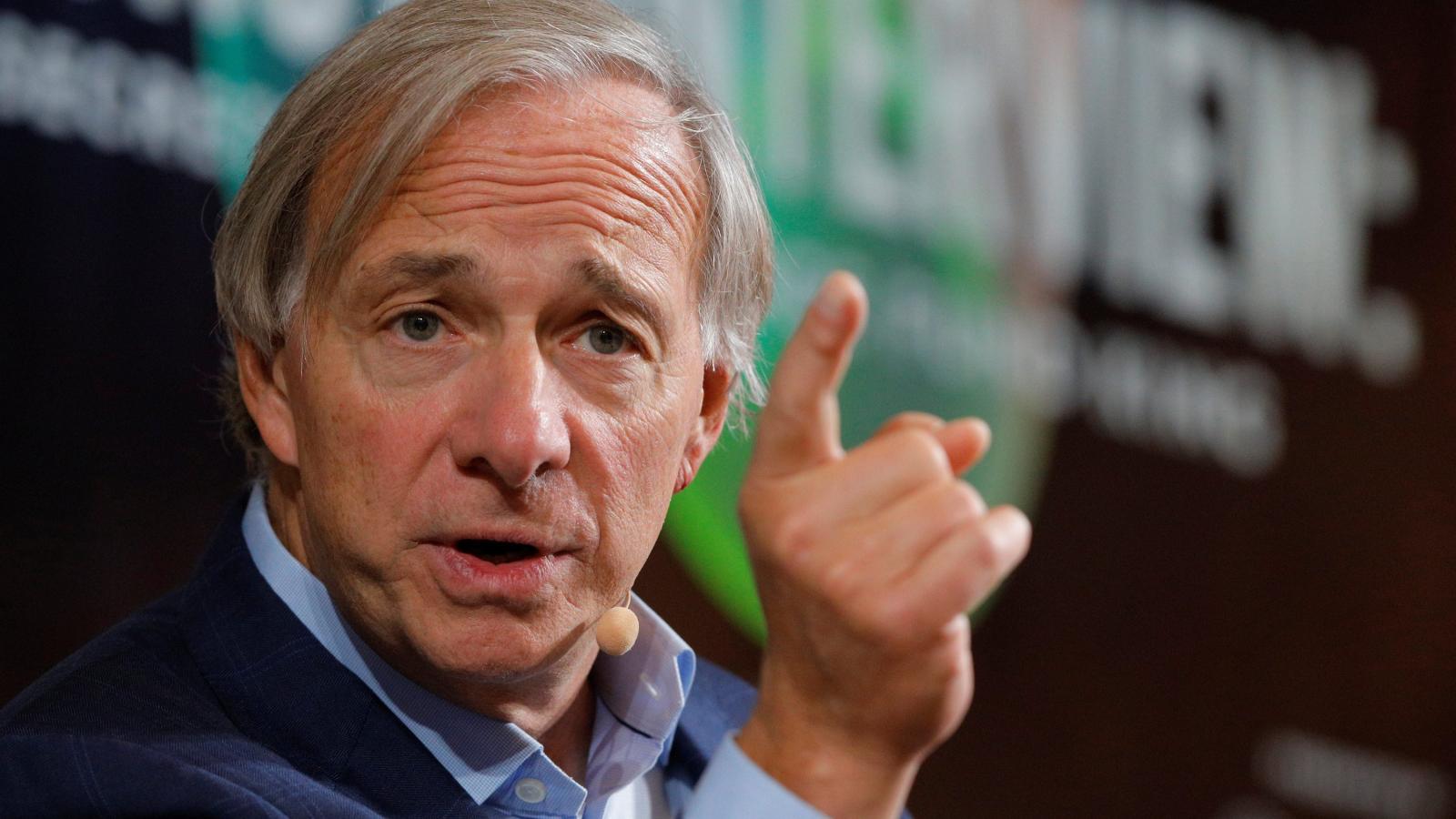
Author: Ray Dalio, founder of Qiaoshui Foundation Original title: How Countries Go Broke: The Dynamic Behind What is Incurable Now Compiled and organized by: bitPushNews In “How Countries Go Bankrupt: The Big Cycle,” I detailed an analytical framework to describe dynamic processes that are highly likely to occur due to unsustainable imbalances between debt supply and demand. Recently, three things happened at the same time: 1) The Japanese government sold part of its US Treasury holdings to return capital to Japan to support the yen and the Japanese capital market, and reduce exposure to US Treasury bonds while avoiding being forced to raise interest rates beyond its wishes in order to support the yen; 2) US bond yields hit new highs under long-term leadership, while the dollar weakened. The reasons include not only the current and anticipated supply of huge debt, but also weak demand for US bonds; 3) Treasury Secretary Bessent announced this week that the US Treasury would buy US Treasury bonds and be able to buy other US Treasury bonds The amount of capital used is limited, and many people ask me : Do these events fit the classic template I set out in my book? The answer is yes. To anticipate what might happen next, let's first review this operating mechanism. The operating mechanism explains in detail that the central government's debt dynamics are the same principles as the debt dynamics of individuals or companies. The only difference is that the central government has a central bank that can print money (this will depreciate the currency), and it can obtain funds from the public through taxation. Because of this, if you imagine how the debt dynamic would work if you or the business you run could print money, or get capital from people through taxation — then you can understand this process. But remember, your goal is for the entire system to work well, not only for yourself, but for all citizens. In my opinion, the credit/market system is like the human body's circulatory system, delivering nutrients to every corner that makes up the market and economy. If credit is used effectively, it can generate productivity and income to repay debt and interest on debt, which is a healthy state of affairs. However, if credit is not properly used to generate sufficient income to repay debts and interest, debt payments will continue to pile up like plaques in blood vessels, squeezing other expenses. When debt payments become very large, debt repayment problems arise, and eventually evolve into debt rollover problems — because debt holders are unwilling to continue to roll over and instead want to sell. Naturally, this will lead to a shortage of demand and sell-off of debt instruments such as bonds; when demand is scarce relative to supply, it either causes a) interest rates to rise, thereby suppressing the market and economic downturn, or b) the central bank “prints money” and buys debt, which will reduce the value of the currency, thereby driving up inflation (compared to the original level). Banknote printing also artificially lowers interest rates and harms lenders' returns. Both options are bad. When debt sell-offs are too large and difficult to contain, and the central bank has already purchased large amounts of debt, rising interest rates can cause the central bank to lose money and damage its cash flow. If this continues, the central bank will fall into a situation where net assets are negative. When this situation became serious, the central government and central bank needed to borrow money to repay the principal and interest of the debt, while the central bank printed money to provide loans due to insufficient free market demand, so a self-reinforcing spiral between debt/banknote printing/inflation formed. In summary, the classic indicators to pay attention to are the following: the ratio of government debt payments to government revenue (which is like the amount of plaque in the circulatory system), the ratio of government debt sold to the demand for government debt (this is like a plaque falling off and causing a heart attack), and the amount of government debt purchased by the central bank to cover the gap between the demand for government debt and the supply of government debt to be sold (this is like the central bank applying a larger dose of liquidity/credit to mitigate liquidity shortages, and the central bank has a risk appetite for these debts). These indicators usually rise over a long cycle of decades — debt and debt payments continue to grow in relation to income — until this state of affairs cannot continue because: 1) debt repayment expenses unacceptably crowd out other expenses, 2) the supply of debt that must be purchased is too large, causing interest rates to rise sharply, leading to a sharp decline in the market and economy, or 3) central banks are unwilling to let interest rates rise and suffer bad market/economic consequences, so they print large amounts of money and buy large amounts of government debt to cover the demand gap, thereby making the value of the currency significant Decreased. Either way, the return on bonds will be poor until the money and debt eventually become cheap enough to attract demand, or the government can cheaply buy back or repay...

15h agoBitpushNews#indebtedness #Bitcoin #economic crisis #US debt #DALIO #gold
Are Bitcoin's 80,000, 120,000, and 300,000 still far away?

Are Bitcoin's 80,000, 120,000, and 300,000 still far away?

Author: Debashree Patra Compiled by: Deep Tide TechFlow Original title: Bitcoin Sword Fingers at $80,000: Analysts Predict Breaking 120,000 Next Year and Shocking 300,000 in 2030 DeepWave Guide: Bitcoin rebounds strongly from around $63,000 to $75,401, completing a 5.8 times standard deviation increase within 48 hours, driving analyst Pierre Rochard to reaffirm his bullish roadmap — hitting $80,000 in 2026 and breaking through $120,000 next year. The sword in 2030 is $300,000. In the short term, bear liquidation and downtrend line breakouts provide momentum, but whether the leverage-driven surge can be turned into continued spot demand will determine whether the larger goal is realistic. Pierre Rochard's $80,000-$300,000 roadmap analyst Pierre Rochard (BitcoinPierre) expects Bitcoin to close around $80,000 in 2026. He believes that Bitcoin is not ready for a “parabolic rise,” but it is expected to break through $120,000 next year. In the longer term, he predicted that Bitcoin could reach $300,000 by 2030. The key variables in this forecast are the Federal Reserve and the broader macro environment. Rochard believes that if the economy is weak enough to allow the Federal Reserve to cut interest rates without reigniting inflation, Bitcoin will benefit from improved liquidity. He also pointed out that artificial intelligence (AI) may improve macroeconomic prospects by increasing productivity and reducing inflation. In that situation, interest rate cuts will create a more favorable environment for risky assets such as Bitcoin. The $80,000 target refocused on Bitcoin's latest price trend has shown signs of regaining momentum. BTC climbed from around $63,000 to $75401 in less than 48 hours. Previously, buyers successfully defended in the $63,000 area. Notably, Bitcoin formed higher highs and higher lows. This round of rebound was partly fueled by large-scale short liquidations. According to reports, as Bitcoin and Ethereum soared, around $14 billion to $17 billion of short crypto positions were liquidated, removing bearish leverage. Glassnode indicated an unusual pattern of this fluctuation. They said that Bitcoin's jump from around $75,401 was a 5.8 times standard deviation (5.8 sigma) of its 30-day volatility — the biggest upward move since October 2023. The last time Bitcoin closed at such a large daily rate was in February, which was only a rebound after a sharp drop of -14% the day before. And there's no crash to bounce back this time around — this is a 5.8 times standard deviation fluctuation compared to its own 30-day volatility, the biggest upward move since October 2023. — Glassnode (@glassnode) However, liquidation alone does not confirm the existence of sustainable spot demand. On-chain analyst Onchain Insights said that Bitcoin has broken through the annual downward trend line resistance and recovered to the $70,000 range. If it continues to close above this structural resistance, it may indicate a weakening of selling pressure and further upward momentum. Another analyst also said that short positions have limited resistance until $80,000, making it an important near-term target. The BTC giant whale sells for $74,000 and $80,000. The gap between these resistances is very large. ——CW (@CW8900) On Polymarket, the probability that Bitcoin will hit $80,000 in August rose to 13%, up 9 percentage points within 6 hours. BTC would need to rise about 14% more from $71,000 to reach $80,000. Can the $120,000 be recovered? Rochard expects Bitcoin to easily break through $120,000 next year if the macro environment turns favorable. His long-term goal of $300,000 by 2030 reflects broader bullish arguments around liquidity, supply, and adoption. His opinion was also supported by SkyBridge Capital CEO Anthony Scaramucci, who expected Bitcoin to surpass $100,000. He cites the halving cycle and new supply...

22h ago深潮TechFlow#Bitcoin

Opinion: Federal Reserve Chairman Walsh may send a gentle signal of calm at the Jackson Hole meeting

Comparing news, TD Securities said that Federal Reserve Chairman Kevin Warsh (Kevin Warsh) may send a mild signal of stability to the market at the Jackson Hole Economic Policy Seminar next week. The market will pay attention to Walsh's more clear statement on the future path of monetary policy and whether he reaffirms the Fed's commitment to curb inflation. However, if Walsh continues to avoid providing forward-looking policy guidance, the market may still be disappointed. TD Securities anticipates that Walsh's speech is more likely to signal a gradual policy adjustment rather than suggest a major policy shift. Investors will try to find clues from their remarks about interest rate trends and changes in the Federal Reserve's policy framework.

1d ago

Giant Whale first set 10 major goals to talk about short order losses: the intention was to do a wave of backtracking, and actually lost 4.6 million US dollars

Comparing the news, Giant Whale first set 10 targets for the X platform and talked about recent short order losses. It said that the original intention of this short time was to do a wave of backtracking and take back a lot. Why would the market correct your opinion, and the 70400 preset loss level was not eliminated; it directly dragged to around 71500. Originally, it only accepted a loss of 2 million, but it was extended to 4.6 million. This article is sponsored by GENG, Build Your Fortune on GENG (https://geng.one)

1d agoburnking
Black eats black? Fake DeFi actually snatched out North Korea's Lazarus real hacker

Black eats black? Fake DeFi actually snatched out North Korea's Lazarus real hacker

Source: Security Company ANY.RUN Compiled by: Daily Planet Daily Original title: Fishing Show of the Year, Fake DeFi Picks Out North Korea's Lazarus, Real Madrid Fans, Real Madrid Fans. With a mathematical background, they only use AI to write code. Core point of view: By setting up a fake DeFi company, the security agency successfully infiltrated the “Famous Chollima” hacker group under North Korea's Lazarus Group, revealed its complete process of using false identities, AI tools, and remote collaboration to infiltrate Western companies, and revealed its evolving toolset and infrastructure. Key element: The researchers disguised themselves as recruiters and recruited three North Korean agents within a few months to record their operation behavior, tool usage, and collaboration patterns in real time through the ANY.RUN sandbox environment. Agents used forged driver's licenses, stolen social security numbers, and mule accounts to complete the onboarding process. Some of these documents were processed by Google Gemini and had SynthID watermarks, revealing signs of forgery. Attackers rely on AI tools such as ChatGPT and Google Gemini to encode, translate, and modify files, and use AstrillVPN, remote desktop software, and dedicated servers to covertly access corporate environments. The three agents showed insufficient skills during development, frequently searched for basic issues, and exposed more proxy server and infrastructure information induced by selective network outages and captcha. The investigation found that Famous Chollima aims to lurk within the enterprise for a long time and legally obtain access to code, systems, and intellectual property rights, and is not limited to short-term attacks, and the threat persists significantly. Crypto friends who are often phished have probably heard of the North Korean hacker group Lazarus Group. Its well-known “campaigns” include, but are not limited to: Bybit ($1.5 billion) theft, Ronin Network/Axie Infinity Bridge attack ($6.2 billion), DMM Bitcoin/Ginco related attack ($308 million), Harmony Horizon Bridge attack ($100 million), and Atomic Wallet attacks ($100 million), etc. And the key to the success of these attacks is social engineering — hackers usually disguise themselves as normal job applicants, lurk at crypto companies for years, and wait for the right time. Recently, security agency ANY.RUN joined forces with BCA LTD (a company dedicated to threat intelligence and hunting) and NorthScan (a threat intelligence program to uncover the infiltration of North Korean IT workers) to effectively crack down on North Korean hacker agents. The researchers created a fake DeFi startup and successfully recruited “Famous Chollima” agents under North Korea's Lazarus Group who specialize in human infiltration, to gain an inside perspective on the actions of North Korea's IT workers. The ANY.RUN sandbox environment shows the agent's behavior patterns in real time, revealing their evolving toolsets, remote access workflows, AI tool usage, and supporting infrastructure. This survey went beyond the simple recruitment process and showed in depth how these agents collaborated, obtained, and used company resources after joining the company. The findings suggest that the North Korean IT worker program not only poses a recruitment risk; once agents sneak inside the organization, they can legally obtain access to code, systems, intellectual property, and critical business processes. The following is a report co-authored by the three parties, compiled by Daily Planet Daily. ——————Introduction In December of last year, we fully recorded the infiltration cycle of “Famous Chollima” for the first time. From recruiting collaborators to help them join Western companies, to falsifying documents, shipping laptops to intermediaries, and even using AI tools to assist and translate in real time during interviews, everything is under control. In that survey, we pretended to be a middleman willing to interview them and lend them a laptop in exchange for a percentage of their salary. The point is that those laptops are actually ANY.RUN sandbox environments that record every click and every step they take. This provided us with massive metrics, hours of computer operation videos, and face-to-face contact images, making an unprecedented survey and making headlines in many media. (“Famous Chollima...

1d agoOdaily星球日报#wallet security #hacks
US Stock Value Investing Is Heading Into Another Trap

US Stock Value Investing Is Heading Into Another Trap

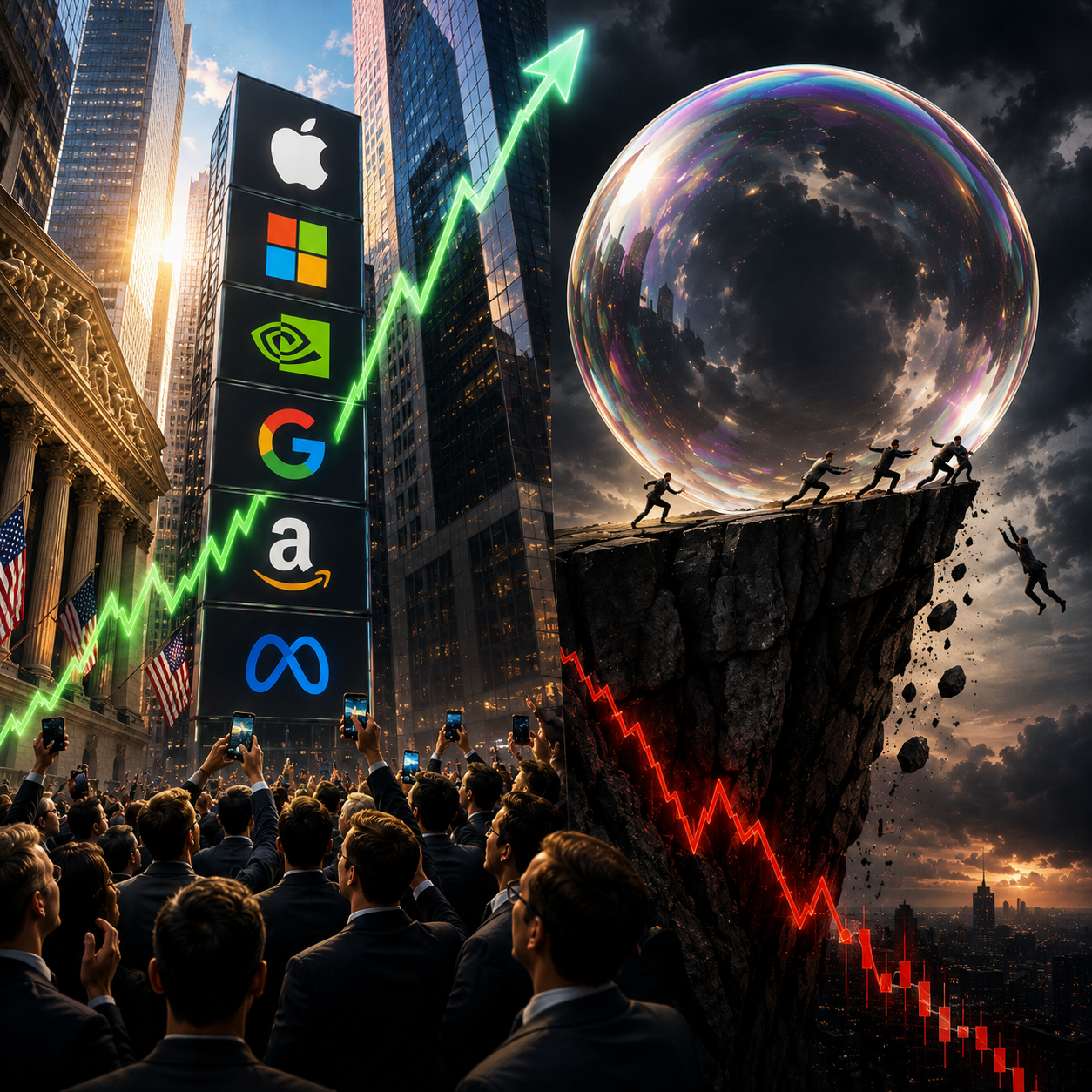
Source: Shenchao TechFlow Original title: (Opinion: Value investing in US stocks is not equal to fundamental investment) When “fundamentals are dead” becomes a consensus, investors who blindly organize giants will eventually experience astonishing capital destruction. Guide: When the market shouted “fundamentals are dead” and the capital frenzy formed a group of tech giants, the author used an astronomy discovery to unravel the logical loopholes behind this narrative. Starting from the composition of valuation multiples, this article reminds investors to distinguish between the true quality of an enterprise and the premium that the market is willing to pay. It is particularly cautionary about long-term allocation in the crypto and technology sector. I promise this introduction won't be as long as the last one on the weather. But please give me 90 seconds. More than 100 years ago, a woman named Henrietta Levitt was doing the tedious job of measuring the brightness of thousands of stars on photographic negatives (the way they were imaged before film appeared). She noticed one characteristic of a class of pulsating stars: the slower they pulsate, the brighter they themselves are. ¹ This might just seem a little interesting today, like “OK, that's pretty cool.” But at the time, astronomers couldn't tell the difference between a dark star very close to Earth and a very bright star far away. For them, the two left the same stain on the photographic film. Visual brightness is a messy mix of these two variables: how bright the thing itself is, and how far away it is from us. Henrietta's work decouples these two things: if you can observe the rate of pulsation, you can know its true luminosity; if you know its true luminosity, you can reverse the distance based on how dark it looks. Astronomers call it “standard candlelight.” A few years later, a man named Edwin Hubble discovered one of these pulsating stars, applied Levitt's math, and discovered what he had always thought was a cloud of gas within our galaxy; in fact, it was an entire independent galaxy, one million light years away. So in simple terms, the observable universe has grown about a trillion times larger, just because one person has figured out how to tell the difference between what things look like and what they actually look like. That in itself is obviously pretty cool. But another interesting thing is that around the same time period, two other astronomers each independently drew a scatterplot. One axis was actual luminosity, and the other axis was temperature. They discovered that stars are not randomly distributed in this space, but rather clustered into different families. The meaning behind this is: stars with the exact same visual brightness may and do belong to a completely different family, have a completely different past, and most importantly, have a completely different future... So what is written in the star? Over the past few years, there has been much discussion about markets, narratives, capital, company building, and financial nihilism. This feeling seems to have reached a feverish climax as the tech and financial world begins to face a very different future than a few decades ago. What is particularly clear is that separating progress from asset prices has become more noisy and in many ways more repulsive. But as an investor who makes a living by buying assets that (hopefully) outperform, a simple framework is: forward returns are roughly equal to growth in fundamentals multiplied by changes in valuation multiples (and multiplied by the dividends you've collected along the way). In this case, the valuation multiplier can very cleanly correspond to the smudges on the photographic film. It's an observable data point, but it entangles two things that the market can't directly see: how good the company actually is, and how far (or how long) its future cash flow is now. I think most of the money that can be made comes from investors who are most capable of unraveling these two variables earlier than others (or “perception of differences”), and we will continue to see astonishing capital ruin for investors who treat their stains as stars. Value investing is not equal to fundamental investing. I think there is a misunderstood view: fundamental investing has historically dominated the creation of excess returns. Most of these legends come from the Graham, Buffett, and Tiger Foundation lineage, as well as numerous narratives built around this group of people. It is believed that by some point in the 2000s, this approach was no longer effective, and anyone who invested in this way was overwhelmed by momentum, trends, and “direct buying tech giants.” The conclusion was (and still is?) It's “fundamentals are dead.” ² The modern version of “fundamentals don't matter” itself isn't stupid. It's rooted in a lot of ideas that many of us on the Compound team have written before. The biggest companies get the most mechanical purchases, and the software industry has a winner-take-all economic law. AI means that giants can transform scale into moats faster than challengers, and there are also reasons why the market's microstructure embeds momentum more deeply into our market infrastructure. These are all real...

1d ago深潮TechFlow#US stocks