


The whole process of issuing coins was empty! How difficult is it to bet on the next “cow comes”
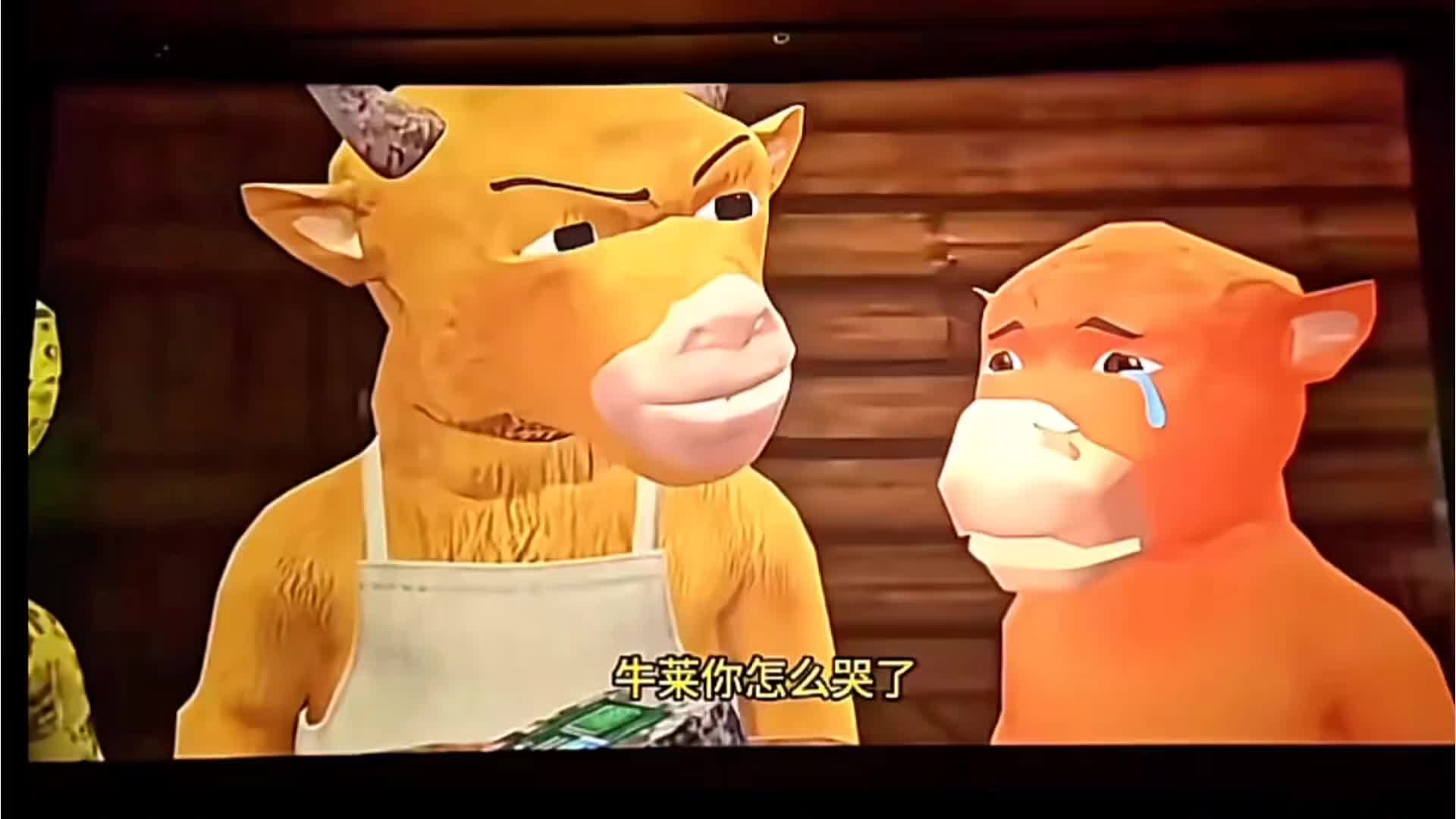
This August, the domestic animation “Cow Lai” suddenly went from “hardly anyone watching” to a phenomenal hit.
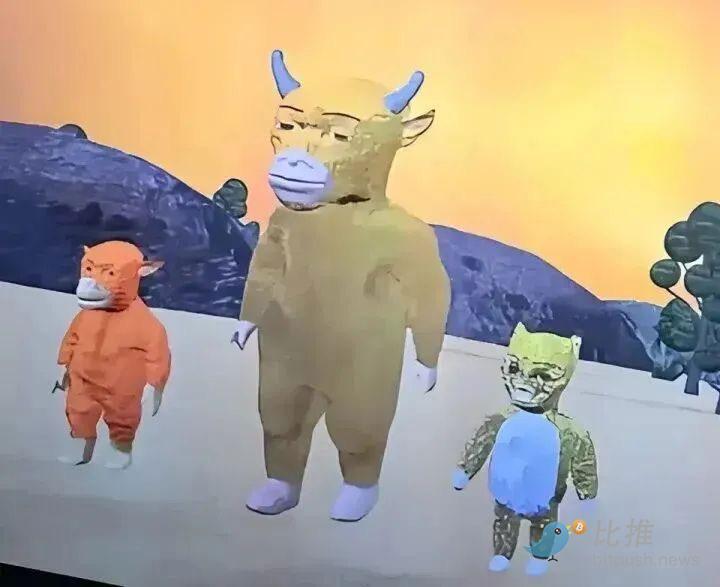
The film was screened on August 5, and the cumulative box office for the first 9 days was only 7,169 yuan, and 236 people watched the movie; after topics rushed to the top search around August 14, the schedule and box office quickly reversed. On August 18, the “Cow Lai” film showed that the box office of the “Cow Lai” film had already surpassed 20 million yuan, and second-innovation videos created spontaneously by Internet users from Station B and Douyin were also all over the place.
The crypto market followed almost synchronously. The meme coin of the same name, “Bullai”, appeared on BNB Chain. Currently, the main contract traded in the market is 0xbeea... 7777, with a market capitalization of about 49 million US dollars at one point.
What is dramatic, however, is that the person who created this coin did not have the greatest wealth effect of this wave.
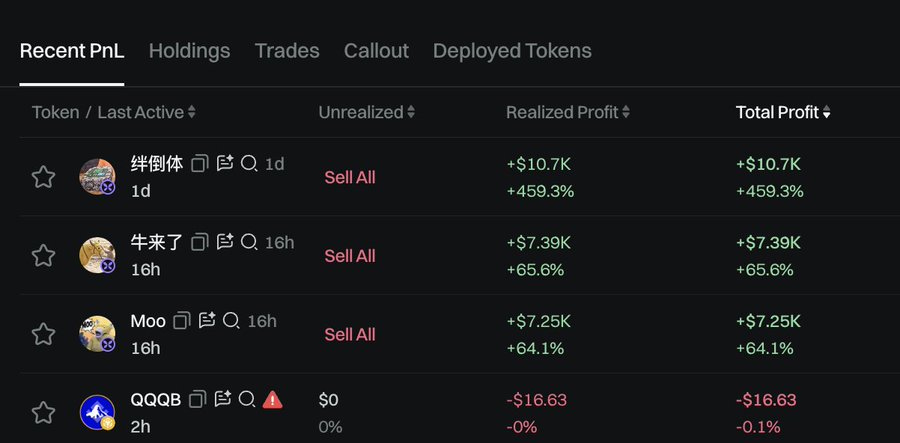
According to on-chain data, “Niulai” was created at the address 0x6af3... 679e. On the morning of August 13, this address created two “Ox Lai” in a row within about 6 minutes, and then issued “Bear Walks” and “Stumbling” tokens for the next few days. The one that was finally selected by the market and became a popular trading target was the second “cow come”.
According to GMGN transaction records, this address did not have any buying or selling records on the main “Niulai” which later became popular. Lookonchain monitoring shows that many early traders made a lot of money, but the publishers themselves did not buy them, so they did not make profits through main coin transactions.
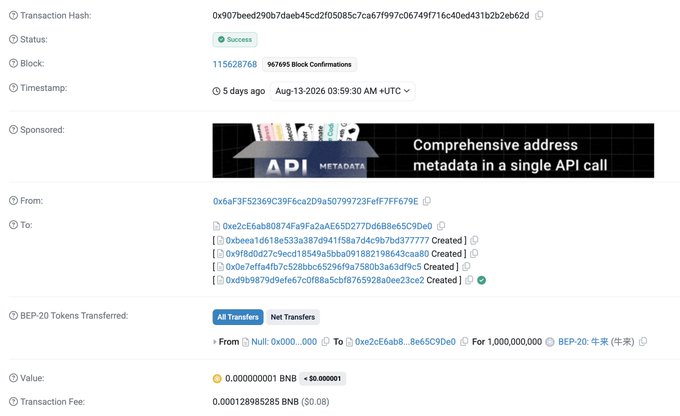
After “Cow Lai” became popular, the address continued to create meme coins such as “Tripp,” “Here Comes the Cow,” and “Moo,” and achieved a cumulative profit of about 253,000 US dollars from these subsequent projects. Therefore, the issuer did not expect the second “cow” to go this far.
This kind of “igniting a fire but not getting in the car” is a common occurrence in the meme industry.
Generally speaking, the usual style of play for meme players is to test the waters in batches, issuing N or more tokens within a few seconds, and betting that one or two of them can hit the hot spot. However, when a concept unexpectedly becomes popular, the creators often either haven't opened a position yet, or have already cleared their position, and can only wait and see.
The most classic example is dogwifhat (WIF).
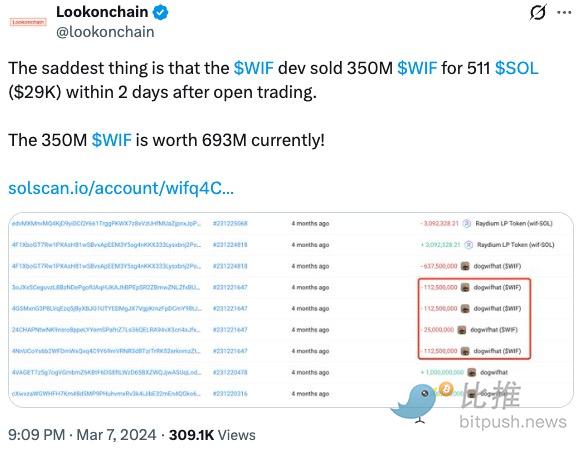
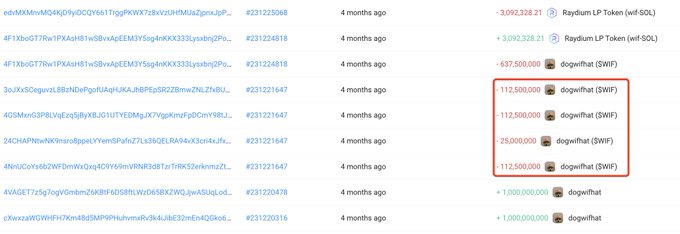
In March 2024, Lookonchain's monitoring showed that the address labeled “WIF Dev” sold 350 million WIF copies in exchange for 511 SOL within two days of opening the transaction; at the time of its posting, the book value of this batch of WIFs had reached about US$693 million. Although this is just a book estimate, it doesn't mean that you can actually sell everything at this price, but the extent of “selling out” is really exaggerated.
There's also the old Fartcoin.
After issuing the coins, the creators of Fartcoin used 2 SOL to buy about 67 million Fartcoins. As a result, they sold all of them in less than 30 seconds, and in the end, they only earned about $600. Later, Fartcoin rushed all the way to a market capitalization of close to 2.5 billion US dollars, and his initial batch of chips was up to about 168 million US dollars.
After missing Fartcoin, this address did not take it away, but instead began issuing new coins without stopping.
According to Axiom and on-chain statistics, as of August 2025, the wallet has created a total of 446 tokens, with a total profit of more than 1.8 million US dollars. Its operation is highly modeled: buy the token immediately after creating it, and then sell it within seconds or minutes. Of course, there is no shortage of money, but it's still two orders of magnitude worse than if you had held Fartcoin in the first place.
There are even more magical examples. In 2024, a teenager founded QUANT during a live broadcast, then sold all 51 million QUANT copies in his hand, making about 29,600 US dollars. As a result, after he cleared his inventory, the community continued to push up the price. At one point, the batch of coins that had already been sold was worth about 4 million US dollars. He then sent LUCY and SORRY, and only earned about $24,000.
For people who issue coins in batches, most coins may not last long, so “run when you see money” is also the most reasonable operation.
This is also the most “fascinating” part of Meme. It always creates stories of “getting rich overnight,” yet it rarely tells you how many zeroed tokens and empty people are behind it. It seems like everyone has an opportunity, but what is actually selected by the market is often only a very small probability event in mass issuance and transactions. Some people changed their net worth because they held one coin; others personally issued a thousand times ten thousand times ten thousand coins, but sold out of chips before take-off. The so-called wealth myth is essentially never a replicable methodology, but rather the result of survivors being magnified by the spotlight.
In the meme market, the hardest part isn't to find opportunities, but to tell if what you see is a pattern or luck.
Author: seed.eth
Twitter:https://twitter.com/BitpushNewsCN
Compare the TG exchange group:https://t.me/BitPushCommunity
Compare TG subscriptions:https://t.me/bitpush
