发币 · 1499
Trump wants to issue coins again? Bitmart officially announced that it is considering restructuring; YuShu Technology has plummeted!

Trump wants to issue coins again? Bitmart officially announced that it is considering restructuring; YuShu Technology has plummeted!

Dear readers, what have the KOLs on X been talking about in the past 24 hours? Note: The following content is compiled from the X platform. They are all personal opinions. They do not represent the platform's position, let alone constitute investment advice. Trump wants to issue coins again? Bull market script, how do you go this time? Bitmart officially announced that it is considering restructuring, YuShu Technology plummeted! Twitter: https://twitter.com/BitpushNewsCN比推 TG Community: https://t.me/BitPushCommunity比推 TG Subscriptions: https://t.me/bitpush

11h agoBitpushNews#KOL

Will compliant ICOs be revived? New SEC regulations open up a financing channel for the cryptocurrency industry

Will compliant ICOs be revived? New SEC regulations open up a financing channel for the cryptocurrency industry

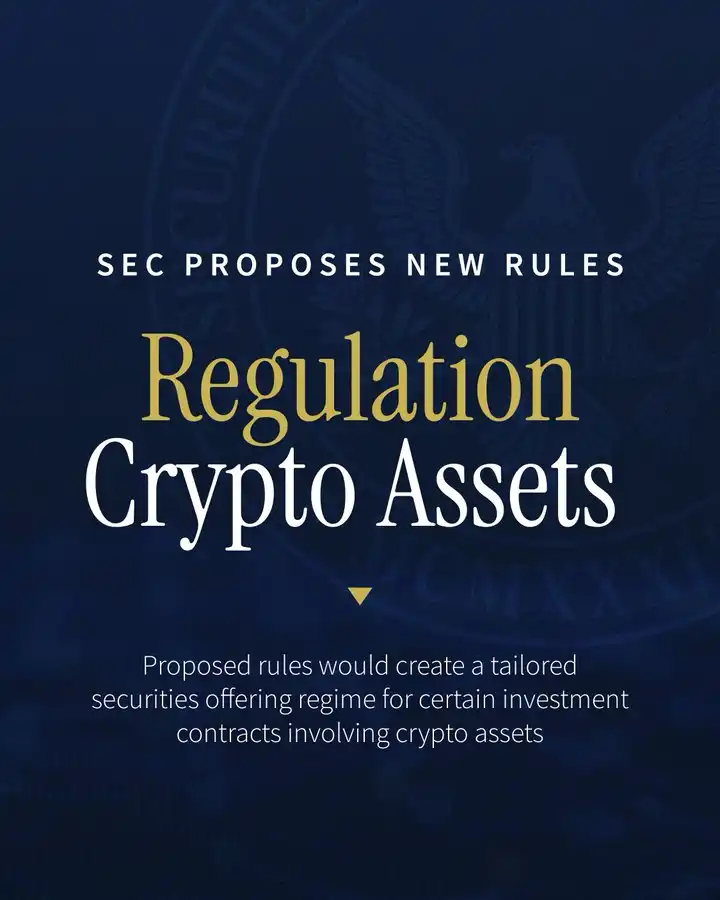
Source: ChainCatcher Author: 0xFACAI Original title: The biggest benefit for the coin industry, is compliant token financing coming back? Public coin sales and financing have once again gained a legal path in the US. On August 18, the US Securities and Exchange Commission released a draft “Regulation Crypto Assets”. According to this draft, startups can raise $5 million in up to four years, and larger projects can raise $20 million or $75 million in 12 months. Without completing a complete set of securities registration, the project can also sell tokens to investors to raise money for network development. The biggest benefit for the coin industry, is compliant token financing coming back? Sounds like ICOs are back. But the SEC gave far more than three funding lines. It wants to establish a set of rules for tokens from birth to “graduation”: projects can be sold to finance first, but it is necessary to clearly explain what to do with this money; if the key work promised by the team is not completed, the token continues to carry the regulatory responsibility for investment terms; only after fulfilling the promise, the token has a chance to exit this level of relationship. “Promises” are the core of the entire draft, and devs must “work” until the token “graduates” before they can “sell”. The draft rules gave the project parties two options. The first type is suitable for startup teams. Assuming a project required $3 million to develop, common choices in the past were to seek venture capital, limit buyers and issue coins outside of the US, or incur the high cost of registering securities. The new draft allows it to use the “startup exemption,” raise no more than $5 million over a maximum period of four years, and file with the SEC when the funding starts and ends. The second type is suitable for projects with greater funding requirements. The first tier raised up to $20 million every 12 months, and the second tier raised up to $75 million. Compared to the $5 million startup exemption, this path can be used over and over again, but the rules are more stringent. Projects can't just hand in a white paper and start selling coins. Both exemptions require the team to disclose how the network is being managed, how the product is being prepared and developed, what security risks the code has, what the company's financial situation is, and who is managing the project. The two larger funding levels also require financial statements to be provided and continuously updated, and the $75 million tranche requires an audit. The SEC didn't remove the original fence either. Issuers and insiders with a record of serious violations cannot use these exemptions, and anti-fraud and anti-manipulation responsibilities remain in effect. If the project uses other securities exemptions at the same time, it must also comply with existing consolidated financial calculation rules. The most important aspect of how to define “graduation” in the entire draft is to treat tokens separately from the investment relationships formed around tokens. A project sells coins to raise money to build a network. Buyers often buy more than just a digital asset that can already be used. They are also expecting the team to create products, attract users, increase token demand, and profit from these efforts. This relationship, which depends on the team's future work, is what the SEC calls an “investment clause.” The token itself can be just a digital asset, but how the project sells it and what it promises to the buyer makes it covered by a layer of investment terms. What the SEC really regulates is this level of relationship between issuers and buyers. The draft designs an exit path for the token. The token can only enter a “safe harbor” after the issuer has completed or permanently ceased all key management tasks of its promises, no new related commitments, and then submitted public certification and analytical instructions to the SEC. As a result, tokens have the concept of “graduation.” When the project is sold and financed, construction is promised to the market. After the project is completed and key tasks are completed, the buyer can no longer rely on the team to fulfill the old promises before the token can “graduate” and the project party can withdraw. The new regulations don't focus on whether tokens are considered securities. In the past, the market judged when a token was no longer subject to securities laws, and often questioned whether the network was “decentralized enough.” As long as the foundation, development company, or founding team continues to work, many people will understand this as the token still relies on a central entity. The SEC draft changed the question: what promises did the project rely on to sell the tokens, and are those promises fulfilled now? Take an example. When Project A sells coins, it tells investors that the team will develop the main network, launch transfer and pledge functions, and then leave the network to a decentralized validator to operate. The main network was later launched, and the features were also available, but the validators were still controlled by the team. Since “decentralizing the network” was also a promise at the time of financing, the token is still unable to “graduate” at this point. When Project B sells coins, it only promises to create a network that can function properly, without “the team must disappear” or “the network...

2d ago22#ICO #SEC
Skyrocketing! The crypto market picked up overnight, who ignited the fire behind it?

Skyrocketing! The crypto market picked up overnight, who ignited the fire behind it?

After months of silence, the crypto market finally ushered in a round of general rise after a long absence. In the US market on August 19, Bitcoin quickly rose from a low of about 64,100 US dollars during the day, and recently hit 69,000 US dollars again. At the beginning of June, Bitcoin fell below 70,000 US dollars and returned to around 69,000 US dollars. Since then, it has fluctuated more than 60,000 US dollars for most of the time. Now, after a lapse of nearly 3 months, it has once again reached this position, and market sentiment has clearly heated up. At one point, Ethereum rose by about 8.6%, and altcoins such as XRP and SOL all rose by more than 6%. The Fear and Greed Index also rebounded from the extreme fear range to a neutral fear level of around 40. This wave of markets is coming very fast, but it's not without any signs. Over the past few weeks, Bitcoin has been stuck in a sideways trade of more than $60,000. Prices are falling little, and buying is not strong enough, and the market is waiting for new catalysts every day. As of today, several factors have just come together: the fall in US bond yields, the weakening of the US dollar, improved US regulatory expectations, and the continued absorption of funds by large players on the chain have finally ignited the market. The first flash came from the US Treasury bond market, which had the biggest impact on the market today, and came from the US Treasury. The US Treasury Department announced that it will increase the liquidity support repurchase scale of 10-year to 30-year treasury bonds. The maximum limit for a single operation will be raised from 2 billion US dollars to at least 4 billion US dollars, which will be implemented on September 9. After the news came out, the yield on US long-term treasury bonds fell rapidly. The 30-year US Treasury yield fell by nearly 10 basis points, the 10-year yield returned to around 4.65%, and the US dollar index also weakened markedly. This is important for Bitcoin. US bond yields have remained high for some time. The 30-year US Treasury yield was once close to 5.34%, a multi-year high. As far as global capital is concerned, when US Treasury bonds can provide a yield of about 5%, capital is naturally more cautious; there is not much need to chase the volatile Bitcoin. Now that long-term yields have begun to decline, the US dollar is weakening at the same time, market concerns about liquidity have temporarily eased, and high-risk assets are also taking a breather. Jeremy Stretch, head of foreign exchange strategy at CIBC, believes that the actions of the US Treasury indicate that the policy level has noticed the pressure on the long-term bond market and the impact of this pressure on other assets. Second catalyst, SEC's new draft token issuance The US SEC proposed a new draft rule called “Regulation Crypto Assets” on August 18. It plans to establish a more targeted issuance system for some investment contracts involving crypto assets, including a maximum issuance exemption of up to 5 million US dollars for startup projects and a financing exemption of up to 75 million US dollars every 12 months. The key benefit is the “safe harbor” rule. Simply put: In the past, many crypto projects could be treated as “securities” by the SEC as “securities” and faced fines and removal at any time. Now, the draft provides a clear way out: the project party has completed (or officially stopped) the promised development and operation, and after reporting to the SEC, this coin is no longer considered a security. In the future, everyone will be able to trade and trade more freely, and there is no need to worry about sudden regulatory action. In addition, early projects can raise up to 5 million US dollars, and the procedures are much simpler. One sentence: The US has finally drawn a clear “graduation line” for crypto projects to reduce uncertainty and facilitate project implementation and transactions with ordinary investors. However, it is still only a proposal, which does not mean that the US crypto regulation issue has been completely resolved. However, market transactions have never been just reality, but also expectations. Crypto concept stocks such as Coinbase and Circle also clearly strengthened on the same day, indicating that this part of the expectation was not only reflected in currency prices. Today's surge in giant whales, which have been collecting funds for a long time, seems sudden, but from an on-chain perspective, the big money movement did not appear until today. CryptoQuant data shows that over the past 60 days, large Bitcoin holders — which excludes exchange and mining pool wallets from the statistics — have increased their net holdings by about 43,000 BTC. Based on the previous price of around 64,000 US dollars, the value is about 2.75 billion US dollars; if calculated at around 69,000 US dollars today, this batch of bitcoins is already close to 3 billion US dollars, and some of the large capital has slowly begun to be received. Real demand for goods is also picking up. According to recent CryptoQuant research, Bitcoin's 30-day “spot demand” has quickly recovered from negative about 206,000 BTC on July 23 to negative 5,000 on August 18. It is only one step away from recovering to a positive value, and the closest to a correction since the end of February. This indicator measures whether there are actually people in the market who are really willing to buy coins with money. CryptoQuant's historical backtesting shows that when this demand indicator changed from negative to positive, Bitcoin rose at a median rate for the next 60 days...

2d agoBitpushNews#original #altcoins #Bitcoin #Bull market #US debt #Market topics
“Graduation rules” under SEC's new rules: token financing is legal, but too many promises make it impossible to get away

“Graduation rules” under SEC's new rules: token financing is legal, but too many promises make it impossible to get away

Author: 0xFACAI Original title: The SEC threw a bombshell, is the spring of compliant token financing finally here? Public coin sales and financing have once again gained a legal path in the US. On August 18, the US Securities and Exchange Commission released a draft “Regulation Crypto Assets”. According to this draft, startups can raise $5 million in up to four years, and larger projects can raise $20 million or $75 million in 12 months. Without completing a complete set of securities registration, the project can also sell tokens to investors to raise money for network development. Sounds like IC0 is back. But the SEC gave far more than three funding lines. It wants to establish a set of rules for tokens from birth to “graduation”: projects can be sold to finance first, but it is necessary to clearly explain what to do with this money; if the key work promised by the team is not completed, the token continues to carry the regulatory responsibility for investment terms; only after fulfilling the promise, the token has a chance to exit this level of relationship. “Promises” are the core of the entire draft, and devs must “work” until the token “graduates” before they can “sell”. The draft rules gave the project parties two options. The first type is suitable for startup teams. Assuming a project required $3 million to develop, common choices in the past were to seek venture capital, limit buyers and issue coins outside of the US, or incur the high cost of registering securities. The new draft allows it to use the “startup exemption,” raise no more than $5 million over a maximum period of four years, and file with the SEC when the funding starts and ends. The second type is suitable for projects with greater funding requirements. The first tier raised up to $20 million every 12 months, and the second tier raised up to $75 million. Compared to the $5 million startup exemption, this path can be used over and over again, but the rules are more stringent. Projects can't just hand in a white paper and start selling coins. Both exemptions require the team to disclose how the network is being managed, how the product is being prepared and developed, what security risks the code has, what the company's financial situation is, and who is managing the project. The two larger funding levels also require financial statements to be provided and continuously updated, and the $75 million tranche requires an audit. The SEC didn't remove the original fence either. Issuers and insiders with a record of serious violations cannot use these exemptions, and anti-fraud and anti-manipulation responsibilities remain in effect. If the project uses other securities exemptions at the same time, it must also comply with existing consolidated financial calculation rules. The most important aspect of how to define “graduation” in the entire draft is to treat tokens separately from the investment relationships formed around tokens. A project sells coins to raise money to build a network. Buyers often buy more than just a digital asset that can already be used. They are also expecting the team to create products, attract users, increase token demand, and profit from these efforts. This relationship, which depends on the team's future work, is what the SEC calls an “investment clause.” The token itself can be just a digital asset, but how the project sells it and what it promises to the buyer makes it covered by a layer of investment terms. What the SEC really regulates is this level of relationship between issuers and buyers. The draft designs an exit path for the token. The token can only enter a “safe harbor” after the issuer has completed or permanently ceased all key management tasks of its promises, no new related commitments, and then submitted public certification and analytical instructions to the SEC. As a result, tokens have the concept of “graduation.” When the project is sold and financed, construction is promised to the market. After the project is completed and key tasks are completed, the buyer can no longer rely on the team to fulfill the old promises before the token can “graduate” and the project party can withdraw. The new regulations don't focus on whether tokens are considered securities. In the past, the market judged when a token was no longer subject to securities laws, and often questioned whether the network was “decentralized enough.” As long as the foundation, development company, or founding team continues to work, many people will understand this as the token still relies on a central entity. The SEC draft changed the question: what promises did the project rely on to sell the tokens, and are those promises fulfilled now? Take an example. When Project A sells coins, it tells investors that the team will develop the main network, launch transfer and pledge functions, and then leave the network to a decentralized validator to operate. The main network was later launched, and the features were also available, but the validators were still controlled by the team. Since “decentralizing the network” was also a promise at the time of financing, the token is still unable to “graduate” at this point. When Project B sells coins, it only promises to make a network that works properly; it does not include “the team must disappear” or “the network must reach a certain degree of decentralization” in the financing promise. Wait until the Internet is online and produced...

2d ago律动BlockBeats#SEC #financing
BONK's crypto treasury revenue soared 6218% in half a year. Why was there only $214,000 left on the account?

BONK's crypto treasury revenue soared 6218% in half a year. Why was there only $214,000 left on the account?

Author: Claude, Shenchao TechFlow Original title: BONK Crypto Treasury has only $2.1 million in cash, but 70% of the revenue comes from the founder's own platform Shenchao Guide: On August 14, the NASDAQ listed company Bonk, Inc. (BNKK) handed over the ledger for the first half of the year: revenue of $5.5 million, a sharp increase of 6218% over the previous year, but the net loss was 7.88 million, leaving only $214,000 in cash on the account. The auditor clearly warned that the company “has serious doubts about continuing operations.” What is more noteworthy is that of this 5.5 million revenue, 3.92 million, or 71%, came from the revenue share of the platform associated with founder Mitchell Rudy. Rudy holds approximately 40.2% of common shares and all Series C preferred shares through Lucky Dog Holdings, which can elect half of the company's directors. This publicly traded company, which was renamed from beverage company Safety Shot, gave its life back to the same person. First, tell me who this company is. BONK is one of the most well-known meme coins on Solana. It was airdropped to the community at the end of 2022, and has no corporate entity itself. Bonk, Inc. is a NASDAQ listed company (stock code: BNKK), formerly known as Safety Shot, which sells energy drinks. It changed its name in October 2025 and announced its transformation into a “digital infrastructure company connecting traditional open markets and the decentralized economy”: BONK tokens in the treasury, and also extracted from LetsBonk.fun, a meme coin launch platform in the BONK ecosystem. On August 17, the company released its first half results, and the subsequent 10-Q quarterly report disclosed the full accounts on August 14. The data contrast was huge: revenue of $5.5 million, up 6218% year over year; however, the net loss for the same period was $7.88 million, mainly due to the decline in the price of BONK tokens held, and unrealized losses of $8.17 million were calculated. As of June 30, there was $214,000 in cash on the account, $203,000 in working capital, and a cumulative loss of $191.4 million. The auditor M&K CPAS and management both wrote in the report that these conditions raised major doubts about the company's ability to continue operating (that is, what auditors often call going concerns). Revenue surged 6218% in the first half of the year, and 71% of the $5.5 million revenue from the founder's own platform comprised two parts: the beverage business sold $1,579 million, and the remaining $3.921 million was all revenue share from related parties, accounting for 71% of revenue. This split comes from LetsBonk.fun. Launched by the BONK community in collaboration with DEX Raydium, it is a meme coin launcher running on Solana. The gameplay is similar to pump.fun: anyone can send a token with a little SOL, trade on a curve, and enter the Raydium liquidity pool after reaching scale. The platform charges a 1% processing fee for transactions, and part of the revenue is used to buy back and destroy BONK. From the end of 2025 to the beginning of 2026, it surpassed pump.fun several times in terms of single-day coin issuance, and once became one of the most active launchpads on Solana. 10-Q disclosed that on August 8, 2025, the company signed a revenue sharing agreement with related party Bonk Digital, Inc., to receive a portion of the platform's future revenue stream; it was revised to 51% of LetsBonk.fun's total revenue on December 10, and both parties can also agree to return to 10%. The documents do not disclose Bonk Digital's shareholder structure, only stating that it is a related party linked to the company “through shared ownership and governance.” In other words, 71% of the company's revenue depends on how popular a platform is in the founder's ecosystem. The founder holds 40.2% of the shares, and the C-Series Preferred Stock can elect half of the board company's largest shareholders and the same group of people behind this related platform. Mitchell Rudy, popularly known as Nom, founder and director of Bonk, Inc. According to a letter of attorney from the company's December 2025 shareholders' meeting, Lucky Dog Holdings, controlled by Rudy, benefited from holding...

3d ago深潮TechFlow#Bonk

The popularity of BSC memes is heating up, and the volume of Flap coins increased by 24% yesterday, due to the rise of bulls and alpha

According to Dune data, on August 18, the number of Flap tokens launched reached 47,551 tokens, an increase of about 24.4% compared to 38,231 tokens on August 17. Over the same period, the number of Pump.fun tokens launched reached 39,247, and the number of Four.Meme tokens launched was 1,165. According to previous news, after the launch of Binance Alpha, the meme coin “Ox Lai” briefly broke through the market capitalization of 50 million dollars and reached a record high, and now the market value has fallen back to around 43.42 million US dollars.

3d ago
The whole process of issuing coins was empty! How difficult is it to bet on the next “cow comes”

The whole process of issuing coins was empty! How difficult is it to bet on the next “cow comes”

This August, the domestic animation “Cow Lai” suddenly went from “hardly anyone watching” to a phenomenal hit. The film was screened on August 5, and the cumulative box office for the first 9 days was only 7,169 yuan, and 236 people watched the movie; after topics rushed to the top search around August 14, the schedule and box office quickly reversed. On August 18, the “Cow Lai” film showed that the box office for the “Cow Lai” film had already surpassed 20 million yuan, and second-innovation videos created spontaneously by Internet users from Station B and Douyin were also all over the place. The crypto market followed almost synchronously. The meme coin of the same name, “Bullai”, appeared on BNB Chain. Currently, the main contract traded in the market is 0xbeea... 7777, with a market capitalization of about 49 million US dollars at one point. What is dramatic, however, is that the person who created this coin did not have the greatest wealth effect of this wave. According to on-chain data, “Niulai” was created at the address 0x6af3... 679e. On the morning of August 13, this address created two “Ox Lai” in a row within about 6 minutes, and then issued “Bear Walks” and “Stumbling” tokens for the next few days. The one that was finally selected by the market and became a popular trading target was the second “cow come”. According to GMGN transaction records, this address did not have any buying or selling records on the main “Niulai” which later became popular. Lookonchain monitoring shows that many early traders made a lot of money, but the publishers themselves did not buy them, so they did not make profits through main coin transactions. After “Cow Lai” became popular, this address continued to create meme coins such as “Tripp,” “Here Comes the Cow,” and “Moo,” and achieved a cumulative profit of about 253,000 US dollars from these subsequent projects. Therefore, the issuer did not expect the second “cow” to go this far. This kind of “igniting a fire but not getting in the car” is a common occurrence in the meme industry. Generally speaking, the usual style of play for meme players is to test the waters in batches, issuing N or more tokens within a few seconds, and betting that one or two of them can hit the hot spot. However, when a concept unexpectedly becomes popular, the creators often either haven't opened a position yet, or have already cleared their position, and can only wait and see. The most classic example is dogwifhat (WIF). In March 2024, Lookonchain's monitoring showed that the address labeled “WIF Dev” sold 350 million WIF copies in exchange for 511 SOL within two days of opening the transaction; at the time of its posting, the book value of this batch of WIFs had reached about US$693 million. Although this is just a book estimate, it doesn't mean that you can actually sell everything at this price, but the extent of “selling out” is really exaggerated. There's also the old Fartcoin. After issuing the coins, the creators of Fartcoin used 2 SOL to buy about 67 million Fartcoins. As a result, they sold all of them in less than 30 seconds, and in the end, they only earned about $600. Later, Fartcoin rushed all the way to a market capitalization of close to 2.5 billion US dollars, and his initial batch of chips was up to about 168 million US dollars. After missing Fartcoin, this address did not take it away, but instead began issuing new coins without stopping. According to Axiom and on-chain statistics, as of August 2025, the wallet has created a total of 446 tokens, with a total profit of more than 1.8 million US dollars. Its operation is highly modeled: buy the token immediately after creating it, and then sell it within seconds or minutes. Of course, there is no shortage of money, but it's still two orders of magnitude worse than if you had held Fartcoin in the first place. There are even more magical examples. In 2024, a teenager founded QUANT during a live broadcast, then sold all 51 million QUANT copies in his hand, making about 29,600 US dollars. As a result, after he cleared his inventory, the community continued to push up the price. At one point, the batch of coins that had already been sold was worth about 4 million US dollars. He then sent LUCY and SORRY, and only earned about $24,000. For people who issue coins in batches, most coins may not last long, so “run when you see money” is also the most reasonable operation. This is also the most “fascinating” part of Meme. It always creates stories of “getting rich overnight,” yet it rarely tells you how many zeroed tokens and empty people are behind it. It seems like everyone has an opportunity, but what is actually selected by the market is often only a very small probability event in mass issuance and transactions. Some people changed their net worth because they held one coin; others personally issued a thousand times ten thousand times ten thousand coins, but sold out of chips before take-off. The so-called wealth myth is essentially never a replicable methodology, but rather the result of survivors being magnified by the spotlight. In the Meme Marketplace, the hardest part isn't finding opportunities, but distinguishing what you see...

3d agoBitpushNews#MEME #original #Issuing coins #Cow Lai topic
What happened to Farcaster, which was sold twice in a year and is valued at $1 billion?

What happened to Farcaster, which was sold twice in a year and is valued at $1 billion?

Author: Shenchao TechFlow Original title: Farcaster, which was once valued at 1 billion US dollars, ushered in a project resold for the second time in a year, and was sold twice within a year. What an experience. On August 17, Farcaster operator Neynar's co-creator Rish announced the search for a new team for the Farcaster agreement, official app, and coin platform Clanker. The company returned the remaining funds and the team later disbanded. It's only been 7 months since Neynar took over the project from the founding team. And that handover was Farcaster's first “sold”. This Web3 social star, once invested by Paradigm and a16z and valued at $1 billion, has entered the process of finding a home for the second time in a year. The founding team that left first On January 21 of this year, Farcaster's founding team, Merkle Manufactory, did an uncommon thing: handing over all of the agreements, codebase, official app, and Clanker to Neynar, and then refunded all of the $180 million in financing to investors. The two founders, Dan Romero and Varun Srinivasan, joined the payment chain Tempo (a project incubated by Stripe and Paradigm). The money was refunded, the people left, and the project was left behind. The takeover, Neynar, a middleware company that makes Farcaster development tools, raised $11 million in Series A in 2024. What it saw when it took over was a developer-first social network and a coin machine that was printing money. After 7 months, it also started looking for a new home. Rish wrote in the announcement that the acquisition seemed like a good choice at the beginning of the year, but then it changed so much that Neynar “no longer fits the needs of the next phase.” The announcement was posted on Farcaster in advance, and he said, don't be so sudden this time around. The money printer temporarily shut down. Among the assets Neynar took over, the most valuable was Clanker, an AI one-click coin issuing robot. At the beginning of this year, when the AI coin issuance hype was at its peak, it was Farcaster Ecological's cash cow, which swept away $35 million in on-chain coin service fees in one quarter. According to DeFilLama data, Farcaster Ecosystem's agreement fee: $35.43 million for the first quarter of 2026. In the second quarter, $4.67 million. From July 1 to August 17, $377,000. But for the past 24 hours, the agreement cost was only $4001. From 35.43 million in a single quarter to 4,000 in a single day, the drop was 99%. The cumulative processing fee of 94.1 million US dollars since its launch has become a monument parked at the top of the mountain. Meanwhile, CLANKER token repurchases, which are fed by handling fees, have stopped. The cost side is also an issue. According to Rish, to keep this full-stack social network running, it costs 100,000 dollars a month, and at its peak, 500,000. However, in the last 30 days, the revenue of the entire ecosystem was $120,000, which can only be said to cover the monthly consumption of the project. At the same time, RiSH also wrote on Farcaster: The operating cost is really high, but it really wasn't a factor in our decision. This number is being disclosed because it may influence the next team's decisions. Our balance sheet can absorb current costs indefinitely. The other sentence is more straightforward: “This is not a financial decision. Gathering energy is much harder than raising capital. “(It's much harder to raise energy than capital.) is probably the most accurate microcosm of Farcaster's development over the past seven years. Perhaps the problem with the consumer-grade social illusion Farcaster really isn't the cost. After the market is booming, it is not critical how much money the project burns this month, because the existing capital can still cover this part. But in terms of direction and demand, one question is hard to avoid: Why are users leaving X and coming to you? Alliance Co-Founder Imran's review is straightforward: Farcaster was a useful...

4d ago深潮TechFlow#Farcaster #WEB3
Don't bet 100 times more, just look for “cash bulls”: What other projects are worth investing in in a bear market?

Don't bet 100 times more, just look for “cash bulls”: What other projects are worth investing in in a bear market?

Source: Odailey Planet Daily Author: Asher Original title: Don't guess 100 times the coin, only bet on “cash cow”: What other projects in the bear market are worth investing in? The bear market only buys the most profitable items on each track, and the bull market then goes after short-term hot spots. Core point of view: In the context of the downturn in the crypto market, this article has selected four issued projects, Pump.fun, Hyperliquid, Uniswap, and Chainlink. They have shown profitability through a bear market with stable agreement revenue, providing a more realistic reference target for long-term investment. Key elements: 1.pump.fun's revenue in the past 30 days was 41.53 million US dollars, with a cumulative total of about 256 million US dollars in the first 7 months. The revenue depends on the popularity of Meme transactions on the Solana chain, but the average monthly cash flow capacity of tens of millions of dollars is outstanding. 2. Hyperliquid's cumulative revenue for the first 7 months was about US$352 million, surpassing Pump.fun. In June, it reached a new high of 60 million US dollars during the year. The revenue mainly comes from perpetual contracts and spot transaction fees. 3. Hyperliquid uses approximately 99% of the agreement fee to repurchase and destroy HYPE tokens, forming a simple investment logic of “profitable and continuous repurchase”. 4. Uniswap has earned 5.6 million US dollars in the past 30 days. It is the most profitable DEX. It accumulated about US$28.4 million in the first 7 months, benefiting from the official opening of the agreement fee after the implementation of the Unification proposal and its use for UNi's destruction. 5. Chainlink's revenue in the past 30 days was 4.57 million US dollars. The monthly revenue was stable in the range of 4.4 million to 5.8 million US dollars. The revenue came from service fees such as oracles and cross-chain services, and the cumulative transaction value facilitated reached 32.18 trillion US dollars. Since this year, the crypto market has continued to be sluggish. There aren't no hot spots on the chain; every once in a while, there are a few burgeoning memes, but these quotes often focus on new coins that have just been issued and hardly give the market time to fully study. Once the story ebbed down, prices quickly dropped back down. Most players who got on the bus halfway ended up losing money and making little money. Since blindly guessing the next 100 times the coin makes little sense. A more realistic investment logic is: if you are preparing to invest slowly in a bear market and wait for the next round of the bull market to return, what other projects are worth buying now? Compared to simply reading the story, a more direct screening criterion is whether the project itself still makes money or not. If a platform can still earn millions or even tens of millions of dollars in revenue every month in the crypto bear market, it at least indicates that users and demand are still there, and the project also has a stronger ability to cross the cycle. This type of platform token won't necessarily be the altcoin with the most exaggerated rise in the next round of the bull market. So, since this year, what other coin issuing projects have continued to make money? (The revenue data for the project in this article comes from Tokenomist and DeFilLama. The revenue caliber is uniformly adopted, that is, the actual revenue of the agreement after deducting distribution to supply-side participants such as LPs.) Pump.fun: The “shovel seller” on the meme circuit earns money from round after round of coin issuance boom. Apart from the two major stablecoin issuers Tether and Circle, Pump.fun is one of the most profitable crypto native projects in the past 30 days, with a revenue of 41.53 million US dollars. Looking at monthly data, Pump.fun's revenue from January to July was 51 million US dollars, 40 million US dollars, 38.1 million US dollars, 32.4 million US dollars, 32.4 million US dollars, 34.4 million US dollars, 26.6 million US dollars, and 33.7 million US dollars, respectively, with cumulative revenue of about 256 million US dollars for the first 7 months. Pump.fun's revenue peak was high at the beginning of the year, then the overall decline was evident in April and June, and there was some recovery in May and July. The core of Pump.fun's revenue comes from continuous trading of SGD on the platform. Currently, users are free to create tokens themselves, but trading during the Bonding Curve phase requires transaction fees. According to Pump.fun's latest rate, Bonding Curve's total fee rate is 1.25% per transaction, of which 0.95% goes to the agreement and 0.30% is distributed to token creators. Additionally, when tokens graduate from Pump.fun and enter PumpSwap, a graduation fee of 0.015 SOL will be charged. Pump.fun's revenue still depends on Solana's on-chain meme activity. When the on-chain market is lukewarm, revenue drops significantly, and recovers quickly when popularity picks up. But from the perspective of a bear market, it can be at 7...

4d agoOdaily星球日报#DeFi #MEME #invests

Robinhood crypto chief: Not issuing coins is our huge advantage

According to Twitter, Robinhood's crypto department head Johann Kerbrat was recently interviewed on a podcast by Threadguy. In an exclusive interview, Kerbrat said, “One of our key differences compared to other blockchains is that we only issue chains, not coins. For us, blockchain is pure technology, the infrastructure that supports all of our new businesses. We don't need to constantly adjust our strategic priorities to maintain rising or sideways token prices. This avoids huge disruptions and is a huge advantage for us.”

7d ago