


Why did he dare to vote for Yu Shu 6 years ago? 丨Exclusive secrets revealed by early investors
Source | Pencil Path
Oral description | Zhao Nan, an early investor in Yushu
Edit | Wang Fang
Original title: Yu Shu Early Investors: Why did I dare to invest 6 years ago? 丨EXCLUSIVE
Today (August 19), Yushu Technology officially landed on the Science and Technology Innovation Board and became the “first stock of humanoid robots” in A-shares.
Yushu's issue price was 150.80 yuan/share, an increase of 629.44% after opening on the first day. The market value reached 444.9 billion yuan at this point.
Earlier, Pencil Road had a conversation with its early investor, Zhao Nan.
Try restoration: Why did Yuuki dare to take action when he was still very low-key? The following is Zhao Nan's oral statement.
- 01 - Meet Yuki because of a four-legged robot
I first met Uki in April 2020.
It wasn't an accidental encounter.
Starting in 2019, I've been watching the robot circuit in a systematic manner.
I basically looked in every direction I could see at the time: four-legged robots, underwater robots,
Food delivery robots even include some consumer-grade products.
After watching that round, I actually have a relatively clear judgment in my mind: the robotics industry,
It's not a question of “will it happen”, but “when will it happen”.
The real question is: which directions have been proven and which are just imagination.
In my opinion, four-legged robots are one of the few directions that have been proven.
Look at Boston Dynamics (Boston Dynamics). It has already made robot dogs, and customers are already using it.
This incident shows a very important thing: robots are not sci-fi, but have entered the real world.
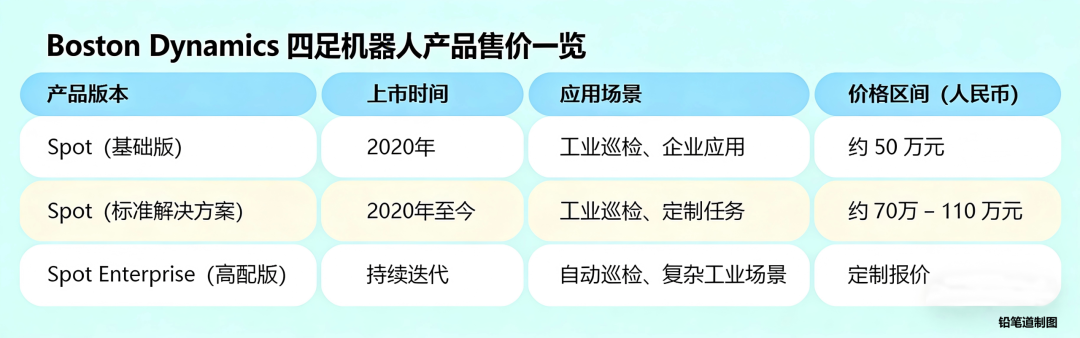
But at the same time, it also revealed a more essential problem — the cost problem: people are too expensive, R&D is too heavy, and the supply chain is immature.
The problem with Boston Dynamics was typical at the time: the team was the best team in the world.
Labor costs are extremely high; R&D cycle is long and investment is huge;
Even early products used diesel instead of lithium; in the end, they were sold by Google to SoftBank Vision Fund.
However, this is not to say that there is no demand for four-legged robots; it is that the cost cannot support it.
So my judgment at the time was: Whoever can cut down the cost will have a chance.
Obviously, the Chinese team has an opportunity because we have a supply chain advantage.
- 02 - Why invest?
It was also based on this judgment that I visited Hangzhou for the first time in April 2020 and met Wang Xingxing (founder of Yushu).
That meeting actually made me realize very quickly that this isn't a “just starting” team.
It was 2020 at the time, and they've been doing it for three years.
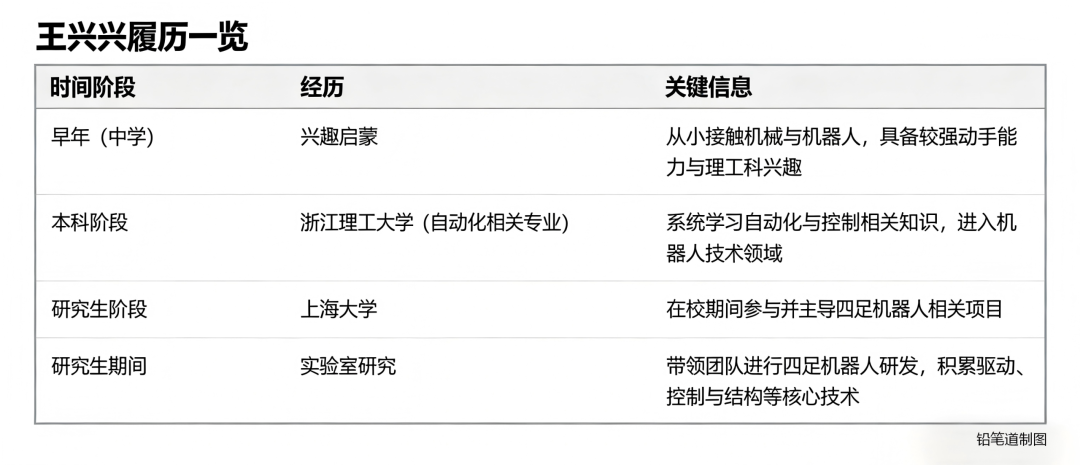
When Wang Xingxing was a graduate student at Shanghai University,
I was already bringing a four-legged robot lab, and I started working on xDog's algorithm at that time.
By the time we met him, he had a deep understanding of every detail of the four-legged robot's functions and procedures.
In other words, while many teams are still “watching the track,” they are already building up technology.
This is particularly critical in the robotics industry, as it is a typical “time for ability” industry.
Many things can't be smashed with money; they have to be accumulated little by little.
First, they have mastered the robot's core underlying ability.
Many people think that robots are a “whole machine product.”
But in reality, there are three things that really determine the height of a robotics company: drivers, sensors, and controllers.
If you don't have these three pieces in your hands, you'll always be just a system integrator.
Meanwhile, in 2020, Yu Shu already has accumulated technology and patents on these three areas.
This means it's not assembling products, but building underlying capabilities. This essentially determines its upper limit.
Second, it's the customer.
Many robotics companies “make products first, then find customers”.
But Yuki did the opposite — they already had customers in 2020, and they're not regular customers.
At the time, their customers included companies such as Apple, Nvidia, Meta, and Google.
These companies buy their robot dogs to use for AI training and algorithm training. Domestic customers are mainly universities.
This matter is critical because it shows two things: First, the product is already available;
Second, this technology has been recognized by top technology companies.
Wang Xingxing always pushes everyone to do one thing: make simple products that customers can accept, and sell them one wave first.
Not to make money, but to train the company's entire R&D, production, and sales system by selling products.
By communicating with customers, we can also find problems and iterate on products.
Third, mass production capacity.
I went to their company at the time and saw something very detailed - they had a warehouse next to their office building.
There is a press machine inside, which is used to mold parts.
At the time, Wang Xingxing explained that apart from the chip, all the core components of a four-legged robot were designed by Yu Shu himself.
Why would a robotics company do this themselves?
Do it yourself, the cost is very low, and the degree of integration can be done very well.
Wang Xingxing has always wanted to integrate everything that can be integrated in the industrial chain, so that the cost of each component can be reduced.
Also, there was no mature supply chain in the industry at the time.
No factory is willing to accept this kind of non-standard product. So they can only do it themselves.
This detail showed me another thing: they were solving “mass production problems” from the beginning rather than making laboratory products.
At the time, there were several domestic companies making four-legged robots, and some were still in the laboratory stage.
Some are experimenting with family companionship, but Yuuki is one of the few teams that actually have mass production capabilities.
At the time, Yuuki was very similar to the pace at which DJI made products ten years ago.
Fourth, market path.
At that time, many teams were working as family companion robots, trying to get directly into the C-side.
But my judgment at the time was that this path was too early. Users aren't ready, costs haven't come down, and the scenario isn't just what they need.
Instead, the To B market is more realistic, such as security inspections and industrial scenarios. These places really have budgets and needs.
So I'm more optimistic about the path: to B stand firm first, then slowly infiltrate towards the C end.
This is also the path Uki chose at the time.
But if I just say that, it's not enough for me to make up my mind to vote.
What really made me think “this company may go a long way” is Wang Xingxing himself.
When I was chatting with him, I had a very strong feeling: he is actually not very interested in business topics.
But when you talk about robots, the whole person is completely different.
He told me that he loved robots since childhood and watched Iron Man. His idol was Elon Musk.
Moreover, he has a typical science and technology mentality. He likes physics and mathematics. He doesn't care much about the language English. He used a turbojet engine in middle school.
This kind of person has a very important characteristic: they don't get into any industry because they are passionate, but because they love it.
In a technology-driven industry, this is very important. Because of many things,
It requires long-term investment and long-term persistence; it cannot be sustained without love.
What's interesting, though, is that even though he's a tech believer, his approach to making decisions is actually very pragmatic.
He's not the kind of person who “first builds a factory and then finds customers”, but rather: first have customers, then expand production, then invest.
In 2020, he already had dozens of college customers, as well as overseas customers. These orders gave him enough motivation.
Buy equipment and build production lines. Without these customers, I'm sure he wouldn't do it.
Another point that many people overlook but I think is important is Uki's developer ecosystem.
Many people look at Yuuki and only see that it sells robots, but in reality, it's more like setting up an ecosystem.
They have been sharing technology, writing papers, and communicating with developers for a long time; these things don't pay off in the short term.
But in the long run, it will have a very strong result: a group of the world's top developers are using your product.
This is why, at such an early age, companies like Apple, Nvidia, and Google would choose Uki over other companies.
What's more interesting is that they have almost never done overseas marketing, no large-scale PR, and no brand launch, but they have a good reputation in overseas tech circles.
This shows one thing: the recognition of the tech world itself is one of the strongest brands.
Many people will later ask the question: Why do so many humanoid robot companies now need to finance so much money (at the level of 1 billion dollars),
And Uki doesn't seem to have spent that much money?
The answer is actually quite simple: it doesn't start from zero.
It already has core capabilities such as drivers, controllers, and sensors, as well as mass production experience.
So when it cuts into humanoid robots, it essentially superimposes the existing system rather than rebuilding a system.
- 03 - Humanoid Robots: Believe First, See Later
Speaking of humanoid robots, I can also honestly say that when I voted for them in 2020, I didn't see them want to make humanoid robots.
At the time, Wang Xingxing also felt that it was too early: humanoid robots were not resistant to falling at the time, followed by AI and mobility,
Human-computer interaction requirements are very high, and there is also the “Valley of Terror Effect.” He felt that within five years, it would be unrealistic for customers to pay for humanoid robots.
He judged at the time that the cost of four-legged robots would soon drop very low.
In 23 and 24, there will be more and more individual players with four-legged robots. After 24 years, there will be significant growth, and even families.
But by 2023, things had changed. Advances in AI have made robots begin to have the “ability to learn.”
This incident was a watershed moment.
If it's just mechanical execution, humanoid robots don't make much sense.
But once it can learn and generalize, its imagination space is completely different.
Many people now ask, “What can humanoid robots do other than dance?”
I'll be very direct: I really can't do much right now. But we're not betting on the present, but on the future.
This future can be roughly divided into three steps.
First step,Physical abilities are close to humans, such as walking, balance, and grasping. This step itself is very difficult.
The second step,It was AI that made it learn how to do things. Just like AlphaGo initially only played Go, then became a general AI.
Step 3It's about entering real-world scenarios, such as dangerous environments, complex terrain, and industrial scenes.
Why do you have to be a puppet?
Because the human world was designed for a “bipedal structure.”
Stairs, mountains, barriers, all of these scenes can't be done on wheels, but both legs are fine.
So if you ask me, what is the biggest reality in this industry right now? I would say: commercialization is still in its early stages.
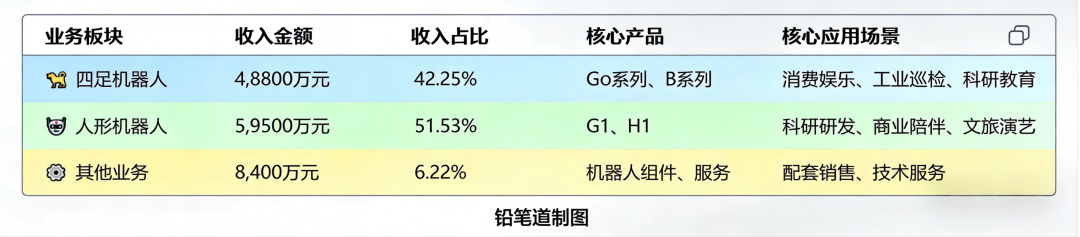
Much of Uki's current income still comes from four-legged robots; humanoid robots have yet to be implemented on a large scale.
But that doesn't mean it's worthless. Because the development of technology is not linear, but it will explode at a certain node.
Just like AI, it's been a long time since playing Go to changing the entire industry.
But once the tipping point is crossed, it is an exponential change. Robots are likely to be like this too.
If I were to summarize why Uki was able to get to where he is today, I would say three points:
First, it's a long-term doctrine, not a follower.
Second, it has built a developer ecosystem, which is an invisible yet extremely strong barrier.
Third, it has the ability to continuously iterate rather than being a one-off product.
They're not making a robot; they're constantly defining a technology path.
So, if you were to ask me: Why did you join the universe in 2020?
My answer is actually quite simple: it's not a company that makes robots, it's a company that is building infrastructure for the robotic age.
(This article is the oral presenter's independent opinion only and does not constitute any investment advice.)
Twitter:https://twitter.com/BitpushNewsCN
Compare the TG exchange group:https://t.me/BitPushCommunity
Compare TG subscriptions:https://t.me/bitpush
