
借贷 · 6925

FT: The economy was under pressure in the Trump era, oil prices rose at the same time as mortgage interest rates, and US debt surpassed $40 trillion

Comparing news, the Financial Times article said that the Trump administration's economic policy is facing multiple pressures: US federal debt has surpassed 40 trillion US dollars, long-term US bond yields have risen to a 19-year high, the Iran war has driven up energy prices, and mortgage interest rates have continued to rise. This week, the US long-term treasury bond market experienced sharp fluctuations. Investors are driving long-term US bond yields higher due to concerns about the expansion of government borrowing and the risk of inflation brought about by the war. US Treasury Secretary Bezent then announced an expansion of the long-term treasury bond repurchase program and plans to introduce measures to reduce the fiscal deficit, but the market response was limited, and the US dollar weakened. According to the data, the size of the US government debt surpassed 40 trillion US dollars for the first time this week, and the growth rate of federal spending reached the fastest level since the pandemic. The US fiscal deficit fell only slightly to 5.8% of GDP in FY2025, and Trump's tax cuts are expected to further increase fiscal pressure in the future. On the energy side, the US-Iran conflict is driving up fuel prices in the US. The price of gasoline rose by about 40% from before the war, to $4.11 per gallon; the price of diesel rose to $5.58 per gallon. Rising energy costs have weakened Trump's previous policy goals of reducing living costs and energy prices. The housing market was also under pressure, and interest rates on 30-year US mortgages rose to 6.65%, up from 5.98% before the war broke out. Meanwhile, consumer inflation in the US rose to a three-year high of 4.2% in May and fell back to 3.4% in July, but Federal Reserve officials are still worried that inflationary pressure continues. Although the US economy is still supported by consumer spending and AI infrastructure investment by big tech companies, the growth rate is below the government's previous target. The annualized growth rate of US GDP in the second quarter of 2026 was about 1.5%, lower than the previously proposed growth forecast of 3% or more. Market participants believe that high debt, high financing costs, and rising energy prices are weakening consumer confidence and may become important political pressures facing the Trump administration. Bessent said that the US is still expected to improve its fiscal situation through economic growth.
12h ago

Aave V4 deposits are close to $750 million, attracting over $300 million in the past week

Comparatively, according to Cointelegraph, the deposit size of the V4 version of the decentralized lending protocol Aave is approaching $750 million. Over the past week, the release has attracted more than $3 billion in capital inflows, and deposits have grown significantly. As a mainstream DeFi lending platform, Aave's V4 upgrade continues to receive market attention, and recent net capital inflows reflect users' recognition of the protocol's liquidity and functionality.

12h ago

UK Inland Revenue and Customs: 8.1 million encrypted tax warning letters were issued in the past 12 months, the number increased by 25%

Comparatively, the UK Revenue and Customs Service (HMRC) has issued 81,000 warning letters to cryptocurrency investors suspected of not paying taxes in the past 12 months, an increase of 25% over the previous year's approximately 65,000. The purpose of such letters is to induce the recipient to disclose unpaid taxes before HMRC initiates a formal investigation. Cryptocurrency exchanges, the use of tokens to buy goods or services, and the transfer of tokens to others may all constitute taxable dispositions. Income tax rules may apply to income from borrowing, pledging, etc., and UK residents are generally required to pay taxes on relevant income and earnings worldwide. The rules, which are scheduled to be implemented in April 2027, will apply no-profit and no-loss treatment to eligible crypto loans and automated market-making arrangements until economic disposition occurs, which is expected to affect approximately 700,000 people. The crypto asset reporting framework requires service providers to submit 2026 transaction data for the reporting period from January 1 to May 31, 2027. It is anticipated that 52 jurisdictions will exchange relevant data in 2027, with 15 more in 2028.

13h ago
Dalio's latest warning: the US debt crisis may explode within three years. The antidote is...

Dalio's latest warning: the US debt crisis may explode within three years. The antidote is...

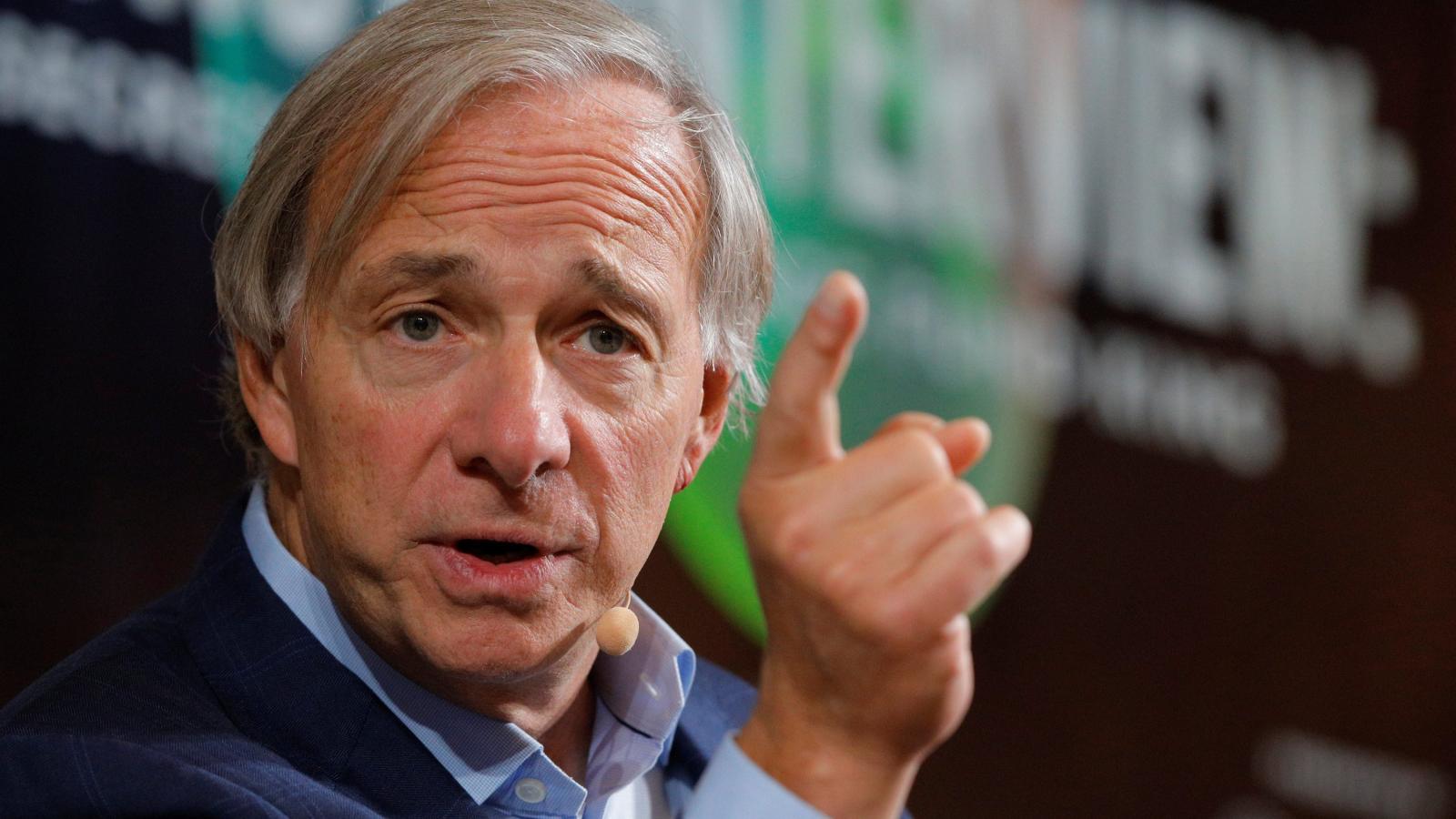
Author: Ray Dalio, founder of Qiaoshui Foundation Original title: How Countries Go Broke: The Dynamic Behind What is Incurable Now Compiled and organized by: bitPushNews In “How Countries Go Bankrupt: The Big Cycle,” I detailed an analytical framework to describe dynamic processes that are highly likely to occur due to unsustainable imbalances between debt supply and demand. Recently, three things happened at the same time: 1) The Japanese government sold part of its US Treasury holdings to return capital to Japan to support the yen and the Japanese capital market, and reduce exposure to US Treasury bonds while avoiding being forced to raise interest rates beyond its wishes in order to support the yen; 2) US bond yields hit new highs under long-term leadership, while the dollar weakened. The reasons include not only the current and anticipated supply of huge debt, but also weak demand for US bonds; 3) Treasury Secretary Bessent announced this week that the US Treasury would buy US Treasury bonds and be able to buy other US Treasury bonds The amount of capital used is limited, and many people ask me : Do these events fit the classic template I set out in my book? The answer is yes. To anticipate what might happen next, let's first review this operating mechanism. The operating mechanism explains in detail that the central government's debt dynamics are the same principles as the debt dynamics of individuals or companies. The only difference is that the central government has a central bank that can print money (this will depreciate the currency), and it can obtain funds from the public through taxation. Because of this, if you imagine how the debt dynamic would work if you or the business you run could print money, or get capital from people through taxation — then you can understand this process. But remember, your goal is for the entire system to work well, not only for yourself, but for all citizens. In my opinion, the credit/market system is like the human body's circulatory system, delivering nutrients to every corner that makes up the market and economy. If credit is used effectively, it can generate productivity and income to repay debt and interest on debt, which is a healthy state of affairs. However, if credit is not properly used to generate sufficient income to repay debts and interest, debt payments will continue to pile up like plaques in blood vessels, squeezing other expenses. When debt payments become very large, debt repayment problems arise, and eventually evolve into debt rollover problems — because debt holders are unwilling to continue to roll over and instead want to sell. Naturally, this will lead to a shortage of demand and sell-off of debt instruments such as bonds; when demand is scarce relative to supply, it either causes a) interest rates to rise, thereby suppressing the market and economic downturn, or b) the central bank “prints money” and buys debt, which will reduce the value of the currency, thereby driving up inflation (compared to the original level). Banknote printing also artificially lowers interest rates and harms lenders' returns. Both options are bad. When debt sell-offs are too large and difficult to contain, and the central bank has already purchased large amounts of debt, rising interest rates can cause the central bank to lose money and damage its cash flow. If this continues, the central bank will fall into a situation where net assets are negative. When this situation became serious, the central government and central bank needed to borrow money to repay the principal and interest of the debt, while the central bank printed money to provide loans due to insufficient free market demand, so a self-reinforcing spiral between debt/banknote printing/inflation formed. In summary, the classic indicators to pay attention to are the following: the ratio of government debt payments to government revenue (which is like the amount of plaque in the circulatory system), the ratio of government debt sold to the demand for government debt (this is like a plaque falling off and causing a heart attack), and the amount of government debt purchased by the central bank to cover the gap between the demand for government debt and the supply of government debt to be sold (this is like the central bank applying a larger dose of liquidity/credit to mitigate liquidity shortages, and the central bank has a risk appetite for these debts). These indicators usually rise over a long cycle of decades — debt and debt payments continue to grow in relation to income — until this state of affairs cannot continue because: 1) debt repayment expenses unacceptably crowd out other expenses, 2) the supply of debt that must be purchased is too large, causing interest rates to rise sharply, leading to a sharp decline in the market and economy, or 3) central banks are unwilling to let interest rates rise and suffer bad market/economic consequences, so they print large amounts of money and buy large amounts of government debt to cover the demand gap, thereby making the value of the currency significant Decreased. Either way, the return on bonds will be poor until the money and debt eventually become cheap enough to attract demand, or the government can cheaply buy back or repay...

21h agoBitpushNews#indebtedness #Bitcoin #economic crisis #US debt #DALIO #gold

Bezent's expansion of US bond repurchases is accused of “playing with fire,” and the US may repeat the depreciation of the Japanese currency

Comparative news: After the US announced this week that it would expand treasury bond repurchases, causing severe market shocks, investors began to compare it with Japan's policy. Measures taken by Japan to lower borrowing costs in the past have caused the yen to weaken for a long time. The US dollar is currently at a three-month low and is poised to record its worst weekly performance this month. The US Treasury unexpectedly announced in mid-week that it will double the scale of longer-term treasury bond repurchases. Robin Brooks, a senior researcher at the Brookings Institution, said that the US government's move is the “clearest sign” so far, indicating that the US is following Japan's footsteps and moving towards depreciation of the local currency. He said the US government is “playing with fire.” US bonds rose for a while after the news was announced, but since then they have regained their gains. Gold and other precious metals were higher. Steven Barrow, head of G10 strategy at Standard Chartered Bank, said that reducing bond yields through repurchases will only put further pressure on the US dollar, but it will not solve the fundamental problem driving the rise in yield, that is, the fiscal deficit. (financemagnates)

1d ago
If it's just tokenized assets and doesn't connect to DeFi, what's left of RWA?

If it's just tokenized assets and doesn't connect to DeFi, what's left of RWA?

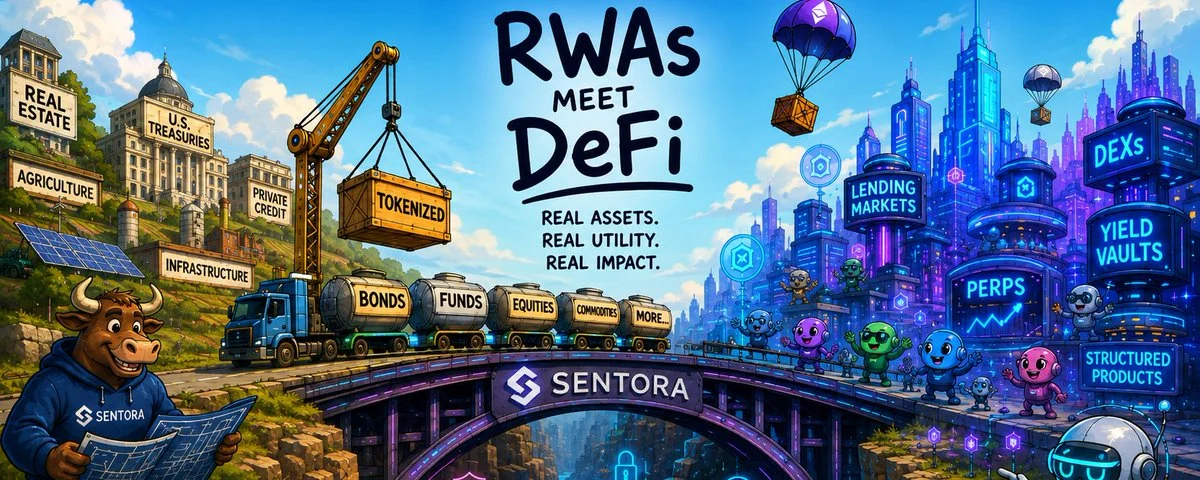
Author: Jesus Rodriguez, co-founder of Sentora Compiled by: Luffy, Foresight News Original title: Does RWA still make sense without DeFi? Discussions in the RWA industry often begin with a simple vision: take a treasury bill, fund share, stock, invoice, megawatt hour, or GPU for one hour, then mint a token representing it. Is it useful? It's really useful. But can it be called transformative? It's far from there. This is like putting a bar code on a container and claiming that a global trade problem has been solved. Barcodes make containers recognizable and machine-readable, but they don't create ports, cranes, customs, insurance, financing, shipping routes out of thin air, or bring in buyers from afar. A token is simply an addressable token of interest, and DeFi is a marketplace operating system. The question really worth discussing is not how many types of assets can go on the chain, but how many assets can complete valuation, financing, hedging, transaction monetization, and loss disposal in a stressful environment, and there is no need for offline meetings and coordination every time a transaction occurs. Tokenization completes the representation of equity; what DeFi brings is actual utility. Tokenization is just a bar code, and a similar scene has happened in the history of the supply chain finance market. The reason why mortgages can be scaled up is not as simple as turning a paper document into an electronic record. To actually achieve large-scale expansion, a complete set of operating mechanisms was created around this type of asset: credit review, post-loan services, securitization, credit rating, warehousing and financing, repurchases, hedging, clearing and settlement, and loss allocation rules. RWA also needed to go through the exact same evolutionary process. An asset that can be adapted to DeFi requires six levels: legally enforceable rights, reliable data sources, clear transfer and redemption rules, enforceable secondary market liquidity, collateral parameters that match actual behavior, and a credible settlement and loss disposal path. Most tokenization projects, on the other hand, tend to stop at the top five levels. There is a simple test that can be used to test the maturity of an asset. It only requires answering three questions: How much is this asset currently worth? Can the agreement complete withdrawal and monetization at this point? If the first two judgments are all wrong, who bears the loss? When smart contracts can definitively answer the above three questions, RWA can truly become a basic component of finance. Before that, it was mostly just a digital packaging shell. The deepest technical contradiction of RWA's quadruple time clock is that RWA runs under multiple sets of different time clocks at the same time. The blockchain can complete settlement in seconds and operate uninterrupted for 7 x 24 hours; oracles may update prices every hour or every day; underlying traditional exchanges are closed at night and on weekends; custodians follow bank working days; and the asset redemption process may take 1 day, 5 days, or even 30 days. If you use such a slow-paced RWA asset to support fast-maturing DeFi liabilities, such as stablecoin loans. This is the term shift, and it is also the core model that banks have relied on for hundreds of years: using short-term debt to fund long-term slow assets. This model has practical value, but the risk must be reasonably priced. Imagine a scenario: At 2 a.m. on Sunday, assets hit the liquidation threshold. Smart contracts can seize tokens immediately, but the underlying real-world market won't open until Monday, and the issuer's redemption business will not be processed until Tuesday. On-chain liquidation has been completed, and real-world asset disposal has only just begun. This creates a clearing gap. DeFi requires immediate withdrawal for monetization, but the real world does not allow it. The time difference between the two. This gap has counterintuitive consequences. Even treasury bonds with very low volatility are riskier than native crypto assets that are more volatile when used as collateral. The price of ETH fluctuates drastically, but it can be traded around the clock; the price of RWA assets appears to be stable, and it may only be up to a dozen hours without a new price tag. A flat price sometimes represents safety, and sometimes it's just a disguise of stale data. Liquidity is an exit channel, not TVL. The digital public also has common misunderstandings about liquidity. Liquidity is not equal to TVL, does not equal the existence of a trading pair, nor does it mean that the issuer promises to eventually redeem it according to net worth. Liquidity refers to the ability to convert a position into the settlement asset you need at an acceptable discount within the time window allowed by your debt. Take a crowded theater for example: the size of the hall cannot determine whether it is safe in the event of a fire; what really matters is the width of the exit channel. One copy of RWA to...

1d agoForesight News#DeFi #RWA

Ripple lays out the RLUSD lending ecosystem to support institutional credit funds to provide loans to fintech companies

In comparison, Ripple is supporting a new institutional credit fund that will partner with lending platform Clearpool and credit management agency Cicada Partners to provide working capital loans to fintech and payment companies using RLUSD, a stablecoin issued by Ripple on XRP Ledger. According to the disclosure, the fund will issue loans in RLUSD. Cicada Partners will be responsible for finding borrowers, formulating loan terms, and managing credit risk; Clearpool will be responsible for building the infrastructure to create and manage loan pools; and Ripple will provide financial support as one of the investors, but the exact size of the investment has not been disclosed. Currently, this product is not available on the XRP Ledger mainnet. Ripple will participate as a limited partner, enjoy the same terms as other investors, and will not be liable for loan losses. Borrowers will receive RLUSD and use RLUSD to repay loans, which will drive demand for this stablecoin while introducing borrowing activity to XRP Ledger.

1d ago

Sun Yuchen's WLFI dispute was upheld by the court, and individual claims will be tried publicly

Comparing news, Sun Yuchen wrote that his lawyer recently appeared in California federal court to oppose World Liberty Financial (@worldlibertyfi)'s request to forcibly transfer the dispute between the two parties to confidential arbitration and seal the documents. The court ruled that all of Sun Yuchen's individual claims would continue to be tried in open court; at the same time, it rejected the opinion that all company-related claims should be submitted to arbitration, and requested both parties to negotiate to determine which claims remained in court and which went to arbitration. Sun Yuchen called this a major victory, stressing that token holders have the right to understand how the project treats their trusters. Sun Yuchen said that as one of World Liberty's earliest and largest investors, it invested 45 million dollars to obtain $WLFI tokens. The lawsuit alleges that after the investment helped raise about 550 million US dollars in token sales, the project party secretly implanted a back door in the smart contract, which could unilaterally freeze, restrict, or destroy holders' tokens, and illegally seize their tokens based on this, and also threatened criminal reporting when defending their rights. The lawsuit claims amount to hundreds of millions of dollars. He has previously obtained a court injunction prohibiting the other party from destroying and disposing of his tokens. Sun Yuchen also said that World Liberty also implants similar backdoor capabilities into its USD1 stablecoin, and mentioned public information such as the project party's use of a large amount of $WLFI tokens as collateral for Dolomite loans and past Dough Finance-related lawsuits by the co-founder, expressed concern about the solvency and transparency of the project, and called on investors to exercise due diligence and caution. The above are all unilateral statements and accusations.

1d ago

Kraken parent company Payward explores becoming an all-purpose bank outside the US

Comparative news, according to The Block, Dave Ripley, co-CEO of Kraken's parent company Payward, said that the company is exploring becoming an “all-purpose bank” outside the US to expand payment, lending, income, and escrow businesses. Payward is also building asset management capabilities and turning its infrastructure into a range of services that banks, brokerage firms, and fintech companies can connect to applications.

1d ago

Kraken's parent company Payward plans to apply for an “all bank” license outside the US

Comparatively, according to The Block, Kraken's parent company Payward is exploring applying for an “all-bank” license outside the US to expand from crypto trading to asset management and broader financial infrastructure services. Co-CEO Dave Ripley revealed that trading, banking, and asset management are the three core directions, but no specific jurisdiction was specified. Kraken Financial, which is licensed by the State of Wyoming, has been granted escrow and institutional deposit rights, but it is still unable to carry out fiat loans and FDIC insurance. At the beginning of the year, getting a “slimmed-down” main account with the Federal Reserve Bank was an important breakthrough. Chief Commercial Officer Mark Greenberg said he hopes to provide services such as mortgages in the future.

1d agoWendy#starters