储备 · 8751
Dalio's latest warning: the US debt crisis may explode within three years. The antidote is...

Dalio's latest warning: the US debt crisis may explode within three years. The antidote is...

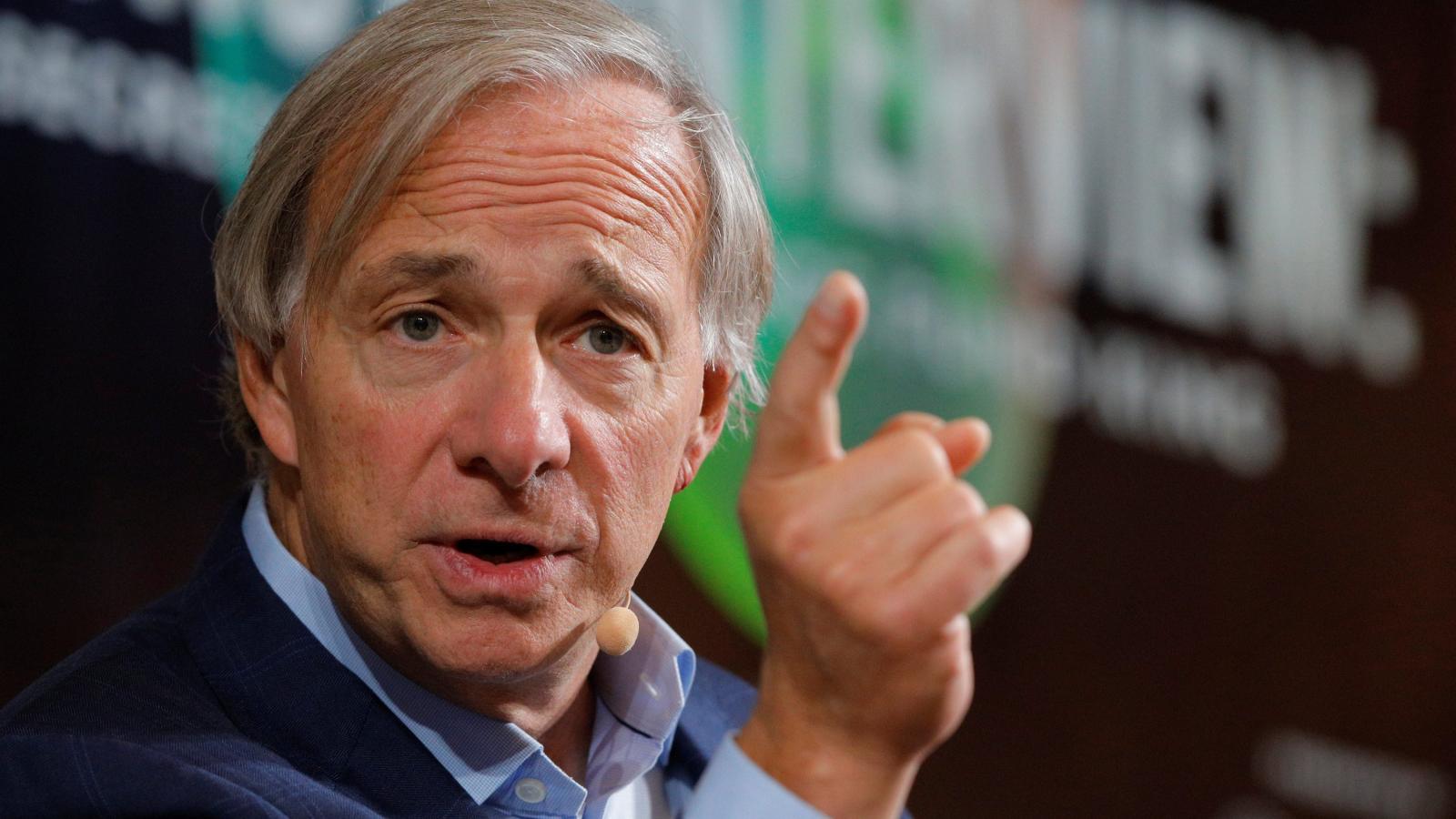
Author: Ray Dalio, founder of Qiaoshui Foundation Original title: How Countries Go Broke: The Dynamic Behind What is Incurable Now Compiled and organized by: bitPushNews In “How Countries Go Bankrupt: The Big Cycle,” I detailed an analytical framework to describe dynamic processes that are highly likely to occur due to unsustainable imbalances between debt supply and demand. Recently, three things happened at the same time: 1) The Japanese government sold part of its US Treasury holdings to return capital to Japan to support the yen and the Japanese capital market, and reduce exposure to US Treasury bonds while avoiding being forced to raise interest rates beyond its wishes in order to support the yen; 2) US bond yields hit new highs under long-term leadership, while the dollar weakened. The reasons include not only the current and anticipated supply of huge debt, but also weak demand for US bonds; 3) Treasury Secretary Bessent announced this week that the US Treasury would buy US Treasury bonds and be able to buy other US Treasury bonds The amount of capital used is limited, and many people ask me : Do these events fit the classic template I set out in my book? The answer is yes. To anticipate what might happen next, let's first review this operating mechanism. The operating mechanism explains in detail that the central government's debt dynamics are the same principles as the debt dynamics of individuals or companies. The only difference is that the central government has a central bank that can print money (this will depreciate the currency), and it can obtain funds from the public through taxation. Because of this, if you imagine how the debt dynamic would work if you or the business you run could print money, or get capital from people through taxation — then you can understand this process. But remember, your goal is for the entire system to work well, not only for yourself, but for all citizens. In my opinion, the credit/market system is like the human body's circulatory system, delivering nutrients to every corner that makes up the market and economy. If credit is used effectively, it can generate productivity and income to repay debt and interest on debt, which is a healthy state of affairs. However, if credit is not properly used to generate sufficient income to repay debts and interest, debt payments will continue to pile up like plaques in blood vessels, squeezing other expenses. When debt payments become very large, debt repayment problems arise, and eventually evolve into debt rollover problems — because debt holders are unwilling to continue to roll over and instead want to sell. Naturally, this will lead to a shortage of demand and sell-off of debt instruments such as bonds; when demand is scarce relative to supply, it either causes a) interest rates to rise, thereby suppressing the market and economic downturn, or b) the central bank “prints money” and buys debt, which will reduce the value of the currency, thereby driving up inflation (compared to the original level). Banknote printing also artificially lowers interest rates and harms lenders' returns. Both options are bad. When debt sell-offs are too large and difficult to contain, and the central bank has already purchased large amounts of debt, rising interest rates can cause the central bank to lose money and damage its cash flow. If this continues, the central bank will fall into a situation where net assets are negative. When this situation became serious, the central government and central bank needed to borrow money to repay the principal and interest of the debt, while the central bank printed money to provide loans due to insufficient free market demand, so a self-reinforcing spiral between debt/banknote printing/inflation formed. In summary, the classic indicators to pay attention to are the following: the ratio of government debt payments to government revenue (which is like the amount of plaque in the circulatory system), the ratio of government debt sold to the demand for government debt (this is like a plaque falling off and causing a heart attack), and the amount of government debt purchased by the central bank to cover the gap between the demand for government debt and the supply of government debt to be sold (this is like the central bank applying a larger dose of liquidity/credit to mitigate liquidity shortages, and the central bank has a risk appetite for these debts). These indicators usually rise over a long cycle of decades — debt and debt payments continue to grow in relation to income — until this state of affairs cannot continue because: 1) debt repayment expenses unacceptably crowd out other expenses, 2) the supply of debt that must be purchased is too large, causing interest rates to rise sharply, leading to a sharp decline in the market and economy, or 3) central banks are unwilling to let interest rates rise and suffer bad market/economic consequences, so they print large amounts of money and buy large amounts of government debt to cover the demand gap, thereby making the value of the currency significant Decreased. Either way, the return on bonds will be poor until the money and debt eventually become cheap enough to attract demand, or the government can cheaply buy back or repay...


23h agoBitpushNews#indebtedness #Bitcoin #economic crisis #US debt #DALIO #gold

Strategy shares break through $120 and hit a two-month high, STRC returns above $96

Comparative news, according to MSX.COM data, Bitcoin treasury company Strategy (MSTR) stock rose to a two-month high today as the Bitcoin price briefly surpassed $79,400. It once broke through $120 intraday, then partially regained its gains. Meanwhile, the price of STRC, Strategy's preferred stock product, also surpassed $96 for the first time since June. Previously, STRC's price once fell below $70 due to concerns about its ability to pay dividends and the ability of the stock price to maintain the $100 target for a long time. Recently, Strategy has continued to manage balance sheets through capital operations, including using MSTR stock issuance funds to support repurchases of preferred shares, dividend payments, and US dollar reserve construction. The company previously disclosed that as of mid-August, its Bitcoin holdings were about 840,447, while the US dollar reserves reached about $4.8 billion. Market participants believe that as the price of Bitcoin rebounds and investors' risk appetite improves, Strategy related securities have recently received repricing opportunities. However, the future performance of MSTR and STRC is still highly dependent on Bitcoin price trends and the continued implementation of the company's Bitcoin treasury strategy.

1d ago

Hyperliquid AQAv2 will launch on August 26 and is expected to increase HYPE repurchases by $135-160 million per year

Comparing news, according to Bitcoin.com, the decentralized derivatives trading platform Hyperliquid's native token HYPE is close to $73. Crypto trader Pentosh1 said that its fee burning mechanism will expand after the AQAv2 upgrade, which may support its continued performance in the next round of the bull market. Hyperliquid has destroyed 462 million HYPE units through repurchases since November 2024, worth approximately $1.27 billion, and approximately 99% of agreement fees are used for repurchases. The platform's annualized agreement revenue is currently around $600 million to $950 million. AQAv2, or Aligned Quote Asset v2, plans to import approximately 90% of the platform's USDC reserves of more than US$5 billion into the Assistance Fund on August 26, and the first payment is expected to arrive on October 3. Market participants estimate that AQAv2 can add an additional $135 million to $160 million in repurchases each year. Both Coinbase and Circle, which were designated as Hyperliquid's official USDC fund distributors in May, have pledged to pledge large-scale HYPE to help launch the mechanism.

1d ago

Bernstein: Bitcoin's shock to $80,000 was driven by liquidity, ETF funding flows have picked up

Comparative news, according to The Block, analysts at Bernstein believe that Bitcoin's rebound over the past two days may mark a shift in market momentum, behind which is an improvement in the liquidity environment, a recovery in ETF demand, and friendly regulation. Bitcoin hit $79,500 on Friday and then fell back to about $78,000. Analysts linked this round of rebound to the US Treasury's announcement to increase repurchases of long-term treasury bonds, believing that liquidity expansion has always been beneficial to Bitcoin. Furthermore, Ethereum outperformed Bitcoin in this round of rebound, which analysts attributed to ETH's higher exposure to stablecoins, tokenization, and real assets. Spot Bitcoin ETF capital flows have changed from net outflows in May and June to net inflows of $1.6 billion this week, and the management scale has risen to over $85 billion; Strategy holdings have changed to surplus of over $2 billion, and cash reserves can cover 2.8-year dividend expenses. Bernstein also mentioned that regardless of whether the much-publicized “CLARITY Act” (which will be subject to a procedural vote on September 15) is passed, the SEC and CFTC are expected to speed up the legislative process in areas such as native token issuance, equity tokenization, perpetual contracts, computing power derivatives, and predictive markets. This article is sponsored by GENG, Build Your Fortune on GENG (https://geng.one)

1d agoburnking
If it's just tokenized assets and doesn't connect to DeFi, what's left of RWA?

If it's just tokenized assets and doesn't connect to DeFi, what's left of RWA?

Author: Jesus Rodriguez, co-founder of Sentora Compiled by: Luffy, Foresight News Original title: Does RWA still make sense without DeFi? Discussions in the RWA industry often begin with a simple vision: take a treasury bill, fund share, stock, invoice, megawatt hour, or GPU for one hour, then mint a token representing it. Is it useful? It's really useful. But can it be called transformative? It's far from there. This is like putting a bar code on a container and claiming that a global trade problem has been solved. Barcodes make containers recognizable and machine-readable, but they don't create ports, cranes, customs, insurance, financing, shipping routes out of thin air, or bring in buyers from afar. A token is simply an addressable token of interest, and DeFi is a marketplace operating system. The question really worth discussing is not how many types of assets can go on the chain, but how many assets can complete valuation, financing, hedging, transaction monetization, and loss disposal in a stressful environment, and there is no need for offline meetings and coordination every time a transaction occurs. Tokenization completes the representation of equity; what DeFi brings is actual utility. Tokenization is just a bar code, and a similar scene has happened in the history of the supply chain finance market. The reason why mortgages can be scaled up is not as simple as turning a paper document into an electronic record. To actually achieve large-scale expansion, a complete set of operating mechanisms was created around this type of asset: credit review, post-loan services, securitization, credit rating, warehousing and financing, repurchases, hedging, clearing and settlement, and loss allocation rules. RWA also needed to go through the exact same evolutionary process. An asset that can be adapted to DeFi requires six levels: legally enforceable rights, reliable data sources, clear transfer and redemption rules, enforceable secondary market liquidity, collateral parameters that match actual behavior, and a credible settlement and loss disposal path. Most tokenization projects, on the other hand, tend to stop at the top five levels. There is a simple test that can be used to test the maturity of an asset. It only requires answering three questions: How much is this asset currently worth? Can the agreement complete withdrawal and monetization at this point? If the first two judgments are all wrong, who bears the loss? When smart contracts can definitively answer the above three questions, RWA can truly become a basic component of finance. Before that, it was mostly just a digital packaging shell. The deepest technical contradiction of RWA's quadruple time clock is that RWA runs under multiple sets of different time clocks at the same time. The blockchain can complete settlement in seconds and operate uninterrupted for 7 x 24 hours; oracles may update prices every hour or every day; underlying traditional exchanges are closed at night and on weekends; custodians follow bank working days; and the asset redemption process may take 1 day, 5 days, or even 30 days. If you use such a slow-paced RWA asset to support fast-maturing DeFi liabilities, such as stablecoin loans. This is the term shift, and it is also the core model that banks have relied on for hundreds of years: using short-term debt to fund long-term slow assets. This model has practical value, but the risk must be reasonably priced. Imagine a scenario: At 2 a.m. on Sunday, assets hit the liquidation threshold. Smart contracts can seize tokens immediately, but the underlying real-world market won't open until Monday, and the issuer's redemption business will not be processed until Tuesday. On-chain liquidation has been completed, and real-world asset disposal has only just begun. This creates a clearing gap. DeFi requires immediate withdrawal for monetization, but the real world does not allow it. The time difference between the two. This gap has counterintuitive consequences. Even treasury bonds with very low volatility are riskier than native crypto assets that are more volatile when used as collateral. The price of ETH fluctuates drastically, but it can be traded around the clock; the price of RWA assets appears to be stable, and it may only be up to a dozen hours without a new price tag. A flat price sometimes represents safety, and sometimes it's just a disguise of stale data. Liquidity is an exit channel, not TVL. The digital public also has common misunderstandings about liquidity. Liquidity is not equal to TVL, does not equal the existence of a trading pair, nor does it mean that the issuer promises to eventually redeem it according to net worth. Liquidity refers to the ability to convert a position into the settlement asset you need at an acceptable discount within the time window allowed by your debt. Take a crowded theater for example: the size of the hall cannot determine whether it is safe in the event of a fire; what really matters is the width of the exit channel. One copy of RWA to...

1d agoForesight News#DeFi #RWA
US Stock Value Investing Is Heading Into Another Trap

US Stock Value Investing Is Heading Into Another Trap

Source: Shenchao TechFlow Original title: (Opinion: Value investing in US stocks is not equal to fundamental investment) When “fundamentals are dead” becomes a consensus, investors who blindly organize giants will eventually experience astonishing capital destruction. Guide: When the market shouted “fundamentals are dead” and the capital frenzy formed a group of tech giants, the author used an astronomy discovery to unravel the logical loopholes behind this narrative. Starting from the composition of valuation multiples, this article reminds investors to distinguish between the true quality of an enterprise and the premium that the market is willing to pay. It is particularly cautionary about long-term allocation in the crypto and technology sector. I promise this introduction won't be as long as the last one on the weather. But please give me 90 seconds. More than 100 years ago, a woman named Henrietta Levitt was doing the tedious job of measuring the brightness of thousands of stars on photographic negatives (the way they were imaged before film appeared). She noticed one characteristic of a class of pulsating stars: the slower they pulsate, the brighter they themselves are. ¹ This might just seem a little interesting today, like “OK, that's pretty cool.” But at the time, astronomers couldn't tell the difference between a dark star very close to Earth and a very bright star far away. For them, the two left the same stain on the photographic film. Visual brightness is a messy mix of these two variables: how bright the thing itself is, and how far away it is from us. Henrietta's work decouples these two things: if you can observe the rate of pulsation, you can know its true luminosity; if you know its true luminosity, you can reverse the distance based on how dark it looks. Astronomers call it “standard candlelight.” A few years later, a man named Edwin Hubble discovered one of these pulsating stars, applied Levitt's math, and discovered what he had always thought was a cloud of gas within our galaxy; in fact, it was an entire independent galaxy, one million light years away. So in simple terms, the observable universe has grown about a trillion times larger, just because one person has figured out how to tell the difference between what things look like and what they actually look like. That in itself is obviously pretty cool. But another interesting thing is that around the same time period, two other astronomers each independently drew a scatterplot. One axis was actual luminosity, and the other axis was temperature. They discovered that stars are not randomly distributed in this space, but rather clustered into different families. The meaning behind this is: stars with the exact same visual brightness may and do belong to a completely different family, have a completely different past, and most importantly, have a completely different future... So what is written in the star? Over the past few years, there has been much discussion about markets, narratives, capital, company building, and financial nihilism. This feeling seems to have reached a feverish climax as the tech and financial world begins to face a very different future than a few decades ago. What is particularly clear is that separating progress from asset prices has become more noisy and in many ways more repulsive. But as an investor who makes a living by buying assets that (hopefully) outperform, a simple framework is: forward returns are roughly equal to growth in fundamentals multiplied by changes in valuation multiples (and multiplied by the dividends you've collected along the way). In this case, the valuation multiplier can very cleanly correspond to the smudges on the photographic film. It's an observable data point, but it entangles two things that the market can't directly see: how good the company actually is, and how far (or how long) its future cash flow is now. I think most of the money that can be made comes from investors who are most capable of unraveling these two variables earlier than others (or “perception of differences”), and we will continue to see astonishing capital ruin for investors who treat their stains as stars. Value investing is not equal to fundamental investing. I think there is a misunderstood view: fundamental investing has historically dominated the creation of excess returns. Most of these legends come from the Graham, Buffett, and Tiger Foundation lineage, as well as numerous narratives built around this group of people. It is believed that by some point in the 2000s, this approach was no longer effective, and anyone who invested in this way was overwhelmed by momentum, trends, and “direct buying tech giants.” The conclusion was (and still is?) It's “fundamentals are dead.” ² The modern version of “fundamentals don't matter” itself isn't stupid. It's rooted in a lot of ideas that many of us on the Compound team have written before. The biggest companies get the most mechanical purchases, and the software industry has a winner-take-all economic law. AI means that giants can transform scale into moats faster than challengers, and there are also reasons why the market's microstructure embeds momentum more deeply into our market infrastructure. These are all real...

1d ago深潮TechFlow#US stocks

Hyperliquid's total processing fees increased 31% to $419 million in the first half of the year, and HYPE's valuation is close to traditional trading platforms

In comparison, Hyperliquid released its performance analysis for the first half of 2026. According to the data, its total transaction fee revenue in the first half of the year reached US$419.3 million, an increase of 31% over the previous year; the average daily active users increased by about 90%, and the trading volume reached US$1.29 trillion in the first half of the year, and the monthly transaction volume reached US$266.5 billion in June. However, Hyperliquid's core protocol revenue fell 3.8% year over year from $317.5 million in the first half of 2025 to $305.3 million. The main reason is the rapid expansion of the HIP-3 market. The mechanism allows external teams to launch markets such as stocks, commodities, and pre-IPO assets based on Hyperliquid infrastructure and receive 50% transaction fees. Currently, HIP-3 has contributed 11.2% of total processing fee revenue. In the derivatives market, Hyperliquid's open contracts are about $9.1 billion, accounting for 10.3% of the global cryptocurrency perpetual contract market, up 24.8% year over year; in the on-chain perpetual contract market, its share reached 54.5%, more than other on-chain platforms combined. In terms of valuation, if the annual HYPE token issuance cost of approximately US$309 million is included, HYPE's price-earnings ratio is about 23 times the issue-adjusted price-earnings ratio, which is basically about 24.5 times the average of traditional exchange peers such as CME, CBOE, Interactive Brokers, and Coinbase. The report predicts that if the USDC reserve revenue cooperation is implemented, it may bring about $135 million to $160 million in additional revenue to Hyperliquid each year and be used for HYPE repurchases. According to the report, Hyperliquid's growth in the second half of the year still faces competition and regulatory risks, including the HIP-3 market's high dependence on a single developer, and markets such as stocks and pre-IPO assets facing regulatory uncertainty. However, HIP-4 predicts new businesses such as markets, options products, and USDC reserve earnings, which may further broaden its revenue sources.

1d ago

Kraken's parent company Payward plans to apply for an “all bank” license outside the US

Comparatively, according to The Block, Kraken's parent company Payward is exploring applying for an “all-bank” license outside the US to expand from crypto trading to asset management and broader financial infrastructure services. Co-CEO Dave Ripley revealed that trading, banking, and asset management are the three core directions, but no specific jurisdiction was specified. Kraken Financial, which is licensed by the State of Wyoming, has been granted escrow and institutional deposit rights, but it is still unable to carry out fiat loans and FDIC insurance. At the beginning of the year, getting a “slimmed-down” main account with the Federal Reserve Bank was an important breakthrough. Chief Commercial Officer Mark Greenberg said he hopes to provide services such as mortgages in the future.

1d agoWendy#starters

Trump Seeks Opinions from Crypto and Finance CEOs, Is “Optimistic” About the Clarity Act

Comparing news, according to Coindesk quoting sources, Trump held a closed-door meeting with crypto and traditional finance executives on Wednesday afternoon. At the meeting, he was “optimistic” about promoting the “Clarity Act” legislation. Earlier at the press conference, Trump had called for a “fair version” of the bill and said that regulators are working to introduce Hyperliquid to the US. Chainlink co-founder Sergey Nazarov revealed that the conference focused on the obstacles to advancing the bill and seeking support from pending senators. Strategic Bitcoin reserves were also mentioned but there were no details. Executives from Nasdaq, Robinhood, Coinbase, Kraken, and Ripple attended. The Senate is scheduled to hold its first procedural vote on the bill on September 15.

1d agoWendy#starters
The New York Times: Ominous Omen? US debt surged above 40 trillion US dollars, with a per capita debt of 116,000

The New York Times: Ominous Omen? US debt surged above 40 trillion US dollars, with a per capita debt of 116,000

Source: The New York Times Compiled and Edited by: BitPushNews Original title: U.S. Debt Hits $40 Accumulated as America's Borrowing Binge ContinuesBitPush Note: The size of US federal government debt has once again broken through a historic integer node. According to data released by the US Treasury Department on the 19th, the total US debt surpassed 40 trillion US dollars for the first time, which is nearly 10 trillion US dollars more than last year's US gross domestic product (GDP), which means that every American is burdened with about 116,000 US dollars in debt. Here is the text: On Wednesday, the total amount of US Treasury bonds broke the $40 trillion mark for the first time. This is an ominous milestone for the US economy: for decades, the US has relied on continuous borrowing to support growing military spending, social security spending, and President Trump's tax cuts, and the fiscal ground has loosened. This year alone, the US will need to borrow more than 2 trillion US dollars to cover various financial expenses, including military expenses for the Iran war and large-scale tax cuts passed by the Republicans in 2025. Meanwhile, interest payments to US debt holders have also risen sharply. Currently, they account for nearly half of the total deficit, further dragging the US into a fiscal quagmire. Is this growing debt a crisis that must be addressed, or is it an alternative manifestation of America's economic strength? It's still a contentious topic. Deficits are also a battleground in a bipartisan political game — when the Republicans are in opposition, they have always been most vocal about reducing the deficit. “The scariest part of this is that we are beginning to see signs of a spiral in debt,” Mark Godwin, senior policy director at the “Committee for Responsible Federal Budget,” which supports deficit reduction, said of interest on debt. The inability of legislators to deal with the debt problem poses long-term risks. Although the US remains the world's largest economy, rising debt burdens may cause investors to demand higher interest rates on US Treasury bonds or question America's credibility, which could shake people's confidence in the US dollar as the world's reserve currency. Both Republicans and Democrats are responsible for America's debt burden. America is having to sell more and more debt to cover the costs of health-care programs, stimulus benefits, disaster relief, and day-to-day government operations. President Trump promised to restore fiscal order, yet many of his policies have exacerbated America's financial woes. When he first ran for president in 2016, Trump said he would eliminate the national debt within eight years by reaching a new trade deal and spurring economic growth. Since then, the national debt has doubled. During his second term, Trump's major measures to cut spending and increase revenue were unsuccessful. The Government Efficiency Department, initially headed by Elon Musk, promised to cut federal spending by $1 trillion. So far, the department claims to have saved just over $200 billion. The US Government Accountability Office said this month that the Government Efficiency Department's estimates lack reliability and transparency. By imposing comprehensive tariffs on imported goods, the Trump administration has previously made progress in increasing additional government revenue. However, this year, the Supreme Court ruled that some of these tariffs were illegal, forcing the federal government to refund more than 160 billion US dollars to companies that have already paid import tariffs, causing these plans to be thwarted. Treasury Secretary Bezent has set a goal of reducing the deficit from more than 6% of GDP when Trump took office to 3% by 2028. He admitted last week that this year's deficit situation is moving in the wrong direction. In an interview with Newsmax, Bezent gave several reasons for the growing deficit. He said that expenses related to the Iran war forced the US to increase military spending, and that tariff refunds weakened the Trump administration's progress in reducing the deficit as a share of GDP in 2025. The war in Iran has led to a rise in US energy prices, which has also dragged down economic growth and weakened economic expansion that Trump administration officials had hoped would increase taxes. Bessent also said that last year's tax cuts are increasing deficits as businesses are using a provision that allows them to immediately deduct plant construction and equipment costs. According to estimates by the Congressional Joint Committee on Taxation, these measures could cost $100 billion in fiscal expenditure this year. However, the finance minister said that despite the initial costs, these tax cuts will pay off in the future through increased revenue. “While this will currently widen the deficit, we are creating productive assets for future growth, and these assets will generate taxes in the future,” Bezent said. “I'd rather compare this to pulling out a slingshot, creating a large amount of potential energy, and then converting it into kinetic energy.” Although he believes that the fiscal trend will stabilize, investment...

2d agoBitpushNews#Trump #US debt #Federal Reserve