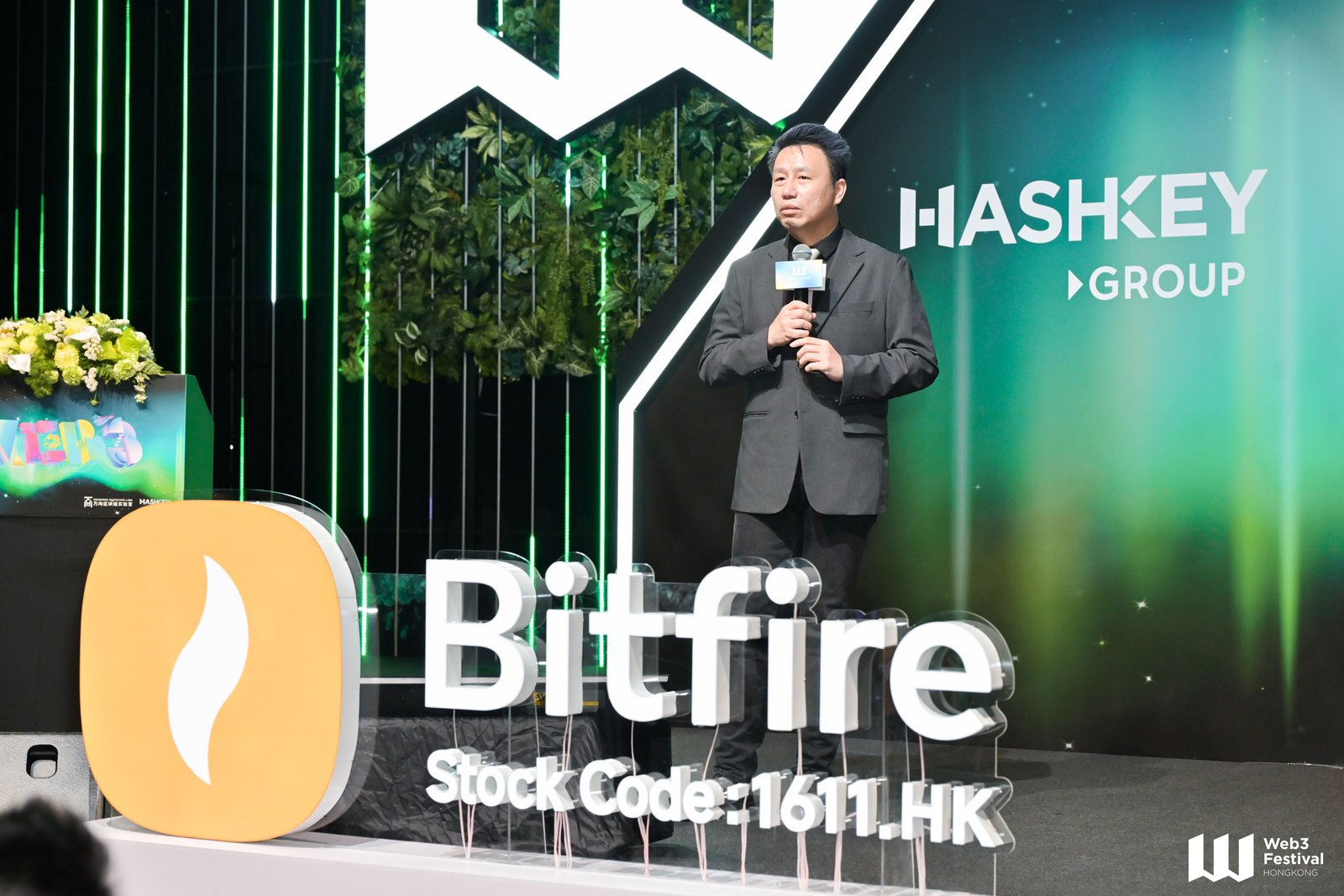
Full transcript of Fu Peng's speech: From traditional finance to the crypto world, why did he decide to jump into this “crazy paradise”?
Summary: Yuliya, PanNews Original title: Fu Peng's speech transcript: I am a veteran of traditional finance, why did I start embracing the crypto industry? Editor's note: On April 23, Fu Peng, the new chief economist of Xinhua Group, made his debut at the 2026 Hong Kong Institutional Digital Wealth Management Summit. He said that traditional finance veterans embraced the essence of the crypto industry, just as computer technology reshaped traditional finance back then, and now AI and blockchain are driving a new round of transformation. In the future, traditional finance and crypto assets will be fully integrated to enter a new era of “FICC+C”. Here is the full text of the speech: Over the past few days, many people have been frantically asking me a question: Why am I getting so close to the coin industry? Actually, this opportunity began in about 2022, and it's been about four years since then. As practitioners in the traditional financial sector, we have been closely monitoring and following developments in the entire crypto asset market. Today I'm here to give a speech. My original intention is actually very simple; I just want to tell you a historical story. For me, I am considered the main recipient of the dividends of the last era. You might see my title as “economist,” but I'm not a pure scholar. Over the past 25 years, my true core experience, the core business we've been doing, is what everyone understands as traditional hedge funds. You'll definitely be curious, why are these traditional capital, people in the traditional financial sector, and money starting to pay attention to crypto assets? Over the past year or so, I have repeatedly mentioned an opinion: the future must be “FICC+C,” that is, traditional asset allocation (FICC) will add a sequence of crypto assets (Crypto). Many people want to know why, so I just took this opportunity to share it simply with you. As long as you understand this logic, you probably already have an answer in your mind about what the market will look like in the future and how asset prices will go. Today, I'm going to help everyone break this layer of window paper. We need to go back to where the FICC asset class started — around the late 70s to the early 80s. Over the past ten years, everyone here can clearly recognize that the overall framework and pattern of our world is undergoing tremendous changes. And this change, most similar to the period after World War II, was in the 70s to 80s. For example, just now, Xiao Feng mentioned artificial intelligence, and all the guests also mentioned the integration of AI. As an important technological advance and productivity, every round of leaps in technology and productivity will reshape all walks of life. The “various industries” here include all business formats, and of course, the financial sector must also be included. Finance is not immutable. It's definitely not what you see in movies like “The Big Time” or “The Wolf of Wall Street” — traders wear vests shouting orders in the market. In other words, when many people visit the NYSE, they may also think that finance means that everyone quotes and trades on the market. Indeed, many reporters still like to use this kind of on-market trading footage as a background for news reports. If you go to Chicago, go to the earliest interest rate derivatives market, or go to the London Metal Exchange (LME), you can still see traces of this history. Yes, it was the most traditional finance before the sixties and seventies. Everyone wears vests to make offers and uses typewriters and punching machines to complete transfers, transactions, and payments. For most people in the Chinese-speaking community, the transaction they are probably still looking at the flop machine in the stock lobby, watching the price, filling out the list and putting it in the counter, and then the staff call the exchange via a dedicated phone line to complete the transaction. However, not all finance or transactions were limited to that era. The biggest changes in the financial sector must have occurred along with advances in technology. In the last cycle of technological progress, productivity and technological progress represented by semiconductors, computers, personal computers, DOS systems, Windows, etc. as the core restructured the new financial business format from the late 70s to the early 80s. The FICC asset transactions, which are now well known, are simply the integration of financial assets such as interest rates, commodities, exchange rates, and stocks. FICC was born in the early 80s. In the 70s, everyone learned about the pricing of financial derivatives, such as the Black-Scholes model of options pricing, when they were in school. But you can imagine that without the large-scale application and popularity of computers, the quotation and pricing of a financial derivative or financial asset would take ten minutes, twenty minutes, or even more than half an hour to be calculated manually. Under such circumstances, how can we efficiently complete the quotation and transaction? Since 1985, professional investors and investment institutions have only begun to widely use Peng...