大而美 · 77
Trump account launched: Big manufacturers donate shares in exchange for presidential endorsements, who is the biggest beneficiary?

Trump account launched: Big manufacturers donate shares in exchange for presidential endorsements, who is the biggest beneficiary?

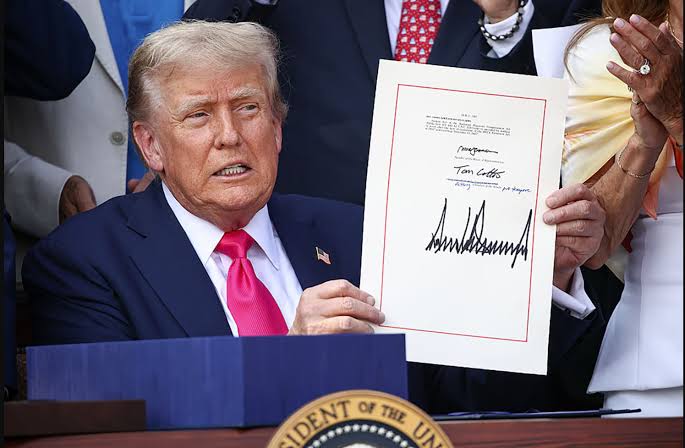
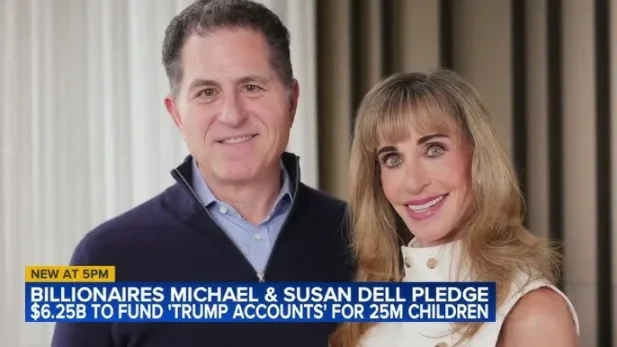
Author: Azuma Original title: When Big Companies Donate Shares to the “Trump Account”, Which Targets Will Benefit? On July 4, the US Treasury Department officially announced that the long-awaited “Trump Accounts” (Trump Accounts) has been officially launched. US parents and children can now download the app and access the account to check the status of funds or make donations in real time. Odaily Note: The so-called “Trump Account”, also known as the 530A account, is a tax-deferred investment account program authorized by current US President Trump on June 9, 2025 under the “Big and Beautiful” Act. The account is open to minors under 18 across the US to set up government-funded savings accounts for the children of US citizens. The initial funding for the “Trump Account” mainly comes from government grants, private donations, and household savings. The federal government will provide an initial funding of $1,000 for each child of a US citizen born from January 1, 2025 to January 1, 2029; in addition, the largest donor and Dell founder Michael Dale announced a donation of $6.25 billion to open accounts for 25 million children with a median household income of less than $150,000 in the region, injecting $250 into each account; parents, friends, and other specific persons can also deposit funds into designated accounts, such as “Donate to an employer ” Channel. Currently, more than 50 companies have pledged to donate to their employees' children. According to current regulations, the funds in the “Trump Account” will be invested in index funds that track the US stock market. Children can withdraw 50% of their account balance at age 18 and the full balance at age 25. Account earnings are taxed at the long-term capital gains tax rate or income tax. Trump called for orders on the spot. On July 6, local time, Trump held a “Trump Account” launch celebration at the White House Oval Office and personally sounded the opening bells of the New York Stock Exchange and NASDAQ last night on the spot to commemorate the first opening of the “Trump Account” since it was fully launched. Trump made a high-profile announcement on the scene: “Today is a historic day. On the occasion of America's 250th anniversary, we launched the 'Trump Account'... to ensure that every American child has the edge to win the starting line and has a fair chance to achieve the American dream.” At the scene, Trump also praised Michael Dale and his wife, the biggest donors of the “Trump Account,” not only calling on the public to “buy a Dell computer,” but also jokingly stated, “We will always find a way to help him get this money back.” Affected by the president's public order, Dell's stock price rose by more than 3% in the short and medium term yesterday. At the close of trading, it was quoted at 411.8 US dollars, an increase of 4.43%. The Treasury allows stock donations, and SpaceX has followed up with the launch of the “Trump Account,” and the US Treasury has opened up new funding channels for the account. On July 2, the Treasury Department officially announced that the “Trump Account” will begin accepting stock donations, and eligible charitable donors can donate approved listed shares to the account. After the Treasury turned on the green light, Trump also publicly named Musk and called on the latter to donate SpaceX shares to “Trump's account.” As of publication, although Musk himself has not publicly responded, SpaceX President and COO Gwynne Shotwell and her husband have announced that they are donating some of their SpaceX shares to Trump accounts for more than 2 million American children. They are expected to donate about 2 million SpaceX shares, with a total value of about US$325 million. Gwynne Shotwell said the donation will be earmarked for accounts for children ages 11 to 17 living in areas with lower average household incomes, with a particular focus on children living close to home in central Texas. From a corporate perspective, today participating in a “Trump account” is not just a public service act; it may also become a new channel for brand exposure. In particular, after Trump publicly called for Dell last night, the market has begun to pay attention to a new logic — in projects that Trump pays close attention to and personally promotes, the sooner companies participate, the more likely they are to receive public endorsements from the president. As SpaceX follows suit, it is expected that more tech companies, large enterprises, and the rich may join this program in the future. For enterprises, donating part of the stock will not directly weaken the ability to operate, but it may be in exchange for long-term political exposure and brand prices...

46d agoburnking#Trump account #stocks

Trump's account was officially launched on July 4. The first year is expected to inject US$30-50 billion in buying capital into US stocks

Comparing news, the US Treasury's official statement made it clear that from July 4, eligible US children's accounts will automatically deposit $1,000 in government seed funds, and the accounts will officially be put into operation. Trump's children's investment account is expected to directly inject 30 to 50 billion US dollars of incremental capital into US stocks in the first year. Subsequent households and employers can add up to 5,000 US dollars/account per year, which will continue to bring in tens of billions of dollars or more stable capital inflows over the long term, forming long-term buying support. The Trump account, also known as the 530A account, is a tax-deferred investment account plan authorized by US President Trump on June 9, 2025, to establish government-funded savings accounts for children of US citizens born from January 1, 2025 to January 1, 2029. The initial funding for Trump's account came mainly from government grants, private donations, and household savings. The federal certificate will provide an initial funding of $1,000 per account, with parents adding up to $5,000 each year; 18 year olds can receive 50% of funding, 25 can use the full amount for education/entrepreneurship, and 30 have no usage restrictions. At the investment level, accounts will be limited to investing in low-cost investment funds or ETFs that track a wide range of stock price indices, such as the S&P 500 index, and cannot be used to invest in specific industry indices or specific sector indices. Funds are also restricted at the level of use, and funds from the account cannot be withdrawn for any reason until January 1 of the year the child turns 18 and becomes a legal adult (unless the child passes away or the funds are transferred to another similarly restricted account). This time, it is scheduled to begin accepting initial deposits on July 4, 2026 (the 250th anniversary of the publication of the US Declaration of Independence), just before the 2026 midterm elections begin. It is expected to become an important policy move for the Republican Party to win over voters.

57d ago
Still obsessed with altcoins? Let's take a look at HOOD

Still obsessed with altcoins? Let's take a look at HOOD

Author: Azuma Original title: For those who are still obsessed with altcoins, go for HOOD. Robinhood (HOOD)'s stock price performance was quite strong recently. Last night, it once returned above $100. Unfortunately, the closing was not stable, but I am personally still optimistic about HOOD's future market performance. In this downward cycle, HOOD is one of the few targets where I have continued to open positions (including exchanging positions), so I wanted to write an article about HOOD a long time ago. I briefly shared the logic of opening a position during the Odaily tea party in the past, but today I want to take advantage of the good stock price trend and have a detailed discussion. I need to state that this is not investment advice, nor does it represent the views of the platform; it is just some of my own thoughts when opening a position on HOOD. Multi-dimensional advantage analysis Regarding the reason for HOOD's recent rise, you can find many favorable explanations in different dimensions. First, let's look at the fundamentals. Robinhood released the platform's May operating data last week. Details are as follows. Total Assets (Total Assets): $377 billion, a record high; Funded Customers: 27.7 million, a record high; Margin Book (Margin Book): $19.5 billion, a record high; Event Contracts (Event Contracts): 3.9 billion copies, a record high; Cash & Deposits (Cash & Deposits): $18.6 billion, a record high; Options Day Average trading volume (Options ADV): 11.6 million shares, tying the historical record; Equity Volume (Equity Volume): US$315 billion, the second-highest in history; Options Contracts (Options Contracts): 231 million shares. Second highest point in history; the only “pull-up” data is Crypto Volume (Crypto Volume): $12.2 billion, ranking only 16th in historical monthly data... Some positive news factors may be more likely to stir up investors' sentiment. The first is the fastest-growing forecasting market. Robinhood has begun to intercept Kalshi through the self-built forecasting market Rothera, and the related revenue is not expected to be shared with Kalshi since then. For details, please see “The First Stock of the Predictive Market Concept Has Appeared!” which we published yesterday. Next is the IPO position. SpaceX's historic IPO brought record levels of traffic to Robinhood. More importantly, Robinhood Securities, the brokerage and clearing business division of Robinhood, was approved as an IPO underwriter last week, which means Robinhood is expected to play a more central role in future IPO activities (such as Anthropic, OpenAI). Then Robinhood was selected by the US Treasury as the brokerage firm and initial trustee for the “Trump Account.” The so-called “Trump Account” is a tax-deferred investment account plan authorized by US President Trump on June 9, 2025 based on the “Big and Beautiful” Act to establish government-funded savings accounts for children of US citizens born from January 1, 2025 to January 1, 2029. This means that over the next few years, tens of millions of American newborns will use Robinhood as their brokerage platform by default. For details, see “Robinhood has added a number of new shareholders, the oldest is 1 year old, and the youngest is -3 years old”. In terms of market trends, there are some more intuitive signals. Robinhood director Meyer Malka has continued to increase HOOD recently. Over the past week or two, Malka has accumulated an increase in HOOD worth more than $50 million. Institutions have also given HOOD more positive price expectations. Goldman Sachs maintains a “buy” rating and has raised the target price from $105 to $108; Mizuho's target price is $115; Piper Sandler is the most optimistic, giving a target price forecast of $135. Personally, the main reason I initially opened a position on HOOD was to be optimistic about its Q2 financial results. One was...

67d agoburnking#Robinhood #invests #Market topics #Predicting the market

Trump's account is about to be officially launched. It is expected to inject US$30-50 billion in incremental capital into US stocks in the first year

Comparing news, US Treasury Secretary Bessent said that the Trump account app can be downloaded from the App Store. For too long, financial markets have been out of reach for too many people. We're proud to launch this app, a historic tool that brings the president's vision directly to American families. Download the app today on any app store to ensure your kids are ready for the official launch on July 4. Trump's account is expected to directly inject $30-50 billion in incremental capital into US stocks in the first year. Subsequent households and employers can add up to $5,000 per account each year, which will continue to bring in tens of billions or more of stable capital inflows over the long term, forming long-term buying support. The Trump account, also known as the 530A account, is a tax-deferred investment account plan authorized by US President Trump on June 9, 2025, to establish government-funded savings accounts for children of US citizens born from January 1, 2025 to January 1, 2029. The initial funding for Trump's account came mainly from government grants, private donations, and household savings. The federal certificate will provide initial funding of $1,000 per account; Dell founders Michael Dell and his wife announced a donation of $6.25 billion in December to open accounts for 25 million children with a median income of less than $150,000 in regional households, injecting $250 into each account; parents, friends, and other specific people can also deposit funds into designated accounts, but they can deposit up to $5,000 per year for each child. At the investment level, Trump's account will be limited to investing in low-cost investment funds or trading platform traded funds (ETFs) that track a wide range of stock price indices such as the S&P 500 index, and cannot be used to invest in specific industry indices or sector-specific indices. Funds are also restricted at the level of use, and funds from the account cannot be withdrawn for any reason until January 1 of the year the child turns 18 and becomes a legal adult (unless the child passes away or the funds are transferred to another similarly restricted account). Trump's account is tentatively scheduled to begin accepting initial deposits on July 4, 2026 (the 250th anniversary of the US Declaration of Independence), just before the 2026 midterm elections begin. It is expected to be an important policy move for the Republican Party to win over voters.

86d ago

US Treasury: Trump has opened 5 million accounts

Comparing news, the US Treasury Department said it has opened 5 million Trump accounts. The Trump account, or 530A account, is authorized by the US Act of 2025 and is a stock index investment account for the children of US citizens. The specific operation method of Trump's account needs to be further clarified. The US IRS issued a notice on the relevant regulatory plan, defining it as an individual retirement account. According to regulations, the funds in the account cannot be withdrawn until January 1 of the year the child turns 18; thereafter, the account will operate like a traditional IRA account.

129d ago
Robinhood has a new group of “shareholders”. The youngest is yet to be born, and the oldest is 1 year old

Robinhood has a new group of “shareholders”. The youngest is yet to be born, and the oldest is 1 year old

Article: Azuma, Planet Daily Original Article Title: Robinhood has added a number of new shareholders, the oldest 1 year old, and the youngest -3 years old. On April 6, local time, the US Treasury Department officially announced the latest trend on “Trump Accounts” (Trump Accounts) — Bank of New York Mellon (BNY) has been selected as the designated financial agency of the US government to manage the initial account; Robinhood will cooperate with BNY to act as the brokerage and initial trustee for the “Trump Account.” All parties will work together to support the Treasury Department's goal of ensuring that every eligible American newborn can obtain a “Trump account” quickly and easily. What is a “Trump account”? The so-called “Trump Account”, also known as the 530A account, is a tax-deferred investment account plan authorized by then-US President Trump on June 9, 2025 under the “Big and Beautiful” Act to establish government-funded savings accounts for children of US citizens born from January 1, 2025 to January 1, 2029. The initial funding for the “Trump Account” mainly comes from government grants, private donations, and household savings. The federal certificate will provide initial funding of $1,000 per account; Dell founders Michael Dell and his wife announced a donation of $6.25 billion in December to open accounts for 25 million children with a median income of less than $150,000 in regional households, injecting $250 into each account; parents, friends, and other specific persons can also deposit funds into designated accounts, but they can deposit up to $5,000 per year for each child. Odaily note: Donating $6.25 billion to Michael Dale and his wife, Trump called it “one of the most generous acts in American history.” At the investment level, “Trump accounts” will be limited to investing in low-cost investment funds or exchange-traded funds (ETFs) that track a wide range of stock price indices such as the “S&P 500” index, and cannot be used to invest in specific industry indices or specific sector indices. Funds are also limited at the level of use. Funds from the account cannot be withdrawn for any reason until January 1 of the year the child turns 18 and becomes a legal adult (unless the child passes away or the funds are transferred to another similarly restricted account), and after the child turns 18, the account will be treated in the same way as a traditional individual retirement account (IRA). According to the current plan, the “Trump Account” is tentatively scheduled to begin accepting first deposits on July 4, 2026 (the 250th anniversary of the US Declaration of Independence). This is on the eve of the 2026 midterm elections, and is expected to be an important policy “killer” for the Republican Party to win voters. What is the potential scale? According to Statista statistics, after 2020, the average annual birth population in the US fluctuated roughly 3.6 million. Using this data as a benchmark, the number of births in the US is expected to reach around 14.4 million during the program coverage period from January 1, 2025 to January 1, 2029. If the federal government opens a “Trump account” of $1,000 for each child, this would mean a huge sum of $14.4 billion; with potential private donations and household savings, this figure will continue to grow to tens of billions of dollars; if the plan continues to advance as a long-term plan beyond 2029, its potential scale will be even more exaggerated. Due to operating characteristics such as long-term lockdown, passive investment, and continuous addition, the “Trump account” will essentially become a long-term passive fund pool with a potential size of hundreds of billions of dollars. Compared to simple child welfare attributes, this is more like establishing a long-term capital transmission channel between fiscal policy and the capital market to directly integrate future generations of people into the stock market system. The biggest beneficiary: Robinhood? After the “Trump Account” plan was revealed, financial institutions such as J.P. Morgan Chase, Carson Wealth Management, and Robinhood began fiercely competing for related services. As the US Treasury officially designated Robinhood as a brokerage firm and initial trustee yesterday, Robinhood, which won the “ticket”, is expected to become one of the most direct beneficiaries of the plan. The most intuitive benefit is on the user side. According to current policy coverage estimates, “Trump accounts” will correspond to tens of millions of newborn accounts, and the interactive portal for these accounts will be completed through a unified application — in other words, Rob...

136d agoLuxurytracy

Trump sends a signal to ease the situation between the US and Iran: favoring an agreement rather than a war

Comparing news, US President Trump: Numerous reports from fake news media have been circulating, claiming that General Daniel Caine (Daniel Caine), sometimes called Razin (Razin), opposes our war against Iran. These reports did not attribute this massive amount of information to anyone, and it was 100% untrue. General Kane, like all of us, doesn't want war, but he thinks we can easily win if we decide to confront Iran on a military level. He knows Iran very well because he was responsible for Operation “Midnight Hammer” to attack Iran's nuclear program. All reports of a possible war against Iran are false and deliberate. I'm a decision maker, and I'd rather reach an agreement than go to war, but if we can't reach an agreement, it will be an extremely bad day for Iran and the Iranian people. Very sad, they are great and beautiful, and this should not have happened to them.

179d ago
Meta is betting big on AI: Is Zuckerberg worth spending $135 billion in 2026?

Meta is betting big on AI: Is Zuckerberg worth spending $135 billion in 2026?

Strong cash flow is underpinned, 100 billion dollars are being added to AI, and the market also seems to be applauding “throwing money”. Will this time be different from the metaverse? By Frank, McComm MSX1350 billion dollars, which is the money Meta (METAM) plans to spend in 2026. The 2025 Q4 results and 2026 Q1 guidelines both surpassed expectations, leaving many shareholders suffering from being “left behind” to breathe a sigh of relief. At the same time, capital expenditure (CapEx) for the full year of 2026 rushed to 135 billion US dollars, almost double that of last year, and it's hard not to worry if this will be another aggressive gamble? Surprisingly, however, the market seemed to have chosen to buy. Meta's stock price once surged more than 10% after the market, and continued to rise in night trading. Meta's stock price data source: Yahoo Finance, and the answer is hidden in this financial report: at least at this stage, it has shown the market that AI investment is not limited to future visions, but has actually improved the current core cash cow — the advertising business, so Wall Street is betting on Meta's narrative reversal and is willing to pay for this super investment plan. At the end of the day, “dare to smash money, dare to stud” has always been the undertone of Meta and Zuckerberg. This also means that winning may be a huge narrative reversal; losing, at least under the current financial structure, is unlikely to turn into an uncontrolled disaster. 1. Financial Report Quick Reading: Performance & Guidelines “Double Exceed Expectations” Judging from the results, this is a financial report that can change market sentiment. Among them, the core financial indicators for Q4 2025 almost all exceeded expectations: revenue of $59.893 billion, up 24% year over year, higher than market expectations of $58.6 billion; net profit of $22.768 billion, up 9% year on year; and diluted earnings per share (EPS) of $8.88, up 11% year over year, higher than market expectations of $8.23. It can be said that Meta handed over a solid and stable Q4 report card regardless of the resilience of growth on the revenue side or the pace of release on the profit side. Extending the perspective to the whole year, the growth logic is also valid: revenue for the full year of 2025 was US$200,966 billion, up 22% year on year; operating profit was US$83.276 billion, up 20% year on year, and the core indicators continued to expand by double digits. The only thing that appeared to be “retrograde” was that net profit for the year recorded $60.458 billion, down 3% year over year, but this change was not a major deterioration, but was mainly due to one-time tax factors — affected by the Big and American Act, the company confirmed about $16 billion in one-time non-cash income tax expenses. If this factor is excluded, net profit and EPS will actually achieve considerable growth for the whole year, which explains the apparent contradiction between full-year data and strong quarterly performance. Source: Meta At the same time, operational-level metrics also showed typical “volume and price increases”: the number of daily active users (DAP) of family apps reached 3.58 billion, up 7% year over year, in line with market expectations; ad impressions increased 18% year over year; average revenue per user (ARPU) was $16.73, up 16% year over year; this set of data collectively points to a conclusion that Meta's advertising engine not only did not stall, but continued to evolve in terms of efficiency and monetization capacity. Furthermore, what really further stimulates the shift in market sentiment is not only the performance that has already been fulfilled, but also the management's optimistic guidance for the future: According to Meta, revenue for the first quarter of 2026 will reach $53.5-56.5 billion, corresponding to a year-on-year increase of 26% — 34%, which is significantly higher than the market's previous expectations of about 21%. This pricing suggests that management's judgment that Reels's boom will continue. At the same time, the commercialization of Threads is progressing better than the market's previous cautious expectations. Under the premise that the advertising base is stable, this guidance also directly strengthens the market's confidence in the continuous improvement of AI-driven advertising efficiency. Details of Reality Labs' losses over the past five years Of course, it is worth mentioning that the “metaverse” is still Meta's bloodbath. Reality Labs, its metaverse division, recorded an operating loss of 6.20 billion US dollars in Q4, an increase of 21% over the previous year, and revenue of 955 million US dollars, an increase of 13% over the same period, since...

204d agoWeb3 农民 Frank#Meta #RWA

Wall Street is betting on the best of both worlds in 2026: interest rate cuts+AI+tax reform resonate

Comparing news, Wall Street strategists generally believe that the US economy and the stock market may experience rare multiple favorable resonances in 2026. US stocks are expected to continue to rise under the combined effects of expectations of the Federal Reserve's interest rate cut, Trump's “Big and American Act” tax incentives, falling inflation, and AI boosting productivity. The market is watching the latest CPI data, which is expected to remain at 2.7% year over year. The strategist pointed out that with falling oil prices and easing housing costs, the one-time price increase effect brought about by superimposed tariffs has subsided, and the room for downward inflation may exceed expectations. At the same time, the cooling of the job market provided policy space for the Federal Reserve to cut interest rates during the year, and the decline in US bond yields may further reduce financing costs and stimulate investment and consumption. On the fiscal side, the Big and Beautiful Act allows enterprises to depreciate 100% of their capital expenditure at an accelerated rate, and is pushing companies to advance future investments to 2026. Wall Street believes that this policy will significantly boost capital expenditure. Goldman Sachs expects AI-driven productivity gains to drive S&P 500 earnings per share (EPS) to grow 12% in 2026. Recent data shows that US labor productivity has recorded its fastest growth rate in two years. However, analysts also warned that the risk of AI substitution for employment is rising, and if it has an impact on the labor market, it may become a new destabilizing factor. Overall, Wall Street sees 2026 as a rare window period: interest rate cuts, tax reform and AI work simultaneously, but we still need to be wary of structural differentiation and potential risks.

222d ago

The outlook for Wall Street's top 15 investment banks was summed up by AI as “in jeopardy”, and Xiaomo warns of the risk of an AI bubble

Comparing news, the market outlook of the top 15 Wall Street investment banks for 2026 was summed up by AI as “in jeopardy.” Although stimulus plans such as the “Big and Beautiful Act” will drive the overall improvement of the market, investors face multiple challenges. J.P. Morgan warned that investment in the AI sector has soared from $150 billion in 2023 to more than $500 billion in 2026, and that the risk of a bubble is rising. Deutsche Bank and Goldman Sachs both pointed out that the fragility of the US labor market could trigger a recession. Bank of America expects the core inflation rate to remain at 2.8% by the end of 2026, far above the 2% target, which may affect the Fed's interest rate cut cycle. At the same time, under the K-type economic pattern, the financial situation of low-income households is particularly vulnerable, and consumers are clearly divided.

241d ago