换币 · 60
17% customs clearance rate, who got the “life and death pass” to the EU crypto market?

17% customs clearance rate, who got the “life and death pass” to the EU crypto market?

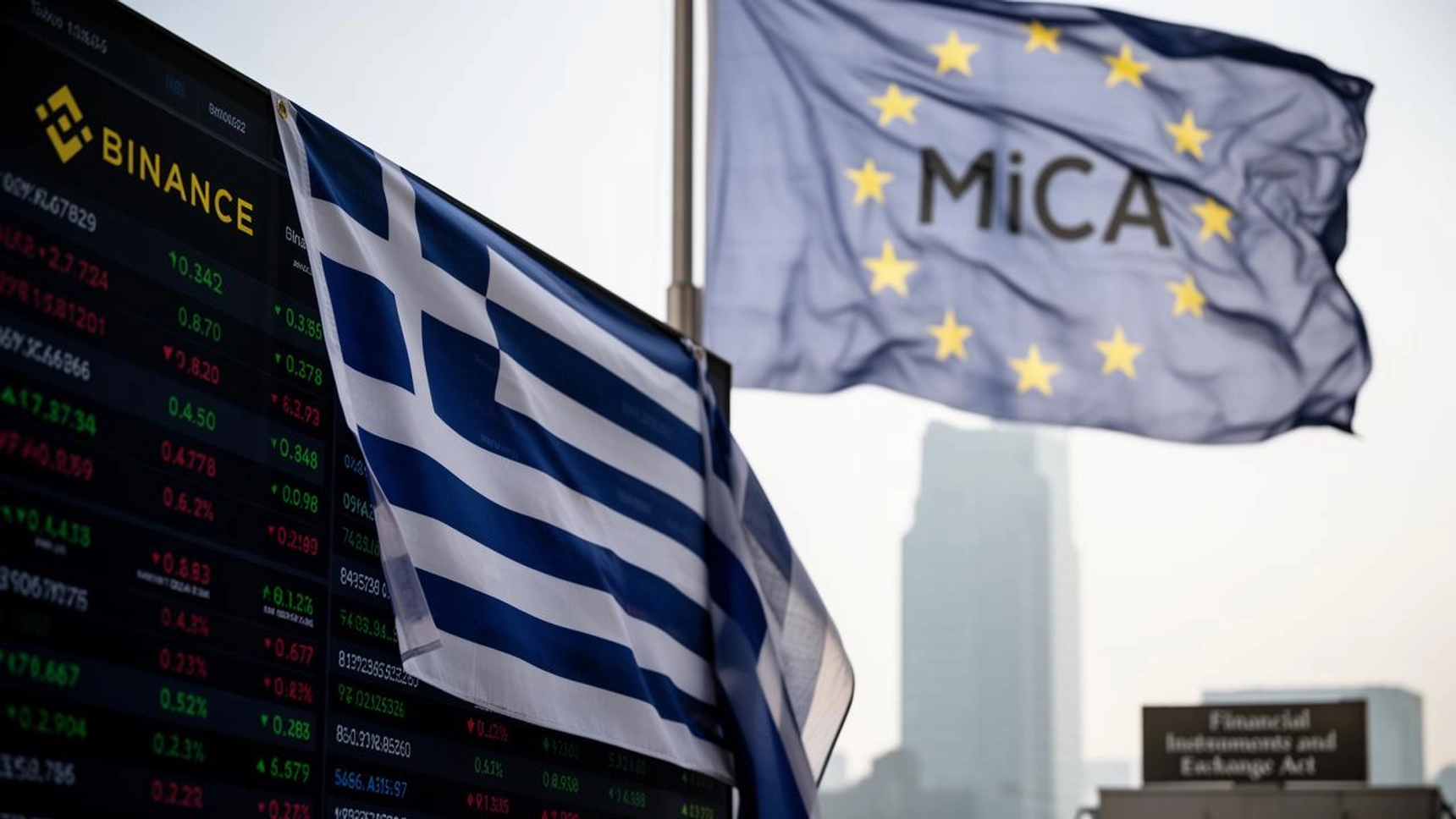
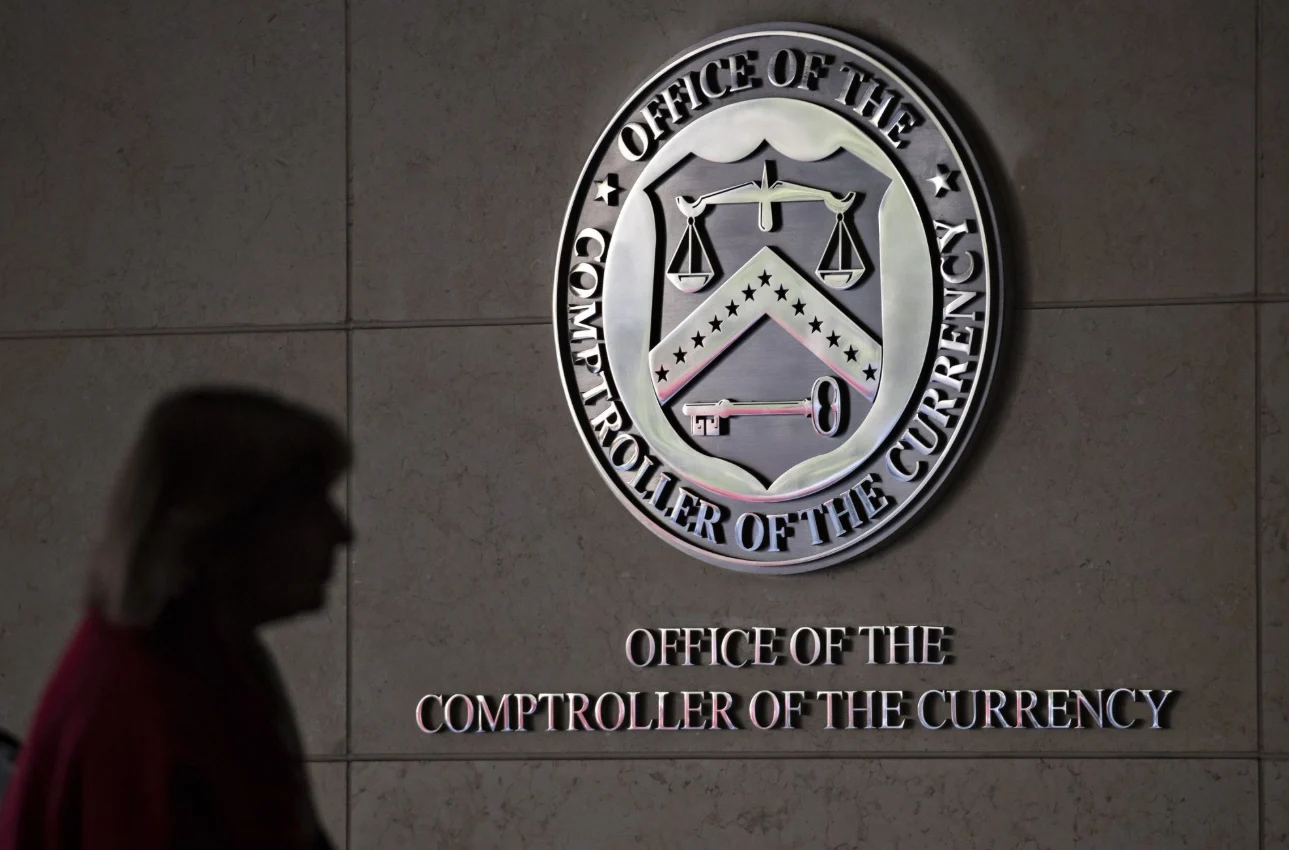
Author: Claude, Shenzhen TechFlow Original title: European Crypto “Line of Life and Death”: Binance is blocked from the door, who got the pass? Guide to Deep Wave: MiCA, the EU's crypto regulatory framework, will be implemented on July 1. Out of more than 1200 licensed institutions across Europe, only about 210 have obtained CASP passes, with a customs clearance rate of about 17%. Binance, the world's largest exchange, suspended most EU services on July 1, and switched to France after withdrawing Greek license applications; Bybit Global simultaneously restricted EEA users and diverted them to the already licensed Bybit EU. Coinbase, Kraken, OKX, Crypto.com, etc. held the pass, and the European crypto landscape was reshuffled. July 1 marks the end of the EU's Crypto Asset Market Regulation Act (MiCA) transition period. After this day, any crypto platform that wants to serve EU customers must hold a CASP (Crypto Asset Service Provider) license issued by the supervisory authority of at least one member state; otherwise, it is illegal and must stop operating. ESMA (European Securities and Markets Authority) has made it clear many times: there is no grace period, no extension, no intermediate status. Either it's licensed or it's illegal. With a customs clearance rate of only 17%, the world's largest exchange fell off the MiCA list. The real lethality is reflected in a number. According to CCN quoting ESMA provisional register data, MiCA previously had more than 1,200 institutions across Europe holding VASP (virtual asset service provider) registrations issued by various countries, but as of May 2026, only about 210 companies had completed the conversion to CASP licenses, with a customs clearance rate of about 17%. More than 80% of the remaining institutions either missed the window, had no legal status before completing the process, or quietly left the market. Binance has fallen on the side of the violation. It previously bet on Greece as an entry point into the European Union. In January 2026, it submitted a MiCA application through a Greek subsidiary. Co-CEO Richard Teng also publicly stated in February that Greece's talent reserves and security environment made it superior to a larger financial center. However, on June 16, Reuters reported that the Greek Financial Supervisory Authority (HCMC) is preparing to reject the application. According to the Financial Times, the barriers focus on anti-money laundering compliance and MiCA's “fit and proper” (suitability) standards for shareholders and managers. The core issues are the past legal records and corporate governance structure of co-founder Changpeng Zhao. The three regulators of Greece, Ireland, and Latvia have jointly followed up on this application. On June 24, Binance voluntarily withdrew the Greek application before it was officially rejected, stressing that “no formal veto has been received” — the wording was deliberate, leaving room for subsequent re-applications. Gillian Lynch, head of Binance Europe, told Reuters that “Binance has not left Europe” and that the company plans to turn to France to seek a license, saying it can be obtained “within the next few months.” For EU users, this means that Binance will stop accepting new users and limit some services in markets such as France, Italy, Poland, and Spain starting July 1. Binance promises that assets are safe and can be withdrawn normally, but new transactions and deposit channels will be cut off. Whether it can obtain a license through France within a few months is the key to Binance's return — and the French regulator itself has an unfinished investigation into Binance. If France approves what Greece is prepared to reject, it will also reveal differences in the scale of MiCA implementation by member countries. For EU readers with Binance accounts, what they need to do now is pay attention to account notifications directly sent by Binance, follow the guidelines to process positions before the deadline, or transfer assets to self-hosted wallets and other licensed platforms. Bybit also restricts EEA users, but the opposite of Binance is the same time that Binance announced the suspension of service. Bybit also issued a restriction notice for European Economic Area (EEA) users, covering 29 EEA countries including Germany, France, Italy, and Spain. On the face of it, it's the same thing; in reality, the direction is completely opposite. Bybit obtained a MiCA license through the Austrian Financial Markets Authority (FMA) as early as May 2025 and operated an independent compliance entity Bybit EU (bybit.eu, Vienna headquarters). The platform was launched in July 2025...
53d agoburnking#CASP #Coinbase #Kraken #MiCA #OKX #compliance #Binance
Crypto projects' flee 'their old names in bulk: the liquidity reset game behind brand upgrades

Crypto projects' flee 'their old names in bulk: the liquidity reset game behind brand upgrades

Author: Gu Yu, ChainCatcher Original title: Why do crypto projects always like to change their names? In the traditional business world, brand assets are the lifeblood of an enterprise. Frequent name changes are almost tantamount to actively destroying a moat. Nvidia won't change its name every few years, Apple won't give up on Apple because of some kind of business transformation, and Nike won't bring back the brand because of a sluggish market cycle. But in the cryptocurrency world, the rules are often the opposite. According to RootData statistics, more than 16% of encryption projects have changed their names, and many well-known first-line projects have also changed their names in large numbers. Just yesterday, the on-chain IP ecosystem Story Protocol announced that it will change its name to DATA, and IP tokens will migrate 1:1 to new DATA tokens. Within a few months, Xion changed its name to Verona, Matrixport changed its name to BIT, and TON's token symbol to GRAM. Earlier, a number of well-known projects such as Klaytn, EOS, Fantom, MakerDAO, Elrond, and Matic Network changed their names. More extreme projects have even changed their names more than once. For example, MAITRIX used names such as CENTRAL, X Network, and XLD Finance; BitSafe used the names dlcBTC and DLC.Link; Talex used the names Read2N and Metale Protocol; and KGen used the names IndigG and Kratos Gaming Network. The names have changed more and more, but most projects have not gained new life due to the new name; instead, they have gradually fallen silent. This brings up a question that is rarely seriously discussed in the crypto industry: Why do crypto projects always like to change their names? The answer is probably not complicated: because in the crypto industry, brands aren't the most important assets; attention, narrative, token prices, and liquidity are. 1. Crypto brand loyalty is too low. The reason traditional brands are afraid to change their names is because user loyalty comes from long-term consumer experiences. A user has bought an iPhone for many years, drank Starbucks for many years, and worn Nike for many years. His perception of the brand was not formed in a day, nor did it change easily due to a certain marketing campaign. But cryptographic projects have a completely different user structure. Most early users aren't consumers in the traditional sense, but investors, airdrop hunters, liquidity providers, node participants, and narrative traders. They use products not necessarily because they are easy to use, but because they may have air investment, may be profitable, and may have room for growth. This means that crypto brands are naturally less loyal to users. In the traditional industry, users ask “Is this brand worth trusting”; in the crypto industry, users are more often asked “can this coin rise?” As long as prices are sluggish for a long time, the narrative fails, and the ecology is silent, the old name will instead become a negative asset. A name that has experienced a crash, duvet cover, hacking, team controversy, or route failure can hardly inspire the market's imagination. It doesn't carry brand assets, but K-line scars and community grievances. This is the root reason why crypto projects dare to change their names frequently: in many cases, old names have no moats, only historical baggage. 2. Renaming is a marketing strategy. Not every name change should simply be viewed as a “vest change.” The name change of some projects is indeed because the original name cannot carry the new strategic scope. As hot market concepts change, if the name includes old concepts such as “Social” and “DAO,” or if the meaning of the name does not match, changing the name is an inevitable choice. For example, the decentralized social networking protocol OpenSocial changed its name to Eden after transforming AI, the decentralized electronic signature platform EthSign chose to remove “Eth” from its name after expanding its business, and the Ethereum sidechain Matic Network changed its name to Polygon (meaning polygon) after building multiple scaling solutions. When the project's business boundaries fundamentally change, the original brand may limit external perception. The name change is a necessary strategic calibration at this point. Of course, there are also quite a few projects that actively “grab hot spots”, and you can get more attention by naming popular concepts. In the last metaverse boom, Elrond changed its name to MultiversX and directly added “Multiverse” elements to the name, apparently hoping to join Yuanyu...

57d agoburnking#encryption #Exchange coins
The license is just the beginning: where are the winners and losers of crypto payments?

The license is just the beginning: where are the winners and losers of crypto payments?

Original Author: Attorney Shao Jiayao Original Title: To make encrypted payments, the first thing is a license; what is the second thing? In the last two years, more and more customers are asking about crypto payments. There are those that accept payments from cross-border e-commerce, those that use stablecoin payments, those that use U cards, those that accept payments from merchants, those that make built-in payments in Web3 wallets, and traditional payment companies that want to slowly receive the original fiat currency payment services into stablecoins, exchange accounts, or on-chain settlement networks. Most people ask the same question as soon as they come up: “Attorney Shao, which license should we get first?” This is certainly an important question. When it comes to payment services, whether it's traditional payments or encrypted payments, it's impossible to bypass a license. US MSB (Money Services Business Registration, money services business registration, strictly speaking, registration at the federal level rather than a license in the traditional sense), state MTL (Money Transmitter License), Hong Kong MSO (Money Service Operator, Money Service Operator), Singapore MPI (Major Payment Institution License), The DPT (Digital Payment Token) service license and CASP (Crypto\ -Asset Service Provider, Crypto Asset Service Provider) under MiCA in Europe may all become regulatory entrances that the project must face. However, in practice, I feel one thing more and more strongly: the license is only the first thing; the second thing actually determines whether the project can run or not. This second thing is not looking for a bank, not a channel, or launching an app right away. Instead, design a closed loop of business that can be understood and executed by banks, payment institutions, exchanges, on-chain risk control service providers, regulators, and internal project teams. A license plate is an admission ticket, and a closed loop is the ability to operate. The most common misconception about crypto payment projects is that a license can solve everything. Many project parties have an almost naive belief in a license. After completing the US MSB registration, I felt that I could make stablecoin payments to customers around the world; when I got the Hong Kong MSO, I felt that USDT and USDC could be easily connected; seeing that a country's VASP application costs were low, I thought I could use it to undertake all cryptographic payment services; I heard that EMI or PI could use electronic money and payments, and I felt that it could naturally cover stablecoin settlements on the chain. This understanding is dangerous. The license addresses the question of “are you qualified to stand at the card table”; it does not solve the question of “can you do this business exactly”. Also called payment, the business difference can be huge. Are you helping customers make currency remittances, or do you help customers complete stablecoin exchanges? Are you a provider of payment collection tools or a cross-border settlement network? Are you only providing technical interfaces, or are you actually handling customer funds? Are you only showing third party pages, or are you participating in quoting, matching, clearing, and settlement? Do you let customers transfer their coins to the merchant themselves, or do you use the platform to collect, pay, and exchange them on your behalf? Every detail change will result in changes in licensing, anti-money laundering, sanctions compliance, customer fund protection, contractual liability, and tax risks. For example, the Hong Kong MSO itself mainly supports money exchange and remittance services, and of course does not cover virtual asset transactions, exchange, escrow, or stablecoin-related activities; US MSB registration is not equivalent to completing all US state-level money transmission license requirements; nor can CASP regulation under European MiCA simply replace the regulatory arrangements involved in traditional payment, electronic money, or bank account cooperation. Therefore, the most dangerous state of crypto payment programs is not that they don't have a license, but that after getting a license, they think they can do anything. Some licenses do allow projects to obtain regulatory status, while others are actually beneficial for account opening, financing, business cooperation, and external promotion. But the license itself doesn't automatically answer the bank's and partner's biggest concern: Who is the customer? Where did the money come from? Where do coins come from? What is the purpose of the transaction? Who will make the final payment? What role does the platform play in the middle? If these questions aren't answered clearly, the more licenses, the easier it is to expose the chaos of business design. The second thing is not to find a bank, but to clarify the business link. Many project parties will say, of course, the second thing after a license is to find a bank. This statement is only half right. Banks are of course important. No bank accounts, no fiat deposits, no merchant settlement accounts, lots of payments...

74d agoLuxurytracy
Can AI paint the wrong pixels cause hype? Take you to understand Slonks 60 times in 6 days

Can AI paint the wrong pixels cause hype? Take you to understand Slonks 60 times in 6 days

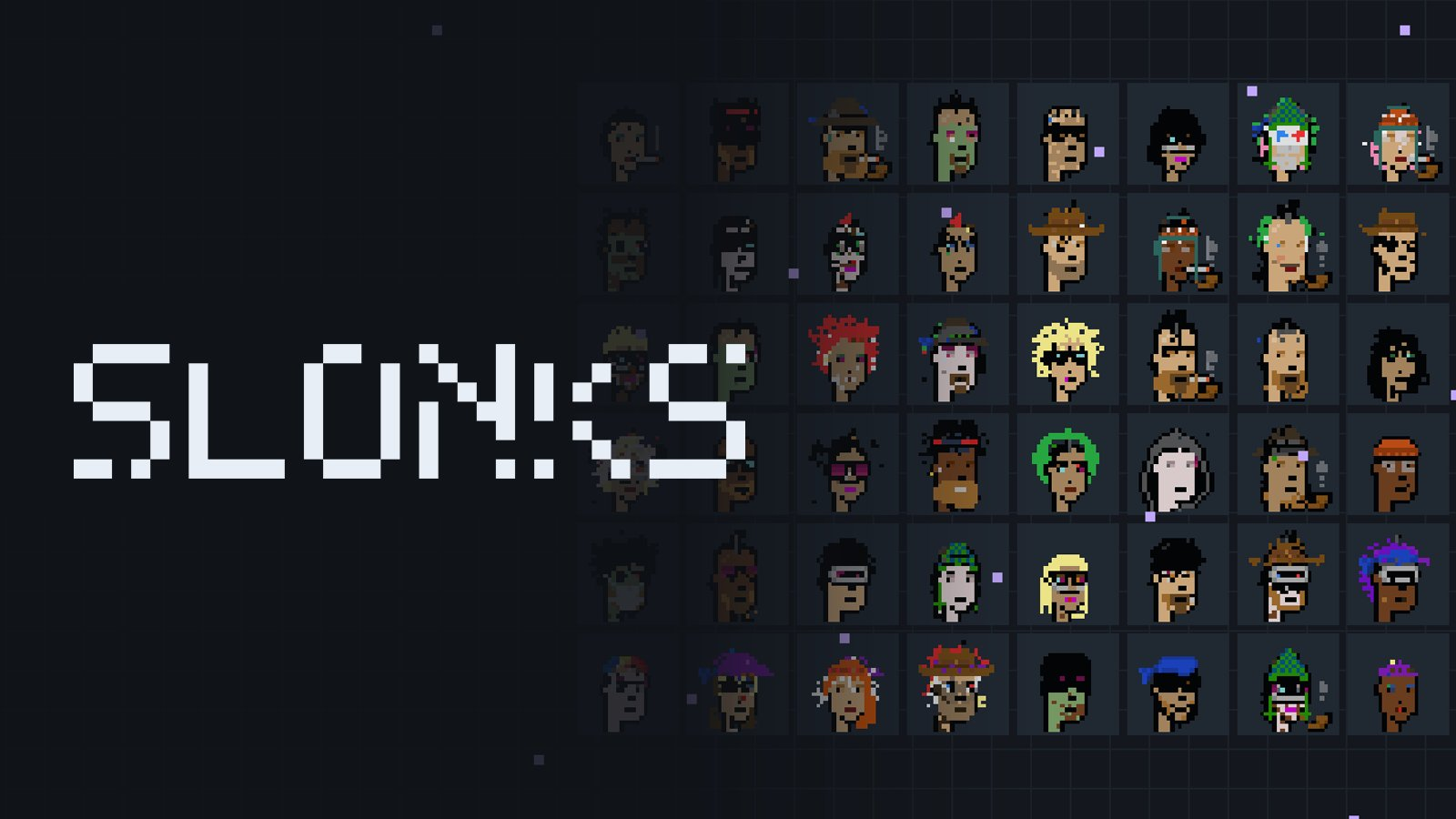
Author: Curry, Deep Wave TechFlow Original title: Are NFTs Reviving Again? Let me give you a general understanding of Slonks, which is 60 times larger in 6 days, a mechanically burning AI NFT project. Why did it sell 586 ETH in a week? The crypto market seems to be picking up recently, and some bosses are also starting to invent innovative ways to play, such as NFTs, which have been dormant for a long time. On May 1, an NFT series called Slonks was launched on Ethereum. Mint was priced at less than 0.004 ETH, equivalent to less than 70 yuan in RMB. Today, six days later, the floor price is 0.123 ETH, up about 60 times. The seven-day turnover on OpenSea was 586 ETH, over 23,000 transactions. With a total supply of 10,000 copies, 1,348 have been permanently burned; the remaining 8,642 are in circulation. What level would these numbers be in the 2026 NFT market? In the same week, the eight-year-old blue-chip CryptoPunks sold a total of 20 transactions. Slonks sold 23,000 transactions. And tonight at 9 o'clock, the project will also issue a token called $SLOP. If you search Slonks on Twitter, you'll find an interesting phenomenon. Almost everyone said the project was “very sophisticated” and “very self-designed”, but you asked them to explain how it actually works, and most people get stuck after saying “can exchange coins, coins can exchange images”... Some say it's GameFi, an on-chain AI art experiment, or an evolved version of CryptoPunks; others say it's essentially a “Dream Journey to the West” game. After doing some quick research, I think all of these statements are related, but they don't seem to get to the point. What's really interesting about Slonks is probably turning a very counterintuitive idea into a business. The idea is: if an AI draws the wrong thing, it's worth more than painting the right one. Why is AI drawing the wrong pixels worth it? What makes this project different from the previous NFTs is that its NFTs are not image files. Traditional NFTs usually store a drawn image on an off-chain server, and only put a link in the contract. Slonks is different. It has an AI image generation model inserted directly into the Ethereum smart contract. The total is only 214KB, which is roughly the size of a low-resolution mobile wallpaper. Every time someone views a Slonk, the contract runs model reasoning on the spot and generates images in real time. Does not save pictures, only the ability to draw pictures. This is actually a slightly innovative way to play with NFTs. So what exactly is this model drawing? Actually, it's copying... The task of this model is to draw a copy of each of the 10,000 original images of CryptoPunks. Each CryptoPunk corresponds to a Slonk. The model looked at the original image and tried drawing it again using the same color palette. However, the 214KB model had to remember 10,000 faces, which was really difficult. Each image has a total of 576 pixels. On average, the model will misdraw about 24 pixels, which is equivalent to about 4% of each image not looking the same as the original. Of the 10,000, only 32 were perfectly reproduced; the rest all had more or less “deviations”. The project called these misdrawn and mismatched pixels a slop. If there are 0 mistakes, the slope is 0; if all the pictures are wrong, the slope is 576. Hirsch, the developer of the project, summed up the project's attitude with one sentence on Twitter: The slope is not a bug. It is the medium. (Distortion is not a defect; distortion itself is a creative medium). This is equivalent to using an AI model to re-replicate the old NFT OG project, but because it can draw the wrong picture and look the wrong way, it has different scarcity and hype value. As a result, the economic model of the entire project is based on this logic: the more mistakes, the more valuable it is. Slonk holders can do an operation called Merge, Merge. Take two Slonk cards of the same level in your hand, choose one to keep, and burn the other. The contract will mix the characteristics of the two images and redraw the model. Because the two different pictures were mixed together, the newly drawn result was the same as the original...

107d agoburnking#AI #NFTs #Slonks #Ethereum

China's Zhejiang Internet Police reported a fraud case under the guise of virtual currency

Comparing news, the Internet Police in Taizhou, Zhejiang, China recently reported a fraud case under the guise of metaverse virtual currency. Under the name of promoting face-swiping payment devices, the criminal gang first diverted money through a points system, then induced investors to buy self-issued air coins, and continued to suck in money through lock-up, price control, and currency exchange methods, eventually defrauding more than 130 investors of about 35 million yuan. The court found that the defendant committed fraud for the purpose of illegal possession, which was extremely large, and was sentenced to 10 years in prison and a fine of 200,000 yuan.

126d ago

Block automatically swept in $120 million, Riot's computing power was “physically isolated”, and Latin American giants increased their positions across seasons

Comparative news, according to BBX data, yesterday, as the closing day of the first quarter, many companies implemented “automatic treasury conversion” and hard asset settlement at the end of the quarter. The core data is as follows: $120 million quarter-end sweep: Block Inc. (NYSE: $XYZ) strictly implemented its algorithm-driven treasury strategy yesterday to automatically sweep approximately $120 million of idle fiat profits into the Bitcoin pool at the end of the first quarter. This “no human intervention” fixed investment mechanism ensures that it is not emotionally disturbed by short-term currency price fluctuations. “Physical isolation” of computing power: Riot Platforms (NASDAQ: $RIOT) announced yesterday that the first batch of 2 EH/s computing power at its new plant in Corsica has been successfully connected to the grid. It is worth noting that this part of the computing power is set as a “treasury line”, and all BTC it produces will be physically cold stored and 100% retained, completely independent of the fund pool for daily operation and sell-off. 150 mining rigs were exchanged for coins: Jianan Technology (NASDAQ: $CAN) disclosed financial updates for the first quarter yesterday, confirming that it has settled the final payment of mining equipment sales directly in Bitcoin form for some major customers, with a total of 150 BTC, officially opening the closed loop from “selling shovels” to “hoarding gold.” $40 million regional hedging: MercadoLibre (NASDAQ: $MELI) revealed yesterday in a quarter-end asset revaluation that it added $40 million worth of BTC/ETH hybrid positions in late March. The move was aimed at hedging the sharp depreciation of Latin American currencies against the US dollar in the first quarter. $85 million staked snowballing: DeFi Technologies (CBOE: $DEFTF) yesterday announced that its treasury had surpassed $85 million. In addition to asset appreciation, all of the node pledge interest generated by its SOL holdings in the first quarter has been reinvested, achieving a compound increase in the absolute number of crypto assets.

143d ago

Semler added 212 BTC, ACXP completed a $2 million increase in holdings, and the MET1 gold exchange was successfully registered

Comparative news, according to BBX data, yesterday global listed companies continued to strengthen treasury sovereignty through asset replacement and targeted fund-raising. The core data is as follows: 212 fixed investment: Semler Scientific (NASDAQ: $SMLR) revealed yesterday that it has gained 212 BTC again, at an average cost of around $75,100. Currently, its total holdings have reached 2,032 units. $2 million second phase increase: Acurx Pharmaceuticals (NASDAQ: $ACXP) confirmed yesterday that it has completed the second batch of a $2 million Bitcoin purchase plan. The company said the pace of implementation of its treasury anti-inflation strategy has been adjusted from quarterly to monthly. 1.2% monthly yield: DeFi Technologies (CBOE: $DEFTF) revealed yesterday that its BTC treasury had achieved a net yield of 1.2% in March. The company announced that it will introduce SOL, which was the first to be pledged, as a diversification supplement to its treasury. $5 million in “gold for coins”: Metals One PLC (LSE: $MET1) announced yesterday that its first batch of $5 million of gold reserves has been successfully replaced with the equivalent of Bitcoin, marking the “hard asset transformation” of its treasury into the practical phase. 3,000-unit reserve milestone: TeraWulf (NASDAQ: $WULF) announced yesterday that its “zero-carbon” BTC reserves have officially surpassed 3,000 units and reiterated that it will maintain an output retention rate of over 90%.

151d ago

Bitdeer plans to buy $100 million in BTC, SBI sets up a 100 billion yen fund, Metals One launches “gold for coins” replacement

Comparative news, according to BBX data, yesterday, global listed companies showed remarkable characteristics from “internal mining companies” to “entry into the market” of “traditional industrial/financial giants” in terms of crypto treasury expansion: $100 million spot purchases: Bitdeer (NASDAQ: $BTDR) yesterday approved the disbursement of $100 million in cash to purchase Bitcoin as a strategic reserve over the next two quarters. 10 billion yen special fund: SBI Holdings (TSE: 8473) announced the establishment of a 1 billion yen (about 67 million US dollars) corporate cryptographic treasury special fund to provide Bitcoin allocation consulting and escrow services for Japanese manufacturing companies. 10% gold asset replacement: Metals One PLC (LSE: $MET1) revealed its treasury reform plan and plans to replace 10% of the gold in its reserves with Bitcoin on the grounds that “BTC will show a better liquidity premium in 2026.” 100% output retention: Digihost (NASDAQ: $DGHI) confirmed that it had achieved 100% retention of Bitcoin production from February to mid-March. Through energy cost optimization, the company currently does not need to sell any BTC to cover all operating expenses. 25% profit conversion: Banxa (TSX-V: $BNXA) announced that 25% of its net profit for the first quarter of 2026 will be directly converted into Bitcoin, setting the financial tone for a “profit-driven” increase in holdings.

156d ago
From idealism to reality in a game: CZ and Binance's 'big clearance' moment

From idealism to reality in a game: CZ and Binance's 'big clearance' moment

Article: Grandpa Zao Web3 Original title: Big Liquidation: The CZ Doctrine Is Broken, Binance Has Blackened and Completed the Crypto Giants' Path of Atonement, Sister Mudou, ignited the fire. Haseeb is also posing as a great prophet. Xu Mingxing takes on the role of Prometheus, combining traditional Chinese and Western medicine, and teaming up to burn Ho Yi and CZ. Carthage must be destroyed, as must Sodom and Gomorrah. This religious presumption of guilt stems from common psychological contradictions in the crypto industry. The entire history of cryptocurrencies has been on the edge of challenging the rules, wandering in a dark, gray, and ambiguous world. Crypto giants now want to get off the ground and need to solve two problems urgently: how to evolve from arbitrators of the rules to those who follow the rules. For example, if the cost of avoiding the “10.11” liquidation is sacrificing oneself, how should Binance consider it? Seize the power to set crypto rules and gain practical benefits for the industry. For example, Coinbase's attitude can influence the progress of a clear bill. Where does the power come from? On Binance, there is also an additional identity dilemma. SBF can directly ask for forgiveness and distort time and space into the 2022 Republican Party, but CZ and Binance's Chinese identity and Chinese background have always faced a cycle of Western censorship and self-justification. Rules are valuable: the king of crypto is also a cutting board. The purpose of political science is not to create people, but to explore how to use people naturally. I'd like to start by telling a story, an old story where a dragon slayer chose to become an evil dragon. When the Soviet Union came to an end in 1991, history seemed to be coming to an end under neo-liberalism. America seriously governed the Earth through the United Nations system. Faced with Iraq's Saddam's invasion of Kuwait, the United States was authorized by the United Nations to join forces with 35 countries. After only 100 hours of ground action, it was easy to defeat Saddam and restore the sovereignty of Kuwait. At the time, America received sincere praise from all over the world. Just two years later, America was overshadowed in the Somali capital, not being able to achieve its small goal of capturing warlords, but also led to a strong backlash in domestic public opinion. Since then, America's morality has been broken. If there is no good reward for doing good deeds, it seems that there is no special cost for doing evil. Until the 9/11 incident in 2001, America's morals were completely shattered, and then the world fell into the quagmire of the war on terror. Thinking big or small, this story is very interesting. The current crypto dilemma is also the same. It was hard to win the Cold War with Wall Street and the banking industry, and won superior hegemony over tokenization and stablecoins, but internal differences have arisen on the route. The Black Hawk fell, the US directly blackened, and good deeds could not be rewarded. Binance also tried to save the crypto industry and eventually chose to create its own land. Let's go back in time to 2022. When FTX collapsed, Binance once held over 70% of CEX's share, but the entire industry was shrouded in an uncertain future. Binance decided to save the entire industry, and the $1 billion SAFU fund was set up at this point. Of course, it also hid some caution. It mainly consists of its own BUSD and BNB. Recently, it is famous for responding to Ellivan's call to exchange its holdings for BTC. Unfortunately, that's not the whole story. At the same time as SAFU, there was also an industry recovery fund IRI (Industry Recovery Initiative) to jointly carry out industry self-rescue plans with major project parties and exchanges. Binance promised to invest at least $1 billion, hoping that the overall scale would reach more than $2 billion. Now that the IRI program application forms are inaccessible, the industry may have recovered. Photo caption: IRI's funding situation. Image source: @business事实上. As early as 2023, IRI had ceased operations, and many promised funders, such as market makers such as Jump/GSR/Kronos, actually didn't invest at all because the leader Binance only spent $15 million and took away the remaining $985 million. Furthermore, the operation of the entire IRI is extremely opaque; you have no idea which project parties have received the investment, and which have no recourse but just wait to die. If you look further, there is more than IRI, which Binance promised but failed to do. Recently, there is the $400 million fund in the same boat fund after 10.11, and far the $1 billion BSC growth fund established in 2021. Many years after establishment, it began spending 50,000 dollars to buy the “I'm stepping on Malaysia” meme coins. Photo Caption: Binance Ecosystem Funds, Photo Credit: @zuoyeweb3如果细数一下币安发起的各个计划, seems to have a particular preference for the 1 billion figure...

201d agoLuxurytracy

Binance will adjust the SAFU Fund's $1 billion stablecoin reserves to Bitcoin reserves and plans to complete the conversion within 30 days

Comparatively, Binance recently announced in an “Open Letter to the Crypto Community” that Binance will adjust the asset structure of the SAFU Fund, gradually convert the original $1 billion stablecoin reserves into Bitcoin reserves, and plans to complete the exchange within 30 days of issuing this statement. Binance will regularly check the SAFU Fund's asset size. If the SAFU Fund's market value falls below $800 million due to Bitcoin price fluctuations, Binance will supplement Bitcoin to restore the fund size to $1 billion. Based on Binance's judgment on Bitcoin as a core asset in the crypto ecosystem and its long-term value, Binance is willing to share uncertainty with the industry and continue to invest resources in the crypto ecosystem during a phase where the industry is under pressure and cyclical fluctuations intensify. This initiative is part of Binance's long-term construction industry, and related work will continue to be promoted in the future, and more progress will be gradually shared with the community.

204d ago