


Can AI paint the wrong pixels cause hype? Take you to understand Slonks 60 times in 6 days
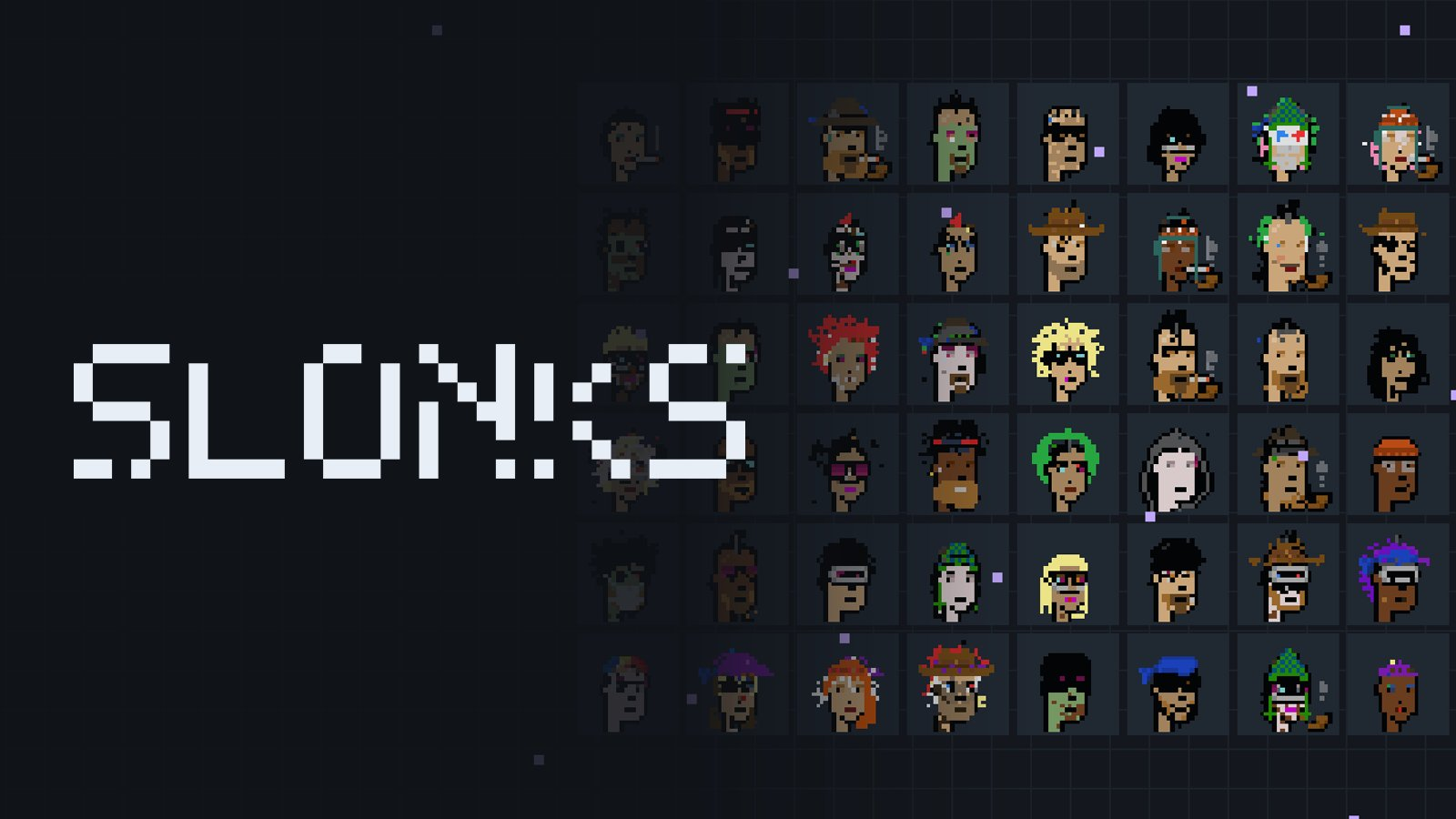
By Curry, Deep Wave TechFlow
Original title: Are NFTs coming back to life? Let me take you through Slonks 60 times in 6 days
Why did a brain-burning AI graphic NFT project sell 586 ETH in a week?
The crypto market seems to be picking up recently, and some bosses are also starting to invent innovative ways to play, such as NFTs, which have been dormant for a long time.
On May 1, an NFT series called Slonks was launched on Ethereum. Mint was priced at less than 0.004 ETH, equivalent to less than 70 yuan in RMB.
Today, six days later, the floor price is 0.123 ETH, up about 60 times. The seven-day turnover on OpenSea was 586 ETH, over 23,000 transactions. With a total supply of 10,000 copies, 1,348 have been permanently burned; the remaining 8,642 are in circulation.
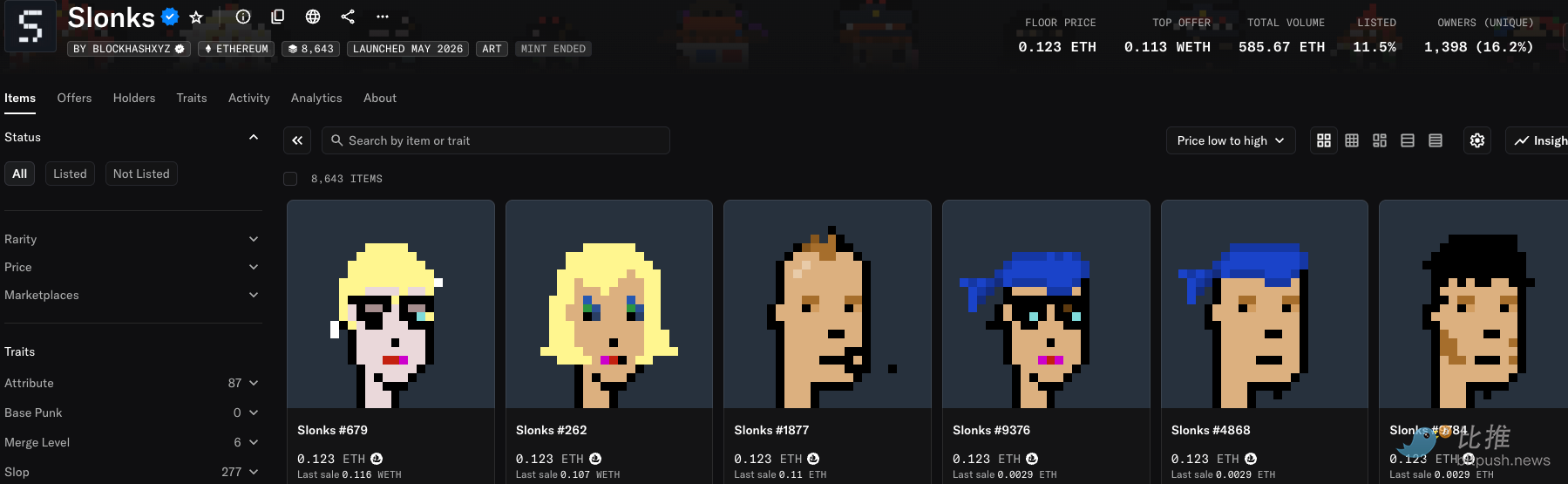
What level would these numbers be in the 2026 NFT market? In the same week, the eight-year-old blue-chip CryptoPunks sold a total of 20 transactions. Slonks sold 23,000 transactions.
And tonight at 9 o'clock, the project will also issue a token called $SLOP.
If you search Slonks on Twitter, you'll find an interesting phenomenon. Almost everyone said the project was “very sophisticated” and “very self-designed”, but you asked them to explain how it actually works. Most people get stuck after saying “picture can be exchanged, coin can be exchanged”...
Some say it's GameFi, an on-chain AI art experiment, or an evolved version of CryptoPunks; others say it's essentially a “Dream Journey to the West” game.
After doing some quick research, I think all of these statements are related, but they don't seem to get to the point.
What's really interesting about Slonks is probably turning a very counterintuitive idea into a business. The idea is:
When AI draws the wrong thing, it's more valuable than drawing the right one.
Why is AI drawing the wrong pixels worth it?
What makes this project different from the previous NFTs is that its NFTs are not image files.
Traditional NFTs usually store a drawn image on an off-chain server, and only put a link in the contract. Slonks is different. It has an AI image generation model inserted directly into the Ethereum smart contract. The total is only 214KB, which is roughly the size of a low-resolution mobile wallpaper.
Every time someone views a Slonk,The contract will run model reasoning on the spot and generate images in real time.
Does not save pictures, only the ability to draw pictures. This is actually a slightly innovative way to play with NFTs.
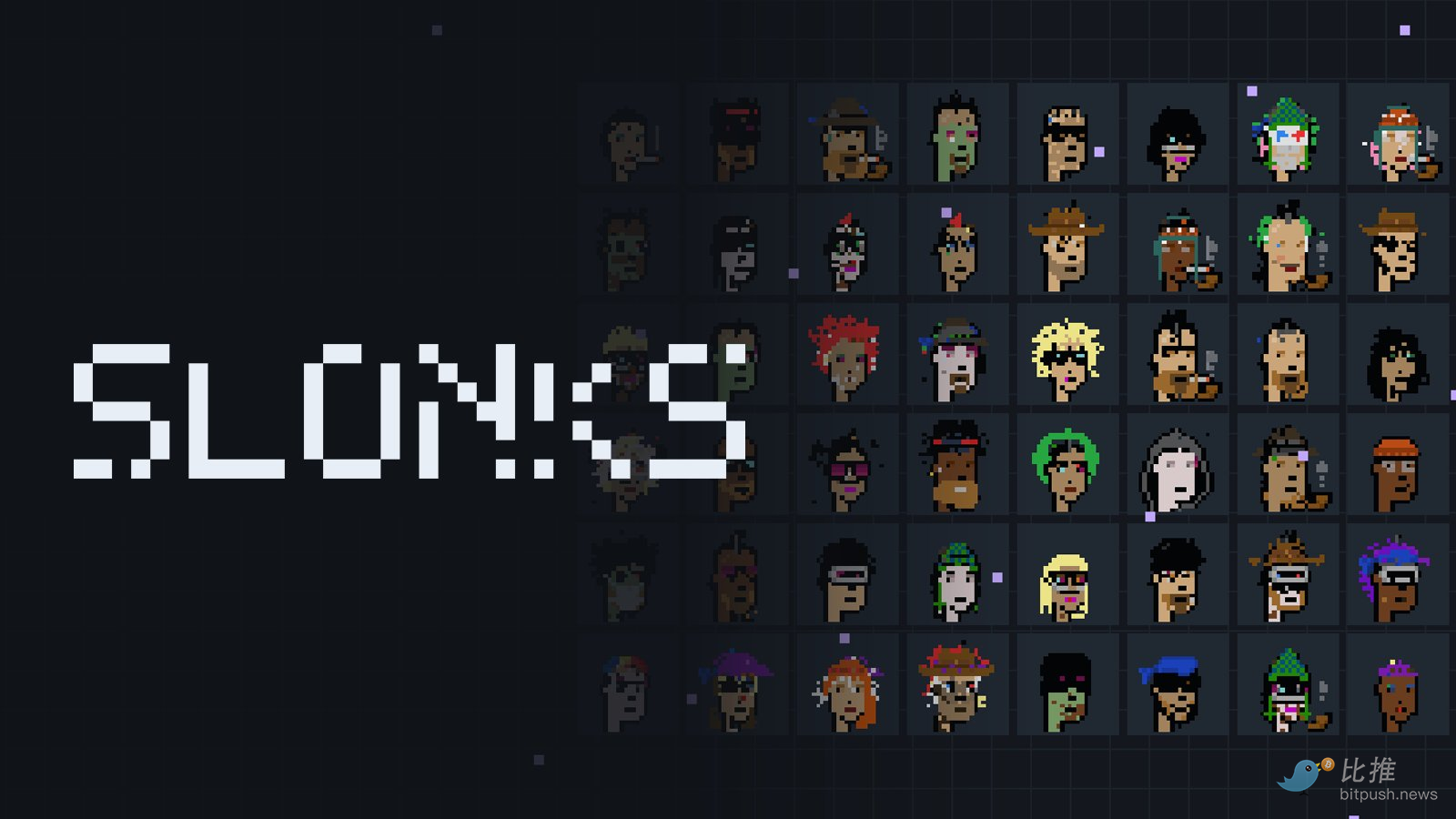
So what exactly is this model drawing?
Actually, it's imitating...The task of this model is to draw a copy of each of the 10,000 original images of CryptoPunks. Each CryptoPunk corresponds to a Slonk. The model looked at the original image and tried drawing it again using the same color palette.
However, the 214KB model struggled to remember 10,000 faces.
Each image has a total of 576 pixels. On average, the model will misdraw about 24 pixels, which is equivalent to about 4% of each image not looking the same as the original. Of the 10,000, only 32 were perfectly reproduced; the rest all had more or less “deviations”.
The project called these misdrawn and mismatched pixels a slop.
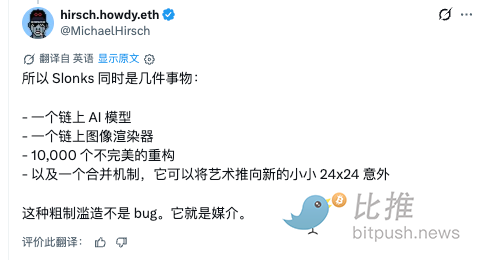
If there are 0 mistakes, the slope is 0; if all the pictures are wrong, the slope is 576. Hirsch, the developer of the project, summed up the project's attitude with one sentence on Twitter:
The slope is not a bug. It is the medium. (Distortion is not a defect; distortion itself is a creative medium).
This is equivalent to using an AI model to re-replicate the old NFT OG project, but because it can draw the wrong picture and look the wrong way, it has different scarcity and hype value.
As a result, the economic model of the entire project is based on this logic: the more mistakes, the more valuable it is.
Slonk holders can do an operation called Merge, Merge. Take two Slonk cards of the same level in your hand, choose one to keep, and burn the other. The contract will mix the characteristics of the two images and redraw the model.
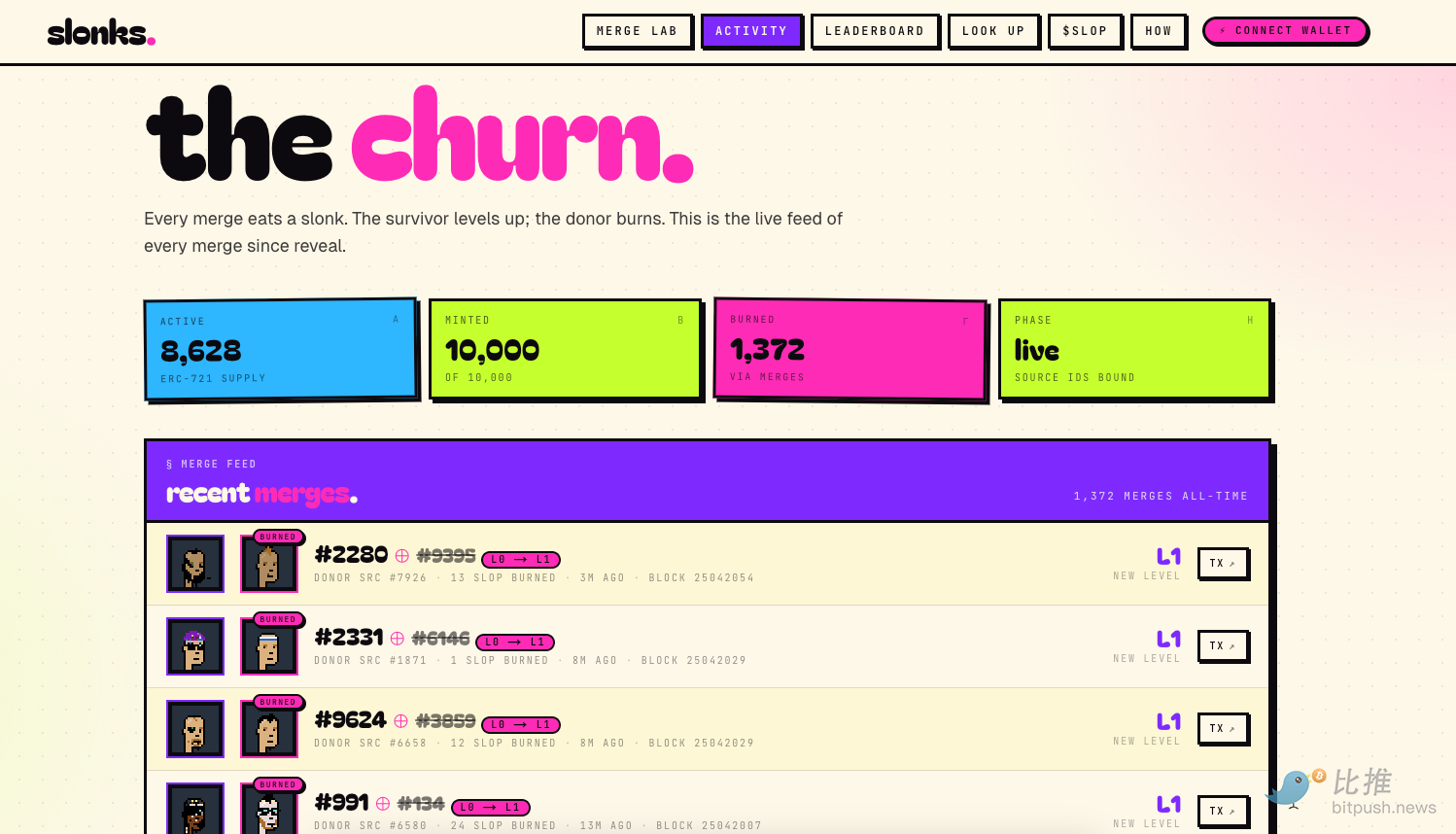
Because the two different images are mixed together, the gap between the newly drawn result and the original CryptoPunk will only be larger, not smaller.
Each time you merge, the slope only rises and doesn't fall.Moreover, the burnt one will never be recovered; the supply is one less.
That's why in the six days since it went live, 10,000 copies have already burned more than 1,300 copies. Players are constantly merging to create higher-sloping versions while reducing circulation.
At this point, Slonks is already a very interesting on-chain art experiment, which is tantamount to using AI algorithms to create a kind of artificial scarcity.
$SLOP: Price is given for each misdrawn pixel
What really turned this project into a business is probably $SLOP, the official token of the project that will go live tonight.
What it wants to do is turn the “wrong number of pixels” number on each picture into something that can be bought and sold.
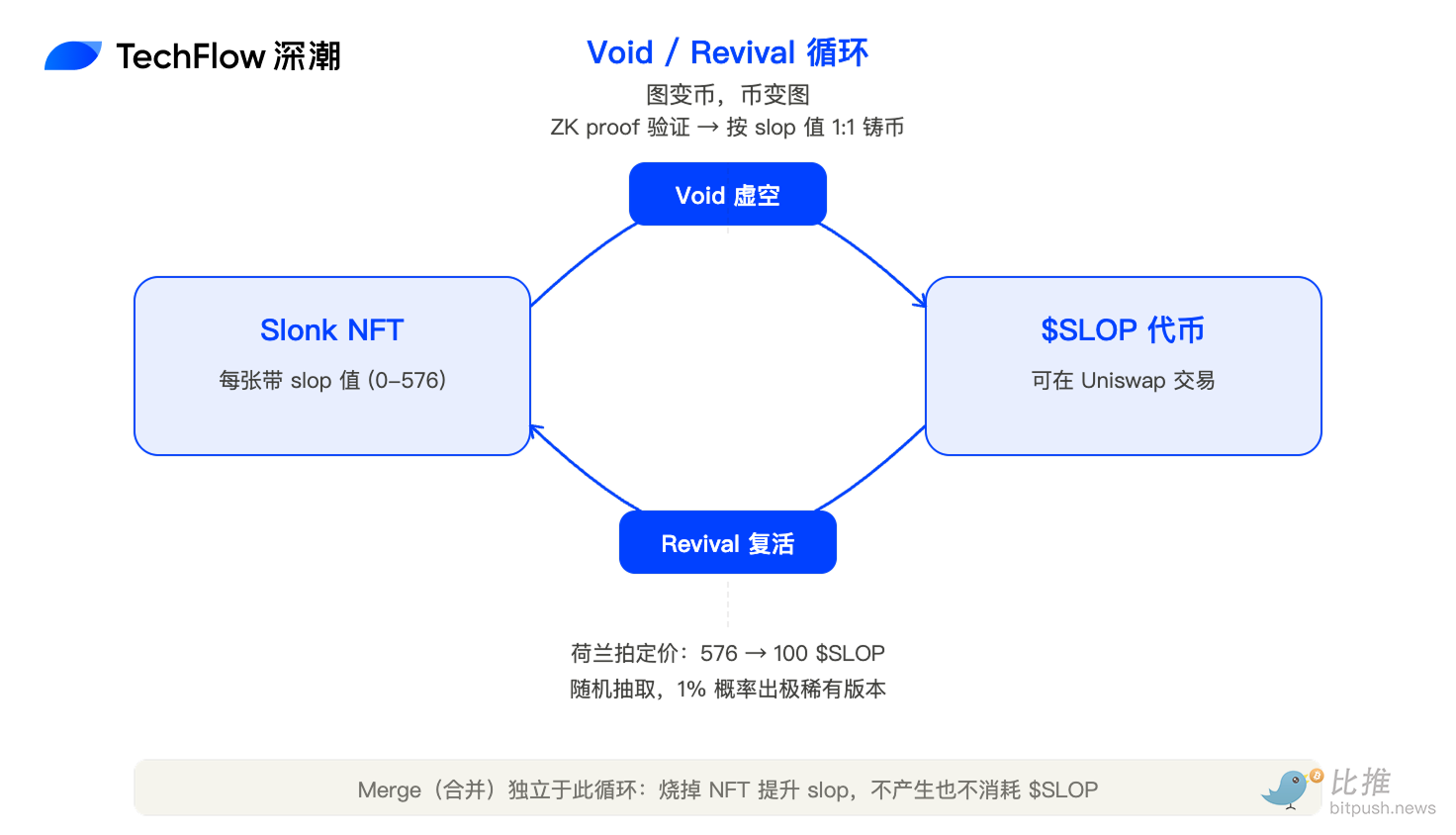
How did it change? Rely on one to callVoid (Void) operation.
Holders can “send their Slonk into the void”, the NFT leaves circulation, and the contract will be sent to you by minting an equivalent amount of $SLOP d tokens, 1:1 according to the slope value of this chart.
For example, if your chart slope is 287, you get 287 $SLOP. The slope is 450, that is, 450.
This process isn't just about casually registering numbers. The contract requires you to first generate a ZK certificate to prove that the on-chain model's rendering results on this image are exactly what you said, and the coins will only be minted if the verification is passed.
To put it bluntly, you have to “inspect the goods” first to prove that you have drawn so many pixels wrong on this picture before the contract is accepted.
Slonk sent to the Void hasn't been destroyed; it's still under contract. This leads to the second operation: Revival, resurrection.
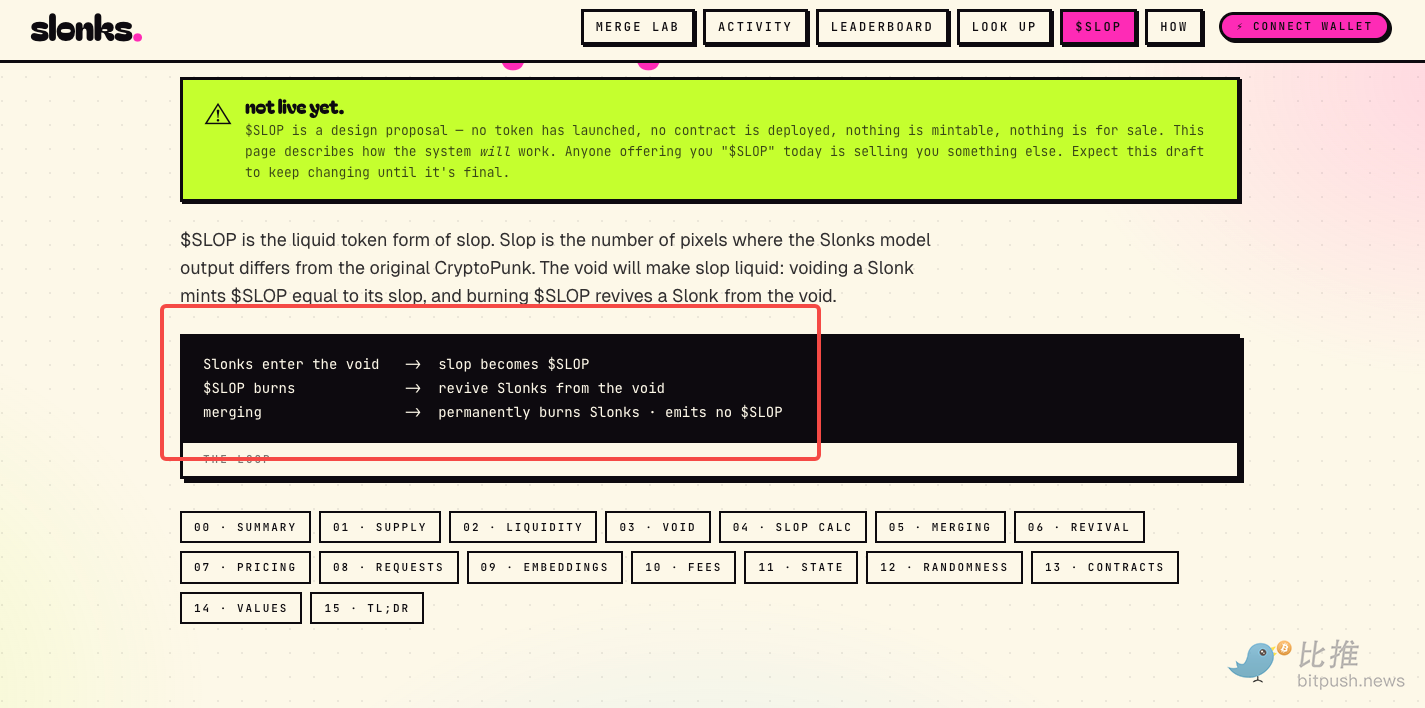
For a certain amount of $SLOP, you can randomly draw back a Slonk from the void. You can't choose which one to draw, and this picture will be redrawn by the model when it comes back, so it probably doesn't look the same as before.
The pricing for the revival is based on the Dutch auction: the starting price is 576 $SLOP, down 1 for every block passed, and the minimum is reduced to 100. But as soon as someone bought it once, the price immediately bounced back to 576 and started falling again. If you want to draw cheaply, you'll have to wait, but if you wait, you can always be preempted by others.
Most of the revived images will be close to the original CryptoPunk, and the slope won't be too high. But there's a 1% chance that the model will “go completely insane” and draw an extreme version with a slope of over 400. That 1% is a lottery ticket.
As you can probably see by now, Void and Revival form one”The economic cycle of “currency exchange”:
Buy a Slonk with a high slope at a low price and exchange it in the void for tokens
Wait for the tokens to rise and spend the tokens to revive a new picture;
If you're lucky enough to get a high slope, then send it to the void for more tokens.
Picture to coin, currency to map, back and forth.
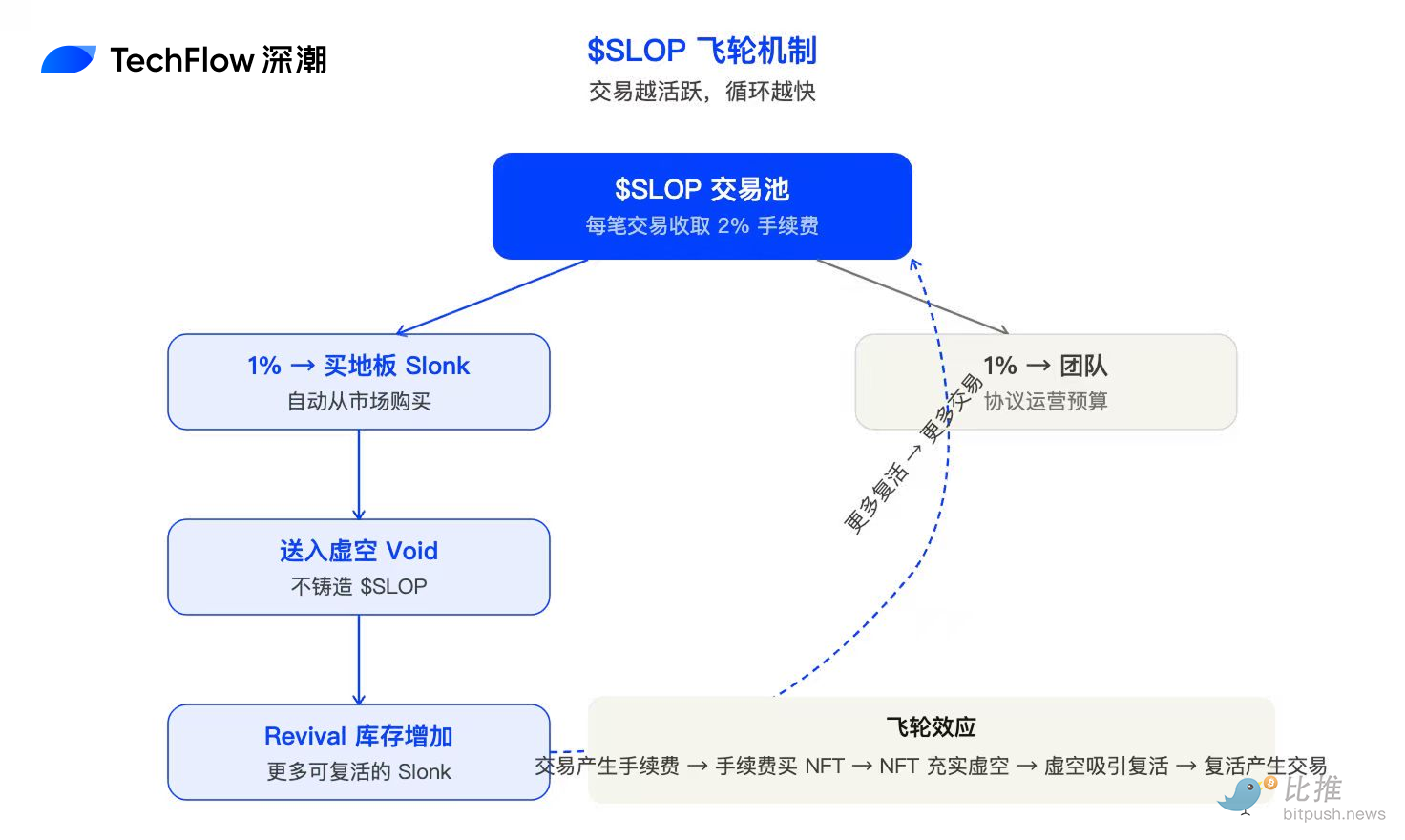
The project also designed an automatic flywheel: the $SLOP transaction pool charges a 2% processing fee, half of which will be used to automatically buy floor-priced Slonk from OpenSea and then sent to the void as inventory for future revival.
The more active the trading, the more inventory in the void, the more stuff you can pull out when reviving.
Regarding tonight's token launch, Hirsch announced the specific process a few hours ago. 576,000 SLOPs will be placed into a one-sided liquidity pool, with an initial market capitalization of about 50,000 US dollars.
Buyers brought their own ETH to buy them. During the first 6 hours of launch, you can only buy and sell tokens, not Void. In other words, this 6 hours is a pure price discovery period.Let the market set a price for $SLOP before opening Void, so that the conversion channel between NFTs and tokens can actually open up.
The $SLOP hard cap is 5,760,000, which is exactly 10,000 images multiplied by 576 pixels each. However, this number will never be fully minted, because the images burned by Merge don't generate any tokens; if the 1,000 or more that have been burned, their slops are locked forever.
The author feels that the smartest part of this design is,It binds “speculation” and “creation” to the same act。
You go Merge the two images, and you're speculating because a higher slope means more potential tokens; but you're also creating because the model will draw a brand-new 24×24 pixel map that never existed. You use the same buttons to make money and do on-chain art, and they cycle with each other.
Therefore, you can think of this gameplay as a slightly innovative Ponzi economic structure for NFTs in terms of creating scarcity, currency exchange, and design deflation.
Inscribed veteran, old and fresh
Not many people in the community know about Michael Hirsch, the creator of Slonks, but he's not a newbie either.
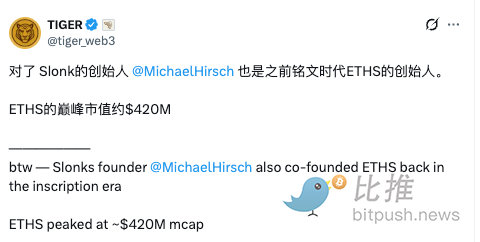
Remember ETHS on Ethereum during the previous inscription craze? At its peak, the project had a market value of around $420 million, and Hirsch was the founder of this project.
After the inscription circuit cooled down, he turned to Blockhash, a small studio focused on on-chain products, and worked on DEX, NFT trading platforms, token-gated chat tools, and various other things he himself described as “strange cryptographic experiments.”
Slonks is the studio's newest work.
A person who has experienced the ups and downs of the inscription cycle chose to launch a project with a very high threshold of understanding now. This in itself is a noteworthy sign. Is the liquidity and market on the chain picking up, and some micro-innovations are starting to be hyped up?
I think I'll have to take a look.
As mentioned before, at nine o'clock tonight, the $SLOP token will go live. You can only buy and sell tokens for the first six hours after launch, and you cannot exchange NFTs for tokens through Void. This six-hour period was a pure price game period, with no new supply added, and buyers set prices for each other.
Six hours later, the Void channel opened, and the two-way conversion between NFTs and tokens was officially launched.
The initial market capitalization of $50,000 means that liquidity is extremely thin, and early price fluctuations will be very sharp. The white paper is still labeled “v1 · draft.”
This project has technical ingenuity, proven founders, and a logical and self-consistent economic cycle, but in fact, it still essentially innovates slightly in terms of economic models and human manufacturing scarcity.
Chives, who have gone through a few cycles, will obviously laugh at this kind of gameplay, but in any case, there are still new things in this market, which I think is a good trend in itself.
DYOR.
Twitter:https://twitter.com/BitpushNewsCN
Compare the TG exchange group:https://t.me/BitPushCommunity
Compare TG subscriptions:https://t.me/bitpush
