收购 · 6876

The US Federal Trade Commission is urged to investigate AI companies' act of destroying books

Comparatively, the US Federal Trade Commission (FTC) is being urged to investigate the acts of some AI companies obtaining AI training data by buying, scanning, and destroying books. According to an open letter obtained by Axios, more than a dozen civil society organizations are calling on the FTC to use regulatory powers to examine what large AI companies call disruptive new methods of data acquisition. Earlier, the “Washington Post” quoted court documents as reporting that Anthropic had spent millions of dollars to buy books and remove book spines to scan the pages and use them to train Claude; Google, Microsoft, and OpenAI have also faced similar copyright lawsuits. These organizations want the FTC to further determine whether such actions constitute unfair competition practices. They believe that by acquiring and destroying physical books, AI companies may actually be emptying the market's key data resources. In particular, some rare books may disappear permanently as a result, while digital companies hold the last few physical copies. Relevant organizations warn that this practice of hoarding and destroying may increase competitors' data acquisition costs, while cutting off important raw materials that AI startups rely on to train models, thereby further expanding competitive barriers for leading AI companies. However, rather than requiring the FTC to restrict AI model training, they want regulators to focus on reviewing the destruction of existing works and intervene before large AI companies use this to establish a market advantage. According to the open letter, this approach is not simply a data acquisition strategy, but may become another structural means for leading AI companies to build a systemic moat that is difficult to overcome. Currently, the FTC under the Trump administration wants to maintain a relatively friendly regulatory environment for US companies, and on the other hand, it continues to release attention to market competition and the monopoly risk of large technology companies.

1m ago

OpenAI Acquires Real-Time Database InstantDB Team: Strengthening AI Proxy Infrastructure

In comparison, according to CryptoBriefing, OpenAI has acquired the real-time database platform InstantDB team, which previously served more than 17,000 users and 400,000 applications, and processed about 2.5 billion transactions. InstantDB provides backend as a service (BaaS) products to help developers handle real-time data synchronization. Existing users will need to migrate cloud-hosted apps by August 31, 2027, and the open source code will continue to be available for self-deployment. InstantDB is Y Combinator's 2022 incubation project. The founding team will join OpenAI to strengthen the AI agent application infrastructure, as its AI agent requires persistent state management, real-time data reading and writing, and concurrent conflict processing capabilities, which are in line with InstantDB's dedicated real-time data synchronization infrastructure capabilities.

3h ago
[Comparative Daily News Picks] Anthropic plans to include anti-AI sentiment as the main risk factor in the prospectus; Strategy's stock price hit a two-month high, and STRC returned above $96; Bernstein: Even if the “Clarity Act” is not passed, the SEC and CFTC will speed up rule-making; Dalio: The US debt crisis may break out within three years, and it is recommended to increase gold holdings

[Comparative Daily News Picks] Anthropic plans to include anti-AI sentiment as the main risk factor in the prospectus; Strategy's stock price hit a two-month high, and STRC returned above $96; Bernstein: Even if the “Clarity Act” is not passed, the SEC and CFTC will speed up rule-making; Dalio: The US debt crisis may break out within three years, and it is recommended to increase gold holdings

Daily AI · Crypto · Macro · Market Highlights, Bitpush helps you set priorities ↓ AI · News [Anthropic plans to include anti-AI sentiment as the main risk factor in the prospectus]. According to CNBC, Anthropic is expected to list the public's negative sentiment about artificial intelligence and data centers as a risk factor in the IPO prospectus to be released in the next few weeks. According to people familiar with the matter, Anthropic recently held a pre-listing “market trial” meeting with bankers and investors. Investors focused on competitive pressure, the impact of open source models on profit margins, and the risks that may be brought about by a slowdown in data center construction. Anthropic is currently valued at close to $1 trillion in the private equity market and is preparing to hit a major IPO. However, as Americans' concerns about AI replacing employment and data center expansion heat up, the related backlash sentiment is becoming a new challenge facing the company's listing. The company has previously achieved an annualized revenue operating rate of more than 65 billion US dollars. [Apple cuts Siri and Vision Pro team positions, and resources shift to AI and new devices] Compared to news, Apple (AAPL.O) is laying off employees from various teams responsible for Siri's digital assistants and Vision Pro headsets. The total impact of this layoff is more than 200 people. Of these, about 100 jobs in the Vision Pro department have been abolished, and about 100 other positions in the Siri and software teams have been cut. The move is part of the company's efforts to focus resources on new devices and artificial intelligence. People familiar with the matter said that in this adjustment, Apple has basically shut down a team dedicated to the Vision Pro game business, while also reducing the size of the department responsible for producing immersive video content for the device. Apple admitted in a statement that the company is making adjustments to some teams “to drive business development and provide the best experience for users.” [Castle Securities: Over 80% of the overall risk in the Situational Awareness Fund portfolio has been divested] According to the Financial Times, Castle Securities founder Ken Griffin responded to the company's acquisition of Situational Awareness assets under Leopold (Leopold) in a letter to clients on Friday. According to a letter obtained by CNBC, Griffin told clients that Castle Securities had divested more than 80% of the overall risk in the original purchased portfolio by conducting more than 100 major transactions (with a market value of more than $4 billion). In his letter, Griffin wrote, “A transaction of this scale would not have been possible without the full cooperation of the transaction teams and lead brokerage teams of the banks serving the two companies. I am very grateful for their dedicated efforts to complete the portfolio transfer quickly.” Griffin also confirmed that the company's flagship multi-strategy fund, the Wellington Fund, had a return of 5.94% in July, which is the fund's best monthly performance since 2022. [AI cloud company Nscale seeks to raise 3 billion US dollars in US IPOs] In comparison, AI cloud company Nscale is reportedly seeking to raise 3 billion US dollars in a US IPO. In the crypto market [Strategy stock price hit a two-month high, STRC returned above $96], the Bitcoin treasury company Strategy (MSTR) stock price rose to a two-month high today as the Bitcoin price briefly broke through $79,400. It broke through $120 during the intraday period, then partially regained its gains. Meanwhile, the price of STRC, Strategy's preferred stock product, also surpassed $96 for the first time since June. Previously, STRC's price once fell below $70 due to concerns about its ability to pay dividends and the ability of the stock price to maintain the $100 target for a long time. [Bernstein: Even if the Clarity Act is not passed, the SEC and CFTC will speed up rulemaking] Comparing news, the Bernstein analyst team led by Gautam Chhugani released a report stating that regardless of the procedural voting results of the “Clarity Act” on September 15, the certainty of US crypto regulation is expected to increase. They expect the SEC and CFTC to accelerate rulemaking in areas such as native crypto asset issuance, tokenized stocks, perpetual futures, computing power derivatives, and predictive markets. This regulatory clarity of expectations has become one of the broader supporting factors in the crypto market. 【A...

15h agoBitpushNews#Compare Daily Picks

Castle Securities: More than 80% of the overall risk in the Situation-Aware Fund portfolio has been divested through large transactions

Comparing news, Castle Securities founder Ken Griffin responded to the company's acquisition of Situational Awarenes (Situational Awarenes) assets under Leopold (Leopold) in a letter to clients on Friday. According to a letter obtained by CNBC, Griffin told clients that Castle Securities had divested more than 80% of the overall risk in the original purchased portfolio by conducting more than 100 major transactions (with a market value of more than $4 billion). In his letter, Griffin wrote, “A transaction of this scale would not have been possible without the full cooperation of the transaction teams and lead brokerage teams of the banks serving the two companies. I am very grateful for their dedicated efforts to complete the portfolio transfer quickly.” Griffin also confirmed that the company's flagship multi-strategy fund, the Wellington Fund, had a July return of 5.94%, which CNBC previously reported was the fund's best monthly performance since 2022.

23h ago

ARK Invest Research Director: Proposes Hyperliquid to acquire Gemini to create a US compliant HIP-3/4 platform

Comparing news, ARK Invest Research Director Lorenzoark wrote an article recommending that Hyperliquid acquire the US compliant trading platform Gemini and make it a US regulated HIP-3 and HIP-4 deployment platform. Hyperliquid is engaging with the CFTC and SEC to support US regulated companies to provide perpetual contract transactions and settlements on their public chains. Gemini was listed at a valuation of 3.3 billion US dollars in September 2025, and currently has a market capitalization of about 450 million US dollars, down more than 85% from the IPO. Under pressure from its core business, it has shrunk its operations in the UK, the European Union, and Australia, cut its workforce by about 40% to 402 from its peak, reduced platform assets from $18.2 billion to $8.4 billion, and its spot trading volume fell 66%. Approximately $450 million can obtain Gemini's full US regulatory license portfolio, including NYDFS trust licenses, CFTC-regulated DCM (Gemini Titan), DCO (Gemini Olympus), FCM in progress, and almost all US MTL and broker-dealer licenses. Compared to Kraken's parent company buying Bitnomial for up to $550 million, Gemini's overall market capitalization is lower. After the acquisition, it can inherit operating assets such as approximately 580,000 monthly active trading users, 1.72 million lifetime users, US$8.4 billion in platform assets, US$3.8 billion in quarterly spot volume, and approximately US$180 million in annualized revenue.

1d ago

Anthropic AI Joint Venture Ode Acquires AI Consulting Company to Accelerate Claude's Launch

According to news, Ode, a corporate AI service company co-founded by Anthropic and Wall Street investment institutions, announced that it has completed its first acquisition since its establishment and will acquire AI consulting firm Casper Studios to promote the application of Anthropic's AI model Claude in the corporate market. Ode was founded in 2026 and is supported by Anthropic in collaboration with Blackstone, Hellman & Friedman, and other investment institutions, and is positioned as a service platform to help companies implement cutting-edge AI technology into actual business processes. The acquisition of Casper Studios aims to enhance Ode's ability to design and deploy AI applications for enterprise customers. As more companies explore generative AI applications, Ode hopes to help enterprises move from AI testing to large-scale application through professional consulting, engineering implementation, and customized solutions. (The Information)

2d ago
From 4 models to more than 500, OpenRouter was acquired after growing 30,000 times in three years

From 4 models to more than 500, OpenRouter was acquired after growing 30,000 times in three years

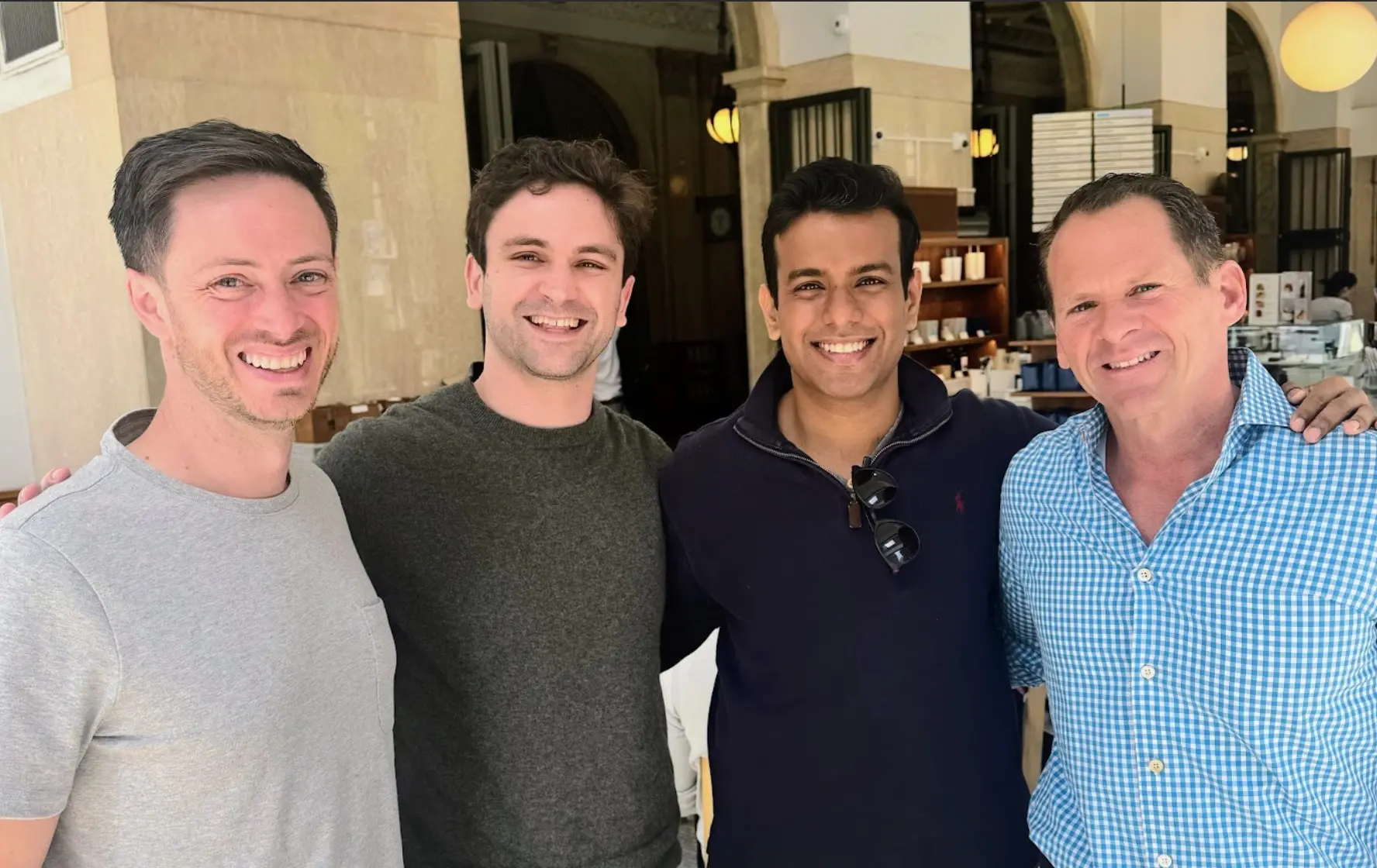
Author: Menlo Ventures Compiled by: Jia Huan, ChainCatcher Original title: Early Investors Behind OpenRouter Revisited Investments Today, OpenRouter announced that it has reached an acquisition agreement with Stripe. OpenRouter was launched in 2023, just over three years ago. OpenRouter was initially launched as a “unified interface for LLM” and only supported 4 models at the time: GPT-3.5, GPT-4, GPT NeoXt and Cohere xlarge by Together. When the company was founded, it was based on two core judgments: first, AI will eventually be used on a large scale and penetrate various fields; second, there will be many different models on the market, each with trade-offs, and users will choose different models according to different needs. As it turned out, both judgments far exceeded expectations at the time. Since its launch, the number of tokens processed by the OpenRouter platform has increased by about 30,000 times. Currently, it has exceeded 4,500 trillion tokens on an annualized basis, and the scale of expenditure on the platform has reached a very impressive level. Meanwhile, the number of models supported by OpenRouter has grown from the original 4 to over 500. Figure: OpenRouter Token usage growth from inception to acquisition Menlo Ventures is fortunate to be part of this journey. In March 2025, we participated in OpenRouter's seed funding round through the Anthology Fund set up in partnership with Anthropic. OpenRouter founder and CEO Alex Atallah previously founded OpenSea, which was once valued at $13.3 billion. His co-founders include tech guru Louis Vichy, whom he met on Discord, and highly executive COO Chris Clark. In May 2025, we led OpenRouter's Series A funding round, with Matt joining the company's board of directors, and Deedy as a board observer. Earlier this year, after seeing OpenRouter's rapid growth in customer numbers and revenue, and the company built a product route with stronger “model intelligence” capabilities around model selection and evaluation, we continued to step up Series B financing. In the tech industry, it often takes years for an idea to change from the judgment of a few people to industry consensus. And just a few weeks ago, this happened: from Ramp to Cursor, more than 10 companies launched their own model routing products almost simultaneously. In just a few years, OpenRouter has become one of the most important companies in the AI era. Picture: Group photo when deciding to lead OpenRouter Round A At first glance, Stripe doesn't seem like the most natural buyer of OpenRouter, but the two companies are actually strikingly similar. Both use an API that can be directly accessed to simplify the otherwise complicated transaction process and charge a certain percentage of the fee. It's just that OpenRouter deals with AI models. As Stripe has always said, the two companies combined and are still doing the same thing: increasing “internet GDP.” In fact, over a year ago, OpenRouter called itself the “Stripe of LLM.” OpenRouter's core value OpenRouter was one of the first companies Deedy came into contact with after joining Menlo in 2024. This company is almost right at the heart of our AI infrastructure investment logic. Menlo presented two judgments necessary to invest in OpenRouter in the 2024 Enterprise AI Report: AI spending will increase dramatically, and developers will not only use one model, but multiple models at the same time. Figure: Menlo's initial contact email to OpenRouter As someone who can also write code and actually use these models, we realized long ago that there is a very clear difference in cost, latency, and performance between the different models...

2d agoburnking#OpenRouter
The Ministry of Finance took steps to reduce long-term interest rates, and gold and Bitcoin rose sharply in response

The Ministry of Finance took steps to reduce long-term interest rates, and gold and Bitcoin rose sharply in response

Author: Cookie Original title: Bond Market Fright, How Can a Buyback Detonate Gold and Bitcoin? On August 18, the US 30-year Treasury yield hit 5.337% intraday, a new high since April 2007. The last time this number appeared on the screen, the iPhone had just been launched, and Lehman Brothers was still a Wall Street giant. In less than 24 hours, the Ministry of Finance was in action. On August 19, the US Treasury Department announced that it would at least double the scale of liquidity-supported repurchase operations for long-term nominal treasury bonds, raising the upper limit of a single operation from 2 billion US dollars to no less than 4 billion US dollars, covering the two ranges of 10 to 20 years and 20 to 30 years, effective September 9 and continuing until November 4. Within minutes of the news, the 30-year yield plummeted from around 5.337% to 5.192%, a drop of about 15 basis points. Gold surged more than $125 to $4,487 per ounce in a single day, a new high since June 4. Bitcoin pulled up 8.7% from an intraday low of $64,112 to $69,700, approaching the $70,000 mark for the first time in two months. Ethereum rose nearly 19%, and the crypto market liquidated more than $20 billion in 24 hours, of which $1.44 billion was liquidated by bears. How did a buyback cause a huge shock in the global market? What is a buyback? Treasury buybacks and the Federal Reserve's QE are two different things. QE is when the central bank prints money to buy bonds, directly injecting new liquidity into the market. However, the Ministry of Finance buybacks up old bonds that the Ministry of Finance uses money from its own accounts to buy back those “old and no one wants to trade”. The purpose is to renew liquidity to the market so that market makers are not “priceless” in the long-term treasury bond market. For example, there is a used car market in your neighborhood, but recently no one is buying used cars. Car dealers have stocked up a bunch of used cars and can't sell them, and the price of new cars is being dragged down. At this point, the property came forward and said, “Used cars will be purchased uniformly by the property; at least this much will be collected. As a result, car dealers had cash in their hands, and the liquidity in the new car market also slowed down. The Ministry of Finance is doing this “property” job. It is buying back “off-the-run” bonds, that is, old securities that are no longer the latest issue and have a scarce trading volume. After institutions that sell old coupons get cash, they can reallocate them to new coupons with better liquidity. As a result, the trading price spread in the entire long-term market narrows, and transaction friction is reduced. The Ministry of Finance did not create money out of thin air. The source of funds for the repurchase was the Ministry of Finance's General Account (TGA), and the TGA money came from taxes and newly issued short-term treasury notes. This means that while long-term supply is declining, short-term supply is increasing, and the total amount of debt has not changed; only the term structure has changed. Why are yields out of control? To understand the urgency of this repurchase, we need to go back to what the bond market has experienced in the past five months. The war in Iran was the trigger. After the US-Iran conflict broke out in late February, passage through the Strait of Hormuz was blocked, and Brent crude oil climbed all the way from the pre-war range of $70 to $91 recently. The sharp rise in energy prices directly boosted inflation expectations, while the Federal Reserve kept interest rates unchanged (3.5% to 3.75% range) at the July interest rate meeting. Three members of the committee even voted against raising interest rates, and the market began to set prices “higher for longer.” But the rise in yield was not only driven by inflation. Fiscal deficits are a deeper structural strain. The monthly deficit in July reached US$432.3 billion, the largest monthly gap since March 2021. The annual deficit is likely to be over $2 trillion, accounting for about 6.4% of GDP. The total national debt is close to $40 trillion, and the public holdings are about to reach 100% of GDP. More importantly, over the next 12 months, $10 trillion of treasury bonds will need to be rolled over. This means that the Ministry of Finance must continue issuing a large number of new bonds in an already indigested market. The long-term market began to show signs of a “buyers' strike” in late June. The winning bid yield for both auctions set new records for more than ten years: the 10-year auction interest rate is 4.683%, and the 30-year auction interest rate is 5.216%. When the yield hit 5.337% on August 18, US Treasury Secretary Bezent's window of choice was already very narrow. The biggest significance of this repurchase of Bezent's undercard is probably to let the market see Bezent's bottom card. On the face of it, the Ministry of Finance said, “Market participants have given a large number of high-quality offers, so expand the scale of operations to provide better liquidity support.” But the city...

2d agoburnking#Bitcoin #gold