政府监管 · 372
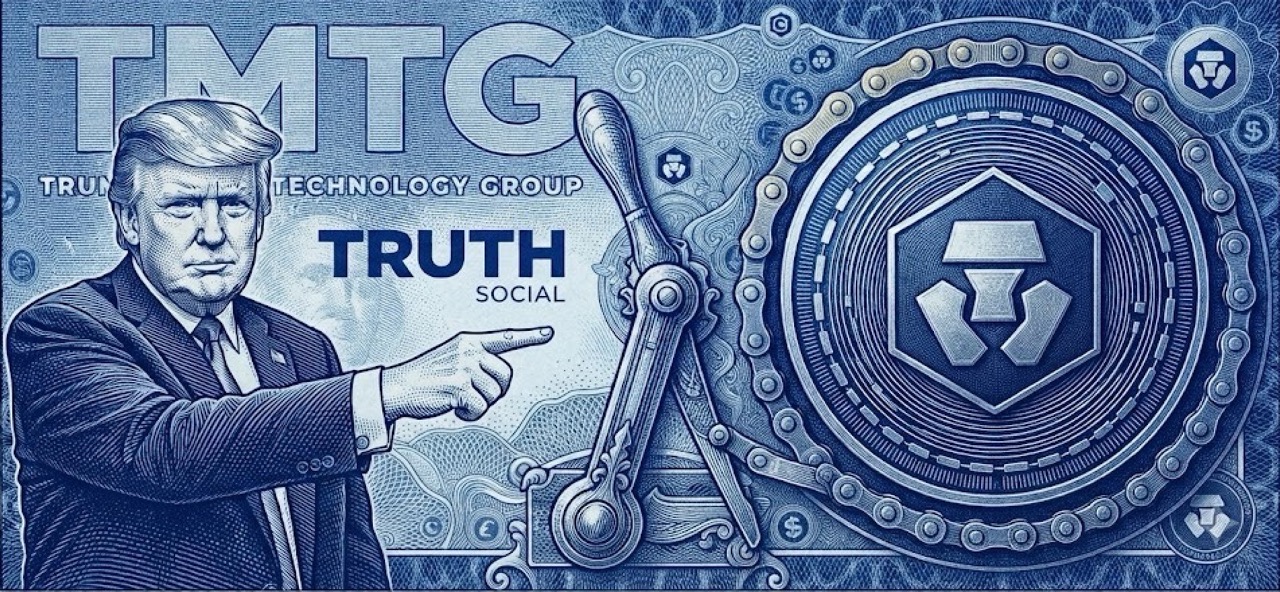
Why did Trump's media's $6.4 billion CRO hoarding plan go bad?

Why did Trump's media's $6.4 billion CRO hoarding plan go bad?

Author: Angelilu, Foresight News Original title: Worth $6.4 billion. Trump Media Group's CRO coin hoarding plan came to an end. A year ago, Trump Media Technology Group (DJT) and crypto exchange Crypto.com held high-profile hands to set up a listed treasury company to hoard several billion dollars of CRO. At the time, this politically strong affiliated company set up a stage with a leading exchange to sing, which made a huge impact. A year later, the capital game came to an end sadly. On August 7, DJT, Crypto.com, and SPAC company Yorkville officially announced the termination of this plan, along with the previously announced forecast market and ETF escrow program cooperation. Bitcoin's peak is almost at a standstill, and there is a collective decline in coin hoarding listed companies — after all, this collaboration, which began as a result of being close to politics, failed to reach the point where it came to fruition. At what stage did the suspended cooperation take place, the most important part of this cooperation is to rebuild a publicly traded CRO treasury company. In August 2025, three parties made a high-profile announcement: Trump Media will use SPAC company Yorkville to establish a company called Trump Media Group CRO Strategy, claiming to be the “first and largest publicly traded CRO treasury company,” and plans to stock up about 6.313 billion CROs — close to one-fifth of the current CRO circulation. The entire company is approximately $6.42 billion, comprised of $1 billion in CRO, $200 million in cash, $220 million in warrants, and a $5 billion equity line of credit. However, momentum returned; in fact, this treasury plan never actually came to fruition. It was only a framework agreement announced in August 2025. It had to go through a major SEC filing and approval process for the backdoor listing, which would have been delayed for more than half a year; it remained in a “to be completed” state until it was directly suspended a year later, and was never established. Along with the yellow one, there are two additional packages. Truth Predict, which was originally intended to be embedded into Truth Social's prediction market product — allowing users to bet on political, economic, and sporting events — has now been reduced to a marketing partnership, with Crypto.com only promoting its own prediction market to Truth Social users; Crypto.com provided escrow arrangements for Trump Media's ETFs, which also stopped. The only thing that actually came to fruition and is still in effect is another independent agreement. In August 2025, Trump Media spent about $105 million to buy CRO on the balance sheet, while Crypto.com bought $50 million in DJT shares. This transaction was unaffected by this termination, and it became the only link that did not let go of during this exit. Politics comes first, and commercial transactions come later to figure out why this game of chess fell on Crypto.com. We have to look back — it's political closeness that paved the way for business first. Before and after the 2024 US election, Crypto.com has been handing out olive branches to the Trump campaign: donating $1 million to the inauguration and investing $10 million in MAGA Inc., the pro-Trump super political action committee; CEO Kris Marszalek also personally visited Sea-Lake Manor to talk to Trump about crypto policies in person. In March 2025, the US Securities and Exchange Commission (SEC) dropped its investigation into Crypto.com — and not long before that, the agency had warned Crypto.com about potential enforcement actions. The relationship paved the way, and a commercial partnership only came to fruition in August 2025. The Trump media wanted a crypto story, a bunch of tokens that could be listed, and an ETF custodian; Crypto.com wanted to use Trump's fame to endorse a self-issued CRO. Precisely because of this, the deal had the smell of a conflict of interest from the first day it was announced — the Trump administration itself had the power to oversee the crypto industry, yet the company linked to his family was deeply tied to an exchange that had just donated money and had just been released by the SEC. Senator Elizabeth Warren and others have publicly called for an investigation into whether the relevant SEC decision involved political factors. Why was it withdrawn? The currency price and market are all...

12d agoburnking

Bloomberg: Trump is the biggest obstacle to passing the CLARITY Act, and the ethics provisions are opposed by the Democratic Party

Comparatively, according to Bloomberg, the approximately $1.4 billion in revenue received by Trump and his affiliates through the meme coin and token business has become the biggest obstacle to passing the CLARITY Act. Democrats are calling for stricter provisions to prevent the president from continuing to profit from the crypto industry regulated by his government, while Trump needs the support of at least 7 Senate Democrats to push the bill through. The Democratic Party opposes the Attorney General appointed by Trump to lead the Department of Justice as the main enforcement agency for ethical regulations, and demands that the state attorney general obtain independent enforcement powers. Bipartisan Senators Ruben Gallego and Thom Tillis are discussing a compromise, but Senate Majority Leader John Thune said the bill might not pass before the August recess. Critics argue that the current draft allows Trump to sell large interests in his crypto business, or place them in blind trusts, but does not require the sale; the provisions only apply to cases where officials have a direct interest in crypto assets, and it is still unclear whether Trump's indirect holding of approximately 38% of World Liberty Financial's shares in DT Marks LLC is applicable. The bill also does not restrict children of government officials, and the ethical requirements expire on January 20, 2029. In addition to ethical issues, the Democratic Party is also calling for stronger consumer protection and illegal financial measures, while the banking sector is pushing for tighter restrictions on stablecoin rewards. The probability of passing the CLARITY Act during the year has dropped to about 33%, which is about half of the probability of passing after the Senate Banking Committee endorsed the earlier version in May.

27d ago

The CFTC ordered Kalshi to comply with the Michigan deal, and the dispute with the state government over supervisory powers heated up

According to the news, the US Commodity Futures Trading Commission (CFTC) ordered the prediction market platform Kalshi on Tuesday to fulfill all trading contracts involving Michigan residents, directly demanding the state's previous court ruling requesting the cancellation of related transactions. About two weeks ago, a Michigan court ordered Kalshi to stop providing prediction contracts related to sporting events and requested that some of the executed transactions be rescinded. However, the CFTC made it clear that state governments have no authority to interfere with market transactions within the scope of federal regulation. CFTC Chairman Michael Selig made a tough statement: “State governments cannot force the designation of contract markets in violation of federal obligations, and federal law does not allow discrimination against residents of any state. Revoking an executed transaction is an unprecedented dangerous move that will trigger a chain reaction in the market and disrupt contract certainty, which is the core cornerstone of market operation.” Currently, the CFTC is in a head-to-head battle with several states over predictive market jurisdiction, and has filed lawsuits against Connecticut, Illinois, and New York in an attempt to clarify the regulatory dominance conferred by Congress on federal agencies. This power game between the Federation and the states may eventually be decided by the Supreme Court.

38d agoWendy#starters
Silicon Valley CEOs Don't Talk About AI Layoffs Anymore

Silicon Valley CEOs Don't Talk About AI Layoffs Anymore

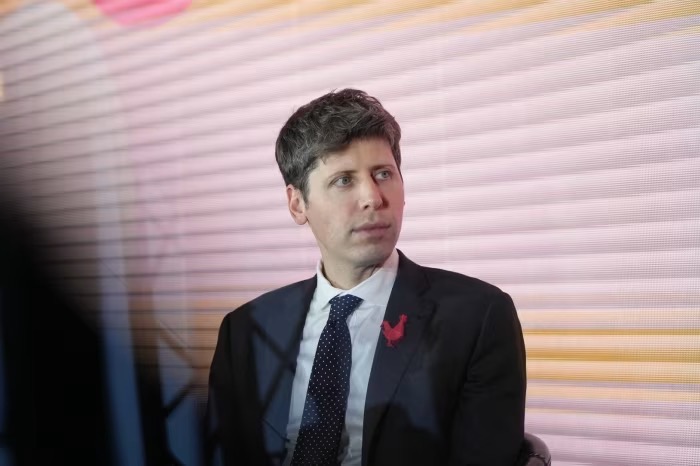
Source: Wall Street Journal Author: Katherine Bindley Compiled and edited by: bitPushNews As public views on artificial intelligence turn negative, warnings about large-scale layoffs are dwindling. OpenAI CEO Sam Altman (Sam Altman) said the industry has underestimated our ability to stay “people-centered” in everything. A year ago, many business leaders conveyed the message that artificial intelligence would completely destroy jobs. But over the past month or so, tech CEOs have begun to adopt a more optimistic tone. In late May of this year, OpenAI CEO Sam Altman (Sam Altman) — who has long predicted that artificial intelligence will cause drastic changes in the labor market — said at a conference: “We were largely right in predicting technology, but completely wrong in terms of social and economic impacts.” Soon after, in an interview with CNBC, he said, “Our industry underestimates our ability to keep people at the center of everything.” Anthropic CEO Dario Amodei (Dario Amodei) warned in May 2025 that artificial intelligence could eliminate half of startup jobs. A year later, he highlighted the more positive solutions facing companies adopting artificial intelligence: “They can do the same thing with fewer resources, which can lead to results such as layoffs; or they can do more with the same resources. But it takes creativity.” In an article published by the executive in June, he wrote that his job loss warning was to give policymakers and the private sector the best chance to adapt — he wasn't trying to be a “doomsday prophet.” (He also wrote that the possibility of “permanent unemployment” still exists.) This more optimistic outlook is to win back customers and the public who are dissatisfied with the promise of artificial intelligence to “disrupt the world”? Or do people now have a better understanding of the role of artificial intelligence in the workplace? Some comments on AI's potential to create jobs come at a time when companies are raising more capital for AI spending through layoffs. Meta CEO Mark Zuckerberg (Mark Zuckerberg) recently said in an interview with “Complex” that if companies focus on increasing employee productivity at a faster rate than automation, “theoretically, there should be more jobs in the future, not fewer.” In May of this year, the company began cutting 8,000 employees and streamlining the team. In February of this year, Amazon CEO Andy Jassy (Andy Jassy) talked about the job creation potential of artificial intelligence in an interview with CNBC. A year ago, he announced that due to artificial intelligence, the company would reduce the number of employees in the next few years. Amazon said that the 16,000 layoffs that followed had nothing to do with the application of artificial intelligence, but were aimed at continuing to reduce organizational hierarchies and revive the company culture. Overall, the narrative has moved from an apocalyptic scenario of “streamlining employees” caused by artificial intelligence to a future where workers can keep their jobs and become more productive. Anthropic CEO Dario Amodei once warned about job replacement issues caused by artificial intelligence, but in a recent article, he said he wasn't meant to be a “doomsday prophet.” This shift in sentiment isn't limited to tech leaders: an EY-Parthenon survey found that the proportion of CEOs who believe investment in artificial intelligence will lead to drastic layoffs fell from around 46% in January 2025 to 20% in May of this year. “They may have noticed that the labor market really isn't changing (or collapsing) as quickly as they expected,” said David Autor, an economics professor at MIT. “They may have realized that claiming that your great new product will destroy the economy is simply bad business strategy.” A recent study by fintech company Ramp and workforce intelligence firm Revelio Labs found that among companies that invest the most in artificial intelligence, employment growth rates are about 10% higher than similar companies that have not yet adopted artificial intelligence. “The companies I know that use artificial intelligence the most are also the ones that hire the most,” Ultraman said in an interview with CNBC. Some tech leaders say artificial intelligence is even creating demand for certain jobs, and more jobs that don't currently exist will appear in the future. Many well-known...

47d agoWendy#AI #OpenAI #Sam Altman #AI #employment

US government regulators urge federal deposit insurers to coordinate cryptocurrency regulation

Comparatively, the U.S. Government Accountability Office (U.S. GAO) sent a letter to Travis Hill, chairman of the Federal Deposit Insurance Corporation, on June 8. The letter stated that blockchain-related financial products and services have increased dramatically, and blockchain technology has been added to the high-risk list. The U.S. GAO recommended establishing relevant coordination mechanisms to help regulators such as the Federal Deposit Insurance Corporation jointly identify risks and implement regulatory responses in a timely manner. Furthermore, according to the GENIUS Act, which was passed last year, the Federal Deposit Insurance Corporation is its primary regulator to oversee the bank's stablecoin issuer. The U.S. GAO also recommended that the Federal Deposit Insurance Corporation rotate case managers assigned to banks to reduce the threat to independence. Three banks linked to the crypto industry went bankrupt in 2023, raising questions about whether regulators are taking sufficient action.

67d ago
Crypto 2029: The ultimate prediction of the crypto industry's four-year cycle

Crypto 2029: The ultimate prediction of the crypto industry's four-year cycle

Written by Luke Compiled by: Saoirse, Foresight News You are on the eve of the biggest change in cryptocurrency history. If you want to continue to cultivate the industry, you must keep an eye on everything that is happening right now. Currently, the entire industry has three core questions: What determines the value of a token? How to implement various cutting-edge technologies into the blockchain ecosystem? What will happen to the market when cryptocurrencies stop being a standalone asset and become the underlying infrastructure of traditional finance? I can simply analyze these three questions one by one from a theoretical level. There are countless people doing this every day, but empty talk can never reach a conclusion. Therefore, I plan to change the method: sort out the actual changes that will occur in the industry from now to 2029 in stages. The content is specific subjects, data, and time points. The content is sufficiently specific. After three years, everyone can go back and verify whether my judgment is accurate. This is just one of many future possibilities; some deductions are bound to go wrong. But vague and empty predictions of the future cannot be falsified, and opinions that cannot be falsified have no value. I'd rather give clear but potentially erroneous judgments than say empty words that are ambiguous and will never roll over. This predictive perspective comes from my work scenario: I have long been deeply involved in the intersection of crypto startups, industry regulation, and venture capital, and have in-depth communication with alternative asset managers and fund allocators every week. This doesn't mean that my judgment is necessarily correct, but my deduction fully takes into account the various constraints in reality. Mid-2026: When high-quality tokens were no longer of all kinds, until mid-2026, the non-public enterprise perpetual contract market had reached the point of fit in the product market before the market uniformly defined token value standards. This transformation began with the Hyperliquid platform. SpaceX's non-public perpetual contract launched on the platform was criticized in the early days due to Ventuals' malicious liquidation and manipulation of the market, but later it became the price reference target with the highest attention in the primary and secondary markets. By July, major banks and hedge funds will refer to this contract to price their private equity assets. Trading software for ordinary users such as Robinhood will also use it to predict the opening price of the company after listing. Every few weeks before a large company goes public, the price of this perpetual contract will accurately match the final opening price. The degree of accuracy makes the investment bank underwriting team that charges a seven-digit service fee and is responsible for pricing lose face. OpenAI's perpetual contract holdings with Anthropic have reached a new high. Over a period of time, this native crypto exchange became the most reliable channel in the world to obtain real-time valuations from leading unlisted companies. At the same time, a basic question arises in the minds of ordinary traders: How can the rest of the various currencies on the chain continue to be traded? The altcoin market has continued to rise for 18 months. The project's founding team and investment institutions continued to leave the market through large-scale spin-off transactions and time-sharing algorithms; on the other hand, $HYPE was the only token that built a closed loop of complete value capture, and the increase crushed all targets in the market. The industry has introduced more than 10 types of token value capture mechanisms, but the vast majority of them have failed to form a positive cycle. The root cause is that the projects attached to these mechanisms themselves have no asset value. Instead, the industry first solved the technical problem of how tokens capture value before searching for physical assets worth carrying value. This upside down in the industry is the underlying driver behind the boom in non-public perpetual contracts. What the market really wants is never perpetual contract products themselves, but high-quality assets; in 2026, the only high-quality assets that can be traded on the chain are synthetic income certificates for physical enterprises unrelated to the crypto industry. End of 2026: AI tracks do not require cryptocurrencies Anthropic and OpenAI to achieve technological breakthroughs. Competition on basic large-scale model racetracks is heated, and the market begins to price general artificial intelligence (AI) ahead of schedule. The ensuing ripple effect is that all non-leading basic model companies continue to flow out of related business capital. Capital is beginning to view generic AI as a core asset held on corporate balance sheets rather than a standardized tool popularized across the industry. In such an environment, the “AI+ encryption” circuit is quietly declining. It's not that this set of logic has been falsified; the industry has no time to refute it. The x402 payment agreement was officially launched, but there were no paying users; the on-chain smart device economy imagined by the industry has never been able to be implemented on a large scale, and all existing smart devices are settled in US dollars through APIs, which is no different from the consistent model of the traditional software industry. Venture capital practitioners have reached a consensus:...

67d agoWendy#Market topics
Does Claude's new privacy policy require “face-swiping data”? Face brushing is an old April rule; “traffic police” is a misinterpretation

Does Claude's new privacy policy require “face-swiping data”? Face brushing is an old April rule; “traffic police” is a misinterpretation

Author: Claude, Deep Wave TechFlow Original title: Claude is going to block ID checks? Face brushing is an old account from two months ago, and “handing over data to the police” is a misinterpretation: Anthropic's new privacy policy will take effect on July 8, and Chinese social media is generally interpreted as a major shift in “face brushing with real name+opening up data to law enforcement agencies.” However, after comparing the original text one by one, most of the sensationalist conclusions are untenable: authentication is an old mechanism that went live in April, and the so-called “lowering the disclosure threshold for law enforcement” has no basis in the old and new provisions. The real real increase is when the data flow direction of the Agent task is written into the policy for the first time. Anthropic issued a privacy policy update notice on June 8. The new version will take effect for Claude's free, Pro, and Max individual users starting July 8. After the notice was issued, Chinese technology and the community spread rapidly. The mainstream narrative focused on two points: Claude would introduce real name and face verification, and the new regulations lowered the threshold for disclosing user data to law enforcement agencies, marking “the end of the era of big model anonymity.” After comparing the original version of the new policy text, the old version (September 28, 2025 edition), and the Anthropic official update summary one by one, we found that most of the conclusions of this set of narratives did not match the original policy text. Myth 1: Brushing your face with your real name is an old mechanism from April. It's not the July New Deal that treats identity verification as a “sudden new deal” on July 8. This is the most common mistake in the current communication chain. The truth is, Anthropic enabled an authentication mechanism on the Claude platform as early as April 14, 2026. The next day, the official website Help Center officially launched the “Identity Verification” policy page. According to reports from V2EX, Dongfangcai.com, and 36 Krypton at the time, users who trigger verification must submit a government-issued physical document (passport, driver's license, or ID card) through the third-party compliance service provider Persona and complete a live selfie with the camera. Fortune accounts owned by Dongfangcai.com recorded at the time that most of the triggers were accounts that subscribed to Max's highest paid subscription, used frequently, or were suspected to be abnormal by the risk control system, and some developers were blocked due to AI misjudgment. In other words, the “do you want to hand in your ID card” incident already happened two months ago, and it already triggered a round of developer backlash at the time. The July 8 privacy policy update did not add this action; it simply included the data collection act corresponding to the verification mechanism already in operation in the privacy policy text — the new “Verification Data” (Verification Data) section, which clearly states what will be collected: images of government documents and portraits in the form of document numbers, dates of birth, photographs or videos on them, facial geometry templates (classified as biometric data in some jurisdictions), and the verification results themselves. Misinterpreting “reposting the policy text” as “the mechanism is suddenly launched,” and the entire timeline is misplaced. Myth 2: “Open data to law enforcement agencies” is untenable. The word-for-word comparison of the old and new provisions has the most impact on the unsubstantial tightening of the communication chain, and the one that should be corrected the “new regulations lower the threshold for disclosing user data to law enforcement agencies.” According to some Chinese paraphrases, the old version was only disclosed when “required by law,” and the new version was relaxed to the extent that Anthropic had “good faith”. We used Claude to compare this frame of comparison, and we can't find a source in the original text. Section 3 of the new version states that, based on existing information, Anthropic may share data with government agencies, law enforcement, or third parties when disclosure is reasonably necessary for four types of situations: to comply with laws, regulations or legal processes (including responding to enforceable government requests), prevent serious harm to persons or property, detect and prevent fraud or illegal activity, enforce terms, or protect the rights of Anthropic, its users and others. The key is how to write the old version (September 28 edition). Section 3 of the old version also allows data to be disclosed “when it is determined that disclosure is necessary to protect your or others' health and safety, prevent fraud or credit risk, or enforce legal rights”, and also includes “disclosure to government supervisory authorities... or assist in investigations in accordance with law.” In other words, the old version was never “only disclosed when required by law”; it originally gave Anthropic room to disclose based on its own judgment. Verbatim...

68d agoburnking#agent #AI topics #Anthropic #Claude

Opinion: Anthropic's export control compliance highlights the risks of AI centralization, and decentralized AI may become a key counterbalance

Comparing news, CoinFund founder Jake Brukhman said that the AI model naturally has centralized attributes and is also a key target for government supervision and control, and Anthropic's latest export control compliance actions further confirm this trend. He pointed out that decentralized networks can be an important counterbalance to the current situation. The core challenge in building a sovereign, open, and public decentralized AI is the issue of computing power. Although outsiders generally believe that only trillion-dollar technology companies can undertake cutting-edge model training, there are actually sufficient general-purpose GPU computing power resources around the world, and the key is to develop new distributed training algorithms. Brukhman said that teams such as Gensyn, Prime Intellect, Bagel, Pluralis, Nous Research, Macrocosmos AI, and Covenant AI have been exploring this direction. Although early outsiders generally thought it was not possible, it has been proven that distributed training is not only possible, but is also less expensive and more efficient than traditional solutions. Furthermore, he sees economic sustainability as another major challenge facing decentralized AI. While the open source model is important, it lacks a mature business model, and Pluralis is exploring the business path of tokenizing AI models by distributing model weight among participants. Brukhman said that it is currently at a critical moment. Whether AI is fully centralized and controlled by censorship and a unilateral government, or whether it is public AI built on an open decentralized network, will determine the future development direction of the industry.

69d ago

a16z Lianchuang Changwen responds to US AI regulation: the dual extreme narrative between “extreme freedom to innovate” and “extreme regulatory order”

Comparing news, a16z co-founder Marc Andreessen published a long, ironic article on the X platform. He expressed the issue of “AI regulation” and presented the conflict of positions through two extreme narratives. In the “opposition to AI regulation” narrative, Marc Andreessen portrays regulation as a force that suppresses innovation, could stifle garage start-ups, weaken the Silicon Valley ecosystem, increase compliance burdens, limit the development of AI and computing power infrastructure, and satirize “American AI regulators would ban horse-drawn carriages if they had controlled our grandfather.” In the narrative of “supporting AI regulation,” Marc Andreessen also ironically describes the order, safety, and industrial compliance system expansion that may be brought about by the regulatory system, including large-scale compliance industries, strengthened government regulatory frameworks, and social redistribution mechanisms. However, Marc Andreessen did not give a single conclusion throughout the article, but rather highlighted the long-standing structural conflict and rift between “freedom to innovate” and “security governance” through highly exaggerated language comparisons. Earlier, Anthropic issued a statement saying that the US government issued an export control order on the grounds of national security powers to suspend all access rights of any foreign entity to the artificial intelligence models Fable 5 and Mythos 5, regardless of whether the person is in the US or not, including Anthropic employees who are foreign citizens.

70d ago

Hedge funds predict Claude's end users will reach 500 million, and the enterprise-level market is the biggest AI dividend

According to surveillance, at the Sohn Montreal Investment Conference on June 4, Alex Sacerdote, founder and CEO of hedge fund Whale Rock, revealed that the number of daily active users (DAU) of Claude under Anthropic has rapidly soared to 14 million (2 million last year). Sacerdote predicts that the number of end users is expected to reach 500 million. He stressed that the AI industry is currently in the very early stages of vertical growth. The past three years have only been equivalent to a powerful search engine, and the enterprise market is the real ultimate trophy. As a major investor, Whale Rock participated in its Series G funding round earlier this year. In response to the AI bubble theory, Sacerdote refuted it. He pointed out that compared with the forward price-earnings ratio of giants such as Cisco, which was more than 100 times higher during the 1999 Internet bubble, today's AI leaders have solid profits and are much more reasonable. In his view, the biggest threat facing the industry today is not economic law, but government regulation. Americans seem to be wary of AI, and there is a serious “Not in my backyard” (Not in my backyard), but this technological trend is unstoppable. This optimistic expectation is echoed by Anthropic's meteoric capitalization process. On Monday (June 1), Anthropic secretly submitted a draft listing application to the US Securities and Exchange Commission (SEC). It plans to list as soon as this fall, and is expected to land on Wall Street ahead of OpenAI. Just last month, the company just completed a massive $65 billion Series H round at a valuation of $965 billion.

78d ago