比特币现金 · 1245

Hyperscale Data added 51 bitcoins, increasing total holdings to around 900

Comparatively, according to PRNewswire, the Bitcoin-centered US AI data center Hyperscale Data announced that its subsidiary ACG purchased 115.9205 bitcoins on the open market from June 30 to July 6. Up to now, its total Bitcoin holdings have reached about 900. As of July 6, 2026, the total value of the company's Bitcoin, cash, restricted cash and silver assets was approximately $111.4 million. This article is sponsored by GENG, Build Your Fortune on GENG (https://geng.one)

46d agoburnking
The US SEC approves T. Rowe Price's application for an actively managed crypto ETF to include up to 15 crypto assets

According to US SEC documents, the US Securities and Exchange Commission recently officially approved a rule change application for T. Rowe Price Active Crypto ETF (T. Rowe Price Active Crypto ETF) listed and traded on NYSE Arca. NYSE Arca first submitted a rule change request in November 2025, and was finally approved after two revisions. The ETF invests in seeking long-term capital appreciation and will hold 5 to 15 crypto assets under normal circumstances. As of the date of submission of the application documents, eligible assets identified by the sponsor include Bitcoin (BTC), Ethereum (ETH), Solana (SOL), XRP, Cardano (ADA), Avalanche (AVAX), Litecoin (LTC), Polkadot (DOT), Dogecoin (DOGE), Hedera (HBAR), Bitcoin Cash (BCH), Chainlink (LINK), Stellar (XLM), Shiba Inu (SHIB), and Sui ( SUI). Additionally, the fund can also hold USDC as operating capital to pay expenses and buy assets, but not as an investment object.

69d ago

Bitcoin is stable above $630,000, and analysts say the actual reversal may take months

Comparing news, Bitcoin remained above $63,000 on Monday, continuing its gains of around 4% on Sunday. This rebound is related to Strategy Executive Chairman Michael Saylor once again releasing a signal to increase holdings, which the market generally sees as an important advantage. Currently, the price of Bitcoin is hovering near the key 200-week EMA, which has historically been seen as an important support area for bull and bear transitions. Alex Kuptsikevich, chief market analyst at FxPro, said that the current market sentiment index has dropped to 8, similar to the situation in mid-2022, when the downward momentum weakened, but a real trend reversal did not occur until a few months later. In terms of altcoins, Audiera's BEAT token has risen 78% in the past 24 hours, and Siren (SIREN) has risen 33%. Both are Web3 AI projects on BNB Chain, but the specific upward catalyst is unclear. Derivatives data shows that unliquidated Bitcoin futures contracts have fallen from an all-time high of 901,000 BTC four days ago to 716,000 BTC, indicating that last week's sharp decline was mainly driven by strong bulls rather than large increases in positions by bears. Ethereum's open positions also fell back from 15.98 million ETH to 14.58 million ETH. Bitcoin Cash (BCH), on the other hand, experienced a simultaneous rise in price with open contracts. In the past 24 hours, unclosed contracts increased by more than 13%, reaching 1.64 million BCH, the highest level since July 2023, while the price fell 8.3% during the same period, indicating that market bearish sentiment continues to heat up, and it may still face the risk of further decline in the future. In terms of volatility, the 30-day annualized implied volatility index BVIV has fallen from a high of 59% to 50% last Friday, indicating that market fears have abated; Ethereum's implied volatility has also dropped from 75% to 69%. The five most actively traded contracts in the Deribit options market in the past 24 hours were all call options, including BTC call options with an exercise price of $170,000 and expiring on December 25 this year, reflecting that some investors are still betting on Bitcoin's sharp rise before the end of the year. However, the Gamma distribution of market makers around $60,000 may still amplify price fluctuations and become a major risk factor facing the market. Additionally, Zcash (ZEC) has rebounded 45% from last week's low after developers proposed a plan to fix the privacy pool forgery vulnerability. On the other hand, since Ethereum fell below $1600 last weekend, USDT briefly surpassed ETH in market capitalization, but as ETH rebounded, the two rankings have returned to normal. Currently, Bitcoin's market capitalization is still around $1.2 trillion, which is far higher than other crypto assets. This article is sponsored by GENG, Build Your Fortune on GENG (https://geng.one)

75d agoburnking
Quantum computing won't kill Bitcoin, but real risk is looming

Quantum computing won't kill Bitcoin, but real risk is looming

Author: nvk Compiled by: Saoirse, Foresight News Original title: Quantum Computing Is a Real Threat to Bitcoin, 99% of people get it wrong TL; DR · Bitcoin does not use encryption, but uses digital signatures. The vast majority of articles get this wrong, and the difference is significant. · Quantum computers can't hack Bitcoin in 9 minutes. This description is just a theoretical circuit; the machine itself doesn't exist, and it won't be around for at least ten years. · Quantum mining is physically impossible to achieve. It actually requires more energy than the total energy output by the Sun. · Bitcoin is fully upgradeable — it has been successfully upgraded before (Quarantine Witness, Taproot), and related work has begun (BIP-360). But the community needs to speed things up. · The real reason for the upgrade is not a quantum threat, but traditional mathematics has broken through countless cryptographic systems. secp256k1 is likely to be next. Quantum computers have yet to break any cryptographic system. · There is a real danger: the public keys of around 6.26 million bitcoins have been exposed. It's not something to be afraid of, but it's worth preparing ahead of time. The core main line sums up everything I want to say next in one sentence: the threat of quantum to Bitcoin exists, but it is still very far away; media reports are generally false and exaggerated; and the most dangerous one is not quantum computers, but rather disguised as panic or insignificant complacency. Whether it's people shouting “Bitcoin is over,” or people who claim “it's all right, don't be a fuss,” they're wrong. Seeing the truth requires accepting two things at the same time: · Bitcoin currently has no imminent quantum threat; the actual threat is probably far farther than what the headline party advertises. · However, the Bitcoin community should prepare ahead of time, as the upgrade process itself will take years. This is not a reason to panic, but a reason to act. Next, I'll use data and logic to make it clear. This chart compares two core quantum algorithms: the Shore algorithm (left) is a “cryptographic killer” that can exponentially accelerate large decomposition and directly crack public key cryptography such as RSA/ECC, and the Grover algorithm (right) is a general quantum accelerator that can bring square level acceleration to disordered searches. Together, the two have demonstrated the disruptive nature of quantum computing, but they are still limited by error correction hardware and cannot be implemented on a large scale. Media routine: The title Party is the biggest hidden danger, and the same movie is repeated every few months: · A quantum computing laboratory publishes a rigorous research paper with a large number of restrictions. · The tech media immediately wrote: “Quantum Computer Hacks Bitcoin in 9 Minutes!” · Crypto Circle Twitter simplified to: “Bitcoin is dead.” · Your relatives and friends sent a message asking if you want to sell it quickly. · But the original paper didn't say that at all. In March 2026, the Google quantum AI team published a paper stating that the physical qubits required to crack Bitcoin's elliptic curve password could be reduced to less than 500,000, a 20 times increase over previous estimates. This is indeed an important study. Google was very careful, did not disclose the actual attack circuit, and only issued a zero-knowledge proof. But the paper never said: Bitcoin can be cracked now, there is a clear schedule, or that everyone should panic. However, the title reads: “Breaking Bitcoin in 9 minutes.” CoinMarketCap once wrote “Will AI-Accelerated Quantum Computing Destroy Bitcoin by 2026?” The full text explains that the answer is almost certainly “no.” This is a typical routine: use sensationalized headlines to blog traffic, and be careful to keep the text accurate. But 59% of the forwarded links don't even click on it—for most people, the title is the message itself. There's a saying that's right: “The market prices risk extremely fast. You can't steal something that goes to zero once you get it.” If quantum computers were to disrupt everything, Google's own stock price (which also uses similar passwords) would have collapsed long ago. However, Google's stock price is stable. Conclusion: The title is the real rumor. The research itself is real and understandable, so let's take a close look. What is the real threat of quantum computers and what is not the biggest misunderstanding: “Cryptography” Almost every article about quantum and Bitcoin uses the term “encryption.” This is wrong, and it affects the whole world. Bitcoin doesn't rely on cryptography to protect assets; it relies on digital signatures (ECDSA, later using Schnorr through Taproot). The blockchain itself is public, all transaction data is always visible to everyone, and nothing needs to be “decrypted” at all. As Hashcash inventor Adam Back, as quoted in the Bitcoin white paper, said:...

137d agoburnking#mining #Bitcoin

CoinShares: Bitcoin Mining Companies Approaching Break-even, Shifting to AI Business Accelerates

Comparing news, the CoinShares report shows that Bitcoin mining companies faced significant profit pressure from the end of 2025 to the beginning of 2026 due to the fall in Bitcoin prices, the network's computing power close to historic highs, and the decline in hashprice (hashprice). In the fourth quarter of 2025, the average cost of a single Bitcoin Cash for listed mining companies rose to about $79,995, while the computing power price dropped from about $36-38 per pH/s/day to $28-30 in the first quarter of 2026, and the industry's profit margins continued to shrink. According to the report, this is one of the most challenging stages since the 2024 halving. During this period, the price of Bitcoin fell from a high of about 125,000 US dollars to about 86,000 US dollars. Competition for superimposed computing power intensified, and some mining companies were close to or below the break-even line. The industry has shown some signs of “clearing up”, including three consecutive reduction in mining difficulty (the first time since July 2022), and the cumulative reduction of more than 15,000 BTC reserves by listed mining companies. Companies such as Core Scientific, Bitdeer, Riot, and MARA have all sold off. In this context, mining companies' transformation to AI and high performance computing (HPC) has accelerated markedly. CoinShares anticipates that by the end of 2026, listed mining companies' share of revenue from the AI business may increase from about 30% to 70%, and the industry has already announced more than $70 billion in related contracts. Companies such as IREN, TeraWolf, Core Scientific, Cipher, and Hut 8 are accelerating their transformation to data center operators, while MARA and others are still mainly mining. At the same time, AI transformation is also driving up the level of industry leverage. For example, IREN issued about 3.7 billion US dollars of convertible bonds, TeraWulf's total debt reached 5.7 billion US dollars, Cipher issued 1.7 billion US dollars of preferential guarantee bonds, and the risk structure of the industry changed. Looking ahead to the future market, CoinShares believes that mining profits will be highly dependent on Bitcoin price trends: if BTC recovers to $100,000, the computing power price may rise to about $37/pH/s/day; if it returns to a high level of $126,000, or rises to about $59; conversely, if it falls below $80,000 for a long time, industry pressure will continue, but some mining shutdowns may help supply shrink and stabilize earnings. (The Block) This article is sponsored by GENG, Build Your Fortune on GENG (https://geng.one)

149d agoburnking

Hyperscale Data holds more than 622 bitcoins, and the value of cash and bitcoins is about 161.23% of the market value

In comparison, NYSE listed company Hyperscale Data, Inc. (stock code: GPUS) announced that its wholly-owned subsidiary Sentinum, Inc. and Ault Capital Group, Inc. (ACG) hold a total of 622.4378 bitcoins, with a market value of about $45,300,000 based on the closing price of Bitcoin of $72,790 on the same day. The company's combined cash and bitcoin holdings are approximately $85,700,000, accounting for about 161.23% of the company's current market capitalization. The company's executive chairman Milton “Todd” Ault III said there is a significant divergence between current market capitalization and balance sheet value, and the company is evaluating all viable strategic options to address this imbalance. Hyperscale Data said it plans to gradually use all of the cash allocated by the digital asset treasury strategy to buy Bitcoin.

158d ago
Why hasn't Bitcoin become “digital gold” yet?

Why hasn't Bitcoin become “digital gold” yet?

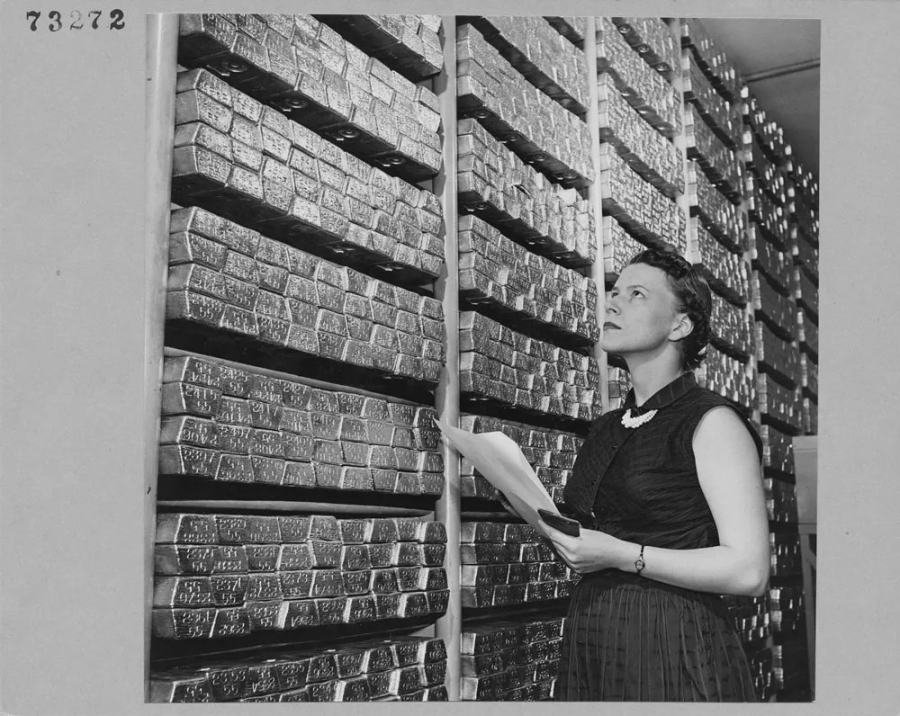
Author: Krieger, Castle Labs Compiled by Saoirse, Foresight News Original title: Why is Bitcoin not digital gold yet? From the legend of the Golden Fleece to South Africa's gold mines, humans have been relentlessly chasing this noble and mysterious treasure. Gold is like captured sunlight, and in fact, it may actually have originated in space — scientists believe that gold was created by the collision of dying stars (that is, supernovae). Most of Earth's gold is trapped in the planet's core, and the rest is carried to the surface by meteorites. Throughout human history, gold has always been the core commodity of commercial activity. If all the gold ever mined by humans were to be collected, it would form a cube of about 20 meters on each side and weigh about 176,000 tons. It's amazing how such a huge amount of wealth can be stored in a warehouse. Stocks, works of art, oil, or collectibles often require huge geographic or administrative resources, yet gold is uniquely portable. Gold is the ultimate store of value because it has no counterparty risk and is the only asset that is not a liability to anyone. J.P. Morgan once said, “Gold is money; everything else is credit.” Gold's high stock-to-flow ratio ensures its scarcity and protects it from arbitrary devaluation of fiat currencies. From ancient Lydian coins to modern central banks' reserve assets, gold has maintained the function of storing value for thousands of years, acting as a highly liquid, stable and reliable “ballast stone” during periods of financial, political, and social turmoil. Recently, however, a new contender for the “currency” title has emerged. Despite being very different from traditional metals, cryptocurrencies such as Bitcoin are touted as “gold killers” due to their volatility and cryptographic characteristics. Bitcoin is often called “digital gold”. Can it replace gold in the future? If it can be replaced, is it advisable to abandon this historic asset? This article will explore the position of gold and bitcoin in combination with the modern economy, decentralized finance (DeFi), and monetary attributes. Afterwards, we will determine whether these two assets can coexist in a highly competitive macro environment through comparative analysis, and analyze whether Bitcoin has the attributes of “digital gold” based on current trends. At the end of the day, diversification of assets may only benefit the global economy. And fiat money — an asset whose value depends largely on any monetary policy — is likely to be replaced by a more pure form of money. Gold, or an asset that hasn't been invented yet, may be able to escape the inherent devaluation dilemma of fiat money. In the current debt-dependent economic system, fiat money is fatally flawed. The historical heritage of gold in the financial field For centuries, gold has been the pillar of the financial system. As the only reserve asset, its status is not established by law, but is strengthened by the physical laws of the universe. As former Federal Reserve Chairman Alan Greenspan (Alan Greenspan) said in his famous testimony in 1999: “Gold remains the world's ultimate form of payment. In extreme cases, no one will accept fiat money, but gold will always be accepted.” The reason why gold is widely recognized around the world stems from its unique intrinsic qualities, which distinguish it from all other substances and establish its enduring position as a means of storing value — what Aristotle called a “stable currency,” which is reflected in the following five points: Durability: Gold is a precious metal that is almost unaffected by most chemical reactions. Unlike silver, it does not oxidize or tarnish, and can maintain stable physical properties over a long period of time. This chemical uniqueness allows it to play a reliable role in economic reserves and high-tech infrastructure (such as electric vehicles, drones, defense systems, rockets), and gold does not rust. Substitutability: Gold has a soft, ductile texture, and is easy to shape, cast, and split. This allows it to be standardized as an interchangeable coin or gold bar, and the gold units of the same weight (traditional units are ounces or grams) and purity (most commonly 14K, 18K, 24K) are essentially identical. Stability: Gold is a reliable store of value. Its rarity and usefulness (despite its high cost, it is still the best choice for critical industrial applications) allows it to maintain its value over the long term, in stark contrast to fiat currencies that commonly face inflation problems. Furthermore, gold has no counterparty risk, which further strengthens its position as the ultimate store of value. Portability: As a high-density, high-value metal, even a small amount of gold is of great value. This high value to weight ratio allows it to efficiently transport large amounts of wealth, which far exceeds silver, works of art, or anything else...

207d agoburnking#Retail investors #institutions #Bitcoin #Market topics #Monero #gold

SBI Crypto is suspected of being attacked, and there is a suspicious outflow of funds of around $21 million

Comparative news, according to market news, there was a suspicious outflow of about $21 million from addresses related to SBI Crypto, involving various cryptocurrencies such as Bitcoin, Ethereum, Litecoin, Dogecoin, and Bitcoin Cash. The stolen funds were transferred to five exchanges and deposited in the coin mixer Tornado Cash. It is worth noting that many indicators of this attack are similar to known North Korean hacker attacks. SBI Crypto is a mining pool subsidiary under the Japanese listed company SBI Group. As of now, the company has not publicly disclosed this security incident.

325d ago
IOSG's in-depth analysis of “currency stocks”: the truth about leverage under the guise of innovation

IOSG's in-depth analysis of “currency stocks”: the truth about leverage under the guise of innovation

Author of the original article: Sam, IOSG VentureStl; DR holdings are highly concentrated: MSTR accounts for 2.865% of the total BTC volume of listed companies, and project homogenization is serious: most reserve projects lack a sustainable advantage, long-term NAV premiums or relatively high-quality projects subside. Valuation bubbles are hidden: NAV multiples are generally >2× (only a few <1×), and stock prices are easily driven by announcements. At the same time, bear market risks can quickly encroach on premium Metaplanet through zero-interest convertible bonds + SAR financing, using the 20% dividend tax and 55% Bitcoin transaction tax difference to profit from SPAC/PIPE/convertible bonds/in-kind promises, TwentyOne and ProCap used a multi-step merger to achieve a full SharpLink financing scale of over US$838 million, almost fully pledged ETH. Joseph Lubin joined the board of directors and OTC with the Ethereum Foundation for 10,000 ETHBTCS innovative adoption of Aave with USDT While buying ETH collateral, crypto funds that are sensitive to loan interest rates and on-chain liquidity lay out strategic reserve stocks and set up special funds through PIPE, etc.; industry veterans act as strategic advisors, providing practical support and professional experience. An introduction to the boom surrounding listed companies' shift to cryptocurrency reserve strategies has not subsided at all. Some companies used this as a last-ditch attempt to save their business; others simply replicated MicroStrategy's approach, but a few truly innovative projects stood out. This article will explore Bitcoin and Ethereum's leaders in the strategic reserve sector — analyzing how they provide alternatives to spot ETFs, deploy complex financing structures, achieve tax optimization, create staked revenue, integrate the DeFi ecosystem, and develop unique competitive advantages. Bitcoin Panorama Overview According to BitcoinTreasuries.net's rectangular tree chart, MicroStrategy has quickly jumped to become the largest corporate holder among publicly disclosed entities — after iShares Bitcoin Trust — which today alone controls nearly 2.865% of the total supply of 21 million. bitcointreasuries.net Despite this, ETFs and trusts still dominate, led by iShares, Fidelity (Fidelity), and Grayscale (Grayscale). At the level of sovereign countries, the US and China hold the most bitcoins, and Ukraine also maintains considerable reserves. Among private companies, Block.one and Tether Holdings are at the top. Among all entities holding bitcoin, the US and Canada are at the top of the list, followed by the United Kingdom. But also worth watching are Japan's Metaplanet (ranked 5th) and China's Next Technology Holding (ranked 12th). bitcointreasuries.net The following list shows how the top 30 publicly traded companies hold bitcoins, with MicroStrategy leading the way. Even when MicroStrategy is excluded, MARA and Twenty One Capital are still at the top, but the distribution of positions is still highly concentrated — most companies outside the top ten hold the amount of bitcoins, which is only moderate compared to the leaders. bitcointreasuries.net, IOSG When evaluating publicly traded companies' Bitcoin reserves, two indicators are particularly noteworthy: the current value to cost ratio comparing the current dollar value of Bitcoin holdings with the initial payment cost. Higher ratios mean huge unrealized gains — both increasing returns and providing a buffer against market fluctuations. Bitcoin net asset multiples (BTC NAV Multiple) mNaV is calculated by dividing the company's market value by the dollar value of its Bitcoin reserves; some companies use enterprise value (EV) instead of market value when reporting mNaV. This multiple reflects investors' premium assessments of core businesses outside of the company's crypto assets. When MNaV > 1, the market values the company above the value of its Bitcoin holdings, indicating that investors are willing to pay a premium for each unit of “Bitcoin holdings.” The point is that MNaV &g...

396d agoWendy#IOSG Ventures #ProCap #TwentyOne #Coin stocks #Coin stock topics