比特币矿场 · 216

Tether Uruguay Bitcoin mining farm terminated due to power supply differences, project costing around $1.2 billion

In comparison, according to Reuters, Tether stopped Bitcoin mining operations in Uruguay in 2025. According to documents and sources familiar with the matter, the project later came to an end due to a disagreement between Tether and the Uruguayan National Electricity Company UTE on the electricity supply terms. Tether believes that the contract agreement is the minimum amount of electricity that can be increased, while UTE sees this as the maximum quota that cannot be exceeded.

1d ago
Binance has set up a creditor committee to intervene in the bankruptcy process, and the filing of claims has already been opened

According to the news, Biyin Poolin Mining Pool set up a creditor committee on August 12 and hired law firms to intervene and supervise the bankruptcy process on behalf of all creditors. Currently, the case has entered the bankruptcy asset sale and liquidation stage. Creditors do not need to appoint their own lawyers and can submit claims through the official Verita Global page. Earlier, Coinprint applied for Chapter 11 bankruptcy protection with the New Jersey District Bankruptcy Court in July and plans to sell its Bitcoin mining assets in Texas for 52 million US dollars.

1d ago
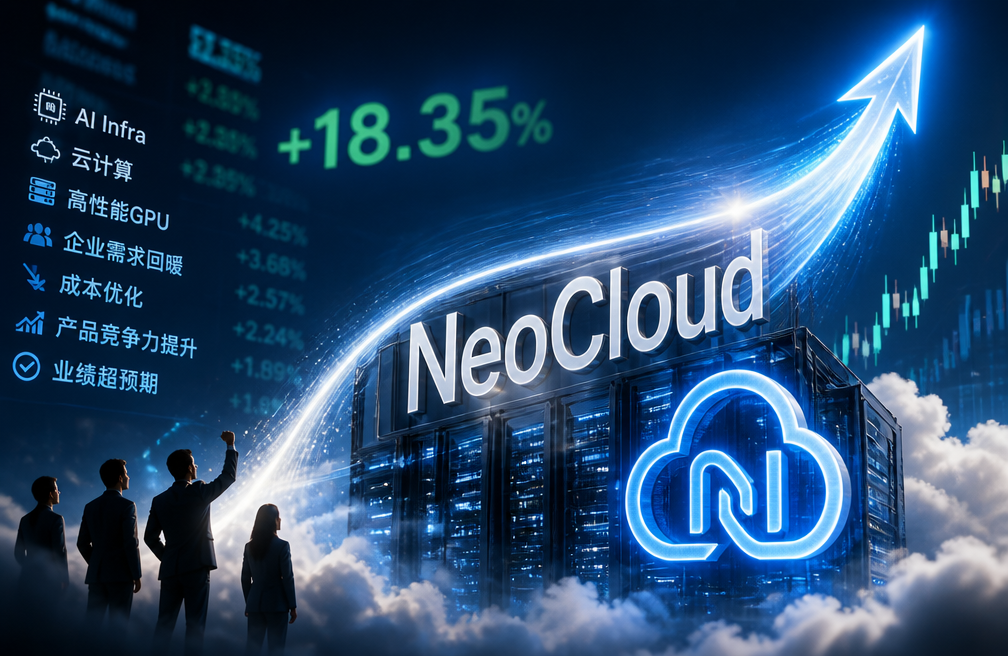
Why did NeoCloud rise more sharply than Nvidia in this round of technology stock rebound?

Why did NeoCloud rise more sharply than Nvidia in this round of technology stock rebound?

Author: Vibrant BlockBeats Original title: Why did NeoCloud increase the most in this round of rebound in US technology stocks? One of the strongest directions in this round of US tech stock rebound came from NeoCloud: CoreWeave, Nebius, and some AI infrastructure companies with power and data center resources. Logically, the capital is pricing an AI infrastructure equity certificate with multiple leverage: computing power production capacity that has been locked in a contract and can be delivered quickly. Once AI demand improves, NeoCloud's revenue expectations, financing capacity, and shareholder equity value are likely to rise at the same time. This makes it highly resilient during the rebound phase of technology stocks; electricity, data centers, financing, and valuation flexibility together form this level of leverage. The AI bottleneck is changing. What was most scarce in the early days was GPUs, followed by HBM and high-speed networks; today, what customers really lack is a complete set of capabilities to go online: get a GPU, have enough power, complete computer room construction, network connectivity, and be able to deliver large-scale clusters within a few months. NeoCloud is stuck in this gap. The funds were purchased by NeoCloud, a “powered computing power factory,” usually including GPU clusters, networks, liquid cooling, data centers, power access, and operation and maintenance services. The customer purchased a block of large-scale computing power capacity that can directly run AI training and inference. This is important. GPUs can be purchased, but power capacity, land, substations, data center licenses, and network access cannot be replicated in the short term. Large cloud vendors have capital and customers, and are also bound by the construction cycle; some AI companies want to preserve more flexibility and are unwilling to put all of their needs on a single hyperscaler. As a result, NeoCloud, which has ready-made electricity and rapid deployment capabilities, became an “accelerator” for investment in AI infrastructure. The market is willing to value them higher, and the core is that these resources have two characteristics: · Scarce: limited available electricity and deliverable data center capacity; · Contractable: customers are willing to sign multi-year capacity contracts with minimum commitments. When scarce resources can be locked in by long-term contracts, the market will reinterpret it from ordinary IT service revenue as a cash-flow asset with infrastructure attributes. Financial reports have changed the market's view on the business model. Previously, the market's main question about NeoCloud was very direct: buying GPUs and building data centers required huge amounts of capex. Will the company fall into a cycle of “continuous financing and continuous burning of money”? The answers given in recent financial reports were positive. CoreWeave Q2's revenue reached $2,575 billion, disclosing a backlog (signed but unconfirmed expected revenue) of approximately $104 billion; Nebius' AI Cloud ARR (annualized recurring revenue) reached $3 billion, and disclosed a number of large long-term contracts. The market focuses on single-quarter revenue, and more on the complete commercial loop that appears behind these numbers: AI customers sign long-term capacity contracts → some customers provide advance payments or minimum payment commitments → companies can more easily obtain debt and equipment financing → add GPUs, computer rooms, and power capacity online → revenue and EBITDA (profit before interest, tax, depreciation and amortization) increase → continued increase in financing capacity and expansion capacity. This has gradually moved NeoCloud's narrative from “high-capex GPU renters” to “AI that supports expansion with orders” “Infrastructure operators”. As long as orders, financing, and delivery can continue to be linked, growth will have a clear flywheel character. Why isn't funding prioritizing storage and the three major clouds? The choice of funding reflects poor expectations in different areas. Storage leaders are benefiting from AI demand, and products such as HBM and DRAM are still very popular. However, the market has begun to worry about rising supply, high prices, peaking profit margins, and whether upbeat expectations in the early period have been fully reflected in stock prices. The financial report is strong. If the forward guidance does not continue to be revised, the stock price will easily be under pressure. The challenge for storage companies is their cyclical nature. The market deals with prices, shipments, and gross margin paths for the next few quarters; when supply is likely to catch up with demand and average selling prices may fall, it is difficult for strong current performance to continue to drive valuation expansion. HBM/DRAM, NAND/SSD, and HDD are also in different sub-cycles, and the stock price performance of all storage companies cannot be attributed to the same reason. Three major clouds — Microsoft Azure, Amazon...

9d agoburnking#AI #Arithmetic power #US stocks #financing

Brazilian police seize an illegal Bitcoin mining site, seize 15 ASIC miners and 3 servers

Comparatively, according to Livecoins, during a routine inspection of scrap metal theft and sales, Brazilian police discovered a hidden illegal Bitcoin mine in a waste recycling bin. Approximately 15 ASIC miners and 3 servers were seized at the scene. The total value of the equipment is estimated to be over 200,000 reais (about 39,400 thousand US dollars). Bitcoin mining is not illegal in Brazil itself, but the devices are stealing electricity, and local electricity company Cemig estimates a monthly loss of around 6 million reais (about $1.18 million). A 37-year-old recycling bin employee was arrested on the spot for stealing and selling stolen goods without stating the origin of the equipment or providing an invoice. The police also opened a case against a 31-year-old man and woman in charge of the business. Police said they are currently tracking the flow of the mined cryptocurrency.

20d ago
Next to Anthropic, has Bitcoin mining salted fish turned around?

Next to Anthropic, has Bitcoin mining salted fish turned around?

Source: Letter AI Author: Wang Jing, Xiao Jinya On July 6, Bitcoin mining company TeraWolf signed a 20-year data center lease with Anthropic, with a total contract value of about US$19 billion. Two weeks later, another mining company, Hut 8, announced a long-term lease worth 9.8 billion US dollars. It built an AI data center in Texas and leased 352 MW of the computer room and power capacity to an undisclosed major customer for 15 years, with a total rent of about 9.8 billion US dollars. This is the second contract of the same size that Hut 8 has received at Beacon Point Park. The total contract value for the two phases of the project has reached 19.6 billion US dollars. Note: Hut 8 CEO Asher Genoot spoke at the Bitcoin Asia conference in Hong Kong and signed these two big orders, all of which were companies that started by mining Bitcoin. Until a few years ago, TeraWolf and HUT 8's main business was mining bitcoins. Mining machines are added when the currency price rises, and some equipment is turned off when the currency price falls or the electricity price is too high. The company's revenue also fluctuates greatly along with the currency price. Now, some of the mining machines are being removed, and the original mine has begun to be converted into an AI data center. The business done by mining companies also changed from mining their own coins to leasing space and electricity to AI companies. Mining machines have been eliminated for generations, but the mines have stayed. The land, electricity, and grid connection qualifications prepared for mining in the past may now be worth more than the mining rig itself. The reason why mining companies have reached this point still has to start with the bankruptcy of Core Scientific. The “mining king” of North America went bankrupt in the second half of 2020 until the end of 2021. Bitcoin ushered in a big bull market, and the price rose all the way from about 10,000 US dollars to nearly 69,000 US dollars. Taking advantage of this bull market, Core Scientific continued to buy mining machines, expand mining sites, and build large-scale mining facilities in Texas, North Carolina, and Georgia. At one point, it became one of the largest listed mining companies in North America. Note: Core Scientific is located at the Marble mine in North Carolina. (Source: Core Scientific) The logic behind Core Scientific's massive expansion is uncomplicated. Bitcoin mining companies invest in computing power to compete across the network. The higher the share of computing power, the more bitcoins they can usually share. As long as the currency price remains high, buy more mining machines and build more mines, there is an opportunity to recover the investment faster. But this expansion presupposes that mining companies cannot control: Bitcoin prices must be high enough to cover equipment and electricity costs. In 2022, that premise was shattered. The price of Bitcoin has dropped sharply from its high point, but energy prices such as natural gas are rising, and mining companies still have to pay for electricity and equipment. The mining machine is generating new costs every day, but the bitcoins that have been mined can no longer support previous expansion. By the end of that year, Core Scientific quickly ran out of cash, and the former North American “mining tycoon” finally filed for bankruptcy protection. Core Scientific isn't the only mining company like this; falling currency prices and rising costs are impacting the entire industry. Another listed mining company, Riot, mined 5,554 bitcoins in 2022, an increase of 46% over the previous year, but mining revenue fell from US$184 million to US$157 million. The company's net loss for the year reached US$509.6 million, mostly due to depreciation of mining machines, bitcoins, and acquired assets. Riot's data also revealed another layer of pressure on mining companies. Mining is an unstoppable equipment race. As more mining machines are added, the Bitcoin network will automatically increase the difficulty of mining, and the number of bitcoins that a single mining machine can mine will also decrease. Old mining machines are slow and consume a lot of electricity. They also cost an electricity bill, but the output is getting lower and lower. In order to maintain production and reduce electricity costs, mining companies can only continue to buy new mining machines with stronger computing power and lower energy consumption. In other words, not only do they have to continue to pay for electricity, but they also have to repeatedly invest in upgrading equipment. Once the price of the currency falls, the value of newly purchased mining machines and Bitcoin holdings will be reduced, yet the high electricity bill is more than a cent. In a bull market, it seems like a good deal that can be replicated over and over again; when it comes to a bear market, it will soon become a cash black hole. More importantly, starting in early 2023, the Bitcoin price gradually broke out of the trough and broke through the historical high of the previous round of bull markets in 2024. However, the profitability of mining companies did not recover along with the currency price. In April 2024, Bitcoin was halved for the fourth time, and the rewards for each block mined were reduced from 6.25 to 3.125. The so-called “halving” means that the Bitcoin network will... about every four years...

25d agoWendy#Anthropic #Core Scientific #TeraWolf #AI #Mining companies

Fidelity refutes the assertion that halving weakens Bitcoin's security: the average daily income of miners has increased from $263,000 to $40.2 million

Comparing news, Fidelity Digital Assets recently released a research report to respond positively to concerns from the outside world that Bitcoin halving will weaken cybersecurity for a long time. Report author and Fidelity Research Analyst Daniel Gray pointed out that Bitcoin cybersecurity not only relies on block rewards; transaction fees, market incentives, and other economic forces also continue to motivate miners to maintain cybersecurity, making continued attacks prohibitively expensive. At the data level, Gray pointed out that despite the continued reduction in block subsidies, the rise in Bitcoin prices has largely offset this impact. The average daily income of miners has grown from around $263,000 during Bitcoin's first halving cycle to over $40.2 million today. He wrote: Despite declining circulation, miner incentives, and the resulting cybersecurity, have continued to strengthen historically as the price of Bitcoin has risen. Since the fourth halving in April 2024, the subsidy for miners has been reduced from 6.25 to 3.125 bitcoins per block. However, there is a clear gap between the report's optimistic assertions and the actual situation of open market mining companies. Many industry analysts have described the current mining environment as one of the toughest on record due to declining block rewards, rising operating costs, and increased competition. In response, many mining companies have begun to transform into the field of AI and high-performance computing, using existing power infrastructure to meet AI computing power requirements. VanEck estimates that listed mining companies may need to raise up to $50 billion in additional capital to complete the full transformation to AI infrastructure, but AI data centers require far higher computer room standards, cooling, power redundancy, and networks than traditional Bitcoin mines, and the difficulty of transformation cannot be underestimated.

55d ago

Hut 8 settles $2.35 million securities class action, Galaxy strategically invests in digital asset lending platform Digital Prime Technologies

Comparative news, according to BBX data, yesterday the two leading listed companies in crypto concept stocks completed the settlement of key historical matters and strategic layout upgrades respectively. The core developments are as follows: Hut 8 Corp. (Nasdaq: $HUT) officially disclosed on June 23 that the company agreed to pay investors $2.35 million in cash to settle a securities class action lawsuit arising from the 2023 merger and acquisition with U.S. Bitcoin Corp (USBTC). The case was handled by the U.S. District Court for the Southern District of New York. The plaintiff was an investor who held Hut 8 securities between February 13, 2023 and January 18, 2024. The core allegation was that the company made significant omissions to disclose infrastructure issues (including energy power restrictions and network connection failures) at its King Mountain Texas Bitcoin mine during the merger and acquisition process, which constituted material misleading to investors. The trigger for this case was a questioning report issued by the shorting agency J Capital Research on January 18, 2024. Hut 8's stock price plummeted by more than 23% in a single day. The $2.35 million settlement amount accounted for about 19.6% of the plaintiff's estimated maximum recoverable damages of $12.8 million, exceeding the historical median settlement rate of similar claims involving only the Securities Law; the settlement still requires final court approval, and Hut 8 denies any wrongdoing and legal liability. The settlement removed the last major historical legal suspense in the company's AI/HPC data center transformation narrative — the valuation logic of its River Bend ($70 billion contract) and Beacon Point ($9.8 billion contract) dual-campus delivery schedule during the year unfolds in the context of a cleaner balance sheet. Galaxy Digital Inc. (Nasdaq: $GLXY) announced on June 23 that it is making a strategic investment in Digital Prime Technologies (securities lending technology platform) without disclosing specific financial terms. The investment builds on Galaxy's existing role as the initiator of the Tokenet platform — Tokenet was developed by Digital Prime Technologies in collaboration with institutional securities lending infrastructure provider EquiLend and was officially launched in May 2026 to introduce mature workflows, risk control mechanisms, and full life cycle management systems in the field of institutional securities lending into the digital asset lending market. Galaxy has now upgraded from a platform participant to an equity investor, directly linking the operation of the Tokenet platform to its own institutional lending and trading business, forming a triple collaboration of “product + balance sheet + equity”. This move is highly consistent with Galaxy's overall business strategy: on the basis of CoreWeave's 15-year AI data center lease (Phase 1 133MW delivered in April) bringing stable cash flow, the dependence on a single beta Bitcoin price was further reduced by deepening the institutional digital asset lending infrastructure layout — Galaxy was also listed by institutional research reports on the same day as one of the few crypto concept stocks that can maintain business resilience during the Bitcoin price downturn cycle. The diversified layout is considered to be pure BTC The core reason for the relative decoupling of price exposure.

59d ago

Bitcoin Miner Hut8 Agrees to Pay $2.35 Million to Settle Investor Class Action Lawsuit Over 2023 Merger Disclosure Dispute with USBTC

Bitcoin mining company Hut 8 has agreed to pay $2.35 million to settle a securities class action lawsuit filed by investors. The lawsuit alleges that Hut 8 misdisclosed operational risks and potential issues related to the transaction during the 2023 merger with U.S. Bitcoin Corp. The lawsuit focused on power and network connectivity issues at the King Mountain Bitcoin mining project in Texas, USA. Investors claim that Hut 8 exaggerated consolidated earnings and did not fully disclose related operational risks. According to the settlement agreement, Hut 8 does not acknowledge the existence of any offense or liability. According to the documents, the settlement amount of $2.35 million represented approximately 19.6% of the plaintiff's estimated maximum recoverable loss of $1.08 million. The settlement plan is still subject to final court approval.

60d ago

Thailand investigates and punishes multiple illegal Bitcoin mining sites and seizes 315 mining machines

Comparative news, according to Bangkok Post, Thailand's Ministry of Home Affairs, the Provincial Electricity Authority, police and local administrators carried out inspections at 14 illegal Bitcoin mining sites in 5 northeastern provinces and seized 315 cryptocurrency mining equipment. Investigators discovered that the relevant site had tampered with electricity meters and illegal electricity connections to operate mining equipment. According to the report, the related losses are estimated at 40.38 million baht (about 1.24 million US dollars), including 5.38 million baht (about 165,000 US dollars) electricity violation fines and about 35 million baht (about 1.07 million US dollars) of unpaid electricity bills. Officials have now collected evidence and filed complaints against those involved in the case.

62d ago