
深圳 · 1039

Ren Zhengfei talks about artificial intelligence

According to similar news, Wen Chugang, chairman of China Huaneng Group Co., Ltd., and Zhong Guodong, general manager, held talks with Ren Zhengfei, CEO of Huawei Technologies Co., Ltd. in Shenzhen on August 20. Ren Zhengfei welcomed the visit of Wen Shugang and his entourage. He said that China's development of artificial intelligence has two important basic advantages: the first is the advantage of electricity, and the other is the advantage of telecommunication networks. In the next step, the two sides have a lot of room for cooperation in the fields of AI, computing power and computing collaboration. The two sides should build on their respective core advantages, strengthen joint technological innovation and scenario-based application, and jointly support the high-quality development of new energy sources and the construction of new power systems.

1d ago

Xu Jiayin was sentenced to life imprisonment and Evergrande Group fined 8.82 billion yuan

Comparatively, on the morning of August 20, 2026, the Shenzhen Intermediate People's Court of Guangdong Province handed down a public verdict in the first instance of the case of Evergrande Group Co., Ltd., Evergrande Real Estate Group Co., Ltd. and defendant Xu Jiayin. The court punished Evergrande Group for several crimes, with a fine of RMB 8.82 billion; a fine of RMB 7 billion for Evergrande Real Estate; Xu Jiayin was punished with a combination of crimes, life imprisonment, deprivation of political rights for life, and confiscation of all personal property; and continued to recover the illegal proceeds, and ordered compensation for the shortfall. The court found that Xu Jiayin is the actual controller of Evergrande Group. Between 2016 and 2021, Evergrande Group, Evergrande Real Estate and Xu Jiayin inflated assets, concealed liabilities by means of financial fraud, carried out crimes such as illegal absorption of public deposits, fund-raising fraud, fraudulent issuance of securities, and illegal disclosure of important information; obtained control of financial institutions through bribery, and illegally withdrew credit and insurance funds. Xu Jiayin also used his position to facilitate organizational financial fraud and usurped the company's assets in the name of dividends. The court found that the relevant acts seriously disrupted the order of the market economy, that the amount of the crime was particularly huge, the circumstances were particularly egregious, and that they were severely punished according to law. On the same day, two courts in Shenzhen also ruled on cases involving Evergrande involving illegal absorption of public deposits and fund-raising fraud. 56 people, including Zhen Litao, Ke Peng, Xu Tenghe, and Xu Zhijian, were sentenced to fixed-term sentences ranging from 18 years to 1 year and 10 months, as well as fines or confiscation of property.

2d ago
Why is capital chasing AI Native and ignoring the old Internet

Why is capital chasing AI Native and ignoring the old Internet

Capital doesn't reward being old-fashioned, not because old-fashioned people are at fault. The old part is clearly priced. There is no bad information, so there is no excess profit. Global venture capital was $510 billion in the first half of 2026, surpassing $44 billion for the full year of 2025 in one and a half months. More than 70% have entered AI; OpenAI and Anthropic took 217 billion dollars, accounting for 43%. With that much money, you'd think everyone could share a little bit. The truth is that distribution is more extreme than total volume, and the first sieve doesn't screen the industry, it screens people. The category that has been screened out now has an unkind name: the internet is old. Let's just say one thing: the “old man” in this article has nothing to do with age. It refers to a set of methodologies that have been formed in the mobile internet cycle, have been tested over and over, and have brought huge returns to holders. The person holding it may be 45 years old or 32 years old. It was this methodology that was being repriced, not the year of birth. Confusing these two things is Lao Deng's most common mistake and one of the most comfortable mistakes — because if the problem is someone else's age discrimination, you don't need to change a single word. 01 What is AI Native The term has been misused. They can use ChatGPT not called AI native, nor AI in the company name, let alone in their twenties. There are three things that really separate people. First, the starting point is a model, not a requirement. The order in which Lao Deng makes a product is: look at what the user wants, write down the requirements, and find technology to implement it. The order of AI natives is reversed: first figure out what level the model is capable of today and what step it is likely to reach tomorrow, and then move from this capability boundary to the external product. The former uses the model as a tool, and the latter uses the model as the foundation. There was no difference between these two kinds of things made by humans in the first edition; by the third edition, there was a difference of one species. Article 2. The default unit of an organization is not a person. The division of labor in the Internet age is the division of one thing into ten people. AI Native's division of labor is to take ten things from one person and add a bunch of agents. The CEO of a domestic application company said that the team consists of less than ten people, but a large number of AI work at night, and the first thing employees do every morning is check the work the AI handed in the night before. Cursor's side is even more extreme. Public reports mention that the company doesn't have a product manager; engineers write their own code, talk to users themselves, and participate in recruiting people themselves. Article 3. Information is first-hand. AI Native's input sources are papers, model cards, GitHub issues, original discussions on X, and self-run evals. Lao Deng's input sources are industry summits, closed-door meetings, brokerage reports, interpretation of public accounts, and finding someone to drink coffee with. This one is the least obscure and most lethal; I'll talk about that separately later. I'm satisfied with all three. The 25-year-old is an AI native, and so is the 45-year-old. I'm not satisfied with the three rules; I'm still an old man at the age of 25. AI natives are a state, not an age group. The trouble is that tickets in this state are works, not resumes. 02 The two lists spread the results of this round on the table. These are two lists. The first one is an all-AI native company. Their valuations are not rising; they are exchanging orders of magnitude. List 1 · Upstream OpenAI raised $122 billion in a single round of financing in Q1 2026, followed by $852 billion, the largest private equity financing in history. Anthropic Q2 had a single round of $65 billion, after investing $965 billion, accounting for about half of the total global venture capital for the quarter; the revenue operating rate in May reached about $47 billion. DeepSeek raised about 70 billion yuan in its first round of financing in May 2026. In April of the same year, Liang Wenfeng raised his direct shareholding from 1% to 34%, and controlled a total of about 84.29% of the shares through related entities. The Dark Side of the Moon (Kimi) was estimated at $4.3 billion in December 2025; it went for three consecutive rounds from January to February 2026 to reach 18 billion; the D round in May was about $2 billion, breaking 20 billion dollars after the investment; the July round surpassed $3.5 billion, after investing 35 billion dollars; the pre-IPO target was 50 billion dollars. ARR broke 100 million in March, 200 million in May, and held steady at 300 million US dollars in June, with APIs accounting for more than 70%. Smart Spectrum · MiniMax successively landed in Hong Kong stocks in early 2026, with a market capitalization exceeding 100 billion yuan. It was one of the first major model companies listed in China. The second one...

4d agoWendy#AI #DeepSeek

Geosheng Intelligent Robotics Co., Ltd. plans to go to Hong Kong for an IPO, raising up to 300 million US dollars

Comparing news, according to Bloomberg, people familiar with the matter revealed that Alibaba-supported robot manufacturer LimX Dynamics (LiMx Dynamics) has secretly submitted an IPO application in Hong Kong to raise up to 300 million US dollars. The wave of Chinese robotics company listings is once again growing. LimX Dynamics is partnering with CITIC Securities to advance the deal. LimX Dynamics (LimX Dynamics) is a embodied intelligent robotics company headquartered in Shenzhen, China. It was founded in 2022 and focuses on the R&D, manufacturing and commercialization of general-purpose robots. Core products include full-sized humanoid robots LimX Oli and LimX Luna, as well as the TRON series of modular robots, and the in-house development of the humanoid brain system LimX COSA. It is committed to promoting the implementation of AGI in the physical world, with the three major technologies of hardware design and manufacturing, integration of cognitive and motor intelligence, and embodied intelligent operating systems. The products have been used in scientific research, commercial services, and industrial inspection. The company received strategic investments from Alibaba, JD, etc., and recently completed multiple rounds of financing.

4d ago#financing

LimX Dynamics reports plans to go to Hong Kong for an IPO to raise up to 300 million US dollars

Comparing news, according to Bloomberg, people familiar with the matter said that Shenzhen-based robotics company LimX Dynamics has secretly submitted an initial public offering in Hong Kong and plans to raise up to 300 million US dollars. The company is cooperating with CITIC Securities to advance related transactions. The move comes at a time when a number of Chinese robotics companies are preparing to go public.

4d ago#financing

Chinese copper foil manufacturer Longdian Huaxin went public on the New York Stock Exchange, surging more than 11% on the first day

Comparative news, according to BIT (bit.com) market data, Chinese copper foil manufacturer Longdian Huaxin (FOIL) has been listed on the NYSE. It closed up 11.36% on the first trading day, and rose 6.12% after trading, and is now reported at $26. The company's IPO raised 94.3 million US dollars, making it the largest Chinese company's IPO in the US since Chahime in April last year. The company is headquartered in Shenzhen, and its products are used in fields such as electric vehicles and 5G communications. It is said to rank first in the global battery copper foil market, accounting for 7.6% of the market share.

9d ago
Office Agent's Summer: Big manufacturers are raising their knives and slashing their former self

Office Agent's Summer: Big manufacturers are raising their knives and slashing their former self

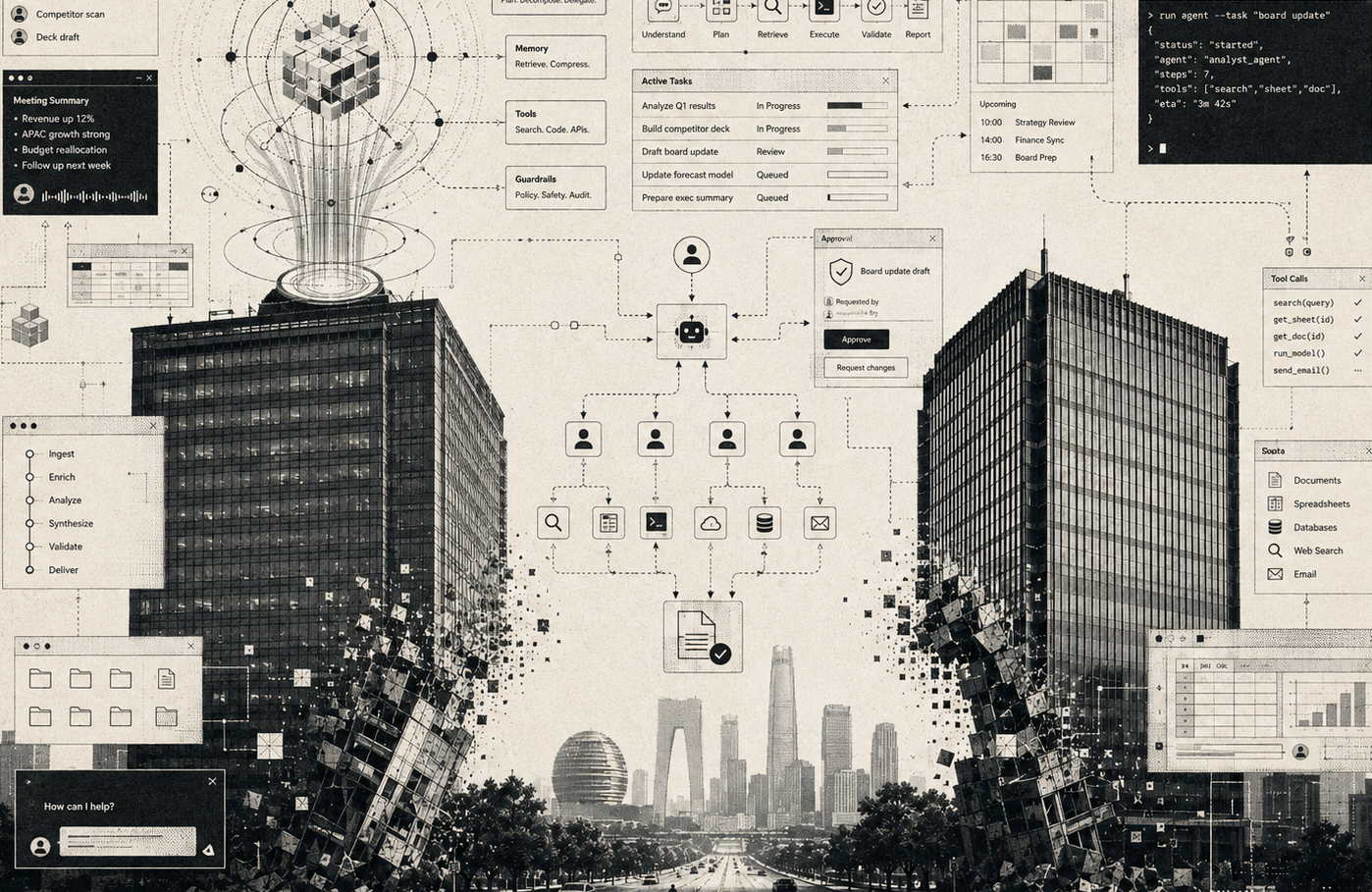
Author: Motion Detecting Original title: Twenty Years of the Internet in China, and Office Agent's This summer, there are two office buildings across the street in Hangzhou. On the roof of a building before the 2026 Spring Festival, a red and gold statue of Sun Wukong was erected next to the dowel's lightning symbol. The roof of the other building is the symbol of Feishu. On the day Sun Wukong stood up, photos were quickly uploaded on social media. Many people laughed that this was the most simple commercial battle. The meaning of DingTalk was probably one step higher than Feishu. The two have been playing for ten years. From whose messages you've read, to documents, forms, and customer lists, all the way to the roof. However, the monkey on the roof had empty hands and didn't wave. It's going to take out something, at the press conference a little over a month later. March 17, Xixi, Hangzhou. The founder of DingTalk was uninvited to stand at the press conference. He created DingTalk in 2015, left in 2021, and was invited back in 2025. On this day, he wants to release a new set of AI assistants. The name is Goku, and the logo uses the monkey on the roof of the building. Ali CEO Wu Yongming sat offstage. Needless to say, we need to break the nail and refine it again with AI. In the past, humans used DingTalk; in the future, AI used DingTalk. When talking about the logo, he removed the gold hoop from the monkey's head, saying it was already a battle over the Buddha. Offstage applause. The monkey that made a big fuss at Tiangong didn't go to Lingshan. He was crushed by Wuxing Mountain for 500 years. When he came out, he had an extra hoop on his head. He rolled all the way under the spell, and his temper was cleaned up little by little. The one who actually walked to Lingshan was already another monkey; he no longer wanted to be king. Fighting over the Buddha is the new name Qi Tian Daisheng got after walking that path. If you want to get there, you have to get rid of the original monkey first. This story is about Goku, but it's also about Ding Ning. What was ostensibly unveiled at this press conference was an AI product, but the one that really wanted to move was DingTalk itself. DingTalk has rewritten more than a thousand low-level abilities into instructions that AI can directly call. In the past, employees had to open approval, schedule, and business systems layer by layer on the screen. Goku could bypass this level, directly read data, adjust tools, and then move things on. Not only is there no way to hand it over, it's not just an entrance; it's also the company's internal organs that have been growing for ten years. However, after just 86 days, he left DingTalk on June 11. This incident is a bit dramatic, but returning to the Chinese Internet for the past 20 years is nothing new. Companies that have actually lived through cycle after cycle have almost all done the same thing, that is, hand over the next knife to their own people when the old business is still making money and the old products are still at their best. In the past 20 years of the Chinese Internet, no one has relied on protecting their former self until today. If you want to survive, you must first kill your former self. Big internet companies have been practicing this art for a long time to kill themselves at the pinnacle. October 2010, Shenzhen. Zhang Xiaolong wrote a letter to Ma Huateng, saying that QQ is a computer, and Tencent needs a communication tool born on a mobile phone. Tencent did not directly hand this matter to the QQ team. The three internal teams started construction at the same time. QQ, QQ address book, and QQ email each made one. Whoever did it first counts as who did it. That year, QQ was at its highest point. January 21, 2011, Guangzhou. The team that works for QQ email launched WeChat 1.0. Tencent took the lead. Two years later, something similar happened in Hangzhou. In 2013, Ma Yun said that the responsibility of the Alibaba Wireless team was to destroy Taobao. That year, Taobao was in the center of the stage. Two years later, mobile Taobao became the main battleground for Double 11. The words Taobao have been preserved, but the screen where people buy things has been replaced, and few people sit in front of a computer and open the Taobao web version. After another five years, it's Beijing's turn. August 2018, Zhichun Road. The China Airlines Building removed the four words “Today's Headlines” and replaced them with “ByteDance.” Today's headlines are still open, and are still being updated, as well as users and ads. That year, today's headlines are still national apps. It's just that TikTok has surpassed it. Three months later, Chen Lin became the CEO of Today's Headlines, and Zhang Yiming's official title was changed from “Today's Headline Founder and CEO” to “ByteDance Founder and CEO.” It's the same three times. Things that need to be used are making money and are getting a lot of attention. It seems like the last place the whole company should touch. But when it grows old on its own, the company will grow old with it. So you have to use it while it's still tough, hand over the next knife to your own person, let the new one grow from the inside, and then eat the old one little by little. The Division of the Losers, but it's bound to be...

10d agoburnking#agent

US robotics startups still rely on the Chinese supply chain, and carry key components in “suitcases”

Comparatively, in the context of the rapid development of the US robotics industry, more and more robot startups are obtaining key components through the Chinese supply chain, and are even entrusting investors and visitors to bring them back to the US after purchasing them from the Chinese market. According to reports, in April of this year, when visiting Shenzhen, China, a venture capitalist from San Francisco carried a purchase list from an American robot startup requesting the purchase of humanoid robots and various robot components. He then went to Huaqiangbei, Shenzhen, one of the world's largest electronics distribution centers, to purchase relevant equipment and parts, and arrange for them to be shipped back to the US. Industry insiders said that although the US has promoted the localization of the robot industry in recent years and tightened restrictions on China's high-tech supply chain, China still has the most mature, lowest cost, and most diverse robot parts ecosystem in the world, including motors, sensors, batteries, controllers, actuators, and mechanical structural parts. American robotics startups face financial pressure and R&D cycle challenges, and the Chinese supply chain can provide rapid iteration, low-cost manufacturing, and mature engineering support, making it an important choice for many companies. This phenomenon reflects a real contradiction in the global robot industry chain: the US has an advantage in artificial intelligence algorithms, software, and capital, but it still relies heavily on China's mature supply system in terms of robot hardware manufacturing and parts supply. As competition for humanoid robots heats up, American companies are trying to establish a local supply chain, but industry insiders believe that it is still very difficult to completely replace China's manufacturing capacity in the short term. (The Information)

15d ago

Nvidia denies news that it is speeding up its entry into the telecom operator market and is seeking cooperation with base station vendors in China

Comparing the news, an NVDA.O (NVDA.O) spokesperson responded to market news about it speeding up its entry into the telecom operator market and seeking cooperation with base station manufacturers in China, saying that the report was unfounded and that the description was untrue. Earlier, it was reported that Shenzhen Jiaxian Communications Co., Ltd. is participating in the cooperative development of Nvidia's 6GAI-RAN base station.

15d ago

Shenzhen “fake hacker” jailed for 3 years and 3 months for attempting to extort 0.88 bitcoins and 90,000 USDT from a company

Comparative news. According to a report by Procuratorate Daily, an employee of an enterprise in Shenzhen posed as an overseas hacker after stealing the company's core research and development data due to online loan pressure of more than 400,000 yuan to demand a ransom of 0.88 bitcoins and 90,000 USDT from the company. In the end, he was jailed for three years and three months and fined 10,000 yuan for extortion (attempted).

16d ago