
特斯拉 · 2504

Tesla's driverless electric car Cybercab press conference scheduled

According to Twitter, Tesla announced that it will hold a Cybercab press conference in Austin, Texas on September 3, 2026. In April of this year, Tesla's driverless electric vehicle Cybercab was officially put into production in North America. The car is driven by AI and does not require a steering wheel, pedals, or rearview mirror.

11h ago
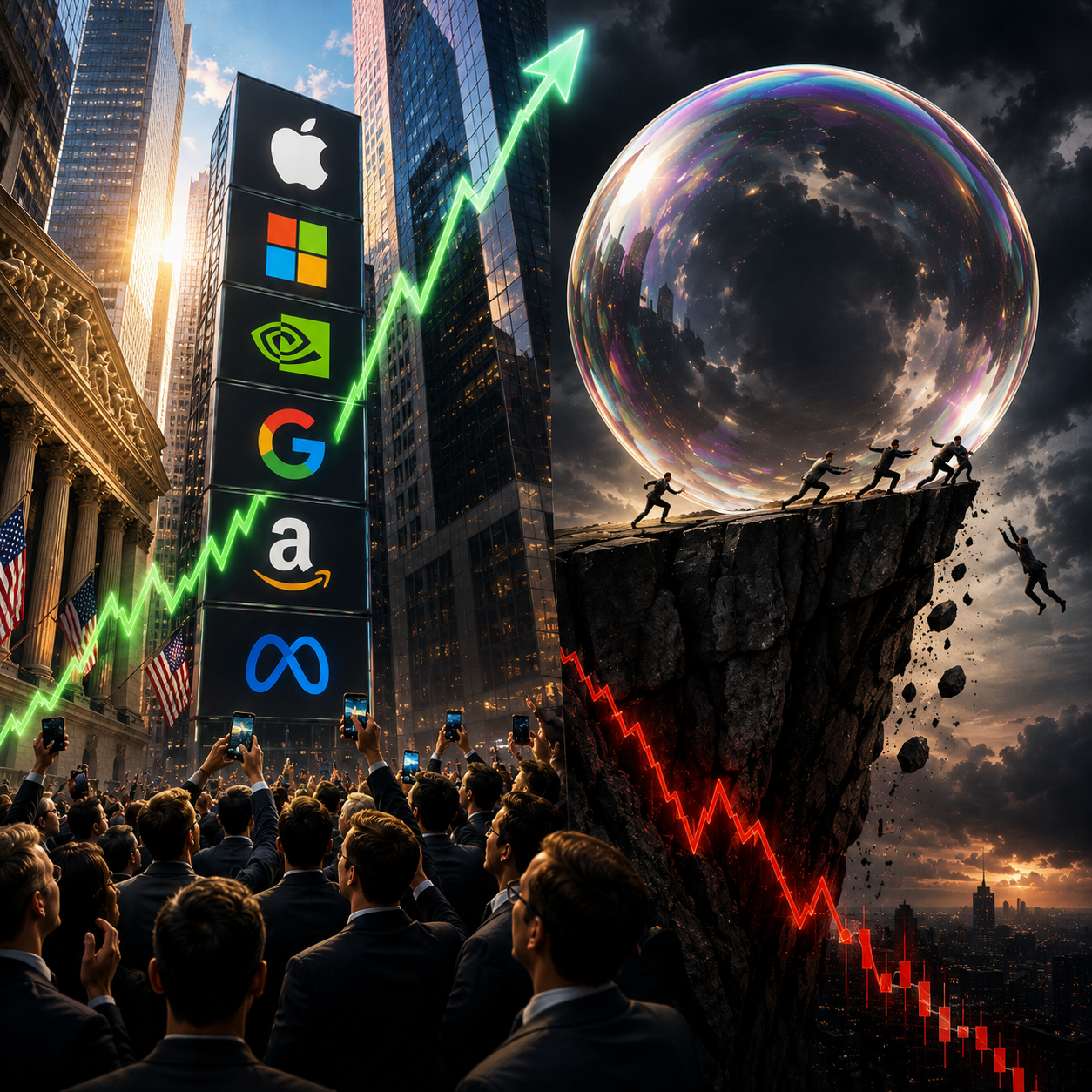
The three major US stock indexes closed higher this morning. Cryptocurrency concept stocks continued to rise, and Tesla hit a new high during the month

Comparative news is that US stocks closed on Friday. The Dow initially closed up 0.98%, the S&P 500 index rose 0.43%, and the NASDAQ rose 0.43%. Tesla (TSLA.O) rose 5.14%, Oracle (ORCL.N) rose 3.11%, and SpaceX (SPCX.O) rose 2.22%. Intel (INTC.O) fell 2.24% and Nvidia (NVDA.O) fell 0.98%. In terms of cryptocurrency concept stocks, MSTR rose 6.10%, CRCL up 5.16%, COIN 8.20%, BMNR 5.84%, SBET 4.22%, and PURR 4.96%.

16h ago
US Stock Value Investing Is Heading Into Another Trap

US Stock Value Investing Is Heading Into Another Trap

Source: Shenchao TechFlow Original title: (Opinion: Value investing in US stocks is not equal to fundamental investment) When “fundamentals are dead” becomes a consensus, investors who blindly organize giants will eventually experience astonishing capital destruction. Guide: When the market shouted “fundamentals are dead” and the capital frenzy formed a group of tech giants, the author used an astronomy discovery to unravel the logical loopholes behind this narrative. Starting from the composition of valuation multiples, this article reminds investors to distinguish between the true quality of an enterprise and the premium that the market is willing to pay. It is particularly cautionary about long-term allocation in the crypto and technology sector. I promise this introduction won't be as long as the last one on the weather. But please give me 90 seconds. More than 100 years ago, a woman named Henrietta Levitt was doing the tedious job of measuring the brightness of thousands of stars on photographic negatives (the way they were imaged before film appeared). She noticed one characteristic of a class of pulsating stars: the slower they pulsate, the brighter they themselves are. ¹ This might just seem a little interesting today, like “OK, that's pretty cool.” But at the time, astronomers couldn't tell the difference between a dark star very close to Earth and a very bright star far away. For them, the two left the same stain on the photographic film. Visual brightness is a messy mix of these two variables: how bright the thing itself is, and how far away it is from us. Henrietta's work decouples these two things: if you can observe the rate of pulsation, you can know its true luminosity; if you know its true luminosity, you can reverse the distance based on how dark it looks. Astronomers call it “standard candlelight.” A few years later, a man named Edwin Hubble discovered one of these pulsating stars, applied Levitt's math, and discovered what he had always thought was a cloud of gas within our galaxy; in fact, it was an entire independent galaxy, one million light years away. So in simple terms, the observable universe has grown about a trillion times larger, just because one person has figured out how to tell the difference between what things look like and what they actually look like. That in itself is obviously pretty cool. But another interesting thing is that around the same time period, two other astronomers each independently drew a scatterplot. One axis was actual luminosity, and the other axis was temperature. They discovered that stars are not randomly distributed in this space, but rather clustered into different families. The meaning behind this is: stars with the exact same visual brightness may and do belong to a completely different family, have a completely different past, and most importantly, have a completely different future... So what is written in the star? Over the past few years, there has been much discussion about markets, narratives, capital, company building, and financial nihilism. This feeling seems to have reached a feverish climax as the tech and financial world begins to face a very different future than a few decades ago. What is particularly clear is that separating progress from asset prices has become more noisy and in many ways more repulsive. But as an investor who makes a living by buying assets that (hopefully) outperform, a simple framework is: forward returns are roughly equal to growth in fundamentals multiplied by changes in valuation multiples (and multiplied by the dividends you've collected along the way). In this case, the valuation multiplier can very cleanly correspond to the smudges on the photographic film. It's an observable data point, but it entangles two things that the market can't directly see: how good the company actually is, and how far (or how long) its future cash flow is now. I think most of the money that can be made comes from investors who are most capable of unraveling these two variables earlier than others (or “perception of differences”), and we will continue to see astonishing capital ruin for investors who treat their stains as stars. Value investing is not equal to fundamental investing. I think there is a misunderstood view: fundamental investing has historically dominated the creation of excess returns. Most of these legends come from the Graham, Buffett, and Tiger Foundation lineage, as well as numerous narratives built around this group of people. It is believed that by some point in the 2000s, this approach was no longer effective, and anyone who invested in this way was overwhelmed by momentum, trends, and “direct buying tech giants.” The conclusion was (and still is?) It's “fundamentals are dead.” ² The modern version of “fundamentals don't matter” itself isn't stupid. It's rooted in a lot of ideas that many of us on the Compound team have written before. The biggest companies get the most mechanical purchases, and the software industry has a winner-take-all economic law. AI means that giants can transform scale into moats faster than challengers, and there are also reasons why the market's microstructure embeds momentum more deeply into our market infrastructure. These are all real...

1d ago深潮TechFlow#US stocks

Musk and Buffett's Great Settlement of the Century? Berkshire Hathaway indirectly holds 0.04% of SpaceX shares through Google parent Alphabet

Comparative news, according to foreign media BusinessInsider reports, based on public position data estimates, Berkshire Hathaway, a subsidiary of “shareholder” Warren Buffett, indirectly holds about 0.04% of the shares in the space exploration technology company SpaceX through a “penetrating shareholding” model with two layers of nested shares, corresponding to a market value of over 700 million US dollars. This also caused a rare capital intersection between “stock god” Buffett and “Iron Man” Musk, the two top business bosses. Musk has long regarded Buffett's investment approval as an important industry endorsement, and has publicly thrown olive branches at Buffett on social platforms many times, hoping that he will become a shareholder of his company. Musk posted an article in 2023 mocking “Unfortunately, he didn't invest when Tesla's market capitalization was only 0.1% of what it is now.” In 2024, he once again publicly stated, “He should open a position with Tesla; this is an obvious choice.” Today, although Buffett has not invested in Tesla, he has become an “invisible shareholder” of SpaceX in a different way. Judging from the shareholding structure, this equity is not Berkshire's direct investment in SpaceX, but rather a subsidiary asset of tech giant Google's parent company Alphabet. (interface news)

2d ago

Samsung Electronics accelerates Mattel Fab Phase II, requiring equipment vendors to obtain SEMI certification in advance

Comparatively, according to ZDNet Korea, Samsung Electronics is speeding up the expansion of cutting-edge foundry production capacity in the US. The company plans to begin construction of the second phase of the Tyler Fab in Texas by the end of this year, with the goal of mass production in 2030, and has requested major equipment partners to obtain SEMI certification in advance for subsequent equipment import and export. SEMI certification is a standard for evaluating the safety of semiconductor equipment and is usually a necessary procedure before the equipment leaves the country. Taylor Fab undertakes the task of mass production of Samsung's most advanced foundry. The first phase is currently undergoing equipment entry and installation. The goal is to start production by the end of this year. The main production process is 2 nm, and Tesla is regarded as a core customer. Samsung said during the second quarter results conference call last month that in order to respond in a timely manner to growing customer demand, Taylor Phase II will start construction at the end of this year. Industry insiders said that although the specific specifications for the second phase have not yet been finalized, Samsung's foundry business has promoted relevant preparations ahead of schedule. Previously, Samsung had postponed Taylor's first phase of investment several times due to insufficient customers and weak market conditions, until construction accelerated after Tesla signed an OEM agreement of about 22.76 trillion won with it in the third quarter of last year. The actual pace of mass production of the second phase will still depend on progress in expanding supply to Tesla and adding new major customers. According to other sources, Samsung E&A is considering sending dozens of construction workers to the area.

2d ago