王东 · 53
After losing 4.9 billion yuan in three years, the 68-year-old founder of BOE went back to the IPO and bet on the future of chips

After losing 4.9 billion yuan in three years, the 68-year-old founder of BOE went back to the IPO and bet on the future of chips

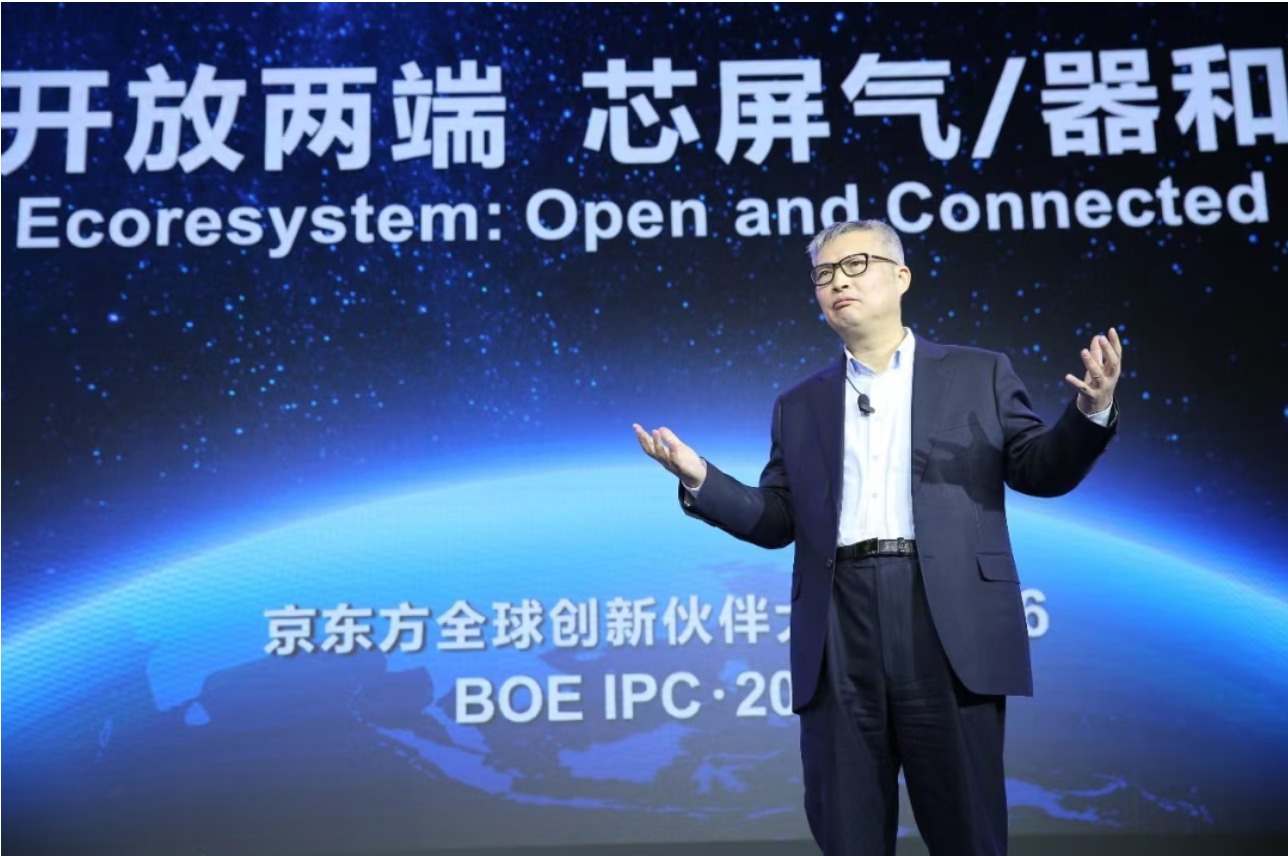
Source | Pencil Dao Author | Editor Song Wei | Zou Wei Original title | 68 years old, BOE founder broke into another IPO: lost 4.9 billion dollars in three years, fought for chips again. In 2019, 62-year-old Wang Dongsheng stepped down from BOE. BOE, which he founded with his own hands, is already the absolute leader in China's display industry. Outsiders thought that the “father of China's semiconductor display industry” would retire, but he turned around and stepped into a new racetrack — chips. “The screen is almost done, so you can do the core too. “My friend's words ignited his passion for starting a business for the second time. Five years later, on May 30, 2025, Easway Computing submitted its first statement to the Hong Kong Stock Exchange. Half a year later, on January 30, 2026, the second submission was invalid again. On July 31, 2026, 68-year-old Wang Dongsheng stood at the entrance of the Hong Kong Stock Exchange for the third time with an Easway calculation. Wang Dongsheng gave a speech at the BOE Global Innovation Partners Conference Source: BOE - 01 - The “Father of Chinese LCD”'s second venture in 1993, Wang Dongsheng led employees to raise their own 6.5 million yuan seed fund to carry out a shareholding system reform of the Beijing Electronic Tube Factory, which had been losing money continuously for seven years, and founded the predecessor of BOE. More than 20 years later, BOE became the world's largest display panel company, completely solving the problem of “fewer screens” in China. The ZTE incident in 2018 stung the entire Chinese semiconductor industry. Upstream wafer production capacity is scarce, chip prices have soared, and China's semiconductor industry has been hit hard. Wang Dongsheng realized that the “screen” problem has been solved, and the “core” problem is far from there. In September 2019, Wang Dongsheng participated in the establishment of Easway Computing. He quickly formed an “all-star team”: Wang Bo, the former product director of Intel, was invited as vice chairman, and He Ning, a former senior chief engineer of Qualcomm, as CTO. The company focuses on the two core application scenarios of smart terminals and embodied intelligence, and adopted a next-generation RISC-V computing architecture. Easway Computing has locked a breakthrough in RISC-V open source architecture—a new racetrack that could break the monopoly of ARM and x86. The open source architecture requires no licensing fees and can greatly reduce chip design costs; the modular nature is particularly suitable for fragmented scenarios in the AIoT era. Against the backdrop of the intensification of the Sino-US technology game, RISC-V has become a strategic channel for China to break through the chip architecture blockade. Easway Computing RISC-V chip product source: Easway's official website - 02 - Revenue is rising, losses are being received, but it is still losing money. Easway Computing is a chip product provider based on the RISC-V architecture. It uses a fabless (fabless) business model to outsource all chip manufacturing, packaging and testing to a third party. Based on the 2025 revenue calculation, Easway Computing is the largest domestic smart terminal human-computer interaction chip product provider in China, with a market share of 5.7%; at the same time, it ranks third in the domestic RISC-V main control chip product market in China, with a market share of 1.2%. The financial data disclosed in the prospectus shows the company's trajectory over the past few years. Revenue is rising. $1,752 billion in 2023, $2,025 billion in 2024, and $2,431 billion in 2025, with a three-year compound growth rate of 19.4%. Revenue for the first quarter of 2026 was 494 million yuan, up 18.4% year-on-year. Losses are narrowing. Net loss of $1,837 billion in 2023, $1,547 billion in 2024, and $1,516 billion in 2025. A cumulative net loss of 4.9 billion yuan over three years. Net loss for the first quarter of 2026 was 375 million yuan. Gross profit margins are improving. Gross profit margin 15.4% in 2023, 18.0% in 2024, 18.6% in 2025. The first quarter of 2026 was 14.8%, a slight decline. The company explained that the first quarter was affected by seasonal factors. Semiconductor wafer source: The source of encyclopedia's losses is research and development. R&D expenditure of $1,445 billion (82.5% of revenue) in 2023, $1,337 billion (66.0% of revenue) in 2024, and $1,042 billion (42.8% of revenue) in 2025. According to the prospectus data, the cumulative R&D investment for the three years from 2022 to 2024 exceeds 4.2 billion yuan. By the end of 2024, the R&D team had more than 1,200 people, accounting for more than 70% of the total number of employees. With this kind of strong investment, there is no possibility of profit in the short term. As of March 31, 2026, the company held approximately $1.3 billion in cash and cash equivalents. According to the current rate of burning money, how long this money can last is...
16d ago22#IDG Capital #BOE #chips
Changxin went public or Fuying trillion yuan. This small town, which was ridiculed back then, gambled to win Chinese chips

Changxin went public or Fuying trillion yuan. This small town, which was ridiculed back then, gambled to win Chinese chips

Source | A Little Bit of Finance Author | Curated by Zou Jun | Tristan can make a city earn 1 trillion dollars once a company goes public? Recently, Changxin Storage Station's Science and Technology Innovation Board subscription threshold is expected to create the largest A-share IPO this year. The only domestic company that can mass-produce mainstream DRAM memory chips is already a popular fried chicken in the AI community. After the news came out, many people calculated another account: How much can Hefei actually make? According to the Tianyancha App, Changxin is headquartered in Hefei, and entities related to Hefei's state-owned assets hold a total of about 36.79% of Changxin's shares. Some agencies predict that Changxin's market value may reach 3 trillion yuan after listing. Based on this calculation, Hefei's book revenue may exceed 1 trillion yuan. What is the concept of 1 trillion? That's about the GDP of Hefei for a whole year. Everyone is amazed at Hefei's huge profits, but they forget that ten years ago, every time the central provincial capital took action, it was viewed by the entire industry as a big gamble they could not control. Hefei invests in star companies such as BOE and NIO. Which one was not initially described as crazy and later punched in the face of the questioner? This provincial capital, which was ridiculed as the “largest county town in China” back then, relied on heavy betting time and time again to become the “best venture capitalist” in the city club. Changxin's listing is just the latest footnote. What makes people curious is why is Hefei able to step on the right spot every time, and where does it bet on the next bet? Hefei's “Three Big Gambles” Hefei's counterattack began in 2008. The global financial crisis that year saw layoffs and contractions everywhere, yet Hefei did something that no one could understand — it wanted to be introduced to BOE. Today's young people probably don't know. Back then, LCD panels in China were stuck to death. Most televisions, computers, and mobile phones need to be imported as long as they have a block screen. Samsung and LG in South Korea, Sharp in Japan, and Youda in Taiwan basically have the final say. In 2008, the global economy was cold, and money bags were tightened everywhere. BOE's performance at the time was poor, and its stock price fell to suck. No one dared to touch the asset-heavy panel line. Wang Dongsheng, the founder of BOE, was looking for money to build a sixth-generation line, but almost no place was willing to pick it up. The reason is simple. A six-generation line requires investment of more than 10 billion dollars. The risk is high and the return is slow. No one wants to go through this muddy water. Hefei said, “I'll come.” The total fiscal revenue of Hefei in that year was only about 30 billion dollars. At the time, Hefei's attitude was very clear; they were breaking the pot to sell iron, and they also wanted to bring in this sixth-generation line. In the end, Hefei promised to pay 60 to 9 billion dollars, which is equivalent to spending less than half a year. Seen at the time, this decision was almost crazy. In an inland provincial capital, they are busy eating their own meals. What kind of high-risk LCD panels are they going to buy? There is a lot of ridicule on the internet, saying that Hefei punches people with swollen faces and makes them fat. But in the end, they got punched in the face. After BOE's Hefei 6th generation line was put into operation, it directly broke the overseas panel monopoly. Within a few years, China became the world's largest producer of LCD panels, and BOE also became the world's largest, and its market capitalization soared. What Hefei received was far more than just that equity return. Because after BOE landed, upstream and downstream slowly became attracted. Corning for glass substrates, Sanli Spectrum for polarizers, Lianyong for driving chips... they built factories one by one in Hefei. The display industry alone has consumed hundreds of billions of dollars in output value in Hefei. It's not about investing in a project; it's about “throwing a seed into a forest.” Because only by turning the project into an industrial cluster can upstream and downstream complete support without leaving the province, reduce costs, and preserve technology. Individual projects may lose, but once the industrial chain grows, it takes root. For a city, if it has its own industrial cluster, taxes, employment, and talent have all settled down, and only then can the economic base stand. After winning the first big gamble, Hefei also found a way: seize the key links in the industrial chain, turn it into a climate, and the upstream and downstream will naturally gather. In 2016, it took another gamble, betting on DRAM memory chips. DRAM is the memory in mobile phones and computers. Your phone card doesn't stick, and it depends on how many apps you can open at the same time. In 2016, China's presence in this field was almost nil. Samsung, Hynix, and Micron monopolize over 90% of the global market. China spends more money on importing chips a year than buying oil, and DRAM is the bulk of it. The DRAM industry burns money fast and returns are slow, and how many major international companies are still at a standstill after burning tens of billions of dollars. In 2016, Hefei and Zhu Yiming, founder of Zhaoyi Innovation, co-founded Hefei Changxin, with a total investment of over 150 billion dollars. Back then, Hefei's fiscal revenue for the whole year was only around 100 billion dollars. This amount of money was equivalent to spending more than a year on the family budget. Questions are once again flooding in: a city in inland China, why? In response to this, Hefei chose to continue to work hard. 201...

31d agoWendy#AI #semiconductors #chips #Changxin Storage
Taiko airdrop storm: a project that claims to be completely decentralized and the founder who claims that the rules are opaque

Taiko airdrop storm: a project that claims to be completely decentralized and the founder who claims that the rules are opaque

The airdrop is still not over, will Taiko's word of mouth reverse? Author: flowie, ChainCatcher Editor: Marco, ChainCatcher In the early morning of May 23, Taiko announced the airdrop search page and TKO token economy model, but since the airdrop was far lower than expected and the airdrop rules were not transparent, Taiko was questioned by many community users. Being scolded for airdrop issues is nothing new, but Taiko's co-founder and CEO Daniel Wang (Daniel Wang)'s tough statement completely ignited the anger of community users and put himself on the cusp. Wang Dongxian wrote on X, “In order to avoid unnecessary controversy, we will not disclose the detailed TKO Genesis airdrop rules. Our goal is fair, but we can't satisfy everyone. Congratulations to those who received TKO and apologies to those who didn't.” Soon after, with more and more questioning and even abuse on the X platform, Wang Dong seemed to be irritated and once again stated on Discord: There is zero tolerance for any related abuse; Taiko is a partner of Galaxy, not a part-time job, is not used as a reference in Galaxy rankings, and does not account for much weight in participating in Taiko related activities on Galaxy; if they don't get an airdrop, it's because others have more points; the rules are opaque because they are transparent and unable to resolve differences, and the definition of “fair” is highly subjective. As soon as this remark came out, Taiko completely fell into a vortex of public opinion. Some users complained that “this is the worst PR response I've ever seen,” while others called on major exchanges to resolutely boycott this opaque crypto project. Taiko: Ethereum Layer2Taiko, which was born with the Golden Key, has attracted much attention since its establishment in early 2022, because its core team is almost the original team of Loopring, the well-known Ethereum Layer 2 zk-rollup protocol. Taiko's three co-creators Wang Dong, Brecht Devos, and Matthew Finestone are all from the Loopring team. Taiko co-founder and CEO Wang Dong (English name Daniel Wang), speaking to the community this time, is also the founder of Loopring. Loopring was the first zk-rollup deployed on Ethereum. Loopring was listed on Coinbase in 2020, becoming the first Chinese project to list Coinbase. Since then, it has also been launched on exchanges such as Binance and OKX, making it a splash for a while. Before joining Web3, Wang Dong was also the technical director of Zhong'an Insurance and JD, technical director and senior software engineer at Google, and participated in the establishment of Yunrang Technology, Coinport, etc. With a complex background such as a traditional Web2 giant, serial entrepreneur, Web2+Web3, etc., and has already founded a good Web3 project, Wang Dong can be said to be the most popular type of founder among investors. Soon after its establishment, Taiko attracted investment from a number of well-known investment institutions. According to RootData data, in about 2 years since its establishment, Taiko has received a total of 37 million US dollars in financing. Investors include traditional investment institutions such as Sequoia China, Yunqi Capital, BAI Capital, and GGV Capital, as well as well-known exchanges or market makers such as OKX Ventures, GSR, and Wintermute, as well as the participation of cryptographic native capital such as Hash Global, IOSG Ventures, and Generative Ventures. Taiko, on the other hand, is a Type-1 type of ZK-EVM (see article: “Vitalik: The Future of Different Types of ZK-EVM”), that is, a fully decentralized, Ethereum-equivalent zk-rollup. The zkEVM that Taiko wanted to build was originally part of Loopring's work, but during the development phase, Wang Dong and his team believed that Loopring was an application-specific extension, and Taiko wanted to build a generic extension, which would cause great confusion, so Taiko developed independently from Loopring. Why did the Taiko airdrop cause discontent? On December 27, 2022, Taiko released the first public testnet Alpha-1 testnet. Taiko announced the launch of its sixth testnet in January of this year...

820d agody zhang#Brecht Devos #ChainCatcher #Coinbase #Loopring #Matthew Finestone #OKX #Taiko #Ethereum #Binance #Wang Dong #airdrop
A conversation with Taiko co-founder Daniel: How will the end of the zk L2 expansion dispute evolve?

A conversation with Taiko co-founder Daniel: How will the end of the zk L2 expansion dispute evolve?

Taiko Co-Founder and CEO Wang Dong talks about the end of Ethereum's expansion, the development direction of L2 and its classification standards, and the impact of the Cancun upgrade on the L2 competitive landscape. Interview and compilation: 0xRJ.eth article compiled from Wang Dong's recent interview: https://youtu.be/iUqmElZyTnA?si=jN-7dovHteftxmuV全文概览:创始人心路历程Taiko The reasons behind the decentralized choice (and the balance found between security, efficiency, and decentralization) The impact of the Cancun upgrade on the L2 competitive landscape: pros and cons Taiko Curve opportunities to overtake the Taiko Curve Ethereum's expansion and review of the development direction of the “classification criteria” of the final zk L2 circuit After all these years of experience, judgment, choices, and thoughts, what do you think you did the most right thing? And what's your biggest regret? Founder's Journey RJ: Hello everyone, I'm RJ. Today, I am very happy to invite Daniel, the founder and CEO of Taiko, an Ethereum layer 2 scaling network based on zero-knowledge proof, to have a conversation about the end of Ethereum's expansion, the competitive landscape and development direction of the Layer 2 circuit. Daniel is a former senior Google engineer, former senior R&D director at JD, and the founder of Loopring, Ethereum's earliest transaction matching protocol based on ZK Rollup. I personally think that an L2 track like this should get a lot of attention in 2023, and on the eve of the major Ethereum upgrade, the Cancun upgrade, take a good look at Rollup Track OG's opinion and the thinking behind it. So why don't we start with this journey of your mind? I'm sure you're actually no stranger to most people in the coin industry. Everyone knows you're the founder of Loopring. But I think people probably don't understand how you came into contact with Crypto from traditional companies like Google and JD and entered this circuit, and what kind of opportunity led you to start using Loopring, and then to now start building a second-tier network that expands Ethereum's capacity based on ZK (zero knowledge) proof. What is your vision for doing these projects or public chains? Daniel: The first idea was that in traditional Web2 companies, big companies like Google, would accumulate enough experience and then start their own relatively large Web2 company. This is what many aspiring young people at the time wanted to do. The state at the time was “copy to China,” that is, “copy to China” something from abroad is different now; now many Americans are copying Chinese things. At the beginning, there really wasn't much idealism. But then I chose blockchain. On the one hand, I think it was because it was a bit boring in traditional big companies. In particular, Internet companies in China are actually not entirely technology-driven. So as a technician, I think it's not very comfortable. Then there are all kinds of people's problems and all kinds of management problems, then blockchain gives people a refreshing feeling. You suddenly think that engineers can change the world. Of course, there is still a long, long way to go before changing the world, but it gave you a small sense of hope. So after being at JD for a while, I felt like the Web2 story wasn't right for me, and I came up with technology to change the world. At the time, there wasn't much mention of the Blockchain concept. The main thing was to mention Bitcoin, and how can Bitcoin change traditional finance so that people in third world countries can have their own wallets. In fact, before I started my first blockchain company, I went to Kenya, Africa, and Nigeria, where the mobile phones used were their own wallets. Of course, they had very little money in their wallets, and then the transfer fee was very high. But they can pay via SMS, so Africa has evolved a small payment solution, even though it sounds rudimentary. However, this demand is huge, and the market is also very large. Probably in about 14 years, when I went to Africa, I was inspired to try out this blockchain, so the first blockchain company was a Bitcoin exchange, then at that time I actually didn't encounter the actual underlying blockchain technology; in fact, I did the same thing as Coinb now...

1065d agody zhang#Bitcoin #Daniel #Taiko #WEB3 #Ethereum #side chain #Binance #Execution layer #pays
Conversation with Cancer: Ethereum's Naming Man, Crypto OG's Honor and Dream

Conversation with Cancer: Ethereum's Naming Man, Crypto OG's Honor and Dream

Interview/Article: Claudia “Coin Circle OG”, “The Naming Man of Ethereum”, “BTS Master”, “Co-Founder of Waterdrop Capital”... There are many bright labels along the way Cancer has walked. These tags are like a knight's medal, and you don't even need to get close to them to sense his glory and dreams along the way. From founding BitCamp, supporting BTS, to the current Shuidi Capital, it is no exaggeration to say that Cancer has witnessed the development history of the entire public chain... Shenchao TechFlow talks to Crypto OG, Gan, founder of Shuidi Capital, to try to present some of his accumulation and musings after going through many rounds of bull-and-bear markets. Turning the fun of a few into a deep wave of the future for more TechFlow: Please introduce yourself? As an old person in the cryptocurrency industry, how did you make up your mind to enter the crypto world at the time? Cancer: Actually, my experience was quite simple. I came to Shanghai after graduating from college in '97. At first, I worked for a space agency, then I changed several units. I stayed at Siemens, then went to Infosys. I was working as an SAP consultant in 2013. I learned about Bitcoin as an amateur, then I thought it was very fun. I couldn't help but pay attention to it, and participated in many community exchanges. Because at the time, I actually worked at SAP for a long time and felt quite boring. I participated in more and more events on the Bitcoin side, and one day I thought it would be better to just quit my job and do it exclusively. At that time, the entire Chinese community was actually still very sparse. A lot of people gathered at the coffee shop in a garage in Beijing, and some people gathered at the Shanghai side as well. At the time, I organized a bit startup camp with some friends, including Da Hongfei, Lan Ling (Sun Ming), Xu Yiji, Chu Xia Hu (Gu Ying), Dadou (Zhang Yinhai), and Crown (101 spacecraft). We often do activities and invite some guests to share things so that more people know about these things, and we have embarked on this path since then. Since then, I have continued to invest and start a business. I have experienced many things, and have always wanted to attract more people to join. In May 2014, Vitalik met the Chinese community for the first time at the invitation of the Bit Startup Camp at Chuangzhi Tiandi in Yangpu, Shanghai. This was a group photo between the organizer and Vitalik at the time. From left to right: Wang Guan, Kaku, Big Head, Da Hongfei, Vitalik, Cancer, Xu Yiji, Early Summer Tiger, Blue Collar Deep Wave TechFlow: Was there a single thing or node that touched you when All in? Cancer: All in should come naturally to me, but when it comes to nodes, I remember it must have been because of BTS in the first place. At that time, the community was basically mainly Bitcoin and Litecoin, and there were a few other small amounts of coins. Basically, these coins were all Bitcoin altcoins. They also mined in the same form as Bitcoin, but they only changed some things, such as the interval between blockchains. When BTS first came out, overall, it was amazing because it could send assets, and some of the designs were quite cutting-edge from today's DeFi perspective. I remember when the first edition of the white paper talked about collateral, stablecoins (not called stablecoins at the time), etc., and I understood that it still took some effort to understand. When the white paper first came out, it was very slow to translate. Then I really couldn't wait, so I translated a copy myself, added some of my own interpretations, and published it on Babbitt. Seems like there are quite a few readers, and everyone is starting to know me. Then ETH came out. Because Teacher Shen Bo is familiar with Vitalik and the BTS team, they often meet together in North America to discuss issues. When ETH was founded, Shen Bo invited me to translate the white paper. Later, I named ETH in Chinese as Ethereum. Many people in the coin industry know me this way. From The Merge to the New Narrative Wave TechFlow: Recently, due to the merger of Ethereum, people have begun to look back nostalgically on the development history of Ethereum. As I mentioned earlier, you are the Chinese namer of Ethereum. I want to ask you why you named Ethereum at the time? Cancer: I had some discussions with Charles Hoskinson about the name Ethereum. Ether is actually very easy to understand. The word “square” has some thought, but it's not that complicated. “Square” has the meaning of workshop. It is compatible with the root word -eum, meaning that Ethereum is a factory for manufacturing smart contracts. Deepwave TechFlow: Translating white papers from that year...

1423d ago深潮TechFlow#Deep Tide TechFlow
Bitcoin's market capitalization has fallen to 10th place among global assets

Bitcoin's market capitalization has fallen to 10th place among global assets

Although Bitcoin's decline isn't too big, many small coins have lost too much blood. The market is almost bleak, and there is no cheap money effect. It is expected that this trend will continue. It is expected that this trend will continue. Flatcakes will still outperform most small coins in the short term. If you think coin-based, it is recommended that everyone mainly hold flatcakes. As Andre Cronje (AC), the founder of projects such as YFI and FTM, announced his withdrawal from the coin industry, tokens related to the AC concept plummeted like water, and panic filled the entire market. Among them, the most noteworthy tokens were: FTM, YFI, KP3R, ANY, BOO, CREAM, SOLID. Subsequently, these projects were also frantically explained on social media and the community, indicating that AC had handed over all the code and would continue to maintain various projects. After AC left his project, these projects had no soul, so this decapitation recommended not to pick up the knife. The inertial decline still existed, just like a Michelin restaurant. If his chef left, it would be difficult to maintain even the best environment and service. Wang Dong, founder of the well-known domestic project Luyin, also said this morning that he is no longer involved in daily work and that the project will be handed over to the new CE. Responsible. In addition, countless projects are announced to run off and close every day. All of these signs indicate that it is already difficult for coin exchange projects to make money, and the energy they consume may not be directly proportional to income. In short, judging from the original historical experience, almost all of the projects handed over by the core developers or founding team did not perform as well as expected in the next few years, so when it comes to this matter, it's fine for everyone to do a probabilistic incident. The bosses are all gone. What are we still struggling with? Under pressure from US politics, Coinbase finally surrendered. It announced that it had blocked 25,000 addresses associated with Russian individuals or entities that they believed were engaged in illegal activities, and that sanctions were initiated against the sanctioned countries. This war between Russia and Ukraine has shown us the real face of Westerners. It is said that some domestic tycoons have already begun to transfer overseas assets back home, because our country's recovery of TW is also inevitable. Whether Europe and the US will impose another round of sanctions and seize all of China's overseas Fijian assets is difficult for anyone to say. In short, when the whole world sees that centralized assets are not safe enough, I believe this is the real starting point for Bitcoin. I have to say that our perception may be a bit ahead of schedule, but this does not affect the rise of Bitcoin. Furthermore, after this sanctions incident, the number of investors and the number of depositing coins on exchanges continued to decline. Everyone understood that the essence of true security is to store tokens in their own decentralized wallets, so this will benefit those wallet tokens to a certain extent. Bitcoin's market capitalization has fallen to 10th place in the world. When did Bitcoin (gold and Apple come in front of it), which was in third place, and now it has once again become an asset that even Tesla's market capitalization cannot match. This is not an opportunity; what else in this world is an opportunity? According to the data, investors who bought Bitcoin at a high point in November 2021 have basically capitulated. This supply was absorbed by other investors with more faith at 29,000 to 40,000. This is a good replacement act, and it is also the foundation for Bitcoin's steady rise. Panic 23, extreme panic. Coin News: Bitcoin: An address that has been dormant for 9 years has been activated for the first time. Fortunately, the wallet has 407 bitcoins. Fortunately, there is not much impact. The probability that US stocks will continue to plummet in the evening is not high, so there is some room for a rebound, and 40,000 has become a strong pressure level recently. Ethereum: The fourth largest whale transferred 11,000 ETH to the exchange. Recently, there has been a lot of on-chain activity of whales selling ETH. Currently, we haven't clearly understood the logic, but judging from market evidence, it should continue to link with Bitcoin and be weaker than Bitcoin. FTM: The CEO said AC handed over all the code to the team, and the developers will continue to do their best to develop the project later. The foundation said that AC is not a core developer, and there are still more than 40 people working on the team. Despite this, the FTM ecosystem has been rapidly withdrawn by the Olympians, gas fees have risen sharply, and the entire ecosystem has plummeted. However, Ethereum's top 1000 whale addresses still increased their positions in FTM and YFI in the midst of a sharp decline, indicating that there are still opportunities for growth in the future. However, the lunatic still suggests making probabilistic deals without illusions. The current market trading volume shows that everyone is lying flat. Unless you think it will drop to 20,000, this position makes no sense in selling coins...

1629d ago数字货币趋势狂人#Digital currency trend fanatic

Guo Xionghui, CTO of Luyin, will be the new CEO

According to Luyin's official blog post, Guo Xionghui (former CTO) has been appointed as the CEO of Loopring (Loopring). Guo Xionghui will take over this role from Wang Dong (founder of Loopring), enabling him to focus more energy on developing the next generation of Tier 2 strategies. Wang Dong will continue to serve as Luyin's consultant. Guo Xionghui was admitted to the China University of Science and Technology when he was only 15 years old. He graduated in 2005 with a doctorate in computer science and began his career at Intel as a software engineer and technology leader. Over the next few years, Guo Xionghui has been committed to the development and customization of Android ROMs. In 2015, Guo Xionghui's first startup, PowerMo Information Technology, was acquired by the listed company Cheetah Mobile. He then joined Cheetah Mobile and became the senior director of engineering. In July 2019, Guo Xionghui officially joined Luyin as CTO.

1661d agoChen.Zou#Loopring #Wang Dong #Road marks #Guo Xionghui
Loopring founder Wang Dong delivered a keynote speech on “Luprinting's Anti-Fact Wallet and NFT” at the EDCON Global Ethereum Conference

Loopring founder Wang Dong delivered a keynote speech on “Luprinting's Anti-Fact Wallet and NFT” at the EDCON Global Ethereum Conference

On August 29th, Loopring founder Wang Dong was invited to attend the EDCON Global Ethereum Conference and delivered a speech on the theme “Counterfactual Wallet & NFTs on Loopring”. The presentation proposed a counterfactual wallet based on the second layer, which allows users to use the second tier smart wallet for free by “use first, deploy later”. Wang Dong also proposed a cross-chain and cross-layer composite solution based on Luyin's second layer. Currently, Arbitrum has been integrated, and plans to cooperate with Binance Chain or Optimism in the next stage to ensure cross-chain and cross-layer deployment of smart wallets. In addition, he also outlined Luyin's support for NFTs. NFTs enabled by the Luprint agreement have low rates, and their transaction fees will be at least 400 times cheaper than Opensea. Finally, Wang Dong said that Luyin will not enter the NFT trading market, but will choose to empower partners to develop the NFT trading market. More progress will be launched in the fourth quarter.

1818d agoChen.Zou#Loopring

Loopring plans to support NFTs on the second floor, and LRC trading volume and growth are at the top of the Coinbase list

Luyin's second-tier trading volume hit a short-term high in the past 24 hours, reaching 38 million US dollars. LRC's trading volume reached a record high. The increase was at the top of the Coinbase list, ranking in the top 5 in trading volume, second only to mainstream currencies such as BTC and ETH. Up to now, the total amount of locked storage on the second floor of Luyin is 165 million US dollars. Currently, first-tier NFT transactions have the characteristics of large transaction volume and high processing fees. OpenSea alone has burned nearly 10,000 ETH since the launch of EIP1559 alone. Will the transaction costs of NFTs stay high? What new changes will ZKRollup Level 2, which has zero gas and transactions in seconds, bring to the entire NFT industry? Will more imaginative business models be born as transaction costs decrease? Loopring founder Wang Dong will reveal more second-tier NFT details at the Ethereum EdCon conference at the end of August.

1825d agoChen.Zou#Coinbase #Loopring #LRC #NFTs #OpenSea #Ethereum #Bitcoin #Wang Dong
[Comparative conversation] Why are NFTs so valuable?

[Comparative conversation] Why are NFTs so valuable?

Beeple's NFT artwork “Everydays: The First 5000 Days” sold for nearly $70 million, and the “NFT” concept became an instant hit. In addition to the art industry, sports stars, singers, and entertainer influencers have joined the market to play with NFTs, and the leading US media “Time” has launched its first magazine cover NFT auction. So why is this concept so lucrative? How long will the popularity of the NFT market last? At 20:00 on March 24, Beijing time, Bituo Editor-in-Chief Susan Feng had an exclusive conversation with Han Feng, co-founder of Yilaiyun, and Wang Dong, founder of Looring (Looring), to discuss the significance behind the NFT market and others. Broadcast time: March 24 at 20:00 Beijing time; March 24 at 08:00 EST Guest introduction: Susan Feng | Bitui Editor-in-Chief Susan is a veteran media personality and joined Betsu in 2018. I have reported on the 2008 financial crisis and the 2008, 2012, and 2016 US elections. He has a unique perspective on America's political economy. Susan has interviewed Buffett five times in a row since 2008, and was the first Chinese reporter to interview Buffett. Pioneering reports on Buffett and discussions on the Chinese economy have had a wide impact on the domestic financial community. Susan also interviewed Greenspan, President Clinton, former US national security adviser Brzezkinsky, former mayor of New York Bloomberg, and columnist “The World Is Flat” Fryderman. Graduated from Columbia University with a master's degree in international relations. Han Feng | Han Feng, co-founder of Yilaiyun, co-founder of Yilaiyun. Visiting researcher at Columbia University, mentor at Tsinghua University iCenter, former blockchain consultant at the Huawei Research Institute, Secretary General of the Asian DACA Blockchain Association, US Oracle Education Foundation China Project Partner, Bitcoin Foundation Lifetime VIP Member, author of the bestselling books “Blockchain: A View of Quantum Wealth” and “Blockchain: From Digital Currency to Credit Society”. Wang Dong | Founder of Luyin, founder of Loopring (Loopring). Former Google senior engineer and technical director, former senior R&D director of JD, cooperated with the former CTO of JD to establish Hejin Online (Internet Insurance Big Data Company) in Beijing and received investment from Red Dot Venture Capital...

1978d agoWendy#NFTs #Yilaiyun #Comparing conversations #Wang Dong #Road marks #Han Feng