电动汽车 · 298

Xiaomi's second-quarter revenue of 108.9 billion yuan fell 6.1% year on year, adjusted net profit was 6.2 billion yuan, and car deliveries increased 28.2% year over year

In comparison, the Xiaomi Group released its financial report for the second quarter of 2026. Revenue was 108.9 billion yuan, down 6.1% year on year, up 9.9% month on month; adjusted net profit was 6.2 billion yuan, down 42.6% year on year, up 2.4% month on month. The mobile phone x AIoT segment generated revenue of 84 billion yuan, with a gross profit margin of 20.0%; the revenue of innovative business segments such as smart electric vehicles and AI was 24.9 billion yuan, up 17.1% year-on-year, with a gross profit margin of 19.2%, and the operating loss of the division was 2.6 billion yuan. Smartphone shipments reached a record high of 31.2 million units, and the world ranked in the top three for 24 consecutive quarters. ASP increased 25.9% year-on-year to 1,351 yuan. The revenue from IoT and consumer products was 31.3 billion yuan, and the revenue from Internet services was 9 billion yuan, with a gross profit margin of 76.8%. The number of connected devices on the AIoT platform reached 1,161 million, an increase of 17.4% over the previous year. The Mijia App had a monthly activity of 124 million, and Xiao Ai's students had a monthly activity of 175 million. The automobile business delivered 104,200 vehicles, an increase of 28.2% over the previous year, and the cumulative delivery of the SU7 series exceeded 500,000 units. R&D expenditure was 9.2 billion yuan, up 18.9% year on year, with R&D personnel accounting for 47.2%. The Xiaomi MiMO-v2.5 dock model ranked first in weekly calls on the OpenRouter platform. The Group has obtained more than 47,000 patents worldwide. The share repurchase amount since 2026 is approximately HK$11.7 billion.
4d ago

Chinese copper foil manufacturer Longdian Huaxin went public on the New York Stock Exchange, surging more than 11% on the first day

Comparative news, according to BIT (bit.com) market data, Chinese copper foil manufacturer Longdian Huaxin (FOIL) has been listed on the NYSE. It closed up 11.36% on the first trading day, and rose 6.12% after trading, and is now reported at $26. The company's IPO raised 94.3 million US dollars, making it the largest Chinese company's IPO in the US since Chahime in April last year. The company is headquartered in Shenzhen, and its products are used in fields such as electric vehicles and 5G communications. It is said to rank first in the global battery copper foil market, accounting for 7.6% of the market share.

9d ago
Yuuki's IPO sparks wealth imagination. Can ordinary investors still get on the bus?

Yuuki's IPO sparks wealth imagination. Can ordinary investors still get on the bus?

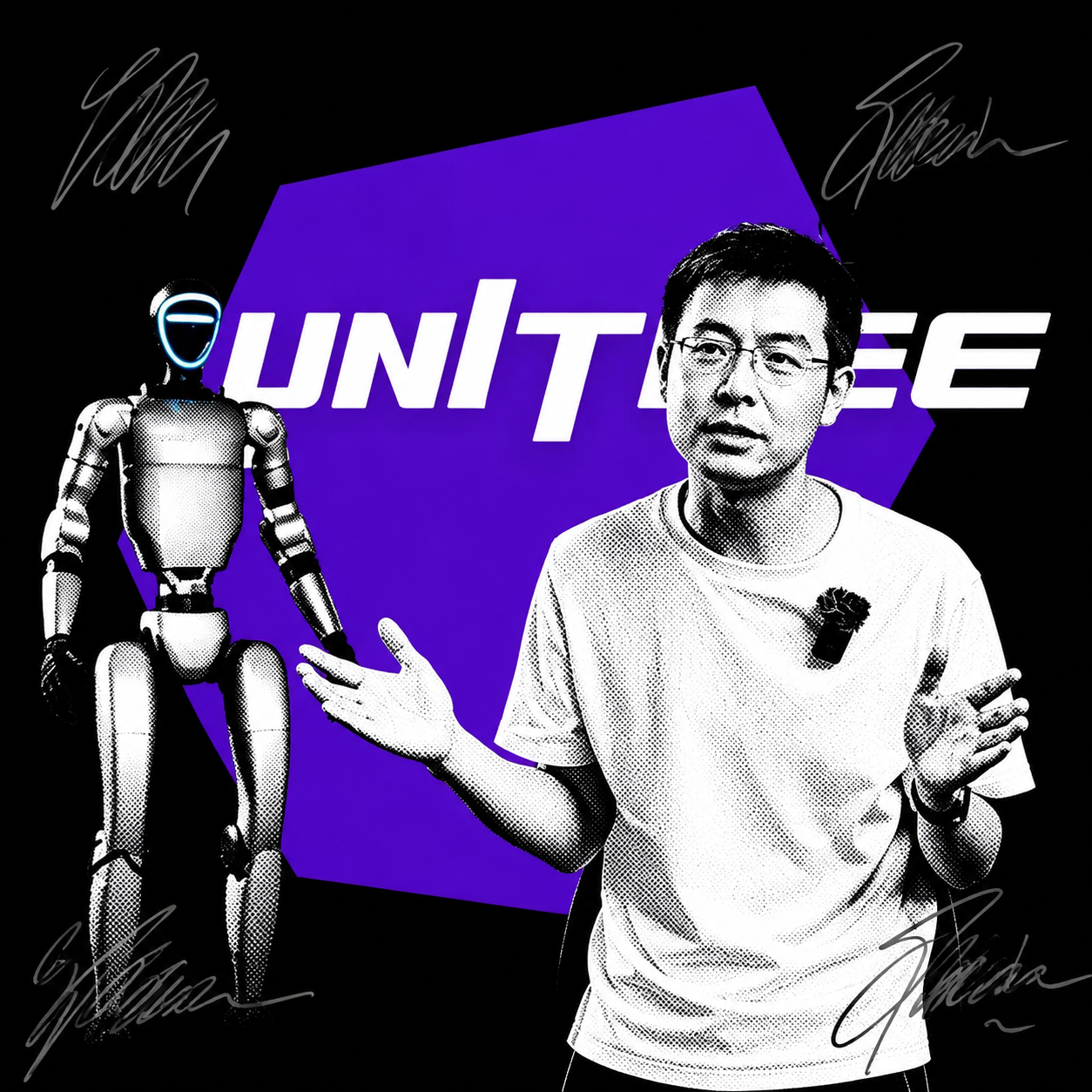
Source | Tencent Technology Author | Gu Lingyu Editor | Xu Qingyang Original Title | Yu Shu's IPO Wealth Feast, only a few people are bound to earn a smart trillion dollars. The circuit is experiencing a fierce game between real value and inflated valuations. Focus on the capital feast of Yushu's listing, the gap between wealth creation in the primary market and the reality of the secondary market. The winning rate is extremely low, and the first day's circulation is extremely small. In the winter of 2017, Wang Xingxing, holding a robot dog, took a ten-hour train from Hangzhou to Beijing to go to Sequoia China for a road show due to the fact that high-speed trains were not allowed to carry large lithium batteries. At that time, he almost couldn't pay his salary on his company account. After 9 years, Yushu Technology will soon become China's A-share “first humanoid robot stock.” The latest news is that on August 6, Yushu Technology announced the issuance price of 150.80 yuan/share, an online roadshow on the 7th, and online subscription will begin on the 10th. Many people expect its market value to break through 100 billion yuan. A number of second-level practitioners expressed the same opinion to Tencent Technology: Although the stock market has fluctuated greatly recently, Yu Shu Daxin will still be scarce. “Because everyone believes that this is a policy-supported industry, the leader must rise.” According to the prospectus, the company publicly issued 404.464 million new shares, accounting for 10% of the total share capital after issuance. On August 6, the issue price was finalized at 150.80 yuan/share. The actual capital raised was about 6.1 billion yuan, corresponding to the post-issuance valuation of about 61 billion yuan. Only 6.471 million shares were initially issued online. Based on 500 shares per contract, the total market had only 12,942 winning numbers, less than 13,000. This means that for every 10,000 valid subscription numbers, the signature amount is only about 2 seats. According to incomplete statistics, over the past two years, China's embodied intelligence industry has spawned more than 300 startups. By August of this year, at least 5 companies had valuations over 20 billion yuan, and nearly 50 companies are preparing to go public on Hong Kong stocks or A-shares. For these companies, Yushu's stock price will form a valuation anchor for A-shares and a valuation reference for Hong Kong stocks. This is a critical moment — yet, in this capital feast fueled by the concept of embodied intelligence, there is a gap between the enrichment of the primary market and the reality of the secondary market. 01 Wang Xingxing, the person who made the most money from Yu Shu, did not fit the typical image of a hard tech entrepreneur — this became the origin of the “anti-consensus” of Yu Shu's early bettors. He graduated from Shanghai University with a mediocre career. When he raised money in the early stages, he ran into trouble everywhere. In the golden decade of Internet model innovation, VC intellectuals have models: backgrounds in famous schools, executives from large companies, elites returning from overseas, or serial entrepreneurs. To a certain extent, these guaranteed the lower limit of entrepreneurial projects, and also screened out entrepreneurs like Wang Xingxing to a certain extent. The original capital partner, Tian Egawa, publicly reflected on this experience. At the end of 2017, Tian Jiangchuan met Wang Xingxing for the first time at a cafe in Hangzhou. At the time, Yuki's products had shown the ultimate cost reduction idea and differentiated technology path, but in the end, Taegawa abandoned the investment. “After the incident, I revisited. The problem was mainly due to my 'elitist arrogance': Xing Xing graduated from Shanghai University, and I think the robotics industry requires a top academic background.” Taegawa later confessed. It wasn't until 2020 that Uki was brought back again at more than 4 times the price of the original capital. An investor who has watched the domestic robot circuit for more than ten years told Tencent Technology that when Yu Shu was founded, the four-legged robot circuit did not receive much attention in the country, and there were very few institutions that came into contact with it in the early stages. Time has rewarded the “anti-consensus-takers” who entered the game first. In 2016, Yin Fangming, who worked for MediaTek, Sogou, and Qihoo 360, acquired 15% of Yushu Technology's shares with an angel investment of 2 million yuan. The post-investment valuation corresponding to this investment was only 13.33 million yuan. Today, this investment indirectly holds shares in Yushu Technology through the shareholding platform Tianjin Junwan Hongyi. Tianjin Junwan Hongyi held 3.0699% of Yu Shu's shares as a whole, ranking as the 10th largest shareholder. After penetrating through, Yin Fangming actually held about 0.46% of Yu Shu's shares indirectly. If the initial issuance valuation is estimated at 42 billion yuan, the book value of shares held indirectly by Yin Fangming is about 200 million yuan, and the overall return is about 100 times. He has already cashed out 58 million yuan in advance by transferring some of his old shares in 2025. In terms of return multiples, the institution that earns the most multiples is variable capital. This early fund invested only 2.09 million yuan in the Yushu Technology Angel Round in 2018. So far, the return ratio has reached 174.62 times. In addition to the portion already withdrawn, the total return is about 364 million yuan. Sequoia China's return multiples are no different. Wang Xingxing got on the road show in exchange for the train, and the Sequoia Seed Fund immediately issued a letter of intent to invest. This investment of 15 million yuan is good for...

15d ago22#AI #Yushu Technology's IPO

Baird: Tesla and SpaceX are expected to merge

Comparing news, Baird analyst Ben Kallo predicts Tesla (TSLA.O) is expected to deliver 392,900 cars in the second quarter. He added that the electric vehicle company will have a total delivery volume of 1.68 million vehicles in 2026. The analyst wrote: We believe the SpaceX (SPCX.O) merger with Tesla is likely to occur and is expected to take 12 to 18 months. He also added that the merger of the two companies is the final direction and is clear and compelling, and both companies will benefit from greater scale. Kallo reiterated Tesla's outperforming market rating and target price of $522.

60d ago
SpaceX rings the bell, Musk is the first adult “Mr. Trillion Dollar”. 400 employees have a net worth of over 100 million

SpaceX rings the bell, Musk is the first adult “Mr. Trillion Dollar”. 400 employees have a net worth of over 100 million

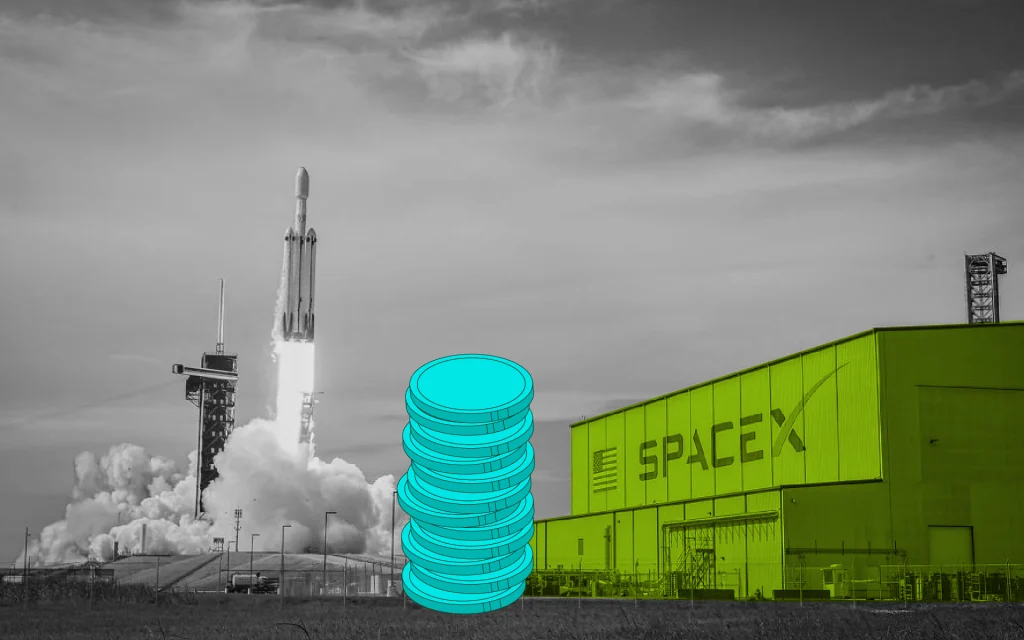
Source 丨 Tencent Technology Article 丨 Editor Su Yang 丨 Xu Qingyang On June 12, local time in the US, SpaceX officially landed on NASDAQ and traded simultaneously with the NASDAQ Texas market in select markets around the world. The stock code is “SPCX”. At around 23:50 Beijing time on June 12, SpaceX officially began trading. The opening price was 150 US dollars per share, up 11.11% from the issue price of 135 US dollars, and the market capitalization reached 1.97 trillion US dollars. After opening, it broke 160 US dollars, and the market capitalization exceeded 2 trillion US dollars, ranking sixth in the world, after Nvidia, Alphabet, Apple, Microsoft, and Amazon. Just the day before, SpaceX officially announced the issuance of 555.6 million shares at US$135 per share, raising US$75 billion, which is more than double the amount of US$29.4 billion raised by Saudi Aramco in 2019, setting the record for the largest IPO in world history. Based on the issue price, SpaceX's market value is about 1.77 trillion US dollars; if employee stock options and restricted stock units are included, the fully diluted valuation is close to 1.8 trillion US dollars. The underwriter was also granted over-allotment rights for a period of 30 days, and can purchase up to 83.3 million additional shares. If the full amount is exercised, the total size of this transaction will rise to a maximum of about US$86 billion. At the roadshow stage, the market's enthusiasm for SpaceX far exceeded expectations. Investors' subscription demand surpassed 250 billion US dollars and recorded nearly four times more oversubscription; retail orders alone exceeded 100 billion US dollars, far exceeding the 20% allotment share reserved for them. The other side of this capital feast is a rare form of collective wealth: more than 4,400 active and former employees became millionaires by holding company shares, and about 400 of them surpassed $100 million in book wealth. From frontline workers at the launch site to core engineers, SpaceX used this IPO to respond to all the questions the outside world had about the startup 12 years ago. But beyond the rising market sentiment, disputes and differences are just as sharp. Well-known shorting investor Jim Chanos publicly criticized the IPO as “a carnival built on hopes and dreams”; the fair value assessment given by Morningstar was only 63 US dollars per share, which is more than 50% off the issue price, which directly contradicts market fanaticism. 01 On the day of the “We May Still Fail” stock listing, Musk appeared on NASDAQ and delivered a brief speech. “I initially expected SpaceX to have less than 10% chance of success,” he said in his speech. “I've told people that even with good luck, we can still fail, but we have to try. If we don't do it, without new companies entering the space sector, humans will never be able to become a true space civilization. Other aerospace companies have built good rockets, but they've never really sought the technology necessary to make life a multi-planetary species.” He summed up SpaceX's ultimate goal in one sentence: “Make Star Trek a reality, remove 'fantasy' from 'sci-fi', and create an exciting future for everyone.” “We want to take anyone we want to go to the Moon, Mars, anywhere in the solar system, and maybe one day surpass the solar system. Whoever you are, no matter where you're watching, SpaceX wants to take you to the Moon, take you to Mars, and eventually go further.” He said, “I'm very confident right now that with this team, we will make it all happen for you.” Finally, he added, “There are always problems that need to be solved on Earth, and we should solve them too. But there must also be something that makes you excited about the future and makes you look forward to when you wake up early in the morning. This is the future SpaceX wants to bring to you.” The speech provided an emotional coordinate for SpaceX's trillion-dollar valuation. In the next roadshow, management will need to use financial data and business logic to translate this grand narrative into a language investors can calculate. 02 There are two types of buyers behind the 100 billion dollar order, and in this IPO, the participation of another group of people made this capital feast show different characteristics from typical institutions leading the listing. They don't look at Morningstar's valuation model, and they don't care about short sellers' warnings — they're betting on Musk. Musk posted in 2020: “I am a strong supporter of small retail investors.” At the time, he promised that the SpaceX Starlink IPO would give retail investors “top priority.” Six years later, this promise was fulfilled with a 20% placement ratio. As for the actual subscription strength of retail investors — orders over $100 billion — it caught underwriters by surprise during the roadshow, and the vast majority of individual investors' order applications were not satisfied. 33-year-old New...

71d agoWendy#IPOs #SpaceX #SpaceX topics #SPCX #public #space #Tesla #NASDAQ #Musk

Serenity, the white stock god, once again called for a single A share to trigger a rise or stop, and released a full list of 800V DC concept stocks

Comparatively, white stock god Serenity posted its optimistic list of 800V DC concept stocks on social media, including: US stocks: IFNNY, ON, VICR, LFUS, VSH, ENPH, NVTS, POWI, BDC, EOSE, SEDG, AEHR, WOLF, AMSC, AOSL, HYLN, FCEL, ASYS, RELL, IPWRA Shares: 300376.SZ (EASTEC) Hong Kong Shares: 2577.HK European Shares: XFAB (Paris Pan European Exchange) ), CWR.L (London Stock Exchange), IQE.L (London Exchange) Taiwanese stocks: 2301 (Guangbao Technology) Japanese stocks: 6504.T, 6890.T, 6844.T, 4973.T, 6616.T, 6882.T Brazilian stocks: PAY.BR Among them, A share 300376.SZ (Easystar) rose 20% after Serenity called for an order, triggering a rise or stop. According to reports, 800V DC is a power revolution currently taking place. It does not refer to a simple 800V wire, but a complete set of new high-voltage direct current (HVDC) power technology systems. The goal is to provide two rapidly developing industries with unprecedented strength of heart and blood vessels. One is an electric vehicle familiar to the public, and the other is an AI data center that drives future technology.

75d ago
Beyond Rockefeller and worth the GDP of 125 countries: A set of numbers to understand Musk's trillion net worth

Beyond Rockefeller and worth the GDP of 125 countries: A set of numbers to understand Musk's trillion net worth

Author: Zhao Ying Original title: If you visualize Musk's wealth Musk is standing on the threshold of becoming the world's first trillionaire, the scale of his wealth is so huge that it is difficult for ordinary people to intuitively understand. According to the “Wall Street Journal” report on the 2nd, Musk's current net assets are about 970 billion US dollars, and the vast majority are held in the form of shares. Once SpaceX's IPO is completed, this figure is likely to break the trillion-dollar mark. In terms of his 31-year career as an entrepreneur, this means he has amassed an average fortune of $992 per second and $3.6 million per hour. This wealth has surpassed the annual GDP of more than 125 countries around the world, including Norway, Thailand, Argentina, and South Africa — the latter being Musk's birthplace, with an annual GDP of around $480 billion. Measured as a share of US GDP, Musk's wealth is about 3% of the US GDP, easily surpassing John D. Rockefeller, the richest person in US history. Wealth composition: Ninety percent is locked in equity According to the Wall Street Journal's analysis, of Musk's 970 billion US dollars of wealth, the largest single item comes from SpaceX's pre-IPO shares, valued at about 538 billion US dollars; Tesla holds shares of about 167 billion US dollars; the total stock options of the two companies are about 150 billion US dollars, which can be used at any time. Additionally, driverless tunneling company The Boring Company and brain-computer interface company Neuralink are each valued at around $5 billion, and real estate, aircraft, and other investment assets are estimated at around $104 billion, as estimated by financial intelligence agency Altrata. This means that the vast majority of Musk's wealth exists in the form of paper assets, not cash that can be used at any time. He can borrow using his SpaceX and Tesla holdings as collateral, but liquidity is still limited. Musk himself publicly stated in 2020 that he “doesn't own any real estate” and sold a number of California properties, but has since bought homes in Texas. Time dimension: The average American family works for 11 million years. To make this figure more specific, link Musk's wealth to the time dimension: In the 31 years since co-founding the first American technology company in 1995, he has accumulated an average of about $59,500 million per minute, about $85.7 million a day, or about $31.3 billion a year. Based on the US median household income of $8,3730 in 2024, an average American family would need to work over 11 million years to accumulate wealth comparable to Musk's. Philosopher and economist Ingrid Robeyns once wrote that the wealth growth rate of the world's richest people has far exceeded the cognitive boundaries of ordinary people. She estimates that if Musk worked 70 hours a week without taking vacations until age 75, his career would have earned around $4.2 million an hour. Musk is known for his intense work — after buying Twitter, he said his weekly working hours soared from around 80 hours to over 120 hours. Imagine purchasing power: from 2.4 million homes to all NFL teams presenting $970 billion in purchasing power in a series of figurative scenarios: this money can buy about 2.4 million ordinary US homes; or buy all 32 NFL teams and all NBA teams, with more than $500 billion left; or build a fleet of over 10,000 Gulfstream G700 private jets and pay for five years of operating costs (including fuel); or simultaneously acquire Accenture, FedEx, Home Depot, UPS, Target, Kroger, Starbucks, CVS Health, Albertsons, Cracker Barrel, and Campbell's all employ over 4 million people. Historical coordinates: Beyond Rockefeller, compared to industrial age giants measured by wealth as a share of GDP, Musk has surpassed Rockefeller, who is recognized as the richest person in American history. Rockefeller's wealth in 1937 was about 1.4 billion US dollars, accounting for about 1.5% of the US GDP at the time; Musk's wealth accounted for about 3% of the current US GDP, which is double that ratio. Rockefeller relied on the wave of industrialization to turn Standard Oil into a monopoly giant, which was eventually forcibly split by the federal government. Musk's wealth is built on the three tracks of electric vehicles, commercial space, and artificial intelligence. Furthermore, Tesla...

80d agoburnking#SpaceX topics #Musk

For the first time since 2026, Citi turned bullish on copper prices, targeting $15,000 per ton

Comparing news, Citi's latest report shows that for the first time since 2026, the bank is bullish on copper prices. It is expected that the copper price will rise to 14,500 US dollars/ton in the next month and further rise to 15,000 US dollars/ton in the next 12 months. There is still room for more than 10% increase compared to the current LME three-month copper price. Citi believes that there is uncertainty about the US refined copper tariff policy. Combined with expectations that normal navigation will resume in the Strait of Hormuz, it will support copper prices. The bank anticipates that the US government may continue to maintain a vague tariff policy strategy to encourage companies to maintain high inventory levels. At the same time, Goldman Sachs also raised copper price expectations at the same time, raising the target price target for the end of 2026 from $12,465 per ton to $13,735 per ton. Citi pointed out that AI data center construction, power grid expansion, and the development of electric vehicles and new energy industries continue to boost copper demand. According to the report, artificial intelligence infrastructure, electrification transformation, and energy system upgrades will be important driving forces for future copper demand growth. However, Citi also warned that factors such as the continued deterioration of the situation in the Middle East, the slowdown in global economic growth, and fluctuations in inventories and demand may still pose a downside risk to copper prices.

82d ago
Sprint to IPO and dismantle the growth and hidden concerns in Yushu Technology's prospectus

Sprint to IPO and dismantle the growth and hidden concerns in Yushu Technology's prospectus

Author: Tanay Jaipuria, Wing Partner Compiled by Felix, PanNews Original title: Countdown to Yushu Technology's IPO! Dismantling Ice and Fire in the “First Stock of Humanoid Robots” prospectus Editor's note: On May 25, the Shanghai Stock Exchange website shows that the Unitree Robotics (Unitree Robotics) Science and Technology Innovation Board IPO will be reviewed on June 1. It plans to raise 620 million US dollars to sprint to the first A-share humanoid robot share. The reason why Yushu Technology's prospectus is very interesting is that it shows the real state of the current development of the robot market. As the company with the highest shipment volume of humanoid robots in the world, Uki has not only achieved profits, but also maintained rapid growth. This article will discuss: The transformation of Yushu Technology's product revenue structure to humanoid robots Which companies are currently buying robots (and why) vertically integrated business models Financial analysis model layer development goals Yushu Technology's products Yushu Technology was founded in Hangzhou in 2016. The founder Wang Xingxing is a self-taught robotics expert, famous for making the first four-legged robot in his apartment. The company currently has 480 employees, including approximately 175 R&D personnel. The company mainly sells two major products: four-legged robots (robot dogs): Go2 (consumer and research grade), B2 (industrial grade), and A2. Humanoid robots: H1, H2, G1, and R1. You've probably seen G1 in trending videos on the internet. It's 1.32 meters tall and weighs 35 kg. The company has been operating internationally since 2018. More than 35% of revenue comes from outside of China, including a large American academic customer base. Two years ago, transformed into humanoid robots, Yushu Technology was essentially still a robot dog company, mainly selling four-legged robots. In 2023, humanoid robots accounted for only 1.9% of its revenue. However, by the first three quarters of 2025, humanoid robots already accounted for more than half of its revenue. What is driving this transformation is product-market fit and aggressive marketing strategies. The company's humanoid robot appeared on CCTV's Spring Festival Gala for the second year in a row. In 2024, Hwang In-hoon also showcased a YuShu robot at the GTC conference. YuShu Robot appeared on CCTV at the Spring Festival Gala, and the brand's exposure was successfully transformed into commercial and scientific research needs. This is something most Chinese hardware companies have never actually done. Compared to other companies, Yuuki's humanoid robot shipments are particularly impressive. Uki sold approximately 5,500 humanoid robots in 2025, making it the world's largest manufacturer of biped humanoid robots. China's domestic AgiBot (AgiBot) followed. In contrast, well-known American companies such as Figure AI and Agility Robotics may only sell a few hundred units (or even less). The 5-year target in the prospectus is to produce 75,000 humanoid robots and 115,000 quadruped robots per year. This is roughly 14 times the production of humanoid robots in 2025. This goal is ambitious, but it also highlights that the industry is still in the very early stages. Who is buying robots The prospectus divides buyers into three categories: research and education, business and consumer, and industrial applications. The harsh reality is that most current demand for humanoid robots is focused on scientific research and education scenarios. 1. Research and education: It accounts for 74% of the revenue/sales volume of humanoid robots. Academic buyers have been Yushu's main customer base since 2022, and are still the company's largest source of total revenue. 2. Commerce and consumption: accounting for 17% of humanoid robot sales. Non-academic consumers who buy these robots mostly use them for “displays”: as eye-catching promoters at retail locations, tourist attractions, shows, and exhibitions. In the first nine months of 2025, consumer-grade revenue nearly quadrupled year over year. That sounds amazing, but its initial base was very small. Today, the most realistic application of a $25,000 humanoid robot seems to be standing in front of a store in Shenzhen to attract customers. 3. Industrial applications: Only 9% of the sales volume of humanoid robots. Yuuki also acknowledged that due to the immaturity of technology, industrial deployment is relatively limited, which also reflects the current state of technology. Of this 9% of sales, about 50%-70% are used in scenarios such as corporate reception and tour guides, so when taken together, only 3% to 4% of humanoid robots actually used in actual operations such as corporate reception and inspection are shipped. On a four-legged machine...

88d agoLuxurytracy#AI #IPOs #OpenClaw topics #public