美联储降息 · 894

GSR Market Supervisor: Many tokenized platforms lack real trading volume, and the hype is beyond practical use

Comparative news, according to Cryptonomist reports, Spencer Hallarn, head of the crypto market maker GSR market, said in an interview that the tokenization hype has surpassed the actual use of many platforms. The problem is not the market's demand for tokenized assets, but the platform design itself. He pointed out that many walled garden-style tokenization platforms with strict KYC generally lack meaningful transaction volume, and tedious entry and compliance processes limit activity. Hallarn believes that the real opportunity lies not in tokenizing for the sake of tokenizing, but rather in repairing the underlying conduits of traditional banking and settlement systems, that is, the infrastructure for transferring funds and assets between institutions. This will bring tokenization closer to an infrastructure repair rather than a simple cryptographic product narrative. He also said that the stagnation in the crypto market this year is largely due to capital shifting to artificial intelligence infrastructure. Large technology companies have raised huge amounts of capital for AI infrastructure through equity financing, tightening the liquidity of various types of assets. Crypto is no exception, and its customers are also shifting from chasing short-term momentum to long-term budget planning, OTC hedging, and RWA. If AI investment cools down and the Federal Reserve cuts interest rates, liquidity is expected to improve and support the Bitcoin price.

10d ago

Trump's plan to cut interest rates is blocked again: the Federal Reserve may maintain high interest rates this week, or even consider raising interest rates

Comparing news, US President Trump's plan to push for interest rate cuts is once again facing challenges. Wall Street analysts generally expect that the Federal Open Market Committee (FOMC) meeting to be held by the Federal Reserve this week may keep interest rates unchanged or even raise interest rates, and Trump's Middle East policy is becoming an important factor influencing interest rate decisions. The FOMC will meet this Tuesday and Wednesday to assess progress in the job market and inflation targets. Currently, the US inflation rate is about 3.5%. Although it is down from May to June, it is still significantly higher than the Federal Reserve's 2% target. The report said that rising energy prices are one of the important factors driving inflation. Currently, fuel prices have risen 15.7% compared to the same period last year. Despite a 4.9% decline between May and June, energy prices remain high as the Middle East conflict continues to affect global oil supply. Wall Street believes that the Trump administration's military and diplomatic actions in the Middle East are limiting the Fed's room to cut interest rates. Since the US and Iran have yet to reach a formal cease-fire agreement, there is still uncertainty over the issue of control over the Strait of Hormuz, making it difficult for oil prices and inflation risks to completely subside. Aditya Bhave, chief US economist at the Bank of America, said that the market has now set a price hike of about 10 basis points in July, and Federal Reserve Chairman Kevin Walsh is facing difficult choices: if interest rates are not raised, it may affect the Fed's credibility in fighting inflation; if interest rates are raised, it may conflict with his previous policy framework which tends to observe the impact of supply shocks. Bank of America anticipates that the Federal Reserve may keep interest rates unchanged in July, but it still expects to raise interest rates by 25 basis points in September, October, and December of this year, respectively. The market is also concerned about Walsh's policy independence after taking office. Analysts believe that if the Federal Reserve avoids necessary interest rate hikes due to political pressure, it may also damage its credibility. According to CME FedWatch Tool data, currently about 68.5% of interest rate traders expect the Federal Reserve to keep interest rates unchanged this week, while the rest of the market participants expect to raise interest rates by 25 basis points to the 3.75%-4% range.

26d ago

Bitcoin ETF ends eight consecutive weeks of net outflows, and the escalating situation in the Middle East dragged BTC back to $6.3 million

Comparing news, risk aversion in the market heated up due to the mutual air strikes between the US and Iran over the weekend. Bitcoin fell more than 1% since 00:00 UTC on July 13, and once fell back to around $63,000. Meanwhile, Brent crude oil futures rose more than 3%, approaching $79 per barrel. The market is concerned that the blockage of shipping in the Strait of Hormuz will push up energy prices and inflation, thereby weakening the room for the Federal Reserve to cut interest rates and putting pressure on risky assets such as crypto. Taran Dhillon, head of digital assets at Kula, said that the crypto market will have a tug-of-war between macroeconomic data and the geographical situation in the Middle East this week, and the upcoming US CPI and PPI data will affect the market's expectations of the Federal Reserve's interest rate path. However, spot Bitcoin ETFs and Ethereum ETFs have ended eight consecutive weeks of net outflows, indicating a recovery in institutional demand. Furthermore, the continued promotion of the “CLARITY Act” is expected to further improve digital asset regulatory expectations and provide support to the market.

40d ago

Walsh faces a major decision on whether to reverse the Fed's interest rate cut

Comparative news. According to Kim 10 reports, as Chairman of the Federal Reserve, Walsh presided over the first meeting during his tenure and decided to keep interest rates unchanged. Despite a consensus within the committee, maintaining that consensus will become more difficult as concerns about inflation increase. When the Federal Reserve meets from July 28 to 29, Walsh will have an opportunity to guide discussions on interest rate hikes and get the latest June inflation data.

40d ago

QCP: Bitcoin's return above $60,000 to ease market fears, but expectations of the Fed's interest rate cut are still unsupported

Comparing news, QCP Capital published an article stating that Bitcoin once fell below the key support of $58,000 on Wednesday, hitting a minimum of about $57,700, then rebounded back to $60,000, boosted by the US non-farm payrolls data for June, and regained a position of $60,000; Ethereum's performance was stronger, returning above $1,700, rebounding nearly 10% from the mid-week low. The options market quickly digested previous fears. The short-term implied volatility declined, and the term structure changed back to a positive market (Contango). Bullish options due in July became dominant in trading, and volatility sellers regained their advantage. However, the current non-farm payroll data is insufficient to support the Fed's shift to dovish. Wage growth is accelerating, unemployment is falling, and consumption is still strong, all of which mean that the Fed still has room to maintain a hawkish stance. Although the BTC spot ETF ended a net outflow of 6 consecutive trading days and recorded a net inflow of $224 million, US bonds and US stocks have yet to confirm a full recovery in risk appetite, so now it's more like a phased rebound in the crypto market, and the market still needs to see if this round of gains can be verified by a wider range of assets.

50d ago
[Comparative Daily News Picks] OpenAI has found an optimization plan that can cut inference costs in half; the US will lift export controls on Anthropic's Fable AI model; Trump submits 927 pages of “gold absorption” financial reports exceeding 1 billion US dollars, with revenue related to MemeCoin reaching 635 million US dollars; WSJ: Iran says if negotiations fail to obtain sole control of the Strait of Hormuz, it will close the channel again

[Comparative Daily News Picks] OpenAI has found an optimization plan that can cut inference costs in half; the US will lift export controls on Anthropic's Fable AI model; Trump submits 927 pages of “gold absorption” financial reports exceeding 1 billion US dollars, with revenue related to MemeCoin reaching 635 million US dollars; WSJ: Iran says if negotiations fail to obtain sole control of the Strait of Hormuz, it will close the channel again

Daily AI · Cryptography · Macro · Market News, Bitpush helps you draw priorities ↓ AI · News [OpenAI finds an optimization solution to cut inference costs in half]. According to The Information report, OpenAI engineers revealed internally that the company has successfully reduced the inference (operation) cost of the AI model by more than 50% through a series of new underlying system optimization techniques. This breakthrough was mainly due to increased utilization of server resources, rather than relying entirely on new computing chips, and even reduced the demand for Nvidia GPUs without logging in to the ChatGPT scenario to hundreds of blocks at one point. [The US will lift export controls on Anthropic's Fable AI model on Tuesday] According to news, the US Department of Commerce is expected to lift export controls and access restrictions on Fable 5 and Mythos 5 models owned by artificial intelligence company Anthropic on the evening of the 30th local time. Previously, the US government ordered the mandatory suspension of the right to use these two advanced models on June 12, citing national security risks. [Anthropic: Claude Sonnet 5] On Twitter, Anthropic announced the launch of Claude Sonnet 5. Safety tests show Claude Sonnet 5 is an improvement over Sonnet 4.6. The model is live on all Claude packages and is available for use through Claude Code and Claude platforms. The model's preferential pricing is $2 per million tokens for input and $10 for output until August 31, then it will be raised to $3 and $15. [AI chip startup Etched raised $800 million, received VC support from Jane Street and TSMC] In comparison, AI chip startup Etched completed about $800 million in financing. Investors include quantitative trading giant Jane Street and venture capital institutions related to Taiwan Semiconductor Manufacturing Company (TSMC), which is currently testing its AI inference chip Products are also scheduled to begin shipping to some customers this summer. At the same time, sales contracts totaling about 1 billion US dollars have been signed, but no specific customers have been disclosed. The company was founded in 2022 and is positioned as NVIDIA's potential competitor in the field of AI computing power chips. It focuses on designing customized chip architectures for large model inference scenarios, and cooperates with TSMC to develop “low voltage inference” technology to reduce energy consumption and cooling pressure. The current round of financing has previously disclosed about 500 million US dollars in valuation financing information, with the participation of Stripes, Peter Thiel related funds, and various quantitative agencies. Jane Street allegedly invested more than 100 million US dollars, and additional investments will be made later. (Bloomberg) Crypto Market [Trump submits 927 pages of financial reports “absorbing money” of over 1 billion US dollars, with revenue related to meme coins reaching 635 million US dollars]. Comparing news, the US Government Ethics Office released Trump's 2025 financial disclosure report, which has a total of 927 pages, showing that its assets and revenue cover various fields such as digital assets, gifts, and authorized income. Among them, Trump received more than $580 million in revenue through the crypto project “World Liberty Financial” related to his family; he also earned another $635 million by selling memes. In addition to digital asset earnings, Trump also revealed that he received more than 80 million US dollars in revenue from settlement agreements with various media companies, and obtained millions of dollars in revenue by authorizing overseas real estate developers to use their names through his own companies. It also claimed to have received more than $370,000 in gifts, including tickets to sporting events such as the World Cup (10 tickets) and Super Bowl. Additionally, a statue worth 250,000 dollars was received to commemorate the image of him raising his fist after being assassinated in Pennsylvania. [The “Big Seven” index of US stocks fell 8.9% in June, the worst monthly performance since March 2025] In comparison, the “Big Seven” index of US stocks fell 8.9% in June, the worst monthly performance since March 2025. [The financing list for the first half of 2026 was announced, and Kalshi and Polymarket raised a total of 1.8 billion US dollars] Comparing news, according to statistics, 2...

52d agoWendy#Compare Daily Picks

Gold once fell below 3,950 US dollars, and Goldman Sachs and many other investment banks lowered their gold price expectations

In comparison, spot gold continued its decline. Today, it fell below 3,950 US dollars/ounce during the intraday period, a drop of 1.75%, a new low since November 2025, and a cumulative drop of about 29% from the historical high set in January of this year. Affected by the drop in international gold prices, the price of pure gold jewelry from many domestic brands was reduced by about 25 to 30 yuan/gram in a single day. Among them, Chow Tai Fu's full gold price dropped to 1208 yuan/gram, Lao Feng Xiang dropped to 1206 yuan/gram, Zhou Shengsheng dropped to 1,213 yuan/gram, and Laomiao Gold dropped to 1,212 yuan/gram. As gold continues to adjust, a number of international investment banks have recently lowered their gold price targets. Goldman Sachs lowered its target price for gold from $5400 to $4,900 by the end of 2026, and said it would maintain a tactical cautious stance due to reasons such as postponing expectations of the Federal Reserve's interest rate cut until 2027, and the first interest rate meeting with new Federal Reserve Chairman Kevin Warsh sending hawkish signals. Institutions such as Deutsche Bank, Citibank, Morgan Stanley, and ANZ have also recently lowered their gold price forecasts. However, some institutions are still optimistic about the long-term trend of gold. Goldman Sachs said that the gold bull market is not over, and the continued diversification of reserves by emerging market central banks will still support long-term demand; J.P. Morgan maintains the forecast that the price of gold is expected to rise to 6,000 US dollars by the end of 2026, believing that the current adjustment is closer to a phased price reset rather than the end of the long-term bull market.

53d ago
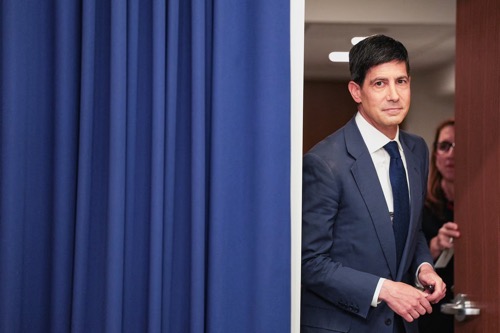
The “Eagle” is out: Walsh debuted, and the Federal Reserve changed!

The “Eagle” is out: Walsh debuted, and the Federal Reserve changed!

On June 17, EST, the Federal Reserve ended a two-day FOMC meeting and announced that it would keep the federal funds rate target range unchanged at 3.50% to 3.75%. This is the fourth time in a row since 2026 that the Federal Reserve has remained on hold. The result of the vote was 12:0 --- the first time since June of last year that the Federal Reserve had no objections to the interest rate vote. At the same time, this was Kevin Warsh (Kevin Warsh)'s first interest rate meeting since succeeding Powell as chairman of the Federal Reserve. Walsh's debut taught the market what “three fires for a new official to take office” is. Statement “slimming down”: 132 words to end “babysitter” communication Walsh's first move after taking office was a drastic overhaul of the Federal Reserve's policy statement. The post-conference statement was only about 132 words in English, while the statement after the April meeting was 341 words long, reducing the length by nearly two-thirds. Walsh said bluntly at the press conference: “You've probably noticed the difference in today's policy statement — it's shorter, more concise, and abandons some old language. This statement only gives you the facts, the facts we can judge.” More importantly, the statement completely removed the key wording that had previously suggested future interest rate cuts. The statement “considering further adjustments to the extent and timing of the federal funds rate target range” was completely removed from the April statement — this phrase was previously interpreted by the market as implying that the next policy action is still to cut interest rates. It was replaced by a shorter, more direct, and factual statement. The statement acknowledged that “economic activity is expanding at a steady pace despite the high uncertainty brought about by the Middle East conflict,” while bluntly stating that “inflation is still high compared to the Commission's 2% target” and promised “price stability will be achieved.” The employment statement has also become stronger: the April statement “employment growth remains low” was changed to “employment growth keeps pace with the expansion of the labor force size,” and the expression “productivity growth and capital investment performance are strong” was added. The tone of the entire statement completely changed from “pigeon watching” in April to “hawkish”. Bitmap: Split from 9 to 9, and the median rate hike jumped. If the streamlining of the statement is a formal change, then the shift in the bitmap is a real policy signal. According to the newly released bitmap, the median federal funds rate forecast for the end of 2026 is 3.8%, a sharp increase from the 3.4% forecast in March. Officials also raised interest rate forecasts for 2027 and 2028 simultaneously to 3.6% and 3.4%, respectively. In terms of distribution, out of 18 officials who submitted forecasts — Walsh himself did not submit forecasts — 9 expect interest rate hikes of at least 25 basis points within 2026. Five of them think they need to raise interest rates by 50 basis points, and 1 even thinks they need to raise interest rates by 75 basis points. Eight officials expect interest rates to stay the same, and only 1 still anticipate interest rate cuts. Inflation expectations have also been drastically raised. The median overall PCE inflation forecast for 2026 soared to 3.6% from 2.7% in March, and the core PCE increased from 2.7% to 3.3%. The Federal Reserve does not expect inflation to return to the 2% target until 2028. The economic growth forecast was slightly lowered, and the median GDP growth rate in 2026 fell from 2.4% to 2.2%. Walsh himself confirmed that interest rate forecasts were not submitted. At the press conference, he said bluntly: “The bitmap is drawn with a pencil and can be erased. My personal submission of the bitmap did not help with policy implementation.” This statement is consistent with his long-standing criticism of forward-looking guidance and bitmaps. Bill Adams, chief US economist at Fifth Third Bank, stated, “This bitmap weighs less than before, and Walsh said at a press conference after the meeting that he did not submit predictions — another sign that he is leading the Federal Reserve away from all forward-looking guidance, including bitmaps.” Five Task Forces: A Reform Starting from the “First Principle” Walsh presented the most important reform initiative at the press conference — setting up five task forces to conduct a comprehensive review of the Federal Reserve's monetary policy framework. The five working groups focused on: first, communication mechanisms — reviewing how the Federal Reserve communicates with the market, including economic forecast summaries (SEP) and bitmaps; second, balance sheets — evaluating the appropriate size and management methods of the Federal Reserve's $6.7 trillion balance sheet; third, data sources — evaluating the reliability and lag issues of existing data sources; fourth, productivity and employment — specifically examining the impact of artificial intelligence on labor and productivity; and fifth, the inflation framework — re-examining the Fed's inflation analysis framework. Walsh said that each working group will “start from the first principle, ask sharp questions, review current practices, and consider alternatives...

65d agoWendy#FOMC #Kevin Warsh #Interest rate hikes #original #Federal Reserve topics #Powell

UBS delays the Fed's interest rate cut forecast until 2027, and this week's meeting is expected to send a hawkish signal

Comparative news, according to a Jin10 report, UBS Global Wealth Management postponed its forecast for the Federal Reserve's interest rate cut until March and June 2027, and no longer anticipates any interest rate cuts this year. The agency said the move reflected its judgment that this week's meeting would send a hawkish signal. UBS currently anticipates that the Federal Reserve will cut interest rates by 25 basis points in March and June of next year, respectively. The previous forecast was to cut interest rates by 25 basis points each in December 2026 and March 2027. The Federal Reserve will announce its interest rate decision this week. This will be the first meeting under the presidency of the new Chairman Walsh. The market generally expects interest rates to remain unchanged. UBS Global Wealth Management analysts said in a report dated June 15: “Although Walsh has previously expressed a more dovish stance, we expect the tone of this meeting to be more hawkish, both in the statement and in the bitmap.” UBS said that major central banks will not hastily switch to more dovish policy statements due to the agreement between the US and Iran. Conversely, central banks are likely to remain cautious as events unfold and data to be released in the coming months gradually reveal whether the energy shock is triggering a second round of inflationary shocks.

67d ago#Federal Reserve topics

Market analysis: Walsh's first meeting may send Trump “bad news”

Comparative news, according to Kim 10, when Kevin Walsh was sworn in as chairman of the Federal Reserve, Trump told the new chairman to “stay independent” and “don't look at me, don't look at anyone, just do your own thing well and do a good job.” But this requirement will soon be tested. After presiding over the meeting for the first time as Chairman of the Federal Reserve, Walsh may have to deliver unwelcome news to Trump — despite Trump's constant calls for lower borrowing costs, the market expects the Federal Reserve to remain the same. Bill Adams, chief US economist at Comerica Bank, said that in order for the Federal Reserve to cut interest rates, they may need to see a new negative impact on the labor market, whether the conflict in the Middle East worsens or the potential downside risks of artificial intelligence to employment become a reality. If these situations do not happen, it will be difficult for the Federal Reserve to find a reasonable reason to cut interest rates in the current environment. Economists said that steady employment growth over the past three months and rising inflation associated with the Iran war left little room for policy makers to reduce interest rates. Traders have moved their expectations from cutting interest rates to possibly raising interest rates later this year or early 2027 in recent weeks.

67d ago