
花旗银行 · 315
Black eats black? Fake DeFi actually snatched out North Korea's Lazarus real hacker

Black eats black? Fake DeFi actually snatched out North Korea's Lazarus real hacker

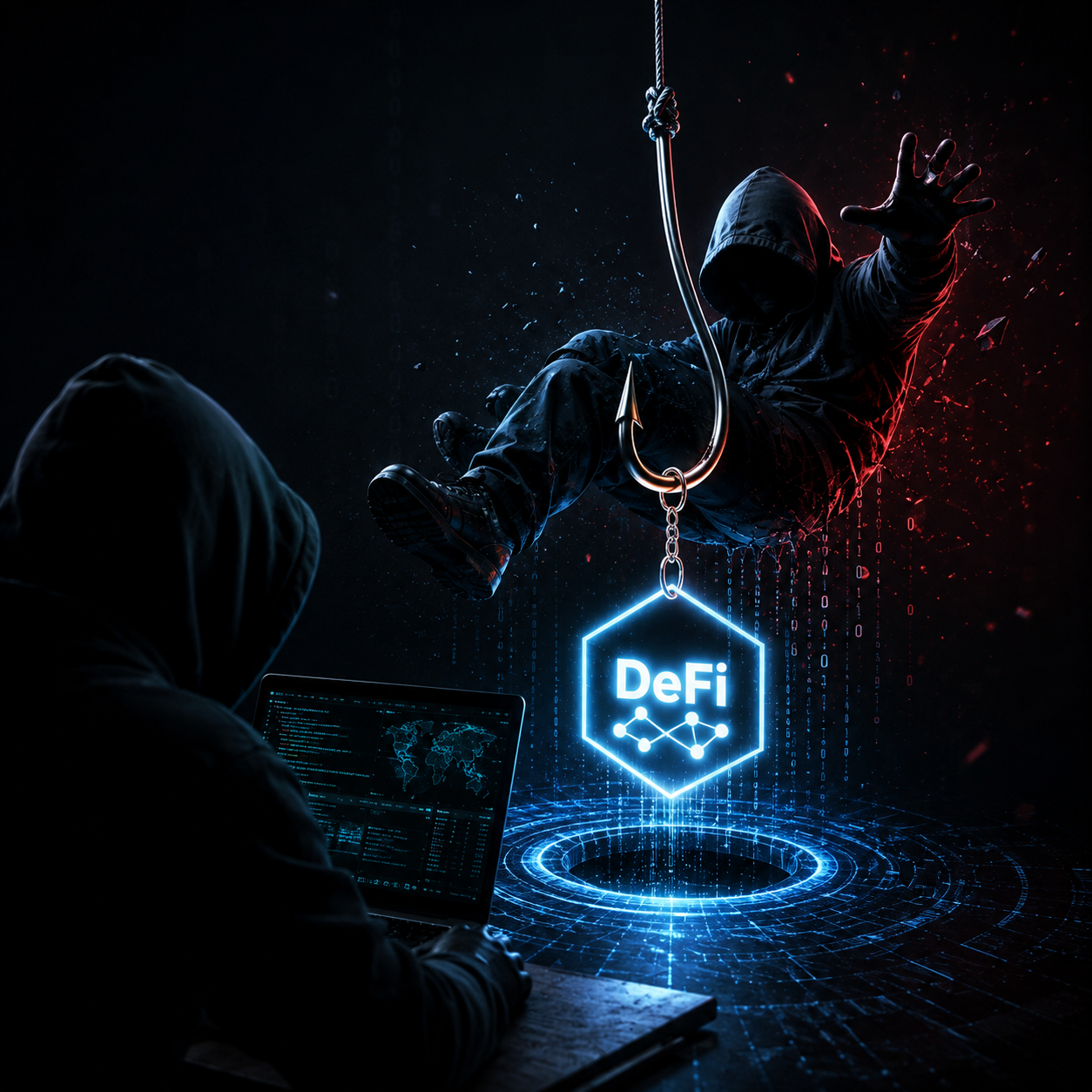
Source: Security Company ANY.RUN Compiled by: Daily Planet Daily Original title: Fishing Show of the Year, Fake DeFi Picks Out North Korea's Lazarus, Real Madrid Fans, Real Madrid Fans. With a mathematical background, they only use AI to write code. Core point of view: By setting up a fake DeFi company, the security agency successfully infiltrated the “Famous Chollima” hacker group under North Korea's Lazarus Group, revealed its complete process of using false identities, AI tools, and remote collaboration to infiltrate Western companies, and revealed its evolving toolset and infrastructure. Key element: The researchers disguised themselves as recruiters and recruited three North Korean agents within a few months to record their operation behavior, tool usage, and collaboration patterns in real time through the ANY.RUN sandbox environment. Agents used forged driver's licenses, stolen social security numbers, and mule accounts to complete the onboarding process. Some of these documents were processed by Google Gemini and had SynthID watermarks, revealing signs of forgery. Attackers rely on AI tools such as ChatGPT and Google Gemini to encode, translate, and modify files, and use AstrillVPN, remote desktop software, and dedicated servers to covertly access corporate environments. The three agents showed insufficient skills during development, frequently searched for basic issues, and exposed more proxy server and infrastructure information induced by selective network outages and captcha. The investigation found that Famous Chollima aims to lurk within the enterprise for a long time and legally obtain access to code, systems, and intellectual property rights, and is not limited to short-term attacks, and the threat persists significantly. Crypto friends who are often phished have probably heard of the North Korean hacker group Lazarus Group. Its well-known “campaigns” include, but are not limited to: Bybit ($1.5 billion) theft, Ronin Network/Axie Infinity Bridge attack ($6.2 billion), DMM Bitcoin/Ginco related attack ($308 million), Harmony Horizon Bridge attack ($100 million), and Atomic Wallet attacks ($100 million), etc. And the key to the success of these attacks is social engineering — hackers usually disguise themselves as normal job applicants, lurk at crypto companies for years, and wait for the right time. Recently, security agency ANY.RUN joined forces with BCA LTD (a company dedicated to threat intelligence and hunting) and NorthScan (a threat intelligence program to uncover the infiltration of North Korean IT workers) to effectively crack down on North Korean hacker agents. The researchers created a fake DeFi startup and successfully recruited “Famous Chollima” agents under North Korea's Lazarus Group who specialize in human infiltration, to gain an inside perspective on the actions of North Korea's IT workers. The ANY.RUN sandbox environment shows the agent's behavior patterns in real time, revealing their evolving toolsets, remote access workflows, AI tool usage, and supporting infrastructure. This survey went beyond the simple recruitment process and showed in depth how these agents collaborated, obtained, and used company resources after joining the company. The findings suggest that the North Korean IT worker program not only poses a recruitment risk; once agents sneak inside the organization, they can legally obtain access to code, systems, intellectual property, and critical business processes. The following is a report co-authored by the three parties, compiled by Daily Planet Daily. ——————Introduction In December of last year, we fully recorded the infiltration cycle of “Famous Chollima” for the first time. From recruiting collaborators to help them join Western companies, to falsifying documents, shipping laptops to intermediaries, and even using AI tools to assist and translate in real time during interviews, everything is under control. In that survey, we pretended to be a middleman willing to interview them and lend them a laptop in exchange for a percentage of their salary. The point is that those laptops are actually ANY.RUN sandbox environments that record every click and every step they take. This provided us with massive metrics, hours of computer operation videos, and face-to-face contact images, making an unprecedented survey and making headlines in many media. (“Famous Chollima...


1d agoOdaily星球日报#wallet security #hacks
At a time when Bitcoin is sluggish, institutional giants are bucking the trend to grab these crypto concept stocks

At a time when Bitcoin is sluggish, institutional giants are bucking the trend to grab these crypto concept stocks

Source: Daily Planet Daily Author: Wenser Original title: Crypto Bear Market, Which Crypto Concept Stocks Are Institutional Giants Making Up Their Positions? The agency is scrambling for funding: the full list of leading stocks on each track is here! Core view: Despite the fluctuating Bitcoin price and poor performance of crypto concept stocks, institutions such as Amundi, Pioneer Group, and State Street Group, the largest European asset management company, bucked the trend and increased their holdings of crypto stocks such as Strategy and Coinbase through 13F documents in Q2 2025, showing that institutional capital is quietly laying out leading targets at their own pace, rather than the “collapse of institutional belief” as market rumors say. Key factor: 1. France's Amundi increased 148% of Strategy shares to 1.32 million shares (worth US$127.7 million). Previously, it cut its position by nearly 90% in Q1, which is a low base correction. 2. In July, Pioneer Group's funds increased their holdings of MSTR by about 610,000 shares, with total holdings exceeding 12.6 million shares, worth more than 1.2 billion US dollars; State Street Group increased its holdings by 506,000 shares, with a total holdings of 7.52 million shares. 3. The pension fund signal is remarkable: the Michigan retirement system increased its MSTR holdings by 141%, the Louisiana and New Jersey pension funds simultaneously increased their positions, and conservative funds expanded their exposure to crypto assets. 4. Bitmine's entry into the Russell Index triggered forced purchases by passive funds such as BlackRock (holding 27.3 million shares) and State Street, which made unactive decisions; Circle received an investment of US$131.8 million from the Norwegian Sovereign Fund and opened a position with the Swiss National Bank. 5. ARK Invest operates on frequent bands such as Coinbase, Block, and Circle. For example, it bought 59,668 COIN shares (worth US$9.16 million) on August 7, reflecting an active dipping strategy. 6. The shareholding ratio of Robinhood institutions exceeds 93%. A large number of small and medium-sized pension funds have scattered positions, indicating that they have entered the regular allocation pool of conservative funds. There was a 45-day disclosure delay in the 7.13F document. Institutional position adjustments were flexible, and retail investors should not directly follow orders, but institutions are more sensitive to the bottom of the market and the racetrack. Recently, France's Amundi, the largest asset management company with an asset management scale of 2.9 trillion US dollars, disclosed that it has increased its share of Strategy by 148% and currently holds 1.32 million shares worth US$127.7 million. Looking back at recent data, although BTC continues to fluctuate and the price performance of many crypto concept stocks is not impressive, there are still quite a few institutions that choose to buck the trend and increase their holdings and wait for the market to rebound to generate profits. Today, claims about the “DAT model bankruptcy” and “the collapse of institutional cryptographic beliefs” are rampant, but the 13F documents that are mandatory to be disclosed by the US SEC every quarter reveal the truth about the time difference — a number of investment institutions with asset management scales of 100 billion and trillion dollars are quietly increasing their positions at their own pace. Strategy (MSTR): Asset management giants and public funds have made up MSTR with the most solid data in this round of institutional holdings increases. Buyers include various institutions such as asset management companies, large banks, and public funds. Amundi's position of about 1.32 million shares mentioned at the beginning of the article was not the result of continuous unilateral purchases. It cut Strategy's stock position by nearly 90% in Q1 this year, and the Q2 increase was to make up for the low base position of about 530,000 shares. After all, the Q1 market performance in the crypto market is hopeless, and asset management giants also need to review the current situation and trade. Asset management giant Vanguard Pioneer Group's VOE fund previously announced an increase of 83,093 MSTR shares, worth $8.16 million, to 2.12 million shares worth $209 million; on July 27, its VTSAX fund increased its holdings of 5291 million MSTR shares worth $50 million and increased its holdings to 10.5 million shares worth $994 million. State Street Corporation (State Street Group), the world's fourth largest asset management company, recently disclosed that it has increased its holdings of 506,635 MSTR shares, involving an amount of about US$51 million, with a total holdings of 7.52 million shares, with a position value of about US$758 million, and a 7.2% increase in holdings. Growth ETF (CGGR) under Capital Group, the world's largest active fund management company with an asset management scale of $3.3 trillion, disclosed an increase in MSTR in July...

8d ago22#Circle #Coinbase #Robinhood #Strategy #invests

Citi adds 238,538 shares of Strategy to a position value of $90.5 million

According to BitcoinTreasury, Citibank (Citi), which has assets of 2.8 trillion US dollars, revealed that it has increased 238,538 shares of Bitcoin treasury company Strategy stock MSTR, worth $22.4 million. Citi currently holds a total of 961,554 shares worth $90.5 million. This article is sponsored by GENG, Build Your Fortune on GENG (https://geng.one)

18d agoburnking

Voting ahead at the Federal Reserve meeting; two hawkish votes against are basically locked

Comparative news. According to Jin Shi's report, the agency carried out a forward-looking analysis of the voting situation at the Federal Reserve meeting. TD Securities and J.P. Morgan are expected to see two hawkish negative votes, mostly from Hamack and Logan. Commonwealth Bank of Australia and Citibank think one or two officials may disagree and support interest rate hikes. UBS Group predicts that if interest rates remain unchanged, 8 to 10 votes are expected to vote in favor. According to the forecast market, the probability that both Hamak and Logan will vote against is 58%.

24d ago

SK Hynix US stock ADR can officially be exchanged with Korean stocks starting today

Comparatively, SK Hynix (SK Hynix) has initiated a conversion mechanism for American Depositary Receipts (ADR, code: SKHY) listed on NASDAQ in the US. Starting today, investors can convert the ADR of US stocks to Korean stocks, or operate in reverse (subject to certain regulatory restrictions) to provide global investors with more flexible cross-border transaction facilities. The move further boosted the global liquidity of Hynix's shares after it completed an ADR offering and listing of approximately $26.5 billion in early July. Each ADR corresponds to one-tenth of South Korean stocks, and the US stock side is still trading at a certain premium. Note that the actual conversion cannot be completed on the same day; it requires depository banks (Citibank), foreign exchange declarations, administrative procedures, etc., and usually takes a certain number of working days. Applications are mainly submitted to KSD/Depository Bank through brokerage firms, but transaction execution and arbitrage effects will be affected by the Korean/US stock trading session (Korean stocks during the day, US stocks at night).

24d ago

Swift Announces Its Blockchain Ledger Is Ready, 17 Banks Will Pilot Tokenized Cross-Border Payments

According to Twitter, according to official sources, Swift announced that its blockchain-based ledger is ready, and 17 banks from six continents are preparing to pilot a 24/7 cross-border payment pilot using tokenized deposits. The ledger provides participating banks with a secure orchestration layer, enables them to issue tokenized deposits on the bank's ledger, and allows funds to be moved around the clock before final settlement is completed through the existing system. Participating banks include ANZ, BNP Paribas, New York Mellon, Citibank, DBS, Abu Dhabi First Bank, First Rand Bank, HSBC, Itau Union Bank, Lloyds Bank, Maerschlegt Bank, Mitsubishi UFJ Bank, OCBC Bank, Standard Chartered Bank, UBS Group, UBS Group, UBS Bank and Wells Fargo Bank.

44d ago

US employment data falls short of expectations, and expectations of the Federal Reserve's interest rate hike have slowed

Comparative news. According to the Kim Ju report, the US employment data blew up, causing the market's expectations of the Federal Reserve's interest rate hike to slow down. Citibank said that expectations for the recovery of supply in the Middle East have been “exaggerated,” while aluminum is rising on the London Metal Exchange (LME). We still need to pay attention to how long the “breathing window” for industrial metals can last.

50d ago

Citi: The share of OpenRouter's open source model tokens soared to 65%, and the price difference between the Chinese and US models reached tens of times

Comparative news, according to a Reuters report, the latest data released by Citibank (Citi) shows that the market adoption rate of low-cost open source models is rising rapidly, driven by companies' demand to cut AI spending. In June of this year, the proportion of open source model tokens processed on the AI aggregation platform OpenRouter jumped from 34% in January to 65%. In its report, Citi highlighted cost differentials as a central factor driving this trend. According to the data, while some large Chinese open source models continue to narrow the performance gap with the leading US model, their fee is as low as 18 cents per million tokens. Currently, the average fee for the leading model in the industry is about 4 US dollars, and the cost gap between the two is more than 20 times.

53d ago
Micron handed over its strongest quarterly report, can the 2x leveraged ETF “RAM” still get on the bus

Micron handed over its strongest quarterly report, can the 2x leveraged ETF “RAM” still get on the bus

Author: Curry, Tide Research Original title: Memory Chips Double Leveraged ETF Listing: After Micron's Earnings Report Blows Through Expectations, Should $RAM Be Used to Increase Leverage? Guide to tracking the memory chip-themed 2-times leveraged ETF “RAM” was listed on June 24. On the same day, Micron handed over the strongest quarterly report in history with revenue of $41.5 billion and gross margin of 84.9%, which rose more than 12% after the market. The underlying target DRAM ETF attracted more than 20 billion US dollars in less than three months after listing, but currently it has pulled back about 16% from a higher point. RAM can amplify rebound gains and can also amplify retracement damage. This article breaks down RAM's product mechanism, core risks, and the profit and loss logic of current purchases. The memory chip sector is in a delicate position: fundamentals have never been stronger, but prices have fallen from their highs. The 2-leveraged ETF “RAM,” which went public on June 24, brought this question to every investor concerned about the storage racetrack — is adding leverage in the pullback a sharp tool or an amplifier that accelerates losses? Before answering this question, let's take a look at what happened that day. Micron had revenue of $41.5 billion in a single quarter. After the Storage Super Cycle received the best verification of RAM on the day it was launched, Micron Technology announced the results for the third fiscal quarter of fiscal year 2026. According to Micron's 8-K filing with the SEC, revenue for the quarter was $41.46 billion, up 346% year over year, significantly exceeding Wall Street's consensus estimate of about $34.7 billion. Non-GAAP earnings per share were $25.11, and the consensus estimate was around $20. The gross profit margin was 84.9%, setting a new company record, and was only 39% in the same period last year. DRAM products contributed $31.3 billion in revenue (accounting for 76%), and the data center business grew more than 7 times year over year to $11.5 billion. More critical is forward-looking guidance: Q4 revenue guidance is $50 billion (± 1 billion), with gross margin of around 86%. CEO Sanjay Mehrotra also announced the signing of 16 strategic customer agreements to lock in multi-year supply commitments. According to CNBC, the American Disc rose about 12.6% after that. The significance of this financial report is that it validates the core logic of the storage supercycle. Supply is limited, prices continue to rise, and profit margins are still expanding. Goldman Sachs previously estimated the DRAM supply and demand gap of 4.9% in 2026, the most severe in nearly 15 years. Micron disclosed that the company can only meet 50% to two-thirds of customer needs in the medium term, and that HBM production capacity for the whole year has been locked in the contract. This is the most important fundamental background for investors considering using RAM as leverage. What is RAM: 2x intraday leverage, the full name of the ETFRAM that tracks the fastest growth in history is Roundhill T-REX 2X Long DRAM Daily Target ETF, jointly issued by Roundhill Investments and T-REX (a joint venture between REX Shares and Tuttle Capital Management) and listed on the Cboe BZX exchange on June 24 . Its target is the Roundhill Memory ETF (code DRAM), a pure memory chip-themed ETF that only includes companies with more than 50% of their revenue from the storage business. DRAM was listed on April 2, breaking the $1 billion management scale in 10 trading days. As of June 24, AUM surpassed $20 billion and a total return of 179.84%, making it the fastest growing product in the ETF industry's history. RAM's mechanism: Every trading day, the goal is to achieve 200% of DRAM's revenue for the day. DRAM rose 3%, RAM target increased 6%; DRAM fell 3%, and RAM target fell 6%. Net rate 1.25% (waived until September 2027). The custodian is Citibank. Options trading is currently not supported. DRAM ETF holdings are highly concentrated: SK Hynix is about 29%, Micron is about 27%, and Samsung is about 21%. Together, the three stocks account for about 77% of the fund's net assets. The remaining holdings include Kioxia, SanDisk, Western Digital, Seagate, etc., all of which are in low single digits. These three companies also happen to be the only three HBM suppliers in the world. The three core risks of RAM: What kind of RAM will happen if you hold it without moving it...

58d agoburnking#ETF #Micron #US stocks #US stock topics

Citrini researcher Jukan: Citibank's report assumes conservatism, and Micron Technology (MU)'s performance may exceed expectations this quarter

Comparing news, Jukan, a researcher at Citrini, a well-known investment and research agency, said in an article on the X platform that after reading Citibank's performance preview report, he believes that the agency's assumptions about the unit price of Micron's products are too conservative. If the market consensus is at this level, Micron may exceed expectations this quarter. According to the data, Micron Technology (MU) stock price is tentatively reported at $1133.99. Earlier, several institutions raised the target price of Micron Technology (MU) to $1,200-1500, including: Citibank raised the target price of Micron Technology to $1,200; Wade Bush raised Micron's target price to $1,300; and Deutsche Bank and investment bank Stifel raised the target price of Micron to $1,500.

62d ago