
裁员 · 1210
[Comparative Daily News Picks] Anthropic plans to include anti-AI sentiment as the main risk factor in the prospectus; Strategy's stock price hit a two-month high, and STRC returned above $96; Bernstein: Even if the “Clarity Act” is not passed, the SEC and CFTC will speed up rule-making; Dalio: The US debt crisis may break out within three years, and it is recommended to increase gold holdings

[Comparative Daily News Picks] Anthropic plans to include anti-AI sentiment as the main risk factor in the prospectus; Strategy's stock price hit a two-month high, and STRC returned above $96; Bernstein: Even if the “Clarity Act” is not passed, the SEC and CFTC will speed up rule-making; Dalio: The US debt crisis may break out within three years, and it is recommended to increase gold holdings

Daily AI · Crypto · Macro · Market Highlights, Bitpush helps you set priorities ↓ AI · News [Anthropic plans to include anti-AI sentiment as the main risk factor in the prospectus]. According to CNBC, Anthropic is expected to list the public's negative sentiment about artificial intelligence and data centers as a risk factor in the IPO prospectus to be released in the next few weeks. According to people familiar with the matter, Anthropic recently held a pre-listing “market trial” meeting with bankers and investors. Investors focused on competitive pressure, the impact of open source models on profit margins, and the risks that may be brought about by a slowdown in data center construction. Anthropic is currently valued at close to $1 trillion in the private equity market and is preparing to hit a major IPO. However, as Americans' concerns about AI replacing employment and data center expansion heat up, the related backlash sentiment is becoming a new challenge facing the company's listing. The company has previously achieved an annualized revenue operating rate of more than 65 billion US dollars. [Apple cuts Siri and Vision Pro team positions, and resources shift to AI and new devices] Compared to news, Apple (AAPL.O) is laying off employees from various teams responsible for Siri's digital assistants and Vision Pro headsets. The total impact of this layoff is more than 200 people. Of these, about 100 jobs in the Vision Pro department have been abolished, and about 100 other positions in the Siri and software teams have been cut. The move is part of the company's efforts to focus resources on new devices and artificial intelligence. People familiar with the matter said that in this adjustment, Apple has basically shut down a team dedicated to the Vision Pro game business, while also reducing the size of the department responsible for producing immersive video content for the device. Apple admitted in a statement that the company is making adjustments to some teams “to drive business development and provide the best experience for users.” [Castle Securities: Over 80% of the overall risk in the Situational Awareness Fund portfolio has been divested] According to the Financial Times, Castle Securities founder Ken Griffin responded to the company's acquisition of Situational Awareness assets under Leopold (Leopold) in a letter to clients on Friday. According to a letter obtained by CNBC, Griffin told clients that Castle Securities had divested more than 80% of the overall risk in the original purchased portfolio by conducting more than 100 major transactions (with a market value of more than $4 billion). In his letter, Griffin wrote, “A transaction of this scale would not have been possible without the full cooperation of the transaction teams and lead brokerage teams of the banks serving the two companies. I am very grateful for their dedicated efforts to complete the portfolio transfer quickly.” Griffin also confirmed that the company's flagship multi-strategy fund, the Wellington Fund, had a return of 5.94% in July, which is the fund's best monthly performance since 2022. [AI cloud company Nscale seeks to raise 3 billion US dollars in US IPOs] In comparison, AI cloud company Nscale is reportedly seeking to raise 3 billion US dollars in a US IPO. In the crypto market [Strategy stock price hit a two-month high, STRC returned above $96], the Bitcoin treasury company Strategy (MSTR) stock price rose to a two-month high today as the Bitcoin price briefly broke through $79,400. It broke through $120 during the intraday period, then partially regained its gains. Meanwhile, the price of STRC, Strategy's preferred stock product, also surpassed $96 for the first time since June. Previously, STRC's price once fell below $70 due to concerns about its ability to pay dividends and the ability of the stock price to maintain the $100 target for a long time. [Bernstein: Even if the Clarity Act is not passed, the SEC and CFTC will speed up rulemaking] Comparing news, the Bernstein analyst team led by Gautam Chhugani released a report stating that regardless of the procedural voting results of the “Clarity Act” on September 15, the certainty of US crypto regulation is expected to increase. They expect the SEC and CFTC to accelerate rulemaking in areas such as native crypto asset issuance, tokenized stocks, perpetual futures, computing power derivatives, and predictive markets. This regulatory clarity of expectations has become one of the broader supporting factors in the crypto market. 【A...

22h agoBitpushNews#Compare Daily Picks

Apple cuts Siri and Vision Pro team positions and shifts resources to AI and new devices

According to the news, Apple (AAPL.O) is laying off employees from various teams responsible for Siri's digital assistants and Vision Pro headsets. The total impact of this layoff is more than 200 people. Of these, about 100 jobs in the Vision Pro department have been abolished, and about 100 other jobs in the Siri and software teams have been cut. The move is part of the company's efforts to focus resources on new devices and artificial intelligence. People familiar with the matter said that in this adjustment, Apple has basically shut down a team dedicated to the Vision Pro game business, while also reducing the size of the department responsible for producing immersive video content for the device. Apple admitted in a statement that the company is making adjustments to some teams “to drive business development and provide the best experience for users.”

1d agoWendy#starters
Half a year has passed, are second-tier US crypto exchanges doing well?

Half a year has passed, are second-tier US crypto exchanges doing well?

Source: Foresight News Author: Eric Original title: Half a year has passed, how are second-tier crypto exchanges in the US doing? Halfway through 2026, the crypto market didn't experience the rebound that many were looking forward to. Bitcoin fell by more than 30% in the first half of the year. At one point, it fell below $60,000, and the industry's spot trading volume shrank by more than 20% for two consecutive quarters. The much-anticipated CLARITY Act has run aground in the Senate, and expectations of regulatory loosening have also been delayed. Coinbase portrayed this chill with a report card that lost more than $750 million in half a year. As the leading cryptocurrency exchange in the US, this is still the case, and second-tier exchanges are having an even worse time. According to recently disclosed financial reports for the second quarter, although some second-tier exchanges have achieved performance growth, their market share continues to be compressed. Gemini, who relied on blood transfusions from the founder to prolong their lives, let's talk about the worst family. Gemini's total revenue for the second quarter was $45.5 million, up 37% year over year, but exchange revenue fell 38% year over year, leaving only $12.5 million. Spot trading volume shrank 66% from $113 billion in the same period last year to $3.8 billion. Revenue growth was supported by side businesses such as credit cards, collateral, and OTC. Of these, credit card revenue was $16.2 million, up 231% year over year. Gemini had a net loss of US$107.7 million in the second quarter, with a cumulative loss of US$217 million in the first half of the year. The platform's assets fell to $8.4 billion from $182 billion a year ago. What is even more troubling is that the credit card business has taken a leap forward. The identity fraud incident discovered in the first quarter continued to ferment in the second quarter, and a transaction loss reserve of 2010 million US dollars was calculated in a single quarter. The contraction came fast and severe. On February 5, Gemini announced its withdrawal from the UK, EU, and Australian markets, which is tantamount to abandoning the overseas territory it has operated for many years. Employees were cut 40% from the high in the third quarter of 2025, leaving only 402 people at the end of the quarter, and marketing expenses were cut 45% year over year. In May, the Winklevoss brothers paid out of their own pockets to inject $100 million into the company at a price of $14 per share through their fund. The founder's premium increase sounds like a vote of confidence, but the market's signal is that the company is no longer able to finance itself externally. This life-saving money paid in bitcoins was then hit by a drop in currency prices, and an impairment was added to the book, directly dragging the adjusted EBITDA for the second quarter to negative 74 million US dollars, which is worse than the first quarter. Stock prices are the most honest voting instrument. Gemini was listed at $28 in September last year, reaching a high of $45.89 on the first day. Today, it has fallen from a high point of more than 88%, or 56% during the year. Citi cut its target price to $4 in April to maintain its sales rating. Bullish, the situation of Bullish being kidnapped by Bitcoin is a bit more complicated. In addition to the exchange, the company also has CoinDesk media, index licensing, and the Consensus Conference, and has a relatively diverse revenue structure. Bullish's second-quarter adjusted revenue was $92.6 million, up 62% year over year. Among them, subscription and service revenue hit a record of $62.7 million. Morgan Stanley and Grayscale all used the CoinDesk index to distribute products. Adjusted net profit for the second quarter was US$14.3 million, reversing losses year over year. Looking at these numbers alone, Bullish seems like the most decent one in the second tier. But the IFRS-caliber report tells a different story. The net loss for the second quarter was US$280 million, mainly due to Bitcoin held in the company's treasury, which recorded a fair value impairment of US$245 million in the second quarter alone. Digital asset sales fell 44% year over year, indicating that the institutional trading business is also shrinking. CEO Tom Farley's answer was to completely change the track. In May, Bullish announced the acquisition of securities registration and transfer agent Equiniti at the Consensus Miami conference. The transaction scale is about 4.2 billion US dollars. It is expected to be completed in early 2027. The goal is to complete the entire chain of tokenized securities from issuance and listing to trading and tracking. On August 12, the company launched its own tokenized stock exchange, which was also approved by the Gibraltar regulator. The story is a popular one, but the capital market isn't buying it right now. Bullish went public with a $37 IPO in August last year, closing at $70 on the first day...

4d agoForesight News#Exchanges
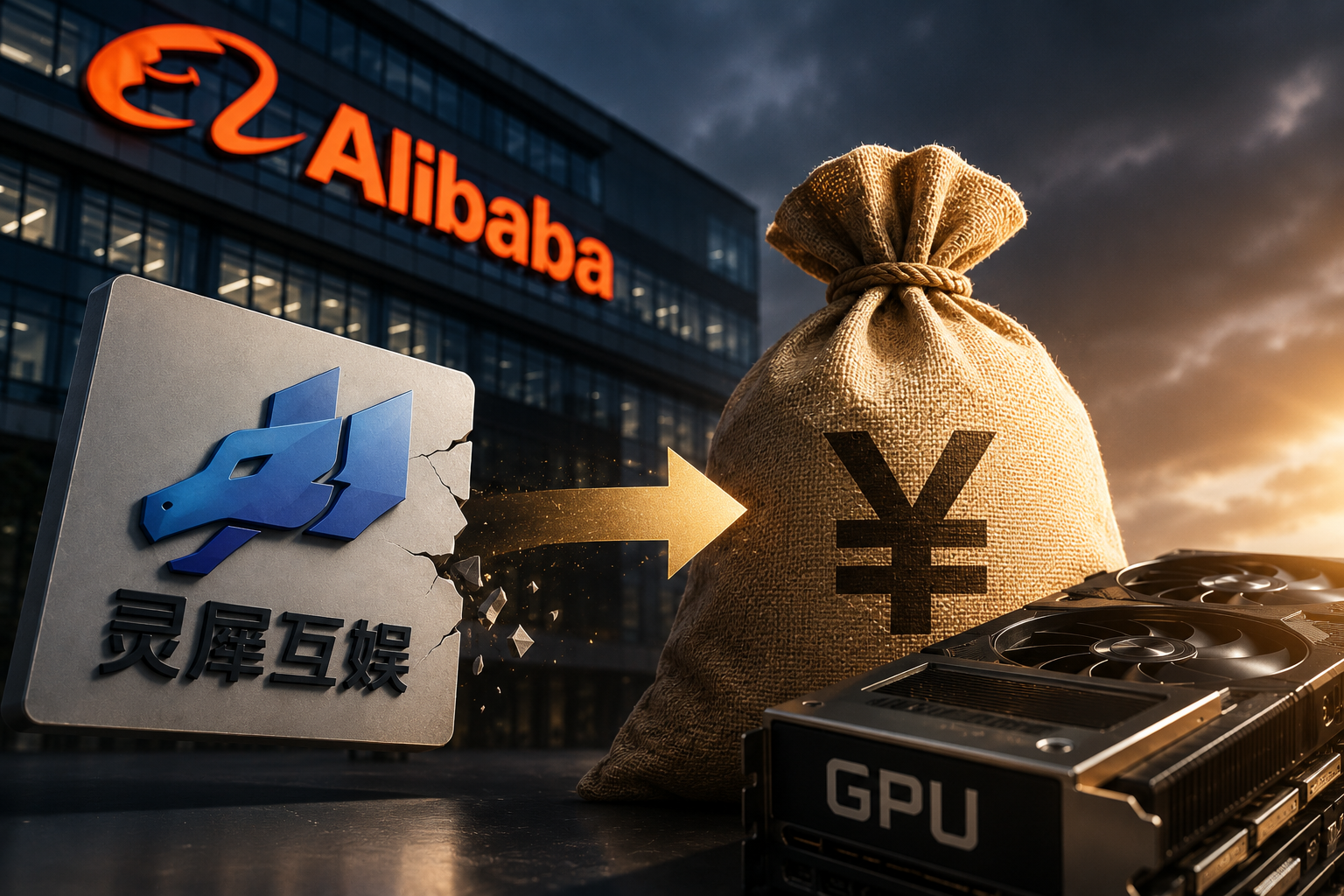
Ali sells his “son” who earns 2 billion dollars a year: All in AI to buy GPUs in exchange for money

Ali sells his “son” who earns 2 billion dollars a year: All in AI to buy GPUs in exchange for money

Source | Pencil Dao Author | Huang Xiaogui Original title: Ali sells his son who earns 2 billion dollars a year: In exchange for 10.1 billion yuan to buy a GPU, Alibaba sold a “chicken that can lay eggs.” On August 17, Zhou Bingshu, CEO of Lingxi Mutual Entertainment, issued an internal letter stating that Alibaba will sell its shares in Lingxi Mutual Entertainment, Xinchen Capital will become the new shareholder, and the original management team will continue to be responsible for the company's operations. According to the 21st Century Economic Report, Alibaba sold Lingxi Mutual Entertainment for at least 1.5 billion US dollars (about 10.1 billion yuan). Currently, Alibaba and Xinchen Capital have not officially disclosed the transaction amount. Lingxi Mutual Entertainment is a high-quality asset, with an annual net profit of 1.5 billion to 2 billion yuan; with “Three Kingdoms Strategy Edition”, a stable cash cow, the number of global users surpassed 100 million. “Exchange money to buy a card (GPU).” Huang Wei (pseudonym), a person familiar with Alibaba, told Pencil that the sale at this time was to concentrate resources and invest in computing power, and Ali, who is all in AI, has already entered a state of “full agent and model development, and scene access.” - 01 - Sold cash cow and invested in AI Lingxi Mutual Entertainment in Guangzhou. Its predecessor, Jian Yue Technology, was founded by Zhan Zhonghui, a former NetEase executive. In 2017, Ali acquired Jianyue Technology at a valuation of about 1 billion yuan and became a subsidiary. In September 2020, it officially launched the “Lingxi Interactive Entertainment” brand. What really gave this company a foothold in the Chinese game industry was “Three Kingdoms: Strategy Edition”, which was launched in 2019. According to Sensor Tower's previous data, the game's revenue in the first two years of its launch was over 1 billion US dollars. In recent years, Lingxi Mutual Entertainment's annual revenue is about 3 billion yuan to 4 billion yuan, which is roughly equivalent to the revenue scale of game manufacturers in central China. Also, according to industry media estimates such as “Game Grapes”, Lingxi Mutual Entertainment's profit in 2025 will be about 1.5 billion to 2 billion yuan. Ali sells a profitable business to invest in a direction that is still burning money — AI. In fiscal year 2026, Ali's capital expenditure reached 126.063 billion yuan, a record high. Most of this is AI computing power infrastructure and data center expansion. This input is directly reflected in the financial statements. In fiscal year 2026, Ali's revenue reached 1.02 trillion yuan, up 3% year on year, but operating profit fell 64%; adjusted EBITA fell 56%. Free cash flow declined from positive 73.9 billion yuan to negative 466 billion yuan. But this isn't a gamble without a future. Ali CEO Wu Yongming revealed, “(Ali) almost none of the cards are empty.” As of the end of March this year, Alibaba Cloud's revenue reached 41.6 billion yuan, an increase of 38% over the previous year, of which external commercialization revenue increased 40%; revenue from AI-related products was close to 9 billion yuan in a single quarter, accounting for about 30% of external revenue, and has maintained three-digit growth for 11 consecutive quarters. Ali predicts that in about a year, AI-related revenue may account for more than half of cloud business revenue. Today, growth is limited by supply, not demand. The ceiling of demand is far from being reached, but the ceiling of supply is just around the corner. At a time when cash is in high demand, but computing power continues to be exchanged for income, it's like “the family has an emergency, lacks money, and sells something for the family.” Huang Wei described Ali's sale of Lingxi Mutual Entertainment in this way. Lingxi Mutual Entertainment's annual profit is 1.5 to 2 billion yuan. It is a good asset, but it is not a core asset. The game business has a limited strategic relationship with AI, cloud, and e-commerce. Retaining it makes more than 1 billion dollars in profits; selling it will take back more than 10 billion dollars in cash at once and invest in AI. And this isn't the first time. In fiscal year 2026, Ali has successively disposed of many assets such as Gaoxin Retail, Yintai Department Store, and Trendyol Local Lifestyle Services. Each of these businesses has its own situation, but the underlying logic is the same: shrink non-core and concentrate resources on the main line of AI. Lingxi Mutual Entertainment sold 10.1 billion yuan, which is a bit higher than the 7 billion to 9 billion yuan expected by the market. Xinchen Capital's premium bid shows that in the eyes of buyers, this is a high-quality asset. For Ali, being able to sell at a high level is also considered a good time to sell. - 02 - Give me some more cards, I can make more money. The whole industry is buying cards. Overall, the 2026 GPU procurement budget of leading domestic manufacturers was raised from 160 billion yuan at the beginning of the year to about 230 billion yuan, a sharp increase of 44% within half a year. The industry's outlook for 2027 is more aggressive — GPU-related investment is likely to double to 500 billion yuan. The world is more exaggerated. According to data from Jibang Consulting, the total capital expenditure of the world's nine largest cloud vendors will exceed 886.7 billion US dollars in 2026, an increase of nearly 90% over the previous year. Amazon $220 billion, Google...

4d ago铅笔道#AI #GPU #Alibaba

Stripe's negotiations with Advent to buy PayPal are heating up, and the deal may be valued at $53 billion

According to the news, takeover negotiations between payment giant PayPal and Stripe and private equity firm Advent Global Opportunities are heating up, and the two sides may reach a deal within the next few weeks. Earlier in July, Stripe and Advent proposed to buy PayPal for $60.50 per share, with a total valuation of about $53 billion, but PayPal did not accept the offer at the time. However, people familiar with the matter revealed that negotiations between the two sides have not been interrupted and are still progressing. Neither PayPal nor Stripe confirmed the news. PayPal declined to comment, and Stripe said it would not respond to market rumors or speculation. The potential sale comes at a time when PayPal is seeking to reverse growth difficulties. After taking office in March of this year, PayPal CEO Enrique Lores launched a restructuring plan to split the business into three major directions: payment and checkout and PayPal business, consumer financial services (including Venmo), payment services, and crypto business. Lores previously said that PayPal will return to its position as a technology company and strengthen its core payment capabilities. At the same time, the company plans to improve efficiency by cutting costs, and the scale of layoffs is expected to reach 20% within the next two to three years. PayPal was founded in 1998, and the founding team included prominent Silicon Valley figures such as Peter Thiel, Elon Musk, and Max Levchin. The company grew rapidly due to the e-commerce boom during the pandemic, but in recent years it has faced challenges such as slowing growth and pressure on stock prices. If the deal is completed, it will be one of the largest acquisitions in the fintech industry in recent years.

7d ago

SpaceX buys $60 billion to acquire Cursor, Musk's AI landscape falls back on weight

Comparatively, according to Kim Ju, Space Exploration Technology has completed the $60 billion acquisition of artificial intelligence coding startup Cursor, which is a key step for Musk to catch up with rivals Anthropic and OpenAI in the AI field. According to regulatory documents, the deal came into effect on August 14, two months after SpaceX officially announced that it had reached an acquisition agreement. The acquisition is one of the largest technology deals in history, and aims to help Musk's company step up efforts to build more advanced AI tools to simplify tasks, including coding — a lucrative market for AI. Musk's AI company, now known as SpaceXAI, had limited commercial applications and underwent a series of layoffs and restructuring. Cursor's AI assistant was launched in 2023 to help programmers write and debug code more efficiently. It became one of the fastest-growing startups of all time and played a central role in the tech-driven programming era, when software developers surged in demand for tools that could be built on chatbot prompts.

8d ago

BitGo had a net loss of $19 million in the second quarter and CFO will step down

Comparatively, digital asset infrastructure company BitGo revealed on August 12 that Chief Financial Officer Edward Reginelli will officially step down on September 15. Reginelli informed the board of directors on August 10 that the company stated that his departure was not due to differences over the company's operations, policies, or practices, and that a formal search for a successor has begun, and that he will continue to act as an advisor after leaving the company. In the same period, BitGo announced financial results for the second quarter of 2026. According to the report, total revenue increased 79.6% year over year to US$4.33 billion, but net loss reached US$19 million, which was a profit of US$38.3 million in the same period last year; net loss narrowed from US$60.7 million in the first quarter. Adjusted EBITDA changed from a profit of $3 million in the same period last year to a loss of $4.2 million. The company said it had laid off about 15% of its employees in June, and related investment priorities and operating model adjustments are expected to result in annual cash savings of about 15 million US dollars. As of the end of June, BitGo held $159 million in cash and 2,523 of its own bitcoins (worth approximately $147.7 million), with no corporate-level debt.

9d ago

Oracle plans to lay off more employees. 21,000 people have already been laid off this year

Comparatively, Oracle has drawn up a new round of layoffs to reduce payroll expenses as the company is accumulating billions of dollars in debt to fund AI infrastructure. Oracle cut 21,000 full-time jobs earlier this year. According to internal documents, layoffs in some teams may reach double digits. People familiar with the matter said that the company has asked management to submit a list of affected employees, with the goal of completing salary cuts before the start of the second fiscal quarter on September 1. Oracle did not comment on this.

9d ago

Bitwise has cut its workforce by about 14%, down to 155

Comparatively, according to Bloomberg, the crypto asset management company Bitwise Asset Management Inc. has cut about 14% of its employees against the backdrop of the recent downturn in digital asset prices. According to reports, the San Francisco-based Bitwise confirmed in an email statement sent to Bloomberg that its workforce has been reduced from around 180 to around 155. CEO Hunter Horsley said that even after the layoffs, Bitwise still had the largest workforce in its eight-year history.

10d ago

Bitwise lays off 14% of employees and manages assets of around $9 billion

Comparatively, the digital asset management company Bitwise Asset Management cut the number of employees from about 180 to about 155, with a layoff rate of about 14%. The company said the adjustment occurred during a period of continued downturn in digital asset prices. Bitwise CEO Hunter Horsley said that after the layoffs, the company's workforce is still at its highest level in eight years, and the business is expected to continue to grow as cryptocurrencies are further integrated into the global economy. Bitwise currently manages more than 70 products, including exchange-traded funds, private equity funds, and independently managed accounts. Among them, the Bitcoin ETF is around $2.3 billion, and the company's assets under management are around $9 billion. (Bloomberg)

10d ago