许家印 · 11

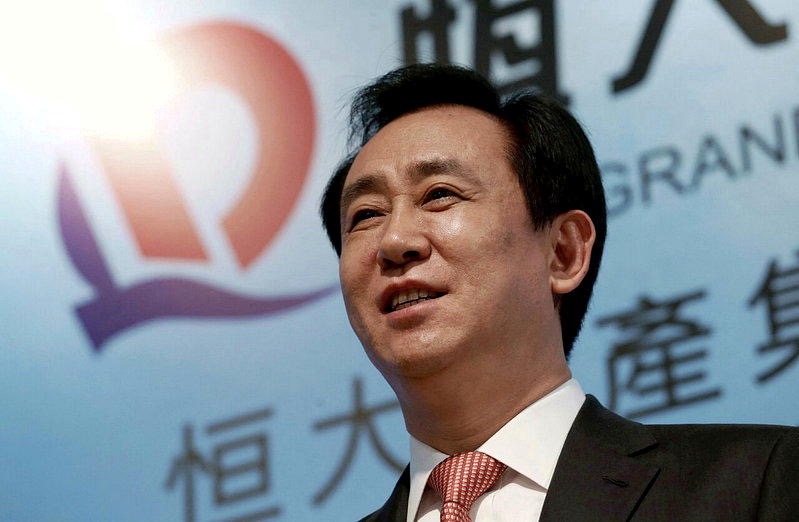
Xu Jiayin was sentenced to life imprisonment and Evergrande Group fined 8.82 billion yuan

Comparatively, on the morning of August 20, 2026, the Shenzhen Intermediate People's Court of Guangdong Province handed down a public verdict in the first instance of the case of Evergrande Group Co., Ltd., Evergrande Real Estate Group Co., Ltd. and defendant Xu Jiayin. The court punished Evergrande Group for several crimes, with a fine of RMB 8.82 billion; a fine of RMB 7 billion for Evergrande Real Estate; Xu Jiayin was punished with a combination of crimes, life imprisonment, deprivation of political rights for life, and confiscation of all personal property; and continued to recover the illegal proceeds, and ordered compensation for the shortfall. The court found that Xu Jiayin is the actual controller of Evergrande Group. Between 2016 and 2021, Evergrande Group, Evergrande Real Estate and Xu Jiayin inflated assets, concealed liabilities by means of financial fraud, carried out crimes such as illegal absorption of public deposits, fund-raising fraud, fraudulent issuance of securities, and illegal disclosure of important information; obtained control of financial institutions through bribery, and illegally withdrew credit and insurance funds. Xu Jiayin also used his position to facilitate organizational financial fraud and usurped the company's assets in the name of dividends. The court found that the relevant acts seriously disrupted the order of the market economy, that the amount of the crime was particularly huge, the circumstances were particularly egregious, and that they were severely punished according to law. On the same day, two courts in Shenzhen also ruled on cases involving Evergrande involving illegal absorption of public deposits and fund-raising fraud. 56 people, including Zhen Litao, Ke Peng, Xu Tenghe, and Xu Zhijian, were sentenced to fixed-term sentences ranging from 18 years to 1 year and 10 months, as well as fines or confiscation of property.

2d ago
Xu Jiayin destroyed the second generation of Northeast China's wealth of 4.2 billion

Xu Jiayin destroyed the second generation of Northeast China's wealth of 4.2 billion

Source: Phoenix News Finance “Company Research Institute” Recently, a ruling by the Hong Kong High Court brought an old account that had been sunk for five years back to the table. Yingjia International Real Estate applied to the court for an injunction to stop Evergrande's liquidators from collecting the debt, but it was rejected. The liquidators wanted HK$5.97 billion, with principal and interest. And behind this huge dispute is a fixed growth game that took place during the peak of Evergrande Auto. In 2021, a second-generation wealthy person from Northeast China paid out 4.2 billion yuan, and Evergrande shares in exchange were nearly zero. What was thought to be just a bridge loan was turned into a huge debt of nearly HK$6 billion hanging over an offshore shell company. Cross-border crossing of HK$01 billion, a seemingly seamless closed loop. On January 24, 2021, Evergrande Motor issued an announcement to complete the IPO with six subscribers. A total allocation of 952 million shares, or HK$27.3 per share, raised a total of HK$26 billion. At that time, Evergrande Auto's market capitalization once surpassed 600 billion Hong Kong dollars, putting pressure on BYD and topping the domestic car companies' market capitalization list. Heyirong International Trading Co., Ltd., controlled by Wang Kaiguo, born in 1989, is also one of the subscribers. It promised to invest HK$5 billion to win about 183 million new shares, with a 12-month sales ban. The paper agreement has been settled, yet the financial problem is looming. It is necessary to mobilize funds in the amount of HK$5 billion to participate in Hong Kong stock subscriptions. The formal foreign exchange approval cycle is long, and Xu Jiayin cannot wait. Add up the two sides and come up with a quick way to pay. The whole process was implemented in three steps. The first step is domestic loans. In March 2021, Heyirong signed a RMB loan agreement with Evergrande, and Heyirong lent funds equivalent to HK$5 billion to Evergrande. From April 7 to 9, Heyirong remitted a total of RMB 4.2 billion to the Guangzhou Kailong Real Estate Co., Ltd. account designated by Evergrande in three transactions. Based on the exchange rate on the day of the transfer, it was just HK$5 billion. The second step is overseas loans. Also in March 2021, Guoxiong Holdings, a subsidiary of Evergrande, signed a loan agreement with Yingjia International Real Estate, wholly-owned by Wang Lihua. Guoxiong loaned HK$5 billion to Yingjia for a period of two years, repaid on a regular schedule without interest, and accrued interest on a 4% annual interest rate. From April 7 to 9, the HKD was also credited to the Yingjia account in three installments. The third step is to complete the IPO. After receiving HK$5 billion, Yingjia immediately transferred the full amount to Hongchang International Trade, another Hong Kong entity controlled by Wang Kaiguo. On April 9, Hongchang International successfully obtained Evergrande Motor's share certificate for 183 million new shares. According to Yingjia International Real Estate's claim in the lawsuit, there was an internal agreement between Evergrande's former management and Yingjia International Real Estate that no actual repayment was required for the above loans. However, on January 29, 2024, the Hong Kong High Court issued a winding-up order for China Evergrande. The liquidator took over the assets and contract files, and this loan agreement with complete procedures and complete settlement of funds was overturned. The old management's verbal tacit agreement was not binding on the liquidators. The contract is written in black and white with a principal amount of HK$5 billion and 4% overdue interest. This is a real claim with legal effect. In May 2025, Guoxiong Holdings officially issued a letter requesting Yingjia International Real Estate to repay nearly HK$6 billion in principal and interest. Yingjia refused to comply with the contract and in turn applied to the Hong Kong High Court for an injunction in an attempt to prevent Guoxiong Holdings from filing a winding-up petition. During the trial, Yingjia International Real Estate changed its arguments several times. First, they claimed that the loan was a false transaction, then changed their rhetoric to saying that there was a special funding arrangement, and finally put forward the core statement: the two parties had an oral subsidiary agreement exempt from enforcement. In response, presiding judge Chen Jingfen found that the oral subsidiary agreement claimed by Yingjia was “recently fabricated,” and rejected all of its defenses one by one. Chen Jingfen said that the loan contract signed in writing in the case and the funds were paid in full constituted a real claim. It was impossible to deny the legal effect of the formal contract based only on an oral agreement claimed by one party afterwards. The execution of the judgment on August 7 means that Evergrande's liquidators can officially commence the winding-up procedure against Yingjia and recover nearly HK$6 billion in claims. However, Yingjia itself is only an offshore shell company; it is still unknown how many actual assets it has that can be executed under its name. These offshore shell companies often only assume the functions of holding shares and transferring capital, making it difficult to get a glimpse of the real trading context of Fujia. To understand the private capital giant's layout in the A-share market, we also need to start with Wang Kaiguo, the core agent who was pushed to the front of the stage. 02 He took 5 directors' seats at age 32 and quietly left the market on April 21, 2021. Financial Street Holdings issued a director candidate announcement. The name “Wang Kaiguo” first appeared in the official disclosure documents of A-share listed companies. Five days later, on April 26, Goldwind Technology announced the “Proposed Election of Non-Executive Directors” on the Hong Kong Stock Exchange...

3d agoWendy#Evergrande #BYD #Wang Kaiguo #Xu Jiayin

Early Bitcoin players were scammed by fake “Shizuka” and “Xu Jiayin” crooks and lost 700,000 yuan

Comparing news, the early Bitcoin player “Security Guards Empty” posted an article on X saying that they had already been scammed by false “Shizuka” and “Xu Jiayin” crooks and lost 100,000 U (about 700,000 yuan). According to it, the scammer added himself through business card recommendations and later defrauded 100,000 USDT of assets by selling USDT at a low price as bait. After it was discovered that the other party had not verified their real name and that their identity was false, it was discovered that they had been scammed. Up to now, victims have begun contacting Binance, Wave, OKLink, and friends around them, and alerted the police.

698d agoburnking#Bitcoin
Sun Yuchen from Beyond Traffic: Not Just “Brother Sun,” He's a Bear Market Hunter

Sun Yuchen from Beyond Traffic: Not Just “Brother Sun,” He's a Bear Market Hunter

A Sun Yuchen was wrapped up in marketing news and soaked in traffic. The aura of wealth was so bright that his face was so blurry. He was a “Brother Sun” made fun of by netizens during group chats. Production/New Business Review In March of this year, 5,689 bitcoins were stored in an offline device in the National Treasury of El Salvador and locked deep in the treasury. The president excitedly said, “This is our first Bitcoin piggy bank.” Three years ago, this small Central American country passed a proposal to become the first country in the world to recognize Bitcoin as legal tender. The whole world has gone viral. Sun Yuchen is one of the few people who tweeted his support, and was praised and retweeted by the president. Compared to those lace news, Sun Yuchen's tweet was rarely mentioned. It wasn't until the bull market came again 3 years later that people discovered that El Salvador had won, and Sun Yuchen was still on the field. The latest case is that his team's Bochang TRON and Huobi HTX reached a strategic brand partnership with Singapore national team goalkeeper Hassan Sunny (Hassan Sunny). Sonny will serve as the chief security officer and brand ambassador for Bochang TRON and Huobi HTX. Misleading and ignorant stories about Sun Yuchen run through fragments. In fact, in the public eye, what you can see are two Sun Yuchen. A Sun Yuchen was wrapped up in marketing news and soaked in traffic. The aura of wealth was so bright that his face was so blurry. He was a “Brother Sun” made fun of by netizens during group chats. Under the cover of Sun Yuchen's aura, Sun Yuchen, another one that is closer to reality, is often overlooked: he is a serial entrepreneur, professional trader, long-term believer, and a calm hunter in financial games. The story of the coin industry is less than ten years old, but it is already turbulent enough. Almost every story has both positive and negative sides. However, whether it is deification or magicalization, it is actually not the best perspective to observe Sun Yuchen. The most scarce perspective right now is “normal.” When we remove all filters, return to blockchain finance itself, and re-examine Sun Yuchen, we will find that he has gone through the turbulent cycle and has become one of the few survivors left on the market. 1. After 3 “curse times” in March 2024, the virtual asset market entered a new cycle as the Bitcoin market picked up. Sun Yuchen founded Bochang TRON in 2017. On March 5, the network revenue reached a record high of 2.31 million US dollars. By the end of May this year, the number of accounts had exceeded 233 million, the number of transactions exceeded 7.73 billion, and the market value of on-chain stablecoins had exceeded 59.8 billion US dollars, all breaking historical records, and the number of daily active users topped the public chain market rankings. The faint sound of drums grew louder and louder. Statistics from the cryptocurrency market data platform Coingecko show that in February of this year, the total market value of the cryptocurrency market returned to $2 trillion after a lapse of two years. The head of Goldman Sachs Digital Asset Asia Pacific said that customers have revived their strong interest in the crypto market, and indicators such as the number of new customers, trading activity, and overall transaction scale are on the rise. “Net new demand worth $8 billion has poured into 9 new Bitcoin ETFs over the past 60 days.” Matt Barensweig, managing director of digital asset trust company BitGo Go Network, said, “What we are seeing is a historic, record level of activity. This trend indicates that the Pandora's box in the cryptocurrency market has opened, and there will be more capital inflows in the future.” Everything was in line with Sun Yuchen's judgment on the market, and the current bull market was hard to come by, and it was necessary to go through the “curse moment” 3 times before it arrived. Since its inception, Satoshi Nakamoto has set rules for Bitcoin: the reward for every 210,000 blocks generated for Bitcoin will be halved until the block reward is 0 in 2140. After all bitcoins have been issued, the final total amount of shares issued is constant at 21 million. This cycle is converted into time. Every four years, mining rewards for Bitcoin miners are cut in half, and the growth rate of the total amount of Bitcoin is drastically reduced. According to the theory of supply and demand, when supply decreases, prices will rise and enter a new market cycle. This point will be reached again in mid-April 2024. Looking back, after three “curse moments” in 2012, 2016, and 2020, Bitcoin will experience a round of upward movement, then fluctuate downward until the next “curse moment” arrives. As a result, people are also using April 2024 as the starting point for a new round of bull markets. Everyone wants to compete for admission...

796d agody zhang#2023 market #Tron #Sun Yuchen #Bitcoin #Huobi #BEARISH
BTC has reached a record high: coin speculators are short, coin hoarders are undefeated, and workers are honored

BTC has reached a record high: coin speculators are short, coin hoarders are undefeated, and workers are honored

Original | Liu Jiaolin and Dapeng rose to 90,000 miles with the same wind in one day. When I woke up early on the 5th, BTC continued to advance upward, breaking 68.5k. This actually reached and surpassed the previous high of 68.35k in the closing price on November 10, 2021. As for the instantaneous high of 69k at the time, it was just that much of a shiver. It reached two levels in February: 42k correction, reaching 50,000. Take a break for 50,000 and pull it to 60,000. At the beginning of March, the 60,000 correction ended, reaching a previous high. The one that had no position stomped with regret. Those that have positions or are waiting to buy begin to shiver for fear of being afraid of heights. After all, from January 20 until now, BTC has soared from 38.5k to 68.5k, and there has been almost no correction. What is even more “frightening” is that looking at the volume chart, on February 29, when it first broke 60,000, there was a fierce clash between long and short periods, and a large amount of volume was released. Over the next three days, 60,000 consolidated, and the volume was getting lower and lower, but the price was as stable as Mount Taishan. The bears are on the 60,000 line. Those that should have handed over their chips all handed over their chips, while the bulls all laughed. By March 4 and 5, when BTC bulls once again gained strength, even though the price level was higher, the trading volume decreased. This is what is called a “contraction increase.” The contraction and rise clearly sends an unmistakable signal to the market: bears have fewer and fewer chips to smash the market to stop the rise, and they are about to run out of gas. This is an undervalued market. The bit rises, the bit rises, the bit rises after the bit rises. BTC, which has been rocking all the way, is like the wheel of history, relentlessly passing over the dead bodies of bears. An empty man who can do nothing but use a mantis as a car. On April 12, 2023, when the teaching chain wrote an essay on “If you want to rush to the top” for BTC, which has just been restored to 25k, the comments section thought it was unbelievable. Here are a few excerpts: “I'm also bullish, but there's no need to be so FOMO.” “With the Federal Reserve not being able to release water, it's hard to imagine that BTC can break through the previous high of 69,000.” “I'm beginning to fantasize. The instructions are almost at the top.” Today, March 5, 2024, no one will probably doubt the goal set by the title of this post. However, few people still remember these impressive pioneers. Because people who got out of the car at 25k last year probably haven't returned to the car yet, they have missed out on this round of the market. Coin traders often go short, while coin hoarders never lose. Some readers and friends asked, will BTC be bought by institutions in the future, and retail investors will have fewer and fewer opportunities? Indeed, in our inherent empirical perception, almost all assets and resources are quickly monopolized by large players, and retail investors can only be forced to accept bullying or quit this game and open another market. “Hype the new, not the old” is a high concentration of this empirical wisdom. However, BTC is just an “anti-common sense” existence. It naturally has the ability to fight against monopolies and continuously diversify itself. As the teaching chain 2021.1.1 article “Why can't your investment outperform Bitcoin?” Said, “Judging from the changes in the distribution of Bitcoin holdings over the past 12 years, the trend from concentration to fragmentation is very obvious.” As a consensus currency, the more concentrated, the lower the value; the more scattered, the higher the value. If you play BTC with big players in rich and hostile countries, the coin speculators may get the hang of it, but the coin hoarders who make money off the market will definitely not lose money. Next, the teaching chain will demonstrate this conclusion from the basic principles from an economic perspective. In a market economy system, people rely on peaceful and honest exchanges to meet their own needs. This is true whether it is a large household in an enemy rich country or a poor person who is impoverished. Large households, no matter how rich and powerful, cannot force poor people to give them labor without paying them. Otherwise, this is not a market economy system, but a powerful economic system or a violent economic system. The establishment of a market economy system is not so much a result of political progress as a result of productivity development. The economic basis determines the superstructure. When forced labor has only worse results than paid labor, violent coercion will naturally be replaced by fair trade. Moving bricks or digging sand can be forced labor, but designing software, mobile phones, missiles, buildings, or AI algorithms may make it difficult to achieve good results through forced labor. What are the characteristics of the rich? No labor required. Even a rich person who is still working, even if he does everything better than others, he needs to distribute part of his work to people who are weaker than him and cooperate in a division of labor, so he can get greater financial rewards. Ricardo proved this a long time ago. The division of labor is not about comparing yourself to others, but about comparing yourself to yourself. You are better than me at A, B, and C, but if you only do the A that you are best at, and if you assign B and C to me who is not as good as you do, you and I will get more...

899d ago刘教链#Liu Jiaolian #Bitcoin #essays
Balance sheet decline, or is deleveraging gracefully and harmoniously?

Balance sheet decline, or is deleveraging gracefully and harmoniously?

Over the past year, industry insiders, experts, and big V's have continuously discussed the question of whether our country is falling into a so-called “balance sheet recession.” In particular, when the July social finance data was released, it actually caused quite a bit of shock. (Refer to Liu Jiaochain's 8.13 article “The growth rate plummeted by 27.3 billion dollars”) However, looking at it over a long period of time, this fluctuation is not surprising. The term balance sheet recession (balance sheet recession) was first proposed by Gu Mingchao, a Taiwanese American economist born in Japan. It is used to refer to a specific form of economic recession, where high indebtedness in the private sector causes individuals or businesses to generally repay debts to increase savings rather than consumption or investment, which in turn causes economic growth to slow down or decline, leading to a recession. This recession method was proposed to differentiate it from the economic recession caused by a sluggish commodity cycle. The balance sheet recession was driven by the debt cycle. It was simply excessive borrowing. It reached a stage where deleveraging was forced, and the economy supported by a weak bamboo pole (lever) plummeted along with a broken bamboo pole. It is believed that Japan's decades-long recession, which began in 1990, and the financial crisis of the United States in 2007-2009 all fall under this pattern of recession. In layman's terms, people all over the world felt that they borrowed too much money and were under too much pressure to pay interest every month, so they all chose the same, active, or forced to choose a lifestyle or business method that cut back and cut expenses, and used their balance to repay old debts in order to reduce the pressure to repay their debts. However, people suddenly changed from borrowing money to saving money to repay debts, which actually led to an economic recession. This is the so-called balance sheet recession. This question sounds a little unbelievable to Chinese people who still maintain traditional Chinese virtues. Isn't it an excellent quality in our culture to cut back on food, be frugal, and focus on savings? Why is it that in the eyes of economists, everyone in society upholds excellent quality, but as a result, it is regarded as the main culprit in causing the economic downturn? So, do you really want traditional virtues and excellent quality? Dario, founder of the Bridgewater Foundation, introduced this reason in his popular science video “How the Economic Machine Works.” Readers who haven't read it can take a look at Liu Jiaochain's 8.23 article “China's Deleveraging.” The reason is that one person's expenses are the income of others. Everyone is unwilling to spend money, which makes it difficult for everyone to make money. Another important reason is that modern fiat money is mostly in the form of debt money. In other words, if you take an asset as collateral to a bank, the bank can create currency based on the valuation of that asset. For example, you mortgaged the house, the bank printed the money, and the developer got the money. (See Liu Jiaochain's 8.27 article “The Xu Family Money Printer”) You got the debt, the developer got the money, and the bank got the business. Your debts are the bank's financial assets. Banks can package and sell these financial assets to financial management and trust companies. They then sort these financial assets, redivide and combine them, package them into gorgeous high-yield wealth management products, and sell them to middle class or wealthy people who have three melons and two dates in their pockets seeking to preserve and add value. (Refer to Liu Jiaochain's 8.4 article “The Lightning of 230 Billion Dollars Explodes”) One by one. All links in the chain are waiting to make money. Only you, who are burdened with debt and regular debt repayment, provide them with income and profit. The principal amount you repay will be offset by the corresponding equal amount of debt, and then both disappear together on the balance sheet. The interest you repay is converted into revenue for each link in the above chain. The characteristic of debt money is that it was created out of thin air and disappeared out of thin air. Its entire life cycle, from creation to disappearance, is to take away interest — the product of your hard work — and bring it to countless people who benefit from it. You said Laozi is not playing anymore; he needs to pay off all of his debts. Well, as much debt you pay off, how much money is eliminated. For example, you paid off 1 million dollars in one go and paid off a debt of 1 million. Well, financial assets that originally had 1 million debts disappeared from the balance sheet in one fell swoop. The assets disappeared. At the same time, there will always be 1 million fewer liquid currencies in society. In other words, this 1 million disappeared without a trace as the debt disappeared. And everyone waiting to enjoy every aspect of your hard work and 30 years of interest is not happy. As society has less money to circulate, money is naturally more tense and harder to earn. Wealthy people who were originally happy to enjoy your interest benefits have naturally lost a bit of income because you cut back on food and saved money to pay off your debts...

995d ago刘教链#Liu Jiaolian #deleveraging #Balance sheet decline #Gu Chaoming #Dario #essays
Cryptocurrency's Path to Innovation: Cheng Wang's Defeat, Kou Hua Yu Chen

Cryptocurrency's Path to Innovation: Cheng Wang's Defeat, Kou Hua Yu Chen

Author: Zhu Weisha https://chainless.hkEmail: zws200712@yahoo.com; briancui2018@gmail.com word count: 4798 Satoshi Nakamoto opened Pandora's box and let out hope and devil. What is hope? What is the devil? Graham said, “Stocks are voting machines in the short term, and weighing machines in the long term.” In the 14 years since Bitcoin was introduced, leading cryptocurrency projects have stood the test of time, and their currency prices can definitely reflect the value of the project. Analyzing the gains and losses of these projects will be enlightening for friends who are still on the way. 8. Cheng Wang defeated Kou Huachen, and Sun Yuchen honored Brother Sun, and was dubbed “Sun Ke.” On September 11, 2023, TRX ranked 10th on the Bitcoin market capitalization website, with a market capitalization of 6.9 billion US dollars. Brother Sun is only 3 years older than Vitalik, and he is also terrifying. There are three Chinese in the top ten cryptocurrency rankings. They are first, fourth, and tenth respectively. They are all characters with stories. Sun Yuchen's total market value of TRX reached 13 billion US dollars in 2018. The ranking reached the top ten, and then declined all the way down. At the time, many blockchain projects issued by Chinese people were ahead of him. Among them, there was no shortage of old cryptocurrencies and people full of aura. Time is killing pigs. In the same environment, only Brother Sun is back in the top ten. Of these three Chinese, I only know Sun Yuchen. I have eaten with a friend's house a few times, and I feel that he is polite, which is different from what society describes. On March 23, 2023, the US Securities and Exchange Commission (SEC) announced cryptocurrency fraud charges against eight celebrities, including Sun Yuchen and supporters of crypto asset companies TRX (TRX) and BT Download (BitTorrent). Writing about Brother Sun is a chore. They say good things for him, saying that he is not a “liar,” and they will think I took him a lot of money. Authoritative officials have identified him as “fraudulent,” and I am a bit confused about this. Because Brother Sun doesn't have the basic characteristics of a liar: “A liar can only deceive for a while, not a lifetime.” If he deceives the rest of the world, then “love lasts forever.” This is also Graham's principle: “Stocks are voting machines in the short term (deceive for a while); in the long term, they are weighing machines (you can't deceive the world).” The market has a classic saying: “Everyone hates Sun Jie, but they all want to be Brother Sun.” According to the article, after the launch of TRX in 2018, Sun Ge cashed out 300 million US dollars of 6 billion CFD. The highest price in history was on January 5, 2018, reaching $0.1984. The average price Sun Ge cashed out was $0.05. Today, Sun Ge's currency is 0.078 US dollars. The chives that took over Sun's at 0.05 US dollars far outperformed A-shares, let alone Evergrande's Xu Jiayin. Compared to them, Sun Ge is a little witch seeing a big witch. However, Brother Sun did cut a bunch of chives at the time; “Sun Cut” got its name. This name is accurately positioned; it is not a “lie” but a “cut”; Zhou Yu beat Huang Gai one wishes to fight another. Brother Sun's approach may be inappropriate, but if he doesn't “cut”, can he survive the risks for so many years? Brother Sun is also unscrupulous. When the market makes “voting” mistakes in the short term, it shows Sun Ge's ability to seize opportunities. So many projects are dead today, and there's not even a scum left, and those who bought grandson's chives still have a chance to unpack. The market is all about losing ground. If the project fails and all go away, it is the greatest betrayal and damage to the people who trust you. A responsible entrepreneur and project party should always remember the trust long-term investors place in you and remember the mission to pursue a continuous increase in project value. The development of cryptocurrencies reminds me of the early days of China's reform and opening up; it can be described as the beginning of chaos. There is a saying in China that the early Chinese entrepreneurs were either in jail or on their way to prison. The power is the same all over the world. It frightened Satoshi Nakamoto to go incognito, and also frightened Zhao Changpeng and Sun Yuchen to hide in Tibet. A new element has emerged in China's reform and opening up — Chinese entrepreneurs. While creating their own wealth, they have optimized social resources and brought economic prosperity. They are all ordinary people with flaws, and they are also heroes of the times. Scammers and entrepreneurs all want to tell stories; one is broken; the other one is done. What became was Brother Sun; what did not become was Sun Ze. Sun Yuchen's TRX outperformed the general trend; in the long run, it seems to have “succeeded.” Figure 1 of Sun Yuchen, who outperformed Satoshi, is a chart of Bitcoin since 2017, and Figure 2 is a chart of volatile coins. Bitcoin slightly outperformed Bitcoin in the short term. In the top ten, there is also Ethereum, which has basically outperformed Bitcoin, and the rest have all lost to Bitcoin. Judging from the long-term trend, TRX is far from the high point...

1075d agoWendy#SEC #Tron #TUSD #Nakamoto Satoshi #Sun Yuchen #custodial #Wish Visha
Xu Jia money printer

Xu Jia money printer

* * Liu Jiaochain's original* * Among all macroeconomic indicators, the size and growth rate of debt is a top priority. For the top two global economies, China and the US, there are different concerns. People are concerned about America's treasury debt, and are worried that it is growing too fast and repeatedly breaking through limits. People are concerned about China's social finance (social finance), and are worried that its growth rate is declining and sluggish. The fiat currency system in today's world has long been shifting from hard currencies such as gold as anchors to debt as endorsements. This is the credit-debt monetary system. Debt (debt) is credit (credit), credit is debt, or in other words, you have to have credit to be eligible for debt. Conversely, your successful debt indicates that your credit is recognized by society. If you have a credit or not, it expires and is voided. Every game starts here. Under the credit-debt monetary system, the principle of banknote printing (currency issuance) is to find an entity with social credit and make him take on debt. For every dollar he owes, he can issue a corresponding 1 yuan note. Similarly, when he pays off this 1 dollar debt, he must also eliminate 1 dollar of currency in order to maintain balance on his balance sheet. The principle is the same, and the mechanism is different. When the US prints banknotes, the US government issues treasury bonds as the creditor, and the Bank of America — the Federal Reserve — prints a certain amount of dollars to cover these debts. This is a simplified model. In fact, the US government (Treasury) and the Federal Reserve are separated by a market, and the operations at both ends are staggered and will not stay in sync, so we will see that recently Yellen is issuing debt while Powell is downsizing. In China, banknotes are printed by the residential department as the credit subject, and the commercial bank evaluates the credit limit and then prints a certain amount of RMB to correspond to this loan (debt). Here we have examined only one of the largest ways of generating debt money, the real estate sector. As for the above two models, we haven't introduced too many details of the banking system's balance sheet, and have ignored other debt methods and subjects, so please note that they are not complete. In the American model, government debt, financing money, is used for government expenses (mainly interest payments, foreign military aid, social benefits, etc.). In the Chinese model, the buyer's debt and financing money were given to real estate agents for consumption and expansion (reinvestment) of the business. In the US, the Federal Reserve is a money printer. In China, every real estate company is a money printer. This is the Zhaojia banknote printer. This is the Li family's banknote printer. This is the Yang family's banknote printer, which is the Xu family's money printer,... Borrowing money to increase debt is called increased leverage. The whole society will have more money in circulation. Currency inflation. In severe cases, it is called excessive liquidity. Repaying money and reducing debt means deleveraging. The amount of money circulating in society as a whole will decrease, and currency deflation. In severe cases, it is called a liquidity crisis. The symptoms of excessive liquidity are treatable; it is enough to introduce policies to suppress borrowing. What is difficult to deal with is a liquidity crisis. They don't want to get into debt, and if they have money left over, they have to repay loans early, which is bad — at least for the financial industry, because you can't get rid of your hair without wild animals. Deflation is also bad because one person's expenses are another person's income. If people don't spend because of lack of money, many people won't be able to eat. This principle can be viewed on the video science of Qiaoshui Fund Dario introduced in the 2023.8.23 article “China's Deleveraging” by Teach Chain. As for the American model, social deflation, the Federal Reserve can print money to make up for this liquidity gap. As for the Chinese model, social finance is poor, and Yang Mama can't print money to fill the gap like the Federal Reserve — because Yang Mama doesn't know how to print money. As explained in the 2023.8.21 article “Artificial Prosperity: The Great Transfer of Wealth” by the Education Chain, the operation of the US model transfers the debt of the residential sector to the federal government through the three links of “Federal Reserve Printing - Treasury Issuance - Government Payment”, and cooperates with the federal government to instigate geographical conflicts abroad to plunder overseas wealth, thus completing the wealth transfer process of “Overseas Wealth - US Wealth - US Residents' Income”, creating a prosperous and prosperous “world economy in recession, America's unique landscape”. Xu Jia's banknote printer is not comparable to the Federal Reserve's banknote printer. The money printing machine in the Xu family consumes batteries from local people. If it runs out of fuel, the money printer will not be able to print money even if it runs out of fuel; if there is an opportunity, it will also secretly transport wealth overseas, spilling oil while refueling, which is very inefficient. The Federal Reserve's banknote printer, on the other hand, relies on the US military and Wall Street to collect dry batteries from around the world and carry overseas wealth to the US. As long as they can catch fat boys, it's enough to eat a wave, and this time they eat leeks from the East, down...

1091d ago刘教链#creditworthiness #indebtedness #Liu Jiaolian #financially #currency #essays
Will the “Evergrande Thunderstorm” destroy Bitcoin?

Will the “Evergrande Thunderstorm” destroy Bitcoin?

Is Evergrande about to kill Bitcoin? Source: Medium Author: New Realities Compiled and Edited by: Chen Zou is first S&P. Then there's Moody's. Then Fitch. And this morning it was J.P. Morgan. Now it's hard for anyone to know the big news about Evergrande's thunderstorm; the thunderstorm of the tens of billion dollars collateral problem has made many commentators think that Lehman's mess seems like a slack in comparison to this news. However, it is unlikely that the Chinese regulators will once again make a bailout similar to the one in history. If Evergrande goes bankrupt, it probably won't take over again. Bitcoin, on the other hand, may be the perfect solution to withstand shocks; it helps prevent a real blow to the Chinese economy. To understand the circumstances, we need to go back a few weeks ago, when Evergrande's lightning actually began to be detonated: Evergrande's debt involved more than 128 banks and 121 non-bank institutions. J.P. Morgan last week estimated that China Minsheng Bank had the biggest risk exposure to Evergrande. & nbsp; ——Reuters What is Evergrande, and how did this thunder begin? Evergrande is one of the world's largest real estate development companies and is listed in Hong Kong. The more formal name is Evergrande Group, a huge Chinese real estate company that has made Xu Jiayin the richest person in China. This national conglomerate is active in technology, automobiles, electric vehicles, consumer goods, tourism, and its core financial and real estate businesses. It is widely known for using policy guidance and extreme use of highly leveraged capital to obtain huge profits over the years. According to the last count, its total assets are just over $147 billion. The only problem is that the company's debt-to-asset ratio (leverage ratio) is 6. (Compliance requirements: The leverage ratio should be around 0.3) Naturally, the leverage ratio is too high. As a result, a large number of creditors are currently filing lawsuits. This sounds manageable in principle, but in the current domestic policy context of deleveraging and curbing housing prices, the problem has taken a turn. Why did Evergrande face a liquidity crisis? At the beginning of 2021, the Chinese government tightened credit and capped mortgage loans to prevent a nationwide, multi-billion yuan real estate bubble in its densely populated cities, which are full of young homeowners, but also families facing financial difficulties due to the coronavirus crisis. This adjustment directly affected real estate sales, but it had the opposite effect. Housing prices did not fall but rose. After 4 months, the government had to step in again to raise mortgage interest rates after housing prices jumped, further reducing the real estate sales rate. As for the market, investors at Evergrande are weeping. Evergrande Group's stock price fell 60% this year and is currently at a four-year low. All of this happened before the Chinese government asked Evergrande to comply with last month's one-time repayment of 40% of its debt. But apparently, the debt has not been repaid. CNBC reports that S&P began credit downgrading the company as early as August. On August 5, the rating agency downgraded Evergrande and its subsidiaries from “B-” to “CCC” because the enterprise group's “risk of non-payment” is expected to escalate, as asset freezes from various commercial parties have increased, indicating tight liquidity. “...

1796d agoChen.Zou#Tehter #PRC #Evergrande #J.P. Morgan Street #Bitcoin #USA
Jeff Bezos may become the world's first trillionaire in 2026, followed by Xu Jiayin, Ma Yun, and Ma Huateng

Jeff Bezos may become the world's first trillionaire in 2026, followed by Xu Jiayin, Ma Yun, and Ma Huateng

Jeff Bezos, founder of online commerce giant Amazon, went viral on Twitter this week. Research predicts that its assets will reach trillion US dollars by 2026, followed by Xu Jiayin, Ma Yun, and Ma Huateng. This prediction comes from a survey by Comparisun, a content and comparison platform for small and medium businesses. The company explained their forecasting method to MarketWatch, saying it analyzed the market capitalization of the 25 companies with the highest market capitalization on the New York Stock Exchange in the last five years based on Macrotrends, and referred to the net assets of the 25 richest people in the world in the last five years according to the business media “Forbes” statistics. Comparisun calculated the average annual growth rate of these rich assets over the past five years and applied it over the next few years to simulate it. According to the results, Bezos will surpass trillion dollars in assets in 2026, when he will be 62 years old. Xu Jiayin, who followed, was only a year later than him, and his assets will exceed trillion US dollars when he was 68 years old. Ma Yun and Ma Huateng are ranked 34th. The period when their assets exceeded trillion US dollars was 2030 and 2033, respectively. MarketWatch believes this is partly due to the sharp rise in Amazon stock prices driven by demand caused by the COVID-19 pandemic. Bezos's net worth is currently valued at $143 billion. He owns 11.2% of Amazon's shares, and his net worth was around $125 billion in March, after which his wealth began to soar. Since this year, Amazon's stock price has risen by more than 28%. Amazon has now promised to spend $4 billion or more to test all of its employees for COVID-19 and raise hourly wages. These additional expenses in response to the pandemic could wipe out the company's second-quarter profits. Still, Amazon will remain an investor favorite as the possibility of a second wave of the virus and longer social distancing policies cannot be ruled out. Image source: Comparisun author Liang Che This article is from Bitpush.news. The source is required for reprinting...

2291d agoLiang#Jeff Bezos #Xu Jiayin #Ma Yun #Ma Huateng