
诉讼 · 4178

The US Federal Trade Commission is urged to investigate AI companies' act of destroying books

Comparatively, the US Federal Trade Commission (FTC) is being urged to investigate the acts of some AI companies obtaining AI training data by buying, scanning, and destroying books. According to an open letter obtained by Axios, more than a dozen civil society organizations are calling on the FTC to use regulatory powers to examine what large AI companies call disruptive new methods of data acquisition. Earlier, the “Washington Post” quoted court documents as reporting that Anthropic had spent millions of dollars to buy books and remove book spines to scan the pages and use them to train Claude; Google, Microsoft, and OpenAI have also faced similar copyright lawsuits. These organizations want the FTC to further determine whether such actions constitute unfair competition practices. They believe that by acquiring and destroying physical books, AI companies may actually be emptying the market's key data resources. In particular, some rare books may disappear permanently as a result, while digital companies hold the last few physical copies. Relevant organizations warn that this practice of hoarding and destroying may increase competitors' data acquisition costs, while cutting off important raw materials that AI startups rely on to train models, thereby further expanding competitive barriers for leading AI companies. However, rather than requiring the FTC to restrict AI model training, they want regulators to focus on reviewing the destruction of existing works and intervene before large AI companies use this to establish a market advantage. According to the open letter, this approach is not simply a data acquisition strategy, but may become another structural means for leading AI companies to build a systemic moat that is difficult to overcome. Currently, the FTC under the Trump administration wants to maintain a relatively friendly regulatory environment for US companies, and on the other hand, it continues to release attention to market competition and the monopoly risk of large technology companies.
4h ago

Sun Yuchen Says Lawsuit Against WLFI Is About Blockchain Ownership Principles

Comparing news, Bochang founder Sun Yuchen wrote that his lawsuit against World Liberty Financial (@worldlibertyfi) was ostensibly a commercial dispute involving 45 million US dollars and 4 billion tokens, but it was essentially about blockchain's founding principles. He pointed out that the industry is built on “your keys, your coins,” meaning that everyone can actually own their own assets without permission. Sun Yuchen said that the case revealed that the other party secretly embedded the power to freeze users' assets in the contract. There was no disclosure, no governance, no procedure, and that their tokens were unlocked for use within a few days. He believes that this is contrary to the name of “freedom”. If the issuer were to seize holders' assets at any time, blockchain would be no different from the old world. He will carry out the lawsuit to the end, not only to recover assets, but also to establish a precedent in court that “your assets must really belong to you”. This article is sponsored by GENG, Build Your Fortune on GENG (https://geng.one)

6h agoburnking

Crypto industry association sues Illinois to challenge 0.2% digital asset tax

According to CoinDesk, the Crypto Innovation Commission (CCI) and Blockchain Association (Blockchain Association) recently filed a civil lawsuit in Sangam County, Illinois, to officially join the legal challenge to the state's digital asset tax policy. The move comes on the heels of a lawsuit initiated by the Digital Chamber of Commerce (Digital Chamber) last month, and marks a further escalation of the industry alliance's rivalry. The plaintiff alleges that the state's new tax law violates the US Constitution, the Illinois Constitution, and the Internet Tax Freedom Act. The source of the dispute is that the tax law requires entities that conduct business or provide services to residents in the state to pay a 0.2% digital asset transaction or storage tax if their annual income exceeds $100,000. Although lawmakers expect the measure to raise $60 million in the state budget each year, the plaintiffs said the move constituted a 'unique punitive treatment' for digital assets due to the lack of corresponding taxes on traditional assets, suspected of unjust allocation of resources through tax codes.

19h ago

First Digital CEO responds to Sun Yuchen's latest remarks: Sun has not shown any evidence to support it in court

Comparing news, First Digital CEO Vincent Chok tweeted in response to Sun Yuchen's remarks about FDUSD in the WLFI lawsuit on the same day, saying the content was untrue. In particular, in the 16 months since the relevant charges were filed, Sun Yuchen has never presented any evidence in court. Previously, First Digital had filed a defamation lawsuit against Sun Yuchen in Hong Kong in April 2025, and the case is still pending.

1d ago
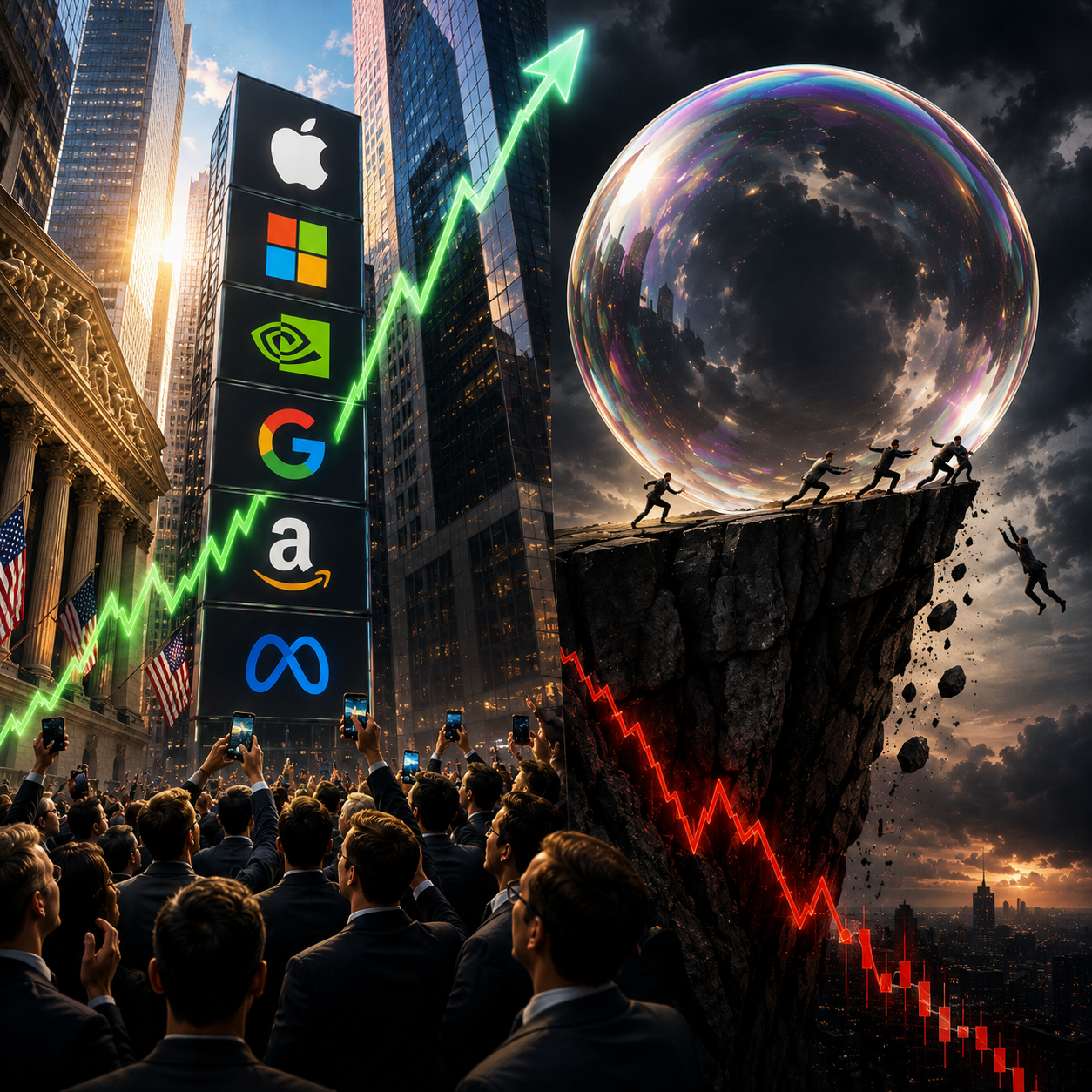
US Stock Value Investing Is Heading Into Another Trap

US Stock Value Investing Is Heading Into Another Trap

Source: Shenchao TechFlow Original title: (Opinion: Value investing in US stocks is not equal to fundamental investment) When “fundamentals are dead” becomes a consensus, investors who blindly organize giants will eventually experience astonishing capital destruction. Guide: When the market shouted “fundamentals are dead” and the capital frenzy formed a group of tech giants, the author used an astronomy discovery to unravel the logical loopholes behind this narrative. Starting from the composition of valuation multiples, this article reminds investors to distinguish between the true quality of an enterprise and the premium that the market is willing to pay. It is particularly cautionary about long-term allocation in the crypto and technology sector. I promise this introduction won't be as long as the last one on the weather. But please give me 90 seconds. More than 100 years ago, a woman named Henrietta Levitt was doing the tedious job of measuring the brightness of thousands of stars on photographic negatives (the way they were imaged before film appeared). She noticed one characteristic of a class of pulsating stars: the slower they pulsate, the brighter they themselves are. ¹ This might just seem a little interesting today, like “OK, that's pretty cool.” But at the time, astronomers couldn't tell the difference between a dark star very close to Earth and a very bright star far away. For them, the two left the same stain on the photographic film. Visual brightness is a messy mix of these two variables: how bright the thing itself is, and how far away it is from us. Henrietta's work decouples these two things: if you can observe the rate of pulsation, you can know its true luminosity; if you know its true luminosity, you can reverse the distance based on how dark it looks. Astronomers call it “standard candlelight.” A few years later, a man named Edwin Hubble discovered one of these pulsating stars, applied Levitt's math, and discovered what he had always thought was a cloud of gas within our galaxy; in fact, it was an entire independent galaxy, one million light years away. So in simple terms, the observable universe has grown about a trillion times larger, just because one person has figured out how to tell the difference between what things look like and what they actually look like. That in itself is obviously pretty cool. But another interesting thing is that around the same time period, two other astronomers each independently drew a scatterplot. One axis was actual luminosity, and the other axis was temperature. They discovered that stars are not randomly distributed in this space, but rather clustered into different families. The meaning behind this is: stars with the exact same visual brightness may and do belong to a completely different family, have a completely different past, and most importantly, have a completely different future... So what is written in the star? Over the past few years, there has been much discussion about markets, narratives, capital, company building, and financial nihilism. This feeling seems to have reached a feverish climax as the tech and financial world begins to face a very different future than a few decades ago. What is particularly clear is that separating progress from asset prices has become more noisy and in many ways more repulsive. But as an investor who makes a living by buying assets that (hopefully) outperform, a simple framework is: forward returns are roughly equal to growth in fundamentals multiplied by changes in valuation multiples (and multiplied by the dividends you've collected along the way). In this case, the valuation multiplier can very cleanly correspond to the smudges on the photographic film. It's an observable data point, but it entangles two things that the market can't directly see: how good the company actually is, and how far (or how long) its future cash flow is now. I think most of the money that can be made comes from investors who are most capable of unraveling these two variables earlier than others (or “perception of differences”), and we will continue to see astonishing capital ruin for investors who treat their stains as stars. Value investing is not equal to fundamental investing. I think there is a misunderstood view: fundamental investing has historically dominated the creation of excess returns. Most of these legends come from the Graham, Buffett, and Tiger Foundation lineage, as well as numerous narratives built around this group of people. It is believed that by some point in the 2000s, this approach was no longer effective, and anyone who invested in this way was overwhelmed by momentum, trends, and “direct buying tech giants.” The conclusion was (and still is?) It's “fundamentals are dead.” ² The modern version of “fundamentals don't matter” itself isn't stupid. It's rooted in a lot of ideas that many of us on the Compound team have written before. The biggest companies get the most mechanical purchases, and the software industry has a winner-take-all economic law. AI means that giants can transform scale into moats faster than challengers, and there are also reasons why the market's microstructure embeds momentum more deeply into our market infrastructure. These are all real...

1d ago深潮TechFlow#US stocks

Sun Yuchen's WLFI dispute was upheld by the court, and individual claims will be tried publicly

Comparing news, Sun Yuchen wrote that his lawyer recently appeared in California federal court to oppose World Liberty Financial (@worldlibertyfi)'s request to forcibly transfer the dispute between the two parties to confidential arbitration and seal the documents. The court ruled that all of Sun Yuchen's individual claims would continue to be tried in open court; at the same time, it rejected the opinion that all company-related claims should be submitted to arbitration, and requested both parties to negotiate to determine which claims remained in court and which went to arbitration. Sun Yuchen called this a major victory, stressing that token holders have the right to understand how the project treats their trusters. Sun Yuchen said that as one of World Liberty's earliest and largest investors, it invested 45 million dollars to obtain $WLFI tokens. The lawsuit alleges that after the investment helped raise about 550 million US dollars in token sales, the project party secretly implanted a back door in the smart contract, which could unilaterally freeze, restrict, or destroy holders' tokens, and illegally seize their tokens based on this, and also threatened criminal reporting when defending their rights. The lawsuit claims amount to hundreds of millions of dollars. He has previously obtained a court injunction prohibiting the other party from destroying and disposing of his tokens. Sun Yuchen also said that World Liberty also implants similar backdoor capabilities into its USD1 stablecoin, and mentioned public information such as the project party's use of a large amount of $WLFI tokens as collateral for Dolomite loans and past Dough Finance-related lawsuits by the co-founder, expressed concern about the solvency and transparency of the project, and called on investors to exercise due diligence and caution. The above are all unilateral statements and accusations.

1d ago

The US CFTC's two co-founders against FTX: Ellison and Wang have both been banned from trading for 5 years and have not sought refunds or civil fines

Comparatively, the US Commodity Futures Trading Commission (CFTC) recently disclosed that the US District Court for the Southern District of New York has issued supplementary consent orders against former Alameda Research CEO Caroline Ellison and Gary Wang, co-founder of Alameda and FTX to formally resolve the CFTC's enforcement case against the two. According to the court order, both Ellison and Wang are required to continue to cooperate with the CFTC investigation. Ellison was given a 5-year trading ban and a 10-year registration ban, and Wang was given a 5-year trading ban and an 8-year registration ban. The relevant ban period is calculated from the effective date of the initial consent order that the two previously signed on December 23, 2022. In 2022, the court found Ellison involved and was responsible for two cases of fraud alleged by the CFTC, and also found Wang responsible for one fraud charge and permanently banned the two from violating the Commodity Exchange Act and CFTC's relevant anti-fraud regulations. Notably, the CFTC is not seeking additional recovery, return of illegal proceeds, or civil fines against Ellison and Wang at this time. CFTC law enforcement said the decision was based in part on significant cooperation between the two in the investigation and related litigation, including pleading guilty in a federal criminal case and assisting in the investigation of FTX-related matters. CFTC law enforcement chief David I. Miller said that Ellison and Wang committed fraud as Alameda and FTX senior executives and were found responsible by the court, but the final penalty reflected the important assistance they provided to the CFTC investigation. Furthermore, in related criminal cases, both have pleaded guilty to multiple crimes, including conspiring to commit commodity fraud, and are jointly liable for a forfeiture order of approximately $11.02 billion. This consent order means that the CFTC's relevant enforcement actions against Ellison and Wang have officially come to an end.

1d ago

US Department of Justice: Iran is accused of hacking the HBO website and stealing academic data

According to Decrypt, according to Decrypt, the US Department of Justice has filed a lawsuit against 17 hackers allegedly belonging to Iran's Mabna Research Institute, accusing them of participating in cyber attacks over several years, including hacking into the US cable network HBO in 2017, stealing data, and then demanding that the other party pay a ransom of about 6 million US dollars in Bitcoin. The prosecution alleges that the organization carried out hacking attacks on behalf of the Islamic Revolutionary Guard Corps of Iran and other Iranian government clients, targeting hundreds of universities, businesses, and government agencies around the world, stealing at least 31.5 terabytes of academic data and intellectual property rights. The organization also targeted over 100,000 professors' accounts around the world and hacked about 8,000 accounts at 144 American universities and 178 foreign universities. The US State Department offered a reward of up to $10 million to collect the whereabouts of 5 of these defendants. The US Treasury recently imposed sanctions on a number of Iranian crypto exchanges and frozen over $131 million in crypto assets linked to Iran's central bank and Revolutionary Guard Corps.

1d ago

CME, CFTC, Kalshi clash fiercely over predictive market regulation

Comparatively, CME Group CEO Terrence Duffy (Terrence Duffy) had a heated confrontation with CFTC Chairman Michael Selig (Michael Selig) and Kalshi Chief Operating Officer Luana Lopes Lara at the US Commodity Futures Trading Commission (CFTC) Innovation Advisory Committee meeting on predictive market regulation issues. Duffy said that some predicted market contracts were at risk of being manipulated, especially some contracts listed through self-certification. He pointed out that some contracts relating to the content of Trump's State of the Union address and the time when Venezuelan President Nicolas Maduro stepped down may have manipulation issues, adding that this is bad for the entire industry. Selig immediately interrupted Duffy, saying that the relevant products he mentioned were not sold in the US, and that the related incident occurred overseas, saying that Duffy's claims were fake news. Duffy responded that he was only raising market risks, and said he could continue discussions if needed. As the forecast market grows rapidly, disputes between US federal regulators and state governments over regulatory powers are also intensifying. Some state governments believe that prediction contracts involving sporting events are gambling and may violate state gaming laws; while Seliger said that the CFTC has exclusive jurisdiction over the prediction market and has initiated lawsuits with several states over related regulatory disputes. Selig said that the CFTC is expected to further revise the relevant rules to strengthen the listing requirements and consumer protection standards for incident contracts, and that regulators have fully listened to the market's concerns about insufficient protection for retail consumers. The prediction market is also facing questions about insider trading and market manipulation in the near future. The US Congress has proposed a bill prohibiting the listing of sports events and casino prediction contracts on registered platforms. Both Kalshi and Polymarket have introduced new anti-insider trading and anti-market manipulation measures. In the latter half of the meeting, Lopes Lara, Kalshi's chief operating officer, asked Duffy if CME had experienced market manipulation issues. Duffy responded that CME regulators have more people than your entire company, and Lopes Lara irked that they should learn how to be more efficient. The two sides then continued to clash over issues such as a credible market. Currently, the prediction market is at a critical point of regulation. Jurisdictional disputes between the CFTC and state regulators, as well as competition between traditional derivatives exchanges and emerging prediction market platforms, may affect the future development path of this market.

1d ago

The first meeting of the U.S. CFTC Innovation Advisory Committee will be held in the early morning of August 21

Comparatively, the first meeting of the US CFTC Innovation Advisory Committee (IAC) will be held from 13:00-16:00 EST on August 20, that is, 01:00-04:00 Beijing time on August 21. The conference is mainly divided into three parts: the first part discusses crypto regulation from “uncertainty to clarity”, including lack of federal market structure, fragmentation of state-level licenses, overlapping regulatory powers, enforcement regulation, and how to improve regulatory clarity under existing legal authority; the second part discusses the application of AI in transactions, compliance, monitoring, risk management, and “Agentic Finance”, and clearly addresses the intersecting fields of encryption and AI; the third part focuses on predicting markets and event contracts, discussing federal and state regulatory powers, state-level litigation and enforcement, market manipulation, and customers protection and long-term regulatory framework. CFTC Chairman Michael S. Selig, IAC Chairman Walt Lukken, and Designated Federal Officer Michael J. Passalacqua will deliver opening remarks.

3d ago