

金融科技 · 4217
They all say stablecoins are suitable for cross-border payments; is it really faster and cheaper than Wise?

They all say stablecoins are suitable for cross-border payments; is it really faster and cheaper than Wise?

Author: Jonah Compiled by: Saoirse, Foresight News Original title: Do cross-border payments really need stablecoins? Everyone says stablecoins are better suited for cross-border payments. Is that really true? If the recipient of your transfer wants stablecoins themselves, then stablecoins are indeed an excellent cross-border solution. You can transfer money around the clock at almost zero cost and instant settlement. But the more difficult question, which is also the focus of this article, is the cross-currency scenario: what happens when one end inputs US dollars and the other end exports foreign currency (such as Mexican pesos). Most crypto industry opinion leaders will claim that stablecoins can fundamentally reduce the speed and cost of transfers in this scenario. However, people who are optimistic about stablecoins deliberately avoid the fact that fintech companies have already achieved low-cost, high-efficiency businesses of the same kind, and there is no need for stablecoins at all. So what problem do stablecoins solve? This article will sort out how the traditional agency banking system works, and also analyze the innovations made by modern fintech companies such as Wise to clarify the actual value of stablecoins. The proxy banking business assumes Alice, who is in the US, wants to send a peso to her friend Bob in Mexico. Both banks do not have branches in each other's countries, so payments cannot be completed directly. The two banks need to use a larger bank, or correspondent bank, to establish a connection. Alice's depositary bank holds funds in US dollars at this correspondent bank called GlobalBank; GlobalBank also holds pesos at BancomX Bank in Mexico. After Alice initiated the transfer, her bank withheld the funds in her account and issued instructions to GlobalBank. GlobalBank transfers $100 from the dollars stored by Alice Bank, completes the exchange according to its own exchange rate, earns the exchange rate spread, then tells BancomX to credit Bob's account and deduct its own processing fee. The entire process relies on the SWIFT system to coordinate information, and SWIFT itself also charges for messages. This underlying transfer mechanism is expensive and slow. The root cause is that all layers of intermediaries are profiting from it. In an ordinary consumer remittance scenario, the comprehensive cost of the agent banking system is about 15%, including transaction fees and foreign exchange spreads embedded in the exchange rate. In addition to this, a transfer usually takes 1 to 5 business days to complete, and each intermediary takes time to complete its own operation process. Modern fintech solutions In 2011, two friends in London had complementary financial needs: one person earned in euros but needed pounds to live in the local area; the other received a salary in pounds and had to repay a mortgage in euros to Estonia. As a result, they bypassed banks and paid each other locally: the British pound was deposited into the London account, the euro was deposited into the Estonian account, and the two funds did not flow across the border. This system later evolved into Wise. The two founders believe that this model of hedging and offsetting capital flows can be implemented on a large scale, and this model has indeed worked. Many other fintech companies have taken the same approach. Let's take another example of Alice sending money to Bob, this time using a service similar to Wise. Alice transferred dollars to the fintech company's US account; the company used its own peso funds stored in Mexico to complete the payment directly to Bob. The funds did not cross the border from beginning to end. Alice's perception of a cross-border transfer is essentially a financial institution that receives and withdraws money at the same time. Because of this, the user experience was almost instantaneous, and the fintech company needed to bear the asset liability risks associated with holding large amounts of foreign currency. In order not to touch the traditional banking system as much as possible, fintech companies will distort transactions. For example, if other users remit pesos overseas in reverse, fintech companies can internally hedge off the two capital flows. Once a currency's capital pool is seriously unbalanced, it is only necessary to seek help from the traditional banking system. At the bottom, fintech companies cobble together partner banks and various license resources, and local partners handle regions that cannot be covered by their own business. Under the premise of normal operation, this model is far superior to the traditional system. Wise only charges a small, publicly disclosed processing fee, using the actual mid-market exchange rate, no hidden exchange rate spread, and the comprehensive rate is only 0.52% (this value is mixed with some transfers in the same currency, and the foreign exchange rate is not disclosed separately). According to World Bank data, the average ratio of digital remittance services...
1d agoForesight News#agent #AI #Claude #GPT #wallets

Ripple lays out the RLUSD lending ecosystem to support institutional credit funds to provide loans to fintech companies

In comparison, Ripple is supporting a new institutional credit fund that will partner with lending platform Clearpool and credit management agency Cicada Partners to provide working capital loans to fintech and payment companies using RLUSD, a stablecoin issued by Ripple on XRP Ledger. According to the disclosure, the fund will issue loans in RLUSD. Cicada Partners will be responsible for finding borrowers, formulating loan terms, and managing credit risk; Clearpool will be responsible for building the infrastructure to create and manage loan pools; and Ripple will provide financial support as one of the investors, but the exact size of the investment has not been disclosed. Currently, this product is not available on the XRP Ledger mainnet. Ripple will participate as a limited partner, enjoy the same terms as other investors, and will not be liable for loan losses. Borrowers will receive RLUSD and use RLUSD to repay loans, which will drive demand for this stablecoin while introducing borrowing activity to XRP Ledger.

1d ago

An artificial bull market? Crypto executives gather for the first meeting of the US CFTC Innovation Advisory Committee

Comparing news, the cryptocurrency sector has been picking up for three consecutive days. Bitcoin once surpassed $75,000 this morning and now remains near the $74,500 mark. Following US President Trump's intensive favorable remarks on the cryptocurrency sector this Wednesday, the first meeting of the US Commodity Futures Trading Commission (CFTC) Innovation Advisory Committee was held this Thursday, presided over by CFTC Chairman Michael S. Selig and others. A large number of founders and executives in the cryptocurrency field appeared on the conference list. These include: Coinbase CEO Brian Armstrong; Uniswap Labs CEO Hayden Adams; Polymarket CEO Shayne CoplanRipple CEO Brad Garlinghouse; a16z Crypto Managing Partner Chris Dixon; Co-Founder of Multicoin Capital Tushar Jainkalshi Co-founder Luana Lopes Lara; Chainlink Labs CEO Sergey Nazarov; Gemini CEO Tyler WinklevosSkraken Co-CEO Arjun Sethi; Robinhood CEO Vlad Tenev; Solana Labs CEO Anatoly Yakovenko; Representatives of companies such as Anchorage Digital, Grayscale, OKX, and Consensys. Traditional financial institutions and exchange executives (such as CME Group, Cboe, Nasdaq, ICE, etc.) also attended. The conference focused on topics such as the evolution of crypto regulation, artificial intelligence, and predictive markets. The U.S. CFTC Innovation Advisory Committee (IAC) was formally established on January 12, 2026. On the same day, CFTC Chairman Michael S. Selig announced the launch of the committee and changed its name from the original Technology Advisory Committee (Technology Advisory Committee) to provide advice to the committee on innovative topics such as fintech, crypto assets, and artificial intelligence.

1d ago

Kraken parent company Payward explores becoming an all-purpose bank outside the US

Comparative news, according to The Block, Dave Ripley, co-CEO of Kraken's parent company Payward, said that the company is exploring becoming an “all-purpose bank” outside the US to expand payment, lending, income, and escrow businesses. Payward is also building asset management capabilities and turning its infrastructure into a range of services that banks, brokerage firms, and fintech companies can connect to applications.

1d ago
Overnight skyrocketing 20%! Trump is sending a big signal, the crypto market is crazy

Overnight skyrocketing 20%! Trump is sending a big signal, the crypto market is crazy

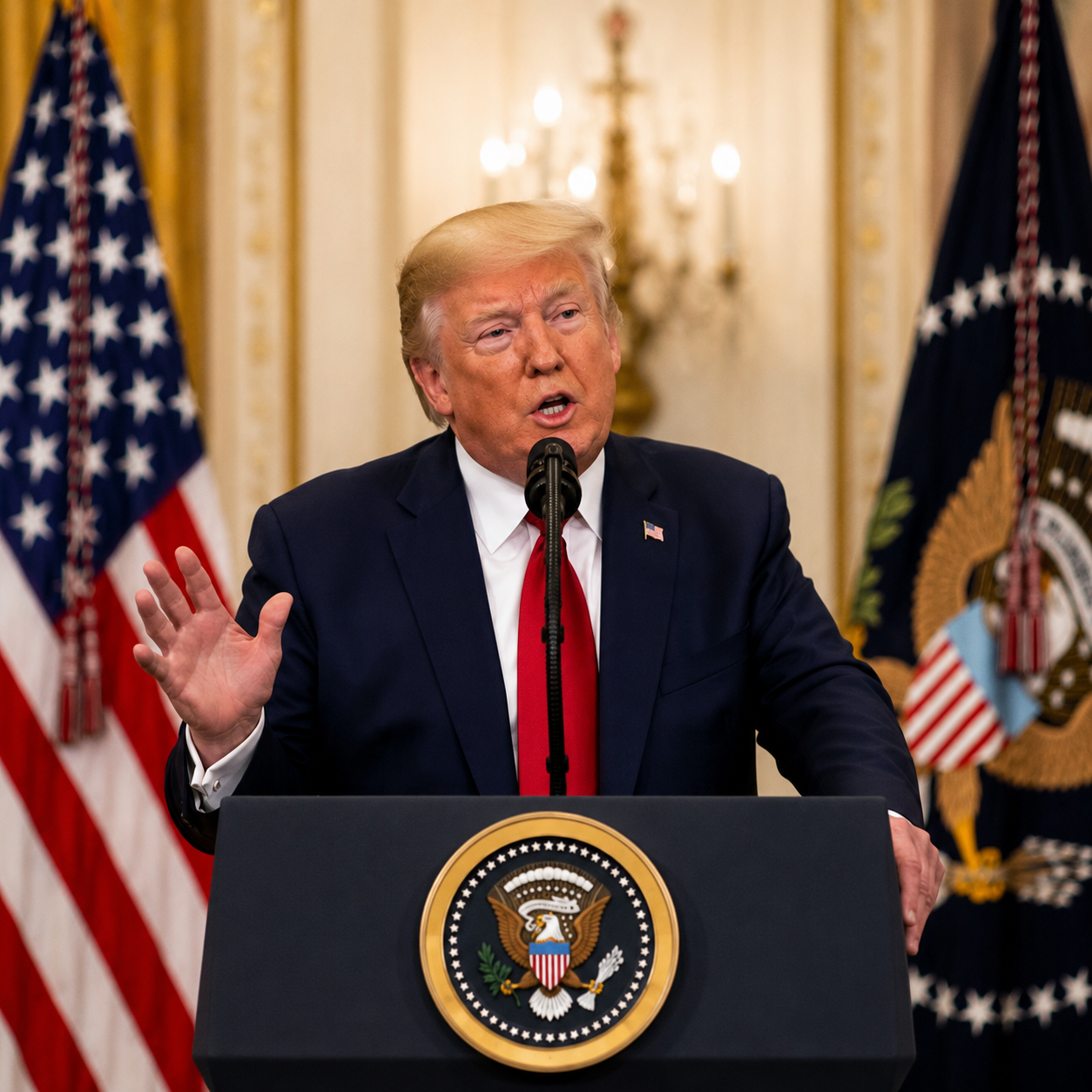
Source: Trump's White House speech compilation: Odaily Planet Daily Original title: What did Trump say on the night of the cryptocurrency explosion? The White House organized a “Cow Comes” show! Core point of view: At the White House cryptocurrency industry executives gathering, Trump explained the results of his administration's policies to promote the development of digital assets, emphasized America's position as a global leader through executive orders, legislation, and regulatory reforms, and called on Congress to pass the CLARITY Act to strengthen competitive advantage. Key elements: 1. Participants included SEC Chairman Paul Atkins, CFTC Chairman Michael Selig, and executives such as Coinbase, Robinhood, and Ripple, highlighting the trend of cooperation between the industry and the government. During the conference, BTC once surpassed 70,000 US dollars, ETH rose nearly 20%, and the market response was positive. 2. Trump announced the dismissal of former SEC Chairman Gary Gensler, terminated “Operation Blockpoint 2.0,” and signed an executive order banning CBDC and launching “Project Crypto” to reform the rules. 3. The government establishes US strategic Bitcoin reserves and digital asset reserves to use Bitcoin as a permanent asset of the Treasury; the “GENIUS Act” paves the way for widespread adoption of US dollar stablecoins. 4. The CFTC approved the first Bitcoin perpetual futures contract and promoted Hyperliquid compliance into the US, showing the gradual implementation of the regulatory framework. 5. Trump criticized the high interest rate policy, arguing that interest rates should be cut to support growth when economic data is strong; he emphasized that the fintech revolution has created jobs and wealth, and that the stock market has reached 80 new highs in a year and a half. 6. He called on Congress to pass the “CLARITY Act” as market structure legislation to ensure that the US continues to lead competitors such as China in the fields of encryption and AI. Editor's note: In the early morning of August 20, Beijing time, the White House held a meeting of cryptocurrency industry executives. Trump himself attended and delivered a speech. Government executives such as SEC and CFTC, industry representatives from Robinhood, Coinbase, Ripple, Gemini, a16z, etc., and senior traditional finance executives such as the Intercontinental Exchange and NASDAQ all attended the conference. Perhaps influenced by this positive signal, the cryptocurrency industry soared at night. At one point, BTC broke the $70,000 mark, and ETH rose close to 20%. Below is Trump's own statement on his speech at the conference. Seriously, a group of important people came to the scene today. If you love the world of finance as much as I do — I really love finance — all of you here today are big names in the financial world. It's incredible that you might not know some of them, but anyone in the financial world should know every one of them. Thank you so much for being here today. We're excited to welcome some of America's best talent in finance, cryptocurrency, and technology. In Washington, D.C., we are about to welcome the first meeting of the US Commodity Futures Trading Commission (CFTC) Innovation Advisory Committee (Innovation Advisory Committee). It's a committee of very smart people who will give us suggestions and tell us what we should do. Right, Paul (referring to SEC Chairman Paul Atkins)? They'll tell us a few things. But I think Paul probably knows these issues better than anyone else, and he did a great job. We're very happy with Paul, and I think everyone thinks the same. He's really amazing. From the cryptocurrency market and prediction market, to traditional finance, to decentralized finance, the people in this room are making sure that the future of the commercial market can be created and improved here in the US. We are competing with many other countries for control of these markets, market share, and the profits, jobs, and everything else they create. And we did a great job. We are leading the way in every aspect, including artificial intelligence, and by a huge margin. We want to continue this lead. I would like to thank CFTC Chairman Michael Selig for his outstanding leadership. (Find someone first) Michael, come over... (Then suddenly found him around) Why am I so close that I almost didn't recognize you. At the same time, I would like to thank a very special person, someone who has been respected by everyone for a long time. I would have liked him to take this role — I wanted him to do this job before he became SEC chairman. Paul Atk...

2d ago22#BTC skyrocketed #Trump

The Korean stablecoin sector collectively surged, and Kakao Pay rose 10.91%

Comparatively, according to Gate data, the Korean stablecoin sector collectively surged, with Kakao Pay up 10.91% to 457,500 won; The Zone rose 10% to 2090 won; NHN KCP rose 9.76% to 148.4 million won; Hecto Financial surged 20.49% to 22.35 million won; and Danal rose 11.73% to 5190 won. Analysts believe that the market may be boosted by news that US President Trump is urging Congress to push forward the CLARITY Act. Trump emphasized during a meeting with key figures in the crypto industry at the White House that the bill will provide an institutional foundation for the US to maintain its leading position in the digital assets sector. If the US crypto regulatory framework is further clarified, it may promote the expansion of the global digital asset and stablecoin payment ecosystem, and related expectations are strengthening the payment and fintech sector in South Korea.

2d ago

Coinbase selects Abu Dhabi as international tokenization hub

According to Twitter, cryptocurrency exchange Coinbase has reportedly selected Abu Dhabi, UAE as its “international tokenization center” with the aim of introducing more traditional financial assets to the blockchain. The move is seen as a significant step forward for Abu Dhabi in attracting global crypto and fintech firms. Coinbase plans to promote real-world asset (RWA) tokenization business through the center and expand its presence in the Middle East and international markets with Abu Dhabi's regulatory environment and policy support. Abu Dhabi has continued to improve its digital asset regulatory framework in recent years, attracting many crypto institutions to settle in.

2d ago
[Comparative Daily News Picks] OpenAI CFO: The company will go public in 2027 or sooner; Bitcoin's short-term rise hits $70,000; Trump: SEC Chairman is pushing to introduce Hyperliquid into the US; US federal government debt exceeds $40 trillion; Federal Reserve meeting minutes: Multiple officials think interest rate hikes may be needed if necessary

[Comparative Daily News Picks] OpenAI CFO: The company will go public in 2027 or sooner; Bitcoin's short-term rise hits $70,000; Trump: SEC Chairman is pushing to introduce Hyperliquid into the US; US federal government debt exceeds $40 trillion; Federal Reserve meeting minutes: Multiple officials think interest rate hikes may be needed if necessary

Daily AI · Crypto · Macro · Market News, Bitpush helps you focus ↓ AI · News [OpenAI CFO: The company will go public in 2027 or sooner] In comparison news, OpenAI Chief Financial Officer Sarah Flair said that OpenAI plans to become a listed company in 2027, but if the business grows at an accelerated pace, it may go public earlier in the morning. Flair said the IPO was a milestone and method of financing. In March of this year, the company closed $122 billion in financing, providing greater flexibility for future growth. [Nvidia plans to invest in AI data labeling company Mercor, financing valuation may reach 20 billion US dollars] According to The Information, according to a person familiar with the matter, Nvidia has already discussed investment matters with data labeling service provider Mercor. Mercor helped the chip designer develop an open source AI model. The investment will be part of Mercor's round of financing valued at $20 billion. Existing investors, General Catalyst, have been negotiating to lead this funding round. Mercor's past revenue came from closed-source AI model developers such as OpenAI, Google, and Anthropic. However, Mercor's revenue from Nvidia is growing as Nvidia prioritizes the development of Nemotron's open source model. Nemotron aims to compete with the world's most advanced open source models. According to people familiar with the matter, Nvidia paid Mercor tens of millions of dollars last quarter. In addition to Mercor, Nvidia also uses data from other data vendors such as Turing and Scale, and also has its own in-house data team. [US CFTC Seeks Public Opinions on AI Hashrate Futures] In comparison, as industry giants begin to accept computing power (compute) as a tradable asset, the US Commodity Futures Trading Commission (CFTC) is seeking public comments on hashrate futures contracts. A number of exchanges, including CME (CME), Intercontinental Exchange, and the emerging fintech company Architect Financial Technologies, have announced plans to launch relevant contracts after receiving regulatory approval. According to these exchanges, the establishment of a futures market with computational power will help end users and speculators hedge against energy shortages or other issues that may affect the technological progress of AI developers. In the crypto market [Bitcoin's short-term rise hit $70,000], according to market data, Bitcoin's short-term rally hit $70,000, but now it has fallen back to $69,800, and the 24-hour increase has increased to 8.08%. [Trump: SEC Chairman is promoting the introduction of Hyperliquid into the US] In comparison, HyperliquidNews posted an article on the X platform saying, “The SEC Chairman is promoting the introduction of Hyperliquid into the US.” [Coinbase CEO: Looking forward to the CLARITY Act being passed on September 15, followed by a new bull market] In comparison, Coinbase CEO Brian Armstrong recently released a vision board on the X platform saying that he expects the CLARITY bill to receive strong bipartisan voting support on September 15, then usher in Upmonth and start the next round of the cryptocurrency bull market, and stated “as predicted.” The CLARITY Act aims to provide a clearer market structure and regulatory framework for US crypto assets. Armstrong's statement reflects its expectations for regulatory progress and a recovery in market sentiment. Macro · Agency [US federal government debt exceeds 40 trillion US dollars] compared news that as US government borrowing has increased at an unprecedented rate in history, the total amount of US treasury bonds has exceeded 40 trillion US dollars. Despite Trump's promises to control government spending, rising debt has raised investors' concerns about the state of America's public finances. According to data released by the US Treasury Department on Wednesday, the total US federal debt broke through the $40 trillion threshold on Tuesday. Over the past year, its debt has increased by $3 trillion, which is the fastest growth rate in history if the pandemic period is not taken into account. “It's like that huge warning light on a car engine,” Responsible Federation...

2d agoBitpushNews#Compare Daily Picks

US CFTC Seeks Public Opinions on AI Computing Power Futures

Comparatively, as industry giants begin to accept computing power (compute) as a tradable asset, the US Commodity Futures Trading Commission (CFTC) is publicly seeking comments on computing power futures contracts. A number of exchanges, including CME (CME), Intercontinental Exchange, and the emerging fintech company Architect Financial Technologies, have announced plans to launch relevant contracts after receiving regulatory approval. According to these exchanges, the establishment of a futures market with computational power will help end users and speculators hedge against energy shortages or other issues that may affect the technological progress of AI developers. CFTC Chairman Michael Selig said in a statement on Wednesday: “Without a strong computing power derivatives market, the US cannot win the AI race. This consultation is the first step in establishing clear rules for the US computing power market.” One of the issues covered by the CFTC in this consultation is how computing power futures differ from other types of derivatives or underlying products currently regulated by the agency. If hashrate futures are allowed to be listed on exchanges regulated by the CFTC, it may be necessary to further unify the variables affecting the price of computing power, including the price index used as a reference for settlement.

3d agoWendy

Prosus plans to invest $100 million in Indian fintech company Navi to complete the first round of institutional financing

Comparing news, according to Bloomberg, Prosus NV plans to invest $100 million in Indian fintech company Navi Ltd. This is Navi's first introduction of institutional capital. This round of investment requires regulatory approval, including from the Competition Commission of India, before it can be completed. Navi is headquartered in Bengaluru, and its business covers payments, credit, insurance and mutual funds. Its UPI payment application ranked fourth in India by size in the fiscal year ending March; Navi Finserv's asset management scale has surpassed about 130 billion rupees.

3d ago