风投 · 2218
They are all stealing earlier data. Where exactly is VC Alpha hidden?

They are all stealing earlier data. Where exactly is VC Alpha hidden?

Author: insights4vc Compilation: Shenchao TechFlow Original title: Private Equity Market Intelligence Warfare Heats Up: In the AI Era, Where Did VC Alpha Come From? Guide to Deep Wave: Venture capital returns are extremely concentrated, and finding a good company in the early stages is almost the life and death line of a fund. This article breaks down the latest evolution of private equity market data tools and whether they can actually bring in excess profits. This is a sobering map for investors who are using AI and research tools to find projects. Venture capital has always been an information business. The advantage often lies in timing: founders tell former colleagues instead of updating data first; new companies start recruiting people before they appear in the database; investors start watching a team before the funding is announced. This advantage is important because VC returns are highly concentrated. According to data from the 2026 Oxford Academic Study, 4.5% of the investment amount contributed to a return of about 60% in a long-term LP data set. [1] Therefore, missing a few excellent companies can affect the entire fund. But finding them early is only part of the problem. Investors also need to develop beliefs, get credits, obtain meaningful holdings, and keep things right for a few years. The private equity market data industry is now getting closer to the moment the company was born. PitchBook, Crunchbase, Dealroom, Tracxn, and CB Insights remain core recording systems for transactions, funds, valuations, and company history. PitchBook generated revenue of $174.7 million in the second quarter of 2026, equivalent to nearly $700 million in annualized revenue. [2] The new platform is not replacing this layer. They're extending this layer with faster updates, behavioral data, and signals that predate traditional company records. Three changes stand out the most. First, companies such as Harmonic and Specter are building a continuously updated map of companies and people, rather than relying mainly on regularly updated data. Second, specialty products are looking for earlier behavioral signals. Evertrace tracks metrics formed by founders, including company registrations, technical activity, research, and domain names. Frontrun monitors changes in selected venture capitals' interest maps on X. Third, the API and Model Context Protocol (MCP) are moving this data into the fund's own software and AI workflows. Crustdata represents the infrastructure side of this market, while Affinity complements first-party relationship data from emails, calendars, and CRM events. Adoption is visible, but evidence of excess return on investment is not clear. Harmonic says hundreds of venture capital teams use its platform, and Specter reports more than 300 investment institutions, Evertrace more than 200 funds, and Affinity more than 3,300 private equity firms. Listed company Tracxn disclosed that it had 2,289 customer accounts in fiscal year 2026. [3] [4] [5] [6] Most of these figures are self-reported by companies. Vendors rarely disclose the complete set of companies unearthed by their models, making it difficult to assess accuracy, recall rates, false positives, and the economic value of individual leads. No single signal alone is enough. Employee departures may be early but vague. Company registration is objective but common. GitHub activities are valuable in developer-led markets, but have limited relevance in other areas. Hiring speed and employee migration provide broader signals, while revenue, customer, and usage data are often more valuable for decision-making, but come later. When several credible industry experts focus on the same company, investors' attention can provide early signs, even though this signal is platform-dependent and may reinforce itself. The strongest defensive sources are likely to be hidden deeper in the data stack: historical time series that cannot be reconstructed later, accurate physical analysis across people and companies, authorized first-party fund data, and distribution through CRM systems, APIs, and agents. Public data is not necessarily proprietary. However, five years of correctly time-stamped change history can become a proprietary asset. AI is more likely to make these infrastructures more easily queried rather than eliminate the need for them. As research, classification, and workflow costs drop, clean data, sources, and institutional context become more valuable. Investment decisions, quotas, and relationships are still not something a simple layer of automation can solve. The likely outcome is that a broader market for private market intelligence will emerge, rather than an independent search for project software categories. A mature database will increase discoveries and...

1d agoburnking
US Stock Value Investing Is Heading Into Another Trap

US Stock Value Investing Is Heading Into Another Trap

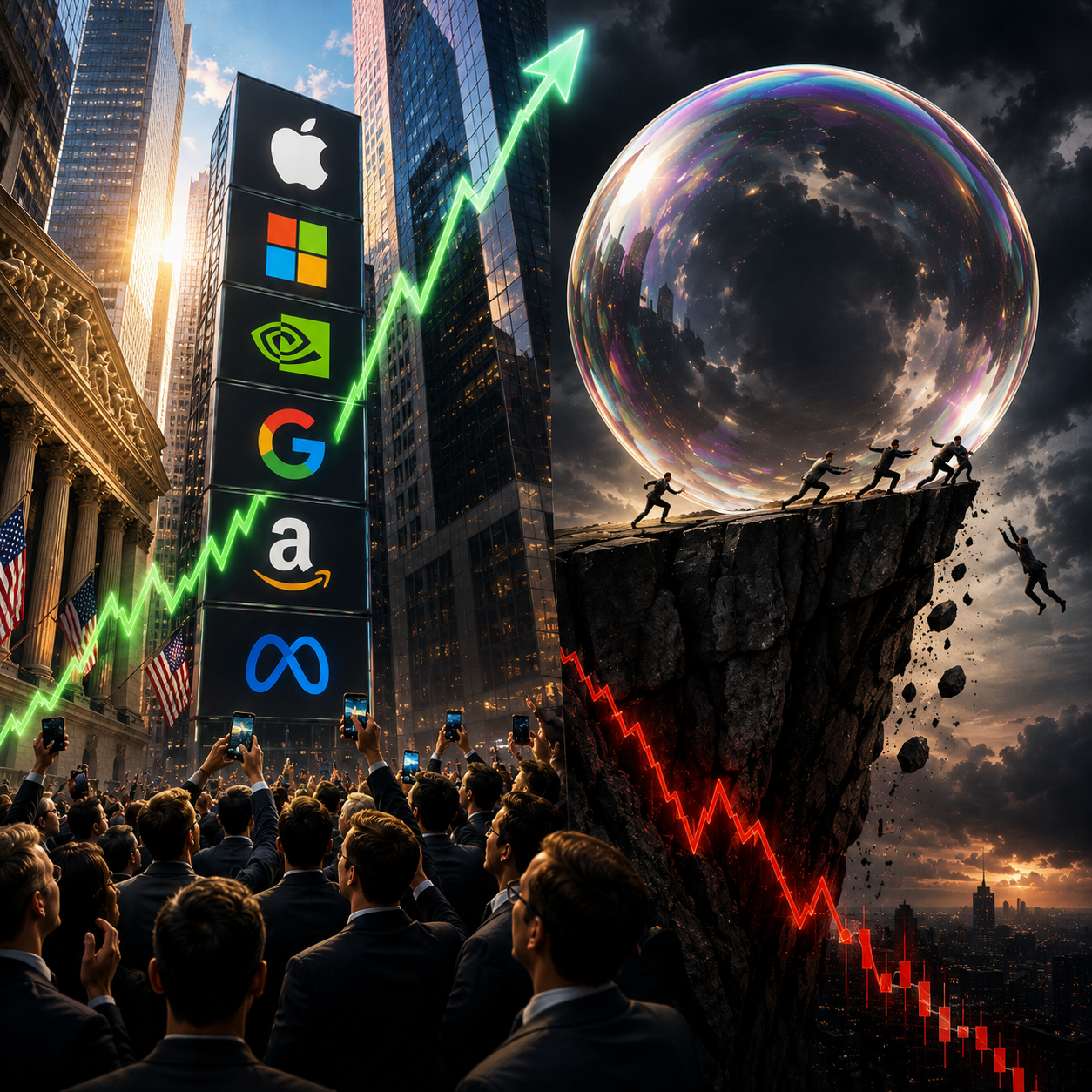
Source: Shenchao TechFlow Original title: (Opinion: Value investing in US stocks is not equal to fundamental investment) When “fundamentals are dead” becomes a consensus, investors who blindly organize giants will eventually experience astonishing capital destruction. Guide: When the market shouted “fundamentals are dead” and the capital frenzy formed a group of tech giants, the author used an astronomy discovery to unravel the logical loopholes behind this narrative. Starting from the composition of valuation multiples, this article reminds investors to distinguish between the true quality of an enterprise and the premium that the market is willing to pay. It is particularly cautionary about long-term allocation in the crypto and technology sector. I promise this introduction won't be as long as the last one on the weather. But please give me 90 seconds. More than 100 years ago, a woman named Henrietta Levitt was doing the tedious job of measuring the brightness of thousands of stars on photographic negatives (the way they were imaged before film appeared). She noticed one characteristic of a class of pulsating stars: the slower they pulsate, the brighter they themselves are. ¹ This might just seem a little interesting today, like “OK, that's pretty cool.” But at the time, astronomers couldn't tell the difference between a dark star very close to Earth and a very bright star far away. For them, the two left the same stain on the photographic film. Visual brightness is a messy mix of these two variables: how bright the thing itself is, and how far away it is from us. Henrietta's work decouples these two things: if you can observe the rate of pulsation, you can know its true luminosity; if you know its true luminosity, you can reverse the distance based on how dark it looks. Astronomers call it “standard candlelight.” A few years later, a man named Edwin Hubble discovered one of these pulsating stars, applied Levitt's math, and discovered what he had always thought was a cloud of gas within our galaxy; in fact, it was an entire independent galaxy, one million light years away. So in simple terms, the observable universe has grown about a trillion times larger, just because one person has figured out how to tell the difference between what things look like and what they actually look like. That in itself is obviously pretty cool. But another interesting thing is that around the same time period, two other astronomers each independently drew a scatterplot. One axis was actual luminosity, and the other axis was temperature. They discovered that stars are not randomly distributed in this space, but rather clustered into different families. The meaning behind this is: stars with the exact same visual brightness may and do belong to a completely different family, have a completely different past, and most importantly, have a completely different future... So what is written in the star? Over the past few years, there has been much discussion about markets, narratives, capital, company building, and financial nihilism. This feeling seems to have reached a feverish climax as the tech and financial world begins to face a very different future than a few decades ago. What is particularly clear is that separating progress from asset prices has become more noisy and in many ways more repulsive. But as an investor who makes a living by buying assets that (hopefully) outperform, a simple framework is: forward returns are roughly equal to growth in fundamentals multiplied by changes in valuation multiples (and multiplied by the dividends you've collected along the way). In this case, the valuation multiplier can very cleanly correspond to the smudges on the photographic film. It's an observable data point, but it entangles two things that the market can't directly see: how good the company actually is, and how far (or how long) its future cash flow is now. I think most of the money that can be made comes from investors who are most capable of unraveling these two variables earlier than others (or “perception of differences”), and we will continue to see astonishing capital ruin for investors who treat their stains as stars. Value investing is not equal to fundamental investing. I think there is a misunderstood view: fundamental investing has historically dominated the creation of excess returns. Most of these legends come from the Graham, Buffett, and Tiger Foundation lineage, as well as numerous narratives built around this group of people. It is believed that by some point in the 2000s, this approach was no longer effective, and anyone who invested in this way was overwhelmed by momentum, trends, and “direct buying tech giants.” The conclusion was (and still is?) It's “fundamentals are dead.” ² The modern version of “fundamentals don't matter” itself isn't stupid. It's rooted in a lot of ideas that many of us on the Compound team have written before. The biggest companies get the most mechanical purchases, and the software industry has a winner-take-all economic law. AI means that giants can transform scale into moats faster than challengers, and there are also reasons why the market's microstructure embeds momentum more deeply into our market infrastructure. These are all real...

1d ago深潮TechFlow#US stocks

Humanoid intelligence company Current Robotics revealed cumulative financing of hundreds of millions of yuan, Baidu and others participated

Comparative news. According to a report by the Science and Technology Innovation Board Daily, the humanoid intelligence company Current Robotics (Yuanliu) disclosed the financing progress for the first time: the company has successively completed seed round, angel round, and pre-A round of financing, with a cumulative total of hundreds of millions of yuan. The company's investors include financial investment institutions such as BV Baidu Venture Capital, Gaolin Venture Capital, Oasis Capital, Monolith Investment Capital, Qianhai Ark, Fosun Wealth Creation, and Junshan Capital, as well as industries such as Zhiyuan Robotics, Xinghaitu, and Polar Shell Technology. The financing will mainly be used to promote large-scale data collection of human whole body data, and focus on research and development of core technologies such as the full body dexterous operation base model and interactive world model.

2d ago#financing
Will compliant ICOs be revived? New SEC regulations open up a financing channel for the cryptocurrency industry

Will compliant ICOs be revived? New SEC regulations open up a financing channel for the cryptocurrency industry

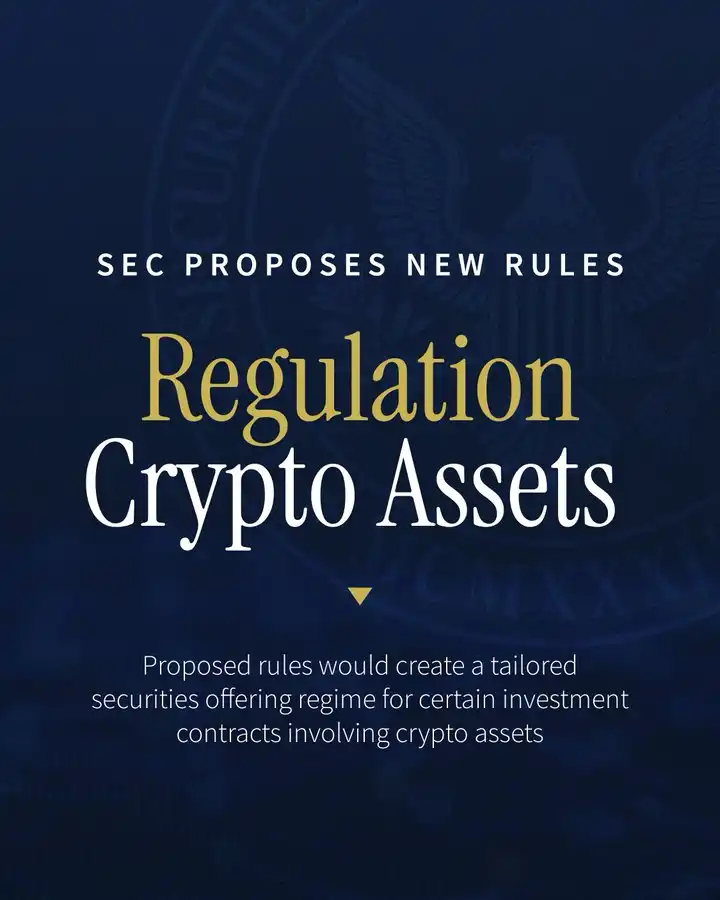
Source: ChainCatcher Author: 0xFACAI Original title: The biggest benefit for the coin industry, is compliant token financing coming back? Public coin sales and financing have once again gained a legal path in the US. On August 18, the US Securities and Exchange Commission released a draft “Regulation Crypto Assets”. According to this draft, startups can raise $5 million in up to four years, and larger projects can raise $20 million or $75 million in 12 months. Without completing a complete set of securities registration, the project can also sell tokens to investors to raise money for network development. The biggest benefit for the coin industry, is compliant token financing coming back? Sounds like ICOs are back. But the SEC gave far more than three funding lines. It wants to establish a set of rules for tokens from birth to “graduation”: projects can be sold to finance first, but it is necessary to clearly explain what to do with this money; if the key work promised by the team is not completed, the token continues to carry the regulatory responsibility for investment terms; only after fulfilling the promise, the token has a chance to exit this level of relationship. “Promises” are the core of the entire draft, and devs must “work” until the token “graduates” before they can “sell”. The draft rules gave the project parties two options. The first type is suitable for startup teams. Assuming a project required $3 million to develop, common choices in the past were to seek venture capital, limit buyers and issue coins outside of the US, or incur the high cost of registering securities. The new draft allows it to use the “startup exemption,” raise no more than $5 million over a maximum period of four years, and file with the SEC when the funding starts and ends. The second type is suitable for projects with greater funding requirements. The first tier raised up to $20 million every 12 months, and the second tier raised up to $75 million. Compared to the $5 million startup exemption, this path can be used over and over again, but the rules are more stringent. Projects can't just hand in a white paper and start selling coins. Both exemptions require the team to disclose how the network is being managed, how the product is being prepared and developed, what security risks the code has, what the company's financial situation is, and who is managing the project. The two larger funding levels also require financial statements to be provided and continuously updated, and the $75 million tranche requires an audit. The SEC didn't remove the original fence either. Issuers and insiders with a record of serious violations cannot use these exemptions, and anti-fraud and anti-manipulation responsibilities remain in effect. If the project uses other securities exemptions at the same time, it must also comply with existing consolidated financial calculation rules. The most important aspect of how to define “graduation” in the entire draft is to treat tokens separately from the investment relationships formed around tokens. A project sells coins to raise money to build a network. Buyers often buy more than just a digital asset that can already be used. They are also expecting the team to create products, attract users, increase token demand, and profit from these efforts. This relationship, which depends on the team's future work, is what the SEC calls an “investment clause.” The token itself can be just a digital asset, but how the project sells it and what it promises to the buyer makes it covered by a layer of investment terms. What the SEC really regulates is this level of relationship between issuers and buyers. The draft designs an exit path for the token. The token can only enter a “safe harbor” after the issuer has completed or permanently ceased all key management tasks of its promises, no new related commitments, and then submitted public certification and analytical instructions to the SEC. As a result, tokens have the concept of “graduation.” When the project is sold and financed, construction is promised to the market. After the project is completed and key tasks are completed, the buyer can no longer rely on the team to fulfill the old promises before the token can “graduate” and the project party can withdraw. The new regulations don't focus on whether tokens are considered securities. In the past, the market judged when a token was no longer subject to securities laws, and often questioned whether the network was “decentralized enough.” As long as the foundation, development company, or founding team continues to work, many people will understand this as the token still relies on a central entity. The SEC draft changed the question: what promises did the project rely on to sell the tokens, and are those promises fulfilled now? Take an example. When Project A sells coins, it tells investors that the team will develop the main network, launch transfer and pledge functions, and then leave the network to a decentralized validator to operate. The main network was later launched, and the features were also available, but the validators were still controlled by the team. Since “decentralizing the network” was also a promise at the time of financing, the token is still unable to “graduate” at this point. When Project B sells coins, it only promises to create a network that can function properly, without “the team must disappear” or “the network...

2d ago22#ICO #SEC
“Graduation rules” under SEC's new rules: token financing is legal, but too many promises make it impossible to get away

“Graduation rules” under SEC's new rules: token financing is legal, but too many promises make it impossible to get away

Author: 0xFACAI Original title: The SEC threw a bombshell, is the spring of compliant token financing finally here? Public coin sales and financing have once again gained a legal path in the US. On August 18, the US Securities and Exchange Commission released a draft “Regulation Crypto Assets”. According to this draft, startups can raise $5 million in up to four years, and larger projects can raise $20 million or $75 million in 12 months. Without completing a complete set of securities registration, the project can also sell tokens to investors to raise money for network development. Sounds like IC0 is back. But the SEC gave far more than three funding lines. It wants to establish a set of rules for tokens from birth to “graduation”: projects can be sold to finance first, but it is necessary to clearly explain what to do with this money; if the key work promised by the team is not completed, the token continues to carry the regulatory responsibility for investment terms; only after fulfilling the promise, the token has a chance to exit this level of relationship. “Promises” are the core of the entire draft, and devs must “work” until the token “graduates” before they can “sell”. The draft rules gave the project parties two options. The first type is suitable for startup teams. Assuming a project required $3 million to develop, common choices in the past were to seek venture capital, limit buyers and issue coins outside of the US, or incur the high cost of registering securities. The new draft allows it to use the “startup exemption,” raise no more than $5 million over a maximum period of four years, and file with the SEC when the funding starts and ends. The second type is suitable for projects with greater funding requirements. The first tier raised up to $20 million every 12 months, and the second tier raised up to $75 million. Compared to the $5 million startup exemption, this path can be used over and over again, but the rules are more stringent. Projects can't just hand in a white paper and start selling coins. Both exemptions require the team to disclose how the network is being managed, how the product is being prepared and developed, what security risks the code has, what the company's financial situation is, and who is managing the project. The two larger funding levels also require financial statements to be provided and continuously updated, and the $75 million tranche requires an audit. The SEC didn't remove the original fence either. Issuers and insiders with a record of serious violations cannot use these exemptions, and anti-fraud and anti-manipulation responsibilities remain in effect. If the project uses other securities exemptions at the same time, it must also comply with existing consolidated financial calculation rules. The most important aspect of how to define “graduation” in the entire draft is to treat tokens separately from the investment relationships formed around tokens. A project sells coins to raise money to build a network. Buyers often buy more than just a digital asset that can already be used. They are also expecting the team to create products, attract users, increase token demand, and profit from these efforts. This relationship, which depends on the team's future work, is what the SEC calls an “investment clause.” The token itself can be just a digital asset, but how the project sells it and what it promises to the buyer makes it covered by a layer of investment terms. What the SEC really regulates is this level of relationship between issuers and buyers. The draft designs an exit path for the token. The token can only enter a “safe harbor” after the issuer has completed or permanently ceased all key management tasks of its promises, no new related commitments, and then submitted public certification and analytical instructions to the SEC. As a result, tokens have the concept of “graduation.” When the project is sold and financed, construction is promised to the market. After the project is completed and key tasks are completed, the buyer can no longer rely on the team to fulfill the old promises before the token can “graduate” and the project party can withdraw. The new regulations don't focus on whether tokens are considered securities. In the past, the market judged when a token was no longer subject to securities laws, and often questioned whether the network was “decentralized enough.” As long as the foundation, development company, or founding team continues to work, many people will understand this as the token still relies on a central entity. The SEC draft changed the question: what promises did the project rely on to sell the tokens, and are those promises fulfilled now? Take an example. When Project A sells coins, it tells investors that the team will develop the main network, launch transfer and pledge functions, and then leave the network to a decentralized validator to operate. The main network was later launched, and the features were also available, but the validators were still controlled by the team. Since “decentralizing the network” was also a promise at the time of financing, the token is still unable to “graduate” at this point. When Project B sells coins, it only promises to make a network that works properly; it does not include “the team must disappear” or “the network must reach a certain degree of decentralization” in the financing promise. Wait until the Internet is online and produced...

3d ago律动BlockBeats#SEC #financing
Why is capital chasing AI Native and ignoring the old Internet

Why is capital chasing AI Native and ignoring the old Internet

Capital doesn't reward being old-fashioned, not because old-fashioned people are at fault. The old part is clearly priced. There is no bad information, so there is no excess profit. Global venture capital was $510 billion in the first half of 2026, surpassing $44 billion for the full year of 2025 in one and a half months. More than 70% have entered AI; OpenAI and Anthropic took 217 billion dollars, accounting for 43%. With that much money, you'd think everyone could share a little bit. The truth is that distribution is more extreme than total volume, and the first sieve doesn't screen the industry, it screens people. The category that has been screened out now has an unkind name: the internet is old. Let's just say one thing: the “old man” in this article has nothing to do with age. It refers to a set of methodologies that have been formed in the mobile internet cycle, have been tested over and over, and have brought huge returns to holders. The person holding it may be 45 years old or 32 years old. It was this methodology that was being repriced, not the year of birth. Confusing these two things is Lao Deng's most common mistake and one of the most comfortable mistakes — because if the problem is someone else's age discrimination, you don't need to change a single word. 01 What is AI Native The term has been misused. They can use ChatGPT not called AI native, nor AI in the company name, let alone in their twenties. There are three things that really separate people. First, the starting point is a model, not a requirement. The order in which Lao Deng makes a product is: look at what the user wants, write down the requirements, and find technology to implement it. The order of AI natives is reversed: first figure out what level the model is capable of today and what step it is likely to reach tomorrow, and then move from this capability boundary to the external product. The former uses the model as a tool, and the latter uses the model as the foundation. There was no difference between these two kinds of things made by humans in the first edition; by the third edition, there was a difference of one species. Article 2. The default unit of an organization is not a person. The division of labor in the Internet age is the division of one thing into ten people. AI Native's division of labor is to take ten things from one person and add a bunch of agents. The CEO of a domestic application company said that the team consists of less than ten people, but a large number of AI work at night, and the first thing employees do every morning is check the work the AI handed in the night before. Cursor's side is even more extreme. Public reports mention that the company doesn't have a product manager; engineers write their own code, talk to users themselves, and participate in recruiting people themselves. Article 3. Information is first-hand. AI Native's input sources are papers, model cards, GitHub issues, original discussions on X, and self-run evals. Lao Deng's input sources are industry summits, closed-door meetings, brokerage reports, interpretation of public accounts, and finding someone to drink coffee with. This one is the least obscure and most lethal; I'll talk about that separately later. I'm satisfied with all three. The 25-year-old is an AI native, and so is the 45-year-old. I'm not satisfied with the three rules; I'm still an old man at the age of 25. AI natives are a state, not an age group. The trouble is that tickets in this state are works, not resumes. 02 The two lists spread the results of this round on the table. These are two lists. The first one is an all-AI native company. Their valuations are not rising; they are exchanging orders of magnitude. List 1 · Upstream OpenAI raised $122 billion in a single round of financing in Q1 2026, followed by $852 billion, the largest private equity financing in history. Anthropic Q2 had a single round of $65 billion, after investing $965 billion, accounting for about half of the total global venture capital for the quarter; the revenue operating rate in May reached about $47 billion. DeepSeek raised about 70 billion yuan in its first round of financing in May 2026. In April of the same year, Liang Wenfeng raised his direct shareholding from 1% to 34%, and controlled a total of about 84.29% of the shares through related entities. The Dark Side of the Moon (Kimi) was estimated at $4.3 billion in December 2025; it went for three consecutive rounds from January to February 2026 to reach 18 billion; the D round in May was about $2 billion, breaking 20 billion dollars after the investment; the July round surpassed $3.5 billion, after investing 35 billion dollars; the pre-IPO target was 50 billion dollars. ARR broke 100 million in March, 200 million in May, and held steady at 300 million US dollars in June, with APIs accounting for more than 70%. Smart Spectrum · MiniMax successively landed in Hong Kong stocks in early 2026, with a market capitalization exceeding 100 billion yuan. It was one of the first major model companies listed in China. The second one...

4d agoWendy#AI #DeepSeek

US Department of Justice launches antitrust investigation against venture capital giant a16z

According to Bloomberg, according to Bloomberg, the US Department of Justice is launching an antitrust investigation against Andreessen Horowitz (a16z), the top venture capital in Silicon Valley, focusing on the fact that its partner also serves as a director at several competing AI companies — co-founder Ben Horowitz is the director of Databricks, and partner Martin Casado is the director of Fivetran. The two companies compete in the field of data processing. Casado also previously served as a director at dbt labs (acquired by Fivetran in June). The investigation, which has continued for almost a year, began with an antitrust review of Fivetran's acquisition of dbt labs. Although the acquisition was unconditionally approved, the investigation into the position of director continues. Such investigations usually end in the resignation of a director. a16z has a close relationship with the Trump administration. The two founders donated millions of dollars to the Trump campaign in 2024 and successfully promoted the weakening of the security fence on AI policies. a16z has assets under management of $90 billion and recently raised $15 billion in funds, with portfolios including SpaceX, OpenAI, and Cursor.

4d ago
Is the code no longer worth it? The $11.2 billion financing gave the same answer

Is the code no longer worth it? The $11.2 billion financing gave the same answer

Author: Shenchao TechFlow Original title: Revealing the $11.2 billion funding flow in half a year: The crypto industry's most valuable asset is changing from code to license Dubai crypto lawyer Irina Heaver and her team NeosLegal did a simple but powerful thing: sorting through all publicly disclosed crypto industry financings in the first half of 2026, totaling about $112 billion. The conclusion is only one sentence: every loan with a disclosed amount goes to a business that requires regulatory permission to operate. The top three tracks are: $3.7 billion in payments and stablecoins, $2 billion in forecasting markets, and $1.7 billion in exchanges and trading platforms. All three areas have one characteristic in common, requiring a license to operate lawfully in any major jurisdiction. Institutional capital's valuation logic for the crypto industry has changed from “what code can you do” to “do you have a license or not”. Who checks the cheque who pays the bill first. Kalshi closed a $1 billion financing round in May, with investors including Sequoia, Morgan Stanley, Ark Invest, and a16z. Polymarket received $600 million, and the lead investor was the Intercontinental Exchange (ICE), the parent company of the New York Stock Exchange. It only predicted a single market track and completed 34 rounds of financing within half a year. Among the $3.7 billion in payments and stablecoin circuits, the names BlackRock, Goldman Sachs, and the Persian Gulf Sovereign Fund appear repeatedly. Vineet Budki, Managing Partner at Sigma Capital, put it bluntly: Regulatory licenses have gone from compliance footnotes to core valuation metrics. There is cold arithmetic behind this judgment. An application cycle for a MiCA license or Dubai VARA license usually takes 18 to 24 months and costs millions of dollars. Codes can be forked over the weekend; licenses can't. When venture capital evaluates two projects with similar functions, the one with the license naturally has a moat that cannot be quickly replicated by competitors. The license plate is a new moat to look at this phenomenon on a longer timeline. In 2020-2021, the main themes of crypto financing were protocols and infrastructure. Public chains, DeFi protocols, and NFT platforms have taken most of VC money. The investment logic is technical barriers and network effects. Whoever has the highest TVL, who has the most active developer ecosystem, is worth the most. In 2022 - 2023, the bear market cleaned out a number of pure narrative projects, and financing began to lean towards businesses with real income. Exchanges, wallets, and infrastructure companies have increased their share of financing. Data for the first half of 2026 show that this trend has reached a logical end: capital is no longer paying for technological innovation itself, but for “the ability to operate technological innovation within a compliance framework.” To put it bluntly, a code is a necessary condition; a license is a sufficient condition. This is highly consistent with the evolutionary path of the traditional financial industry. Fintech companies relied on technology disrupted financing in the early 2010s, and by the late 2010s, they relied on licenses and compliance capabilities. Stripe is worth 100 billion dollars, and the core barrier is its ability to operate in compliance in more than 40 countries, far exceeding the technical gap of the payments API itself. The crypto industry is following the same path, only faster. Funding flows and user activity are being split, but there is an important gap in this set of data: it only counts financing, not users. On-chain data shows that DeFi protocols are growing in TVL, DEX trading volume, and number of active addresses in the first half of 2026. Uniswap, Aave, and Jupiter's unlicensed daily activity and trading volume didn't shrink because VC money stopped flowing to them. Retail users are still trading, borrowing, and providing liquidity on the chain. This means that what is happening is a more subtle split rather than the “death of unlicensed agreements”: institutional capital is flowing to compliant, licensed centralized businesses, and retail user activity is still distributed in an unlicensed on-chain market. Money and people are moving in two directions. This split is most evident in the prediction market. Kalshi and Polymarket both predict markets, but Kalshi is a CFTC-registered exchange, and Polymarket has no license in the US. Kalshi got $1 billion in financing and Morgan Stanley...

5d ago深潮TechFlow#Kalshi #Exchanges #stablecoins #financing #Predicting the market

Aachen AI startup Amber closes €7 million Series A financing round

According to news, German Aachen AI platform company Amber announced that it has completed a Series A round of financing of 7 million euros, which will be co-led by Ventech and NRW.Venture, a venture capital fund under NRW.BANK. Amber was founded in 2021 and focuses on helping small and medium-sized enterprises integrate fragmented enterprise data, build independent commercial AI infrastructure, and integrate traditional search, generative AI, assistant functions and automation. Customers include well-known companies such as Ritter Sport and Zentis. This round of funding will be used to accelerate the expansion of the European market, first stop in the Benelux region, and continue to deepen the research and development of its proprietary AI data layer.

5d ago

Thrive Capital takes $215 million in Amazon shares

Comparatively, according to Bloomberg, Joshua Kushner's Thrive Capital has bought shares of Amazon worth about $215 million, continuing the venture capital firm's strategy to invest in the open market. The investment, which was disclosed in a regulatory filing on Friday, is expected to give Thrive exposure to a large company benefiting from artificial intelligence. Amazon benefits from AI by providing agent-based AI shopping tools and providing computing infrastructure for other businesses. Earlier this month, Amazon surpassed $3 trillion in market capitalization for the first time, making it the fifth company to reach this milestone. Thrive declined to comment. Amazon representatives were unable to immediately respond to requests for comment. Thrive is known for early investments in companies such as SpaceX, Stripe, and OpenAI, among which OpenAI was also supported by Amazon. The venture capital's other open market holdings include Figma Inc., Stubhub Holdings Inc. and Oscar Health, co-founded and incubated by Kushner.

7d ago