
风险投资 · 4309

Arthur Hayes: Bitcoin is shorting the market or restarting the Ethena flywheel, ENA yield is expected to rise to 9%

Comparing news, Arthur Hayes retweeted his interview video on the X platform saying that the Ethena (ENA) ecosystem is currently facing a downturn, but as the market environment improves, its revenue mechanism may restart. The price of ENA has fallen by about 99% from its all-time high. The yield has declined due to pressure from venture capital institutions and the downturn in the crypto market, bringing the entire mechanism to a standstill. Arthur Hayes said that if Bitcoin rises and triggers large-scale short liquidation, the market basis (basis) may expand rapidly, and a higher base spread will drive Ethena's yield to 8%-9% from about 4% now. When yields recover, Ethena's revenue-driving mechanism may re-form a positive cycle, driving the ecosystem to revitalize again. This article is sponsored by GENG, Build Your Fortune on GENG (https://geng.one)

1d agoburnking
They are all stealing earlier data. Where exactly is VC Alpha hidden?

They are all stealing earlier data. Where exactly is VC Alpha hidden?

Author: insights4vc Compilation: Shenchao TechFlow Original title: Private Equity Market Intelligence Warfare Heats Up: In the AI Era, Where Did VC Alpha Come From? Guide to Deep Wave: Venture capital returns are extremely concentrated, and finding a good company in the early stages is almost the life and death line of a fund. This article breaks down the latest evolution of private equity market data tools and whether they can actually bring in excess profits. This is a sobering map for investors who are using AI and research tools to find projects. Venture capital has always been an information business. The advantage often lies in timing: founders tell former colleagues instead of updating data first; new companies start recruiting people before they appear in the database; investors start watching a team before the funding is announced. This advantage is important because VC returns are highly concentrated. According to data from the 2026 Oxford Academic Study, 4.5% of the investment amount contributed to a return of about 60% in a long-term LP data set. [1] Therefore, missing a few excellent companies can affect the entire fund. But finding them early is only part of the problem. Investors also need to develop beliefs, get credits, obtain meaningful holdings, and keep things right for a few years. The private equity market data industry is now getting closer to the moment the company was born. PitchBook, Crunchbase, Dealroom, Tracxn, and CB Insights remain core recording systems for transactions, funds, valuations, and company history. PitchBook generated revenue of $174.7 million in the second quarter of 2026, equivalent to nearly $700 million in annualized revenue. [2] The new platform is not replacing this layer. They're extending this layer with faster updates, behavioral data, and signals that predate traditional company records. Three changes stand out the most. First, companies such as Harmonic and Specter are building a continuously updated map of companies and people, rather than relying mainly on regularly updated data. Second, specialty products are looking for earlier behavioral signals. Evertrace tracks metrics formed by founders, including company registrations, technical activity, research, and domain names. Frontrun monitors changes in selected venture capitals' interest maps on X. Third, the API and Model Context Protocol (MCP) are moving this data into the fund's own software and AI workflows. Crustdata represents the infrastructure side of this market, while Affinity complements first-party relationship data from emails, calendars, and CRM events. Adoption is visible, but evidence of excess return on investment is not clear. Harmonic says hundreds of venture capital teams use its platform, and Specter reports more than 300 investment institutions, Evertrace more than 200 funds, and Affinity more than 3,300 private equity firms. Listed company Tracxn disclosed that it had 2,289 customer accounts in fiscal year 2026. [3] [4] [5] [6] Most of these figures are self-reported by companies. Vendors rarely disclose the complete set of companies unearthed by their models, making it difficult to assess accuracy, recall rates, false positives, and the economic value of individual leads. No single signal alone is enough. Employee departures may be early but vague. Company registration is objective but common. GitHub activities are valuable in developer-led markets, but have limited relevance in other areas. Hiring speed and employee migration provide broader signals, while revenue, customer, and usage data are often more valuable for decision-making, but come later. When several credible industry experts focus on the same company, investors' attention can provide early signs, even though this signal is platform-dependent and may reinforce itself. The strongest defensive sources are likely to be hidden deeper in the data stack: historical time series that cannot be reconstructed later, accurate physical analysis across people and companies, authorized first-party fund data, and distribution through CRM systems, APIs, and agents. Public data is not necessarily proprietary. However, five years of correctly time-stamped change history can become a proprietary asset. AI is more likely to make these infrastructures more easily queried rather than eliminate the need for them. As research, classification, and workflow costs drop, clean data, sources, and institutional context become more valuable. Investment decisions, quotas, and relationships are still not something a simple layer of automation can solve. The likely outcome is that a broader market for private market intelligence will emerge, rather than an independent search for project software categories. A mature database will increase discoveries and...

1d agoburnking
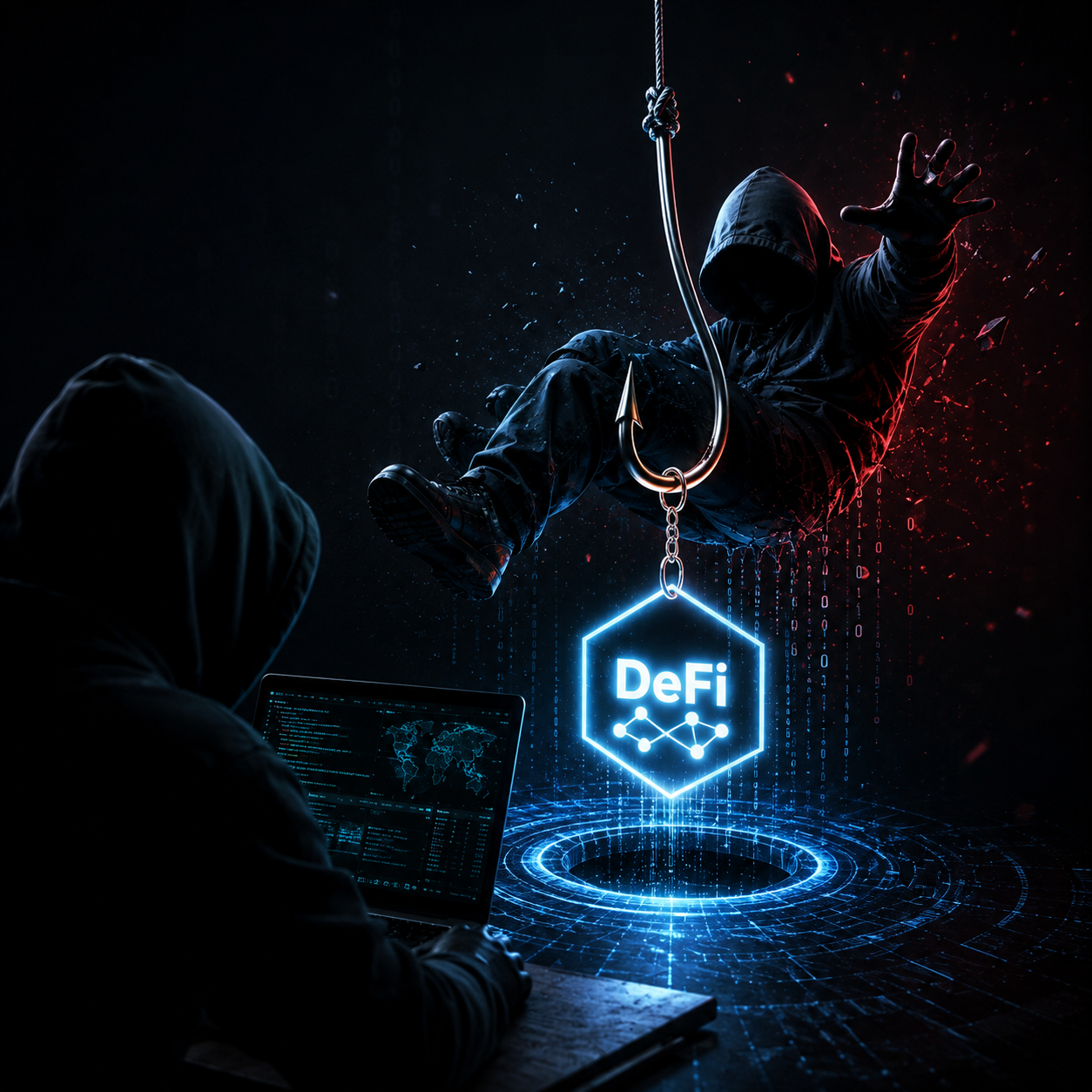
Black eats black? Fake DeFi actually snatched out North Korea's Lazarus real hacker

Black eats black? Fake DeFi actually snatched out North Korea's Lazarus real hacker

Source: Security Company ANY.RUN Compiled by: Daily Planet Daily Original title: Fishing Show of the Year, Fake DeFi Picks Out North Korea's Lazarus, Real Madrid Fans, Real Madrid Fans. With a mathematical background, they only use AI to write code. Core point of view: By setting up a fake DeFi company, the security agency successfully infiltrated the “Famous Chollima” hacker group under North Korea's Lazarus Group, revealed its complete process of using false identities, AI tools, and remote collaboration to infiltrate Western companies, and revealed its evolving toolset and infrastructure. Key element: The researchers disguised themselves as recruiters and recruited three North Korean agents within a few months to record their operation behavior, tool usage, and collaboration patterns in real time through the ANY.RUN sandbox environment. Agents used forged driver's licenses, stolen social security numbers, and mule accounts to complete the onboarding process. Some of these documents were processed by Google Gemini and had SynthID watermarks, revealing signs of forgery. Attackers rely on AI tools such as ChatGPT and Google Gemini to encode, translate, and modify files, and use AstrillVPN, remote desktop software, and dedicated servers to covertly access corporate environments. The three agents showed insufficient skills during development, frequently searched for basic issues, and exposed more proxy server and infrastructure information induced by selective network outages and captcha. The investigation found that Famous Chollima aims to lurk within the enterprise for a long time and legally obtain access to code, systems, and intellectual property rights, and is not limited to short-term attacks, and the threat persists significantly. Crypto friends who are often phished have probably heard of the North Korean hacker group Lazarus Group. Its well-known “campaigns” include, but are not limited to: Bybit ($1.5 billion) theft, Ronin Network/Axie Infinity Bridge attack ($6.2 billion), DMM Bitcoin/Ginco related attack ($308 million), Harmony Horizon Bridge attack ($100 million), and Atomic Wallet attacks ($100 million), etc. And the key to the success of these attacks is social engineering — hackers usually disguise themselves as normal job applicants, lurk at crypto companies for years, and wait for the right time. Recently, security agency ANY.RUN joined forces with BCA LTD (a company dedicated to threat intelligence and hunting) and NorthScan (a threat intelligence program to uncover the infiltration of North Korean IT workers) to effectively crack down on North Korean hacker agents. The researchers created a fake DeFi startup and successfully recruited “Famous Chollima” agents under North Korea's Lazarus Group who specialize in human infiltration, to gain an inside perspective on the actions of North Korea's IT workers. The ANY.RUN sandbox environment shows the agent's behavior patterns in real time, revealing their evolving toolsets, remote access workflows, AI tool usage, and supporting infrastructure. This survey went beyond the simple recruitment process and showed in depth how these agents collaborated, obtained, and used company resources after joining the company. The findings suggest that the North Korean IT worker program not only poses a recruitment risk; once agents sneak inside the organization, they can legally obtain access to code, systems, intellectual property, and critical business processes. The following is a report co-authored by the three parties, compiled by Daily Planet Daily. ——————Introduction In December of last year, we fully recorded the infiltration cycle of “Famous Chollima” for the first time. From recruiting collaborators to help them join Western companies, to falsifying documents, shipping laptops to intermediaries, and even using AI tools to assist and translate in real time during interviews, everything is under control. In that survey, we pretended to be a middleman willing to interview them and lend them a laptop in exchange for a percentage of their salary. The point is that those laptops are actually ANY.RUN sandbox environments that record every click and every step they take. This provided us with massive metrics, hours of computer operation videos, and face-to-face contact images, making an unprecedented survey and making headlines in many media. (“Famous Chollima...

1d agoOdaily星球日报#wallet security #hacks

Franklin Templeton completes $1.5 billion CFO financing to lay out private market asset allocation

In comparison, asset management giant Franklin Templeton announced that its first mortgage fund obligation (CFO) product, Franklin Templeton Structured Solutions 2026, has successfully raised US$1.5 billion to provide investors with diversified and more efficient private equity investment channels. The asset portfolio covers strategies such as the private equity secondary market, continuing funds (continuing vehicles), and direct loans to medium-sized US enterprises. By the end of July 2026, Franklin Templeton's alternative asset management scale reached US$295 billion. Its alternative investment platforms covered various fields such as the secondary private equity market, private real estate, private credit, venture capital, hedging strategies, and digital assets. This article is sponsored by GENG, Build Your Fortune on GENG (https://geng.one)
2d agoburnking
From 4 models to more than 500, OpenRouter was acquired after growing 30,000 times in three years

From 4 models to more than 500, OpenRouter was acquired after growing 30,000 times in three years

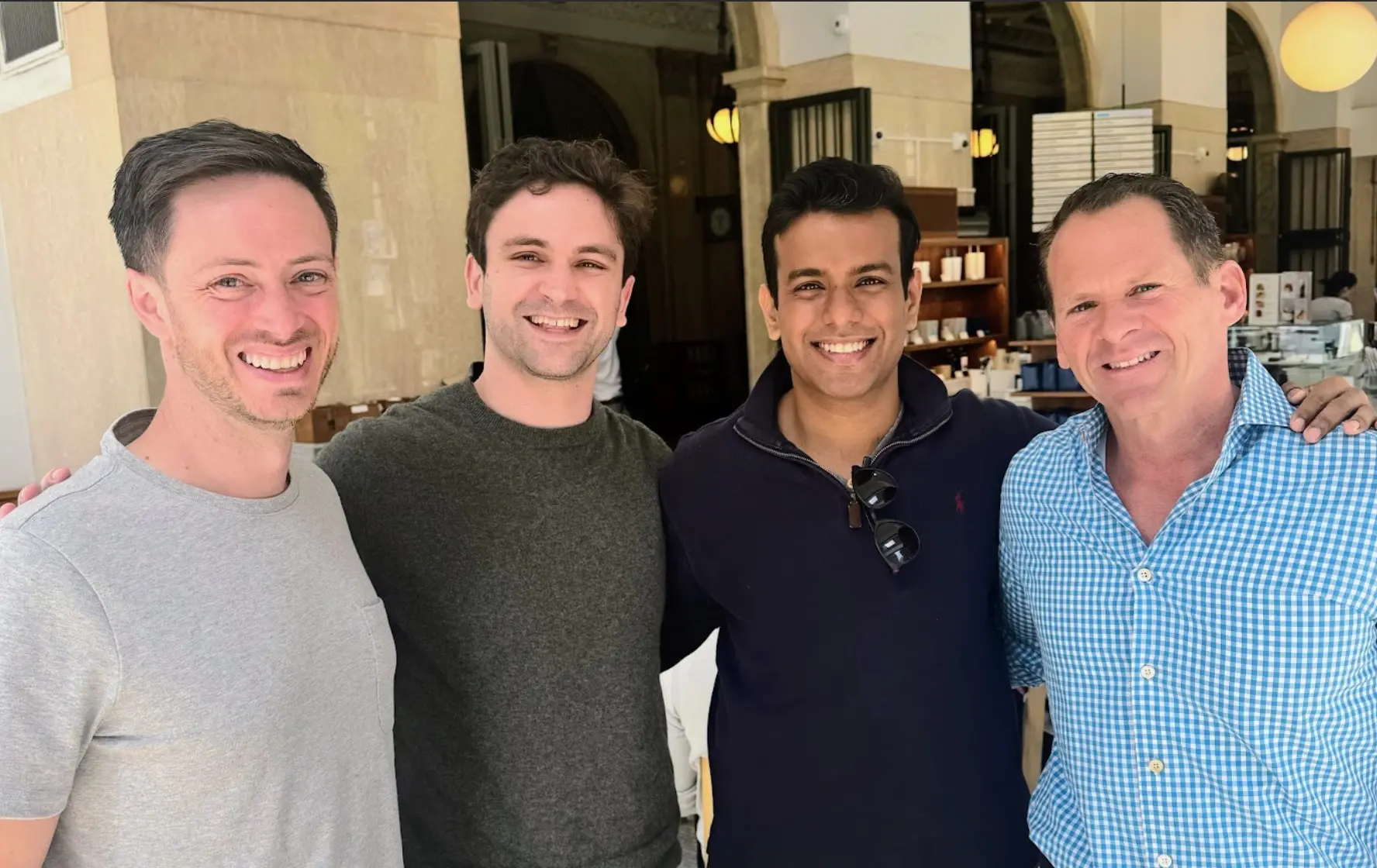
Author: Menlo Ventures Compiled by: Jia Huan, ChainCatcher Original title: Early Investors Behind OpenRouter Revisited Investments Today, OpenRouter announced that it has reached an acquisition agreement with Stripe. OpenRouter was launched in 2023, just over three years ago. OpenRouter was initially launched as a “unified interface for LLM” and only supported 4 models at the time: GPT-3.5, GPT-4, GPT NeoXt and Cohere xlarge by Together. When the company was founded, it was based on two core judgments: first, AI will eventually be used on a large scale and penetrate various fields; second, there will be many different models on the market, each with trade-offs, and users will choose different models according to different needs. As it turned out, both judgments far exceeded expectations at the time. Since its launch, the number of tokens processed by the OpenRouter platform has increased by about 30,000 times. Currently, it has exceeded 4,500 trillion tokens on an annualized basis, and the scale of expenditure on the platform has reached a very impressive level. Meanwhile, the number of models supported by OpenRouter has grown from the original 4 to over 500. Figure: OpenRouter Token usage growth from inception to acquisition Menlo Ventures is fortunate to be part of this journey. In March 2025, we participated in OpenRouter's seed funding round through the Anthology Fund set up in partnership with Anthropic. OpenRouter founder and CEO Alex Atallah previously founded OpenSea, which was once valued at $13.3 billion. His co-founders include tech guru Louis Vichy, whom he met on Discord, and highly executive COO Chris Clark. In May 2025, we led OpenRouter's Series A funding round, with Matt joining the company's board of directors, and Deedy as a board observer. Earlier this year, after seeing OpenRouter's rapid growth in customer numbers and revenue, and the company built a product route with stronger “model intelligence” capabilities around model selection and evaluation, we continued to step up Series B financing. In the tech industry, it often takes years for an idea to change from the judgment of a few people to industry consensus. And just a few weeks ago, this happened: from Ramp to Cursor, more than 10 companies launched their own model routing products almost simultaneously. In just a few years, OpenRouter has become one of the most important companies in the AI era. Picture: Group photo when deciding to lead OpenRouter Round A At first glance, Stripe doesn't seem like the most natural buyer of OpenRouter, but the two companies are actually strikingly similar. Both use an API that can be directly accessed to simplify the otherwise complicated transaction process and charge a certain percentage of the fee. It's just that OpenRouter deals with AI models. As Stripe has always said, the two companies combined and are still doing the same thing: increasing “internet GDP.” In fact, over a year ago, OpenRouter called itself the “Stripe of LLM.” OpenRouter's core value OpenRouter was one of the first companies Deedy came into contact with after joining Menlo in 2024. This company is almost right at the heart of our AI infrastructure investment logic. Menlo presented two judgments necessary to invest in OpenRouter in the 2024 Enterprise AI Report: AI spending will increase dramatically, and developers will not only use one model, but multiple models at the same time. Figure: Menlo's initial contact email to OpenRouter As someone who can also write code and actually use these models, we realized long ago that there is a very clear difference in cost, latency, and performance between the different models...

2d agoburnking#OpenRouter

Arthur Hayes: AI bubble focused on data center debt and unprofitable AI companies, still optimistic about the agentic economy

Comparing the news, Arthur Hayes posted an article on the X platform saying that some people asked why he launched an AI/encryption project when they thought AI was a bubble that would burst. He said the bubble is in debt to build data centers, as well as unprofitable hyperscale cloud service providers and cutting-edge lab stocks. The price is what you pay, the value is what you get. He believes 100% in the Agentic Economy, and the excess computing power caused by the construction of loan funds supports his judgment on Flop Labs. Earlier, Arthur Hayes announced that he would end his retirement and lead Flop Labs. Flop Labs is “food” for AI agents. The project has no pre-sale, no venture capital agency participation, and uses a 100% fair distribution model.

3d ago
Why is capital chasing AI Native and ignoring the old Internet

Why is capital chasing AI Native and ignoring the old Internet

Capital doesn't reward being old-fashioned, not because old-fashioned people are at fault. The old part is clearly priced. There is no bad information, so there is no excess profit. Global venture capital was $510 billion in the first half of 2026, surpassing $44 billion for the full year of 2025 in one and a half months. More than 70% have entered AI; OpenAI and Anthropic took 217 billion dollars, accounting for 43%. With that much money, you'd think everyone could share a little bit. The truth is that distribution is more extreme than total volume, and the first sieve doesn't screen the industry, it screens people. The category that has been screened out now has an unkind name: the internet is old. Let's just say one thing: the “old man” in this article has nothing to do with age. It refers to a set of methodologies that have been formed in the mobile internet cycle, have been tested over and over, and have brought huge returns to holders. The person holding it may be 45 years old or 32 years old. It was this methodology that was being repriced, not the year of birth. Confusing these two things is Lao Deng's most common mistake and one of the most comfortable mistakes — because if the problem is someone else's age discrimination, you don't need to change a single word. 01 What is AI Native The term has been misused. They can use ChatGPT not called AI native, nor AI in the company name, let alone in their twenties. There are three things that really separate people. First, the starting point is a model, not a requirement. The order in which Lao Deng makes a product is: look at what the user wants, write down the requirements, and find technology to implement it. The order of AI natives is reversed: first figure out what level the model is capable of today and what step it is likely to reach tomorrow, and then move from this capability boundary to the external product. The former uses the model as a tool, and the latter uses the model as the foundation. There was no difference between these two kinds of things made by humans in the first edition; by the third edition, there was a difference of one species. Article 2. The default unit of an organization is not a person. The division of labor in the Internet age is the division of one thing into ten people. AI Native's division of labor is to take ten things from one person and add a bunch of agents. The CEO of a domestic application company said that the team consists of less than ten people, but a large number of AI work at night, and the first thing employees do every morning is check the work the AI handed in the night before. Cursor's side is even more extreme. Public reports mention that the company doesn't have a product manager; engineers write their own code, talk to users themselves, and participate in recruiting people themselves. Article 3. Information is first-hand. AI Native's input sources are papers, model cards, GitHub issues, original discussions on X, and self-run evals. Lao Deng's input sources are industry summits, closed-door meetings, brokerage reports, interpretation of public accounts, and finding someone to drink coffee with. This one is the least obscure and most lethal; I'll talk about that separately later. I'm satisfied with all three. The 25-year-old is an AI native, and so is the 45-year-old. I'm not satisfied with the three rules; I'm still an old man at the age of 25. AI natives are a state, not an age group. The trouble is that tickets in this state are works, not resumes. 02 The two lists spread the results of this round on the table. These are two lists. The first one is an all-AI native company. Their valuations are not rising; they are exchanging orders of magnitude. List 1 · Upstream OpenAI raised $122 billion in a single round of financing in Q1 2026, followed by $852 billion, the largest private equity financing in history. Anthropic Q2 had a single round of $65 billion, after investing $965 billion, accounting for about half of the total global venture capital for the quarter; the revenue operating rate in May reached about $47 billion. DeepSeek raised about 70 billion yuan in its first round of financing in May 2026. In April of the same year, Liang Wenfeng raised his direct shareholding from 1% to 34%, and controlled a total of about 84.29% of the shares through related entities. The Dark Side of the Moon (Kimi) was estimated at $4.3 billion in December 2025; it went for three consecutive rounds from January to February 2026 to reach 18 billion; the D round in May was about $2 billion, breaking 20 billion dollars after the investment; the July round surpassed $3.5 billion, after investing 35 billion dollars; the pre-IPO target was 50 billion dollars. ARR broke 100 million in March, 200 million in May, and held steady at 300 million US dollars in June, with APIs accounting for more than 70%. Smart Spectrum · MiniMax successively landed in Hong Kong stocks in early 2026, with a market capitalization exceeding 100 billion yuan. It was one of the first major model companies listed in China. The second one...

4d agoWendy#AI #DeepSeek

Analysis: The era of easy earnings in the crypto industry is coming to an end, and over 100 projects have gone out of business in 2026

In comparison, Global Settlement Network (GSN) CEO Ryan Kirkley said that the crypto industry is experiencing a round of large-scale liquidation, and projects with inflated valuations, weak business models, and lack of sustainable revenue are leaving the market one after another. Over 100 crypto projects have shut down, filed for bankruptcy, or virtually disappeared since 2026. Kirkley believes that this wave of failure is largely a result of the financing frenzy from 2020 to 2021. Many projects received huge financing at excessive valuations at the time, but lacked real revenue and profit paths, and were eventually forced to rely on continuous financing to maintain operations. According to Galaxy Research data, venture capital in the crypto and blockchain sector in the first quarter of 2026 was about US$4 billion, involving 355 transactions. The capital scale fell by about half compared to the fourth quarter of 2025, while the number of transactions fell by only 16%, indicating that the contraction in capital was mainly due to a decrease in large-scale financing. Kirkley believes that stablecoins, digital banks, and institutional wallets and settlement infrastructure may become winners after the industry clears up, while social tokens, memes, and some Web3 game projects will face more severe tests. For Bitcoin, Kirkley said the market is currently in a mild bear market, with $6.12 million as a key support level. If it falls below this position, leveraged funds may be forced to sell off, further opening up room for a decline to $41,000. Meanwhile, Kirkley said that he has met with government representatives from 7 countries in the past month, and the interest of institutions and governments in blockchain technology is increasing, but their focus is more on applications such as reducing financial costs, tokenized assets, and cross-border settlement, rather than the decentralized financial system emphasized by the traditional crypto industry. This article is sponsored by GENG, Build Your Fortune on GENG (https://geng.one)

4d agoburnking

US Department of Justice launches antitrust investigation against venture capital giant a16z

According to Bloomberg, according to Bloomberg, the US Department of Justice is launching an antitrust investigation against Andreessen Horowitz (a16z), the top venture capital in Silicon Valley, focusing on the fact that its partner also serves as a director at several competing AI companies — co-founder Ben Horowitz is the director of Databricks, and partner Martin Casado is the director of Fivetran. The two companies compete in the field of data processing. Casado also previously served as a director at dbt labs (acquired by Fivetran in June). The investigation, which has continued for almost a year, began with an antitrust review of Fivetran's acquisition of dbt labs. Although the acquisition was unconditionally approved, the investigation into the position of director continues. Such investigations usually end in the resignation of a director. a16z has a close relationship with the Trump administration. The two founders donated millions of dollars to the Trump campaign in 2024 and successfully promoted the weakening of the security fence on AI policies. a16z has assets under management of $90 billion and recently raised $15 billion in funds, with portfolios including SpaceX, OpenAI, and Cursor.

4d ago

Harvard University takes $2.2 billion SpaceX

Comparative news, according to Kim Ju, according to Fox News, the investment department of Harvard University disclosed its $2.2 billion stake in SpaceX. Harvard Management reported the position in a regulatory filing on Friday, making SpaceX the largest single share position disclosed in its $4.3 billion US stock portfolio. SpaceX's record IPO in June brought significant returns to university endowments, which acquired shares in the company through venture capitals—some of which had been in place for over a decade. Harvard isn't the only college investor to benefit from SpaceX's listing. The University of California's investment department disclosed a position of about $1 billion in a document this week, and the University of North Carolina and Washington University in St. Louis also hold shares in the company.

6d ago