
鲍威尔 · 2640

Trump's change in attitude towards the chairman of the Federal Reserve: don't cut interest rates, don't blame Walsh

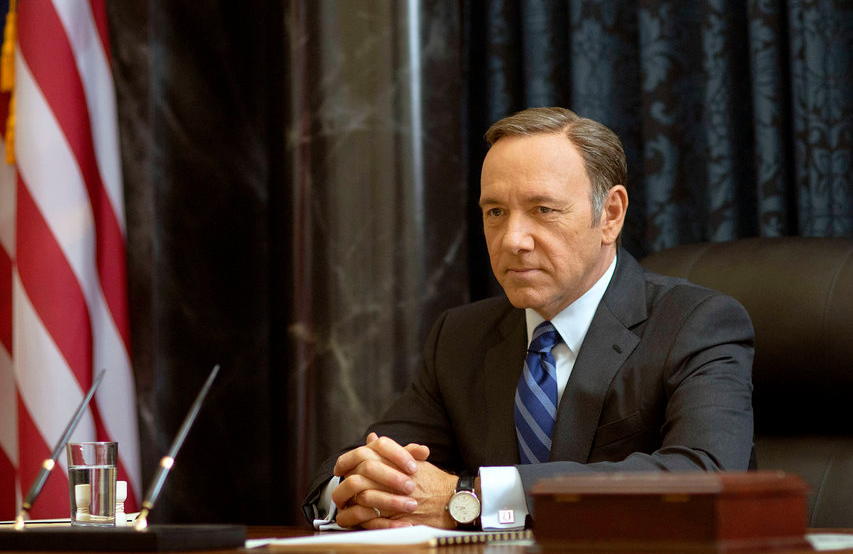
Comparing news, Trump completely changed his attitude towards the chairman of the Federal Reserve. He once bombarded Powell for not cutting interest rates, but now he has shown rare tolerance for Walsh even though he may want to raise interest rates. When asked if Federal Reserve Chairman Walsh should suspend interest rate hikes before the November midterm elections, Trump showed a milder tone that was different from the past. He admits that the final direction of interest rate adjustments is not decided by the Federal Reserve Chairman alone. In the interview, Trump will point the finger at the Federal Reserve Board of Governors. “It depends a little bit on him, but it's not entirely. He is facing a very politicized council,” Trump said bluntly. He added that decision-making power lies with the entire board of directors, thereby reaffirming his consistent criticism of former directors such as Powell and Cook. Before Walsh was officially approved to take office in May of this year, Trump frequently criticized Powell for being too slow in cutting interest rates, and now his tolerance for the current president has increased markedly. People familiar with Walsh's idea revealed that if the inflation data released in the next few weeks remains hot and the market's expectations of rising borrowing costs heat up further, Walsh will not hesitate to raise interest rates at the September meeting.
15d ago

“Federal Reserve microphone”: Powell may become the fourth official to complete his 14-year term as a Federal Reserve governor

Comparing news, “Federal Reserve microphone” Nick Timiraos: The three most recent people who have fully served their 14-year term as Federal Reserve directors are Alan Greenspan (1992 to 2006), George Mitchell (1962-1976), and William McChesney Martin Jr. (1956 to 1970). Moreover, all three of them had already filled unfinished terms (a board member who left office early) as members of the Federal Reserve Board of Governors before they began their respective 14-year terms. If Powell can stay in office until January 2028, he will join the ranks. (Powell has served on the Board for 14 years, but his official 14-year term began in 2014.)

18d agoWendy
Predicting “no action” and betting on “interest rate hikes” exist at the same time. What are the concerns of the market on the eve of the FOMC?

Predicting “no action” and betting on “interest rate hikes” exist at the same time. What are the concerns of the market on the eve of the FOMC?

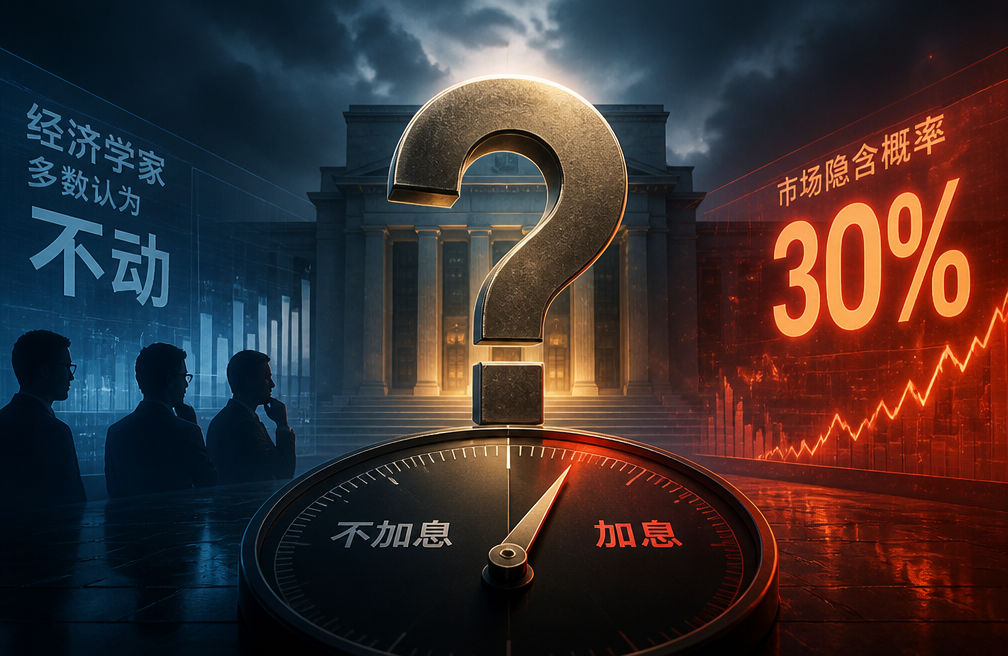
Author: Huohuo Original title: Whether to raise interest rates tonight: Economists say no, the market gave a 30% probability TL; the DR · Reuters survey showed that economists agreed not to raise interest rates in July, but the futures market once gave a probability of about 30% of interest rate hikes. · The disagreement centered on whether the oil price shock would force Warsh to use more hawkish communication to maintain inflationary credibility. · Related targets: US dollar index, USDJPY, WTI/Brent crude oil, gold, US stocks, Bitcoin and crypto assets. Federal funds futures were re-priced ahead of the July FOMC resolution, and traders began paying higher prices for the Federal Reserve to unexpectedly raise interest rates or release more hawkish signals. The anomaly is that economists' judgments are almost on the other side. According to a Reuters survey on July 21, all 104 economists expect the target range of 3.50% to 3.75% for the July meeting, and 78 of them expect it to remain the same until the end of the year. However, the futures market once gave a probability of about 30% of the 25 basis point interest rate hike. For investors, this isn't guessing the outcome of a meeting. The bigger question is whether the market is re-understanding how the Federal Reserve reacts to the impact of oil prices after Kevin Warsh took office as Chairman of the Federal Reserve on May 22. If Warsh sees the situation in the Middle East driving up oil prices as a temporary supply disturbance, the Federal Reserve is more likely to keep interest rates unchanged and wait for more data. If he is more concerned that oil prices will lead to secondary inflation, even if interest rates are not raised tonight, the September interest rate hike window may be reopened. The futures market buys hawkish tail risk federal funds futures, which can be understood as contracts betting on the path of the Federal Reserve's interest rate. The more open contracts, the more money is being bet or hedged around the outcome of the resolution. According to CME and media data leads, the federal funds futures open position contract rose to a high level before the resolution. This signal does not mean that the majority of the market believes that interest rates will be raised, but it indicates that the uncertainty before the resolution has already been traded into a crowded position. The “25 basis point rate hike probability” is the same logic. The probability of CME FedWatch comes from the 30-day federal funds futures price and is not the result of an economists' vote. The meaning of a probability of about 30% is that the tail risk suddenly becomes expensive. Markets don't necessarily think the Federal Reserve will act tonight. It's more like buying insurance for two types of unexpected events. One category is a direct rate hike, and the other type is no rate hike, but statements and press conferences suggest that the September rate hike has entered a serious discussion range. This is straightforward about asset pricing. The US dollar will be supported by interest rate expectations. If the yen continues to be pressured at a high level, the risk of intervention will be re-discussed. Overvalued stocks and crypto assets face higher discount rates and weaker risk appetite. The dispute between BofA and Citi is between hawkish agencies and dovish institutions that weigh oil prices. It is not about whether oil prices have risen, but about how the Federal Reserve should handle this rise. According to a Reuters report on July 27, institutions such as BofA and Deutsche Bank still use the July standstill as the benchmark scenario, but believe that oil prices and the situation in the Middle East made this meeting close to a dilemma. BofA's concern is that if the Fed completely downplays pressure on oil prices, it could challenge its inflationary credibility. This set of logic emphasizes the new chairman's first stress test. Warsh has just taken office, and the market doesn't have enough samples to judge the bottom line of his policies. If he seems too relaxed in the face of geopolitical shocks and inflationary pressures, investors may wonder whether the Federal Reserve is still willing to prioritize inflation. The judgment of agencies such as Citi is more biased towards a different set of explanations. The rise in oil prices is first a supply shock. Price pressure comes from concerns about energy supply; it is not that US demand is overheating. Interest rate hikes will not produce more crude oil; an overreaction may dampen growth. The core concept is secondary inflation. The rise in oil prices itself can be a short-term disturbance, but if it is transmitted to transportation, commodities, wages, and inflation expectations, it will become more enduring price pressure. Hawks are worried about the latter; doves believe that interest rates have not yet been raised to the point where it is necessary to raise interest rates. Therefore, what the market is arguing about is not the price of oil itself, but the weight of the oil price in the response function of the Federal Reserve. Will Warsh treat it as temporary noise or as a reputational risk that needs to be suppressed in advance. The new chairman amplified path pricing. The peculiarity of Warsh after taking office is that the market has yet to form stable expectations about his communication style. In the Powell era, investors were used to looking for path hints in wording, bitmaps, and press conferences. In the new presidency phase, the weight of every sentence will be amplified. If the Federal Reserve reduces forward-looking guidance and repeatedly emphasizes reliance on data, the market ostensibly gains flexibility; in reality, it assumes a wider distribution of interest rates. Traders are unsure about the policy path before the next meeting...

24d agoburnking#FOMC #Bitcoin #Federal Reserve #inflationary #gold

Bitwise CIO: Interest rate decisions in the next five years will have less impact on Bitcoin than in the past 15

Comparing the news, Matt Hougan, chief investment officer of Bitwise, posted that interest rate decisions in the next five years will have less impact on Bitcoin than in the past 15 years. He said that since the inception of Bitcoin, interest rates have fluctuated greatly between 0% to 2.5%, 0% to 5%, and 3.5%. The changes are measured in percentage points as a whole, but future adjustments may be more moderate. The CME expects interest rates to rise by only 50 basis points in the next year. Matt Hougan determined that the Federal Reserve under Warsh might be closer to the slightly fine-tuning style of the Greenspan era in the mid-90s rather than the model of the recent Bernanke and Powell period. If this is true, since interest rates change less, their impact on Bitcoin will also weaken. Interest rates are still important, but the weight of other factors will increase.

25d ago

This week's major market events: The US stock earnings season is coming to an end, and the Bank of America and Japan announced interest rate decisions one after another

Comparing news, the global market will face a double test of macro and financial reporting this week. According to this week's calendar of major market events, between July 27 and August 2, the Federal Reserve and the Bank of Japan will successively announce interest rate decisions, and technology giants such as Meta, Microsoft, Apple, Amazon, Qualcomm, and ARM will also release financial reports intensively, and market fluctuations may expand further. At the macro level, at 2 a.m. Beijing time on Thursday, the US FOMC will announce the latest interest rate decision, and then Federal Reserve Chairman Powell will hold a monetary policy press conference at 2:30 a.m. On the same day, the US will also announce the number of jobless claims for the week ending July 25. The market will focus on the Federal Reserve's latest statement on inflation, employment, and the path to cut interest rates during the year. On Friday, the Bank of Japan will announce the interest rate decision. The governor will then hold a press conference. The yen, Japanese bonds, and Asian risk assets may be affected. In terms of US stock earnings reports, technology leaders entered the centralized disclosure phase this week. On Wednesday, SK Hynix announced financial results for the second quarter, and Seagate Technology held an earnings conference call; on Thursday, Meta, Samsung Electronics, Microsoft, Qualcomm, and ARM will release results or hold earnings calls; and on Friday, Apple, Amazon, and Strategy will disclose financial reports. AI computing power, cloud services, advertising business, consumer electronics demand, and chip cycles will be the focus of market observation. On the crypto market side, there are still multiple tokens unlocked this week. Monday WAL unlocked 38.33 million tokens, BTR unlocked 14.69 million; Tuesday XPL unlocked 297 million and SIGN unlocked 208 million; HYPE unlocked 9.92 million on Wednesday and FF unlocked around 102 million; SUI unlocked around 13.72 million tokens and EIGEN unlocked 38.35 million on Saturday; ZAMA unlocked 280 million tokens and ENA unlocked 111 million on Sunday.

26d ago

Goldman Sachs warns that US inflationary pressure is spreading, and Federal Reserve Chairman Walsh is under pressure to raise interest rates

Comparing news, Goldman Sachs's latest research report shows that US inflationary pressure is spreading from a few industries to a wider range of sectors. Although the current level of inflation has not reached its peak in 2022, the coverage of price increases is expanding, making the Federal Reserve's policy face greater challenges. Goldman Sachs economist Jessica Rindels analyzes the extent of the spread of inflation through a six-month annualized rate of change based on the personal consumption expenditure (PCE) price index that the Federal Reserve focuses on. According to the data, compared to the average level of inflation from 1990 to 2019, more than 3% of the inflation-category pressure index has now reached a level of about 6, while at the peak of inflation in 2022, the index was 10. The report points out that fields such as audio-visual equipment, financial services, healthcare, and transportation have become important sources of current price increases. Meanwhile, housing rent inflation, which is heavily weighted by PCE, is expected to fall below 3% in the fourth quarter of this year, which may be an important factor in easing inflationary pressure. Goldman Sachs's analysis echoes recent concerns about the spread of inflation by new Federal Reserve Chairman Kevin Warsh. Warsh said that preventing price increases from spreading to more sectors of the economy is an important task for the Federal Reserve. However, unlike former Chairman Powell's more explicit policy communication method, Warsh currently declined to provide specific interest rate path guidance. Jeremy Schwartz, senior US economist at Nomura Securities, said that the Federal Reserve is reducing its forward-looking guidance to the market, and this policy uncertainty has increased Wall Street concerns. Meanwhile, hawkish voices within the Federal Reserve are heating up. Dallas Federal Reserve Chairman Logan has expressed support for a moderate rate hike, believing that the current economic resilience does not match the risk of inflation.

33d ago
Zero-yuan share options, mandatory entry for newborns: Trump is betting on US stocks

Zero-yuan share options, mandatory entry for newborns: Trump is betting on US stocks

Author: Xing Sheng BeatZ Original title: US stocks are national transportation. Trump is transforming the US into a fund the 250th anniversary of the founding of the US, and Trump is transforming the US into a fund. Last Monday, a few minutes before the US stock market opened, Trump was sitting in an oval office with a camera in front of him. The opening bells for the NYSE and NASDAQ were picked up by the White House and he rang them remotely. As the bell falls, he said to the camera that as the opening bell rings, these accounts will grow along with our booming economy. This week alone, $800 million in new capital will be invested in the stock market for American children. This is the first trading day since the “Trump Account” went live. Two days ago, on July 4, the 250th anniversary of the founding of the United States, he gave newborns across the country a birthday present: an investment account named after him, containing $1,000, which automatically bought US stocks. Six million children registered before it went live. In the same week, his treasury was dealing with another matter: $39 trillion in treasury bonds, which would cost more than $1 trillion in interest alone in fiscal year 2026, averaging $170 million a day. Every day, the Ministry of Finance has to find a way to repay the interest left over from yesterday. In the past 18 months, the president, a real estate agent, did three ostensibly unrelated things. The government directly took a stake in the company, opened investment accounts for newborns, and competed for shares in AI companies, but they all pointed to the same goal: making US stocks deeply tied to the US national fortune. The Eagles' 39 trillion dollar debt The starting point of this game of chess was not ambition; it was anxiety. As of May 2026, total US Treasury bonds surpassed $39 trillion, approaching $40 trillion. The size of the debt already exceeds the size of the US economy as a whole, and debt accounts for about 123% of GDP. Every day, about $5 billion in treasury bonds are added. The Congressional Budget Office predicts that interest expenses alone will exceed $1 trillion in fiscal year 2026, accounting for nearly 14% of total federal spending, which is higher than the defense budget. For every dollar the federal government receives, it costs $1.33. Huatai Securities estimates that the 2026 fiscal year deficit could reach $2.2 trillion, and the deficit rate rose to 7%. To resolve anxiety about US treasury bonds, there are three traditional solutions: increase taxes, cut spending, and inflate debt, that is, let prices rise to dilute actual debt. The first two solutions are tantamount to political suicide before the midterm elections, and the Trump administration will definitely not consider them. However, the third solution requires the US central bank, the Federal Reserve, to cooperate in cutting interest rates, and former Chairman Powell never bowed down even when threatened by Trump to find trouble and file a lawsuit. If then-Chairman Walsh directly announced interest rate cuts under the current state of the economy, it would obviously be very unattractive. So Trump needs to find a new path. And we all know that Trump's approach to solving problems has always come from the business he has been in business for the rest of his life. Real estate agents look at balance sheets in a different way than politicians: if they can't move on the debt side, then expand the asset side. On the US government's balance sheet in the past, 39 trillion dollars of debt was clearly and clearly understood; the asset side was vague, and there were almost no financial assets under the federal government's name that could be priced at market prices. Therefore, Trump's solution is to first use the powers in the hands of the government: subsidies, grants, government orders, export controls, and regulatory powers as costs and trading bargaining chips, and go to lower-priced shares in large companies. Intel was the first to be ripped off by Trump. On August 22, 2025, the US government announced the exchange of 9.9% of Intel, one of the world's largest semiconductor manufacturers, of 9.9% of the shares, at $20.47 per share, making it the chip giant's largest single shareholder. The subtlety of the deal is the source of funding: 5.7 billion from subsidies originally to Intel from the semiconductor industry subsidy bill “Chip Act” passed in 2022, and 3.2 billion from federal funding for secure chip projects. In other words, the government did not pay a single cent of the new money; what it paid was a “check that was supposed to be paid in vain” was exchanged for quite a bit of equity. Trump himself is also very proud. He announced in full capital letters on his social networking platform Truth Social: “I paid zero dollars for Intel. It's worth about $11 billion, all of which goes to the US.” Later, in a public discussion about the deal, he mentioned the negotiation process with Intel CEO Chen Liwu. Chen Liwu is a Malaysian Chinese-American who became the CEO of Intel in March 2025, and previously served as CEO of the chip design software company Cadence for 12 years. Trump said England...

37d agoburnking#Trump #US stocks
[Comparing Daily News Picks] Meta is building a cloud business to sell its surplus AI computing power resources; US President Trump: Micron Technology announced an investment of US$250 million in the “Trump Account”; the Robinhood Chain mainline is online, simultaneously launching 24/7 stock tokens and perpetual contracts, and plans to launch AI proxy transactions; Federal Reserve Chairman Walsh declined to say whether interest rates will be raised in July

[Comparing Daily News Picks] Meta is building a cloud business to sell its surplus AI computing power resources; US President Trump: Micron Technology announced an investment of US$250 million in the “Trump Account”; the Robinhood Chain mainline is online, simultaneously launching 24/7 stock tokens and perpetual contracts, and plans to launch AI proxy transactions; Federal Reserve Chairman Walsh declined to say whether interest rates will be raised in July

Daily AI · Cryptography · Macro · Market News, Bitpush helps you focus ↓ AI · News [Meta is building a cloud business to sell its surplus AI computing power resources]. According to Bloomberg, Meta Platforms (META.O) is building a cloud business to sell its surplus artificial intelligence computing power resources. [US President Trump: Micron Announces Investment of US$250 Million in the “Trump Account”] In comparison, US President Trump wrote: Micron announced an investment of 250 million US dollars in the “Trump Account.” The move is aimed at broadening long-term savings channels for children, and is the biggest corporate commitment the program has received since its inception. Trump said that Micron Technology is a truly outstanding American company and one of the most popular companies in the world. [Source: SoftBank restarts loan negotiations with OpenAI shares and makes more concessions] In comparison, according to a Bloomberg report, two people familiar with the matter revealed that the SoftBank Group has restarted negotiations with the loan syndicate on a $10 billion loan secured by its OpenAI shares. Previously, SoftBank's financing attempts came to a standstill due to market concerns about the difficulty of valuing private companies. People familiar with the matter said that in order to allay lenders' concerns, SoftBank proposed also providing a guarantee for loan repayment. If OpenAI shares used as collateral depreciate in value, banks can seek compensation from SoftBank. People familiar with the matter said the loan consortium is expected to include Goldman Sachs, J.P. Morgan Chase, and Mizuho Group. Crypto · Market [Robinhood Chain Mainnet Launched, Simultaneous Launch of 24/7 Stock Tokens and Perpetual Contracts, Plans to Launch AI Proxy Trading], Robinhood Chain officially launched its public mainnet today. The L2 is built on Arbitrum technology, with Uniswap and others as the first partners. Stock Tokens stock tokens were launched simultaneously, supporting more than 120 countries. Eligible users can transact 24/7 through Robinhood Wallet, but it's not open to US users. At the same time, the new wallet connects to perpetual futures products on the Lighter decentralized exchange in specific regions, and is exempt from gas fees and perpetual contract fees for the first 90 days. Additionally, Robinhood Earn has been launched in the US, providing a loan service with an annualized return of about 7% supported by USDG based on the Morpho agreement, and is equipped with insurance coverage. The company announced its entry into the Canadian market on the same day, Singapore obtained a MAS license, and plans to launch an AI proxy trading function in the US. [BlackRock IBIT holdings dropped to 7342.61 million, a decrease of nearly 100,000 BTC in the past two months] In comparison, Bitcoin News posted an article on the X platform stating that BlackRock IBIT's BTC holdings have been reduced by nearly 100,000 units in less than two months. On May 6, IBIT's BTC holdings peaked at 822.36 million, and currently stands at 7342.61 million. Macro · Agency [Federal Reserve Chairman Walsh declined to say whether interest rates will be raised in July] Comparing news, Federal Reserve Chairman Walsh avoided the question of whether the Federal Reserve is likely to raise interest rates at the July meeting. “I hope we can have a full 'family argument' when we meet in four weeks,” he said. “When we meet behind closed doors, we have a heated debate. But beyond that, I have no more information to reveal.” Walsh made the above remarks at the ECB's annual policy seminar in Sintra, Portugal; this is his first public appearance since attending the Federal Reserve's press conference for the first time last month. Since then, investors have begun to expect the Federal Reserve to raise interest rates more times, but the market currently anticipates less than 50% chance of raising interest rates for the first time this month. [Walsh: The Federal Reserve will start a new course and will not provide forward-looking guidance] Comparing news, Federal Reserve Chairman Walsh said that investors should pay more attention to economic data to determine whether the central bank will raise interest rates. Walsh did not give any hints as to whether the Federal Reserve will raise interest rates in July, and reiterated his dissatisfaction with the “forward-looking guidance.” Walsh was nominated by Trump earlier this year and took over as Federal Reserve Chairman in May. He previously served at the Federal Reserve during the 2008-2009 global financial crisis. When speaking publicly about the economy, Walsh is unlikely to be as outspoken as Powell. He once said that he thinks beauty...

51d agoWendy#Compare Daily Picks

Walsh: Don't expect hints from the Federal Reserve about future interest rate trends

Comparing the news, according to the Kim 10 report, Federal Reserve Chairman Walsh said that investors should pay more attention to economic data to determine whether the central bank will raise interest rates. Walsh did not give any hints as to whether the Federal Reserve will raise interest rates in July, and reiterated his dissatisfaction with the forward-looking guidance. Walsh was nominated by Trump earlier this year and took over as Federal Reserve Chairman in May. He previously served at the Federal Reserve during the 2008-2009 global financial crisis. When speaking publicly about the economy, Walsh is unlikely to be as outspoken as Powell. He once said that he thought that the Federal Reserve officials spoke too much, which would confuse investors.

52d ago