黄金代币 · 150

HSBC Hong Kong: Preparations for the launch of the Hong Kong dollar stablecoin are progressing as scheduled. Details will be announced soon

Comparing news, recently there is a market opinion that the attitudes of the first two Hong Kong dollar stablecoin license holders were divided, and HSBC showed a negative attitude. This may be related to a direct conflict with its main business. In response to the above public opinion, an HSBC Hong Kong spokesperson said that HSBC continues to be active in the digital asset sector in Hong Kong. “We are planning to launch in the second half of 2026. Preparations are progressing as scheduled. Details will be announced shortly.” The spokesperson said that HSBC Hong Kong's decision to issue HKD stablecoins stemmed from market demand for digital currencies and improved payment efficiency, while reflecting its commitment to serve the digital asset ecosystem. In the early stages, the application scenario focused on enabling HSBC customers to make on-chain P2P and P2M payments and invest in tokenized products in a safe and secure manner. Although retail payments in Hong Kong are already quite efficient, stablecoins can provide consumers with additional options to help them participate in the ever-expanding digital ecosystem. The move will complement HSBC Hong Kong's existing tokenized deposits, digital bonds and gold tokens to further enhance the product portfolio. (CLS)
3d ago
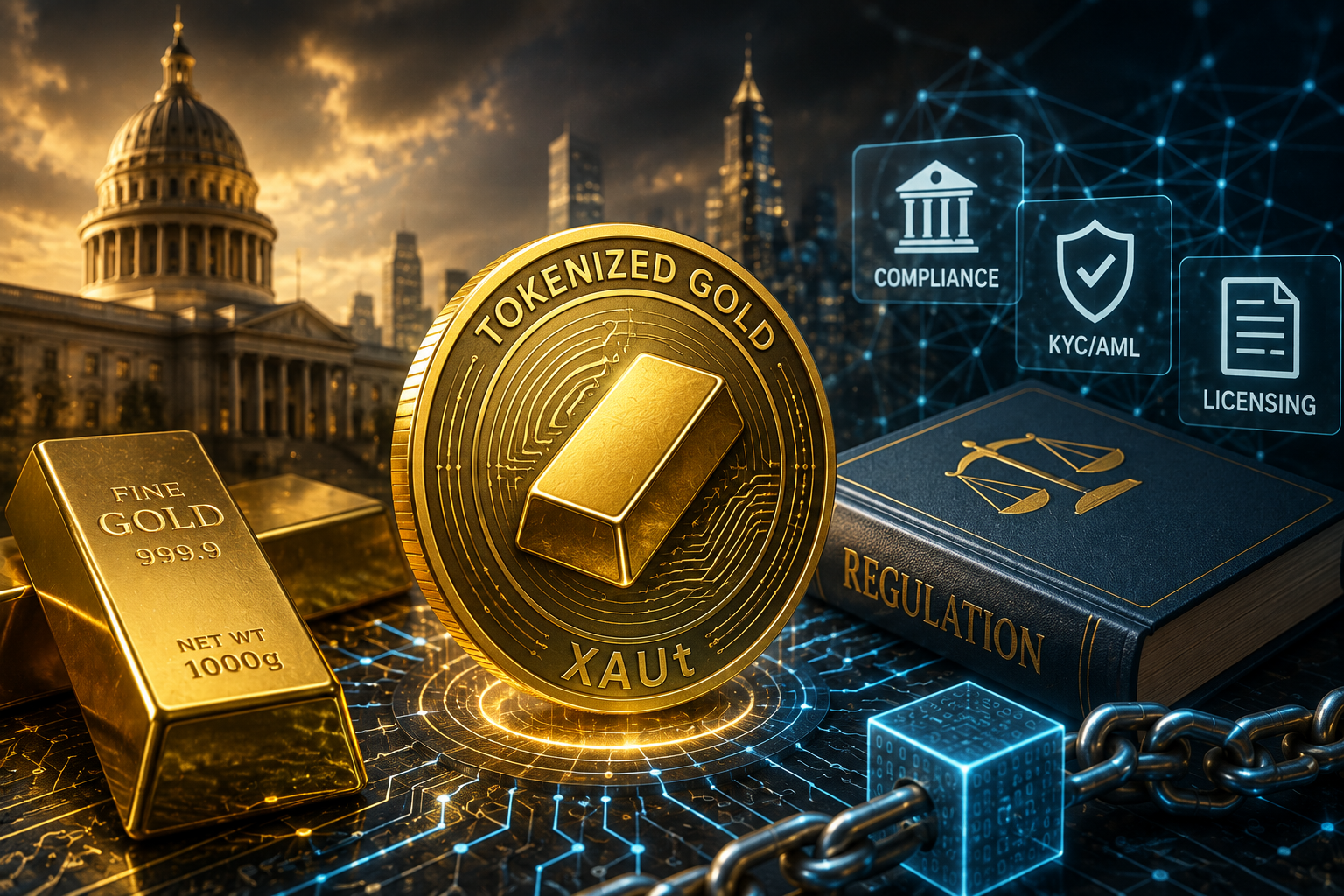
Gold tokenization: How does regulation force gold to move onto the chain?

Gold tokenization: How does regulation force gold to move onto the chain?

Source: Token Dispatch Author: Thejaswini M A Compiled by: Foresight News Original title: Gold tokenization, a financial revolution forced by regulations New York crowds, slow delivery, and Basel's “tight spell” — a dark battle for the London Treasury's ledger. In February 2025, the market anticipated that the US would soon introduce a tariff policy, and traders took gold from the Bank of England treasury and shipped it to New York. The waiting time for gold bar withdrawals has been extended from a few days to 4 to 8 weeks, and all withdrawal reservations are about full. Bank of England Deputy Governor for Market Affairs Dave Ramsden told reporters that the process of entering the building that morning was extremely cumbersome because a cargo truck was parked in the treasury area. Gold ownership certificates are traded on a daily basis at the London Gold Market, while physical gold is stored securely in vaults. However, during that period of uncertainty, the extractability of gold directly changed the price: the price of gold under the Bank of England dropped due to weeks of queues; the price of gold in commercial vaults rose, and buyers were willing to pay a premium so that physical gold could be immediately withdrawn and transported. On an ordinary trading day in May, the banks responsible for the gold clearing business in London reached $73.7 billion on the market, and there was no need to move physical gold throughout the process. As of the end of July, there were 9534 tons of gold in various gold stocks in London, worth 1.2 trillion US dollars, or about 762,000 gold bars. The clearing agency said that this mechanism already works — moving physical gold is expensive, and comes with security risks. This article will explore why the UK Financial Conduct Authority (FCA) has begun to develop regulatory rules for tokenized gold, and why the relevant regulations focus entirely on the ledger system. London is a global gold trading hub. The London Bullion Market Association (LBMA) is an industry trade organization and is responsible for setting industry standards. The final settlement of the parties' debts and liabilities was completed by four clearing banks: HSBC, ICBC Standard Bank, J.P. Morgan Chase, and UBS Group. The electronic reconciliation clearing agency operated by the above banks is London Precious Metals Clearing Limited (LPMCL, also known as AURUM). The UK Financial Conduct Authority (FCA) has been communicating with major banks to discuss how to regulate tokenized gold and whether such assets can be used as collateral in the wholesale market. Prior to that, the UK Financial Conduct Authority, the Bank of England, and the Prudential Supervisory Authority had jointly issued a report on May 18, 2026, suggesting that tokenized gold can be used as collateral for non-liquidated OTC derivatives. There are already precedents to follow in related fields. The UK Financial Conduct Authority issued a policy statement in April stating that all types of money market funds (including tokenized funds) are eligible to be collateral for non-liquidated transactions in accordance with the British version of the European Market Infrastructure Regulation (UK EMIR). Currently, a total of 16 institutions in the UK are carrying out tokenization-related pilot projects within the regulatory sandbox. The UK government estimates that tokenization technology could add £33 billion to the UK economy every year by 2035. The first tokenized government bond is expected to launch in early 2027, coinciding with the Bank of England upgrading its collateral system; by 2028, various types of digital ledgers are expected to be interconnected with the digital pound. There is a common opinion that London's promotion of gold tokenization is due to concerns about losing business to the Asian market. But the truth is that this technology was independently developed by the Local Clearing Bank of London. At the end of 2023, HSBC will split the standard 400-ounce gold bars in the London Treasury to generate small digital shares to facilitate transactions for institutional investors. The bank then launched a version for retail customers in Hong Kong, with a cumulative transaction volume of US$2.2 billion, but this innovation originated in London. The London gold market has four core functions: the first two are physical storage (treasury and security) and quality inspection. Quality verification also confirms that the purity of the gold is compliant; buyers do not need to re-check the molten gold. The token clearly can't do these two jobs; it can only do business based on physical infrastructure. Third function: Register ownership of gold. There is a consensus that the token performs very well in this regard and is inexpensive. The fourth function is credit business, which is also the key to the conflict. Tokenizing gold will make banks' existing credit systems irrelevant. With tokens, ownership of physical gold can be transferred instantly. Investors do not need to deposit gold with banks in exchange for convenient transaction channels. The vast majority of gold in the London market is held and traded on an unallocated account model. Customers do not own a specific number of gold bars; they only enjoy the corresponding number...

5d agoForesight News#Financial regulation #gold token
[Comparative Daily News Picks] DeepSeek plans to increase API service pricing; Nvidia is reportedly considering lowering the memory capacity of Rubin Ultra chips; the Coinbase Bitcoin Premium Index has had a negative premium for 80 consecutive days, setting the longest “negative” record; data: RWA deposits soared to US$7.4 billion, tripling year-on-year, and DeFi TVL shrinks by nearly 15%; Trump announced additional tariffs on polysilicon and derivatives

[Comparative Daily News Picks] DeepSeek plans to increase API service pricing; Nvidia is reportedly considering lowering the memory capacity of Rubin Ultra chips; the Coinbase Bitcoin Premium Index has had a negative premium for 80 consecutive days, setting the longest “negative” record; data: RWA deposits soared to US$7.4 billion, tripling year-on-year, and DeFi TVL shrinks by nearly 15%; Trump announced additional tariffs on polysilicon and derivatives

Daily AI · Cryptography · Macro · Market News, Bitpush helps you set priorities ↓ AI · News [DeepSeek Plans to Increase API Service Pricing]. DeepSeek issued an announcement stating, “We plan to increase the overall pricing of the DeepSeek API service in the near future. The increase is expected to be significant, so please arrange your use reasonably. The specific plan is subject to the official notice.” [Nvidia reports considering lowering the graphics memory capacity of Rubin Ultra chips] According to “The Information”, Nvidia (NVDA.O) is considering a major measure to deal with the shortage of high-end high-bandwidth memory chips. Nvidia is considering using a lower graphics memory configuration than originally planned for the next generation Rubin Ultra graphics processor. People familiar with the matter revealed that Nvidia has tested at least three versions of Rubin Ultra video cards in the past few weeks, and some versions have lower memory than the specifications initially announced. Part of the reason for this adjustment is that it may not be able to obtain enough high-end memory to meet the supply requirements of the original design. Reduced video memory will have an impact on chip performance, but Nvidia can make up for it in other ways. However, if other artificial intelligence companies use this reduced video memory chip to run large-scale AI models, they will need to use more chips than the original one. [Yushu Technology: Determination of the current issuance price of 150.80 yuan/share] According to Yushu Technology's announcement, the issuer and sponsor (lead underwriter) comprehensively assessed the company's reasonable investment value, valuation level of listed companies in the same industry, and second-level market valuation level in the relevant industry based on preliminary inquiry results, fully considering factors such as effective subscription multiples, market conditions, capital raising requirements, and underwriting risk for offline investors. Investors are requested to purchase online and offline on August 10, 2026 (T-day) at this price. No subscription funds are required at the time of purchase. [Alphabet's hyperscale bond issuance received an order of 115 billion US dollars] In comparison, Alphabet (GOOG.O) received an order of about 115 billion US dollars in the latest round of hyperscale bond issuance, indicating that after the recent sell-off, investors have regained interest in debt related to the AI boom. According to people familiar with the matter, this bond issuance attracted four times more demand than the expected maximum issuance of 25 billion US dollars. This demand exceeds the subscription scale obtained by companies such as Amazon and SpaceX recently issued other AI-related bonds. Alphabet's current bond issuance provided investors with relatively high issuance benefits to attract demand. Crypto · Market [Coinbase Bitcoin Premium Index has had negative premiums for 80 consecutive days, setting the longest “consecutive negative” record] Comparative news. According to Coinglass data, the Coinbase Bitcoin Premium Index has been in the negative premium range for 80 consecutive days (May 19 to now), and the latest value is -0.0978%. Historical data shows that long-term negative premiums often accompany the exit of US institutional capital, so we need to be wary of short-term pullback pressure. Previously, the index had a negative premium for 40 consecutive days from January 16 to February 24 this year, setting a record for the longest “consecutive negative” since the launch of the indicator, exceeding the number of consecutive days of negative premiums for about 30 days during the “1011 crash”. [Bloomberg: Wintermute will trade commodities, crypto ETFs, and tokenized stocks after approval] Comparative news. According to Bloomberg, cryptocurrency market maker Wintermute plans to expand its business into commodities, cryptocurrency ETFs, and tokenized stock trading after receiving regulatory approval. Wintermute is currently one of the world's largest crypto liquidity providers, and this expansion marks an extension of its strategy from pure crypto assets to the intersection of traditional finance and digital assets. If approved, the company will be able to provide customers with a wider range of asset class trading services and further open up the liquidity connection between traditional financial markets and the blockchain ecosystem. [Data: RWA deposits soared to $7.4 billion, tripling year-on-year, and DeFi TVL shrank by nearly 15%] According to reports from CoinShares and Token Terminal, as of Q2 2026, tokenized real asset (RWA) deposits on lending platforms and DEX reached 7.4 billion US dollars, more than tripling the 2.3 billion US dollars in the same period in 2025. In the same period, overall DeF...

15d agoWendy#Compare Daily Picks

Data: RWA deposits soared to $7.4 billion, tripling year-on-year, and DeFi TVL shrank by nearly 15%

In comparison, according to reports from CoinShares and Token Terminal, as of Q2 2026, tokenized real asset (RWA) deposits on lending platforms and DEX reached 7.4 billion US dollars, more than tripling the 2.3 billion US dollars in the same period in 2025. Over the same period, the total amount of DeFi deposits dropped by about 15%. The growth was almost entirely driven by traditional financial products, including tokenized treasury bonds, gold tokens (such as XAUT, PAXG), and private equity loans. DEX spot trading volume fell 70%, but RWA trading volume bucked the trend and surged 220%. Ethereum accounts for nearly 70% of RWA deposits. CoinShares defines this as “hybrid finance” — traditional assets are moving up the chain at an accelerated pace rather than the victory of native crypto assets.

15d agoWendy#starters

Tether gold token XAuT is certified by the Shariah to expand the Islamic financial market

According to Cointelegraph, according to Cointelegraph, Tether's gold-backed token xAUt has obtained Shariah (Shariah) certification from Amanah Advisors, confirming that its structure is in line with Islamic financial principles — including full endorsement of physical gold, no interest or leverage, and transparent reserves. Each XAuT represents one ounce of physical gold stored in a Swiss vault. The certification provides a more clear path for Tether to promote XAuT to Islamic financial institutions and investors, and is expected to drive adoption in the Gulf Cooperation Council, South Asia, and parts of Africa. XAuT is one of the largest tokenized gold products in the crypto market, and the value of on-chain assets has increased from around $700 million in July 2025 to around $2.5 billion.

25d ago

Tether Gold is recognized by the Abu Dhabi Global Market as a service that accepts spot products

According to Twitter news, stablecoin issuer Tether announced that its gold token Tether Gold (XAU) has been recognized as an “Accepted Spot Commodity” (Accepted Spot Commodity) by the Abu Dhabi Global Market (ADGM), opening a channel for companies within ADGM that meet regulatory requirements to provide XAUrelated services. Tether said the approval was obtained after continuing communication with ADGM and demonstrating its operational resilience, transparency and compliance framework, and will help companies that have obtained relevant regulatory licenses to support XAUproducts and services in a regulated environment. Previously, the ADGM Financial Services Regulatory Authority (FSRA) recognized USD, the US dollar stablecoin issued by Tether as an “Accepted Fiat Reference Token” (Accepted Fiat Reference Token). This endorsement of XAUfurther expands the scope of application of Tether products in the ADGM regulated ecosystem. This article is sponsored by GENG, Build Your Fortune on GENG (https://geng.one)

33d agoburnking
 On the day the traditional market closed, on-chain trading never stopped

On the day the traditional market closed, on-chain trading never stopped

Source: Foresight News Author: Matt Hougan Original title: The Weekend That Changed Finance I've always believed that the financial industry's shift to the chain is inevitable. Blockchain allows assets to be traded 7 x 24 hours a day, 7 hours a day, and settled instantaneously at a cost far lower than traditional systems. It makes traditional stock exchanges and T+1 settlements look very old. But I've always been curious: When will this transformation actually happen? What other event will drive a complete change in the entire system? After all, most people simply don't feel the delays in the current system. When my uncle bought stocks on his Carson Wealth Management account, he didn't care that it would take a day to settle, nor did he care about the complicated processes involved with mysterious institutions such as NSCC, DTCC, and Cede & Co. He bought, and the stock appeared in the account, simply and directly, with no twists and turns. So I thought for a while that the crypto-driven market would first grow on the edge. Over the next 5 to 10 years, they will mainly serve native crypto users, as well as those unable to fully integrate into traditional financial systems, such as global retail investors who want to trade US stocks. Eventually, these systems will become excellent enough to slowly take over the existing system, and institutions such as the NYSE will gradually shift to the tokenized market, just as they switched from on-market transactions to electronic trading back then. This would be a classic tech story: disrupt the edge first, then take over the core. I thought this would take 5-10 years. But this weekend proved me wrong. Now I'm sure it's all going to happen faster than anyone expected. What happened this weekend At 2:30 a.m. EST on Sunday, February 28, Trump announced an attack on Iran. This point in time is very special for global financial markets; almost all markets are closed. The US stock market is closed, the US futures market is closed, the main foreign exchange markets are closed, the European market is closed, and the Asian market is closed. Basically, only Middle Eastern stock markets such as Saudi Arabia and Qatar are still trading at this time (they trade from Sunday to Thursday), but these markets are limited in size and coverage, with few Western investors participating and not many assets covered. In the past, if a major geopolitical shock broke out on Sunday morning, investors could only wait until the US futures market opened at 18:00 p.m. on Sunday to know how the market would react. But this weekend told us: they now have another option to move to a 24/7, globally traded crypto infrastructure. And this weekend, they actually did it. Throughout Sunday, on-chain finance became the core of global finance. The decentralized exchange Hyperliquid, in particular, has taken center stage. It provides perpetual contract transactions for crypto assets and real assets such as crude oil. Hyperliquid's trading volume has skyrocketed, so much so that Bloomberg directly quoted the crude oil contract price on Hyperliquid when reporting on the impact of air strikes on crude oil; it is the most indicative price. It's no coincidence that HYPE, Hyperliquid's native token, rose around 30% over the weekend. In my opinion, this is more like investors paying for its future in advance. But not just Hyperliquid. The 24-hour trading volume of XAUT, a gold token issued by Tether, soared to over $300 million. Predictive markets such as Kalshi and Polymarket hit new highs in trading volume. Crypto assets such as Bitcoin and Ethereum are also in the spotlight. In my memory, this was the first time that the cryptocurrency market actually became a “market” in the true sense of the word. Why this matters If you're a hedge fund, bank, or any investor who wants to stay competitive, you have no choice right now: you have to open a stablecoin wallet, learn to trade with Hyperliquid, understand XAUT, and research tokenized stocks. Because even if you don't do it, others will. This trend will accelerate. The biggest threshold for participating in the on-chain market is to get used to tools such as wallets, stablecoins, Hyperliquid, and Uniswap. Once you get started, all the new capabilities of DeFi and on-chain finance are within easy reach. Exposure brings exploration, and exploration brings deals. Of course, some will say: traditional markets can do it too! NASDAQ is implementing 23 hours a day, 5 days a week! We don't offer 7×24 deals because nobody needs them! OK, say whatever you want. Back then, Wikipedia also rated Netflix in the same way, and Microsoft also rated iPhone in the same way. The shift in on-chain finance...

43d ago章鱼烧#24 hour trading #HYPERLIQUID #On-chain finance

HSBC completes first digital native structured product launch in Hong Kong

In comparison, HSBC announced on July 10 that it has completed the issuance of its first digital native structured product in Hong Kong as a private placement of a structured note denominated in US dollars. The note is issued directly on the blockchain rather than being digitized after it has been issued. Marketnode, an Asia-Pacific digital market infrastructure operator, acts as a tokenization agent and digital payment agent, managing the payment process between issuers and investors. Marketnode is supported by Euroclear, HSBC, SGX Group and Temasek. HSBC has positioned the deal as a pilot project to show how tokenization can improve issuance, settlement and ongoing services throughout the product lifecycle. HSBC did not disclose the scale of issuance, reference assets, term of notes, investor status, or blockchain used. The offering continues HSBC's long-standing presence in the tokenization field. Previously, it had issued digital native bonds through the HSBC Orion platform and launched retail gold tokens in Hong Kong.

43d ago

Singapore's DBS Bank will offer tokenized gold transactions to retail customers

Comparatively, according to CoinDesk, DBS Singapore plans to offer tokenized gold transactions to retail customers in the second half of 2026. DBS Bank will launch a product called “DBS Physical Gold Token” on its digital banking platform and is considering listing it on the DBS Digital Exchange (DDex), an exchange tailored for qualified investors and institutions. Each token is backed by 1 gram of physical gold held by DBS Bank in a dedicated vault in Singapore. DBS said the token will be independently issued and managed by DBS. James Tan, head of investment products at DBS Bank, said that previously retail customers could only buy gold funds. Physical gold was mainly aimed at institutions and qualified investors, and this tokenization will expand the scope of access.

72d ago

Tether launches the world's first gold-backed Visa bank card, and you can get XAUT rebates on purchases

According to Twitter, Tether and Fasset have partnered to launch the world's first gold-backed Visa bank card. Users can spend fiat at Visa merchants around the world while receiving up to 6% of the gold token XAUT cash back on eligible transactions. The card supports real-time conversion of XAUT to USDT and then to fiat currency. It also has an automatic reconciliation function to automatically invest transaction points into the gold token XAUT to achieve passive gold accumulation in daily consumption. Tether promised to invest up to $1 million in XAUT to reward the ecosystem and help spread tokenized gold in emerging markets. Currently, the total market value of tokenized gold exceeds 5.3 billion US dollars, of which XAUT accounts for more than 2.6 billion US dollars. This article is sponsored by GENG, Build Your Fortune on GENG (https://geng.one)

80d agoburnking