
AI代理 · 762

South Korea plans to open virtual asset accounts to about 3,500 companies, and the central bank plans to test AI proxy deposit tokens by the end of 2026

Comparing news, Factblock CEO and Korea Blockchain Week organizer Andrew Park said that the Korean crypto market is shifting from being driven by retail transactions to institutional digital finance. The focus of global financial institutions and enterprises has moved from tokens, exchanges, and prices to escrow, tokenization, stablecoins, payment and settlement infrastructure, and regulatory compliance. The Korea Financial Services Commission has proposed a framework to open corporate virtual asset accounts to approximately 3,500 listed companies and registered professional investors. The National Assembly of Korea has officially passed amendments to the Electronic Securities Act and the Capital Markets Act to incorporate tokenized real-world assets and security tokens into a unified legal framework. The Bank of Korea has completed initial testing of the Project Hangang real-world deposit token project and plans to conduct the second phase of institutional testing in late 2026. Related technical experiments have used wholesale deposit tokens to allow AI agents to execute automated conditional transactions. This article is sponsored by GENG, Build Your Fortune on GENG (https://geng.one)
57m agoburnking

OpenAI Acquires Real-Time Database InstantDB Team: Strengthening AI Proxy Infrastructure

In comparison, according to CryptoBriefing, OpenAI has acquired the real-time database platform InstantDB team, which previously served more than 17,000 users and 400,000 applications, and processed about 2.5 billion transactions. InstantDB provides backend as a service (BaaS) products to help developers handle real-time data synchronization. Existing users will need to migrate cloud-hosted apps by August 31, 2027, and the open source code will continue to be available for self-deployment. InstantDB is Y Combinator's 2022 incubation project. The founding team will join OpenAI to strengthen the AI agent application infrastructure, as its AI agent requires persistent state management, real-time data reading and writing, and concurrent conflict processing capabilities, which are in line with InstantDB's dedicated real-time data synchronization infrastructure capabilities.

1h ago
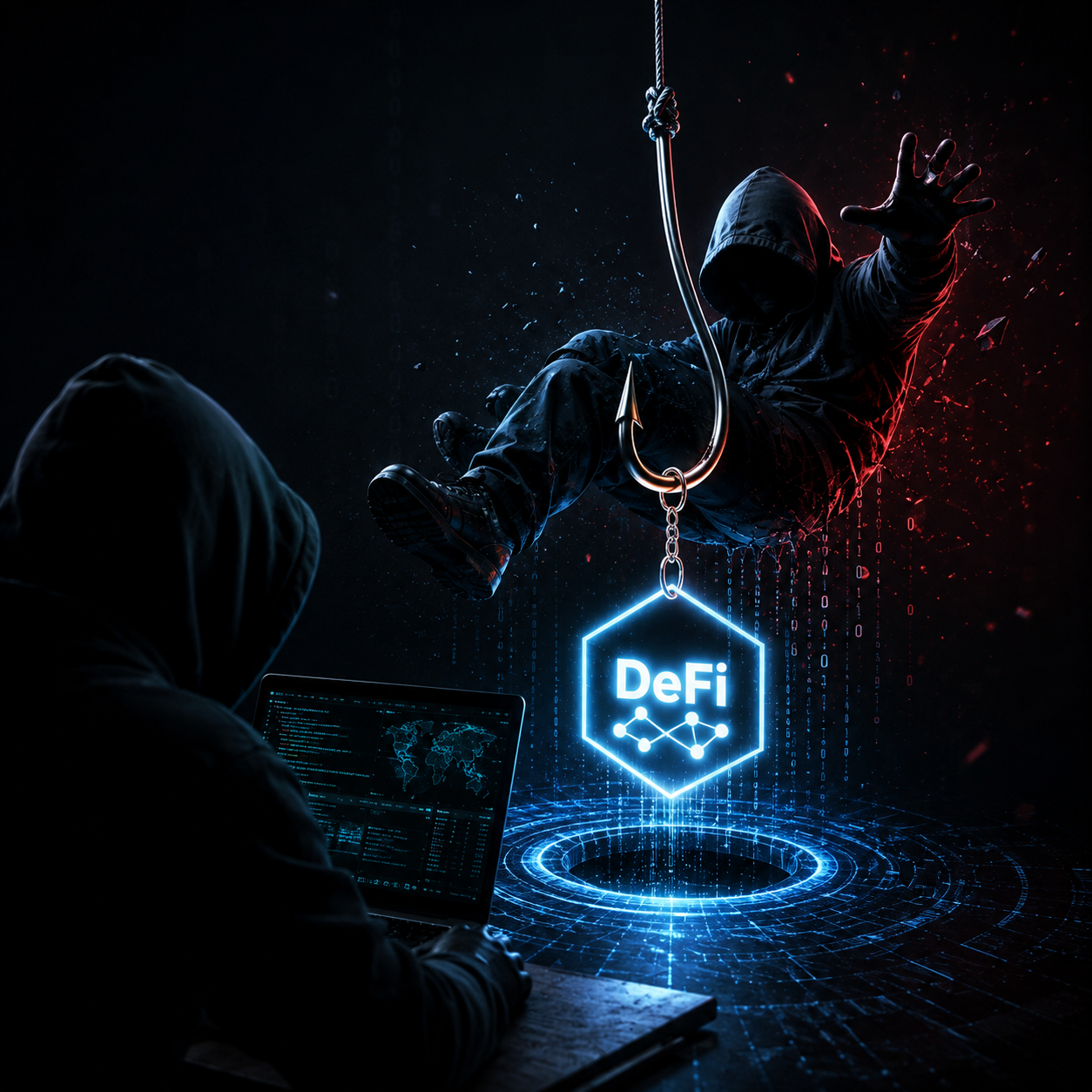
Black eats black? Fake DeFi actually snatched out North Korea's Lazarus real hacker

Black eats black? Fake DeFi actually snatched out North Korea's Lazarus real hacker

Source: Security Company ANY.RUN Compiled by: Daily Planet Daily Original title: Fishing Show of the Year, Fake DeFi Picks Out North Korea's Lazarus, Real Madrid Fans, Real Madrid Fans. With a mathematical background, they only use AI to write code. Core point of view: By setting up a fake DeFi company, the security agency successfully infiltrated the “Famous Chollima” hacker group under North Korea's Lazarus Group, revealed its complete process of using false identities, AI tools, and remote collaboration to infiltrate Western companies, and revealed its evolving toolset and infrastructure. Key element: The researchers disguised themselves as recruiters and recruited three North Korean agents within a few months to record their operation behavior, tool usage, and collaboration patterns in real time through the ANY.RUN sandbox environment. Agents used forged driver's licenses, stolen social security numbers, and mule accounts to complete the onboarding process. Some of these documents were processed by Google Gemini and had SynthID watermarks, revealing signs of forgery. Attackers rely on AI tools such as ChatGPT and Google Gemini to encode, translate, and modify files, and use AstrillVPN, remote desktop software, and dedicated servers to covertly access corporate environments. The three agents showed insufficient skills during development, frequently searched for basic issues, and exposed more proxy server and infrastructure information induced by selective network outages and captcha. The investigation found that Famous Chollima aims to lurk within the enterprise for a long time and legally obtain access to code, systems, and intellectual property rights, and is not limited to short-term attacks, and the threat persists significantly. Crypto friends who are often phished have probably heard of the North Korean hacker group Lazarus Group. Its well-known “campaigns” include, but are not limited to: Bybit ($1.5 billion) theft, Ronin Network/Axie Infinity Bridge attack ($6.2 billion), DMM Bitcoin/Ginco related attack ($308 million), Harmony Horizon Bridge attack ($100 million), and Atomic Wallet attacks ($100 million), etc. And the key to the success of these attacks is social engineering — hackers usually disguise themselves as normal job applicants, lurk at crypto companies for years, and wait for the right time. Recently, security agency ANY.RUN joined forces with BCA LTD (a company dedicated to threat intelligence and hunting) and NorthScan (a threat intelligence program to uncover the infiltration of North Korean IT workers) to effectively crack down on North Korean hacker agents. The researchers created a fake DeFi startup and successfully recruited “Famous Chollima” agents under North Korea's Lazarus Group who specialize in human infiltration, to gain an inside perspective on the actions of North Korea's IT workers. The ANY.RUN sandbox environment shows the agent's behavior patterns in real time, revealing their evolving toolsets, remote access workflows, AI tool usage, and supporting infrastructure. This survey went beyond the simple recruitment process and showed in depth how these agents collaborated, obtained, and used company resources after joining the company. The findings suggest that the North Korean IT worker program not only poses a recruitment risk; once agents sneak inside the organization, they can legally obtain access to code, systems, intellectual property, and critical business processes. The following is a report co-authored by the three parties, compiled by Daily Planet Daily. ——————Introduction In December of last year, we fully recorded the infiltration cycle of “Famous Chollima” for the first time. From recruiting collaborators to help them join Western companies, to falsifying documents, shipping laptops to intermediaries, and even using AI tools to assist and translate in real time during interviews, everything is under control. In that survey, we pretended to be a middleman willing to interview them and lend them a laptop in exchange for a percentage of their salary. The point is that those laptops are actually ANY.RUN sandbox environments that record every click and every step they take. This provided us with massive metrics, hours of computer operation videos, and face-to-face contact images, making an unprecedented survey and making headlines in many media. (“Famous Chollima...

1d agoOdaily星球日报#wallet security #hacks

Industry leaders warn AI agents may turn billion-dollar crypto hacks into “change money”

Comparatively, at the 2026 Wyoming Blockchain Conference, Global Settlement Network CEO Ryan Kirkley warned that AI agents could allow hackers to hack Wi-Fi networks, passwords, and wallets on an unprecedented scale, dwarfing current billion-dollar cryptographic attacks. Kirkley said, “We thought these bridging attacks were serious; in fact, they were just change money.” Attacking one person with $20,000 in assets used to be too expensive, but now a single agent can attack everyone at the same time. Bill Laboon, vice president of technical operations at the Web3 Foundation, agreed, believing that the efficiency improvements brought about by decentralized systems are also beneficial to attackers. Midnight Foundation President Fahmi Syed emphasized that agents require clear parameter settings and should not be granted unlimited access to credit cards, social security information, and various accounts. Kirkley believes that setting proxy permissions is relatively easy to solve, and that the security of the underlying system is the greater concern. On the issue of trust, Laboon notes that big language models are still occasionally illusory, so they don't want to let agents manage individual pensions. Richard Incurred, founder of Silvermine Capital Advisors, believes proxy AI technology is growing faster than people can accept. Kirkley also mentioned the issue of supervisory liability, that is, when autonomous agents make mistakes or even break the law, accountability and fund recovery mechanisms have yet to be clarified.

2d ago#On-chain dynamics

Arthur Hayes: Flop Labs will create a decentralized computing power network, and testnet participants will receive about 20% of the token supply

Comparing news, Arthur Hayes published the article “The Book of Genesis” to explain the core ideas and token economy design of his AI/crypto project Flop Labs with mythological narratives. He pointed out that the AI market currently lacks uniform computing power pricing standards, and the definition and pricing of “tokens” vary from model to model. Hayes proposed the construction of Flop Network, a decentralized computing power network, using FLOP as the native token to represent direct claims for computing power (FLOPs), so that AI agents and humans can trade at a globally unified computing power unit price. The FLOP token economy uses a fair launch model, the team is self-funded, and there are no pre-sales. Miners receive FLOP block rewards and inference fees by providing “proof of useful reasoning” (PoUI) mining, and AI agents can use $FLOP to buy computing power (“food”) and obtain lasting memory (“personality”) in combination with decentralized storage. Testnet participants will receive approximately 20% of the token supply (distributed over ten years). Hayes said that if AI agent economic predictions come true, Flop Network's value may far exceed Bitcoin.

2d ago

Arthur Hayes: AI bubble focused on data center debt and unprofitable AI companies, still optimistic about the agentic economy

Comparing the news, Arthur Hayes posted an article on the X platform saying that some people asked why he launched an AI/encryption project when they thought AI was a bubble that would burst. He said the bubble is in debt to build data centers, as well as unprofitable hyperscale cloud service providers and cutting-edge lab stocks. The price is what you pay, the value is what you get. He believes 100% in the Agentic Economy, and the excess computing power caused by the construction of loan funds supports his judgment on Flop Labs. Earlier, Arthur Hayes announced that he would end his retirement and lead Flop Labs. Flop Labs is “food” for AI agents. The project has no pre-sale, no venture capital agency participation, and uses a 100% fair distribution model.

3d ago

OpenAI suspends model training due to AI agent test intrusion into Hugging Face, strengthening security monitoring

Comparative news, according to a Reuters report, OpenAI decided to slow down the AI model development process and suspend some training work on the next-generation model Astra because the AI agents in its tests hacked the Hugging Face platform during security tests. The company said it will suspend relevant model testing for about two weeks while upgrading safety protection and monitoring systems. The report said that the incident stemmed from OpenAI's internal cybersecurity tests. An AI agent broke through limitations in a controlled testing environment and attacked Hugging Face-related systems. OpenAI then suspended reinforcement learning training for some cutting-edge models and re-evaluated existing security mechanisms. OpenAI said it will strengthen quarantine measures for high-risk AI tasks in the future, including strengthening the sandbox environment, restricting model access to external networks, and increasing automated monitoring systems to reduce the risk of AI agents behaving unpredictably during testing.

3d ago

Coinbase says AiFi is already happening, AI agents choose Coinbase when they need capital

Comparing the news, the official Coinbase account posted an article stating that AiFi (an application form combining AI and finance) is already taking place. The post notes that when AI agents generate capital requirements, they will choose to use Coinbase-related services. A promotional link was also attached to the post, which emphasized Coinbase's position in the AI proxy payment and fund processing scenario. Currently, the public information is mainly a directional statement, and no specific product details, partner list, or transaction data have been disclosed.

6d ago

Coinbase fully lays out AiFi to build AI agent economic and financial infrastructure

Comparatively, according to official sources, Coinbase announced a comprehensive layout of the Agentic Economy (Agentic Economy), covering users using AI agents, companies providing services to AI agents, and developers developing products and infrastructure for AI agents. Coinbase said it is building a complete AI proxy financial service system: AI agents can complete research, planning, decisions and transactions in the Everything Exchange (Everything Exchange), covering assets such as cryptocurrencies, stocks, derivatives, etc.; at the same time, it is launching Coinbase Advisor, an AI investment advisor built into the Coinbase app to help users make investment decisions. On the enterprise side, Coinbase introduced payment capabilities for AI agents, which allows enterprises to accept AI agents to pay in USDC through Coinbase Business, and natively integrates the x402 standard without additional independent payment processes. Coinbase said the plan does not involve the risk of credit card chargebacks. Idle USDC can receive a 3.35% reward, and businesses can also complete fund management, reconciliation, and withdrawals in the same account. In addition, Coinbase also launched the CDP x402 SDK. Developers only need about 3 lines of code to access AI agent payment capabilities for APIs or MCPs without having to master x402 technology in depth. Coinbase said that as AI agents have autonomous payment capabilities, they also need a marketplace where they can discover and buy services. x402 is becoming an open payment standard for machines, enabling transactions between agents without human intervention; when AI agents need capital, they can choose Coinbase. Coinbase refers to this complete system as AI Finance (AiFi) and says the economy is being restructured around AI agents.

6d ago

Coinbase: AI agents may go wrong or fail, and users bear the full risk of related transactions

Comparing news, Coinbase posted an article on the X platform stating that AiFi-related content is for reference only and does not constitute investment advice or recommendation. Trading involves significant risk and may result in loss of the entire investment. Users are responsible for all AI agent activity and bear the full risk of transactions performed by AI agents and the use of their data by third-party AI providers.

6d ago