

CBDC · 1824
Is “Cow Lai” really here? Bitcoin skyrocketed, and $2,743 billion bears were brutally liquidated

Is “Cow Lai” really here? Bitcoin skyrocketed, and $2,743 billion bears were brutally liquidated

Source: PanNews Author: Nancy Original title: Is “Cow Coming” Really Here? Bitcoin changed overnight, and bears hit the main points of the biggest liquidation day in history: Bitcoin rebounded strongly on August 19, with an intraday increase of more than 7.4%, once approaching 70,000 US dollars, a new high since the beginning of June; Ethereum simultaneously broke through 2,300 US dollars. Over the past 24 hours, the entire network closed out more than 2,986 billion US dollars, of which short liquidations reached 2,743 billion US dollars, setting a new record for short liquidation in a single day. The recovery in the market was driven by multiple factors: the US Treasury expanded the scale of long-term treasury bond repurchases to improve liquidity; the SEC proposed new crypto asset issuance rules to exempt some registration requirements; and Trump met with crypto business executives and made supporting remarks, urging Congress to pass the Clarity Act. Furthermore, the net inflow of Bitcoin spot ETFs has exceeded US$480 million in the past two days, causing large-scale short liquidation effects. On-chain data shows that spot demand is about to improve, with a median increase of about 18.1% over the next 60 days. However, Glassnode pointed out that high real interest rates are still a suppressing factor, the market is still bottoming out, and the capitulation is not completely over. VanEck believes that 8 of the 12 capitulation indicators have been triggered, but this is not a sign of bottoming out. The potential cumulative window may be from September to November. Standard Chartered Bank expects Bitcoin to rise to 100,000 US dollars by the end of 2026. If it effectively breaks through $65,500, it may confirm the low in the cycle. CEO Strive believes that the long-term downward trend in the US dollar may bring the strongest macro tailwind to Bitcoin. Overall, there are positive signs in the market, but continued strengthening still requires verification of demand, liquidity, and macro environment, and investors should maintain reasonable positions. While the movie “Cow Lai” continues to be popular, the market's expectations for a “return to the bull market” are also constantly being ignited. Coincidentally, the crypto market also suddenly ushered in a long-lost “bull attack”. Bitcoin's strong counterattack overnight led to a collective recovery of the market. For the crypto market, which has been dormant for a long time, this surge not only means a breakthrough in price, but also a return to market volatility. After the market heated up rapidly, market sentiment was instantly ignited, and coin industry players even ridiculed that “native families are finally getting better.” Meanwhile, this sudden strong rebound also simultaneously triggered a single-day liquidation wave of bears on an astonishing scale. Bitcoin fought back strongly. On the evening of August 19, the bears experienced the biggest wave of liquidation in history. On the evening of August 19, Bitcoin broke out of a long-lost positive line and strongly broke through the consolidation range that continued for several months. According to CoinGecko data, Bitcoin suddenly experienced a strong rebound, with an intraday increase of more than 7.4%, once approaching 70,000 US dollars, a new high since the beginning of June. Ethereum strengthened at the same time. At one point, the price broke through 2,300 US dollars, reaching a new high of nearly three months. Mainstream assets rose collectively, rapidly driving the overall recovery of the crypto market. Over the past 24 hours, the total crypto market capitalization has risen by around 7.5%, recovering to around $2.46 trillion. However, this sudden surge also turned into a large-scale bear slaughter. According to CoinGlass data, the total amount of online liquidations in the past 24 hours has exceeded 2,986 billion US dollars, and more than 175,000 traders have been forced to close their positions. Among them, the biggest single liquidation occurred in the BTC-USD contract on the Hyperliquid platform, which amounted to about US$48.8 million. Judging from the historical scale, this wave of liquidations has surpassed the single-day liquidation record of about 2.23 billion US dollars during the “tariff shock” in February 2025, ranking the eighth largest liquidation event in crypto history. What is more noteworthy is that this liquidation almost showed a one-sided pattern of bears squeezing. According to CoinGlass data, in the past 24 hours, the amount of short liquidation reached US$2,743 million, far exceeding the liquidation scale of about US$243 million for longs. This figure even surpassed the scale of short liquidations of about 2.46 billion US dollars on the largest settlement date in history on October 10, 2025, setting a new record for the scale of short liquidations in a single day in the crypto market. The crypto market welcomed multiple benefits. Trump's bullish remarks ignited optimism behind the collective reversal of the crypto market's decline, mainly driven by multiple factors such as improved macro liquidity, bearish shortfall, regulatory optimism, and the return of ETF funds. At the macro level, the US Treasury expanded the scale of long-term treasury bond repurchases, which became the core trigger for this round of market recovery. The Ministry of Finance announced that it will double the maximum limit of liquidity support repurchases of 10-year to 30-year treasury bonds from at least US$2 billion to US$4 billion. The measures will be implemented on September 9 and will continue until November 4. The market generally interpreted this as strong support for the liquidity of the treasury bond market, which effectively lowered long-term yields. The yield on 30-year treasury bonds declined markedly from a high level of about 5.33% to 5.34%. And the decline in US bond yields...
2d ago22#Blood washes empty heads
Overnight skyrocketing 20%! Trump is sending a big signal, the crypto market is crazy

Overnight skyrocketing 20%! Trump is sending a big signal, the crypto market is crazy

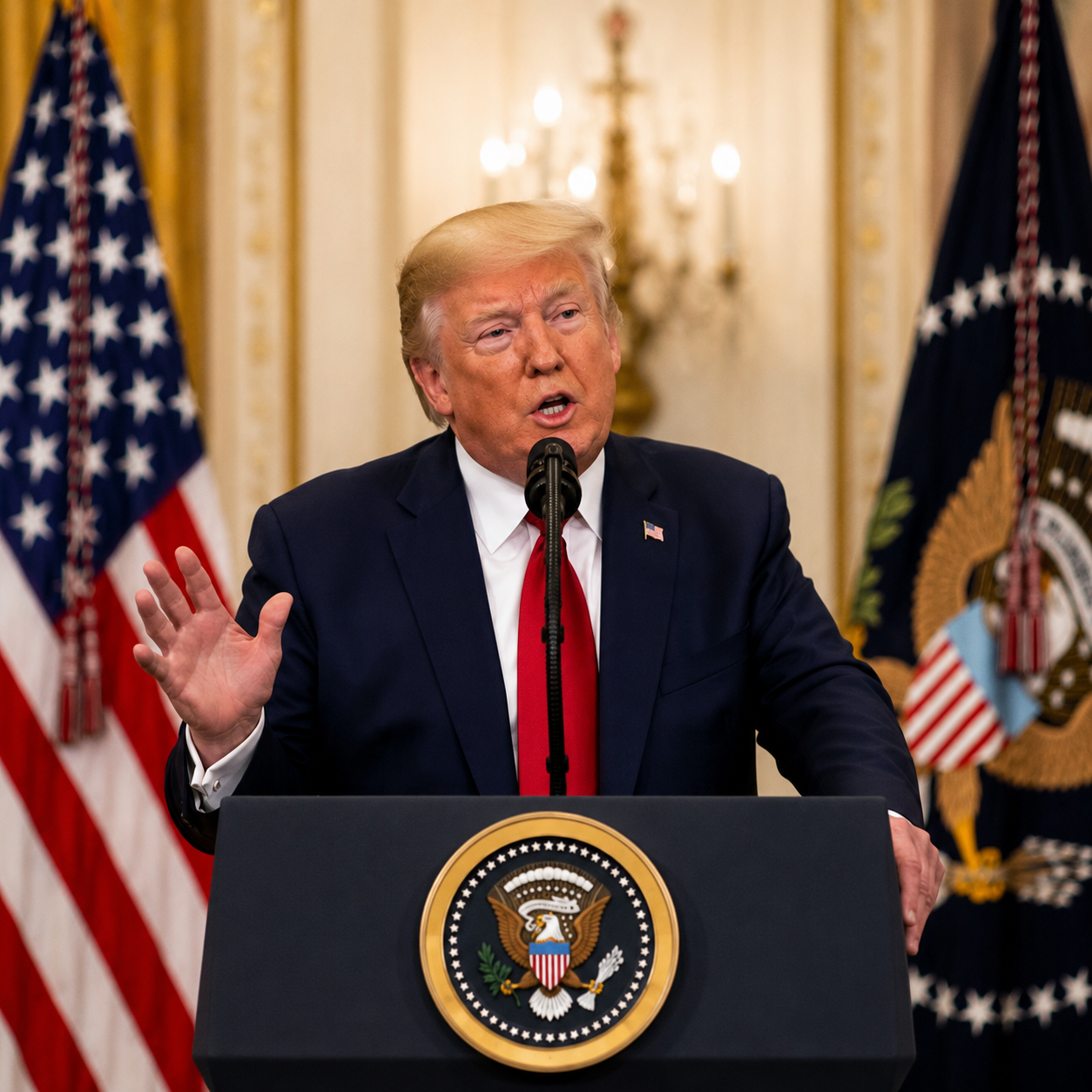
Source: Trump's White House speech compilation: Odaily Planet Daily Original title: What did Trump say on the night of the cryptocurrency explosion? The White House organized a “Cow Comes” show! Core point of view: At the White House cryptocurrency industry executives gathering, Trump explained the results of his administration's policies to promote the development of digital assets, emphasized America's position as a global leader through executive orders, legislation, and regulatory reforms, and called on Congress to pass the CLARITY Act to strengthen competitive advantage. Key elements: 1. Participants included SEC Chairman Paul Atkins, CFTC Chairman Michael Selig, and executives such as Coinbase, Robinhood, and Ripple, highlighting the trend of cooperation between the industry and the government. During the conference, BTC once surpassed 70,000 US dollars, ETH rose nearly 20%, and the market response was positive. 2. Trump announced the dismissal of former SEC Chairman Gary Gensler, terminated “Operation Blockpoint 2.0,” and signed an executive order banning CBDC and launching “Project Crypto” to reform the rules. 3. The government establishes US strategic Bitcoin reserves and digital asset reserves to use Bitcoin as a permanent asset of the Treasury; the “GENIUS Act” paves the way for widespread adoption of US dollar stablecoins. 4. The CFTC approved the first Bitcoin perpetual futures contract and promoted Hyperliquid compliance into the US, showing the gradual implementation of the regulatory framework. 5. Trump criticized the high interest rate policy, arguing that interest rates should be cut to support growth when economic data is strong; he emphasized that the fintech revolution has created jobs and wealth, and that the stock market has reached 80 new highs in a year and a half. 6. He called on Congress to pass the “CLARITY Act” as market structure legislation to ensure that the US continues to lead competitors such as China in the fields of encryption and AI. Editor's note: In the early morning of August 20, Beijing time, the White House held a meeting of cryptocurrency industry executives. Trump himself attended and delivered a speech. Government executives such as SEC and CFTC, industry representatives from Robinhood, Coinbase, Ripple, Gemini, a16z, etc., and senior traditional finance executives such as the Intercontinental Exchange and NASDAQ all attended the conference. Perhaps influenced by this positive signal, the cryptocurrency industry soared at night. At one point, BTC broke the $70,000 mark, and ETH rose close to 20%. Below is Trump's own statement on his speech at the conference. Seriously, a group of important people came to the scene today. If you love the world of finance as much as I do — I really love finance — all of you here today are big names in the financial world. It's incredible that you might not know some of them, but anyone in the financial world should know every one of them. Thank you so much for being here today. We're excited to welcome some of America's best talent in finance, cryptocurrency, and technology. In Washington, D.C., we are about to welcome the first meeting of the US Commodity Futures Trading Commission (CFTC) Innovation Advisory Committee (Innovation Advisory Committee). It's a committee of very smart people who will give us suggestions and tell us what we should do. Right, Paul (referring to SEC Chairman Paul Atkins)? They'll tell us a few things. But I think Paul probably knows these issues better than anyone else, and he did a great job. We're very happy with Paul, and I think everyone thinks the same. He's really amazing. From the cryptocurrency market and prediction market, to traditional finance, to decentralized finance, the people in this room are making sure that the future of the commercial market can be created and improved here in the US. We are competing with many other countries for control of these markets, market share, and the profits, jobs, and everything else they create. And we did a great job. We are leading the way in every aspect, including artificial intelligence, and by a huge margin. We want to continue this lead. I would like to thank CFTC Chairman Michael Selig for his outstanding leadership. (Find someone first) Michael, come over... (Then suddenly found him around) Why am I so close that I almost didn't recognize you. At the same time, I would like to thank a very special person, someone who has been respected by everyone for a long time. I would have liked him to take this role — I wanted him to do this job before he became SEC chairman. Paul Atk...

2d ago22#BTC skyrocketed #Trump

Trump urges Congress to pass a fair version of the Clarity Act

Comparatively, US President Trump said during a meeting with crypto industry and financial institution executives at the White House that he urged Congress to pass a fair version of the “Clarity Act” (Crypto Market Structure Act) to establish a more clear regulatory framework for digital assets. Trump said the bill would help the US maintain its leading position in the cryptocurrency sector and open up space for the next round of innovation and entrepreneurship. He said the US needs clear regulatory rules to prevent crypto companies from moving overseas due to policy uncertainty. The conference included several crypto and finance company executives including Coinbase, Ripple, Robinhood, Kraken, Chainlink, and Gemini, as well as SEC Chairman Paul Atkins, CFTC Chairman Michael Selig, and White House crypto advisor Patrick Witt. The Clarity Act aims to clarify the powers of the SEC and CFTC in digital asset regulation and establish a federal-level crypto market regulation system. The bill is expected to be re-submitted to the Senate for consideration in September. Currently, the Republican Party still needs to seek the support of about 6 Democratic lawmakers to reach the 60-vote threshold. Additionally, Trump emphasized that his administration has promoted strategic Bitcoin reserves, a digital asset reserve plan, a ban on the Bank of America digital currency (CBDC), and crypto-related policies such as the Clarity Act. Earlier, the US SEC has proposed new crypto asset issuance rules, and plans to provide regulatory exemptions for some token offerings and lower the funding threshold for eligible crypto projects.

2d ago

LG CNS, a subsidiary of South Korea's LG Group, will launch a new blockchain service for the stablecoin ecosystem in September

According to a report by Digital Asset, LG CNS, an IT service company under the LG Group in South Korea, plans to launch a new blockchain service in September aimed specifically at the stablecoin ecosystem, covering core functions such as digital wallets, transaction processing, fee payment, and on-chain data management. Lee Jung-hwa, head of the blockchain department at LG CNS, said that wallets are the most important infrastructure in the stablecoin ecosystem, and whoever has control of the wallet and fiat currency entry and exit channels in the future can occupy a key position. The company has previously accumulated CBDC and deposit token-related technologies through participation in the Bank of Korea's “Project Hangang”, and has verified various on-chain settlement models in experiments.

11d ago

CRS 2.0 involving crypto assets is coming: payment of overseas income taxation insurance benefits has begun

Comparative news, according to a Caixin report, with the normalization of CRS information exchange, tax authorities have been able to fully obtain dividends and cash value data for overseas insurance policies. Gaps in collection and administration are gradually being filled. Currently, payment of insurance benefits taxed on overseas income has begun. In addition, CRS, as the “eye of the sky” of the global tax system, is also being upgraded according to the schedule. CRS 2.0 is coming. The core changes include incorporating cryptographic assets, central bank digital currency (CBDC), and specific electronic currency products into the definition of financial assets, in line with the trend of gradual integration of digital assets into the mainstream financial world. Overall, from the multiple dimensions of overseas stock trading, overseas insurance, and offshore trusts, the iterative implementation of CRS2.0 resonates with the tightening of overseas income tax collection and administration. The two support each other, add efficiency, and jointly tighten regulations on cross-border tax sources.

16d ago

Survey: Switzerland's cryptocurrency usage rate reached 23%, more than double that of Germany

Comparing news, Bearingpoint's latest survey shows that 23% of Swiss adults use cryptocurrencies at least occasionally, which is significantly higher than the 18% in Austria and 11% in Germany. Furthermore, 37% of Swiss respondents think cryptocurrencies are worth investing in, 45% think they can be used as international trade or reserve currency in the future, and 44% say they are willing to use central bank digital currency (CBDC). The relevant ratio is higher than in Germany and Austria. According to the report, Switzerland has formed a mature crypto ecosystem since implementing the DLT Act in 2021, and Crypto Valley has gathered 1,749 blockchain and DLT companies. Germany, on the other hand, plans to rely on traditional banking channels such as DZ Bank and Dekabank to promote crypto asset services to narrow the popularity gap with Switzerland.

19d ago

Experts from the Academy of Social Sciences: Changxin Technology's overseas on-chain transactions may weaken the domestic capital market's dominance over technology asset pricing

Comparative news, according to a Caixin report, Zhao Yao, a specially invited researcher at the Payment and Clearing Research Center of the Institute of Finance of the Chinese Academy of Social Sciences, said that overseas digital asset platforms have recently launched on-chain trading varieties around Changxin Technology and other Chinese technology companies, indicating that global digital finance platforms are creating trading exposure around China's high-quality technology assets and organizing price expectations, transaction liquidity, and cross-border capital entry in advance. Although such products do not correspond to A-share shares, they are synthetic perpetual contracts or pre-market perpetual contracts settled with stablecoins such as USDC and USDT. It may weaken the domestic capital market's dominance over the pricing of technology assets. Zhao Yao proposed speeding up the construction of RMB digital finance infrastructure, promoting the collaborative development of commercial bank tokenized deposits, wholesale CBDCs, and technology asset tokenization, and relying on Hong Kong to explore pilot technology asset tokenization projects to enhance the RMB's capital organization capabilities and international pricing power in global technology finance competition.

26d ago

South Korea launches deposit-token payment infrastructure project to expand CBDC pilot to private payments

Comparative news, according to a DigitalToday report, the Korea Internet Development Agency (KISA) and the Ministry of Science and ICT launched the “Deposit Token Payment Infrastructure Expansion Project” to expand the results of Korea's CBDC pilot “Project Hangang” to the private payment sector. The project is managed by the Financial Settlement Institute, with 9 banks, 8 payment gateways, and 2 large demand parties participating, with a total budget of 9.6 billion won to reduce payment fees for small and micro merchants. The project uses existing payment systems rather than new infrastructure. Users complete payments through bank deposit token wallets, and merchants do not need to change terminals. The government also plans to use deposit tokens to pilot official travel expenses and explore treasury fund management models linked to dBrain. Of the total project budget, approximately 3 billion won will be invested in the development, operation and promotion of small and medium-sized enterprises, startups, and IT companies, and participating banks will further promote related businesses of about 4.5 billion won.

31d ago

The Bank of Korea's digital currency pilot is accused of lacking external independent security verification

Comparative news. According to Korean media Maeil Business, data from the Korea Financial Supervisory Service shows that during the first phase of the CBDC pilot project led by the Bank of Korea, the financial authorities did not carry out any independent security verification; only participating banks carried out their own prior security reviews. Before starting the project, only participating banks were self-assessed for IT vulnerabilities. The Financial Security Service, SK Shields, and the Woori Bank and Nonghyup Bank self-inspection teams jointly carried out the evaluation model of “supervised person self-inspection”. The central bank acknowledged questions about the safety of deposit tokens from the outside world in the pilot results report, and responded that the preliminary review was sufficient, but critics pointed out that the instructions were a self-assessment and not an independent third-party verification.

32d ago

The Bank of Korea's CBDC pilot, the second phase of the Han River Plan is expected to start as early as September

Comparatively, according to Yonhap News Agency, the second phase of the Bank of Korea's digital currency (CBDC) pilot project “Han Jiang Plan” is about to be officially launched. The Bank of Korea and commercial banks are making final preparations for the second phase of the real transaction test of deposit tokens. If preparations for system development and recruitment of participants are completed as planned, actual trading is expected to begin as early as September. In the first phase of transaction testing from April to June last year, 81,000 people participated through e-wallets and carried out 114,880 transactions using deposit tokens. The first phase examined deposit token payment systems, while the second phase focused on exploring commercialization. Additionally, South Korea's Ministry of Finance and Economy announced in its economic growth strategy for the second half of the year released on the 15th that it will implement a government bond tokenization pilot project linked to the Bank of Korea's institutional central bank digital currency (CBDC) next year.

33d ago