DAT · 388
After losing 10 billion US dollars in three months, why did DAT's stock price not fall but rise?

After losing 10 billion US dollars in three months, why did DAT's stock price not fall but rise?

Author: Eric, Foresight News Original title: After losing 10 billion US dollars in 3 months, DAT began to return to rationality. The financial reporting season, which had just ended, the Crypto Treasury Company (DAT) handed over a seemingly terrible answer. Strategy's net loss for the second quarter was US$8.22 billion, of which 8.32 billion was a reduction of the fair value of Bitcoin holdings; Strive had a net loss of US$258 million, with over 90% falling prices of Bitcoin and STRC preferred shares held by it; Sharplink's net loss of US$394 million; Metaplanet's net loss of 182.8 billion yen (about US$1.15 billion) in the first half of the year, of which about US$430 million in the second quarter; Bitmine, due to the fiscal year ending in August, It lost only $83.6 million in the March-May fiscal quarter, but the cumulative net loss over the past nine months has exceeded $9 billion. The five companies combined had a net loss of about 10 billion US dollars in the second quarter, and accumulated more than 30 billion US dollars in the first half of the year. A year ago, such a statement was enough to trigger a panic sell-off. But what actually happened was a different story. Strategy's stock price closed up 4.73% on the day the earnings report was released, while the options market originally fluctuated 8% in both directions. From the low at the end of June, Bitmine rebounded about 36%, Sharplink rebounded about 37%, Strategy and Strive rose more than 10%, and Metaplanet also rebounded about 15% from its late-June low. Losses are real, but everyone knows that DAT's second-quarter earnings report must have been a huge loss, the difference between 10 billion and 9.9 billion dollars. Large DAT companies have their own dashboards, or at least there are people who continuously count relevant data. Every financing, every time Bitcoin or Ethereum is being watched by the world with a magnifying glass. Therefore, everyone in the market can see how much money was lost in the second quarter. The financial report simply confirmed what had already happened. What has caused the stock prices of these DAT companies to “bottom up” is that both the market and the company have returned to rationality. In the second quarter, Strategy raised $8.4 billion in a single quarter, surpassing any quarter of last year; in May, it repurchased $1.5 billion of convertible bonds at a face value of 9.2 billion, reducing total convertible bonds from 8.2 billion to 6.7 billion dollars; and in June, Sharplink completed a targeted increase of $75 million at a price higher than net asset value, while using an average price of $4.70 to buy back its shares. In the performance guidance and earnings call, most of these companies invariably gave the same direction: focus on increasing the “content” of each share of crypto assets. Last year, DAT told a story of growth. Whoever buys coins faster will rise. The tide receded this year, and the surviving companies all exchanged KPIs for the same indicator, the number of crypto assets corresponding to each share. Strategy's Bitcoin content per share increased 5% month-on-month in the second quarter; Metaplanet's fully diluted Bitcoin holdings increased 9.6% in the first half of the year; Sharplink repeatedly emphasized the increase in ETH content per share. Accompanying this goal is discipline. Metaplanet clearly implements a set of capital allocation policies. When MNaV is above 1x, it issues additional shares to buy coins, stops issuing additional shares when it is less than 1x, and instead uses preferred shares and credit instruments, and even repurchases stocks. In the second quarter, just because its MNaV fell below 1 times, the company voluntarily abandoned targeted increases from third parties, preferring to slow down the growth rate of its holdings rather than dilute shareholders at a discount. Sharplink and Strategy have also launched repurchases. Treasury companies are no longer brainlessly expanding, but are returning to a simple question: how to make each share more money behind it. Strategy even went against its promise to “never sell coins” for this goal, and its stock price also had the lowest rebound among mainstream DAT companies. This is a pain that must be experienced from “above” to rationality. A new tool for STRC model apprentices to achieve this goal is STRC, invented by Strategy in July of last year, a perpetual preferred stock with a face value of 100 dollars anchored and dividends adjusted monthly. The logic is simple, use around 12%...


4d agoForesight News#DAT

Galaxy Research: Q2 crypto lending market contracted 16.8% month-on-month, but deleveraging process was “orderly and moderate”

In comparison, Galaxy Research released the Q2 2026 crypto leverage market report, showing that total crypto collateral loans fell 16.78% month-on-month to $56.16 billion, down 40.13% from the 2025 Q3 high of US$78.69 billion. Among them, DeFi loans contracted 27.61% month-on-month to $20.43 billion, and CeFi loans fell 9.62% month-on-month to $22.98 billion. This is the first time since Q3 of 2023 that CeFi has surpassed DeFi in size. Tether still dominates the CeFi market with a 58.54% share. According to the report, the key difference between current deleveraging and the previous bear market is the “orderly and moderate” pace: falling only 10%, 5%, and 17% for three consecutive quarters, rather than a 2022 cliff-style collapse of over 55% in a single quarter. In the futures market, Q2 unliquidated contracts fell slightly by 3.08% month-on-month to US$103.2 billion, but in July they rebounded to around US$114 billion. In terms of institutional corporate debt, Strategy completed a $1.5 billion debt repurchase in May, reducing the DAT industry's total outstanding debt to $161 billion. According to the report, if there is no drastic liquidation of the market or counterparty default, deleveraging is expected to continue the gradual decline model.

4d ago
At a time when Bitcoin is sluggish, institutional giants are bucking the trend to grab these crypto concept stocks

At a time when Bitcoin is sluggish, institutional giants are bucking the trend to grab these crypto concept stocks

Source: Daily Planet Daily Author: Wenser Original title: Crypto Bear Market, Which Crypto Concept Stocks Are Institutional Giants Making Up Their Positions? The agency is scrambling for funding: the full list of leading stocks on each track is here! Core view: Despite the fluctuating Bitcoin price and poor performance of crypto concept stocks, institutions such as Amundi, Pioneer Group, and State Street Group, the largest European asset management company, bucked the trend and increased their holdings of crypto stocks such as Strategy and Coinbase through 13F documents in Q2 2025, showing that institutional capital is quietly laying out leading targets at their own pace, rather than the “collapse of institutional belief” as market rumors say. Key factor: 1. France's Amundi increased 148% of Strategy shares to 1.32 million shares (worth US$127.7 million). Previously, it cut its position by nearly 90% in Q1, which is a low base correction. 2. In July, Pioneer Group's funds increased their holdings of MSTR by about 610,000 shares, with total holdings exceeding 12.6 million shares, worth more than 1.2 billion US dollars; State Street Group increased its holdings by 506,000 shares, with a total holdings of 7.52 million shares. 3. The pension fund signal is remarkable: the Michigan retirement system increased its MSTR holdings by 141%, the Louisiana and New Jersey pension funds simultaneously increased their positions, and conservative funds expanded their exposure to crypto assets. 4. Bitmine's entry into the Russell Index triggered forced purchases by passive funds such as BlackRock (holding 27.3 million shares) and State Street, which made unactive decisions; Circle received an investment of US$131.8 million from the Norwegian Sovereign Fund and opened a position with the Swiss National Bank. 5. ARK Invest operates on frequent bands such as Coinbase, Block, and Circle. For example, it bought 59,668 COIN shares (worth US$9.16 million) on August 7, reflecting an active dipping strategy. 6. The shareholding ratio of Robinhood institutions exceeds 93%. A large number of small and medium-sized pension funds have scattered positions, indicating that they have entered the regular allocation pool of conservative funds. There was a 45-day disclosure delay in the 7.13F document. Institutional position adjustments were flexible, and retail investors should not directly follow orders, but institutions are more sensitive to the bottom of the market and the racetrack. Recently, France's Amundi, the largest asset management company with an asset management scale of 2.9 trillion US dollars, disclosed that it has increased its share of Strategy by 148% and currently holds 1.32 million shares worth US$127.7 million. Looking back at recent data, although BTC continues to fluctuate and the price performance of many crypto concept stocks is not impressive, there are still quite a few institutions that choose to buck the trend and increase their holdings and wait for the market to rebound to generate profits. Today, claims about the “DAT model bankruptcy” and “the collapse of institutional cryptographic beliefs” are rampant, but the 13F documents that are mandatory to be disclosed by the US SEC every quarter reveal the truth about the time difference — a number of investment institutions with asset management scales of 100 billion and trillion dollars are quietly increasing their positions at their own pace. Strategy (MSTR): Asset management giants and public funds have made up MSTR with the most solid data in this round of institutional holdings increases. Buyers include various institutions such as asset management companies, large banks, and public funds. Amundi's position of about 1.32 million shares mentioned at the beginning of the article was not the result of continuous unilateral purchases. It cut Strategy's stock position by nearly 90% in Q1 this year, and the Q2 increase was to make up for the low base position of about 530,000 shares. After all, the Q1 market performance in the crypto market is hopeless, and asset management giants also need to review the current situation and trade. Asset management giant Vanguard Pioneer Group's VOE fund previously announced an increase of 83,093 MSTR shares, worth $8.16 million, to 2.12 million shares worth $209 million; on July 27, its VTSAX fund increased its holdings of 5291 million MSTR shares worth $50 million and increased its holdings to 10.5 million shares worth $994 million. State Street Corporation (State Street Group), the world's fourth largest asset management company, recently disclosed that it has increased its holdings of 506,635 MSTR shares, involving an amount of about US$51 million, with a total holdings of 7.52 million shares, with a position value of about US$758 million, and a 7.2% increase in holdings. Growth ETF (CGGR) under Capital Group, the world's largest active fund management company with an asset management scale of $3.3 trillion, disclosed an increase in MSTR in July...

8d ago22#Circle #Coinbase #Robinhood #Strategy #invests

CryptoQuant founder: Bitcoin futures leverage is still high, ETF and DAT have become the main structured purchases

Comparing news, CryptoQuant founder Ki Young Ju wrote that Bitcoin OG traders have just experienced the most profitable cycle in history. Unlike in the past, crypto trading platform traders were not the main exiting liquidity in this cycle; ETFs and DAT (digital asset reserve companies) were the main buyers. This structured buying boosted Binance traders' unrealized profits to nearly three times the top of the 2021 cycle. He said that the current Bitcoin price range is similar to that of two years ago, and the market is in the deleveraging phase. A large amount of unrealized profits accumulated during this cycle flowed into futures leverage. As traders' profits are settled, the BTC price has now stabilized near the average cost base of Binance traders. Ki Young Ju also pointed out that the on-chain market leverage ratio (BTC/USDT futures holdings divided by USDT reserves) previously exceeded 0.5 and is currently around 0.3, which is still higher than the level before the ETF was launched. Futures leverage is expected to rise again if ETF funds continue to flow in. Furthermore, he recalled that the OG giant whale made large-scale purchases in 2023 when BTC was close to $1.6 million, and the buyer/seller ratio showed that a large number of long market positions were established near the bottom of the cycle.

9d ago
Is Bitcoin still salvageable? Let the data do the talking

Is Bitcoin still salvageable? Let the data do the talking

Author: Will Clemente (@WClemente) Compiled and collated by: BitPushNews Author Profile: Will Clemente worked as the chief analyst at Blockware Solutions in his early years, focusing on Bitcoin on-chain data (exchange fund flow, holder behavior, etc.). In 2021-2022, he co-founded Reflexivity Research with Anthony Pompliano to provide institutional-level on-chain and macro research, and later became a listed company DeFi Technologies acquisition. He then became a consultant and participated in STIX related work. X has nearly 800,000 fans. The analytical style is data-driven and easy to understand. It is one of the influential voices in the field of Bitcoin cycle judgment. Here is the text: Happy summer! I haven't written a long analytical article on Bitcoin in a while. In this post, I'm going to do a thought review and share my thoughts on this asset class and some of my personal thoughts on how to deal with future trends. Last year, I generally focused my personal market attention on commodities, because it was clear at the time that there was an oversupply problem in the cryptocurrency sector, which made the market seem very heavy. At the same time, with the exception of Hyperliquid, lack of substantial innovation led to a lack of market interest — at least compared to the market activity we saw in other markets — making it difficult for demand to absorb all supply. I thought that late last year, when small-cap stocks soared and gold had just set off a sharp rise, Bitcoin had a window of good performance, but I was very disappointed when Bitcoin basically experienced a failed breakthrough (a few days before October 10). In January of this year, I further reduced my Bitcoin positions that I personally still hold because the market trend at the time was similar to the previous bear market we experienced in 2022. Frankly speaking, this hasn't been a fun year for those focused on Bitcoin and the cryptocurrency space. Although judging from the percentage decline, Bitcoin's retracement is much milder than in 2022, in many ways, one can argue that this bear market is even tougher than 2022. At least in 2022, you can clearly indicate the reason for the decline (rising interest rates, removal of leverage and fraud, FTX thunderstorm) and determine that “if these things are likely to change, and at the end of 2022, things are asymmetrically biased towards the impossibility of getting worse, then Bitcoin is probably a good long-term buying point here” — yet today, we don't see any similar situation, other than DaTS and quantum computing (which I'll talk about later), and what I think are some positive signs of recovery that I think are finally beginning to appear. Bitcoin ETFs hold 50 billion US dollars in assets and set a record for initial capital inflows, but they were surpassed by storage ETFs earlier this year. Major institutions have begun to introduce loan products. Gold performed extremely well last year, driven by central bank reserve demand. Fueled by the de-dollarization narrative, this should have been a time for Bitcoin to shine. Almost any individual or entity that wants to gain exposure to Bitcoin can do it, which makes it even more disappointing to see a net Bitcoin ETF outflow of $5 billion over the past year, while DRAM attracted $10 billion in capital inflows within a month. Network Health When we talk about the fundamentals of Bitcoin, we're clearly not talking about metrics in the traditional sense; we're focusing on the underlying state of the network itself. I'm not going to go through each data point one by one to list the data, but I think there are two main points that are really important. In an increasingly centralized world, in the context of a country-led economy and a country-influenced market, and the most centralized technological power brought by large technology companies, I do believe that decentralization is of great value. For those who don't know much about the details of Bitcoin, in addition to the miners we all know, there are also nodes. Nodes can be run by anyone and are responsible for enforcing rules and verifying the network, while miners provide security through extensive energy-backed computation. There are nodes all over the world, and there are probably many more that you can't easily track. The following list alone covers nearly 200 countries. Source: https://bitref.com/nodes/虽然查看矿池(它们对个体矿工没有控制权)是可能的,但你很难像追踪节点那样追踪个体矿工. However, we can get through...

11d agoWendy#cycles #Bitcoin #BEARISH #Bull market #Market topics
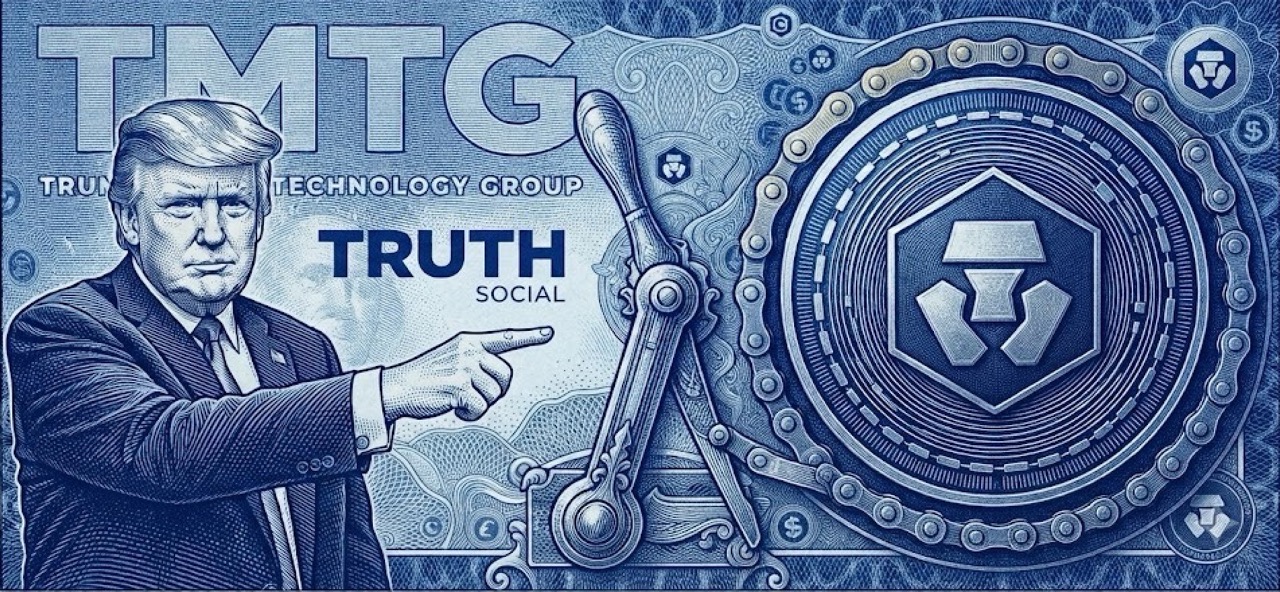
Why did Trump's media's $6.4 billion CRO hoarding plan go bad?

Why did Trump's media's $6.4 billion CRO hoarding plan go bad?

Author: Angelilu, Foresight News Original title: Worth $6.4 billion. Trump Media Group's CRO coin hoarding plan came to an end. A year ago, Trump Media Technology Group (DJT) and crypto exchange Crypto.com held high-profile hands to set up a listed treasury company to hoard several billion dollars of CRO. At the time, this politically strong affiliated company set up a stage with a leading exchange to sing, which made a huge impact. A year later, the capital game came to an end sadly. On August 7, DJT, Crypto.com, and SPAC company Yorkville officially announced the termination of this plan, along with the previously announced forecast market and ETF escrow program cooperation. Bitcoin's peak is almost at a standstill, and there is a collective decline in coin hoarding listed companies — after all, this collaboration, which began as a result of being close to politics, failed to reach the point where it came to fruition. At what stage did the suspended cooperation take place, the most important part of this cooperation is to rebuild a publicly traded CRO treasury company. In August 2025, three parties made a high-profile announcement: Trump Media will use SPAC company Yorkville to establish a company called Trump Media Group CRO Strategy, claiming to be the “first and largest publicly traded CRO treasury company,” and plans to stock up about 6.313 billion CROs — close to one-fifth of the current CRO circulation. The entire company is approximately $6.42 billion, comprised of $1 billion in CRO, $200 million in cash, $220 million in warrants, and a $5 billion equity line of credit. However, momentum returned; in fact, this treasury plan never actually came to fruition. It was only a framework agreement announced in August 2025. It had to go through a major SEC filing and approval process for the backdoor listing, which would have been delayed for more than half a year; it remained in a “to be completed” state until it was directly suspended a year later, and was never established. Along with the yellow one, there are two additional packages. Truth Predict, which was originally intended to be embedded into Truth Social's prediction market product — allowing users to bet on political, economic, and sporting events — has now been reduced to a marketing partnership, with Crypto.com only promoting its own prediction market to Truth Social users; Crypto.com provided escrow arrangements for Trump Media's ETFs, which also stopped. The only thing that actually came to fruition and is still in effect is another independent agreement. In August 2025, Trump Media spent about $105 million to buy CRO on the balance sheet, while Crypto.com bought $50 million in DJT shares. This transaction was unaffected by this termination, and it became the only link that did not let go of during this exit. Politics comes first, and commercial transactions come later to figure out why this game of chess fell on Crypto.com. We have to look back — it's political closeness that paved the way for business first. Before and after the 2024 US election, Crypto.com has been handing out olive branches to the Trump campaign: donating $1 million to the inauguration and investing $10 million in MAGA Inc., the pro-Trump super political action committee; CEO Kris Marszalek also personally visited Sea-Lake Manor to talk to Trump about crypto policies in person. In March 2025, the US Securities and Exchange Commission (SEC) dropped its investigation into Crypto.com — and not long before that, the agency had warned Crypto.com about potential enforcement actions. The relationship paved the way, and a commercial partnership only came to fruition in August 2025. The Trump media wanted a crypto story, a bunch of tokens that could be listed, and an ETF custodian; Crypto.com wanted to use Trump's fame to endorse a self-issued CRO. Precisely because of this, the deal had the smell of a conflict of interest from the first day it was announced — the Trump administration itself had the power to oversee the crypto industry, yet the company linked to his family was deeply tied to an exchange that had just donated money and had just been released by the SEC. Senator Elizabeth Warren and others have publicly called for an investigation into whether the relevant SEC decision involved political factors. Why was it withdrawn? The currency price and market are all...

11d agoburnking

Head of Strategy at Flashbots: The problem with Ethereum is not too much more ETH, but insufficient investment in the ecosystem

Comparing the news, Hasu, the head of strategy at Flashbots, wrote that charging passive holders to pay for projects that invest in your ecosystem (such as Lido, Aave, and DAT, which co-fund the Ethereum client team, multiple EF derivatives, overall DeFi construction, etc.) is actually very good. The problem with Ethereum has never been too much more ETH, but rather insufficient investment in the ecosystem. Lowering inflation will inevitably have an inhibitory effect on the decline in investment. Unfortunately, the Ethereum research community has never been good at predicting these second-order or third-order effects.

13d ago