ETHShanghai 2025 has come to a successful conclusion, Vitalik, Xiao Feng and other big names talk about the future of Ethereum
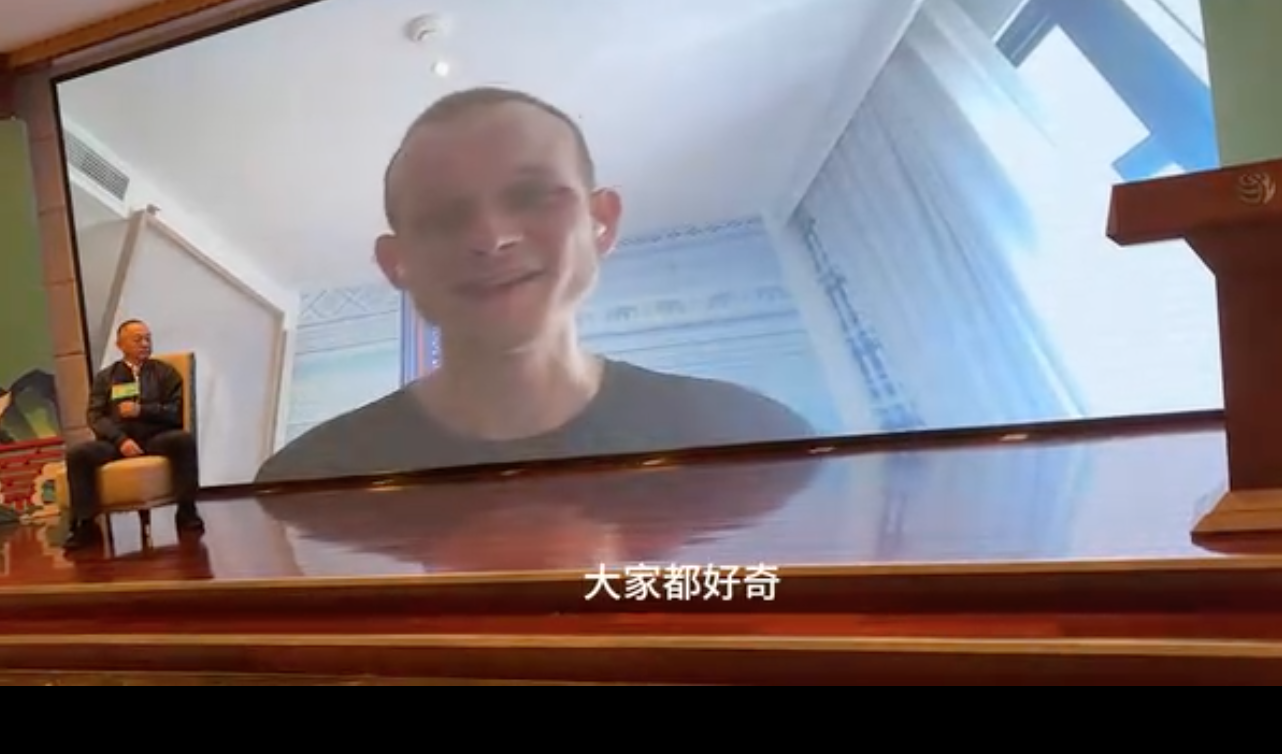
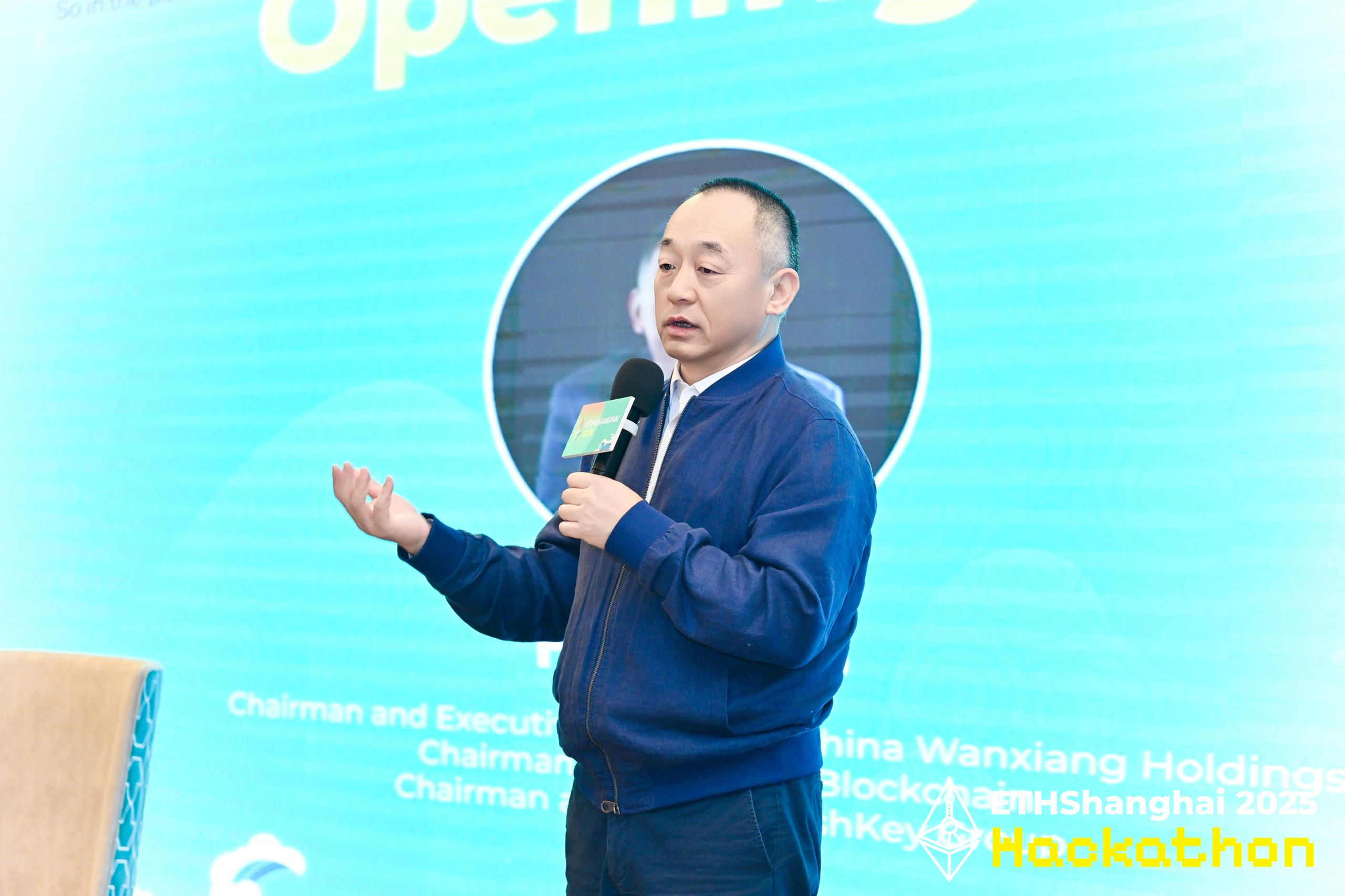
On October 22, the ETHShanghai 2025 Main Summit came to a successful conclusion in Shanghai. With the theme of “Expanding Ethereum and Shaping an Open Future”, the conference was co-hosted by the Chinese-speaking builder community ETHpanda in collaboration with Wanxiang Blockchain Labs, Panews and Tinland. The conference attracted more than 40 industry leaders from around the world. They had wonderful sharing and in-depth discussions on core topics such as Ethereum expansion, modular ecosystem, developer growth, and long-term security, and officially announced the winners of the ETHShanghai 2025 hackathon at the conference. Vitalik Buterin: The prediction market is becoming a new type of information medium. Security is still a key issue in AI agent development. Xiao Feng, Vice Chairman and Executive Director of Wanxiang Holdings, Chairman of Wanxiang Blockchain, Chairman and CEO of HashKey Group, and Vitalik Buterin, the co-founder of Ethereum, had an in-depth online conversation on the three topics of AI, prediction markets, and ZK ID. Vitalik said that during the US election, many people participated in predictions through Polymarket, which in itself was a kind of success. Traditional media and social media may be unable to determine the importance of events, and predicting the market reflects reality more quickly through price signals, and it is becoming a new medium of information. The prediction market is not only suitable for large-scale events, but with the support of AI, it can also accurately predict minor events. In the future, AI combined with the prediction market will make predictions more mainstream and more intelligent. For the AI circuit, Vitalik proposed that blockchain defines the rules of the game, and AI can be a participant. With the rise of AI agents, they can independently issue tokens, participate in application and governance, and open up a large amount of experimental space. In the future, we should further consider how to enable ecological development. However, he emphasized that AI should not replace humans, but should be a tool for humans. Security remains a critical issue, including the risk of hacking agents. He further mentioned the potential of ZK ID (zero-knowledge identity) in preventing AI misuse. ZK ID can help differentiate between humans and robots. While protecting privacy, it can support the development of circuits such as low-risk DeFi. Xiao Feng: Ethereum is still the core of applications. With its first-mover advantage and continuous optimization, it is difficult to replace Xiao Feng. Blockchain can be roughly divided into two categories. One type is represented by Bitcoin, mainly a currency issuance system, which uses simple mathematical formulas to achieve high-speed computation and does not allow complex external deployment, so it is regarded as “digital gold”; the other is represented by Ethereum, which is application-centered and gradually developed along the original intention of the white paper. Xiao Feng pointed out that there is no need to try to replace Ethereum because it has a first-mover advantage and continues to improve. Other blockchain projects need to prove that their strategic positioning is different from Ethereum and provide differentiated value, and the possibility of challenging Ethereum is very low. Xiao Feng also stressed that the development of DeFi cannot be ignored, but it is necessary to balance KYC and anti-money laundering requirements. The concept is different from traditional finance. Through zero-knowledge authentication (ZK ID), users can confirm their status as qualified investors with information such as certificates, certificates, and work experience, so that they can safely trade globally and make decentralized finance better serve the global financial system. Hsiao-Wei Wang, Co-Executive Director of the Ethereum Foundation: Large-scale adoption of Ethereum requires crossing the three divides of expansion, experience and trust, Hsiao-Wei Wang, co-executive director of the Ethereum Foundation, said in his keynote speech on “Mass Adoption of Ethereum: Crossing the Divide” that the vision of Ethereum to achieve large-scale adoption can be reflected in three aspects: one is autonomous control, so that users can truly own their assets; the second is global settlement capabilities, so that value can cross geographical restrictions, improve overall efficiency, and have the ability to be verified globally; third, Everyday utility allows blockchain and Ethereum to naturally and smoothly integrate into people's daily lives, such as in daily transfers, like the Internet. At the same time, she pointed out that before crossing the divide, Ethereum faced three major challenges: scalability and high cost barriers, experience gaps, and trust gaps. In terms of capacity expansion, Ethereum's route is L1 + L2, and the core strategy is to achieve high throughput and low cost transactions through L2 Rollups. Key upgrades include Dencun (EIP-4844), Pectra (2025 Q1), and Fusaka (2025 Q4). In terms of accounts and user experience, an account draw was proposed...